Circus Maximus guide: Rome's original stadium, honest assessment
Rome: E-Bike Tour of the Seven Hills
Duration: 3 hours
Is the Circus Maximus worth visiting?
The outdoor site (the large elongated valley) is free to enter and takes 20–30 minutes to walk. There are very few standing ancient structures — it is primarily a grassy depression with some excavated sections visible. The interpretive museum underground (closed for much of 2025; check current status) adds context significantly. On its own, the Circus Maximus is best combined with adjacent sites: Aventino Hill, Baths of Caracalla, and Testaccio.
The stadium that doesn’t look like one
The Circus Maximus was, for approximately 1,000 years, the largest venue on earth. At its peak in the 4th century CE, it held an estimated 250,000 spectators — a number that exceeds every modern stadium by a factor of two or three. It was 621 metres long and 118 metres wide. It hosted chariot racing, gladiatorial contests, hunting spectacles, public executions, and military triumphs.
Today it is a large, roughly flat green valley between the Palatine and Aventine hills, with a gravel running track maintained by the city park authority. The contrast between what it was and what it looks like now is the honest centrepiece of any visit.
Understanding why it looks this way — and why this matters — is the reason to come.
| Where | Between the Palatine and Aventine hills, Metro B Circo Massimo |
| Cost | Free for the outdoor site; underground exhibition ~€12 when operating |
| Time needed | 20-30 min alone; add 20 min for the Aventine Keyhole |
| Getting there | Metro Line B to Circo Massimo, or 5 min downhill from the Palatine exit |
| Best time | Late afternoon, combined with the Aventino Hill and Baths of Caracalla |
What the Circus Maximus actually was
Chariot racing (ludi circenses) was the dominant spectator sport of the Roman world. It was faster than gladiatorial combat, more unpredictable, and backed by a ferocious faction culture: Blues, Greens, Reds and Whites — chariot teams with intensely loyal supporter bases, comparable to modern football clubs but with more political weight (emperors regularly associated themselves with specific factions).
The oval track (spina) down the centre was decorated with lap-counting mechanisms, the obelisks of Augustus (now in Piazza del Popolo) and Constantius II (now in Piazza San Giovanni in Laterano), fountains, and statues. Up to 12 chariots could race simultaneously. The average race was seven laps (approximately 4.5 km); the fastest chariot teams could complete a lap in under 90 seconds.
The stands were originally wooden; the stone and concrete rebuilding began in the 1st century BCE and was essentially continuous through the late Empire. By the time of Constantine, the stands were three storeys high along both long sides, with starting gates (carceres) at the flat eastern end.
What survives and what you see
The honest answer: very little stands above ground at the Circus Maximus. The site was stripped of usable building material throughout the medieval period — the marble cladding, iron fittings, the seating stone blocks, and eventually the foundations themselves were removed for other construction. By the 16th century, the track bed was farmland.
What is visible today:
- The elongated oval shape of the valley, which preserves the footprint of the ancient track.
- Sections of the starting gate (carceres) on the eastern end — partially excavated brick foundations visible from the Via dei Cerchi.
- Sporadic archaeological excavations along the northern edge (visible through fencing) exposing the lowest courses of the stands.
- The spina alignment is suggested by a low raised ridge in the grass.
- A modern gravel running track follows the ancient circuit — popular with local joggers.
What you cannot see without substantial imagination: The stands, the spina monuments, the obelisks (now in piazzas elsewhere in the city), any of the decorative elements.
The underground interpretive experience
An underground exhibition opened in recent years beneath the western end of the Circus Maximus, using multimedia installations to reconstruct the experience of race day — sounds, video reconstruction of the ancient crowds, scale models. Entry: approximately €12 adult. The experience runs approximately 45 minutes.
Important: This attraction had interrupted operating hours in 2025 due to maintenance. Verify current opening status and booking requirements at parcocolosseo.it before planning your visit. When operating, it significantly improves the visit for first-timers who struggle to visualise the ancient reality from the empty valley.
Is the Circus Maximus worth visiting on its own?
As a standalone destination: only if you have a specific interest in Roman chariot racing or sport. The visible remains are not impressive enough to justify a dedicated trip for casual visitors.
As part of a combined day: yes, easily. The Circus Maximus sits at the base of Palatine Hill (5 minutes from the Palatine exit) and is 15 minutes’ walk from the Baths of Caracalla. Walking past on the way between these two sites takes 20 minutes and adds useful context for the Roman neighbourhood of Aventino-Circo Massimo.
The Aventino Hill directly above the Circus Maximus rewards a 10-minute detour: the Orange Garden (Giardino degli Aranci), the Rose Garden, and the famous Aventine Keyhole (at the Knights of Malta priory gate on Piazza dei Cavalieri di Malta) — where looking through the keyhole reveals a perfect framed view of St. Peter’s dome through a tunnel of clipped hedges. All free.
Practical information
Entry: The outdoor Circus Maximus site is free, open continuously. The underground exhibition (when operating): €12, bookable online.
Getting there: Metro Line B to Circo Massimo — the station exits directly adjacent to the site. Bus 118, 160, 628 also serve the area. Walking from Testaccio: 10 minutes. From the Palatine Hill exit: 5 minutes downhill.
Time needed: 20–30 minutes for the outdoor site alone; 60–75 minutes including the underground exhibition (if operating). Add 20 minutes for the Aventine Keyhole.
Combined with: Palatine Hill (directly above, 5 minutes via the hill path), Baths of Caracalla (15 minutes south on foot), Testaccio market and neighborhood (15 minutes west). See our Testaccio neighborhood guide for eating and drinking after your ancient site visits.
The e-bike tour of Rome’s seven hills covers the Circus Maximus, Aventino, Palatine and Caelian in one loop — the best way to link multiple Rome hills efficiently without the uphill effort.The Circus Maximus in context: then and now
Rome’s relationship with the Circus Maximus continued long after ancient racing ended. The last chariot races were held in approximately 549 CE under the Ostrogothic king Totila — by which point the city’s population had collapsed from perhaps one million to under 100,000.
Today the site hosts large outdoor concerts (Bruce Springsteen, the Rolling Stones and similar acts perform here regularly — capacity approximately 70,000), and the Rome Marathon finish line runs through the area. The valley still functions as a public gathering space, just as it did for 1,000 years of Roman history.
Chariot racing: how it actually worked
Roman chariot racing is most familiar from the fictional “Ben-Hur” (1959 film) which, despite its Hollywood origins, depicts the racing format reasonably accurately. A few facts that enrich the visit:
The factions: Spectators and patrons organized into four colour-coded factions (Whites, Greens, Blues, Reds). By the late Empire, Blues and Greens dominated, with intense loyalty comparable to modern football rivalry — historians record riots, assassinations and civic disorder connected to faction conflicts in Rome and Constantinople.
The charioteers: Professional chariot drivers were celebrities — the equivalent of modern Formula 1 drivers. Gaius Appuleius Diocles, who raced for the Reds in the 2nd century CE, earned an estimated 35 million sestertii over his career — a sum that, according to historian Peter Struck, would have been sufficient to pay the entire Roman army for several months. He survived 1,462 races, winning 1,064 — an extraordinary record in a sport where crashes (naufragii — “shipwrecks”) were common and often fatal.
The course: Seven laps around the spina, with tight turns at each end (metae — three conical posts). The inside position (prima rota) was advantageous at the turns but dangerous; the outside lanes required longer paths. The first turn was where most crashes occurred.
The starting gates (carceres): Twelve individual stalls arranged in a slight curve to equalize starting distances to the first turn. The starting mechanism (a rope or barrier) was controlled by the presiding magistrate; a false start required re-running. The stalls were drawn by lot.
The obelisks that used to stand here
Two obelisks dominated the Circus Maximus spina — the most prominent decorative elements of the track:
Augustus’s obelisk (originally from Heliopolis, Egypt, erected by Ramesses II, ~1279 BCE): 24 metres tall, brought to Rome by Augustus in 10 BCE and erected on the spina as a symbol of his Egyptian conquest. Toppled in late antiquity, rediscovered in 1587, and re-erected in Piazza del Popolo by Pope Sixtus V — where it stands today.
Constantius II’s obelisk (also from Heliopolis, originally erected by Thutmose III, ~1504 BCE): The tallest ancient obelisk in the world at 32 metres, brought to Rome in 357 CE and erected on the spina. Toppled, rediscovered in three pieces in 1587, restored by Domenico Fontana, and re-erected in Piazza San Giovanni in Laterano — Rome’s largest piazza — where it remains.
Both obelisks are now more accessible in their current locations than they would be on the spina of the Circus Maximus — but knowing they stood here enriches both the Circus and the piazzas where they now live.
The Aventino Hill: the free extension worth taking
The Aventino Hill immediately north of the Circus Maximus (accessible via the Via dell’Aventino steps from the valley) offers three free attractions in a 20-minute walk:
Giardino degli Aranci (Orange Garden): A small formal garden on the hilltop with the best free panoramic view of Rome from the south — across the Tiber to the dome of St. Peter’s. Locals go here for sunset.
Giardino delle Rose (Rose Garden): On the slope below the Orange Garden, free to enter (April–June when in bloom). Contains over 1,000 rose varieties, many historically named.
Aventine Keyhole: The famous view from the Knights of Malta priory gate (Piazza dei Cavalieri di Malta) — a perfectly framed tunnel view of St. Peter’s dome through the hedge-lined garden approach. Free, always accessible. Rome’s most photographed hidden detail.
For the full ancient Rome one-day itinerary that incorporates the Circus Maximus alongside the Colosseum, Forum and Palatine, see our ancient Rome in one day guide.
Roman chariot racing in the ancient world
The cultural significance of chariot racing in the Roman world extended far beyond Rome. The Blue and Green factions that dominated the sport in the later Empire were political forces throughout the Mediterranean — in Constantinople, Alexandria, Antioch, and every major city with a hippodrome. The Nika Riots in Constantinople (532 CE) — which nearly overthrew Emperor Justinian — were triggered by chariot faction rivalry. The Blues and Greens had transformed from sports organizations into urban political machines.
In Rome itself, the Emperor’s relationship with the factions was complex. Supporting a particular colour was a political signal — Nero was Green, Caligula was Green, Domitian was Blue. The factions’ finances involved enormous sums (a successful chariot team was an expensive operation — horses trained from birth specifically for racing, specialist stables, veterinary staff), and their political connections extended into the Senate and the court.
The fall of chariot racing in Rome closely tracked the fall of the city’s population and wealth. By the late 5th century, the logistics of supplying horses, funding games, and maintaining the vast infrastructure of the Circus Maximus was beyond what the declining imperial government could manage. The stadium that had roared for 1,000 years went silent not with a dramatic ending but with economic exhaustion.
The Circus Maximus and Roman time
The Circus Maximus served a calendrical function in Roman public life that is easy to miss. The Roman calendar was filled with ludi — official games days — that were structured around the circus schedule. The Ludi Romani (September), Ludi Plebeii (November), Ludi Apollinares (July), and a dozen other festival cycles all included chariot racing as their central entertainment.
These games days were public holidays — citizens did not work, courts did not sit, assemblies did not convene. The Circus Maximus was therefore the focal point of a significant portion of the Roman year. An average Roman citizen living in the 1st century CE could expect to attend chariot racing on roughly 60–70 days per year (individual games ran for multiple days).
This makes the Circus Maximus not just a sports venue but a civic institution embedded in Roman time — comparable in modern terms to a combination of a national sports stadium, a public holiday calendar, and a religious festival venue.
Practical connection to the Colosseum area
For visitors doing the standard ancient Rome day (Colosseum-Forum-Palatine in the morning), the Circus Maximus is the natural first stop in the afternoon sequence. From the Palatine Hill exit on the southern slope, the valley floor of the Circus Maximus is immediately visible and accessible in 5 minutes.
Walking the Circus Maximus perimeter (20 minutes), climbing to the Aventine Hill for the Keyhole view (20 minutes), and continuing to the Baths of Caracalla for 45 minutes gives a satisfying 90-minute afternoon before returning to Testaccio for dinner.
See our Baths of Caracalla guide for the afternoon connection and our Testaccio neighborhood guide for where to eat afterward.
The golf cart seven hills tour of Rome — efficient and entertaining way to cover the hilltop sites including Aventino and the views over the Circus Maximus valley.Setting expectations against the Colosseum and Forum
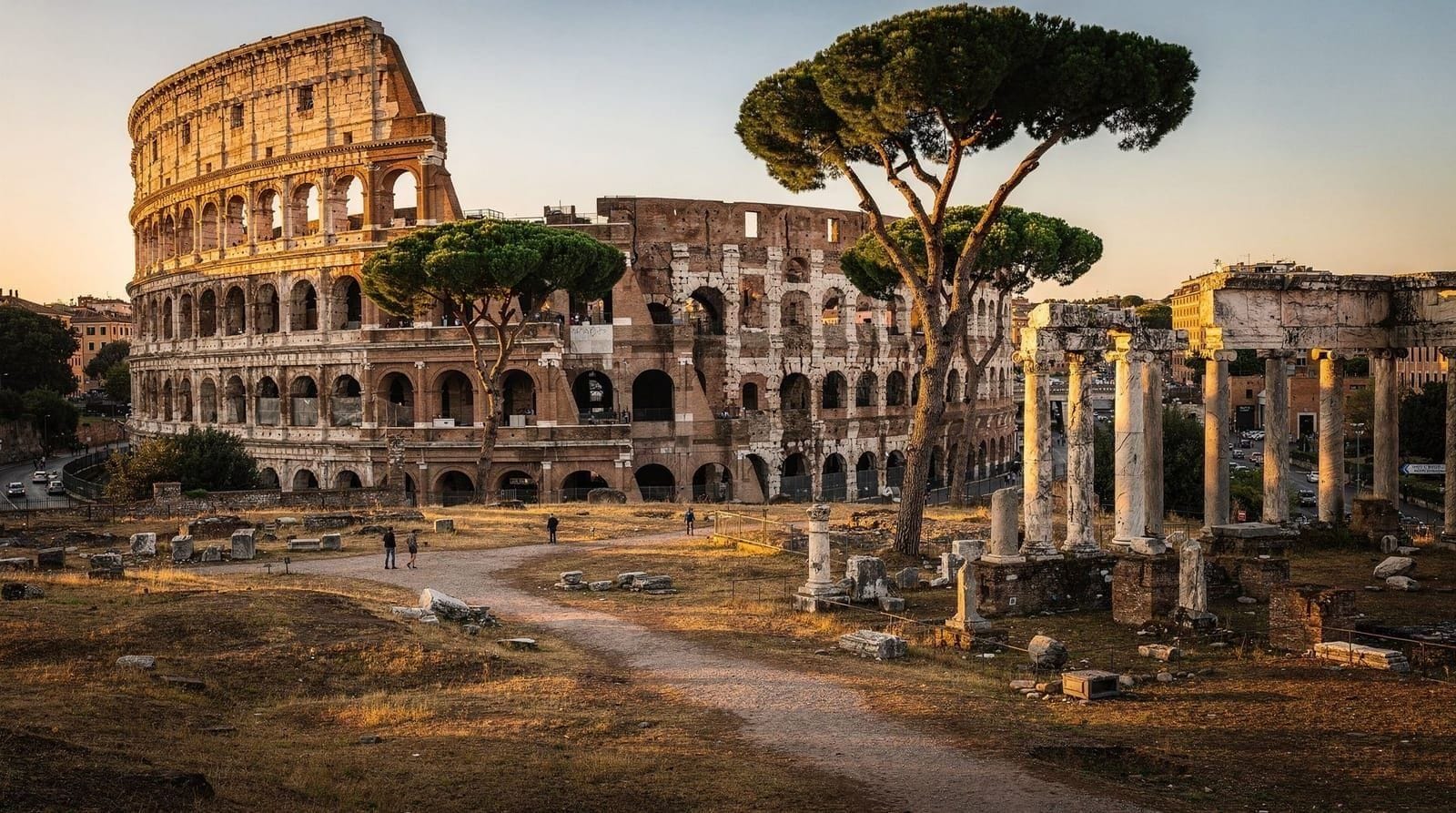
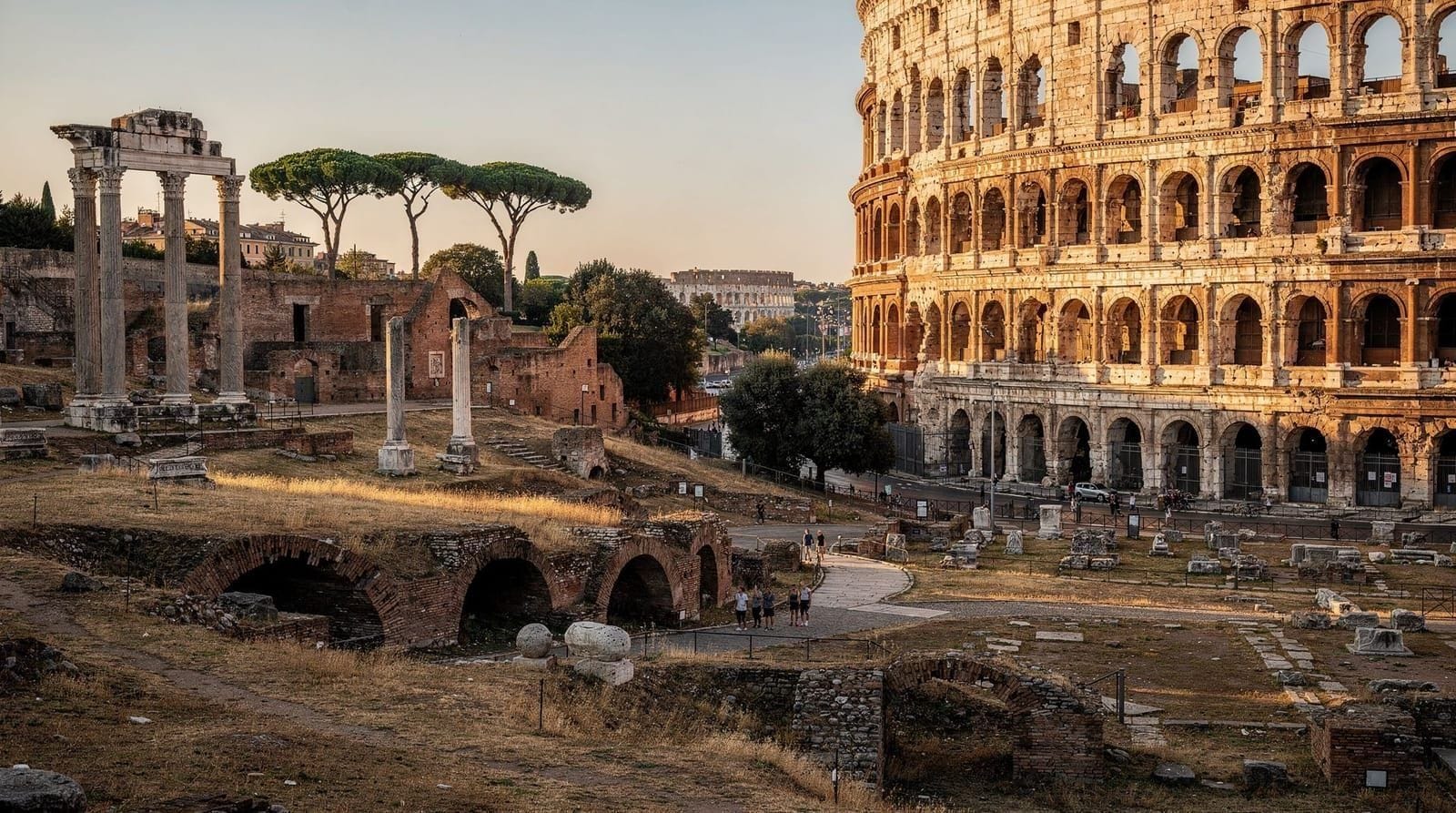
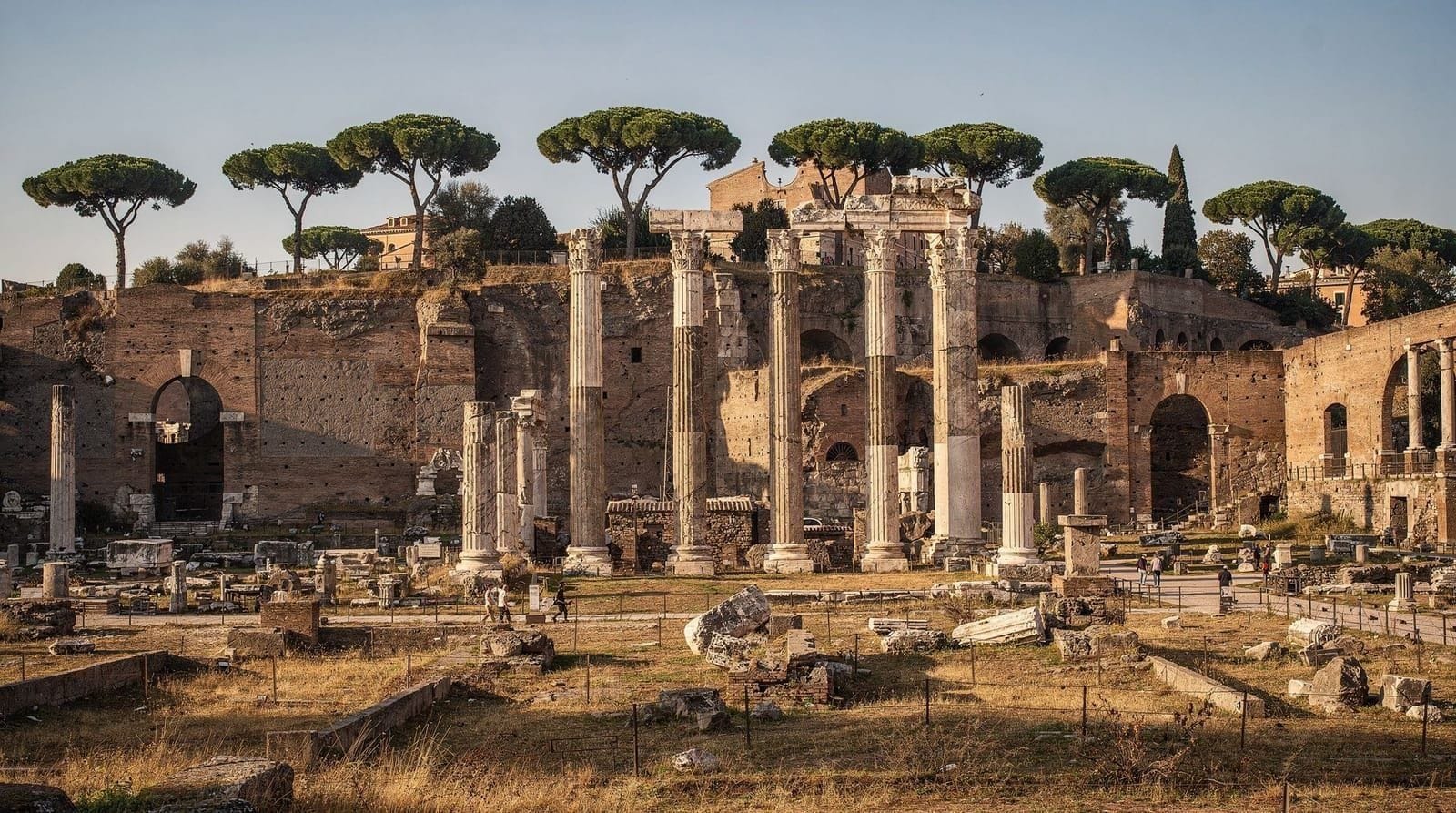
Visitors coming straight from the Colosseum, Roman Forum and Palatine sometimes expect a similarly monumental standing structure here — that expectation is the single biggest source of disappointment. The honest comparison: the Colosseum and Forum give you extensive standing ruins to walk through; the Circus Maximus gives you a shape in the landscape and a story to imagine into it. Neither is a lesser experience, but they deliver value in different ways, and knowing that before you arrive changes how the visit lands. For deeper context on how Roman public life and entertainment fit together across sites, see the Roman Empire explained and Rome history guide; for the Palatine Hill itself, our dedicated guide covers the imperial palace ruins immediately above the valley.
Frequently asked questions
Do I need to book anything to visit the Circus Maximus? No. The outdoor site is free and open continuously with no ticket or timed entry. Only the underground exhibition, when operating, requires a paid ticket that can be booked online in advance.
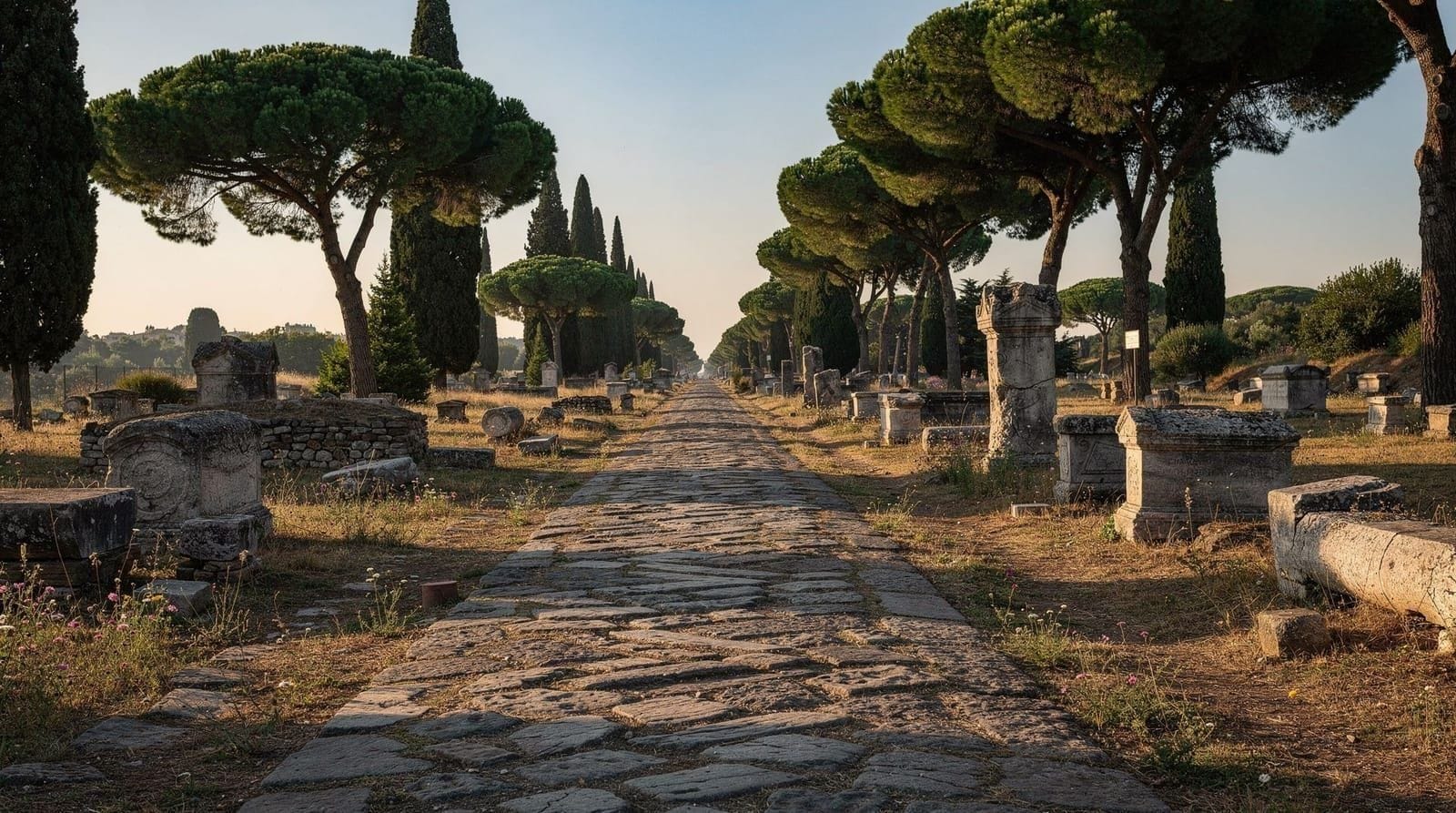
How does it compare to the Appian Way for an ancient-Rome walk? Different in character — the Appian Way has genuine standing ruins (tombs, aqueduct arches) spread along several kilometres of countryside, while the Circus Maximus is a single compact valley in the city centre. If you want more visible ancient stonework in a similar amount of walking time, the Appian Way delivers more; if you want a quick, free, centrally located stop between other sights, the Circus Maximus wins on convenience.
Top experiences
Bookable activities with verified prices and instant confirmation on GetYourGuide.