Best areas to stay in Rome by traveller type (couples, families, budget, first-timers)
Rome: City Sightseeing Hop-on Hop-off Bus with Audioguide
What is the best area to stay in Rome?
For first-timers, Centro Storico or Monti offer central access to major sights. Couples often prefer Trastevere for romance or Prati for calm with Vatican access. Families with children do well in Prati (wide streets, near Vatican) or Monti (compact, walkable). Budget travelers find the best value in Esquilino-Termini or southern Monti. The 'best' neighborhood depends on your priorities — no single answer applies to everyone.
Finding your Rome neighborhood match
Choosing where to stay in Rome is genuinely consequential. The city has distinct neighborhoods with very different characters — some loud and social, others calm and residential, some expensive and central, others affordable and 20 minutes from the sights. The wrong choice can mean late-night noise when you wanted sleep, or a long commute every morning to the Colosseum.
This guide breaks down Rome’s main neighborhoods by traveller type, with honest notes on what each area actually delivers versus what the marketing says.
| Best for first-timers | Monti or Centro Storico |
| Best for couples | Trastevere (atmosphere) or Prati (calm) |
| Best for families | Prati or Testaccio |
| Best for budget | Esquilino-Termini |
| Quietest central option | Aventino |
| Booking lead time | 2–3 months for April–May/Sept–Oct peak |
First-timers: Centro Storico and Monti
If this is your first visit to Rome and you want to maximize walking access to the major sights, Centro Storico and Monti are the strongest options.
Centro Storico — the historic center bounded roughly by the Tiber, Piazza Navona, and the Pantheon — puts you in walking distance of the Pantheon, Piazza Navona, Campo de’ Fiori, and the Trevi Fountain. It also puts you in the heart of tourist Rome, with corresponding pricing. A comfortable mid-range double runs €150–250 in shoulder season, €200–350 in April–May. Streets can be noisy until 11 pm most nights.
Recommended hotels: Hotel Teatro di Pompeo (built over the ancient theater, excellent location, mid-range), Relais Palazzo Taverna (boutique, quiet courtyard), Hotel Nazionale (larger, reliable, central).
Monti — Rome’s oldest neighborhood, directly behind the Imperial Fora and a 12-minute walk to the Colosseum — offers a better balance of authenticity and convenience. Prices are 15–25% lower than Centro Storico. The streets around via del Boschetto and via della Madonna dei Monti have genuine neighborhood character with local cafés and wine bars alongside the tourist traffic. For a first-timer who wants central access without staying in the most touristy core, Monti is often the better choice.
Recommended hotels: Hotel Lancelot (near Colosseum, reliable, garden), Palazzo Manfredi (luxury, Colosseum views), Locanda Cairoli (boutique, quiet location).
See the full Monti neighborhood guide for practical detail.
Couples: Trastevere, Prati, or Aventino
The “romantic Rome” question has three honest answers depending on what kind of romance you want.
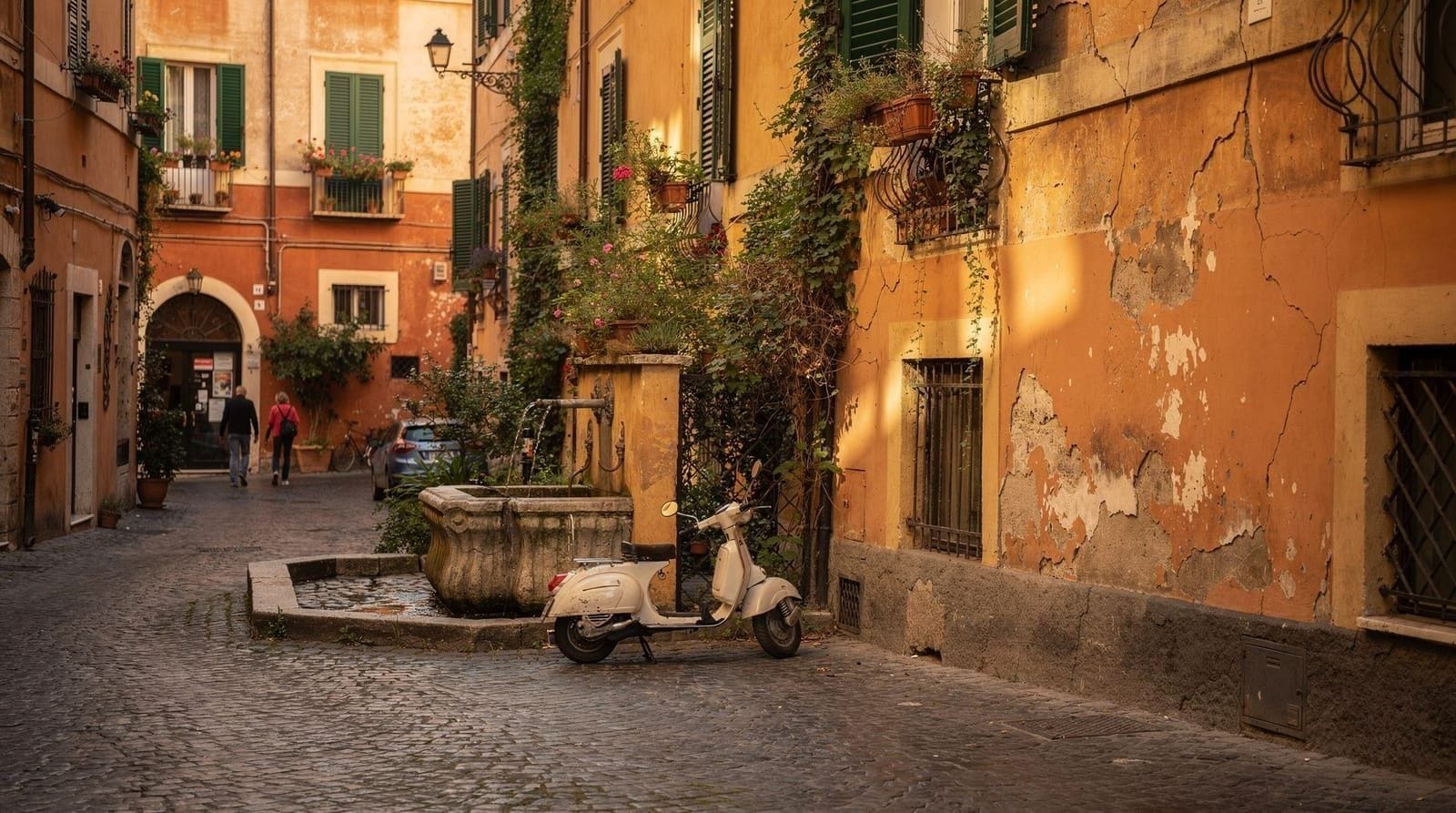
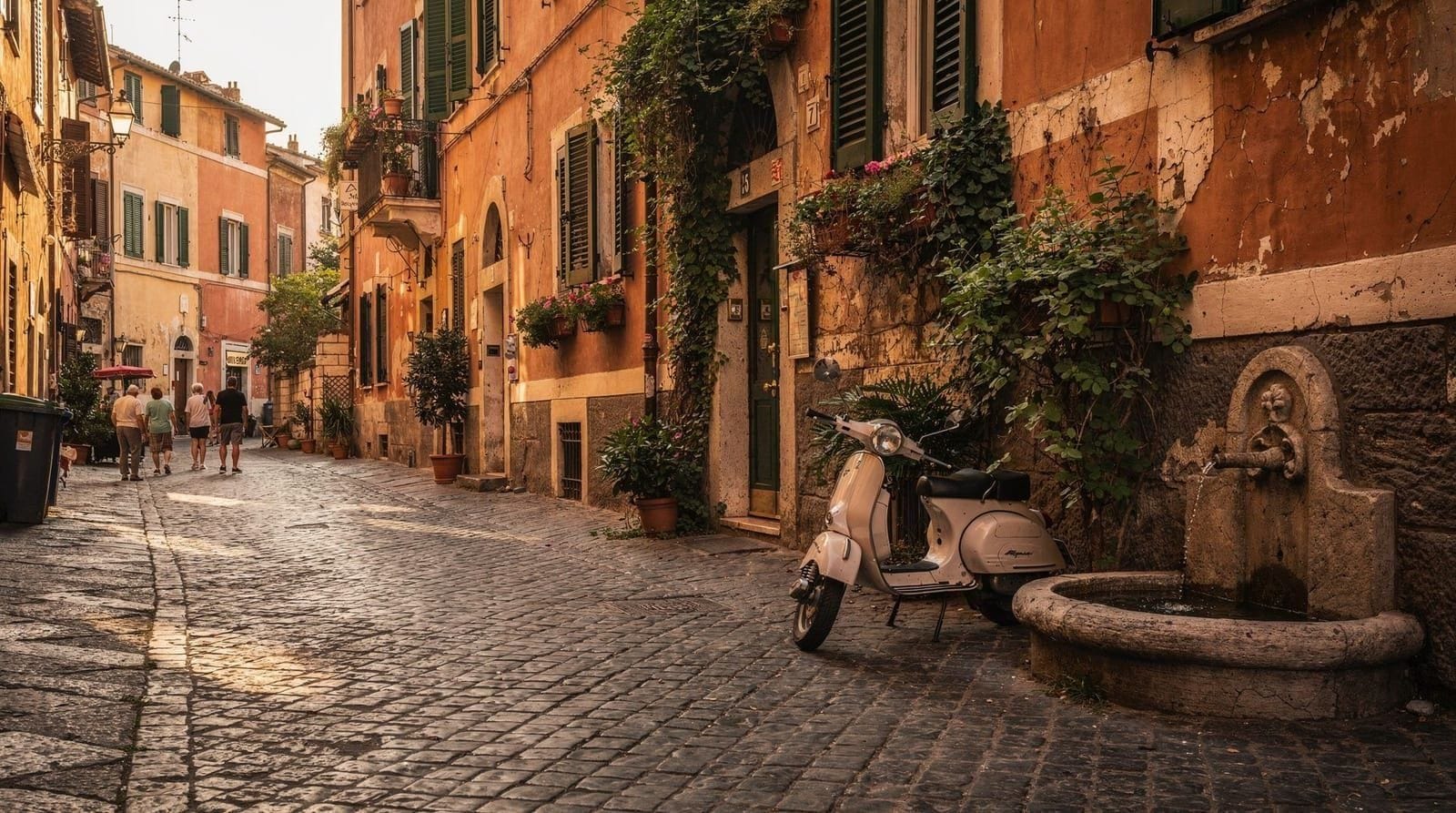
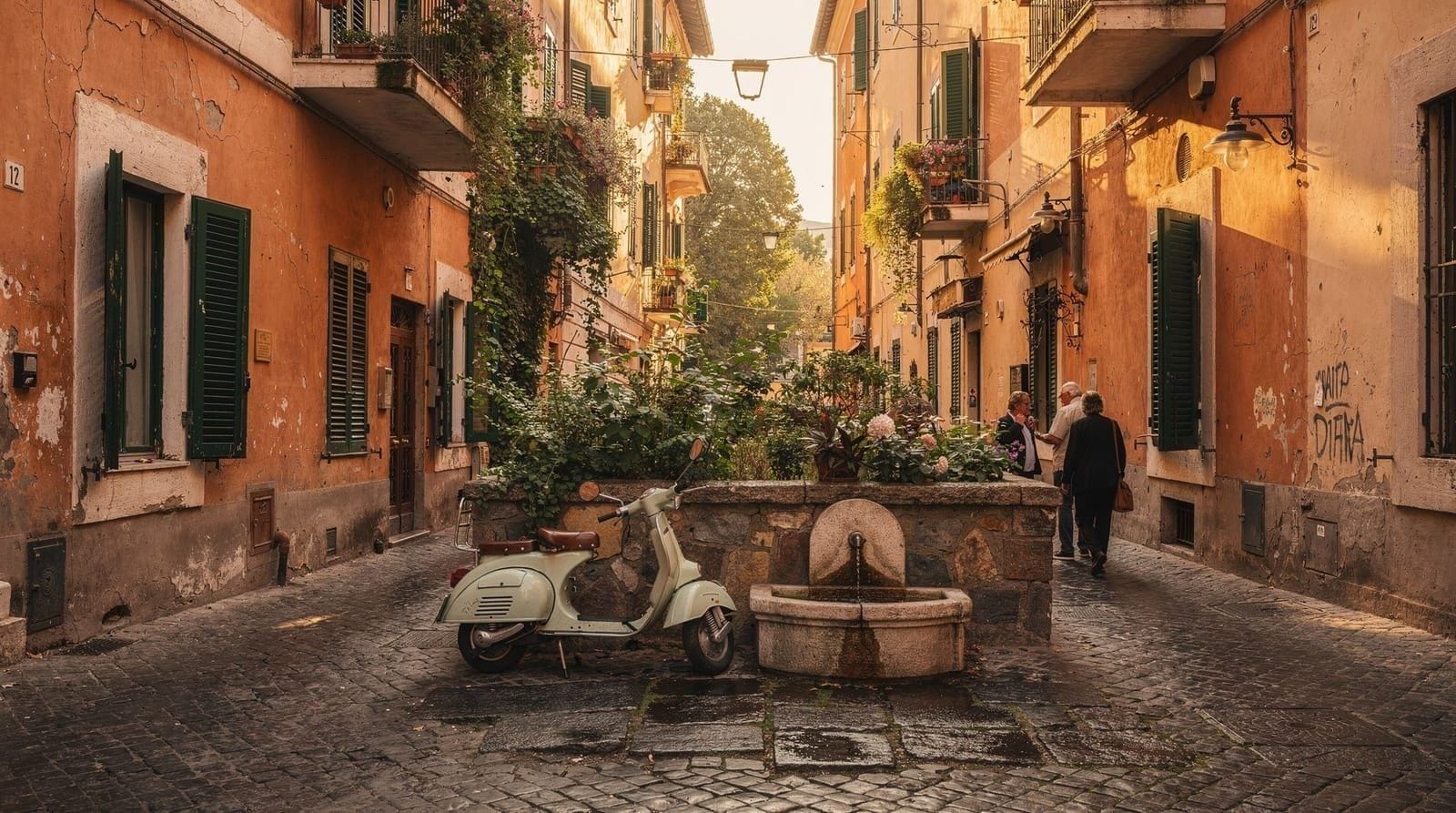
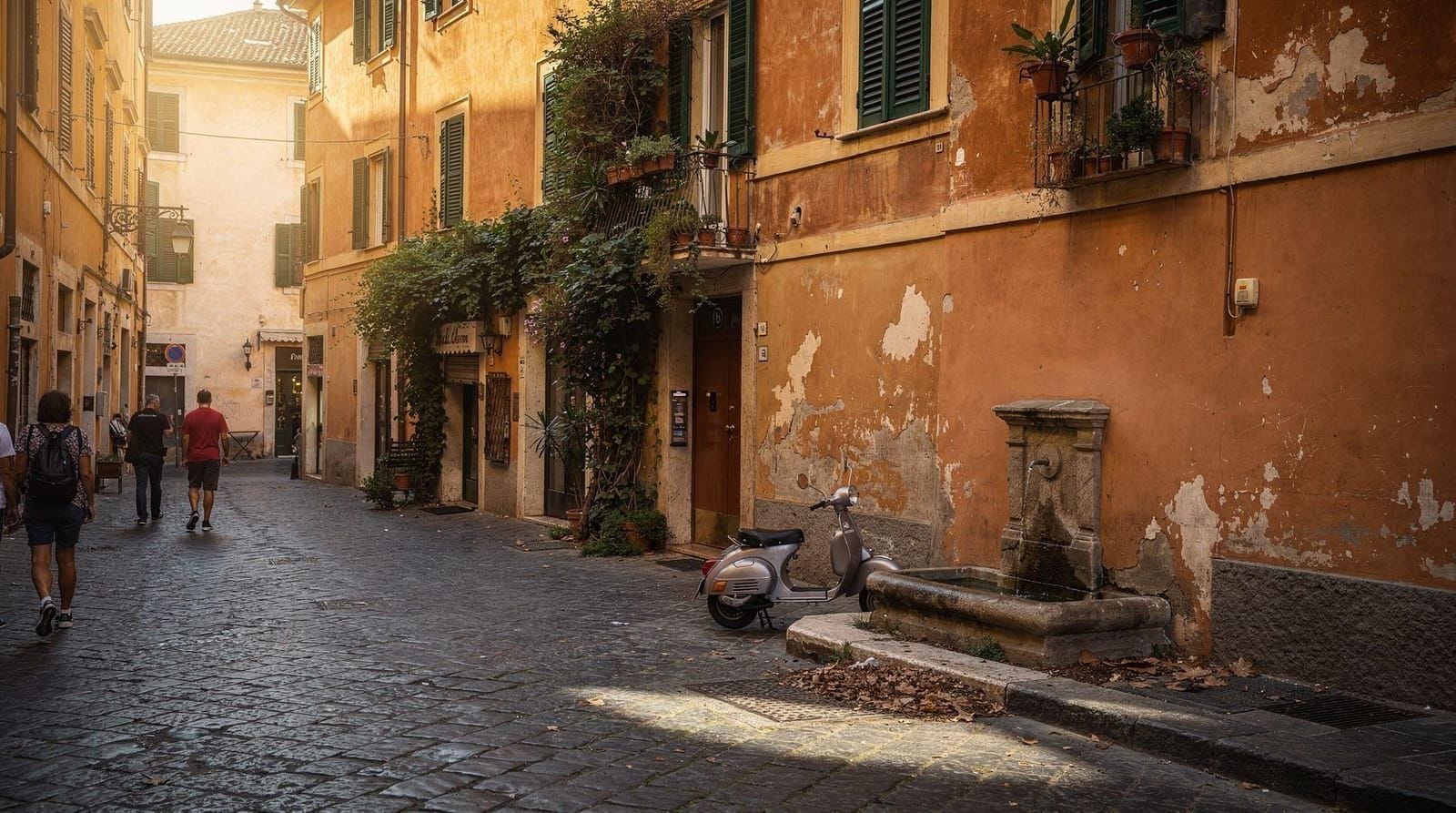
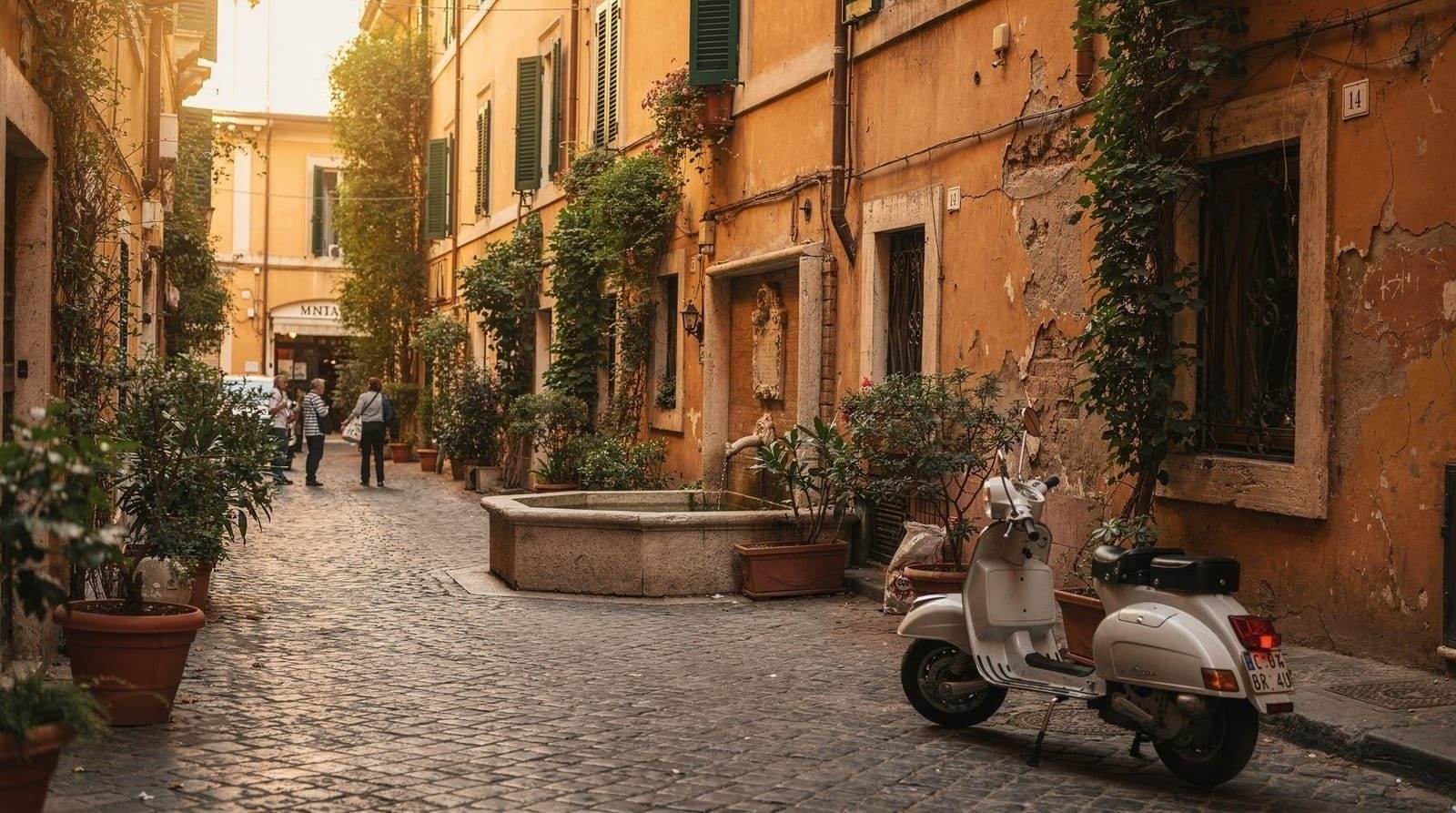
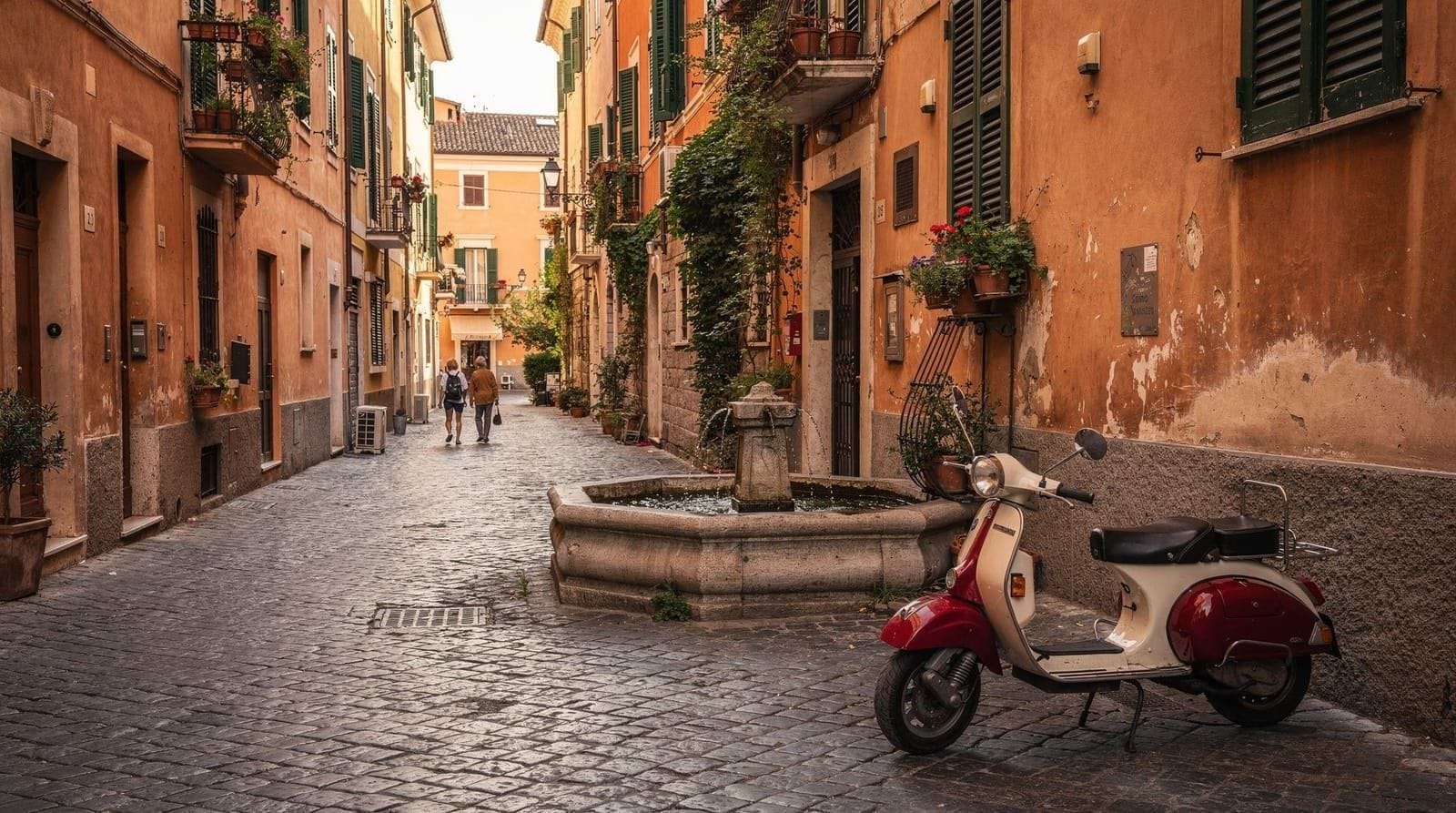
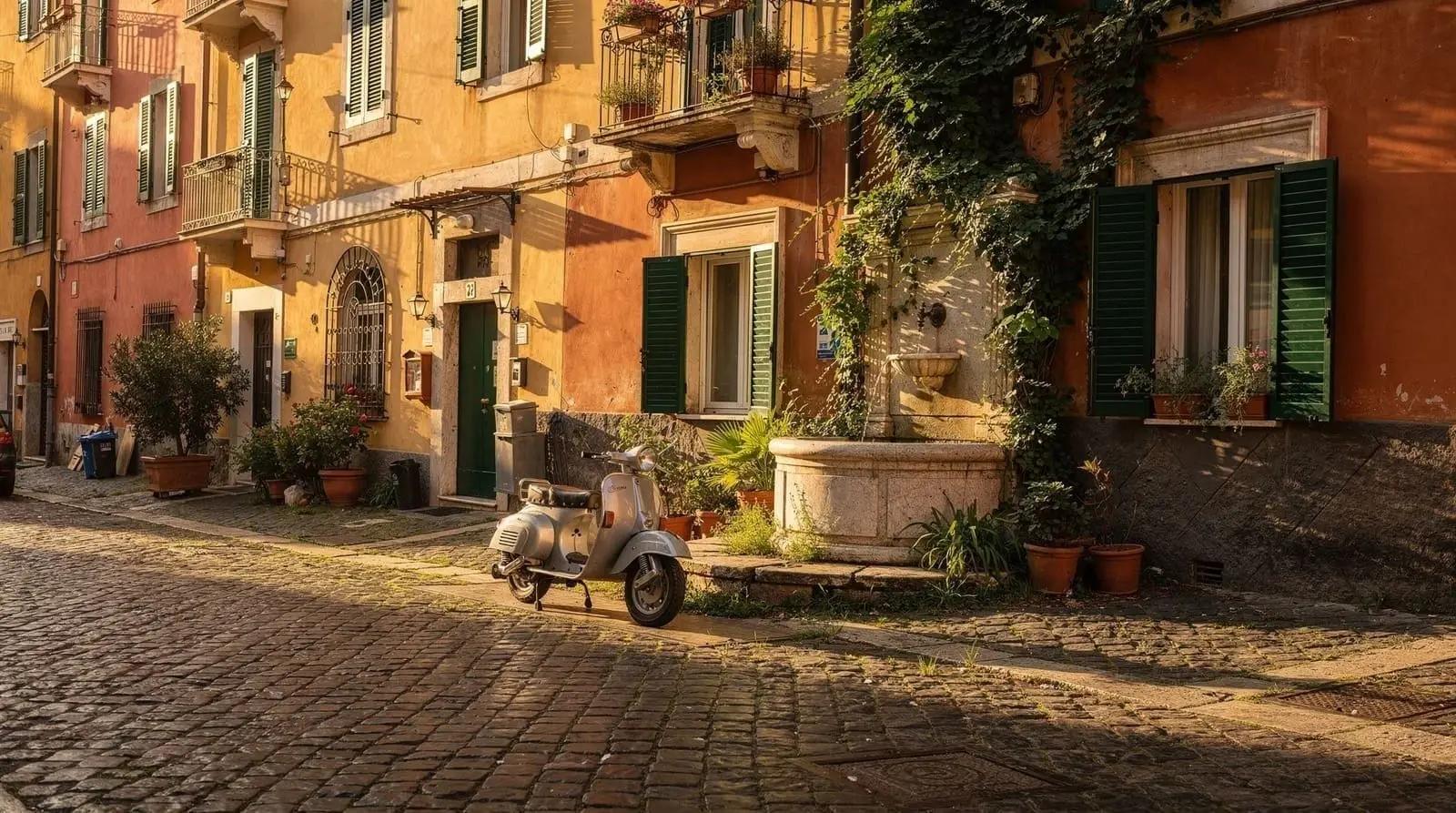
Trastevere is the Instagram answer — cobbled streets, candlelit restaurants, ivy-draped walls, evening atmosphere. It genuinely delivers on this when you find the right corner of it. The caveats: it is also one of Rome’s busiest nightlife areas. On Friday and Saturday nights, street noise peaks around 11 pm–1 am. Couples who want to eat late and be part of the energy find it perfect; couples who want to sleep by 11 pm find it frustrating. Book a courtyard room, not a street-facing one.
Good mid-range options in Trastevere: Hotel Santa Maria (courtyard, quiet, excellent location), Arco del Lauro (B&B, reliable), Villa della Fonte (small, peaceful despite proximity to the piazza).
Prati offers a different kind of romance — the elegant neighborhood directly across the river from Castel Sant’Angelo, with wide tree-lined streets, good trattorias, the Lungotevere river walk, and easy walking to the Vatican. It is quieter than Trastevere in the evenings and tends to attract couples who want to walk to dinner without weaving through crowds. A 15-minute walk from Castel Sant’Angelo to the Spanish Steps along the Lungotevere at dusk is one of Rome’s better free experiences.
Aventino is the surprise option. The hill above Testaccio and the Circus Maximus is one of Rome’s quietest residential areas — entirely unlike the tourist center. The Knights of Malta keyhole view of St. Peter’s dome (free, via Piazza dei Cavalieri di Malta), the Orange Garden (Giardino degli Aranci), and the almost uncrowded atmosphere make it feel like a different city. Hotels here are fewer but excellent for couples prioritizing peace. It is a 25–30 minute walk or short bus ride to most major sights.
See the Aventino neighborhood guide for the full area breakdown.
A guided Rome highlights golf cart tour with a local guide covers the major sights efficiently — good for couples who want to orient themselves on day one without exhausting themselves on foot.Families with children: Prati and Testaccio
Families traveling with young children have specific needs: space, playground access, manageable distances, and restaurants that don’t make you feel like an inconvenience.
Prati is consistently the best family neighborhood in central Rome. Wide pavements (important for strollers), the Vatican and Castel Sant’Angelo as major child-friendly attractions, Prati’s own playground in Piazza dei Quiriti, and a residential character that makes evenings calm. The street-level character — proper alimentari (delis), pasticcerias, neighborhood pizzerias — suits families better than the tourist-food concentration of Centro Storico.
Hotels with family rooms or apartments: Colors Hotel (affordable, Prati location), Vatican View B&B (practical, near Castel Sant’Angelo), various apartment rentals on via Cola di Rienzo for families wanting kitchen access.
Testaccio is underrated for families. The Testaccio Market has excellent food, the neighborhood is genuinely residential and not touristy, and the proximity to Villa Borghese (20 minutes by tram or bike) makes it practical for families wanting green space. The Testaccio neighborhood also has the Non-Catholic Cemetery (surprisingly good for older children interested in history) and the Macro Testaccio contemporary art space.
The Colosseum is 20 minutes’ walk from Testaccio — manageable for older children, slightly long for toddlers. Families with young children might find Celio (the neighborhood around the Colosseum itself) more practical for those days.
Budget travelers: Esquilino-Termini and outer Monti
Budget travelers in Rome have two real options: the Termini area (lower prices, more pickpocket risk, convenient transport connections) or the outer reaches of Monti and Esquilino (slightly further from the core but still accessible).
The Termini area (Esquilino neighborhood, around Piazza Vittorio Emanuele II) has the highest concentration of budget and hostel accommodation in Rome. Budget doubles run €60–100 in shoulder season, which is genuinely cheaper than Centro Storico or Trastevere equivalents. The trade-off is atmosphere: the streets immediately around Termini station are functional rather than beautiful, and the pickpocket risk is real — keep bags close and be alert in the station and on Metro Line A.
Further into the Esquilino neighborhood, away from the station, the streets around Piazza Vittorio and via Merulana are more residential, with the Santa Maria Maggiore basilica (free, extraordinary mosaics) as a local landmark. This is multicultural Rome — Bangladeshi, Ethiopian, and Chinese restaurants alongside Roman trattorias — which is genuinely interesting if you want a break from tourist-center pricing.
See the Esquilino neighborhood guide for the full honest picture.
Outer Monti, along via Cavour and the streets east of the Colosseum, has mid-budget options that undercut the premium Monti boutiques while maintaining the neighborhood’s general appeal. The walk to the Forum takes 10–15 minutes from here.
For budget travelers who want atmosphere over convenience, Testaccio has some surprisingly affordable B&Bs and guesthouses — and arguably Rome’s best cheap eating.
Rome’s hop-on hop-off bus covers 11 stops across the city including Colosseum, Trastevere, Vatican, and Termini — useful on day one for getting your bearings before you commit to a base neighborhood’s walking patterns.Apartment vs hotel: which suits which neighborhood
The choice between an apartment rental and a hotel interacts with neighborhood choice more than most visitors expect. Trastevere and Monti have a strong supply of characterful short-term apartment rentals in genuine residential buildings — a good fit if you want a kitchen, more space, and a taste of living like a local, particularly for stays of four nights or more. Centro Storico apartments tend to be smaller and priced at a premium for the location. Prati has a mix of both, with apartments on via Cola di Rienzo particularly practical for families needing kitchen access for young children. Esquilino-Termini has the most hotel-heavy budget supply, since the area’s building stock leans toward converted commercial buildings rather than the residential apartment blocks found in Trastevere or Monti. Whichever you choose, check the exact address before booking — a listing described as “Trastevere” or “Monti” can sometimes sit at the edge of the neighborhood, closer in character to a busier adjacent area.
Solo travelers: Monti and Trastevere
Solo travelers have different priorities: safety (more a comfort factor than actual risk in Rome’s main neighborhoods), social atmosphere if desired, and good solo dining options.
Monti has become a favored solo traveler neighborhood. The wine bars and restaurants on via del Boschetto and around Piazza della Madonna dei Monti have a casual drop-in culture — standing at the bar for an aperitivo or a glass of natural wine, getting into conversation with other travelers or locals, is entirely normal. Solo dining at the bar (il bancone) is never uncomfortable in Italian restaurant culture and is standard practice.
Trastevere works for solo travelers who want social evening options. The neighborhood’s bars — particularly Freni e Frizioni and the smaller wine bars on side streets — are easy to navigate alone. The weekend crowd is very mixed (young locals, travelers, expats). The noise concern is less of an issue if you are also part of the nightlife.
For female solo travelers specifically: all of Rome’s main neighborhoods are fine. The honest concern is the same as for any traveler — watch your phone and bag in crowded tourist areas and on Metro A. Via Nazionale and the streets around Termini after midnight are better navigated with awareness. Trastevere, Monti, Prati, and Aventino are all straightforwardly comfortable.
Longer stays and repeat visitors
If you are staying a week or more, or returning to Rome after a first trip that covered the major sights, the calculus shifts away from proximity to the Colosseum and Vatican and toward daily livability. Testaccio and the quieter parts of Monti reward longer stays because you start to use them as an actual neighbourhood — the same bar for morning coffee, the same market stall for produce — rather than just a base to sleep in between sightseeing days. Prati works particularly well for longer stays with families, since the wider streets and everyday shops (rather than tourist-facing restaurants) hold up better over multiple weeks. Trastevere is more of a mixed bag for long stays: wonderful for the first few nights, but the weekend noise pattern repeats every week, which matters more over two weeks than over three nights.
Accessibility considerations by neighborhood
Mobility matters as much as atmosphere when choosing a base. Prati is the most consistently flat and manageable neighborhood for wheelchair users or anyone with limited mobility, with a mix of paved and lightly cobbled streets and easy access to the Vatican’s accessible entrance. EUR, further from the centre, is entirely modern and smooth but trades convenience for accessibility. Trastevere and Monti both involve steep alleys and heavy cobblestones that make them harder bases for visitors with mobility limitations, however appealing their atmosphere. See our dedicated accessible Rome guide for the full neighbourhood-by-neighbourhood accessibility breakdown, and the Rome for seniors guide for visitors managing general mobility limitations rather than wheelchair use specifically.
What to avoid when choosing your Rome neighborhood
A few common mistakes:
Booking purely on price, ignoring the Termini cluster. There is a large concentration of budget accommodation within 500 meters of Termini that is cheap for a reason — the area is functional but not pleasant for a Rome holiday. The €15–20 saving per night rarely compensates for starting each day in a dispiriting street environment.
Assuming Centro Storico puts you close to everything. It puts you close to the tourist core. The Colosseum is 35 minutes’ walk from Campo de’ Fiori. The Vatican is 35–40 minutes. If your itinerary is heavy on ancient Rome or Vatican, Centro Storico is not as central as it sounds.
Underestimating Prati. Many first-time visitors dismiss Prati as “just a place to stay near the Vatican.” It is in fact one of Rome’s most livable and enjoyable neighborhoods, with excellent restaurants, easy access to Castel Sant’Angelo and the Tiber walk, and a calm character that makes evenings genuinely pleasant.
Booking a Trastevere hotel on a main street without reading the noise warnings. Multiple Rome travel forums have detailed noise complaints from travelers who booked Trastevere without understanding the weekend atmosphere. This is not a secret — it is well-documented. Book accordingly.
Quick reference: neighborhood by priority
| Priority | Best choice | Second choice |
|---|---|---|
| First visit, maximum sight access | Monti | Centro Storico |
| Romantic atmosphere | Trastevere | Aventino |
| Families with children | Prati | Testaccio |
| Budget | Esquilino-Termini | Outer Monti |
| Peace and quiet | Aventino | Prati |
| Solo travel / social scene | Monti | Trastevere |
| Near Vatican | Prati | Vatican-adjacent Centro Storico |
| Near Colosseum | Monti / Celio | Aventino |
For a comprehensive look at how the neighborhoods relate to each other across the city, see the Rome neighborhoods overview. For a full guide to neighborhood character beyond accommodation, see Rome for first-timers.
Rome’s e-bike Seven Hills tour covers all the main neighborhoods in 3 hours — an excellent orientation on arrival day before you settle into your base area’s rhythm.Honest summary
No single Rome neighborhood is objectively best. The decision depends on your itinerary, budget, tolerance for noise, and what you want the walk from the hotel door to look like at 7 am.
Centro Storico and Monti are the safest default choices for first-timers. Prati is consistently underrated. Trastevere delivers on atmosphere when the conditions align, frustrates when they don’t. Esquilino-Termini is practical if budget is the constraint. Aventino is Rome’s best-kept accommodation secret for couples who want peace within the city proper.
The full destination guides for each area — Trastevere, Monti, Testaccio, Esquilino-Termini, Aventino-Circo Massimo, and Vatican-Prati — give the neighborhood detail you need to make a confident choice.
Frequently asked questions about Best areas to stay in Rome by traveller type (couples, families, budget, first-timers)
Is it better to stay near the Colosseum or near the Vatican?
Which area is safest for tourists in Rome?
How far in advance should I book accommodation in Rome?
Is Trastevere noisy for sleeping?
Is Termini area safe to stay?
What is the most romantic neighborhood in Rome?
Top experiences
Bookable activities with verified prices and instant confirmation on GetYourGuide.