Roman Forum guide: what to see and how to understand it
Rome: Guided Tour of Colosseum, Roman Forum & Palatine Hill
What is the best way to visit the Roman Forum?
Enter with the combined Colosseum–Forum–Palatine ticket (€18 adult). Enter from the Via Sacra entrance near the Arch of Titus and walk west toward the Capitoline Hill — this follows the ancient processional route and makes spatial sense of the ruins. Allow at least 90 minutes, preferably 2 hours. An audio guide (€5) or licensed guide transforms comprehension significantly.
The most important ancient site you will misread
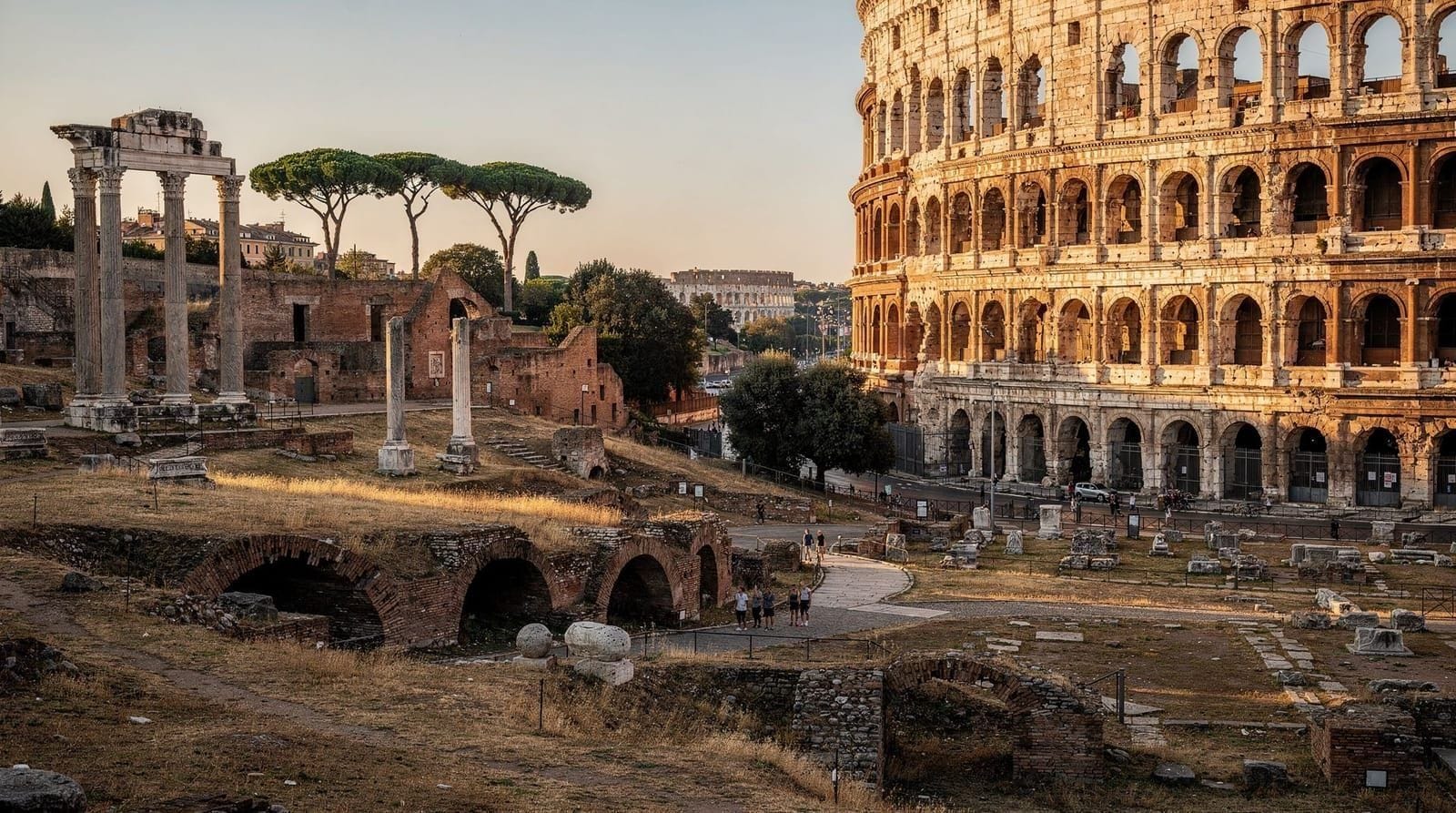
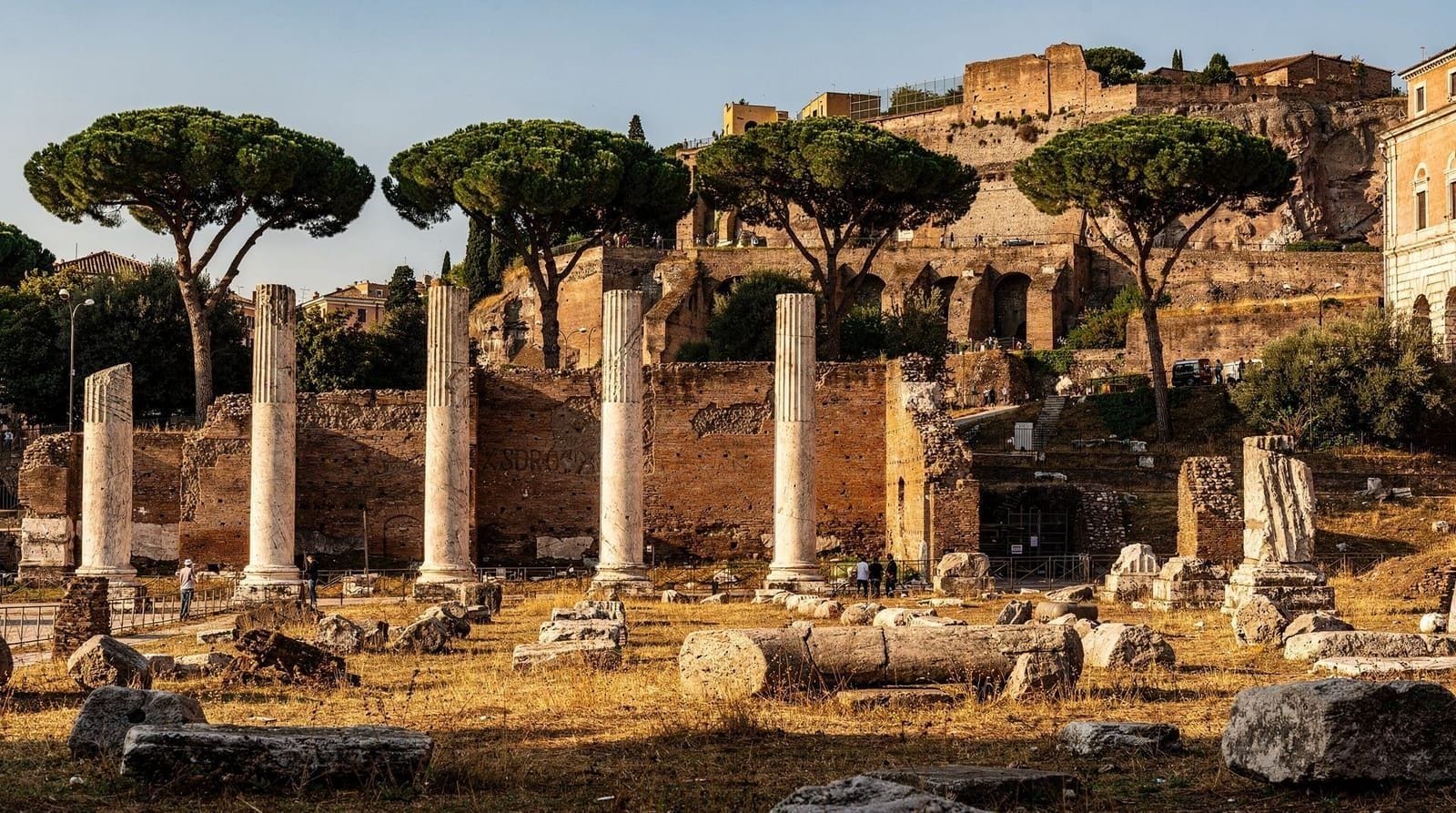
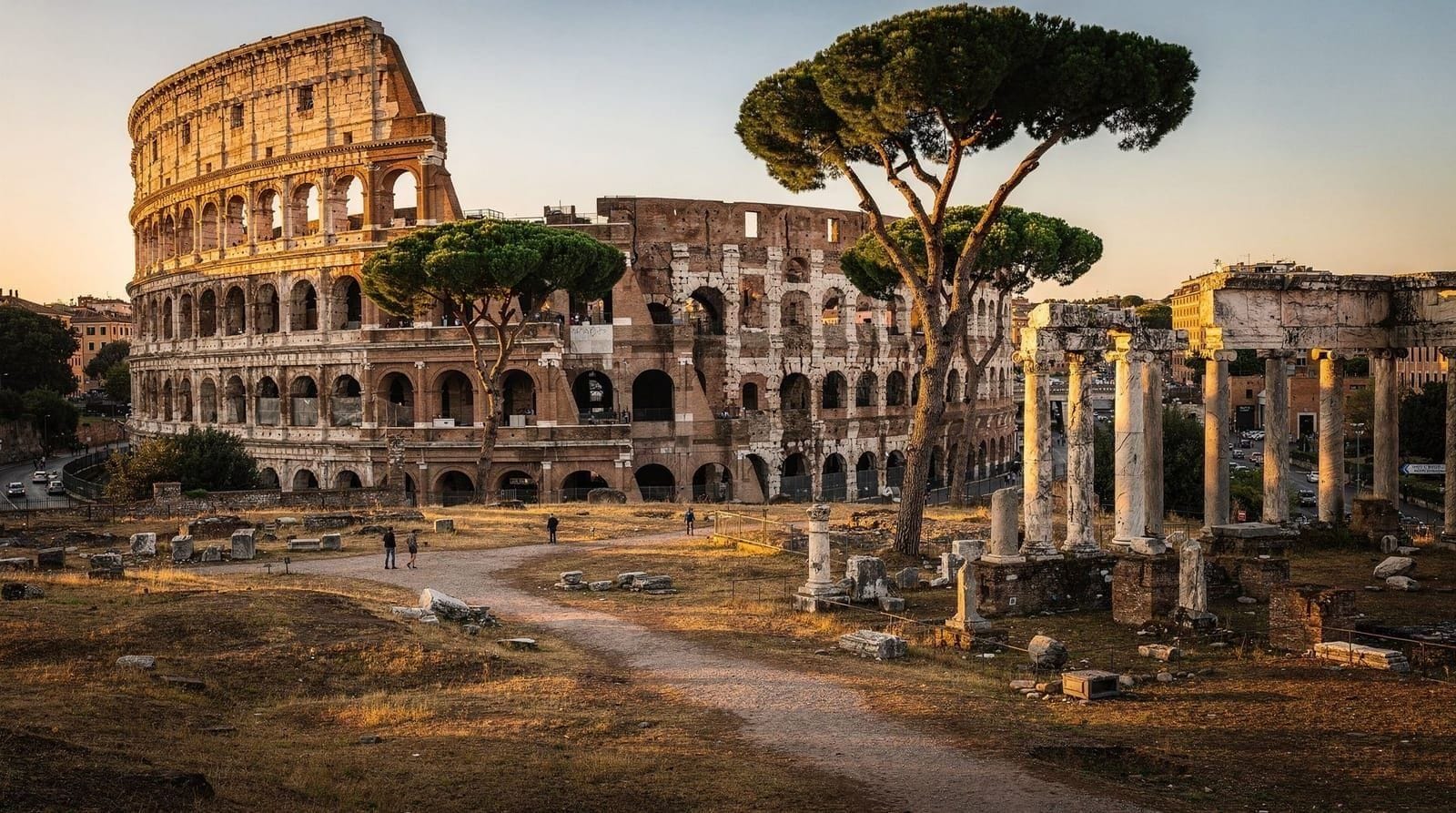
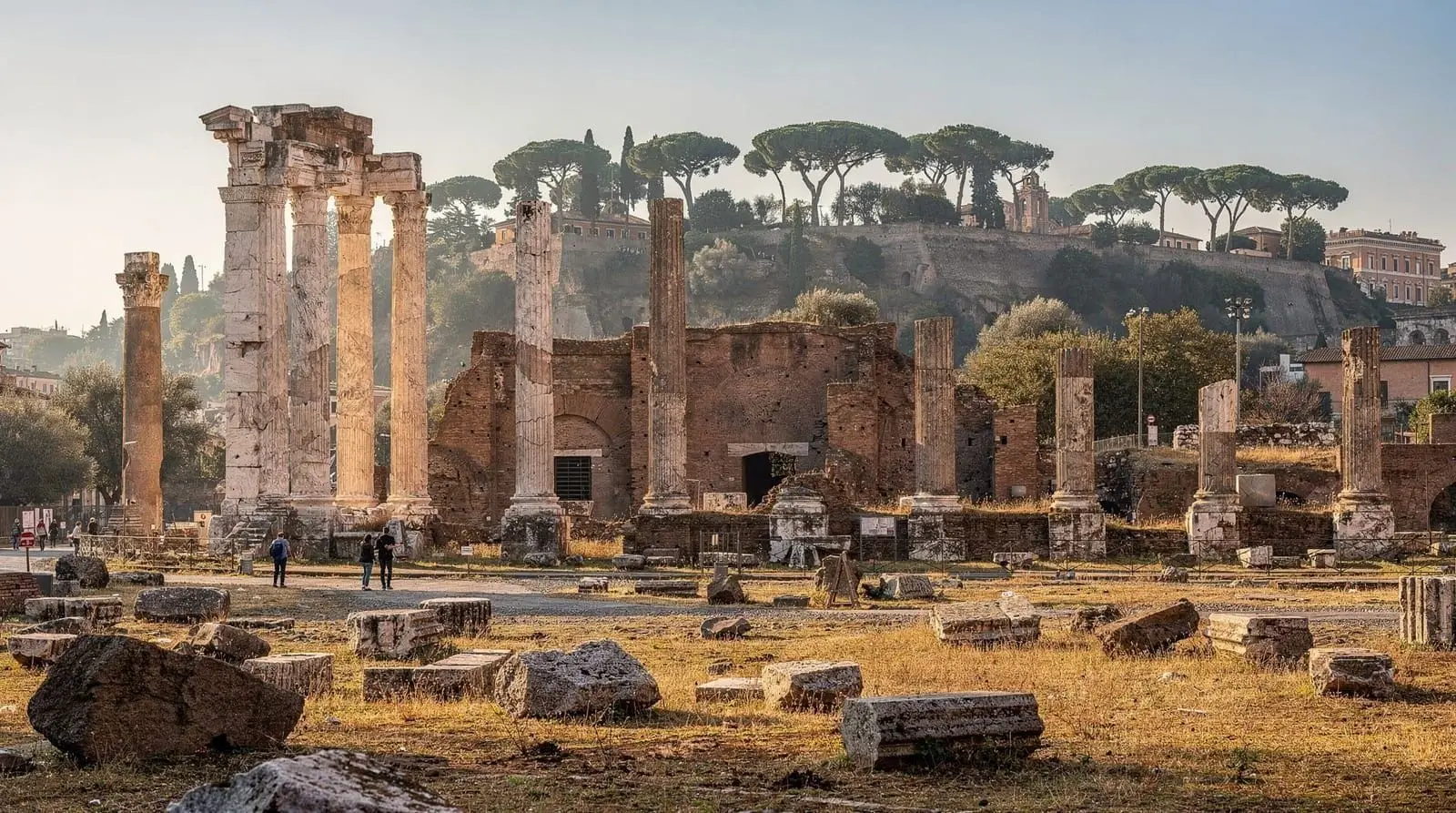
The Roman Forum is the single most historically significant open space in Western civilization. It is also, for most visitors arriving without preparation, the most confusing. A field of columns and brick stumps of varying heights, with occasional walls and an arch or two — and no immediately obvious narrative.
This guide gives you the narrative. By the time you finish reading it, the ruins will make spatial and chronological sense, and your time inside will be substantially more rewarding.
| Cost | €18 combined Colosseum–Forum–Palatine ticket |
| Time needed | 90 minutes minimum, 2–2.5 hours for a thorough visit |
| Entrance | Via Sacra, near the Arch of Titus |
| Best time | Opening (9:00) or the last 2 hours before closing |
| Don’t miss | Temple of Vesta, Basilica of Maxentius, Via Sacra walk |
What the Forum actually was
The Forum was Rome’s civic center for over a millennium — from the early Republic (roughly 509 BCE) through the late Empire. It was simultaneously a marketplace, a law court, a political meeting point, a religious complex, and a venue for triumphal processions. The phrase “going to the Forum” in ancient Rome meant roughly what we might say today about going downtown, to parliament, and to church — all at once.
Over time, successive generations of Romans built, rebuilt, demolished, and re-consecrated the same area. The result is a palimpsest: ruins from the 5th century BCE sitting next to buildings from the 4th century CE. Nothing was preserved for posterity; Rome built over itself constantly. What we see today is partly what survived medieval stripping (for building materials), partly what was deliberately excavated from the 16th–19th centuries.
Getting oriented: the basic layout
The Forum runs roughly east–west, approximately 300 metres long and 60–100 metres wide, in a valley between the Capitoline Hill (west) and the Velian Hill (east, now largely removed).
Via Sacra (Sacred Road) is the spine. Walk it from the Arch of Titus in the east to the Temple of Saturn in the west and you have covered the main sequence.
Three zones of activity:
- Eastern end (Arch of Titus, Temple of Vesta, Basilica of Maxentius): religious, processional
- Central area (Rostra, Column of Phocas, Lacus Curtius): political and civic
- Western end (Temple of Saturn, Tabularium, Capitoline Hill access): administrative and financial
The key structures: what to look for
Arch of Titus (81 CE)
The entrance landmark from the Colosseum side. Built by Emperor Domitian to commemorate his brother Titus and their conquest of Jerusalem in 70 CE. The interior reliefs are famous: the right side shows Roman soldiers carrying the Menorah and other temple treasures through Rome in triumph. These are the oldest surviving visual depictions of the Menorah. Important, historically charged, and often overlooked by visitors who photograph the arch from outside without entering the span.
Temple of Vesta and House of the Vestal Virgins
The circular temple (rebuilt in its current form around 191 CE after a fire) housed the sacred flame of Vesta, goddess of the hearth. Extinguishing the flame was considered catastrophic for Rome — the Vestals tended it continuously for over 1,000 years. The Vestals (six women, chosen between ages 6–10 from patrician families, serving 30-year terms) lived in the Atrium Vestae adjacent to the temple — the long building with the central garden pool. The garden is now planted with roses and boxwood; the pond reflects the remaining columns. One of the most atmospheric spots in the Forum.
Basilica of Maxentius (306–312 CE)
The enormous three-bay brick structure at the northeast end of the Forum is the most physically impressive building remaining in the Forum. Originally the basilica was larger — six bays in total — but the western half collapsed. Each surviving bay is approximately 25 metres high. Michelangelo measured this building when designing the nave of St. Peter’s Basilica; the structural logic of Renaissance church architecture was directly borrowed from Roman basilica engineering.
Temple of Saturn (498 BCE, rebuilt 42 BCE)
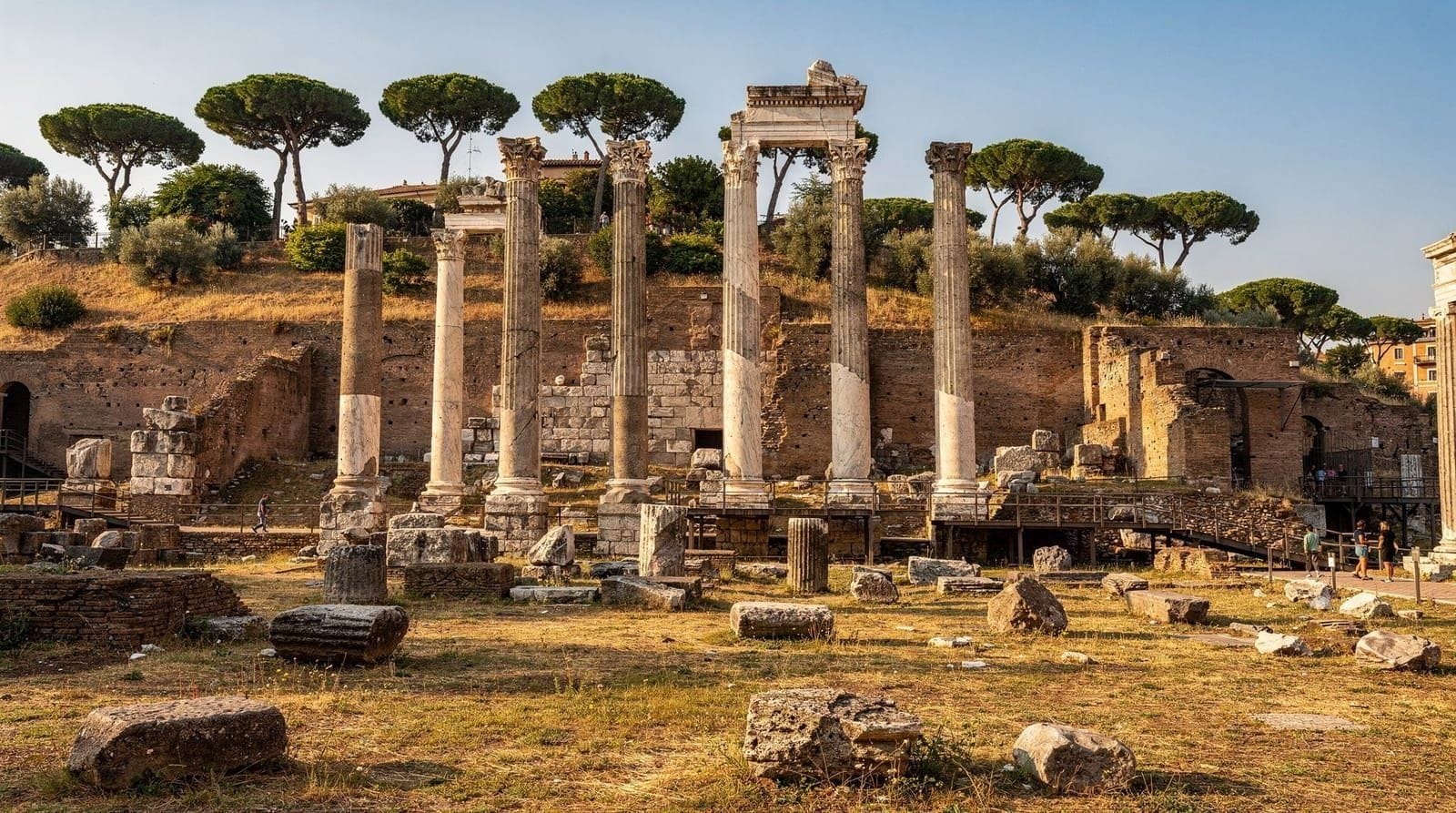
Eight standing columns at the western end of the Forum mark the Temple of Saturn — one of Rome’s oldest temples and the site of the state treasury (aerarium). The distinctive dark granite columns with their white marble capitals are often the most visually striking element in photographs of the Forum. The temple was also associated with the festival of Saturnalia (December), the Roman precursor to midwinter gift-giving traditions.
Curia Julia (senate house, 44 BCE, rebuilt 283 CE)
Julius Caesar began the current senate house; its present form dates from Diocletian’s rebuilding. It is one of the best-preserved buildings in the Forum because it was converted to a church in 630 CE — a conversion that saved many ancient buildings from stone-stripping. The interior houses the Plutei of Trajan, two marble balustrades showing Trajan cancelling debts and other acts of public generosity. Bronze doors are copies; originals are in the Lateran Basilica.
Rostra (speaker’s platform, 338 BCE)
The curved stone platform from which Roman orators addressed crowds in the Forum. The term “rostra” (plural of rostrum, meaning ship’s beak) comes from the bronze beaks of enemy ships fixed to the platform after Rome’s naval victory at Antium in 338 BCE. Julius Caesar’s funeral was held here. Mark Antony delivered his “Friends, Romans, countrymen” speech from a platform in this vicinity.
Column of Phocas (608 CE)
The last monument built in the Forum — a single white marble column erected by the Byzantine exarch Smaragdus to honour Eastern Emperor Phocas. It stands incongruously in the central Forum area, the final flourish of a civilization about to collapse. The base is partly sunken, indicating how much soil had accumulated over the Forum by the early medieval period.
Arch of Septimius Severus (203 CE)
The triumphal arch at the northwestern end of the Forum commemorates the military campaigns of Emperor Septimius Severus and his sons (including Caracalla, who later killed his brother Geta and had Geta’s name chiselled out of the inscription — you can still see where the letters were removed).
The best viewpoints inside the Forum
Palatine Hill terrace (inside the combined ticket area): The Farnese Gardens terraces on Palatine Hill offer the single best elevated view of the Forum — looking down from above, the spatial logic of the site becomes clear. Walk up after exploring the Forum floor.
Capitoline Hill (free, outside the paid site): The terrace of the Piazza del Campidoglio offers a free elevated view of the Forum from the west. Best in the late afternoon light.
Basilica of Maxentius upper level: If open, the upper viewing area of the Basilica gives a different perspective on the Forum floor. Not always accessible.
Practical information for 2026
Ticket: Combined Colosseum–Forum–Palatine, €18 adult (€2 reservation fee). Forum-only combo (without Colosseum): check the official site for availability. Free admission first Sunday of each month — but extremely crowded, not recommended.
Hours: Generally 9:00 to approximately one hour before sunset (ranges from 16:30 in winter to 19:15 in summer). Check the official site for exact hours by date.
Audio guide: €5 at the Forum entrance kiosks. Worth it. The QR code audio alternative (download before arriving in case of connectivity issues) is available in English.
Entrance: Main entrance on Via Sacra near the Arch of Titus. Also accessible from inside the Colosseum complex, and from the Capitoline Hill (via the Tabularium passage — included in Capitoline Museums ticket). See our Capitoline Hill guide for combining these sites.
A licensed guided tour covering the Colosseum, Forum and Palatine together in 2.5–3 hours — the most time-efficient way to understand the site if it is your first visit to ancient Rome.What to skip if you are short on time
If you have only 60 minutes for the Forum (not ideal, but it happens):
- Walk Via Sacra end to end — 15 minutes.
- Stand at the Temple of Vesta pond — 10 minutes.
- Walk inside the Basilica of Maxentius — 10 minutes.
- Look at the Curia Julia from outside — 5 minutes.
- Photograph the Temple of Saturn columns — 5 minutes.
- Climb partway toward Palatine for the view — 15 minutes.
That covers the essential visual markers. For the deeper story, the Roman Empire explained guide provides the historical context that transforms the ruins from attractive rubble into legible narrative.
The Forum in literature: what contemporary Romans said
The Forum is not just an archaeological site; it has an extensive literary record. Several Roman authors describe it in ways that enrich the physical experience of walking through it.
Plautus (3rd–2nd century BCE) provides the earliest detailed description in his comedy “Curculio,” listing the different social types who congregate in different parts of the Forum: money-changers, gossips, prostitutes, priests. The Forum was already organized into informal zones by activity in the Republic.
Cicero treats the Forum as his natural element — his speeches in the Forum and surrounding law courts are the primary records of late Republican political life. His description of the Rostra (“the beacon of the state from which I looked out over the sea of the Roman people”) conveys the emotional charge of the space in a way that no panel text can.
Ovid describes walking the Forum in “Ars Amatoria” as part of a guide to meeting women in Rome — the Forum’s mixed public nature, combining civic seriousness with ordinary social life, is a recurring tension in Roman sources.
Tacitus, writing under the Empire, treats the Forum with a melancholy retrospection — the space where republican liberty was exercised, now reduced to a ceremonial stage for imperial power. The contrast between Forum-as-used and Forum-as-museum is not a modern problem; Romans were already nostalgic for the Forum’s earlier meaning within a few decades of Augustus.
The Forum and Roman religion: a polytheistic landscape
The Forum was not a secular civic space that happened to have some temples. It was a profoundly religious landscape in which civic life and religious obligation were inseparable.
The Temple of Vesta’s sacred fire was not metaphorical — it was literally kept burning because Romans believed Rome’s safety depended on it. When the fire was accidentally extinguished (it happened occasionally), it was treated as a civic emergency requiring immediate ritual remediation.
The sacred boundary (pomerium) of Rome ran through or near the Forum area; crossing this boundary with a weapon was strictly forbidden (which is why returning generals had to lay down their commands before entering the city in triumph). The physical landscape of the Forum encoded these legal and religious distinctions.
The ritual functions of the Regia (house of the Pontifex Maximus, near the Temple of Vesta) included storage of sacred objects including the ancilia — the holy shields said to have fallen from heaven during the reign of Numa, Rome’s second king. These objects gave the Forum a relic quality comparable to a medieval cathedral’s treasury.
Conservation and ongoing excavation
The Roman Forum is actively excavated and conserved. Archaeological work continues in multiple areas simultaneously; fenced sections change from year to year as different zones are worked and reopened.
Significant recent work includes:
- Palatine Hill / Lupercal: Ongoing investigation of the cavity identified under the Palatine in 2007, believed to be the Lupercal cave of Romulus and Remus legend.
- Regia excavation: New work on the Regia’s earlier phases — the building has been rebuilt multiple times; the current above-ground remains date largely to the Republic, but the foundations go significantly deeper.
- Cloaca Maxima investigation: Periodic inspections of the great sewer network beneath the Forum have yielded archaeological material — the Cloaca is still an active Roman drain.
Visitors may encounter fenced areas with ongoing work. This is the Forum as a living archaeological project, not a static museum.
Combining the Forum with nearby sites
The Forum sits at the center of a cluster of ancient sites that can be combined efficiently:
- Colosseum (eastern entrance of the Forum complex): 5 minutes’ walk. See our full Colosseum guide.
- Palatine Hill: Inside the same ticket area, accessed by a footpath from the Forum floor. See our Palatine Hill guide.
- Capitoline Hill and Museums: Immediately above the western end of the Forum. See our Capitoline Hill guide.
- Circus Maximus: 10 minutes’ walk south of the Palatine Hill. See our Circus Maximus guide.
- Appian Way and Baths of Caracalla: 20–25 minutes’ walk south. See our Appian Way guide and Baths of Caracalla guide.
For a complete ancient Rome day itinerary, see our ancient Rome in one day guide.
The official guided Colosseum and ancient Rome tour includes expert-led commentary on both the Colosseum and Forum — skip-the-line access included.Weather and light: when the Forum photographs and feels best
The Forum has almost no shade — the ruins are mostly low walls and stumps of columns rather than covering structures, and the exposed brick and stone radiate heat in summer. Visiting at opening (9:00) in June–August avoids both the worst heat and the busiest hours before tour groups arrive from 10:30 onward. For photography, the late-afternoon light in the two hours before closing rakes across the ruins at a low angle and brings out the texture of the brick and marble far better than the flat midday sun — the Column of Phocas and the Temple of Saturn’s columns in particular benefit from this light. Spring (April–May) and autumn (late September–October) combine comfortable temperatures with reasonably clear skies, making them the best overall months for a first visit that also wants to look good in photos.
A short glossary for reading the ruins
A handful of Latin terms recur throughout the Forum and are worth knowing before you arrive: a basilica was a large civic hall for legal and commercial business (not originally a church — the Christian church later borrowed the architectural form, as covered in our popes and papacy guide); a rostra was a speaker’s platform; a curia was a senate meeting house; a pomerium was Rome’s sacred legal boundary; and spolia refers to older architectural fragments reused in later buildings, visible throughout the Forum’s later Christian-era conversions. Knowing these five terms alone makes most on-site information panels and guided commentary substantially easier to follow.
Frequently asked questions about Roman Forum guide: what to see and how to understand it
Do I need a separate ticket for the Roman Forum?
How long does the Roman Forum take to visit?
Can I see the Roman Forum from above without entering?
Is the Roman Forum accessible for wheelchair users?
What is the difference between the Roman Forum and the Imperial Fora?
Is the Roman Forum worth visiting if I've already seen the Colosseum?
Should I visit the Roman Forum before or after the Palatine Hill?
Top experiences
Bookable activities with verified prices and instant confirmation on GetYourGuide.