Palatine Hill guide: the emperor's neighbourhood nobody reads about
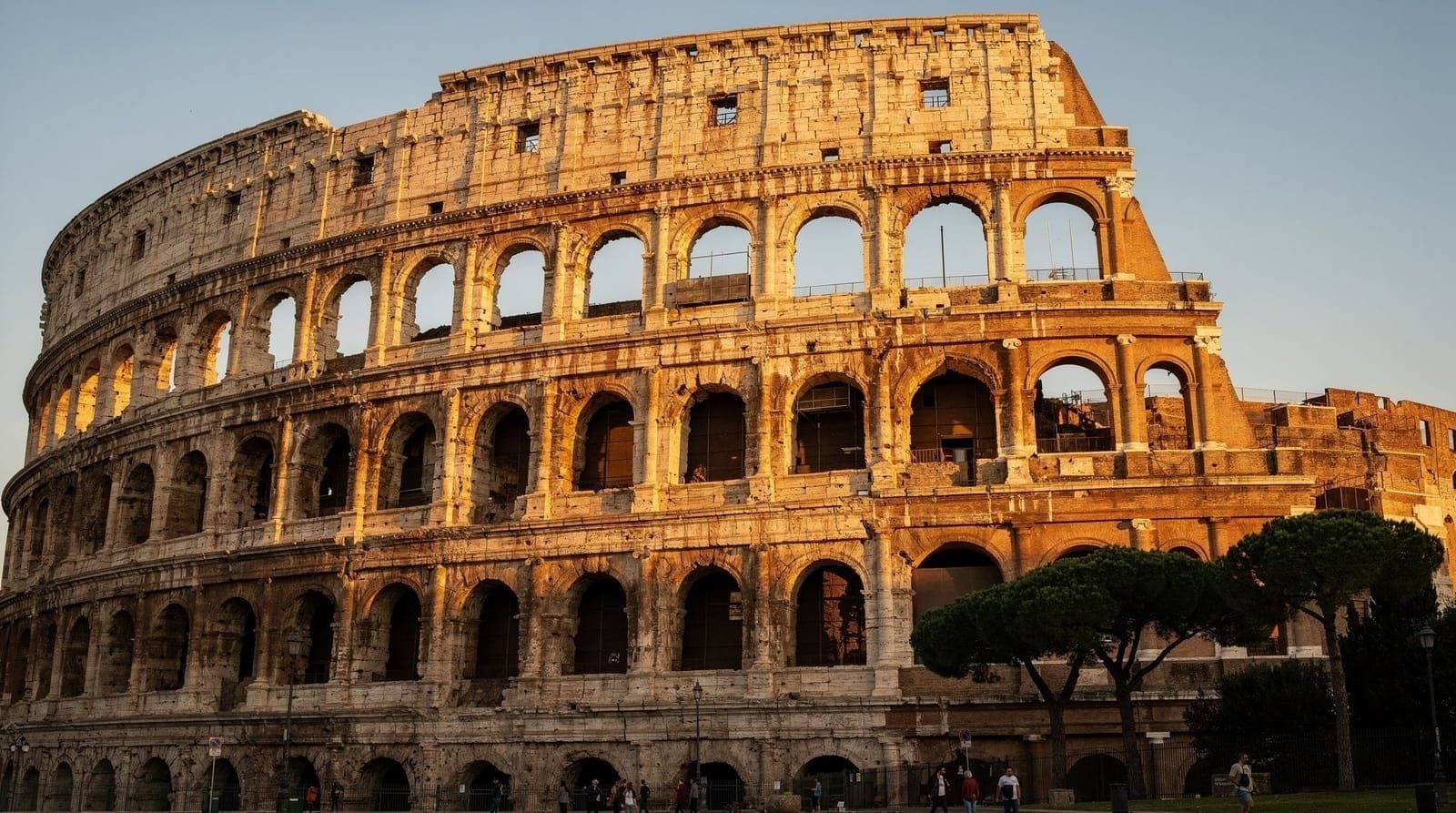
Rome: Guided Tour of Colosseum, Roman Forum & Palatine Hill
Is Palatine Hill worth visiting?
Yes — and it is consistently the most undervisited of the three sites on the combined ticket. The Farnese Gardens terraces offer the best elevated view of the Roman Forum anywhere. The Palatine Museum houses original Augustan-era frescoes. And the hill is quieter than both the Colosseum and Forum. Budget 45–60 minutes here after visiting the Forum.
The hill that everyone has a ticket to but few actually explore
Palatine Hill is included in the same ticket as the Colosseum and Roman Forum — and yet the majority of visitors spend less than 20 minutes here, drifting through the Farnese Gardens and exiting toward the Circus Maximus. This is one of Rome’s more consequential missed opportunities.
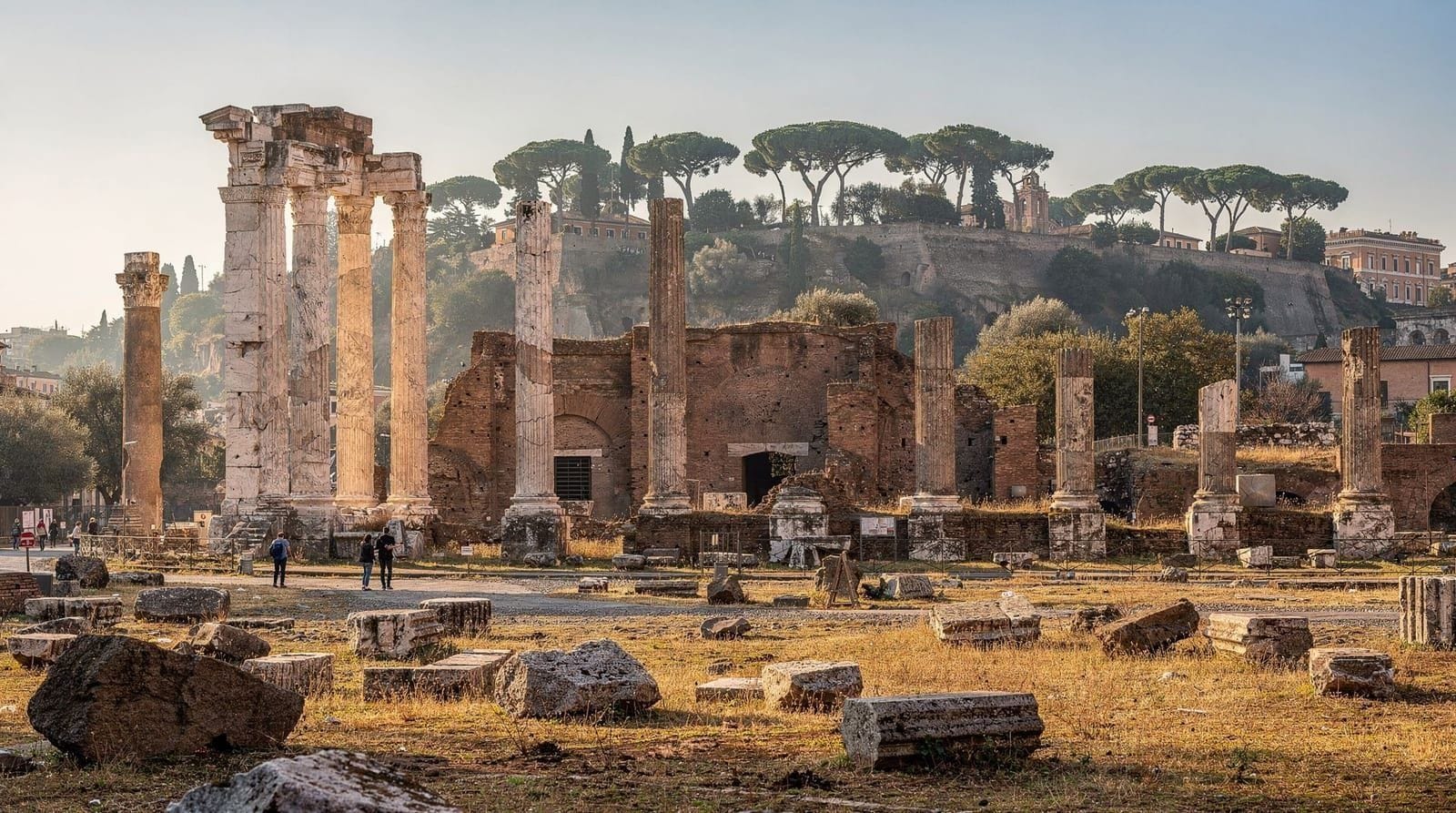
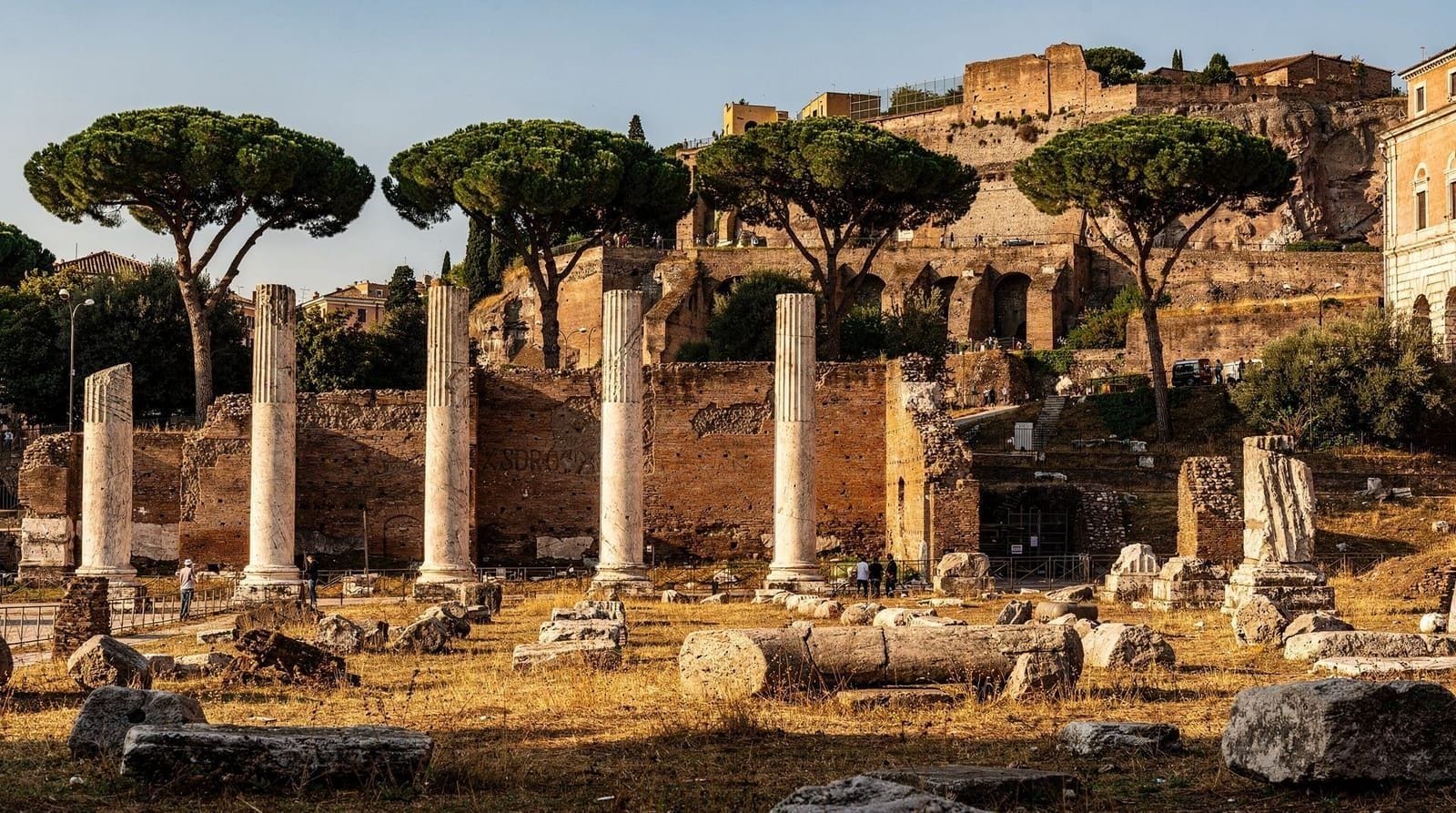
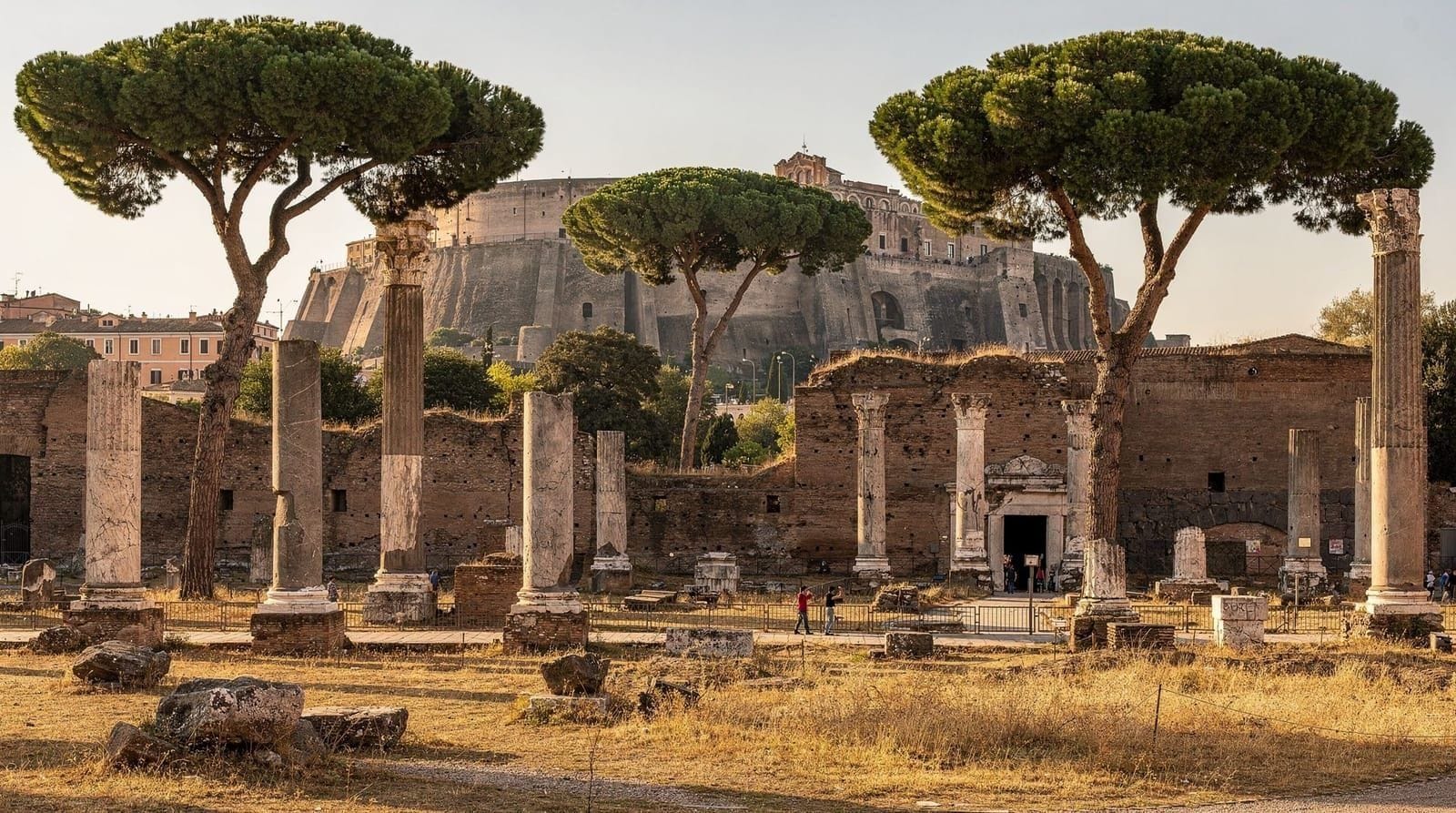
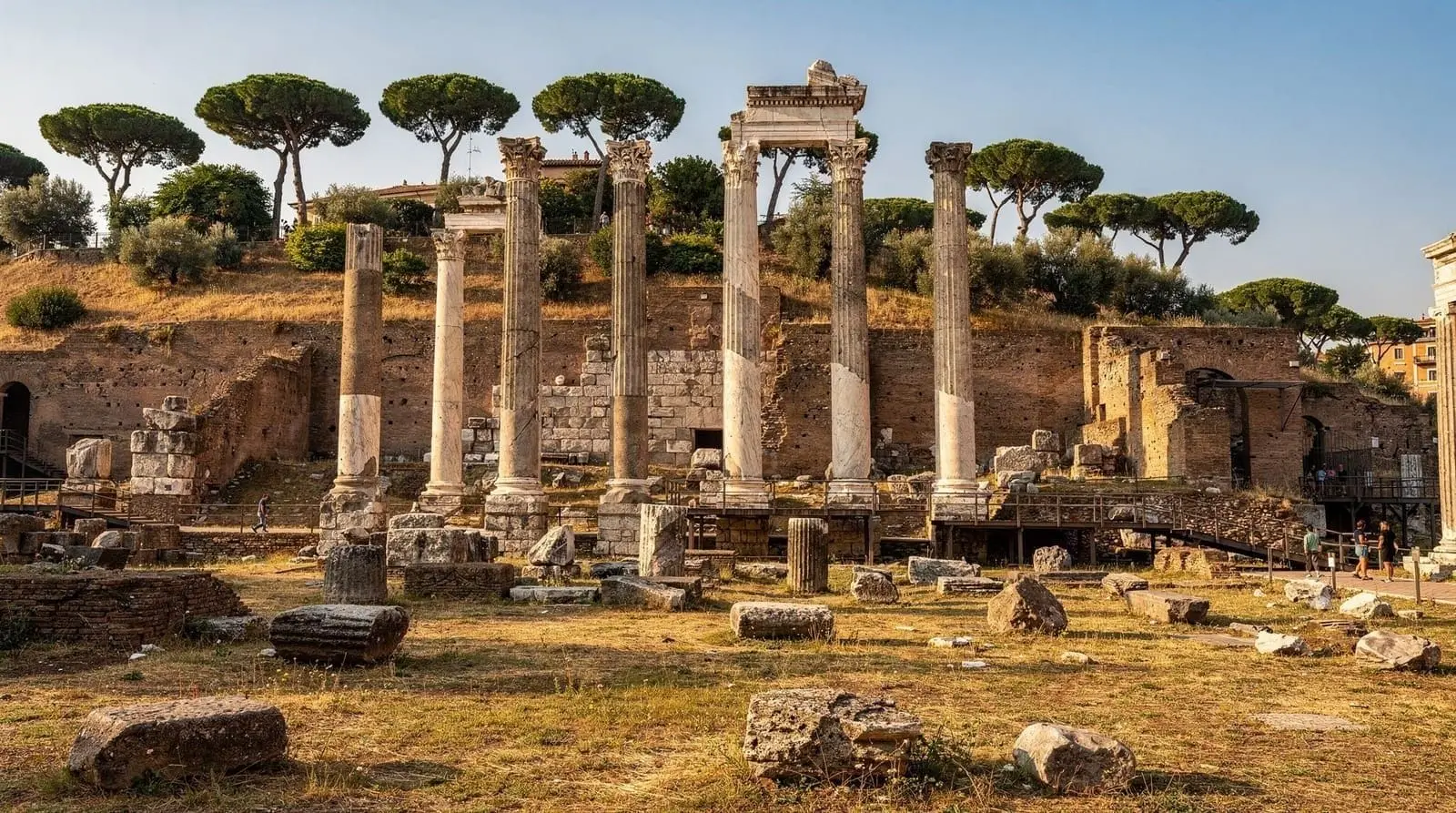
The hill is Rome’s oldest continuously inhabited site, the location of the Imperial Palace that coined the word “palace,” and the source of the most dramatically beautiful views of the Roman Forum available anywhere. It is also significantly quieter than the Forum floor below — particularly in peak season, when the Forum can feel crowded and loud.
| Included with | Colosseum + Roman Forum combined ticket |
| Time needed | 45–75 minutes |
| Best view | Farnese Gardens northern terrace, morning light |
| Crowds | Noticeably quieter than the Forum or Colosseum |
| Don’t skip | Palatine Museum’s Augustan frescoes |
Why Palatine Hill is historically significant
It is where Rome began. Archaeological evidence confirms continuous habitation on Palatine from at least 1000 BCE. The traditional date of Rome’s founding in 753 BCE is associated specifically with Palatine — Romulus supposedly drew the initial boundary furrow here. The Lupercal cave, where legend says the she-wolf nursed Romulus and Remus, was on the southwestern slope (it was rediscovered archaeologically in 2007, though the site is not yet open to the public).
The word “palace” comes from this hill. Palatium — the Latin name for the hill — became the word for any large residence of a ruler. By the time of the Empire, virtually the entire hill was consumed by the overlapping imperial residences: Domus Augustana and Domus Flavia (both parts of the Palace of Domitian, completed around 92 CE), plus earlier structures from Augustus and Tiberius.
Augustus lived here. The house of Augustus (Casa di Augusto) and the adjacent house of Livia (his wife) are on the northern slope of Palatine. The frescoes in Augustus’s private study chambers — discovered in the 1960s — are among the finest surviving examples of 1st-century BCE Roman painting. They are extraordinary: delicate architectural perspectives, fantastical architectural frames, and painted garden scenes that still read as fresh.
What to see: the main areas
The Farnese Gardens (Orti Farnesiani)
The Farnese Gardens were created in the 16th century by Cardinal Alessandro Farnese on top of the ruins of the Palace of Tiberius. They became the first botanical garden in Europe. The terraced formal garden with clipped box hedges, fountains and a central oval basin creates a startling juxtaposition with the ancient ruins below.
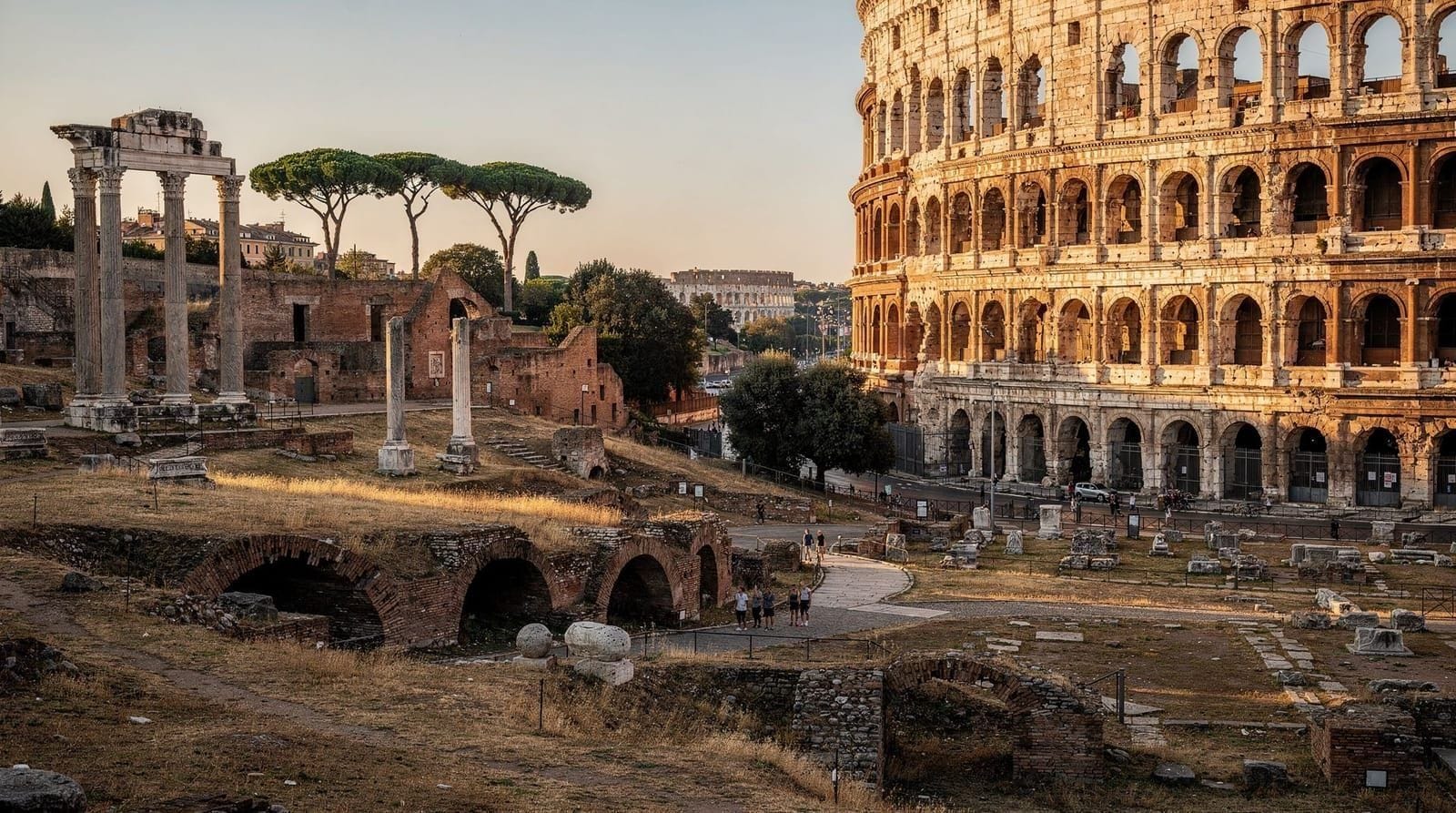
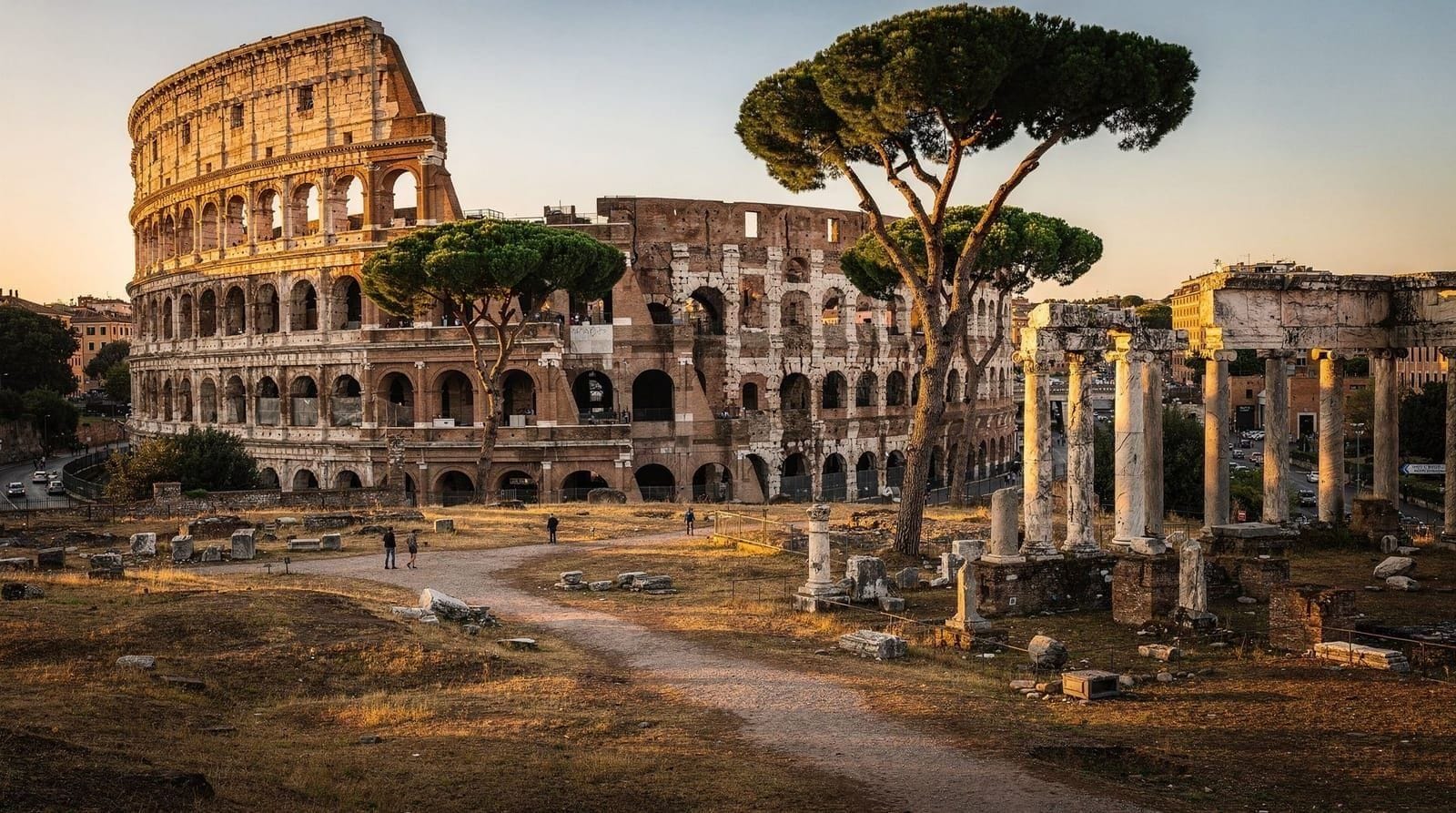
The terraced lookout points at the northern edge are the main reason to be here: looking north from the Farnese Gardens, the entire Roman Forum is laid out below you — Temple of Saturn at left, Arch of Septimius Severus, the Curia, the Basilica of Maxentius at right, and the Colosseum beyond. This is the best vantage point in the entire complex and costs nothing extra (it is inside the combined ticket area). Come here first thing in the morning for the cleanest light, or late afternoon when the golden light rakes across the Forum ruins.
Palace of Domitian: Domus Flavia and Domus Augustana
Domitian’s palace complex, completed 92 CE, covered the southern half of the hill. It comprised the Domus Flavia (public rooms, throne room, banqueting hall) and the Domus Augustana (private residential quarters of the emperor).
The Domus Flavia’s basilica, triclinium (dining room) and peristyle are visible as low wall foundations. The triclinium looked out over two nymphaeum gardens with elaborate fountain systems — the oval basin in one of them is largely intact.
The Domus Augustana is better preserved: the multi-storey residential block with its sunken private garden (a sunken courtyard roughly 100m long, with a central ornamental pool) gives a clear sense of imperial residential scale. The palace had over two storeys on this side, looking down toward the Circus Maximus.
The Stadium of Domitian (private hippodrome)
Adjacent to the Domus Augustana is a long oval structure (approximately 160m long) that resembles a stadium but was not a public racing venue. It was a private garden in hippodrome form — likely used for equestrian exercise, private games, or simply as a large sculptured garden. The shape is intact and immediately legible from above. At one end, a curved imperial box (kathisma) survives in fragmentary form.
Palatine Museum (Museo Palatino)
The museum building houses the most important portable finds from the hill: the frescoes from the house of Augustus (vivid, delicate, barely visible in photographs but extraordinary in person), Augustan-era floor mosaics, early Imperial bronzes and sculptural fragments. The museum is included in the combined ticket and takes 20–30 minutes.
Most visitors skip it entirely. This is a mistake, particularly if you have any interest in Roman decorative arts. The Augustus room with its painted architectural perspective walls is as close as you can get in Rome to experiencing what a wealthy Roman’s private space actually looked like.
House of Augustus and House of Livia
The Casa di Augusto and Casa di Livia are on the northwestern slope of Palatine, slightly below the Farnese Gardens. Opening hours are limited — typically weekends only — and access requires a timed sub-ticket (included in the combined ticket on applicable dates). Check the coopculture.it booking site when planning your visit.
The painted rooms in the House of Augustus include the “Room of Perspective Paintings” (elaborate fictive architectural views), the “Room of the Pine-Garlands” (painted festoons) and the “Study of Augustus” (smaller room with mythological scenes). These are among the most fragile and best-preserved ancient paintings in Rome.
The views: where and when
Farnese Gardens northern terrace — best panoramic Forum view in the entire complex. Morning light (facing east-southeast). Midday is harsh; late afternoon is warm and beautiful.
Domus Augustana eastern wall — looking toward the Colosseum. Good for photographs of the Colosseum’s southern face from an unusual angle.
Capitoline Hill connection — the western end of the Forum connects to Palatine via a path near the Tabularium. From the Capitoline Museums terrace (separate ticket — see our Capitoline Hill guide) you look down at both the Forum and the western end of the Palatine.
How to visit Palatine Hill within the combined ticket
Palatine Hill allows multiple re-entries on the same day using the combined ticket. The Colosseum is single-entry only.
Practical route suggestion:
- Enter the Colosseum complex at your reserved slot (eastern entrance).
- After the Colosseum, walk through the connecting passage to the Roman Forum.
- Walk Via Sacra west to east or east to west, spending 90 minutes in the Forum.
- Take the footpath up to Palatine (signposted from the Forum floor near the Temple of Vesta).
- Visit the Farnese Gardens terraces for the view, the Domus Augustana sunken garden, and the Palatine Museum.
- Exit either via the Via Sacra exit (back toward the Colosseum) or via the Circus Maximus exit on the southern slope.
Total visit time for all three sites: 3.5–4.5 hours depending on depth of engagement.
A licensed guided tour covering all three sites gives the historical narrative that transforms these ruins from confusing to coherent — especially valuable for the Palatine’s complex imperial strata.The Palatine through Rome’s history: from Romulus to Mussolini
The hill’s historical layers do not stop at the Imperial period. After the fall of Rome, Palatine became monastery gardens and private vineyards through the medieval period. Pope Paul II’s Farnese family acquired the northern part of the hill in the mid-16th century — which is how the Farnese Gardens came to be built on top of Tiberius’s palace. The gardens were excavated by archaeologists from the 1860s onward, when the Italian state purchased the hill.
Mussolini ordered extensive new excavations on the Palatine in the 1930s as part of his programme to invoke ancient Rome for nationalist purposes — the same period that created Via dei Fori Imperiali (originally Via dell’Impero) by demolishing medieval buildings. Some of the 1930s excavations were sloppy by modern standards; they uncovered structures but also destroyed stratigraphic context that would now be considered essential.
The archaeology of the Palatine continues today. The ongoing excavation of the Lupercal cave on the southwestern slope — the legendary she-wolf den of Romulus and Remus — represents one of the most significant pending archaeological discoveries in Rome. Announced in 2007 after ground-penetrating radar identified a cavity, the site has not yet been formally opened due to structural concerns and ongoing analysis.
What makes the Palatine frescoes special
The frescoes preserved in the House of Augustus are technically and historically extraordinary. They date from the late 1st century BCE — Augustus’s own lifetime — and represent the so-called “second Pompeian style” of Roman wall painting.
This style is characterized by painted trompe-l’oeil architecture: the wall surface is painted to look like a window into another space — columns, pergolas, balconies, garden landscapes seen through fictive openings. The painter creates an illusion of architectural depth on a flat surface, a technique that requires considerable spatial reasoning and technical skill to execute convincingly.
The specific rooms in Augustus’s study chambers use a particularly refined version of this technique. The Room of the Pine-Garlands uses restrained decorative bands; the Room of Perspective Paintings creates elaborate architectural vistas that effectively double the apparent size of small rooms. These techniques directly influenced Renaissance trompe-l’oeil ceiling painting — the relationship between Augustus’s private rooms and Raphael’s early Vatican ceiling frescoes is traceable through the documented visits of Renaissance artists to Palatine.
Augustus the man, not the emperor
The House of Augustus — his personal residence before he assumed the title “Augustus” in 27 BCE — is more modest than you might expect for the man who became effectively the first Roman emperor. It lacks the scale of Domitian’s later palace on the same hill. This restraint was deliberate political communication: Augustus presented himself not as a monarch (a despised concept in Roman republican tradition) but as a citizen of exceptional virtue.
His private quarters are small. The study rooms where the best frescoes survive are intimate spaces, not throne rooms. The adjacent Temple of Apollo (traces of which survive on the hill) was attached to his personal residence, creating a direct physical link between his household and the state religion — an innovation that later emperors exploited far more aggressively.
Understanding this restraint makes Domitian’s later decision to consume the entire hill with a palace the size of a small city read correctly: it was not business as usual, it was a rejection of the Augustan model of leadership.
Practical tips
Shade and heat: Palatine Hill has more tree cover than the Forum floor, making it significantly more tolerable in summer. If visiting in July or August, consider doing Palatine first (cooler), then the Forum, then the Colosseum.
Crowds: Palatine is noticeably quieter than both the Colosseum and Forum. If you need a quiet moment in the middle of a busy day, the Farnese Gardens bench area is often calm even in peak season.
Accessibility: The main paths are paved but have gradients. Some areas have gravel or original stone surfaces. The Palatine Museum is accessible. The House of Augustus sub-site has limited accessibility.
Photography: The Farnese Gardens terrace is the best photo spot in the entire combined complex. No tripods without permit. The Palatine Museum prohibits flash photography; some rooms prohibit photography altogether — check signs at each room entrance.
Time allocation: Visitors who rush through Palatine in 20 minutes miss both the view and the museum. Allow at minimum 45 minutes; 60–75 if you want to absorb the Augustan frescoes properly.
Toilets and water: Facilities are available near the Palatine Museum and at the Circus Maximus exit; there are no facilities near the Farnese Gardens terrace itself, so plan accordingly if you are spending an extended period at the viewpoint. Refill water bottles before climbing up from the Forum, especially in summer.
Where most people enter from: Most visitors reach Palatine via the footpath from the Forum floor near the Temple of Vesta, meaning they arrive already partway through their ancient-Rome visit and somewhat fatigued. If your energy allows, consider a brief pause at a bench before tackling the Farnese Gardens climb, rather than pushing straight through.
The Romulus and Remus legend in physical context
The Palatine Hill is where the founding myth of Rome is physically located. The story of Romulus and Remus — twin sons of Mars, abandoned by their great-uncle Amulius, suckled by a she-wolf in the Lupercal cave, raised by a shepherd named Faustulus — is one of the most persistent founding narratives in Western culture.
Its importance for a visitor to Palatine Hill is not whether it is historically true (it is clearly legend, though it may contain kernels of real memory) but rather what it communicates about Roman self-understanding. The Romans placed their founding on this specific hill, at this specific location, with these specific divine and animal associations — and then built over it repeatedly, maintaining continuity through memory rather than physical preservation.
The Lupercal cave specifically (on the southwestern slope, near the House of Augustus) was honoured through the historical period. The February festival of Lupercalia — in which young men ran through the city striking bystanders with goat-hide thongs to ensure fertility — was conducted from the Lupercal cave. It was one of the oldest Roman festivals, maintained well into the Christian period.
The rediscovery of a cavity matching ancient descriptions of the Lupercal in 2007, using ground-penetrating radar, created significant archaeological excitement. The cavity has a domed ceiling decorated with shells, mosaics, and a white eagle at the apex — which matches descriptions of an imperial-era renovation of the sacred cave. Excavation and structural stabilization continue.
The Republican Palatine: before the emperors
Most visitors — and most guides — focus on the Imperial Palatine: Domitian’s palace, Augustus’s house, the Farnese Gardens. The Republican Palatine, which predates these constructions, is physically less visible but equally important.
The Palatine in the Republic (roughly 500–31 BCE) was the most prestigious residential district in Rome — the Beverly Hills of the ancient city. The most famous Republican-era resident was Cicero, who owned a house on the northern slope at enormous cost (he paid 3.5 million sestertii — roughly equivalent to hundreds of millions of euros in modern purchasing power, according to some economic historians). The house no longer exists, but the slope where it stood is visible from the Farnese Gardens terrace.
Other notable Republican residents included Mark Antony (whose house was eventually demolished by Augustus to extend his own property), Crassus, Pompey’s associates, and multiple consular families. The hill was already densely built over before Augustus began consolidating property.
Augustus’s genius — characteristically for him — was acquiring the Palatine gradually and presenting the consolidation as modest civic virtue rather than the imperial land grab it actually was.
For the full ancient Rome day plan, see our ancient Rome in one day guide.
This skip-the-line ancient Rome tour covers the Colosseum and Forum complex with a guide — a good option when you want reliable entrance priority across all three sites.Palatine Hill and the rest of ancient Rome
Palatine Hill does not stand alone — it is the connective tissue between several of Rome’s essential ancient sites, and understanding those connections helps decide how much time to give it. To the north, the Roman Forum is the civic counterpart to Palatine’s residential and imperial story; the two sites share a single ticket and a single physical boundary, and most visitors move between them in one continuous visit. To the south, the Circus Maximus — visible from the Domus Augustana’s southern terraces — was the emperors’ private grandstand onto the largest entertainment venue in the ancient world, a relationship that is far easier to grasp once you’ve stood on the Palatine looking down at it. For a broader view of how these sites fit into the sweep of Roman power, our Roman Empire explained and Rome history guide provide the political context behind why an emperor needed a hill this large in the first place.
If you’re deciding how to allocate a full day among the Colosseum, Forum and Palatine, and whether to add the Baths of Caracalla or the Capitoline Hill on a second imperial-Rome day, our colosseum tickets guide covers the booking mechanics that apply across all of these combined-ticket sites.
Frequently asked questions
Can I visit Palatine Hill without visiting the Colosseum or Forum?
Not really as a practical matter — Palatine Hill is sold only as part of the combined ticket that also covers the Colosseum and Roman Forum; there is no standalone Palatine-only ticket. You can, however, choose to spend the bulk of your time on Palatine and treat the Colosseum and Forum as shorter visits, which is a perfectly reasonable way to prioritise if the imperial residential story interests you more than the arena or civic centre.
Is the House of Augustus always open?
No — access is limited, typically to weekends, and via a timed sub-ticket that is not guaranteed on every combined-ticket date. Check coopculture.it before your visit if seeing the Augustan frescoes in the House of Augustus specifically (rather than the reproductions and related finds in the Palatine Museum) is a priority, and have the museum as a reliable backup since it holds original frescoes from the same era regardless of the house’s opening schedule.
Top experiences
Bookable activities with verified prices and instant confirmation on GetYourGuide.