Rome sunrise and sunset spots: where and when for the best light
Vespa Sidecar Tour: Highlights of Rome
Where should I watch the sunrise and sunset in Rome?
Sunrise: Gianicolo Hill (facing east over the whole city), Giardino degli Aranci on the Aventine, Ponte Sant'Angelo (catching the early light on Castel Sant'Angelo). Sunset: Pincio terrace above Piazza del Popolo (faces west, perfect for the dome panorama), Gianicolo again (faces east but the sky behind you glows), and the rooftop of the Vittoriano. Each requires specific positioning and early arrival to avoid crowds.
Light is the variable that changes everything
The same location in Rome looks radically different depending on when you visit. The Pincio terrace — the classic panoramic viewpoint above Piazza del Popolo — is a tourist scrum at 14:00 in July and genuinely magical at 19:00 in May when the setting sun lights every dome on the horizon to burnished gold. Ponte Sant’Angelo is average in overcast midday light and extraordinary at dawn when the eastern sky turns to blush pink behind the Castel Sant’Angelo.
This guide is specifically about timing. Most travel advice tells you where to go; this guide tells you exactly when to be there — with local sunrise/sunset times by month, specific golden-hour windows, and honest assessments of how long you have before each spot fills with people.
| Spot | Best for | Faces | Cost |
|---|---|---|---|
| Gianicolo Hill | Sunrise | East/northeast | Free |
| Giardino degli Aranci | Sunrise (near-solitude) | East | Free |
| Pincio terrace | Sunset | West/southwest | Free |
| Ponte Sant’Angelo | Dawn and blue hour | East-west aligned | Free |
| Roman Forum terrace | Dusk/golden hour | East over the Forum | Capitoline Museums ticket, or free from Via del Monte Caprino |
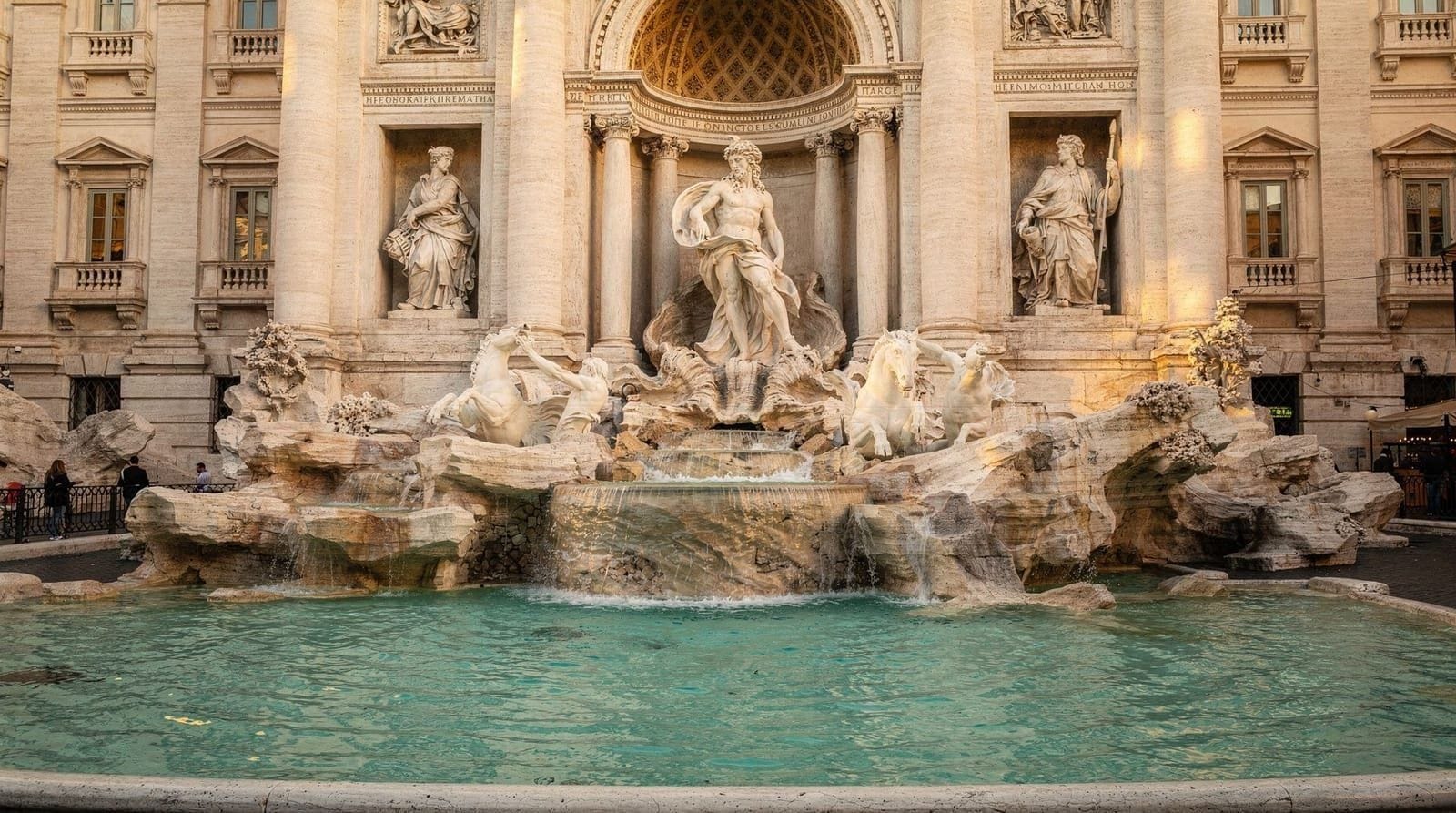
| Trevi Fountain | Blue hour | South (flat at dawn) | Free |
| Vittoriano rooftop | Sunset, 360° panorama | All directions | €7 |
Understanding Rome’s light quality
Rome’s light has particular characteristics that photographers prize. The city sits at 41.9° north latitude, which means the sun is never quite directly overhead — the shadows are always somewhat angled, even at noon in summer. The travertine limestone and tufa stone that dominate Roman architecture warm rapidly in morning and late-afternoon sun, glowing amber and terracotta in ways that no amount of post-processing can fully replicate.
The city also has a microclimate effect: autumn and spring often bring a light ground haze or mist in the early morning, particularly near the Tiber, that adds atmospheric depth to long-lens shots. Clear winter days offer the best long-distance visibility — the Alban Hills and occasionally the Apennines are visible from Gianicolo on clear December mornings.
The worst light quality falls between roughly 10:00 and 16:00 in summer — flat, overhead, bleaching white marble to grey and washing out the warm terracotta tones entirely. Anything you can do to shift your photography toward the edges of the day will dramatically improve your results.
Gianicolo Hill: Rome’s best sunrise viewpoint
The Gianicolo (Janiculum) is the hill above Trastevere, on the western side of the Tiber, and it offers the best true sunrise panorama in Rome. The main terrace — near the equestrian statue of Giuseppe Garibaldi — faces almost directly east and northeast, looking across the entire city spread below: from the Vittoriano monument on the left, through the Forum and Palatine area, to the distant Castelli Romani hills on the horizon.
At sunrise the low eastern sun illuminates the entire city from behind you, casting warm light across the rooftops and warming the ochre and terracotta of the city’s facades. In the city below, the streets are still in shadow — the light catches the tops of buildings and monuments first before gradually filling in. This high-contrast moment, roughly 10–20 minutes after sunrise, gives the most dramatic quality of light of the day.
Practical details: the hill is accessible by bus 870 or 115 from Trastevere, or a 20-minute walk from the Porta San Pancrazio. The terrace is a public park, open all hours, free. At sunrise in spring and summer you may share it with a few early joggers but rarely any tourists. By 09:30 the weekend crowds begin; by 10:30 on a summer Sunday it is busy. The cannon firing at noon (every day since 1847) is audible throughout the city.
Secondary subject on the way up: the Fontana dell’Acqua Paola on Via Garibaldi, a massive Baroque fountain with a wide basin and triple-arched structure. In morning light with the eastern sun reflecting off the water, this is one of Rome’s less-photographed but highly photogenic monuments.
Giardino degli Aranci: sunrise on the Aventine
The Garden of the Oranges (Giardino degli Aranci) on the Aventine Hill is a small public park that opens at dawn and offers an eastern terrace looking toward the Circus Maximus area. It is significantly less well-known than Gianicolo — you may genuinely be alone at sunrise in all but peak summer weeks.
The orange trees are the key feature: in spring (late March through April) they are in fragrant white blossom, creating a framing element of extraordinary delicacy against the distant rooftops. In autumn the oranges ripen to bright orange against dark green foliage — also striking. Even without the seasonal element, the terrace gives a clear view toward the Palatine and Caelian hills, with the dome of Sant’Alessio visible in the mid-ground.
From the Giardino, it is a 5-minute walk to the Aventine keyhole (Piazza dei Cavalieri di Malta), though the keyhole view works better in mid-morning light than at dawn. See our Aventino neighborhood guide for the full circuit of Aventine attractions.
Best season: April for blossom, October for ripe oranges. Best time: 06:00–08:00 for near-total solitude.
Pincio terrace: the sunset panorama
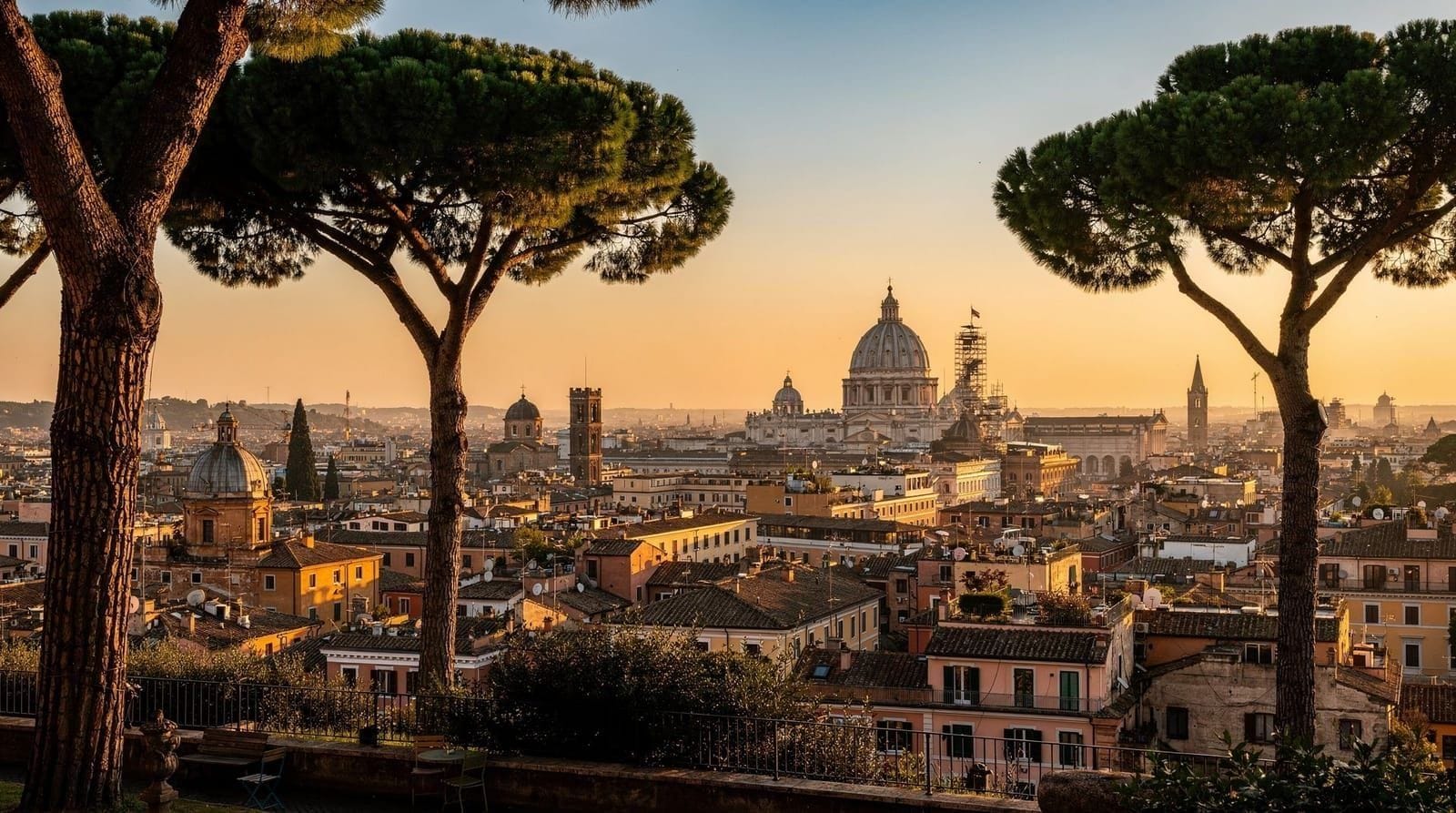
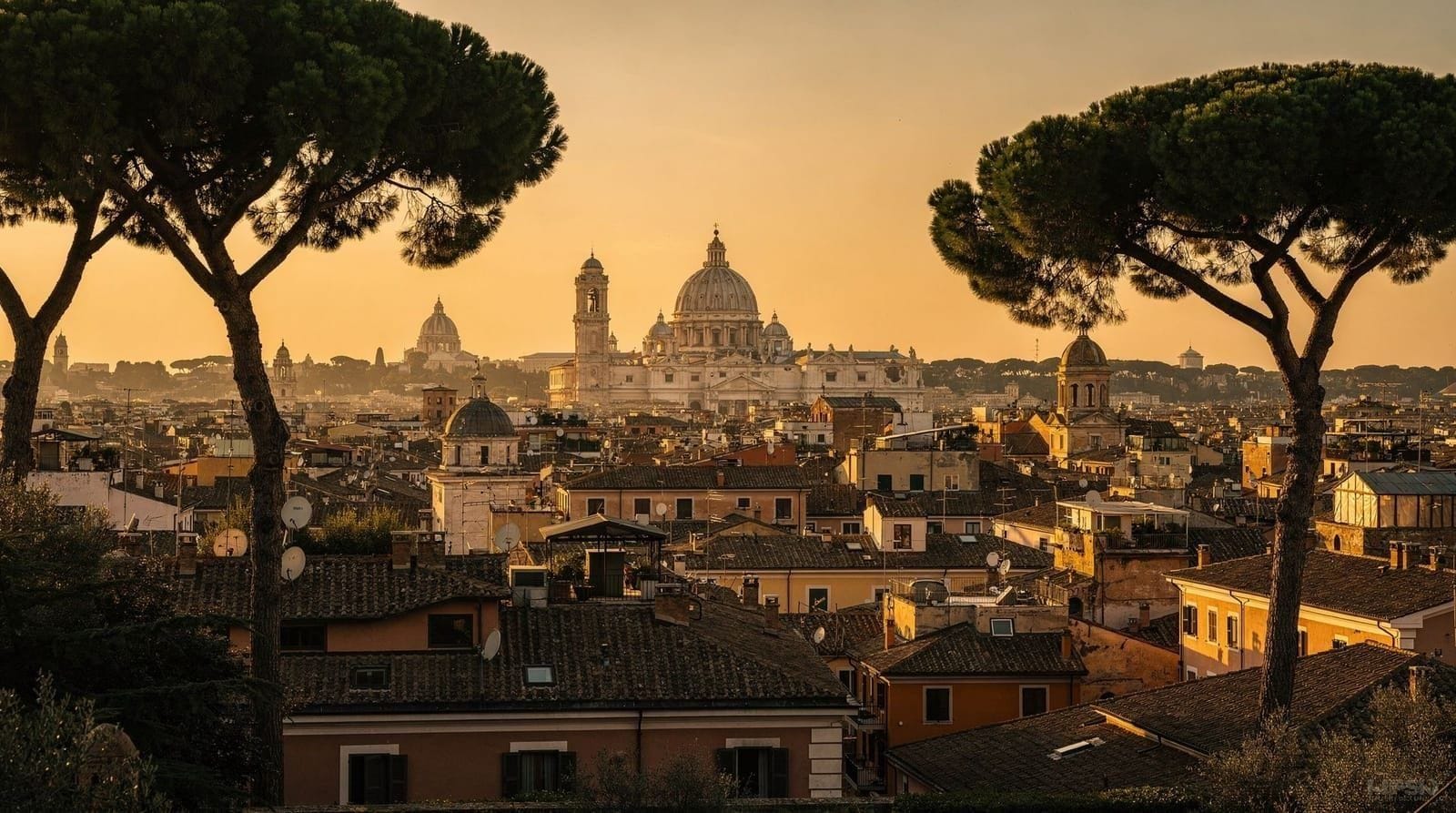
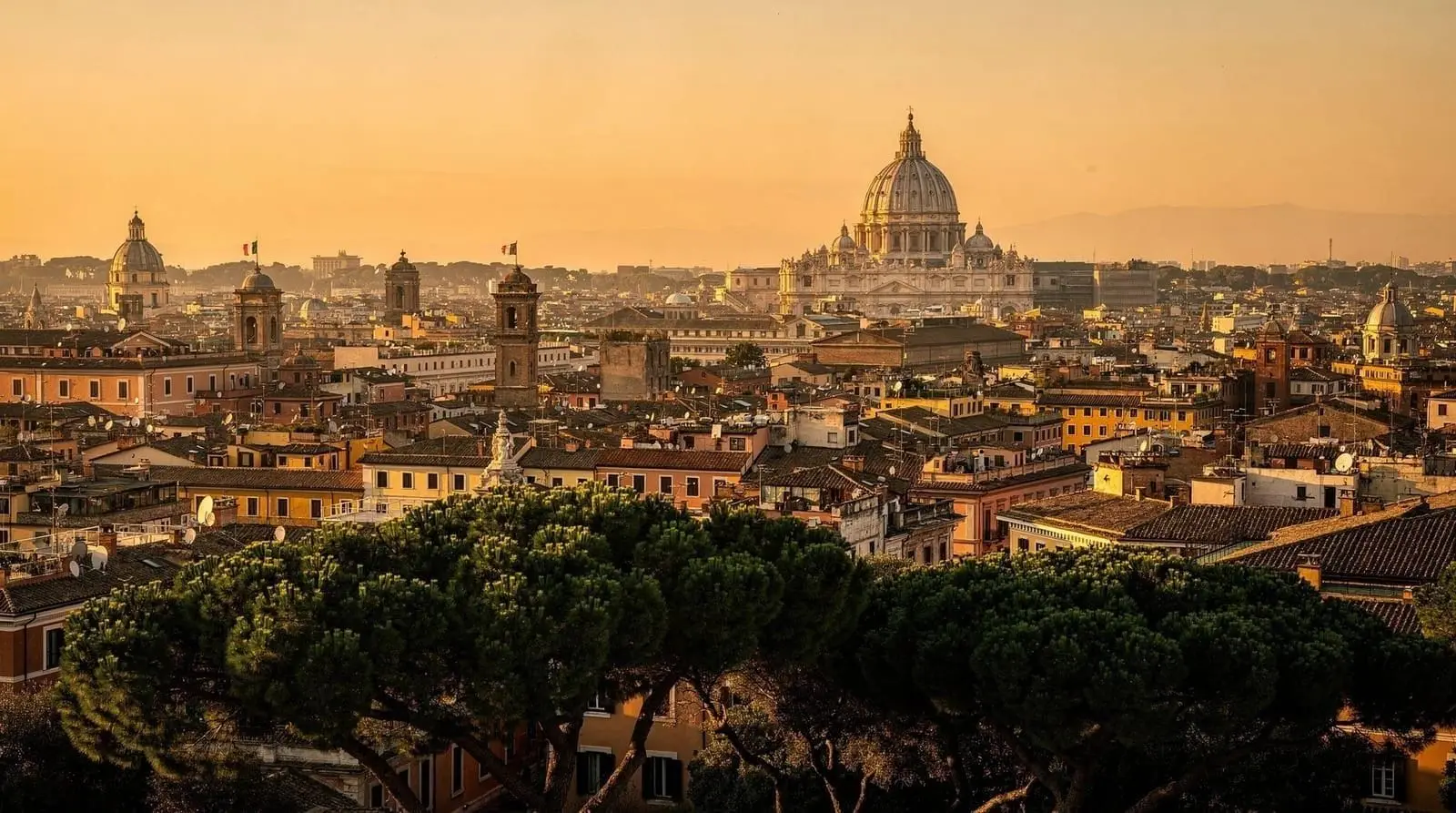
The Pincio terrace is the definitive sunset viewpoint in Rome. There is genuinely no competition for the combination of accessibility, visual drama and compositional elegance. Standing at the main balustrade at the rear of the Pincian Hill park (above Piazza del Popolo), you look west and southwest across a dense roofline at the dome of St. Peter’s rising above everything else, flanked by the domes of Sant’Agnese, Sant’Andrea della Valle and a dozen smaller church tops. The obelisk in Piazza del Popolo below is directly in the foreground of the most classic composition.
In the final 30–40 minutes before sunset the light turns amber, then deep orange-gold, falling directly onto the dome clusters. The sky behind them, depending on cloud cover, can go from pale yellow to deep crimson. Even on a clear day without dramatic clouds, the warmth of the light transforms the cityscape. In blue hour (20–30 minutes after sunset), the sky deepens to indigo while the city lights come on below — a different but equally compelling shot.
Crowds: the Pincio is one of Rome’s most popular sunset spots and fills up noticeably from about 18:00 in summer. Claim your position by 18:30–19:00 for a sunset at roughly 20:15 (June). In autumn and winter, sunset is earlier and crowds are smaller — late October can give you a spectacular golden sunset from the terrace with very manageable numbers. Go on a weekday in October if possible.
Access: from Piazza del Popolo via the ramp on the east side, from Villa Borghese via the main garden paths, or by taxi/bus to the Museo Carlo Bilotti on Viale dell’Aranciera. Free, all hours.
A Vespa sidecar highlights tour that sweeps through Rome’s main viewpoints — including the Gianicolo area and the Pincio — in the afternoon, ending in time to watch the city transition to golden hour at the classic panoramic spots.Ponte Sant’Angelo: dawn and blue hour
Ponte Sant’Angelo — the ancient pedestrian bridge across the Tiber built by Hadrian — is at its most photogenic at the extremes of the day. The bridge is aligned roughly east-west, which means it catches the early morning light from the east (warming the Castel Sant’Angelo facade and the angel sculptures at dawn) and the evening light from the west (backlighting everything dramatically at sunset and golden hour, with the sky glowing behind the Castel).
Dawn, specifically the window from civil twilight (about 30 minutes before sunrise) through the first 20 minutes after sunrise, is the ideal time for several reasons. The bridge is empty or nearly so. The sky transitions from deep blue through lavender to pink and orange. The Castel Sant’Angelo, still fully illuminated by its night lighting, is caught in a moment of perfect exposure balance against the dawn sky — warm artificial light on the stone against cool natural light in the sky above.
At blue hour (20–30 minutes after sunset), the bridge is illuminated and the Castel is floodlit, creating the classic warm-against-deep-blue image. The difficulty is that the bridge becomes busy in the evening hours — finding a clear shooting position with no other tourists visible requires patience or significant post-processing. Arriving at the start of blue hour, before the evening crowds peak, gives the best chance of a clean composition.
See our Centro Storico neighborhood guide for how to combine Ponte Sant’Angelo with the surrounding Castel area.
The Roman Forum terrace at dusk
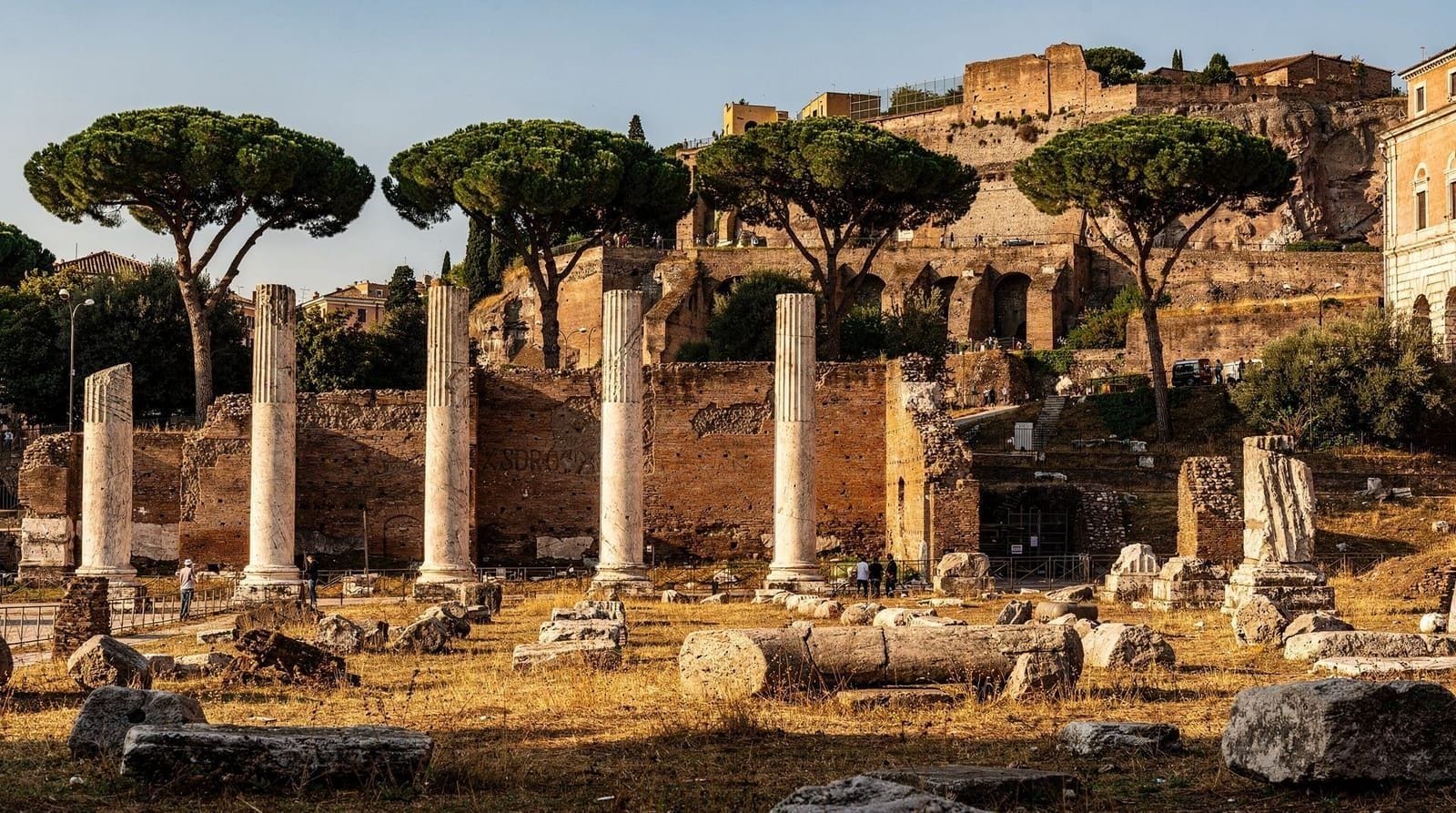
This is less well known as a sunset spot, but the terrace above the west end of the Roman Forum — accessible via the Capitoline Museums (ticket required) or from the free path off Via del Monte Caprino on the south side of the Capitoline — offers a direct view eastward over the Forum ruins toward the Colosseum. In the late afternoon golden hour, the low-angled western sun illuminates the ancient columns and arches from behind you, catching every fragment of travertine and turning the entire site amber.
The famous columns of the Temple of Saturn (eight standing columns at the western Forum end) are particularly photogenic in this light — their dark grey granite shafts and white marble capitals at the top catch the warm light dramatically. From the terrace above, looking east, you see the Forum floor stretching into the distance with the Arch of Titus at the far end and the Colosseum behind it.
The best time is the final 45–60 minutes before sunset, when the sun is low enough to enter the east-west axis of the Forum. In summer this means 19:00–20:15; in autumn 17:00–18:30. The Roman Forum guide has full details on the site and the viewpoints within and around it.
Trevi Fountain: blue hour over dawn
For the Trevi Fountain specifically, blue hour after sunset gives better results than dawn — but you need to get there early to claim a position. The fountain faces roughly south, which means it does not catch direct sunrise light well (it is in shadow early in the morning from the north). At dawn the fountain is empty and beautiful in a quiet way, but the light is flat and indirect.
Blue hour — the 20–30 minutes after sunset — transforms the Trevi. The deep blue sky above the Baroque facade, the warm flood lights illuminating the sculptures, and the lit green-blue pool all work together in a way that daytime never achieves. The optimal position is from the small set of steps to the right of the main viewing area, slightly elevated, looking southwest — this gives the classic three-quarter view of the facade with the sky above.
The challenge is claiming this position. During summer, the Trevi area is crowded until after midnight. Arrive at least 30 minutes before blue hour begins (i.e. 30 minutes before sunset) and secure a position. A compact gorilla pod propped against the step railing allows a slow shutter speed that smooths the water surface. See our Trevi Fountain guide for additional context on the fountain’s history and logistics.
An evening guided walk taking in the Spanish Steps, Trevi Fountain, Piazza Navona and the Pantheon at sunset and into blue hour — the best way to experience these spaces in their most photogenic light without navigating the crowded streets alone.Piazza del Popolo and the twin churches at dusk
Piazza del Popolo — the large oval piazza at the northern end of the Centro Storico — is overlooked as a photography location compared to the Pincio above it, but the piazza itself has its own compositional strengths. The twin Baroque churches of Santa Maria dei Miracoli and Santa Maria in Montesanto, which frame the entrance to the three roads radiating south into the city, are best photographed from the north end of the piazza in the late afternoon golden hour, when the light falls on their west-facing facades. The Egyptian obelisk at the centre provides a vertical element.
At blue hour the churches light up and the piazza empties slightly after the late-afternoon tourist peak, giving better compositional flexibility. The fountain on the north side of the piazza, with the mountain lion sculptures, photographs well in low light. See our Centro Storico guide for the full neighbourhood context.
Seasonal light: when each spot is best
April and May offer the best combination in Rome: light quality is excellent, daylight lasts until 20:00–20:30, morning temperatures make early starts comfortable, and spring flowers appear in parks and on balconies. The Rome in spring guide covers the full seasonal picture.
October is arguably the best single month for photographers: the city is less crowded than summer, the autumnal light is particularly warm and directional, and sunset falls early enough (18:30–19:00) to combine with an evening in the city without a 05:30 alarm. The colours on trees in Villa Borghese and along the Tiber add seasonal interest.
Winter (December–February) offers two advantages: crowds are minimal and winter sunsets in Rome are often spectacular, with the low sun angle at its most dramatic and the atmospheric clarity at its best. The Rome in winter guide covers what to expect.
Drones and tripod restrictions
Drone flights are effectively banned across central Rome — the historic centre sits within restricted airspace tied to the Vatican and government buildings, and unauthorised flights risk confiscation and fines. Do not plan a drone shot at any of the spots above; it is not a grey area, it is enforced. Standard tripods are permitted in public parks and on bridges (Gianicolo, Pincio, Ponte Sant’Angelo) but are increasingly restricted inside paid archaeological sites and museum-adjacent terraces — check signage, and default to a compact gorilla pod or mini-tripod, which draws no attention and works at every spot in this guide.
Equipment and logistics quick notes
Bring layers even in summer — the early mornings at the Gianicolo and Pincio can be noticeably cooler than daytime. A compact gorilla pod or mini-tripod fits in a daypack and is useful at Ponte Sant’Angelo and the Trevi at blue hour without attracting attention. Charge your camera the night before: batteries drain faster in cool dawn temperatures.
The Rome aperitivo and nightlife guide covers what to do in the city after blue hour once you have your sunset shots in the bag — Rome transitions into aperitivo hour around 18:00–19:00 and the streets around Trastevere and Monti fill with a very different energy.
Combining viewpoints with a paid rooftop
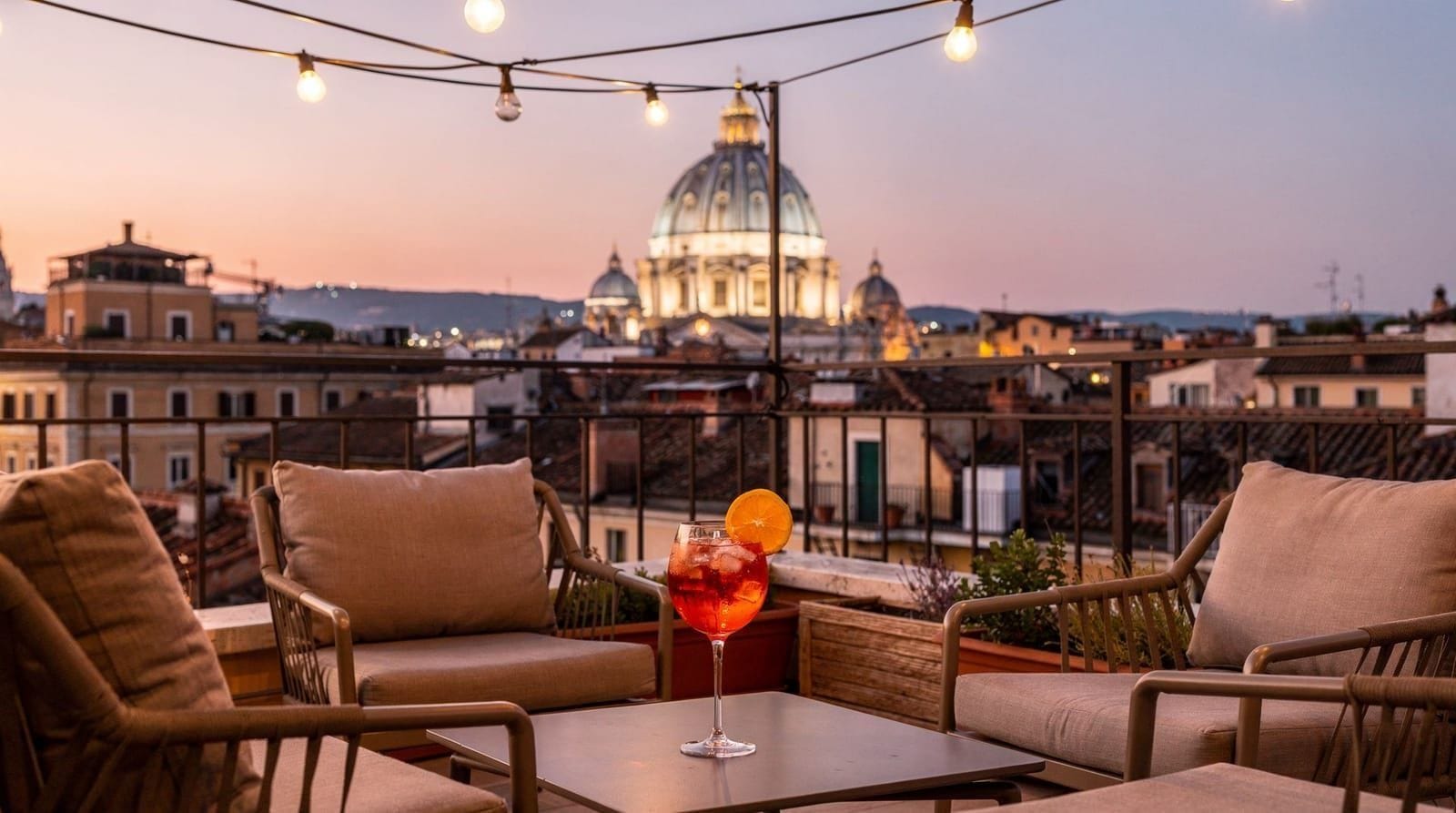
If a free public terrace isn’t dramatic enough, several of Rome’s rooftop bars occupy positions that rival the free viewpoints above with the added comfort of a table and a drink. The Rome rooftop bars guide covers pricing and which terraces face the right direction for sunset — a genuine complement to this guide for travellers who want the golden-hour view without standing at a public railing. For general orientation on which viewpoints suit which part of a Rome itinerary, the best photo spots guide and Rome Instagram spots guide cross-reference many of the same locations from a daytime photography angle.
Frequently asked questions about Rome sunrise and sunset spots: where and when for the best light
What time is sunrise and sunset in Rome by month?
Is the Pincio terrace better for sunrise or sunset?
Can you watch the sunset from inside the Colosseum?
What is the Giardino degli Aranci and why is it good for sunrise?
Is the Vittoriano rooftop worth visiting for sunset?
Where is the best blue-hour spot in Rome?
Do I need to pay to access any of these sunrise/sunset viewpoints?
Top experiences
Bookable activities with verified prices and instant confirmation on GetYourGuide.