Carbonara and cacio e pepe: where to eat Rome's iconic pastas
Rome: Fresh Pasta-Making Class with Italian Chef and Wine
Where is the best carbonara and cacio e pepe in Rome?
For carbonara: Flavio al Velavevodetto in Testaccio or Roscioli near Campo de' Fiori. For cacio e pepe: Da Enzo al 29 in Trastevere or Tonnarello. Both dishes require reservations at the best spots — book at least a week ahead for dinner.
Why these two dishes deserve their own guide
Carbonara and cacio e pepe are Rome’s two most imitated, most misunderstood and most frequently ruined pasta dishes. They’re also two of the most satisfying things you can eat in the city when they’re done correctly. The gap between a proper version and a tourist-trap approximation is enormous — and both dishes are deceptively simple-looking, which encourages corners to be cut.
This guide gives you the technical understanding of what makes each dish work, tells you what bad versions look and taste like, and lists the specific restaurants in Rome that consistently get both dishes right.
| Best carbonara | Flavio al Velavevodetto (Testaccio) or Roscioli (Centro Storico) |
| Best cacio e pepe | Da Enzo al 29 or Tonnarello (both Trastevere) |
| Typical price | Around €14-18 per dish at a serious trattoria |
| Booking | 1-3 weeks ahead for dinner at the best-known addresses |
| Avoid | Anywhere within sight of the Colosseum, Trevi or Vatican offering photo-menu pasta |
Carbonara — the technical reality
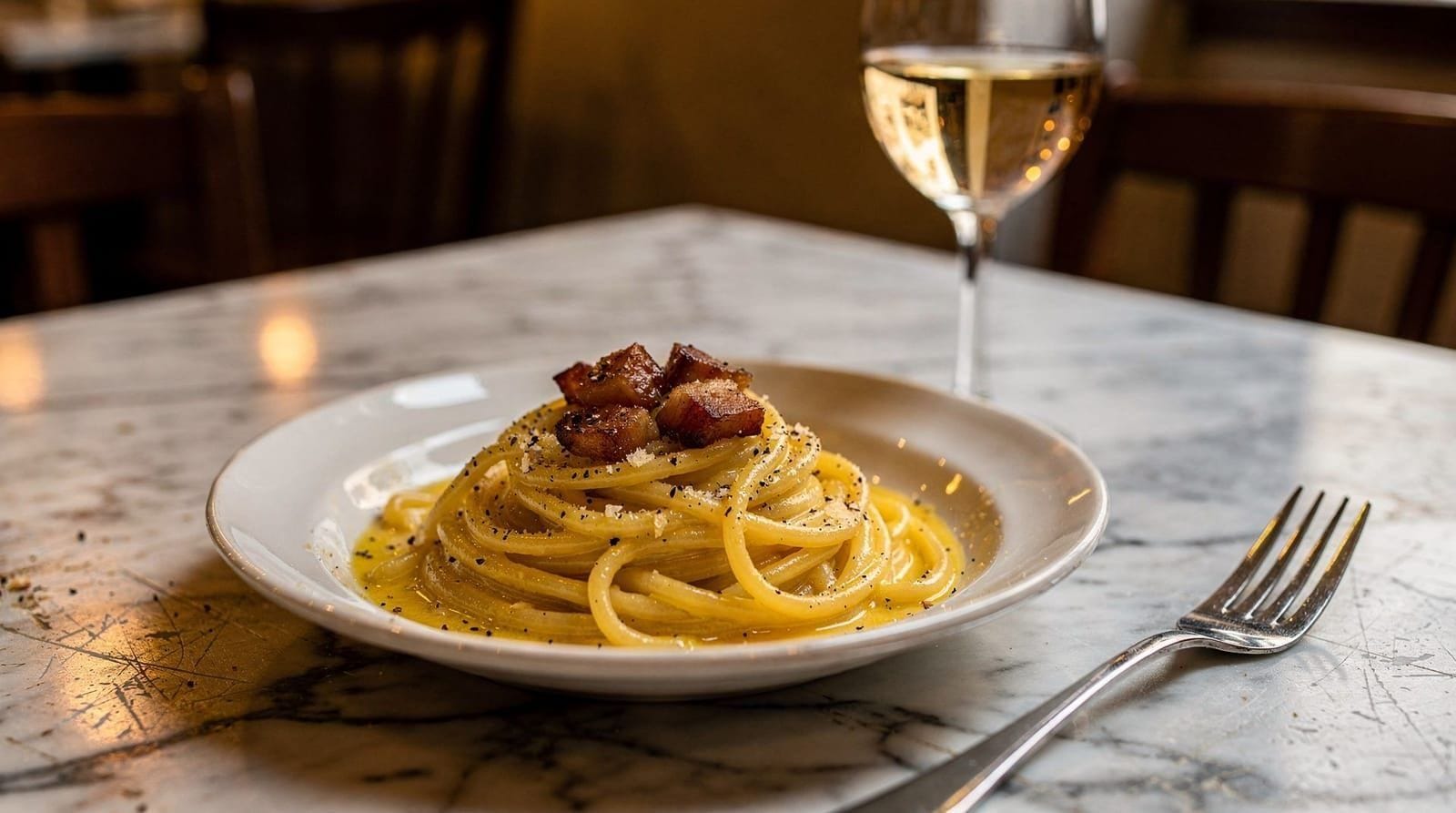
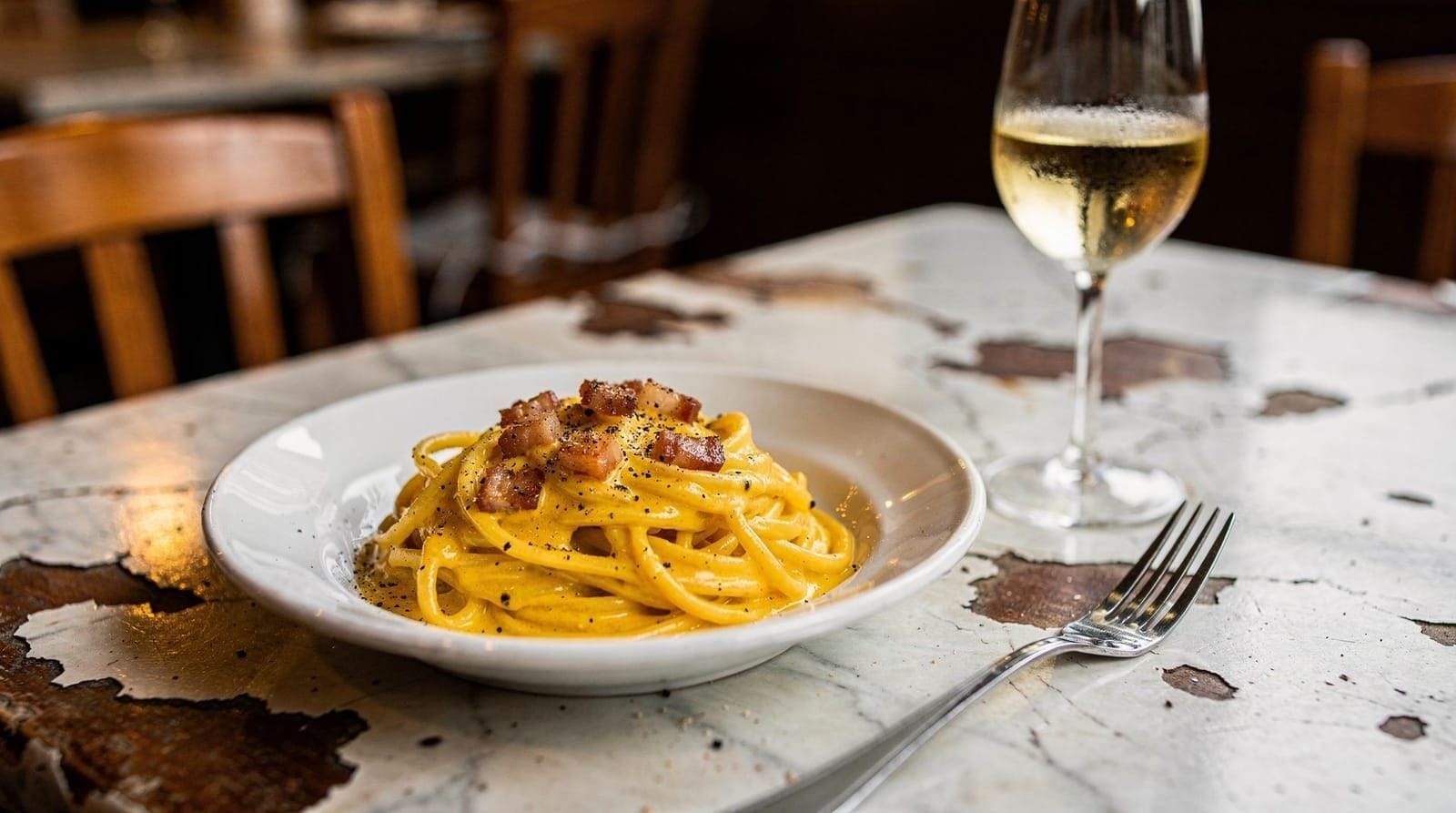
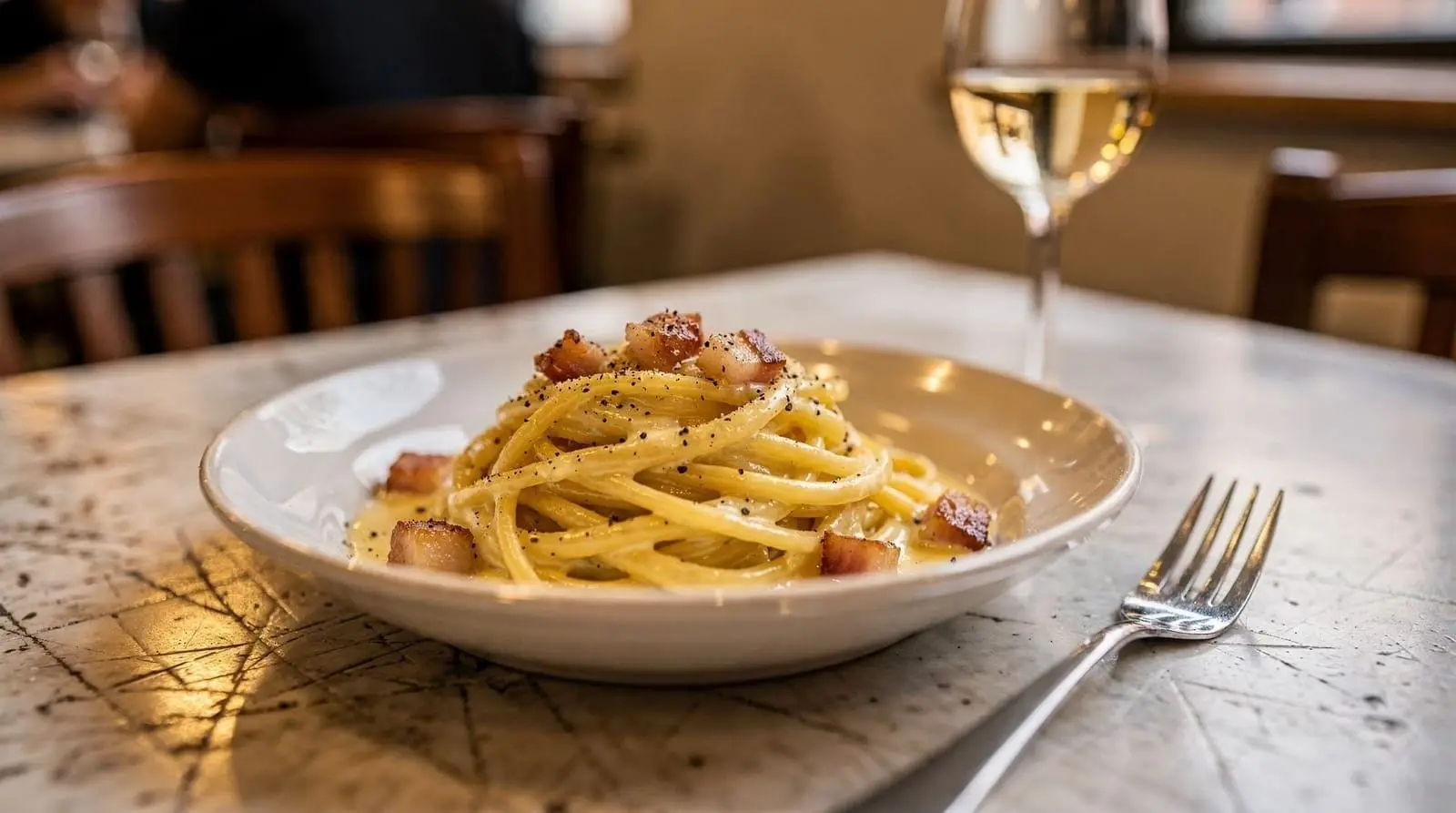
Carbonara is three things working together: guanciale (cured pork cheek), egg yolk and pecorino romano (sheep’s milk cheese), bound with pasta starchy water and seasoned with black pepper. The pasta shape is traditionally rigatoni or spaghetti alla chitarra.
The chemistry: when the egg yolk contacts the hot guanciale fat and starchy pasta water at the right temperature (around 65°C — hot enough to thicken the yolk proteins, cool enough to avoid scrambling them), it forms a smooth, glossy emulsion that coats the pasta. This is not a metaphor: carbonara sauce is technically an emulsion in the same way as mayonnaise or hollandaise.
What goes wrong:
- Cream: A kitchen that can’t control the temperature adds cream to stabilize the sauce. The result is richer, heavier and clearly different from the egg-yolk version. Not a disaster, but not carbonara.
- Overheating: The egg yolk scrambles. You get carbonara with egg curds. Some restaurants try to hide this with extra cheese.
- Wrong fat: Pancetta or bacon substituted for guanciale. The fat structure and flavor are both wrong.
- Wrong ratio: Too much egg yolk makes it cloying; too little and the sauce is thin. A good version has about one large yolk per 100g of pasta.
Recognizing a good version: The sauce should be glossy and fluid enough to pool slightly in the bowl — not gluey, not runny. The guanciale pieces should be irregular strips of rendered fat with a slightly crispy edge. Black pepper should be visibly present, freshly cracked, not dusty pre-ground. The flavor should be rich, peppery and slightly sharp from the pecorino — not dairy-mild.
Cacio e pepe — simpler and harder
Cacio e pepe has two active ingredients (pecorino romano and black pepper) and one technical requirement (starchy pasta water). No fat, no protein, no additional flavors. This makes it both the most accessible-sounding Roman pasta and the hardest to execute correctly in practice.
The emulsion problem: Pecorino romano has high protein content. When added to water that’s too hot, the proteins seize and the cheese clumps — you get a grainy, lumpy mess rather than a smooth sauce. When added to water that’s too cool, the cheese won’t melt properly. The starch from the pasta water acts as an emulsifier, binding cheese and water into a cohesive sauce. Getting the temperature and starch concentration right takes experience.
What goes wrong:
- Gluey or lumpy texture: The temperature was wrong or the pasta water wasn’t starchy enough.
- Floury taste: Some kitchens add a little flour to help the emulsion. Wrong.
- Butter or cream: Added to stabilize or enrich the sauce. Common in tourist-facing restaurants. Changes the flavor significantly.
- Pre-ground pepper: Black pepper should be freshly cracked — the volatile oils in fresh-cracked pepper are part of the dish’s character.
Recognizing a good version: The sauce should coat the pasta smoothly without lumps or graininess. The pepper should be visible in flecks and taste sharp and aromatic. The overall flavor should be sharp, salty and peppery — not mild or creamy.
Where to eat carbonara in Rome
Flavio al Velavevodetto — Testaccio
Via Monte Testaccio 97
The consistent local recommendation for technically correct carbonara. The version here uses rigatoni and arrives glossy and peppery, with irregular strips of rendered guanciale that still have some texture. The kitchen works at high volume for a Roman trattoria and maintains quality across services.
Practical details: Book ahead — minimum a week for dinner, preferably more. Lunch is easier to walk in for on weekdays. Coperto €2, carbonara €15. Closed Sunday evening.
Roscioli — near Campo de’ Fiori
Via dei Giubbonari 21
The most serious version in central Rome. Roscioli uses a high yolk ratio and very good guanciale from a named producer; the carbonara is made with attention to ingredient quality that most trattorias don’t replicate. The result is richer and more complex than a standard version.
Worth noting: Roscioli is also a deli and wine bar, not just a restaurant. Eating at the deli counter (rather than the restaurant tables) gets you slightly faster service for lunch. The cheese and cured meat selection is worth exploring in itself.
Practical details: Book in advance for the restaurant; the deli counter takes walk-ins. Budget €18-22 for the carbonara alone, €45-60/person for a full meal. The wine list is extensive and good.
Tonnarello — Trastevere
Via della Paglia 1-2
Larger and louder than either of the above, without the same level of ingredient sourcing. But the carbonara is honest, made correctly, and you can usually get a table with less advance planning. Good for a reliable version without the wait.
Practical details: Tables on the alley when weather permits. Carbonara €14. Wine list is short and functional.
Da Enzo al 29 — Trastevere
Via dei Vascellari 29
Better known for cacio e pepe (see below), but the carbonara here is also correct. The restaurant is small (about 30 covers) and very well regarded, which means limited availability. The menu changes seasonally.
Where to eat cacio e pepe in Rome
Da Enzo al 29 — Trastevere
Via dei Vascellari 29
The most consistent cacio e pepe in the city by consensus among food-aware Rome visitors. Small room, limited menu, serves the Trastevere community as much as visitors. The tonnarelli cacio e pepe is technically correct — smooth, sharp, peppery, no cream or butter. The coperto and pasta price (€14-16) reflect a serious restaurant, not tourist-level pricing.
Practical details: Book two to three weeks ahead for dinner. Lunch reservations are easier. Cash only. Closed Sundays.
Tonnarello — Trastevere
Via della Paglia 1-2
The gricia on tonnarelli pasta is the highlight here but the cacio e pepe is also reliable — the same pasta shape used for the dish it’s named after. Large portions, honest prices, no reservation required for early lunch or early dinner.
Roscioli — near Campo de’ Fiori
The same restaurant mentioned for carbonara also does a precise cacio e pepe. If you’re going to Roscioli, order one or the other — both deserve attention.
Armando al Pantheon — Centro Storico
Salita dei Crescenzi 31
A family restaurant with an unusually good location (near the Pantheon but not a tourist trap). The cacio e pepe is correctly made; the coperto and pasta prices are fair for the central location. Book ahead — the room is small and well known among food-conscious visitors.
Comparing the five addresses at a glance
| Restaurant | Neighborhood | Best dish | Booking lead time | Price range |
|---|---|---|---|---|
| Flavio al Velavevodetto | Testaccio | Carbonara | ~1 week (dinner) | €15 pasta |
| Roscioli | Centro Storico | Both | Several days-1 week | €18-22 pasta |
| Da Enzo al 29 | Trastevere | Cacio e pepe | 2-3 weeks (dinner) | €14-16 pasta |
| Tonnarello | Trastevere | Both (honest, no fuss) | Same day-few days | €14 pasta |
| Armando al Pantheon | Centro Storico | Cacio e pepe | Few days | Mid-range |
If you only have time for one meal, pair it with a walk through Testaccio or an evening in Trastevere so the trip does double duty. For a wider view of where Rome eats well beyond these two dishes, our Rome street food guide and testaccio food guide cover the rest of the map, and the trastevere food guide does the same for that side of the river.
The cooking class option — learn the technique
Understanding the temperature control and emulsion science of carbonara and cacio e pepe by cooking them yourself is the fastest path to appreciating what the best restaurants are doing. Rome’s pasta-making classes are genuinely good:
A hands-on fresh pasta class with an Italian chef — covers technique, sauce science and the differences between Roman pasta dishes, followed by eating what you’ve made with wine. Pasta-making class near the Pantheon — multiple shapes and sauces covered in an afternoon session, with wine throughout and a complete meal at the end.The ingredient guide — sourcing matters
Both dishes depend heavily on ingredient quality. Here’s what to look for and what it means when a restaurant gets it right.
Guanciale
The best guanciale in Rome comes from a handful of artisan producers in Lazio and Abruzzo — the regions with a long tradition of cured pork production. A well-made guanciale has been cured for a minimum of 90 days, is lightly peppered on the outside, and has a fat layer that’s at least 60-70% of the total cut.
When you see guanciale on a plate, it should look like irregular strips of fat-heavy pork — pale, translucent where rendered, slightly golden at the edges. If you see uniform pink cubes, you’re looking at pancetta. If you see brown, crispy, bacon-like pieces, you’re looking at either over-cooked guanciale (less common) or bacon (more common).
Some Romans use a blend of guanciale and pancetta for carbonara when making it at home — a legitimate domestic shortcut. At a restaurant presenting itself as a serious trattoria, there’s no excuse.
Pecorino romano
Pecorino romano (DOP) is produced primarily in Sardinia, with some production in Lazio and Tuscany. It’s a hard, white sheep’s milk cheese aged for at least 5-8 months — much saltier and sharper than Parmesan. The salt content (up to 7% in some production runs) is part of why carbonara and cacio e pepe don’t need additional salt in the recipe.
Good pecorino romano is available at Roscioli’s deli counter, Mercato di Testaccio and any serious alimentari (grocery store) in Rome. The blocks sold in vacuum packaging at tourist food shops are not always the same quality.
Some chefs use a 50/50 blend of pecorino romano and Parmesan for carbonara — this softens the saltiness and adds a sweeter, nuttier note. Neither version is wrong; the pure pecorino version is sharper and more traditional.
Eggs
Most serious Roman restaurants specify the egg source for carbonara — either free-range (galline allevate all’aperto) or from named farms. The yolk richness and color (deep orange rather than pale yellow) affects both flavor and appearance.
Tourist-trap versions to recognize and avoid
The streets around the major monuments — the Colosseum, Trevi Fountain, Pantheon and Vatican — are ringed by restaurants where carbonara arrives with cream and cacio e pepe with a floury, gluey texture.
Signs of a bad carbonara: Pale yellow sauce that’s uniformly smooth and heavy (cream). Pancetta cubes that haven’t rendered properly. A dish that arrives at the table looking exactly like fettuccine Alfredo with some bacon in it. A sauce that tastes of dairy milk rather than egg yolk and sharp cheese.
Signs of a bad cacio e pepe: Gluey, clumped texture where the sauce is bunched around the pasta rather than coating it. A floury or starchy taste. No visible pepper. A sauce that looks grey-white rather than creamy-white.
Universal red flags in Rome restaurants: Photo menus with carbonara pictures outside the door, staff soliciting at the entrance, prices below €12 in a central location, English-only menu in a restaurant presenting itself as a traditional Roman address.
Historical context — briefly
Carbonara is a postwar dish. The most credible origin theory involves American GI rations (dried eggs, bacon) being adapted by Roman cooks using guanciale and pecorino. It became standardized as a Roman dish through the 1950s-60s. There is no cream in any version of the historical record. The first documented recipe for carbonara with cream appears in a 1970s American cookbook — that detail is telling.
Cacio e pepe is older. Documented Roman dishes of pasta with cheese and pepper appear in food writing from the medieval period onward. The current form with tonnarelli pasta and the emulsion technique is modern; the conceptual simplicity — two pantry ingredients making a complete sauce — is ancient. It may have origins in the food of shepherds who carried easily preserved goods (dried pasta, aged cheese, black pepper) on transhumance routes.
Both dishes are now protected by informal community standards — recipes are debated online and in print, restaurants are rated for technique, and a bad version is treated with something close to civic offense by food-aware Romans.
What to drink with either dish
Both dishes are rich and salty enough that a crisp, acidic white cuts through better than a heavy red. Frascati, the classic Castelli Romani white, is the traditional local pairing and it’s what most of the trattorias above pour by the glass or carafe. A dry Verdicchio or a simple Vermentino works just as well if Frascati isn’t on the list. If you’d rather drink red, keep it light and low-tannin — a Cesanese or a young Sangiovese won’t fight the dish the way a big Barolo would. Skip the temptation to order a heavy Amarone or a big oaked red “to match the richness” — the fat in guanciale and pecorino needs acidity, not more weight. Roscioli’s wine list is the strongest of the five for exploring this properly, with staff who can steer you toward the right glass if you ask.
Combining these dishes with a broader Rome food itinerary
The best approach to eating carbonara and cacio e pepe in Rome is to commit to one good version of each and understand it properly, rather than sampling five mediocre versions looking for the “best.”
Choose one restaurant for carbonara (Flavio al Velavevodetto if you can get a reservation; Tonnarello if you can’t), eat the carbonara with a secondi like abbacchio (Roman lamb) if you want the full Roman meal experience, and pay attention to what you’re tasting. The same approach applies to cacio e pepe at Da Enzo.
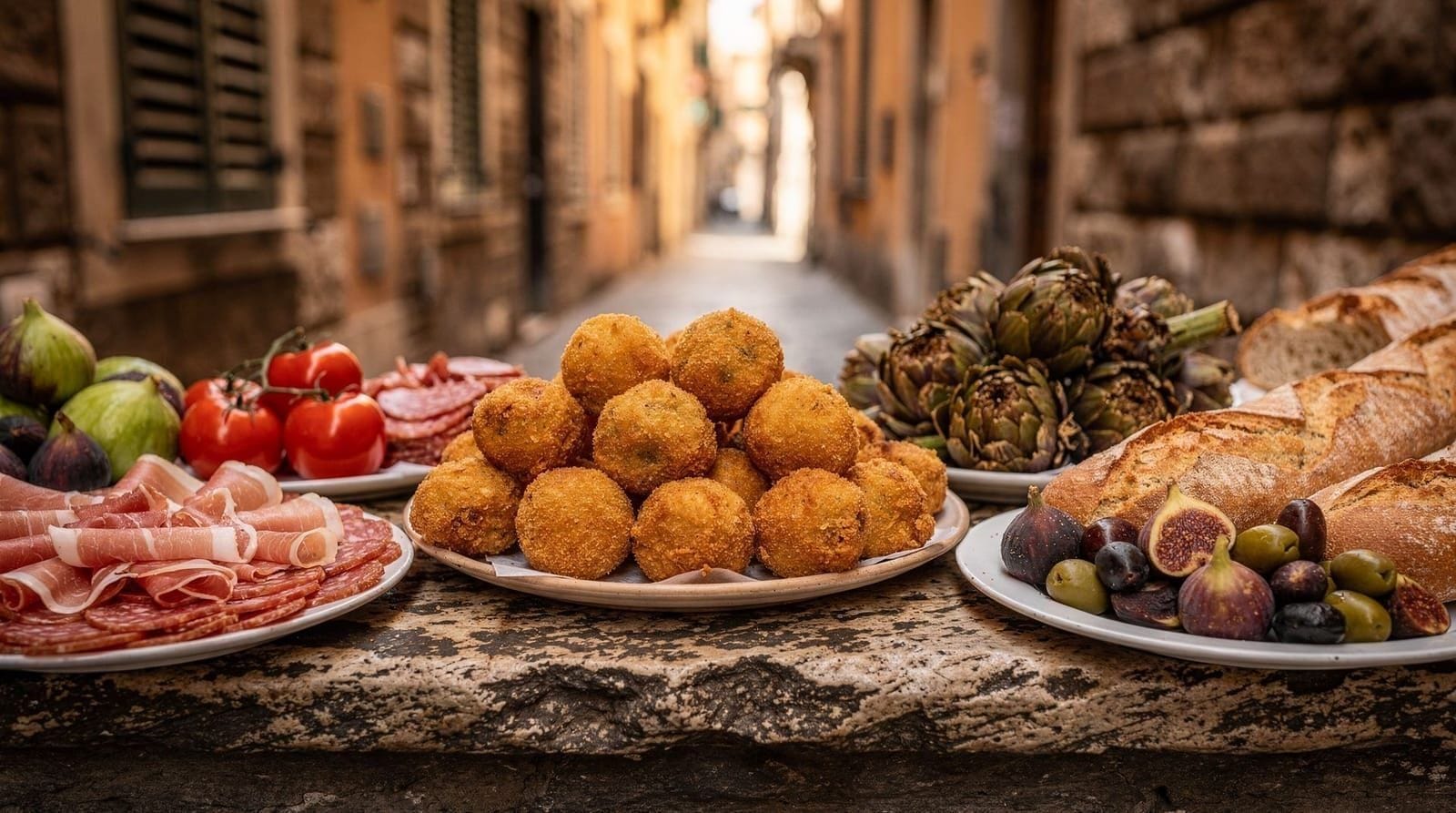
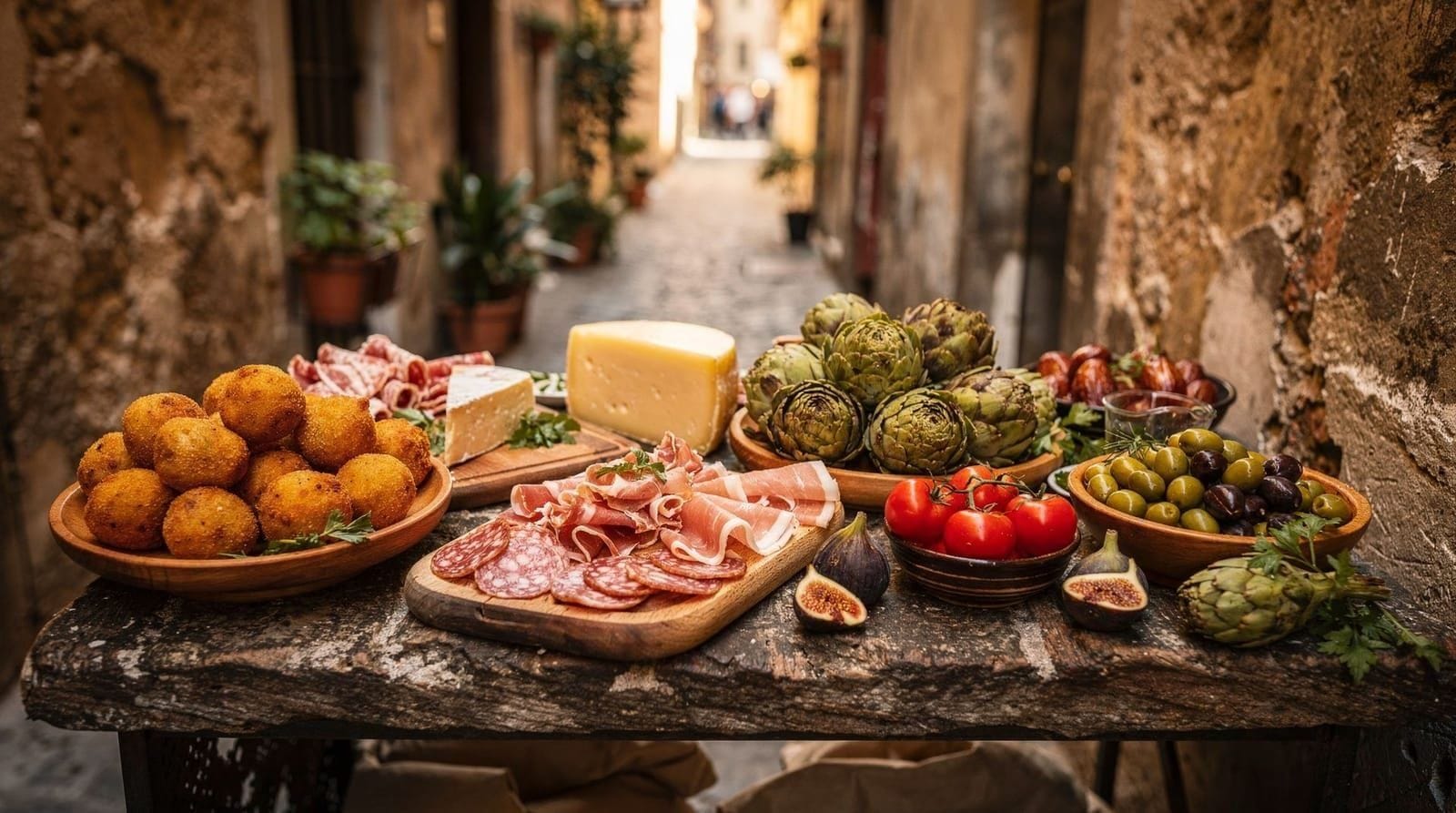
This leaves room for the rest of the Roman food experience: the supplì at Mercato di Testaccio, the pizza al taglio at Pizzarium, the gelato at Gelateria del Teatro. For the broader picture, see our where to eat in Rome guide and the Roman pasta food tour guide.
A city-center fettuccine class — learn the pasta-making technique that underlies all Roman pasta dishes, with sauce instruction included.For neighborhood context around the restaurants listed here, see our guides to Testaccio and Trastevere. If you’d rather have a guide sequence the meal for you, our Rome food tours compared roundup covers walking tours that build in a proper pasta stop, and our Rome cooking classes guide has the wider list beyond the two classes linked above.
Frequently asked questions about Carbonara and cacio e pepe: where to eat Rome's iconic pastas
Does real carbonara have cream?
What makes cacio e pepe difficult to get right?
What pasta shapes are traditional for carbonara and cacio e pepe?
What is the difference between guanciale and pancetta?
How much should I pay for a proper carbonara in Rome?
Is Roscioli worth the price?
Can I cook carbonara from a class?
Is there a vegetarian version of carbonara?
Do I need to book ahead for carbonara or cacio e pepe in Rome?
Can I get good carbonara or cacio e pepe near the Colosseum or Vatican?
Top experiences
Bookable activities with verified prices and instant confirmation on GetYourGuide.