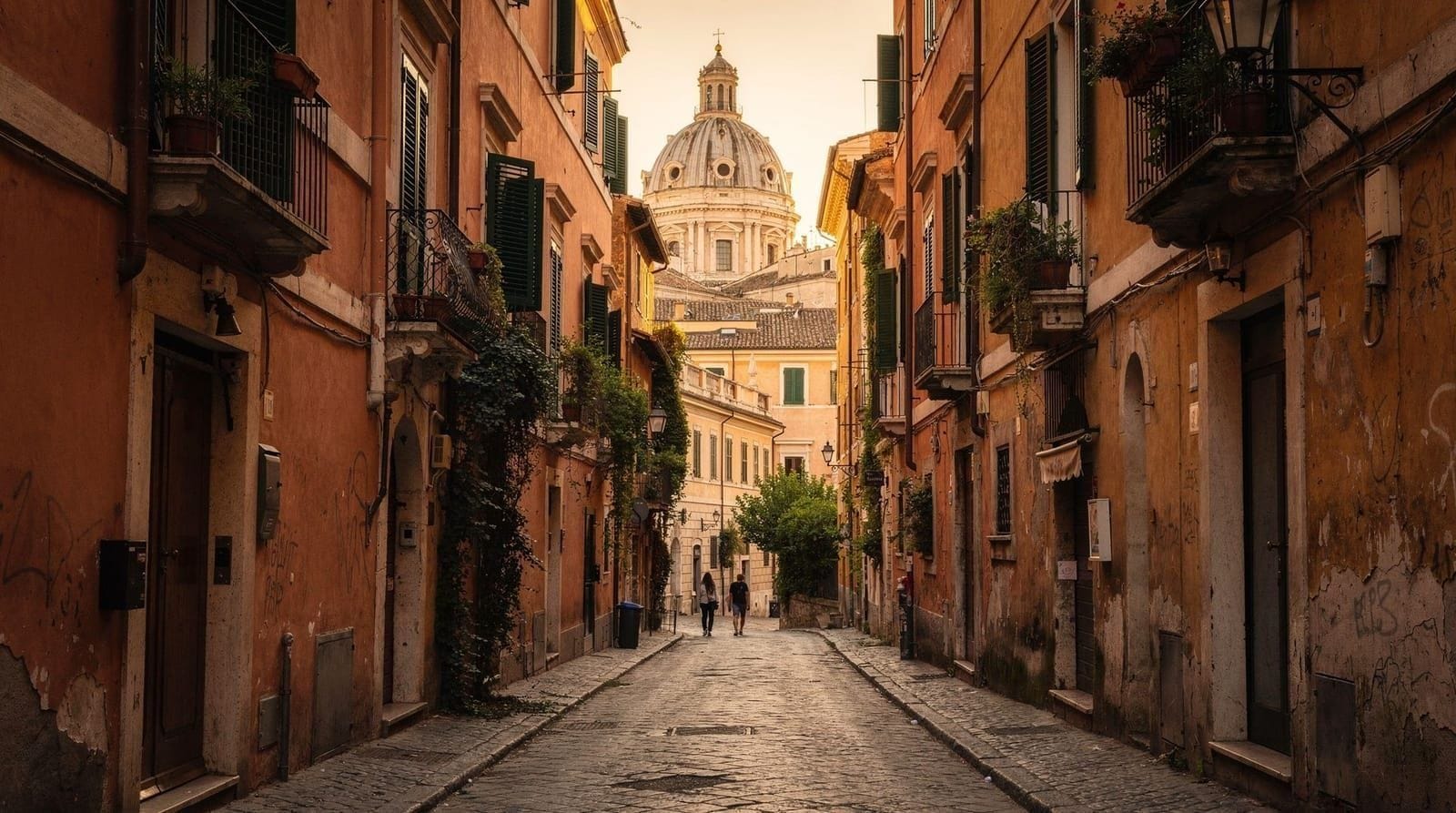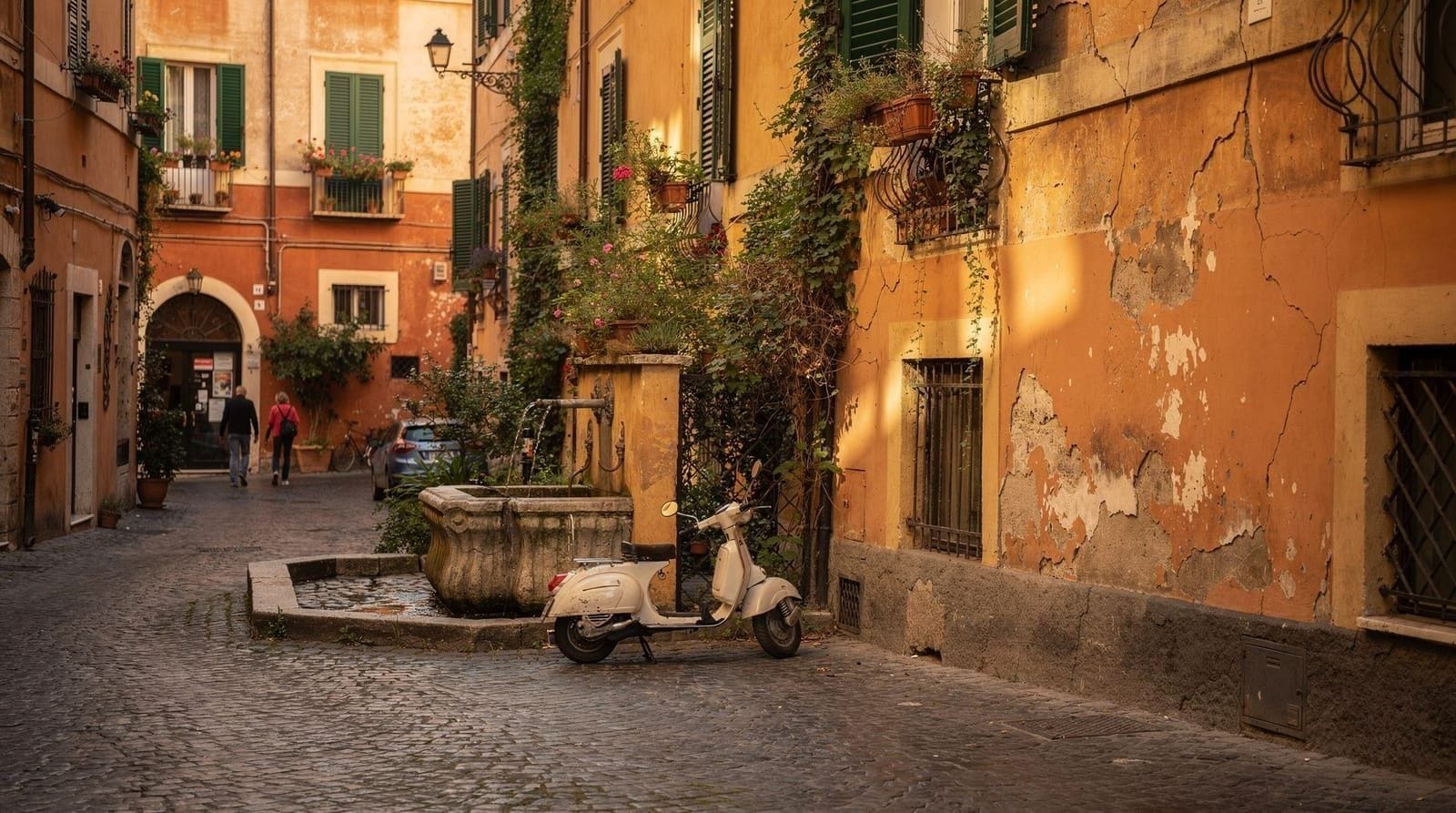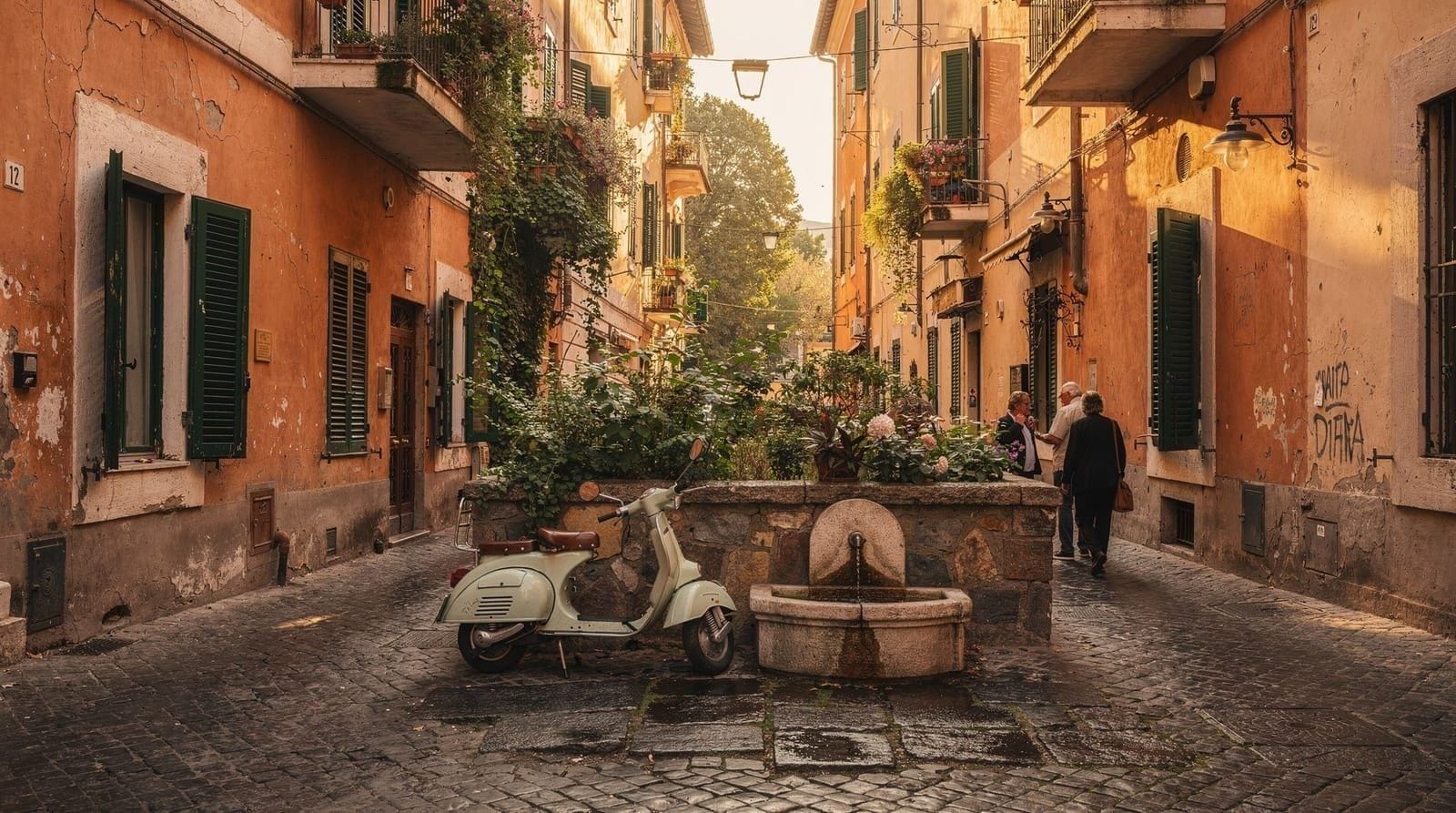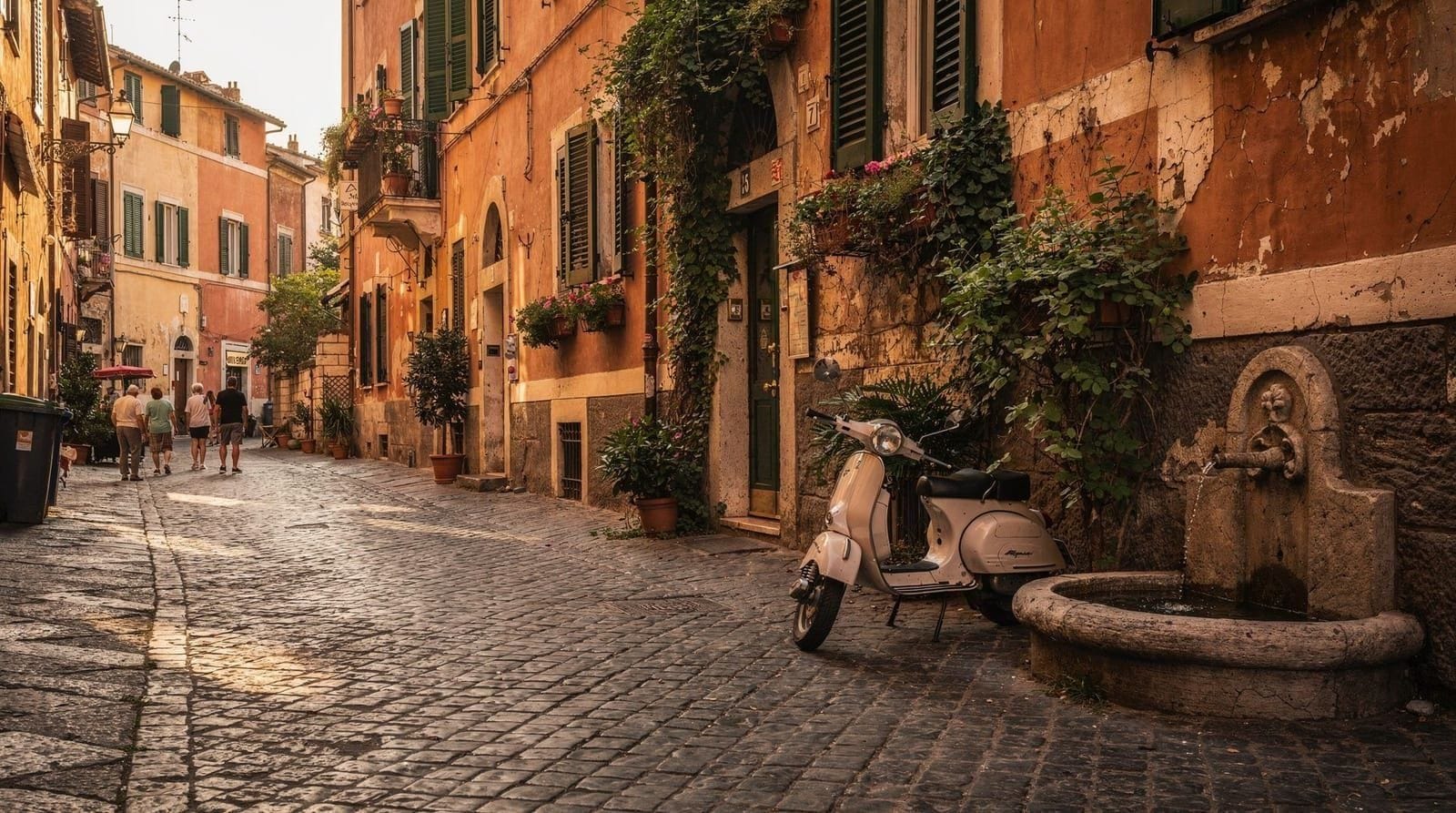
Centro Storico guide: staying in Rome's historic heart
Vespa Sidecar Tour: Highlights of Rome
Is Centro Storico worth the premium to stay in?
Yes for first-timers, with caveats. Staying here means the Pantheon is a 5-minute walk and Trevi is 10 minutes — you will spend significantly less time commuting than from other neighborhoods. But prices are 30–40% higher than Monti or Prati for equivalent quality, and the Campo de' Fiori area has significant nightlife noise on weekends. Choose your street carefully.
The middle of everything
Centro Storico is where Rome performs itself most completely. The Pantheon, still structurally intact after 1,900 years. Piazza Navona, built on the footprint of a Roman stadium, with Bernini’s fountain at its center. The Trevi Fountain, where Anita Ekberg waded in Federico Fellini’s La Dolce Vita and where tourists have thrown coins ever since. Campo de’ Fiori, a medieval piazza turned daily market and evening bar strip, with Giordano Bruno watching from his plinth at the center — burned alive here for heresy in 1600.
This is Rome’s most concentrated square kilometer of history, art, and urban spectacle. It is also the most expensive, most tourist-saturated, and noisiest in which to stay. Getting it right requires knowing exactly where to book, which restaurants to avoid, and which blocks are genuinely quiet at night.
| Where | West of Via del Corso, within the Tiber bend |
| Cost | Mid-range hotels around €180-320/night peak season |
| Time needed | 2-3 days to see it properly; a lifetime to know it well |
| Getting there | No metro — buses via Largo Argentina, or walk from anywhere central |
| Best for | First-time visitors who want everything within walking distance |
What Centro Storico actually covers
The Centro Storico is not a single neighborhood but a collection of interrelated rioni (historic quarters) that function as a geographic whole. The main zones:
The Pantheon quarter: Via della Rotonda and surrounding streets. Ground zero for tourist density but worth the trade-off for the Pantheon itself.
Piazza Navona zone: Via del Governo Vecchio, via dei Coronari, via della Pace. Some of Rome’s best independent restaurants and wine bars sit within two blocks of the square — finding them requires moving off the piazza perimeter.
Campo de’ Fiori area: The square itself, via dei Giubbonari south toward the Ghetto. Market in the mornings (7 am–2 pm); bars and restaurants in the evenings; nightlife noise Thursday–Saturday until 2–3 am.
Jewish Ghetto: Via del Portico d’Ottavia and surrounding streets. Historically significant, less touristy than the Navona area, excellent food (Roman-Jewish carciofi alla giudia, deep-fried artichokes, are essential). Quieter at night.
Via Giulia: The elegant Renaissance street running parallel to the Tiber — one of Rome’s most atmospheric streets for a walk, with fewer tourists than areas further east.
Largo Argentina: Ruins of four Republican-era temples in a sunken archaeological area; the cat sanctuary; transport hub; near the Trastevere tram connection.
Piazza Farnese fringe: The quiet grid of streets between Campo de’ Fiori and Via Giulia — via dei Baullari, via del Mascherone — offers some of the best balance in the neighborhood between walkability and calm, without the premium of a Pantheon-facing address.
Where to stay: honest recommendations by area
The single most important variable in Centro Storico accommodation is location within the neighborhood. Two hotels 200 meters apart can have dramatically different noise profiles.
Quietest areas within Centro Storico
North of Piazza Navona: Streets like via della Scrofa, via di San Agostino, via dei Coronari. Beautiful, historic, residential. The nightlife noise from Navona’s perimeter restaurants mostly disperses by midnight.
Via Giulia area: Elegant, low-traffic, genuinely quiet at night. Longer walks to some sights (Trevi is 20 minutes), but the neighborhood quality is high.
Jewish Ghetto periphery: Via dei Falegnami, via del Portico d’Ottavia. Quieter residential character; the Ghetto shuts down early in the evening.
Noisier areas to research carefully
Campo de’ Fiori: The square itself and via dei Giubbonari. Nightlife noise peaks around 11 pm–2 am on Thursdays, Fridays, and Saturdays. Earplugs or soundproofed rooms essential.
Near the Pantheon: Via della Rotonda, via del Pantheon. Tourist foot traffic until 10 pm; then quiets considerably. Less of a noise problem than Campo.
Hotels worth knowing:
Hotel Pantheon (via dei Pastini 131) — the name says it all. Four-star; some rooms have direct Pantheon views. Consistently high quality and naturally the most sought-after option in this area. €300–450/night peak season; book 3–4 months ahead.
Hotel Due Torri (vicolo del Leonetto 23) — small, atmospheric, in a quiet lane near Piazza Navona. Converted palazzo; genuinely charming. €200–280/night.
Residenza in Farnese (via del Mascherone 59) — boutique guesthouse near Campo de’ Fiori in a quieter lane. Excellent value for the area. €160–230/night.
The Hoxton Rome (largo del Fontanella di Borghese 15) — design hotel positioned toward the fashionable north of Centro Storico; strong café culture; lively lobby; attracts younger professional travelers. €180–280/night.
Hotel Sant’Eustachio (via degli Staderari 4) — above the famous café of the same name (one of Rome’s best espresso institutions). Small, atmospheric, right next to the Pantheon. €200–270/night.
Hotel Campo de’ Fiori (via del Biscione 6) — excellent rooftop terrace view; rooms on the quieter internal streets rather than the square. €170–250/night.
Caravita Boutique Hotel (via del Caravita 5) — newer boutique near the Jesuit church; good design sensibility; €220–300/night.
Budget options in Centro Storico: Genuine budget accommodation is scarce here. Under €100/night in peak season typically means a shared bathroom or very basic rooms. Budget travelers are better served in Monti or Esquilino.
The Pantheon: what no guide tells you
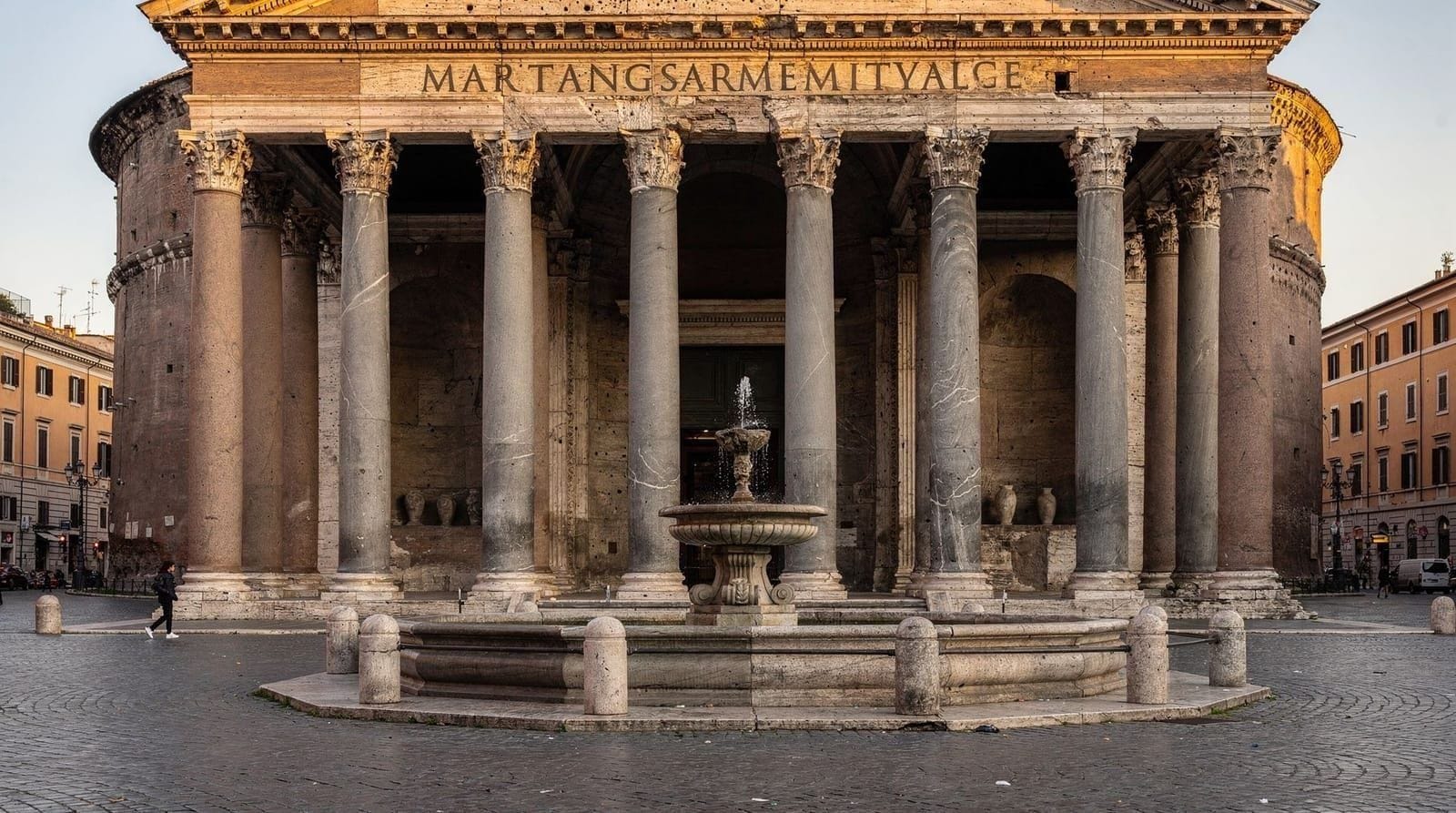
The Pantheon (9 am–7 pm, closed Sundays until 12 pm for mass) requires a €5 timed-entry ticket — book online to avoid the queue. The building was completed by Hadrian around 125 CE and has been in continuous use ever since, initially as a temple, then as a church from 609 CE.
The engineering achievement — a concrete dome 43.3 meters in diameter with a 9-meter oculus at the top, still the largest unreinforced concrete dome in the world — is more extraordinary when you understand the construction limitations of the 2nd century CE. The Pantheon was built without steel reinforcement, using graduated aggregate (pumice near the top to reduce weight).
What most visitors miss: The floor is original Roman — look at the pattern of marble circles and squares, still virtually intact after 1,900 years. The proportions of the building are such that a perfect sphere would fit inside the drum and dome exactly. Raphael is buried here (along with other Italian kings) — his tomb is in the second niche on the left.
The Pantheon café issue: Sant’Eustachio il Caffè (piazza di Sant’Eustachio 82) is one of Rome’s great coffee institutions — sugar is added during preparation rather than after (ask for amaro if you take it without sugar). It is 100 meters from the Pantheon and significantly more authentic than the café on the piazza itself.
Piazza Navona: the beautiful tourist trap
Piazza Navona is genuinely extraordinary — the elongated oval shape preserves the exact footprint of Domitian’s stadium (built 86 CE), and the three fountains (Bernini’s Fontana dei Quattro Fiumi at center, flanked by two smaller 17th-century works) are masterpieces in public space design.
The restaurants on the piazza’s perimeter are another matter. They exist almost entirely for tourists, serve generic Italian food at 60–100% above the prices you would pay one block away, and are not recommended. The experience of the piazza is better enjoyed from a café table (order water or coffee) than from the restaurant terraces.
Eating near Navona done correctly:
- Osteria dell’Anima (via dell’Anima 57) — one block from the piazza, serving genuinely good Roman food to a mix of locals and visitors who know better than to eat on the square. Cacio e pepe and abbacchio are reliable.
- Pizzeria La Montecarlo (vicolo Savelli 13) — a Roman pizza classic near Campo de’ Fiori; a short walk but worth it.
- Cantina e Cucina (via del Governo Vecchio 87) — simple, honest, good wine list; serves the streets-behind-Navona residents who work and live there.
Campo de’ Fiori: morning market, evening chaos
Campo de’ Fiori hosts one of Rome’s most photogenic morning markets (7 am–2 pm, Monday–Saturday) — flowers, produce, tourist souvenirs intermingled in a medieval piazza under the watchful gaze of Giordano Bruno’s statue. The market is more tourist-oriented than Testaccio’s but still sells real produce to real Roman cooks.
By evening, Campo de’ Fiori transforms. The restaurants and bars that surround it fill with a young international crowd, and by 10 pm on Fridays and Saturdays it is genuinely loud. The noise extends along via dei Giubbonari toward the Jewish Ghetto.
If you are staying near Campo: Ask specifically for courtyard-facing rooms. Book in the quieter lanes north of the square (via del Biscione, via del Monte della Farina) rather than directly on it. Expect weekend noise.
The statue: Giordano Bruno (1548–1600) was a philosopher, astronomer, and heretic burned at the stake on this exact spot by the Roman Inquisition. He held views about the infinite nature of the universe and the existence of multiple worlds that were theologically unacceptable. His statue (1889) faces the Vatican. The choice of location is not accidental.
Jewish Ghetto: the quieter Centro Storico
Via del Portico d’Ottavia and the surrounding streets of the Ghetto are the least touristy part of Centro Storico. Rome’s Jewish community has been here since at least 161 BCE — the oldest Jewish community in Western Europe — and the neighborhood retains a distinct character: smaller in scale, more residential, with synagogue, museum (Museo Ebraico di Roma, €11), and genuinely good restaurants serving Roman-Jewish cuisine.
What to eat here: Carciofi alla giudia (deep-fried artichokes, the Jewish Ghetto’s signature dish), baccalà (salt cod prepared in multiple traditional styles), ricotta desserts. The restaurants on via del Portico d’Ottavia are honest — touristy in the sense that they serve visitors, but the food is correct.
Ba’Ghetto (via del Portico d’Ottavia 57) — Rome’s best-regarded kosher restaurant; Roman-Jewish and Middle Eastern influences; lunch and dinner. Genuinely good food at honest prices.
See our Jewish Ghetto food guide for full coverage.
Getting around from Centro Storico
The absence of metro access in most of Centro Storico is its main practical disadvantage for multi-site days.
Buses: The hub is Largo Argentina, with connections east (toward Colosseum via bus 40/64), north (toward Termini), and south. Lines 46 and 30 serve the western parts; line 64 is the main east–west corridor.
Walking: Within Centro Storico, walking is the only rational mode. The Pantheon to Piazza Navona is 7 minutes. Navona to Campo de’ Fiori is 10 minutes. Centro Storico to Trastevere (via Ponte Sisto) is 20 minutes.
To the Colosseum: Bus 40 or 64 from Largo Argentina to Via dei Fori Imperiali — 20–25 minutes in moderate traffic; longer at peak times. Taxi from Campo de’ Fiori: €12–15. No metro connection.
To the Vatican: Bus 40 or 64 from Largo Argentina west across the river. About 25–30 minutes. Alternatively, walk via Ponte Cavour (30–35 minutes to St. Peter’s Square).
A Vespa sidecar tour starting from the Centro Storico sweeps through the major sights — Colosseum, Circus Maximus, Trastevere, Gianicolo — efficiently, giving context to how the different parts of Rome relate spatially.Beyond the main sights: Centro Storico’s hidden layer
Via dei Coronari — a street of antique and art dealers running parallel to the Tiber north of Navona. The shops here are genuine, and browsing costs nothing.
Sant’Agostino (piazza di Sant’Agostino) — a Renaissance church with a Caravaggio painting (Madonna dei Pellegrini) that most visitors walk past because the church is unsigned on the tourist map. Free; extraordinary.
San Luigi dei Francesi (piazza di San Luigi dei Francesi) — contains three Caravaggio paintings in the Contarelli Chapel that are among his most important works. Free; often has a brief queue but never the lines of the Vatican. See our Caravaggio trail guide.
Palazzo Altemps (piazza di Sant’Apollinare) — part of the National Roman Museum, this branch occupies a 15th-century palazzo and houses an exceptional collection of ancient sculpture with almost no visitors. Entry €10 or combined ticket with other National Roman Museum branches.
Piazza Farnese — one of Rome’s most elegant piazzas, immediately south of Campo de’ Fiori. The Palazzo Farnese (now French Embassy) faces it; fountains use granite from the Baths of Caracalla as basins. It is a working government building, not a tourist site — which is exactly why it is so pleasant.
Centro Storico for a multi-day visit
For a 3-night stay in Centro Storico, a logical daily structure:
Day 1: Pantheon (morning, 9 am, book ahead), lunch near Sant’Eustachio, Piazza Navona (afternoon, walk with café stop), dinner in the Ghetto area (Bàghetto or via del Portico d’Ottavia).
Day 2: Campo de’ Fiori morning market (8–10 am), then dedicated time at the nearby church of Sant’Andrea della Valle (Piazza Vidoni) — one of the largest Baroque churches in Rome with almost no queue. Afternoon: consider the Colosseum circuit (bus from Largo Argentina). Evening: Trastevere for dinner (tram 8 from Largo Argentina).
Day 3: Vatican day (bus 40 from Largo Argentina west). Reserve Vatican Museums tickets well in advance. See our Vatican Museums guide.
For full planning, see our Rome in 3 days guide.
A golf cart tour with a local guide starting in the Centro Storico can cover the main sights in 2.5 hours — useful on arrival to orient yourself before spending the remaining days exploring on foot.The honest cost of staying in Centro Storico
Mid-range hotels (3-4 star): €180–320/night in peak season (June–September). This is the realistic floor for a comfortable room in a decent location. Anything significantly below this in Centro Storico in summer involves trade-offs on room size, street noise, or building condition.
Booking window: 3–4 months for popular properties in peak season. September and October are nearly as expensive as summer but less crowded — the best compromise.
The premium over Monti or Prati is real: approximately 30–40% for equivalent quality. Whether that premium is worth paying depends on how highly you value being able to walk to the Pantheon before breakfast.
For most first-time visitors, it is worth it. For most return visitors who have already done the main sights walk, the smarter money goes into a better restaurant.
Centro Storico vs the alternatives
| Neighborhood | Walkability to icons | Nightlife noise | Typical premium |
|---|---|---|---|
| Centro Storico | Best — Pantheon 5 min, Trevi 10 min | High near Campo de’ Fiori | Baseline (highest prices) |
| Monti | Good — Colosseum 10-15 min | Moderate, localized | 20-30% cheaper |
| Trastevere | Fair — 15-20 min to Centro Storico | High on weekend evenings | 15-25% cheaper |
| Prati | Good for Vatican, fair for rest | Low, residential | 25-35% cheaper |
If you’re still deciding where to base yourself at all, our where to stay in Rome and best areas to stay in Rome guides cover the full trade-off across all the neighborhoods, not just this one.
Frequently asked questions about Centro Storico guide: staying in Rome's historic heart
What is included in Centro Storico?
Which part of Centro Storico is quietest at night?
Is Centro Storico safe?
How do you get around without a metro in Centro Storico?
What are the best restaurants in Centro Storico that aren't tourist traps?
Can I see the Pantheon for free?
How does Centro Storico compare to Trastevere or Monti for a first stay?
Is it worth paying the Centro Storico premium for a second or third Rome trip?
Top experiences
Bookable activities with verified prices and instant confirmation on GetYourGuide.