Rome, Naples & Pompeii: 5 Days
Pompeii Day Trip from Rome by High-Speed Train & Guided Tour
Quick answer: Five days covering Rome’s ancient core and Vatican, then a 1h10 high-speed train south to Naples and Pompeii, with a day on the Amalfi Coast. No car needed — the entire itinerary runs on trains and ferries, with one optional bus for the Amalfi road.
| Where | Rome (2-3 nights) → Naples (1-2 nights) → Sorrento/Amalfi (optional night 5) |
| Cost | Around €1,000-1,400 per person total, mid-range |
| Time needed | 5 days, no car needed |
| Getting between cities | Frecciarossa/Italo high-speed train, Rome-Naples 1h10 |
| Best time to visit | May, June or September |
Rome and Naples are the twin poles of Italian urban life: the former is monumental, studied, slightly self-conscious; the latter is chaotic, loud, genuinely brilliant, and smells of pizza and sea air. Pompeii connects them chronologically — the city that Rome built, and Vesuvius preserved. The Amalfi Coast is the reward at the end.
Five days at a glance
| Day | Base | Focus |
|---|---|---|
| 1-2 | Rome | Colosseum/Forum, Vatican, centro storico |
| 3 | Rome → Naples | Borghese Gallery morning, train south, first Naples evening |
| 4 | Naples | Pompeii day trip, optional Herculaneum |
| 5 | Naples → Amalfi Coast | Sorrento, Positano, Amalfi, Ravello |
If five days feels like too much movement, dropping the Amalfi Coast day and staying an extra night in either Rome or Naples is the honest trade-off — you lose the coast but gain a slower pace. If you have more time, the Rome and Florence Tuscany 7-day itinerary shows the equivalent northern-Italy version of this same Rome-plus-one-region structure.
The logistics are simple. High-speed trains (Frecciarossa or Italo) run Rome Termini to Naples Centrale in approximately 1h10, with departures every 30-60 minutes. Pompeii is a further 40 minutes from Naples on the Circumvesuviana commuter line. The Amalfi Coast is accessible from Sorrento by SITA bus or by ferry. You do not need a car, and in Naples and on the Amalfi road you actively do not want one.
Day 1: Rome — ancient core
Morning: Colosseum, Roman Forum, Palatine
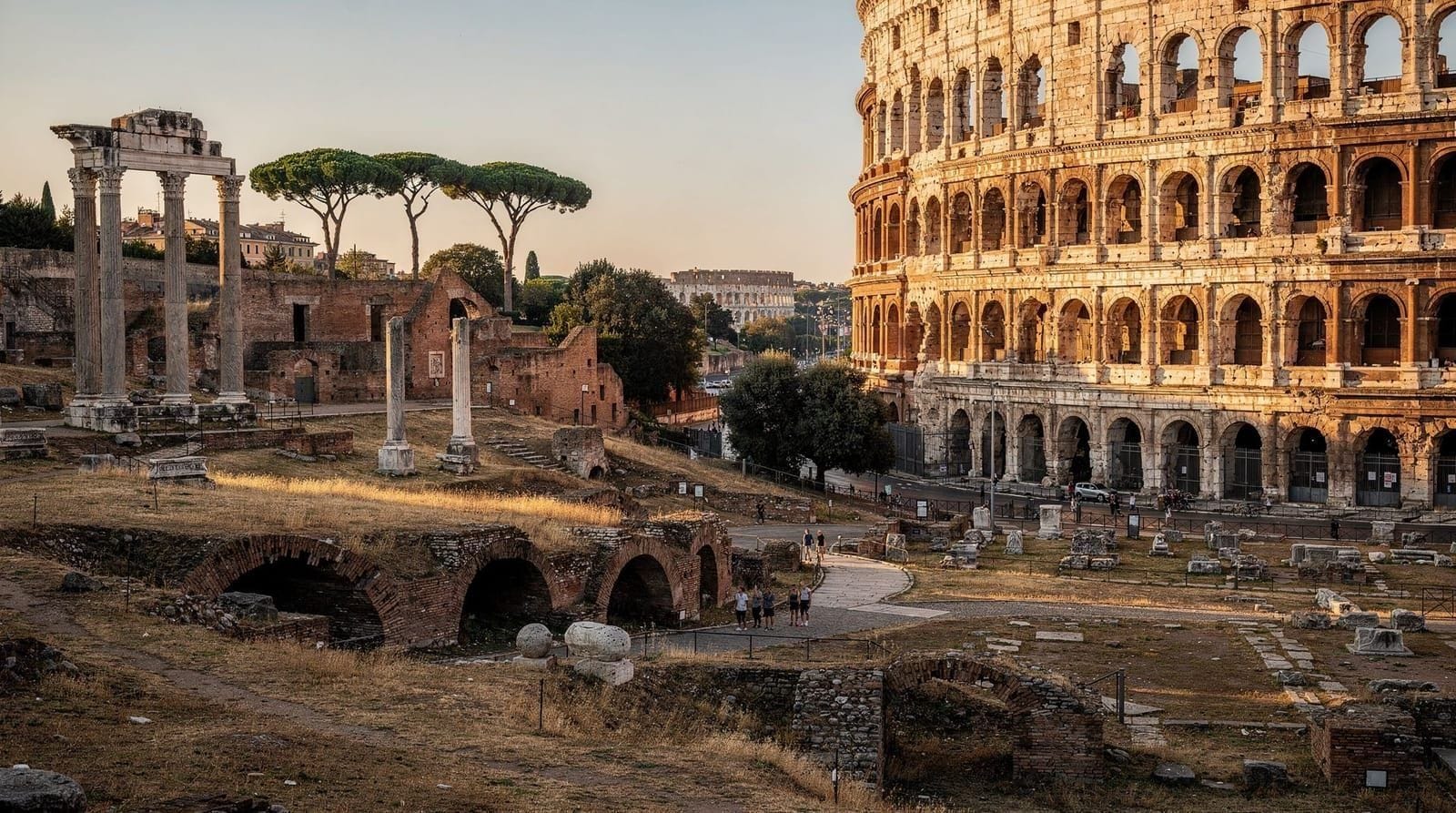
Start with the Colosseum and the ancient core of Rome. Book your timed ticket in advance — the Colosseum uses a named reservation system and slots fill up weeks ahead, especially from March to October. A guided tour is the most efficient way to make sense of the site; the ruins of the Forum are labyrinthine without context.
Colosseum, Roman Forum and Palatine Hill guided tourAllow three to four hours for the complete complex. The Forum sits between the Capitoline and Palatine hills, both of which offer elevated views of the archaeological zone. The Palatine — where Rome’s imperial palaces stood — is the least visited element but has some of the most interesting ruins and good views south toward the Circus Maximus.
Afternoon: Circus Maximus and Capitoline Hill
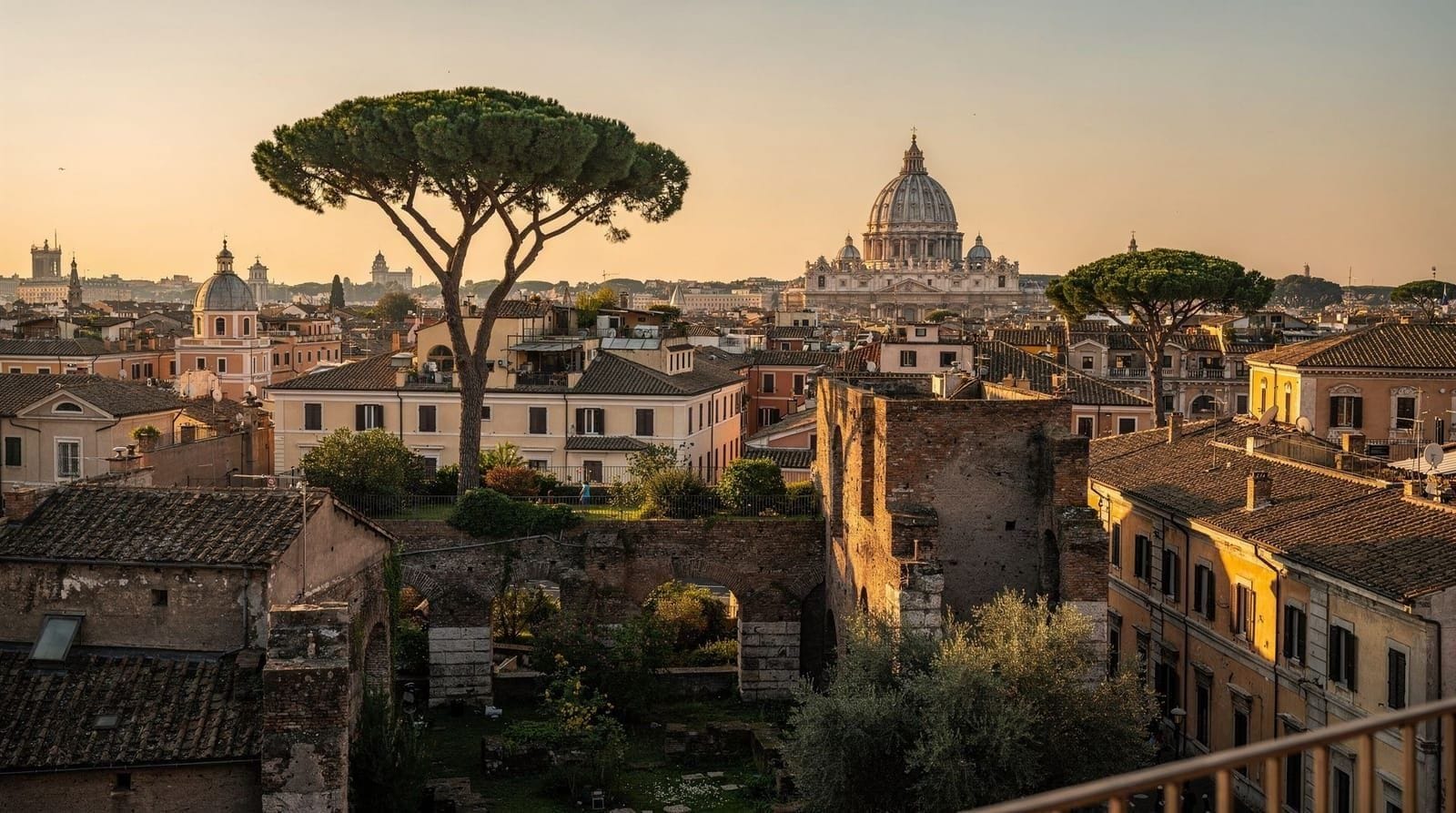
Walk up to the Capitoline Hill for the Michelangelo-designed piazza and the terrace view over the Forum — this is the best photograph of the ancient city. The Capitoline Museums deserve two hours if you have them; the Marcus Aurelius statue and the Capitoline Wolf are originals.
Evening: dinner in Testaccio
Testaccio is the right place for a first Roman dinner. This is where the carbonara, cacio e pepe, and amatriciana come from — a working-class neighborhood that has always eaten well and never charged tourist prices for it. The Testaccio food market is a morning operation; for dinner, the trattorias around Via Galvani are the target.
Day 2: Rome — Vatican and centro storico
Morning: Vatican Museums and Sistine Chapel
The Vatican is non-negotiable but requires planning. The queue for walk-up tickets is genuine — two hours is normal in high season. Pre-purchased tickets with skip-the-line entry or a guided tour are the standard solution.
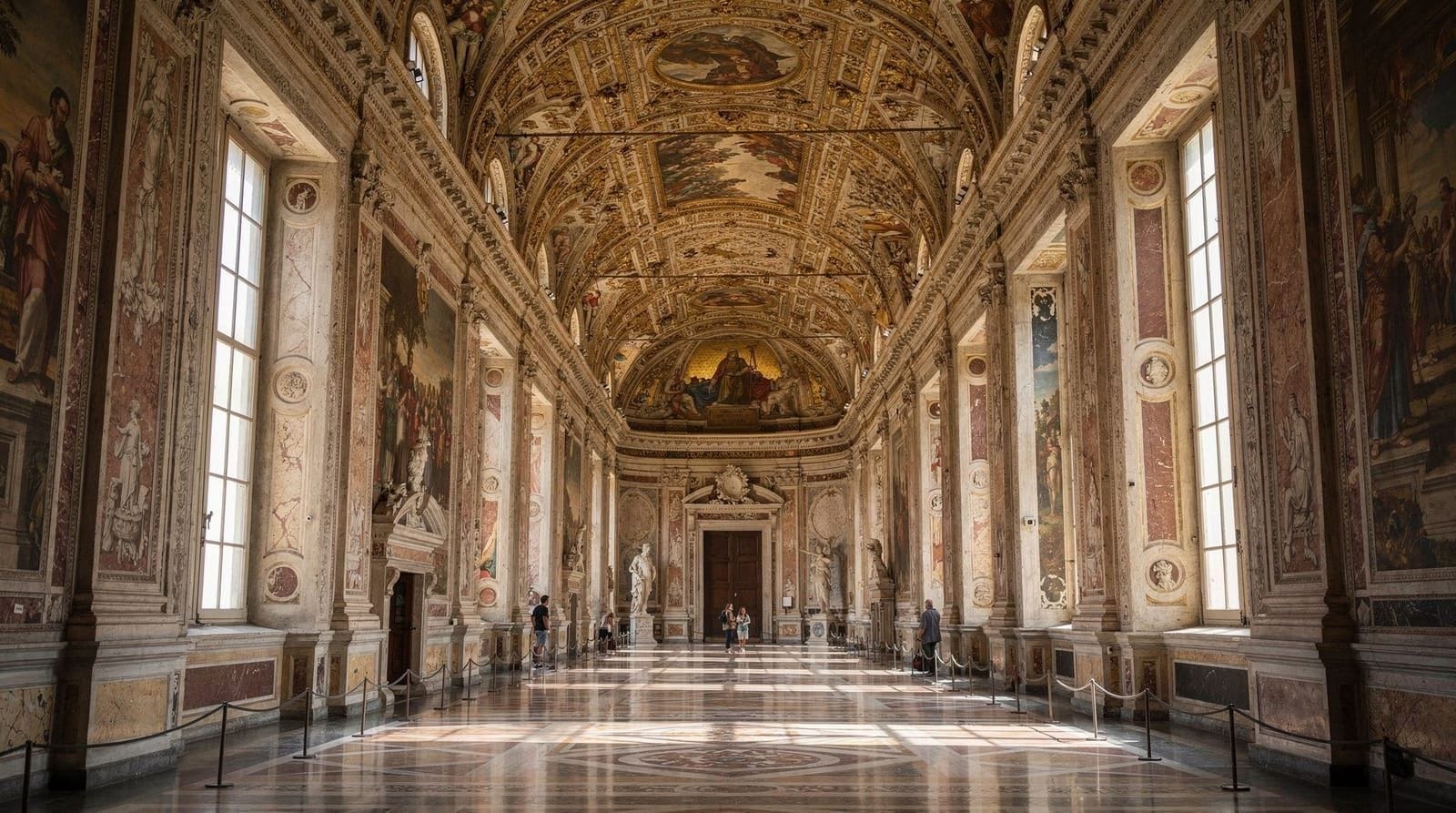
Vatican Museums and Sistine Chapel skip-the-line entryThe route through the museums takes you through the Gallery of Maps, the Raphael Rooms, and finally the Sistine Chapel — Michelangelo’s ceiling (1508-1512) and the Last Judgement (1536-1541). The experience is better if you understand what you are looking at; the guided versions explain the iconography. St. Peter’s Basilica is free and adjacent; do not leave without walking through it. The dome climb (€8-10) gives the aerial view.
Afternoon: centro storico
After lunch in Prati — the neighborhood around the Vatican, which is reliably good value — cross the Tiber and spend the afternoon in the centro storico. The Pantheon requires a pre-booked timed ticket (€5 online). From there, walk through Piazza Navona to Campo de’ Fiori to the Jewish Ghetto and back along the river. The Trevi Fountain is on the east side of the centro storico — arrive before 8am or after 8pm if you want a photograph without 1,000 people in it.
Evening: Trastevere or Monti
Both Trastevere and Monti work well for a last Roman evening. Trastevere is more atmospheric but more tourist-facing; Monti is quieter and more local. Either choice gives you good wine bars and solid independent restaurants.
Day 3: Rome to Naples — half-day Rome, afternoon arrival
Morning: Borghese Gallery
If you booked the Borghese Gallery in advance (and you should — it sells out 10-14 days ahead), take the 9:00am or 11:00am slot. The two-hour limit is strict but the collection is exceptional: Bernini’s early sculptures, Raphael, Titian, Caravaggio. The gallery is in the Villa Borghese park, 20 minutes by taxi from Termini.
Midday: train to Naples
Take a late morning or early afternoon Frecciarossa from Roma Termini to Napoli Centrale. The journey is 1h10 at 300 km/h. Book ahead for prices from €20; walk-up tickets work but cost significantly more. Arrive in Naples by 1-2pm.
Afternoon: first impressions of Naples
Naples Centrale sits at the top of Spaccanapoli, the long straight street (actually the old Greco-Roman decumanus maximus) that bisects the city’s historic center. Drop your bags at the hotel and walk down into the centro storico, a UNESCO World Heritage Site. The density of churches, street shrines, pizza vendors, and laundry across medieval alleys is genuinely overwhelming in the best possible way.
The must-eat of Day 3 is pizza. Naples invented it, and the difference between Naples pizza and any other pizza is not subtle. L’Antica Pizzeria da Michele (Forcella) has the most famous pies in the world — margherita or marinara only, no reservations, queue expected. Sorbillo (Via dei Tribunali) is nearly as good with shorter queues. Both cost around €5 for a pizza.
Evening: Quartiere Spagnoli and Chiaia
The Spanish Quarter (Quartieri Spagnoli) is a grid of steep narrow streets west of the city center, densely inhabited and genuinely atmospheric after dark. Walk through to Chiaia, the smarter neighborhood along the waterfront, for an aperitivo with a view of Castel dell’Ovo illuminated on its rock.
Day 4: Pompeii
Take the Circumvesuviana from Naples Piazza Garibaldi (below Centrale) to Pompeii Scavi–Villa dei Misteri. The journey is 40 minutes; trains run every 30 minutes from around 6am. The ticket costs around €3.
Morning: Pompeii — the essential circuit
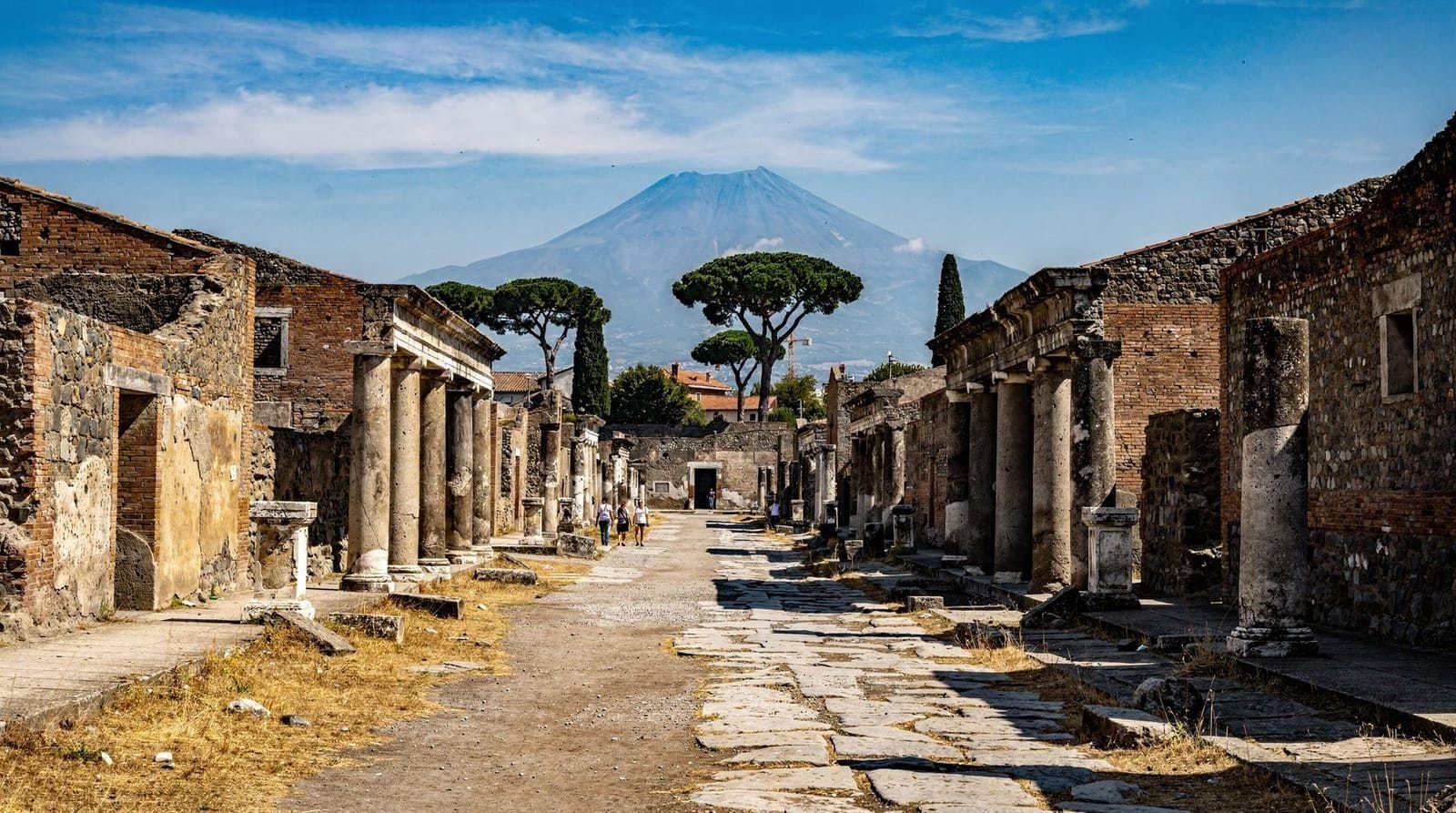
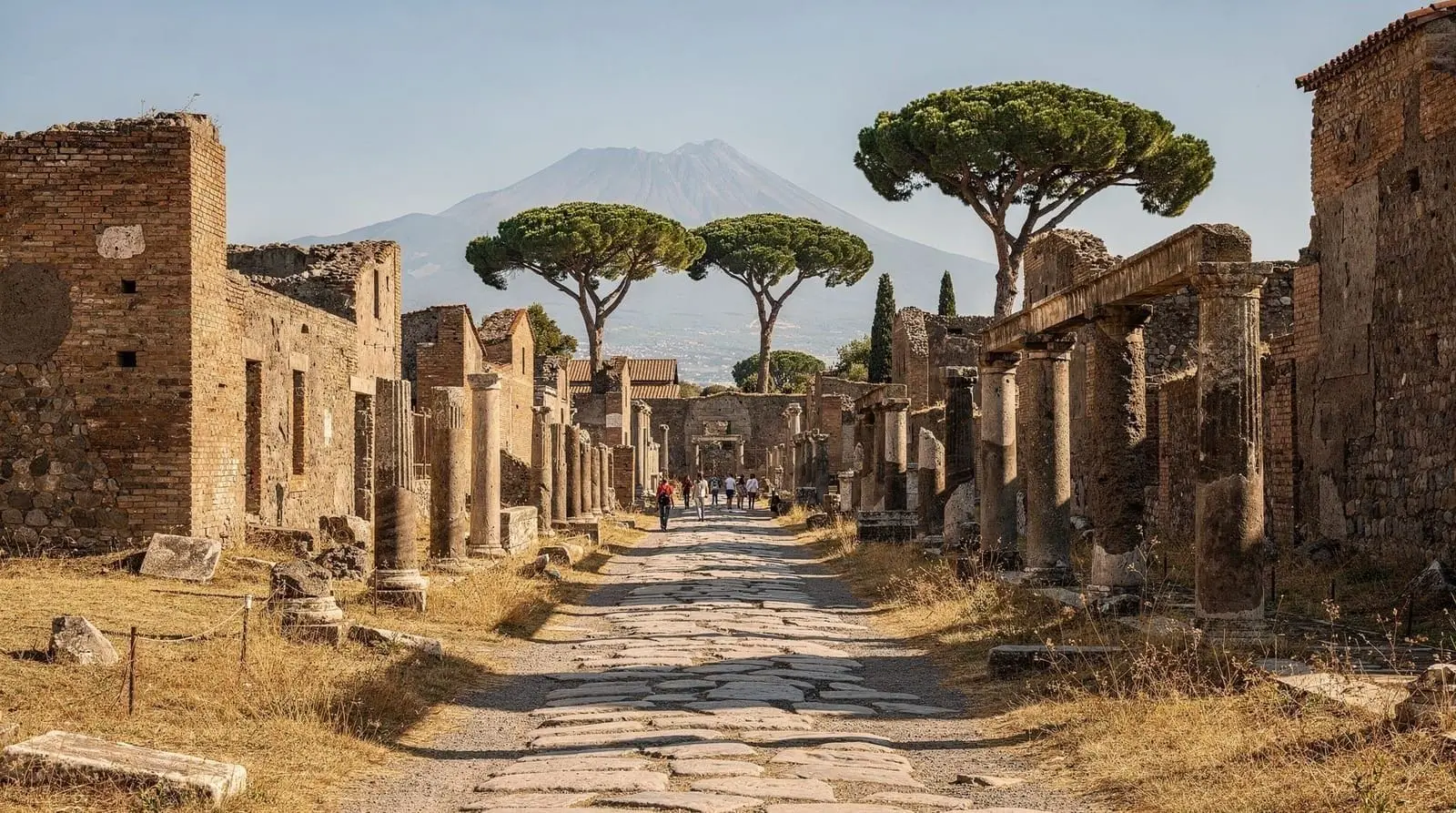
Pompeii is large — the site covers 44 hectares — and you cannot see all of it in one day. The essential circuit takes you through the Forum (the commercial and political heart of the city, with Vesuvius looming behind it), the Via dell’Abbondanza (the main street), the House of the Vettii (the best-preserved wealthy household, with intact frescoes), the amphitheatre (the oldest Roman amphitheatre in existence), and the Villa of the Mysteries (the extraordinary frescoes of an initiation rite, just outside the main gate in the opposite direction from the town center).
Pompeii day trip from Rome by high-speed train with guided tourA guided tour is genuinely useful here — the context of what the city was like in 79 CE, what Pliny the Younger described, what the plaster casts of the victims represent — turns ruins into a story. The site has several cafés but they are expensive and not good; bring a packed lunch or eat outside the gates.
Afternoon: Herculaneum (optional)
Herculaneum (Ercolano) is smaller than Pompeii but better preserved — the organic materials (wood, food, textiles) survived because the pyroclastic flows sealed the site differently than the ash fall at Pompeii. It is 15 minutes back toward Naples on the Circumvesuviana. If choosing between the two, Herculaneum is the better experience for architecture; Pompeii is more dramatic for scale and the casts.
Evening: return to Naples
Return to Naples by late afternoon. A second evening in the city rewards a walk along the Lungomare (the seafront promenade) toward Castel dell’Ovo, a sea-bream dinner at a restaurant in the Pignasecca market area (cheaper and more local than the seafront), and a walk back through Spaccanapoli at night, when the street lights and the shrine candles give the old city a completely different atmosphere.
Day 5: Amalfi Coast — Sorrento, Positano, Amalfi
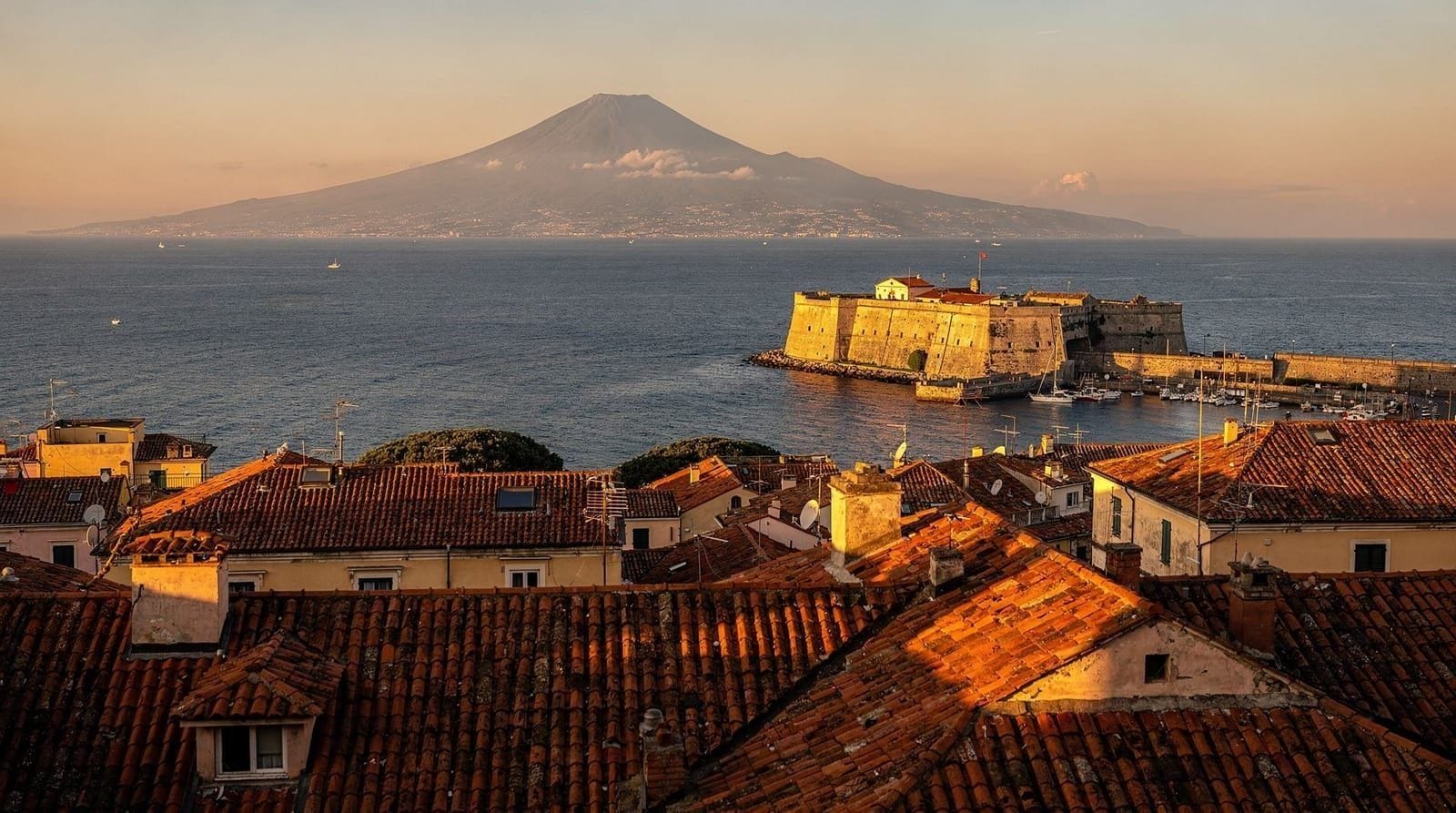
Take the Circumvesuviana from Naples to Sorrento (65 minutes). Sorrento is the staging point for the Amalfi Coast and also worth 30 minutes in itself — the cliff-top centro storico above the Marina Grande, the views across the Bay of Naples to Vesuvius, and the best limoncello in existence.
Getting along the coast
The SITA bus connects Sorrento to Amalfi via Positano and the full coastal road (SS163). This is both scenic and uncomfortable — the road is genuinely narrow, the bus is genuinely local, and the journey takes 90 minutes to Amalfi with stops. It is the real experience. Book SITA tickets online or at tabacchini; do not turn up without a ticket in high season.
The ferry from Sorrento to Positano (30 min) or Amalfi (1h15) is faster and dramatically more pleasant on a clear day.
Pompeii, Amalfi Coast and Sorrento day trip from RomePositano
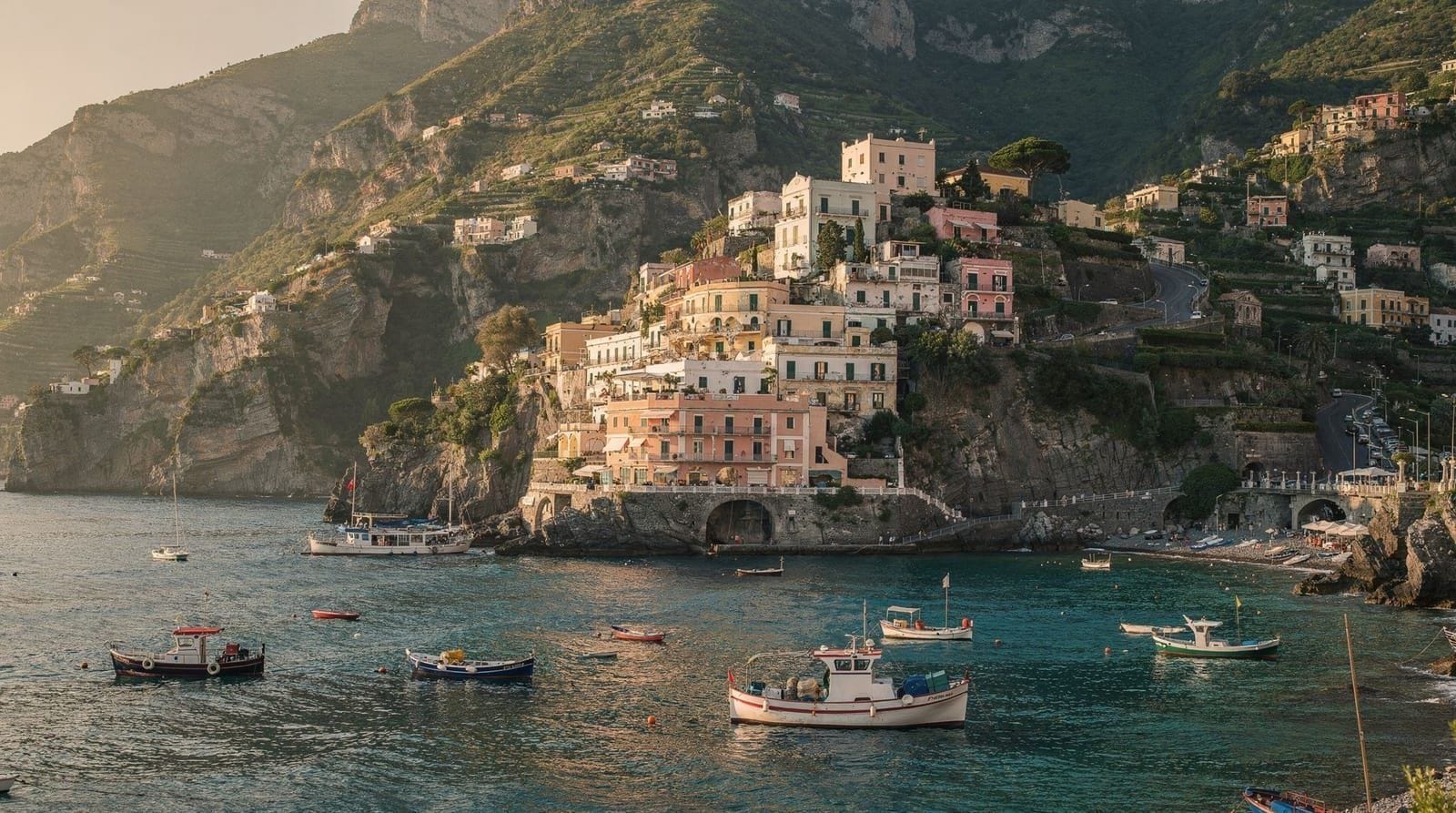
Positano is the most photographed village on the coast — the pastel houses stacking up the cliff behind the beach are the image you know. Spiaggia Grande (the main beach) has sun loungers for hire (€25-30 for two); the village above is steep, beautiful, full of boutiques, and genuinely expensive for anything you eat or drink. Two hours is enough to walk it, swim if you want, and move on.
Amalfi and Ravello
Amalfi has the coast’s most dramatic cathedral (Duomo di Sant’Andrea, free to enter, with its zebra-striped facade up a monumental staircase) and a working commercial center that is less resort-focused than Positano. From Amalfi, a bus runs up to Ravello in 25 minutes — the terrace of Villa Rufolo and the infinity terrace of Villa Cimbrone are both worth the climb.
Return from Amalfi to Sorrento by ferry or bus, then Circumvesuviana back to Naples and high-speed train to Rome (1h10) or direct to another destination.
Where to stay
Rome (nights 1-2): Monti, Celio, or Prati. All three are quiet, well-connected to the ancient core and Vatican, and have good independent restaurants. The neighborhood around Via Cavour in Monti puts you between the Colosseum metro and the centro storico.
Naples (nights 3-4): The Chiaia neighborhood (west of the city center, near the seafront) is safer and more comfortable for visitors than the centro storico while still being walkable to the historic core. Corso Vittorio Emanuele and the area around Piazza dei Martiri have several good mid-range hotels. If you want to be inside the historic center, the streets around Spaccanapoli are noisier and less polished but more immediately Neapolitan.
Sorrento (optional night 5): If you want to base on the coast rather than commuting from Naples, Sorrento is the most practical option — better infrastructure, cheaper than Positano, and on the Circumvesuviana line. Book early for June-September; the town is popular and the good mid-range options sell out.
Practical notes: The Circumvesuviana is reliable but not comfortable — watch your belongings, particularly at Naples Piazza Garibaldi. The coastal road closes occasionally for maintenance and weather events; check ahead in shoulder season. On the Amalfi Coast in July and August, accommodation and ferry tickets fill up 2-3 months in advance — book early or adjust your timing to May, June, or September.
Budget: Mid-range costs for this itinerary run approximately €160-200 per person per day including accommodation (shared double room), meals, train tickets, and entry fees. The Colosseum and Pompeii are the most significant entry costs (€18-22 each). Rome-Naples high-speed train costs €20-50 per direction depending on advance booking. The Amalfi Coast bumps the daily cost — ferries, beach clubs, and restaurant meals on the coast are all priced at a premium. A comfortable total for five days with a one-night Sorrento stay is €1,000-1,400 per person excluding flights.
Best time to visit: May, June, and September offer the best combination of weather, manageable crowds, and reasonable prices. July and August are extremely hot (35°C+ in Rome and Naples) and the Amalfi Coast is at capacity. October works well for Rome and Naples, though the coast is quieter and some coastal services reduce frequency.
Pompeii or Herculaneum, if you can only pick one
Day 4 offers both as an option, but if time genuinely only allows one, the choice depends on what you want from the visit. Pompeii is larger, more dramatic in scale, and has the plaster casts of victims that give the site its emotional weight — allow a minimum of three hours and expect crowds at the main sites (the Forum, the House of the Vettii) even with a guided tour. Herculaneum is smaller, denser, and better preserved architecturally — wooden beams, upper floors, and even food remnants survived here in ways Pompeii’s ash fall didn’t allow — and can be done properly in 90 minutes to two hours. Families with limited walking stamina or anyone short on time should lean Herculaneum; anyone who wants the full “lost city” experience should choose Pompeii and treat Herculaneum as the reason to come back.
FAQ
Do I need to book Pompeii tickets in advance? Yes, especially May through September — walk-up queues at the main entrance can run 30-60 minutes in peak season. A guided tour handles this booking for you and adds context that self-guided visits often miss, particularly around what the plaster casts represent and how the 79 CE eruption unfolded.
Is the SITA bus or the ferry the better way to see the Amalfi Coast? The ferry is faster and more comfortable, especially Sorrento to Positano (30 minutes) — take it if the sea is calm and you want to conserve energy for walking once you arrive. The SITA bus along the coastal road is slower and more cramped but is the more authentic experience of the coast’s genuinely narrow, cliff-hugging road; do it once for the experience, but don’t feel obligated to do the whole route both ways.
Can this itinerary work in reverse, starting in Naples? Yes, and it’s a reasonable option if your flight lands in Naples rather than Rome. The logic holds either direction — front-load the more demanding city and end on the Amalfi Coast’s slower pace, whichever city that ends up being.
Top experiences
Bookable activities with verified prices and instant confirmation on GetYourGuide.

Pompeii Day Trip from Rome by High-Speed Train & Guided Tour

Rome: Guided Tour of Colosseum, Roman Forum & Palatine Hill

Vatican Museums & Sistine Chapel Skip-the-Line Entry Ticket

From Rome: Naples and Amalfi Coast Full-Day Trip
From Rome: Pompeii & Amalfi Coast w/ Positano or Sorrento