Amalfi Coast from Rome: is the day trip worth it?
From Rome: Day Trip to the Amalfi Coast and Positano
Is the Amalfi Coast doable as a day trip from Rome?
Technically yes, realistically no. The fastest route — high-speed train to Naples (1h10), train to Salerno (40 min), then SITA bus along the coast — puts you on the Amalfi Coast roughly 3h15–3h30 after leaving Rome. That leaves 2–3 hours before you have to turn around. If you insist on doing it in a day, a guided tour with a coach is the only sane option. But two nights in Positano or Ravello is the honest recommendation.
The honest truth: this is a very long day
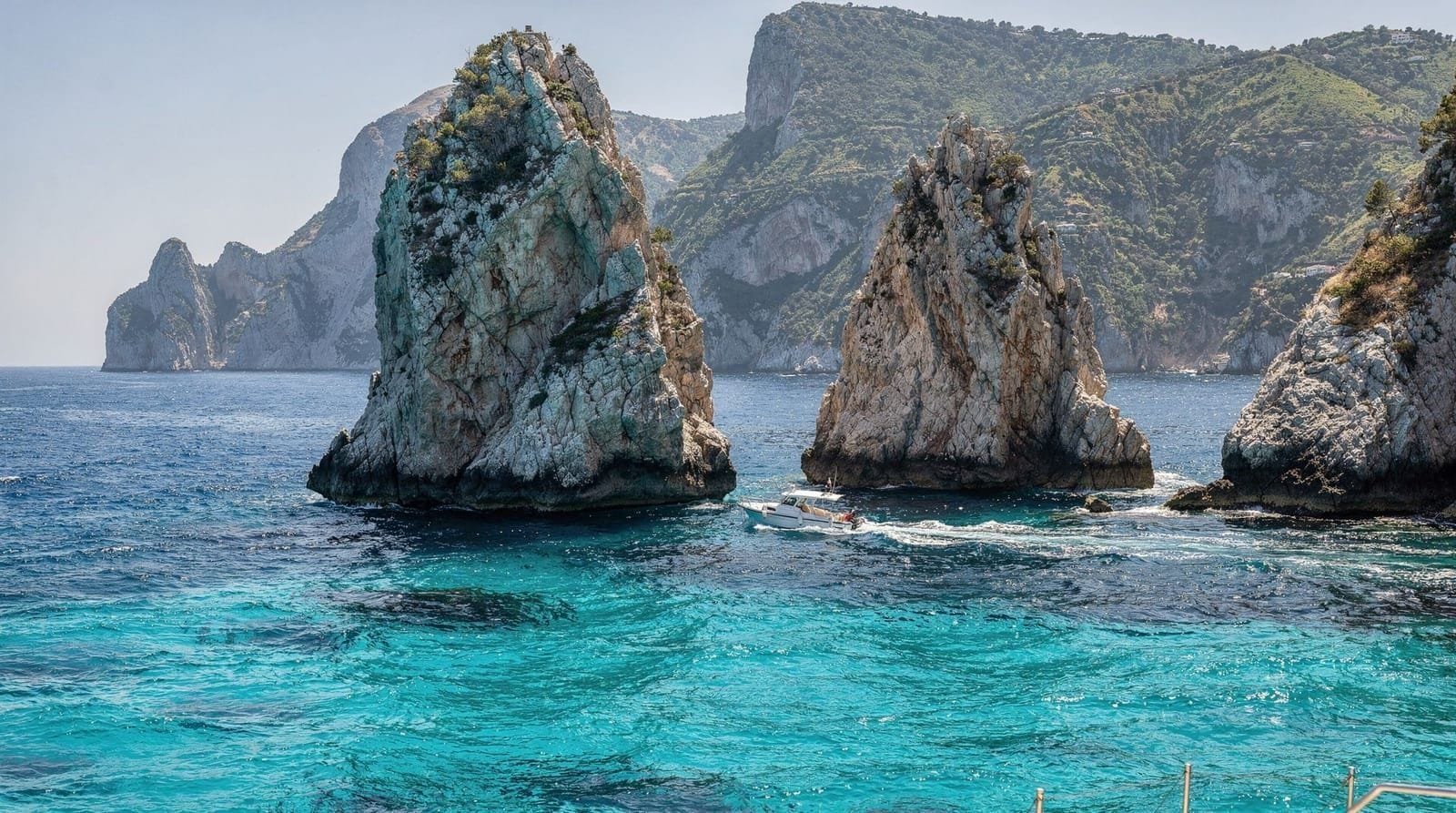
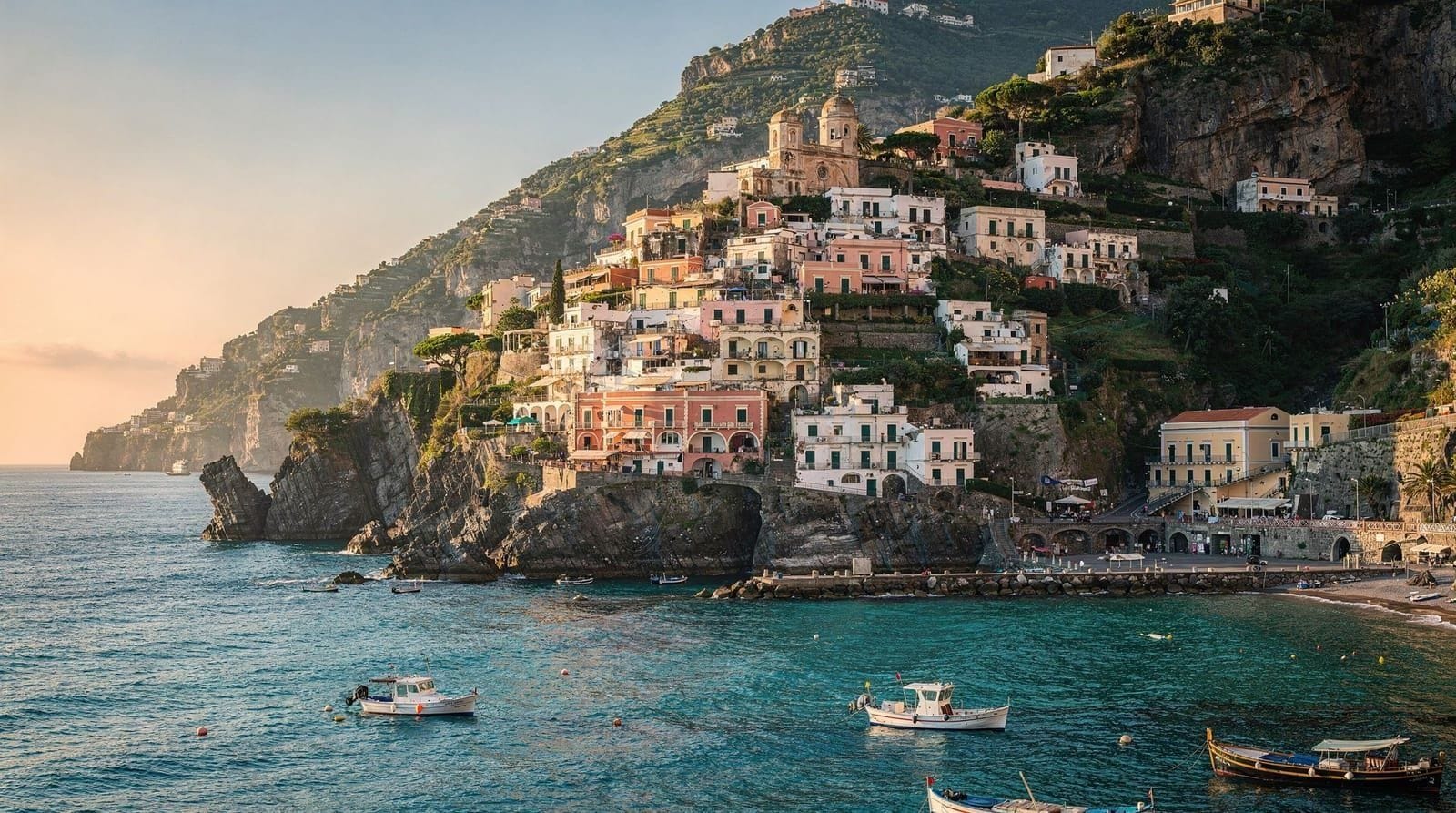
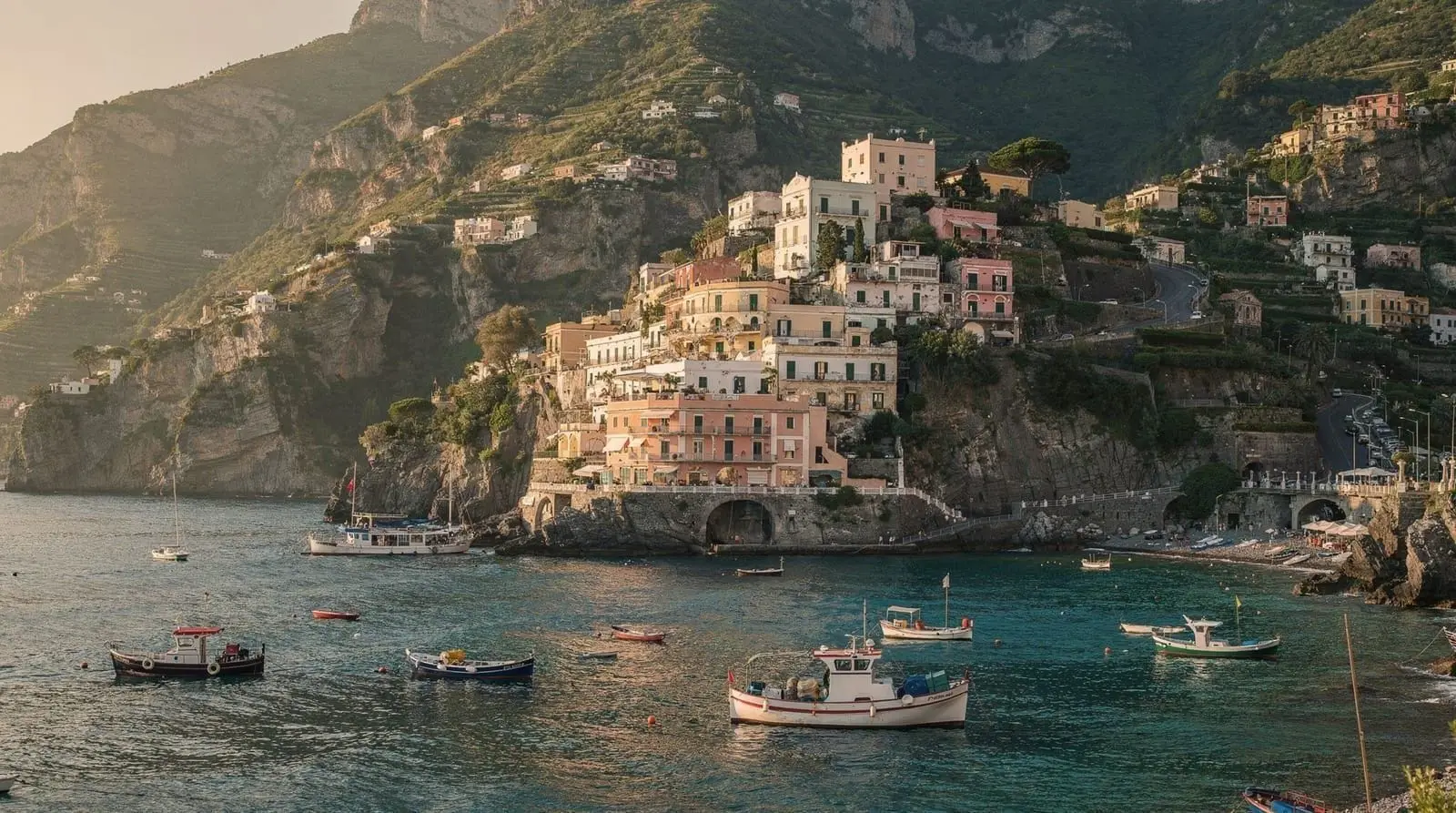
The Amalfi Coast is one of the most extraordinary stretches of Mediterranean coastline in Europe. Cliffs dropping into turquoise water, pastel-coloured villages draped across vertical rock faces, lemon groves and bougainvillea, ferry boats threading between white-walled ports. The photographs are accurate — the coast really does look like that.
The problem is distance. Rome is roughly 280 km from Amalfi town in a straight line, but the route involves either a motorway-then-coastal-road combination or a train-then-bus combination, neither of which is fast. The honest door-to-door transit time from central Rome to a beach chair in Positano is 3h30–4h each way.
Do the arithmetic: if you leave Rome at 07:00 and return at 21:00, you have 14 hours. Subtract 7–8 hours of transit. You are left with 6 hours on the coast — on a good traffic day. On a bad one (a summer Saturday, for instance), you might have 4 hours and spend 5 hours each way on the road.
This is not a reason to skip the Amalfi Coast. It is a reason to plan your visit honestly.
| Where | Positano, Amalfi town, Ravello — Campania coast |
| Travel time from Rome | Around 3h30–4h each way, door to door |
| Cost | Around €25–40 DIY, or €65–120 guided tour, each way included |
| Time on the coast (day trip) | Roughly 4 hours, split across towns |
| Better option | 1–2 nights in Positano, Praiano or Ravello |
| Booking | Guided tours 1–2 weeks ahead in June–September |
What “a day trip to the Amalfi Coast” actually gives you
Let us be precise. If you take a guided coach tour departing Rome at 07:30, the typical itinerary looks like this:
- 07:30 depart Rome
- 10:30–11:00 arrive Positano (2h30–3h travel time on a good day)
- 11:00–13:00 free time in Positano: walk down to the main beach, photograph the village from the water, eat lunch
- 13:00 reboard coach to Amalfi town (45 minutes)
- 13:45–15:45 free time in Amalfi: Piazza del Duomo, the cathedral, the port, gelato
- 15:45 begin return journey
- 18:30–19:30 arrive back in Rome (return is often faster as traffic thins)
Total time on the Amalfi Coast: approximately 4 hours, split across two towns. You will see the coast. You will not experience it — not the early morning light before the tour buses arrive, not an evening aperitivo with the village to yourself, not a swim without ten boats anchored nearby.
When a day trip is worth it
A day trip from Rome to the Amalfi Coast makes sense if:
- You have visited before and know what you are getting
- You are happy with a visual impression rather than a deep experience
- Your itinerary does not allow an overnight stop in the south
- You are travelling with people who have mobility limitations and prefer a guided transport option
It does not make sense if this is your only chance to see the Amalfi Coast and you want to actually swim, explore the towns at leisure, or walk any of the coastal paths.
The boat tour option: a smarter day on the coast
One alternative worth considering: rather than travelling the coastal road, some tours combine the train to Naples or Salerno with a boat tour along the coast. You board a vessel at Salerno or Sorrento and cruise past Positano, Praiano, and Amalfi from the water — returning to port by late afternoon.
This is genuinely beautiful and eliminates the coastal road congestion entirely. You see the coastline in its best context (from the water), you can swim off the boat in calmer bays, and the logistics are cleaner.
Amalfi Coast and Positano day trip from Rome with a coastal boat cruise — combines transport, guide, and time on the water.Getting there independently: train and bus
If you prefer independent travel over a guided tour, the route is:
-
Roma Termini → Napoli Centrale by Frecciarossa or Italo (1h10–1h15, from €14.90 on Italo advance). Trains run every 30–60 minutes from around 06:00.
-
Napoli Centrale → Salerno by regional Circumvesuviana or Trenitalia (40–50 minutes, approximately €4). Alternatively, direct Frecciarossa services stop at Salerno (1h45 from Rome, more expensive but saves the Naples connection).
-
Salerno → Amalfi or Positano by SITA bus (approximately 1h10 to Amalfi, 1h45 to Positano; tickets €1.30–2.60 bought at tobacconist or on app). Bus runs frequently in summer. In peak season, buses are crowded — be prepared to stand.
Alternatively from Naples: ferry from Molo Beverello to Amalfi or Positano (approximately 1h10–1h30 depending on destination, €18–25 one way). The ferry is more pleasant than the bus and keeps you off the coastal road — but it is weather-dependent and runs on a seasonal timetable.
Total DIY transport cost each way: approximately €25–40 (train to Naples, Naples to Salerno, Salerno to coast). Return journey reverses the route.
Booking the trains: Frecciarossa and Italo fares to Naples increase closer to departure, so booking 2–4 weeks ahead on an early morning train (the 06:00–06:40 departures) locks in the lowest fares and the earliest possible arrival on the coast. Buying a fully flexible fare rarely makes sense for a single day trip — the early trains are the ones you actually want, and cancelling is unlikely.
Luggage: If you are doing this as a stop between longer stays rather than a round trip back to your Rome hotel, Napoli Centrale has left-luggage facilities near the main concourse, which is worth knowing if your itinerary has you continuing south afterwards rather than returning to Rome the same night.
Time alert: The SITA bus timetable requires attention. Last buses back from Amalfi or Positano to Salerno in the evening may be earlier than you expect — typically the last useful bus from Positano is around 20:00–21:00 in summer but earlier in shoulder season. Miss it and you are looking at an expensive taxi.
Getting there by guided tour: the practical case
For most visitors making this journey for the first time, a guided coach tour from Rome removes the significant logistical complexity. The bus handles the A3 motorway, the coastal road, the car parks (which are not accessible to private vehicles in many areas), and the return schedule. You also have a guide to provide context on the villages and coast.
Guided Amalfi Coast and Positano day trip from Rome — coach transport, local guide, and free time in both towns.The case for staying overnight
The Amalfi Coast is at its best before 09:00 and after 17:00. In those hours, the day-trip crowds have not yet arrived or have already left. The light is extraordinary, the streets are quiet, and the villages reveal their actual character rather than performing for the tourist economy.
A night in Positano at a place like Hotel Miramare or the more affordable Villa Nettuno, or a night in Ravello (quieter and genuinely off the day-trip circuit), transforms the experience entirely. Even Amalfi town has a calm evening quality when the day-trippers leave.
If you have a full week in Rome and can spare two nights for a southern excursion, the combination of Naples (one night, for pizza and the archaeological museum), the Amalfi Coast (one night in Positano or Ravello), and then the train back to Rome is one of the most satisfying itineraries in southern Italy. Our 5-day Rome and Naples itinerary has a detailed version of this route.
Combining the Amalfi Coast with Pompeii
Some tours combine Pompeii and the Amalfi Coast in a single day from Rome — departing very early (06:30) and covering Pompeii in the morning and the coast in the afternoon. This is one of the most demanding possible day trips from Rome:
- Total day length: approximately 14–15 hours
- Time at Pompeii: 2–3 hours (not enough for a comprehensive visit)
- Time on the Amalfi Coast: 2 hours
- Time in transit: 8–9 hours
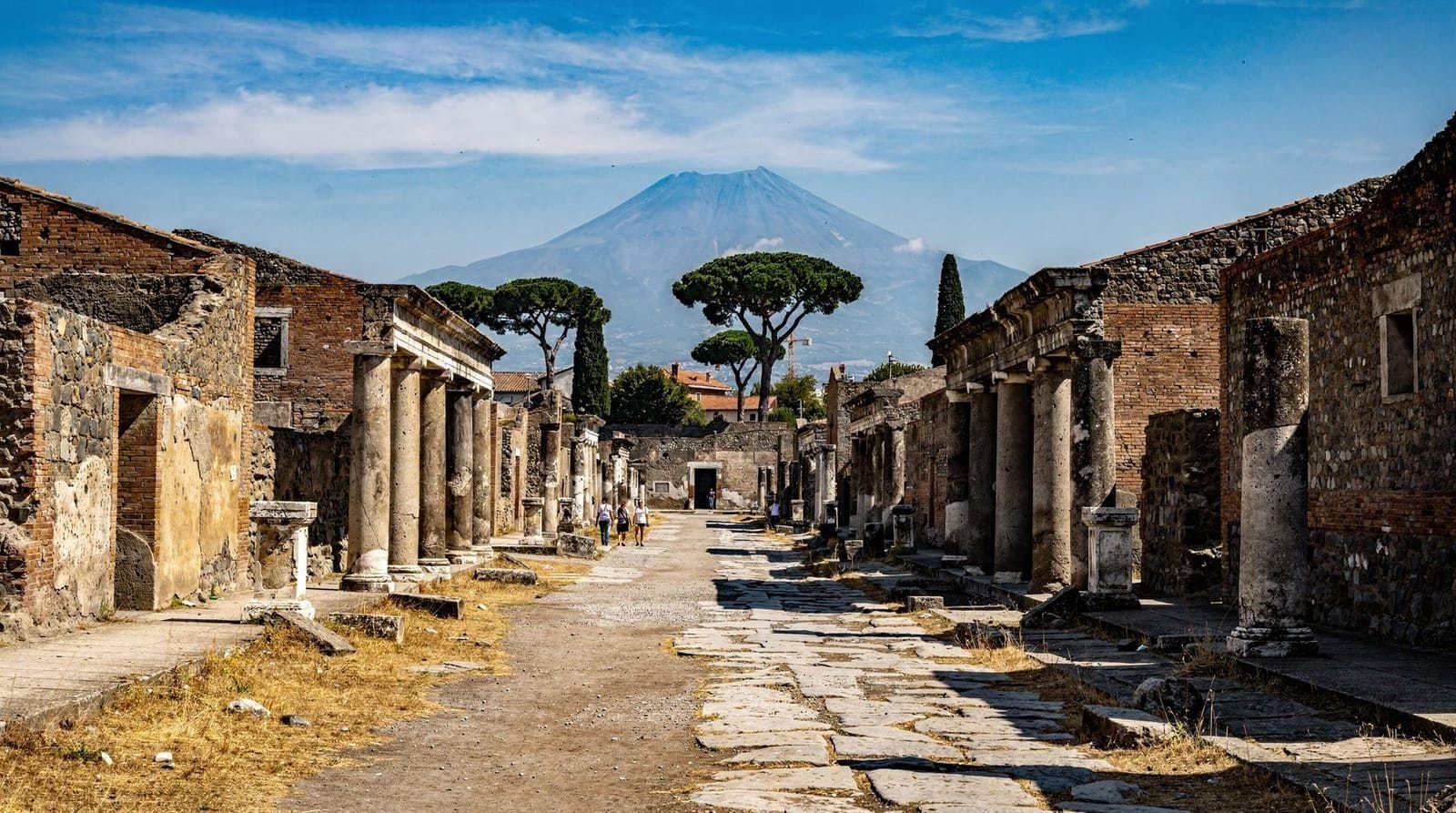
It is a viable option if both Pompeii and the coast are items you want to tick off with limited days, rather than destinations you want to genuinely experience. Our Pompeii from Rome guide has the detailed logistics if you want to consider Pompeii as a separate day.
Rome to Pompeii, Amalfi Coast, and Positano combined day trip — the long option if you want both destinations in one day.What the Amalfi Coast actually offers (so you know what you are choosing)
Positano is the most photogenic. Stacked houses in pink, white, and terracotta rising above a small beach. The main beach (Spiaggia Grande) is pebbly and gets very crowded. The village above is boutique shopping and restaurant terraces. Genuinely beautiful from every angle.
Amalfi town is a working port with a proper medieval centre. The Duomo di Sant’Andrea (striped black-and-white marble, 9th-century origins, elaborate staircase) is worth entering (€3, includes the cloister). The Piazza del Duomo is lively without feeling entirely fake. Easier to navigate than Positano.
Ravello sits 350 metres above the coast — cooler, quieter, and more aristocratic. Villa Rufolo (Wagner composed part of Parsifal in the garden) and Villa Cimbrone (famous infinity terrace, the Terrazza dell’Infinito) are the draws. Ravello is the least typical “Amalfi” experience but the most peaceful. Reachable by bus from Amalfi town (20 minutes).
Praiano is between Positano and Amalfi, smaller and less touristed. Good for swimming (Marina di Praia beach), limited sightseeing.
| Town | Character | Time needed | Day-trip friendly? |
|---|---|---|---|
| Positano | Photogenic, stacked, boutique-heavy | 1.5–2h | Yes — main stop |
| Amalfi town | Working port, proper centre, Duomo | 1.5–2h | Yes — main stop |
| Ravello | Elevated, aristocratic, gardens | Half day | No — needs a detour |
| Praiano | Small, quiet, good swimming | 1–1.5h | Only with extra time |
For a day trip with only 3–4 hours on the coast, the Positano–Amalfi combination is the most efficient use of time. Ravello requires half a day to justify the detour from the coast road, which is why it suits an overnight stay far better than a single day. If you want the full logistics of comparing a rushed day against staying over, our day trip vs overnight guide breaks down both approaches directly, and the train vs tour comparison covers whether DIY transport or a guided coach suits you better.
Practical details for 2026
Reservations: Guided tours should be booked 1–2 weeks in advance in peak season (June–September). Some July and August dates sell out.
Traffic: The Statale 163 (the coastal road) is a single carriageway with frequent buses, delivery vehicles, and private cars. In summer it can operate at walking pace for stretches. Account for this in your timing.
Seasickness: If the journey includes a boat segment and you are susceptible to motion sickness, take appropriate medication. The coastal waters can be choppy in early morning or after afternoon winds.
Parking: Private vehicles cannot access most Amalfi Coast towns directly (Positano requires an entry permit; some areas restrict access by time of day). This is one of the stronger practical arguments for a guided coach over hiring a car.
ETIAS: Not yet required in June 2026. Expected to be mandatory from approximately April 2027. If you are planning a future trip, check the current status at travel.ec.europa.eu.
For an overview of all major day trips from Rome ranked by travel-time-to-experience ratio, see our best day trips from Rome guide. For train-specific options, see our day trips by train from Rome guide.
If the Amalfi Coast turns out to be too far
If you read the above and the travel time gives you pause, it is worth honestly comparing alternatives before committing. Capri, reached via a shorter train-plus-ferry combination through Naples or Sorrento, has a similar Mediterranean-island feel with a total transit time closer to 3 hours each way — see our Capri from Rome guide for the full comparison. Naples itself, only 1h10 away by high-speed train, offers a completely different but equally rewarding day — historic centre, Pompeii nearby, and genuinely excellent pizza — detailed in our Naples from Rome guide. Neither substitutes for the Amalfi Coast’s specific cliffside drama, but both are honest options if the 7–8 hour round trip does not fit your schedule. And if the whole point of the trip is coastal scenery rather than one specific village, the Sorrento and Amalfi destination overview covers the wider area, including Sorrento as a base that shortens the final leg.
Frequently asked questions about Amalfi Coast from Rome: is the day trip worth it?
How long does it take to get from Rome to the Amalfi Coast?
What is the best way to reach the Amalfi Coast from Rome for a day trip?
Is Positano or Amalfi town better for a quick visit?
How much does an Amalfi Coast day trip from Rome cost?
Can I visit Positano and Amalfi town on the same day from Rome?
When is the worst time to visit the Amalfi Coast as a day trip?
Is the Amalfi Coast better as an overnight trip?
Does a guided day trip to the Amalfi Coast include Pompeii?
Top experiences
Bookable activities with verified prices and instant confirmation on GetYourGuide.