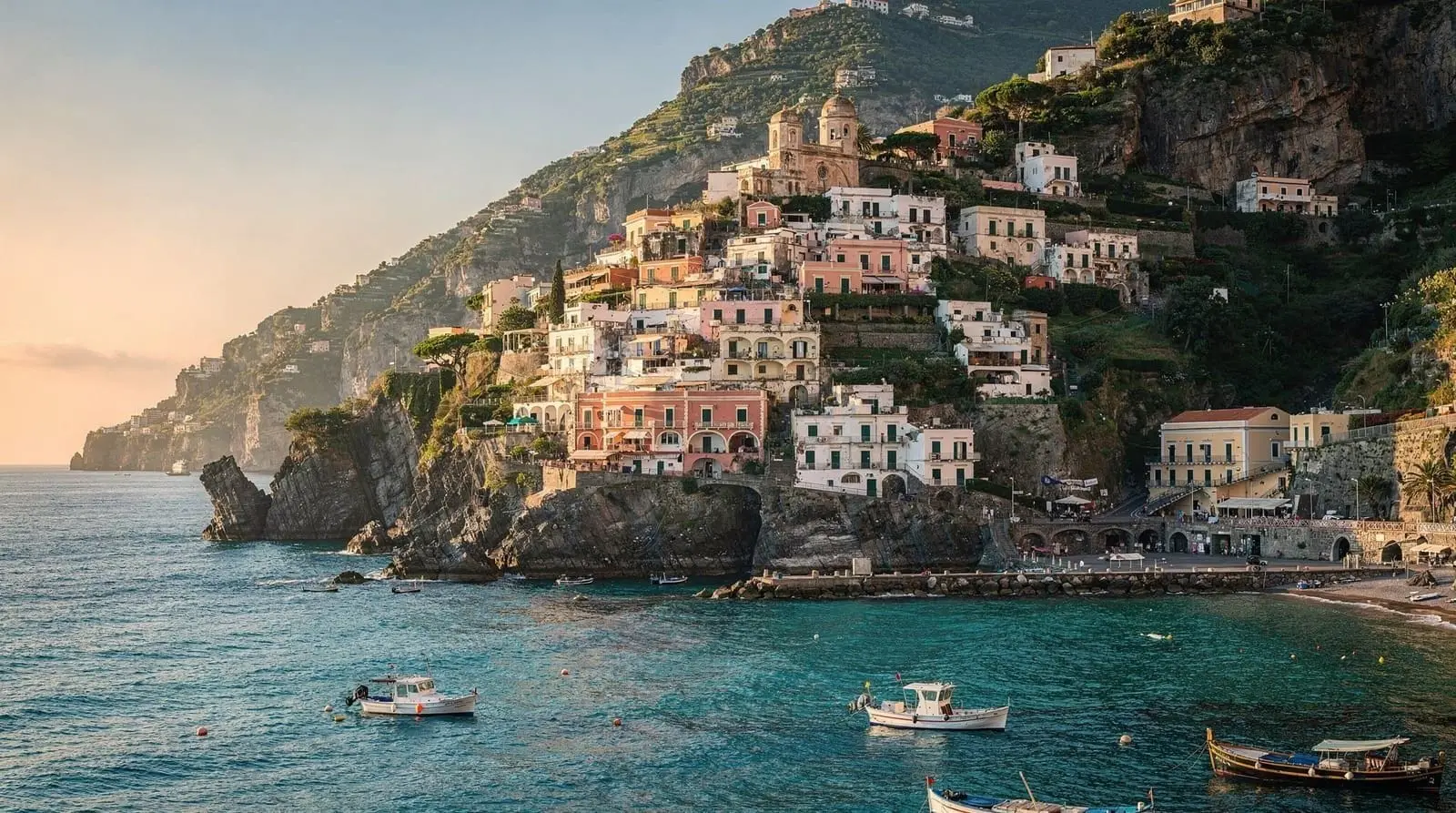
Sorrento & the Amalfi Coast
Sorrento & the Amalfi Coast from Rome is a long day. Here's the honest transit breakdown, what's worth the effort, and why one night helps.
From Rome: Day Trip to the Amalfi Coast and Positano
Quick facts
- Train from Rome
- Frecciarossa to Naples (1h10), then Circumvesuviana to Sorrento (+1h)
- Total transit each way
- ~2h15–2h30 minimum
- Best base
- Sorrento (direct train); Positano and Amalfi require boat or bus
- Day trip feasibility
- Possible but exhausting; overnight strongly recommended
- Best time
- May, June, September, early October
- Crowds
- Extreme July–August; boats + roads jam simultaneously
The honest truth about doing the Amalfi Coast from Rome in a day
This is the most asked-about day trip from Rome, and the one that most often ends in disappointment when people don’t go in with realistic expectations. The Amalfi Coast is one of the most beautiful coastlines in the world. It is also genuinely far from Rome, and the last stretch of the journey involves either a boat, a winding coastal road, or both.
The math: Rome Termini to Naples Centrale by Frecciarossa is 1h10. Naples to Sorrento by Circumvesuviana regional train is 1h. That’s already 2h10 each way, not counting connections or the time to get from Sorrento to Positano (1h by SITA bus or 40 minutes by boat). On a full summer day, you might spend 4h30 in transit to get 5–6 hours on the coast.
That’s doable. It’s just not what the Instagram version of this trip looks like.
This guide is for people who want to do it properly — whether that’s a long day trip from Rome, or a smarter two-night plan.
Understanding the geography: Sorrento vs Positano vs Amalfi
The Amalfi Coast is a 50-km stretch of cliff road from Positano to Vietri sul Mare, with the town of Amalfi roughly in the middle. Sorrento is not technically on the Amalfi Coast — it’s on the Sorrentine Peninsula, 25 km west. But Sorrento is the practical transit hub because it has the Circumvesuviana train connection from Naples.
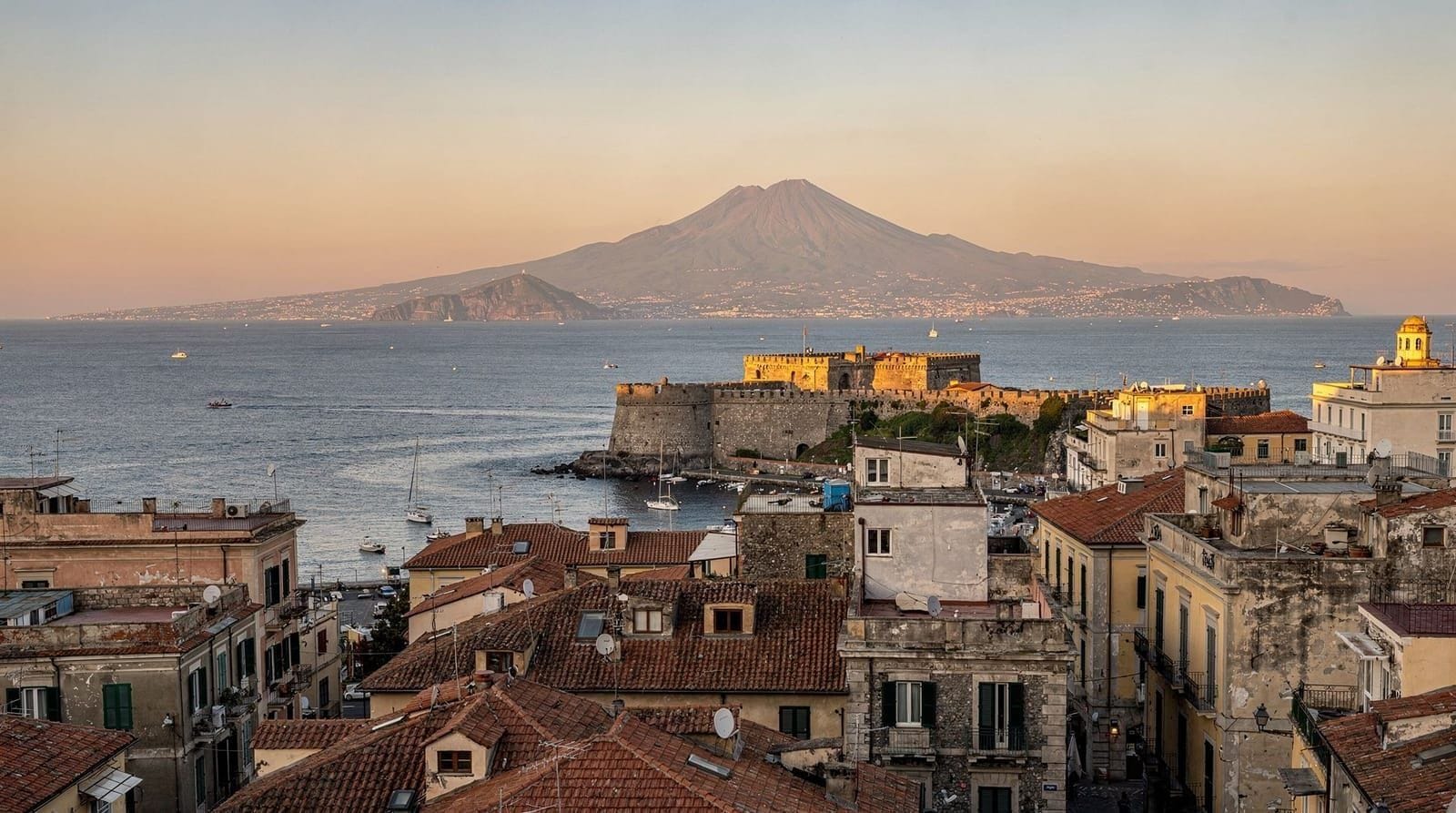
- Sorrento: easiest to reach from Rome. Pleasant town, good food, views over the Bay of Naples toward Vesuvius. Charming but not visually dramatic in the way Positano is.
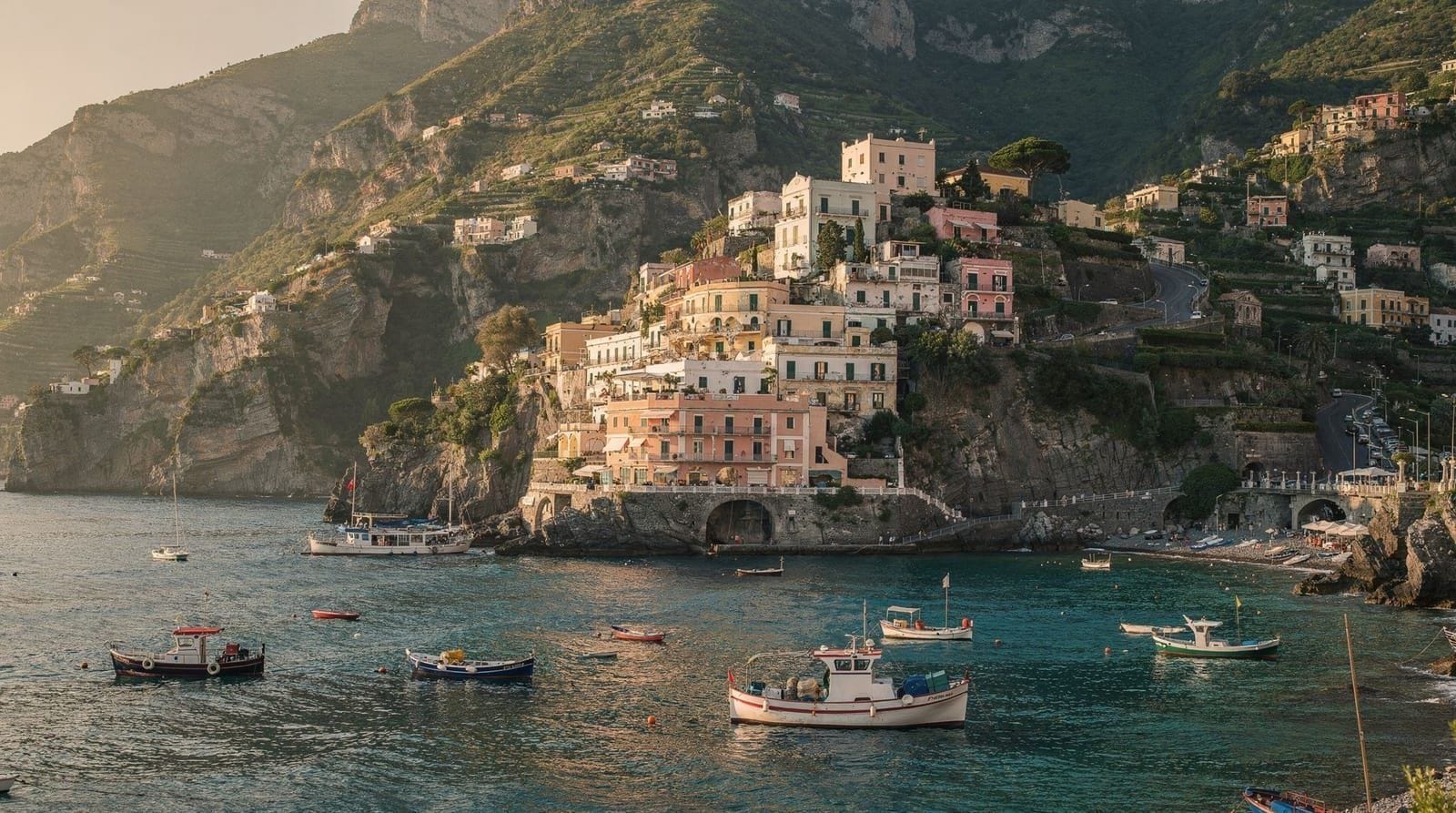
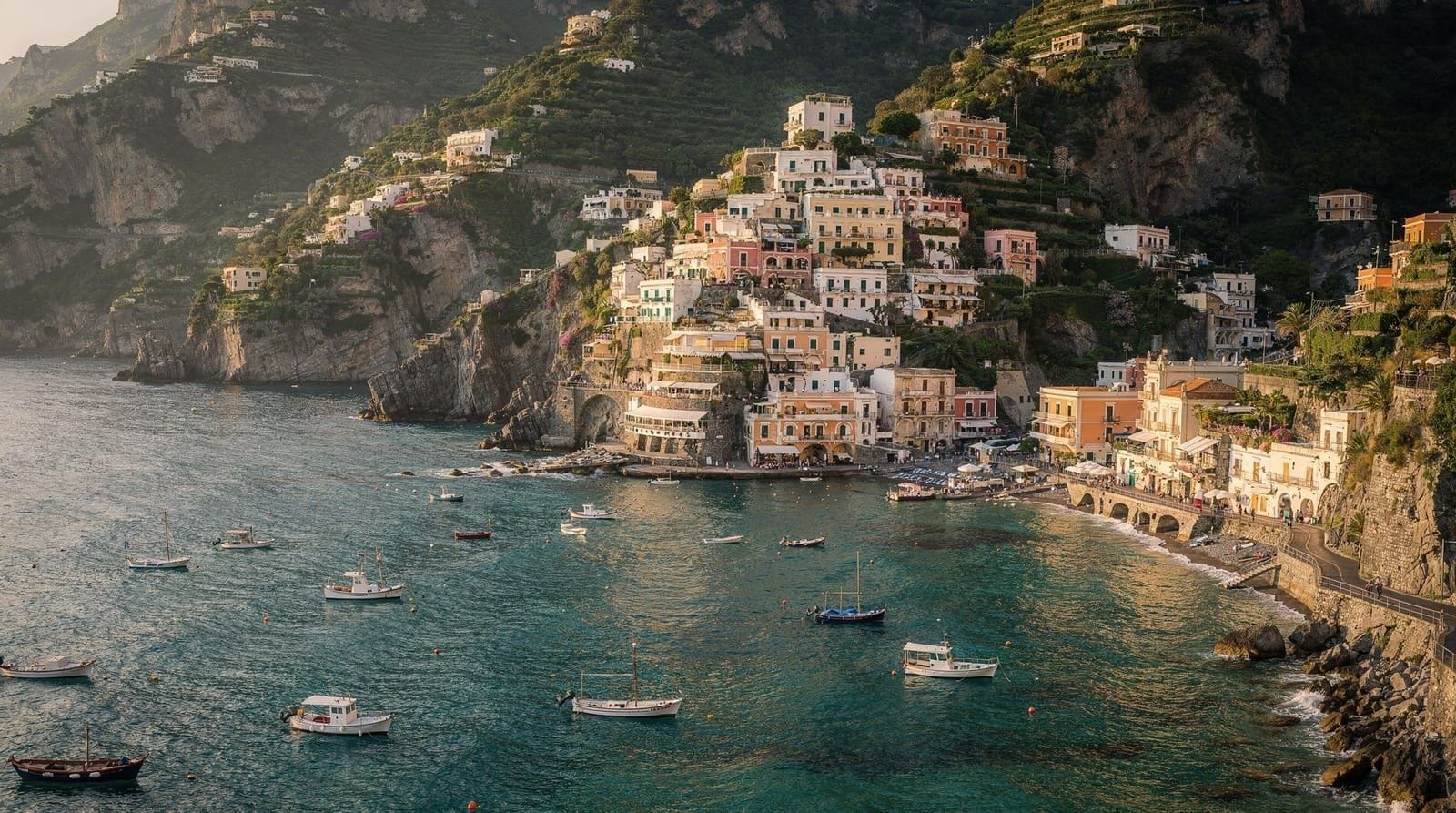
- Positano: the postcard village — pastel houses cascading down a cliff face, boats, two beaches. 45–60 minutes from Sorrento by boat (summer services), or 1h by bus. The town itself is tiny; most people spend 2–3 hours.
- Amalfi town: larger, more commercial, impressive cathedral, historical maritime republic. 1.5–2 hours from Sorrento by boat or bus.
- Ravello: hilltop village above Amalfi, famous for its gardens (Villa Cimbrone, Villa Rufolo). 30 minutes by bus from Amalfi. Worth it for the views.
For a single day from Rome: Sorrento + Positano is the most common and realistic combination. Do not try to reach Amalfi town on the same day unless you’re taking an organised tour or have a private driver.
Getting there: the train + Circumvesuviana route
Step 1: Rome Termini → Naples Centrale Frecciarossa or Italo high-speed train: 1h05–1h15. First trains depart around 6:00 am. Book at trenitalia.com or italotreno.it. Fares: €25–€65 each way (book 2–3 weeks ahead for the best prices).
Step 2: Naples Centrale → Sorrento The Circumvesuviana is a regional train run by EAV (not Trenitalia). Buy tickets at the dedicated Circumvesuviana counter in Naples Centrale (lower level, follow signs). Cost: €3.90 each way. The train is slow (1 hour), crowded, and not air-conditioned. Keep your bag in front of you — pickpockets work this route.
Total time Rome → Sorrento: approximately 2h15–2h30 including connection.
Circumvesuviana notes: trains depart approximately every 30–40 minutes. Check the EAV schedule at eavsrl.it. The service is reliable but not frequent enough to be casual about. If you miss a train, you lose 40 minutes.
Getting from Sorrento to the coast
By boat (summer season, April–October) The most pleasant option. Ferry services operate from Sorrento to Positano (35–45 minutes, €15–€20), Amalfi (1h10–1h20), and Capri. Timetables from Caremar and Alilauro vary by season. Book seats on popular crossings in advance in July–August or expect standing.
By SITA bus The SITA Amalfi Coast bus (route 5090/5091) runs from Sorrento through Positano to Amalfi. It’s cheap (€2.50–€4 for most legs) and offers extraordinary views — but the road is narrow, buses are often delayed, and in summer the journey can take much longer than the scheduled time. Not recommended as a main transport plan on a tight day-trip schedule.
Honest note on the coastal road: the SP163 Amalfitana is one of the most beautiful roads in Italy. It’s also one of the most congested in July–August. Traffic jams of 1–2 hours are common on summer weekends. This is not a hypothetical.
Organised day tours: who they’re best for
For most Rome-based visitors, an organised day tour to the Amalfi Coast removes the stress of Circumvesuviana logistics, SITA bus timing, and boat scheduling. A good tour picks you up, handles connections, and brings you back — letting you focus on the scenery rather than the timetable.
The standard Amalfi Coast and Positano day trip from Rome covers both towns with a guide, typically including a coastal boat segment.
For a combination that also covers Pompeii on the same day, the Pompeii, Amalfi, and Sorrento day trip is popular — though very full. Honest assessment: this itinerary works best for people who want to cover ground rather than linger.
If you prefer to go by train and have a car meet you at Sorrento, the Amalfi Coast private day trip by train and car offers the most flexibility.
What to do in Sorrento
Sorrento itself is worth 2–3 hours even if you’re just using it as a base. The old town (Centro Storico) is a compact grid of streets with good food shops, ceramic workshops, and views out over the Bay of Naples.
Don’t miss:
- Via San Cesareo: the main pedestrian shopping street; local limoncello, olive oil, mozzarella. Much better quality than the souvenir shops near the port.
- Villa Comunale gardens and cliff views: free access; dramatic drop down to the Bay of Naples with Vesuvius directly opposite.
- The Marina Grande (not the ferry port — the small fishing harbour below the town): quieter than the main port, a few good seafood restaurants with nets hanging out to dry.
Where to eat in Sorrento:
- Ristorante Il Buco (Via Rampa Marina Piccola 5): Michelin one-star, local ingredients, seasonal menu. Worth the splurge for a proper lunch (€40–€60 per person without wine).
- Pizzeria Da Franco (Corso Italia 265): reliable, cheap, no fuss. Pizza €7–€12.
- Bar Fauno (Piazza Tasso): for a granita di limone or a café corretto. The square is touristy but the bar is proper.
Positano: expectations vs reality
Positano is extremely photogenic. It is also extremely crowded, extremely hilly (the main beach is at the bottom; you arrive at the top), and the beach itself is a pebble slope with sun loungers rented at €20–€30 per person. The sea is clear but the beach is not large.
That said, walking through the village, having a glass of Falanghina at a terrace bar overlooking the colourful houses and boats below, is genuinely one of the better experiences southern Italy offers.
Budget 2–3 hours: arrive by boat from Sorrento, walk down to the main beach (Spiaggia Grande), explore the village, have lunch or a drink with a view, boat back.
Avoid: the boutique shops selling “artisan” ceramics at €40–€80 that were made in Vietri sul Mare and shipped up the road.
The case for an overnight in Sorrento
If your Rome itinerary allows for it, two nights in Sorrento (or one in Sorrento and one in Positano) transforms this trip. You get:
- A day without the Rome–Naples transit stress
- Sunset over the Bay of Naples (genuinely different from midday)
- A morning boat to Positano or Capri before the day-trippers arrive
- A proper dinner in Sorrento where you’re not watching the clock
Hotels in Sorrento range from budget B&Bs around €70/night to clifftop hotels with infinity pools at €300+. The area around Via Luigi De Maio has several mid-range options (€100–€160) with good access to both the port and the town centre.
Seasonal considerations
April–June: ideal. Wildflowers on the cliffs, sea warming up, manageable crowds on weekdays. Boat services fully operational from late April.
July–August: the coast is at full capacity. Positano beach is wall-to-wall. Roads are congested. Ferry queues are long. It’s still beautiful but the experience is more stressful than the travel content suggests. If you must go in August, take an organised tour — they handle queuing.
September–October: often the best month. Warm sea (23–24 °C), thinner crowds, lower hotel prices, the light is extraordinary in October.
November–March: boat services reduced or suspended. SITA bus more reliable (no traffic). Some restaurants closed. Not ideal for a beach-focused trip but perfectly fine for walking and scenery.
Ravello: the alternative to the coast road
Most visitors arrive at the Amalfi Coast by ferry or bus, queue for Positano, and leave. A smaller number discover Ravello.
Ravello is a hilltop village above Amalfi town, accessible by a 25-minute winding bus ride from Amalfi (€1.30, runs frequently). The population is around 2,400 people. There are no major beaches — this is a village for gardens, views, and music.
Villa Rufolo (entry €7): 13th-century Moorish-Gothic gardens on a clifftop terrace overlooking the sea. Wagner visited in 1880 and declared it the setting for Klingsor’s magic garden in Parsifal. The annual Ravello Festival (June–August) holds open-air concerts here.
Villa Cimbrone (entry €8): 10th-century grounds with the famous Terrazza dell’Infinito (Terrace of Infinity) — a balustrade of marble busts at the cliff edge, views stretching 300+ km on clear days. The grounds include a rose garden, a Gothic crypt, and various belvedere viewpoints. E.M. Forster, D.H. Lawrence, and Greta Garbo all visited in the early 20th century.
For a day trip from Rome, Ravello is a step too far — you’d add 30+ minutes each way from Amalfi town. But for anyone spending 2+ days on the coast, it’s more rewarding than a second visit to a crowded Positano beach.
What the Amalfi Coast actually smells like: the lemon economy
The Amalfi Coast is one of the last places in Italy producing sfusato amalfitano lemons — a variety larger, less acidic, and more aromatic than standard lemons, PGI-protected since 1994. You’ll see the terraced lemon groves (limoneti) climbing the hillside above Praiano, Minori, and Amalfi town.
Limoncello: the lemon liqueur made from sfusato amalfitano zest (with a 28–30% alcohol content in the traditional version) is genuinely different from the limoncello sold in Rome and Naples. The best versions are produced by small coastal manufacturers. Look for bottles that list only three ingredients: lemon zest, alcohol, water, sugar — no artificial flavouring.
Where to buy: avoid the tourist shops on the main Amalfi waterfront — they sell standard limoncello at tourist prices. Lemon products from the Cooperativa Sole (based in Ravello and Minori) are producer-direct and significantly better quality.
The lemon terraces: the maintenance of the terraced limoneti is disappearing — it’s physically demanding work and the economic return doesn’t match the effort. Some NGOs and tourism initiatives now fund terrace maintenance through tourism income. Walking through an active lemon grove (some farms offer short visits) is a genuinely interesting agricultural tourism experience.
Driving vs. public transit vs. tour
Driving the Amalfi Coast road: the SP163 Amalfitana is a narrow two-lane road clinging to a cliff. It’s spectacular and extremely congested in July–August. Local buses, tourist coaches, delivery lorries, and a constant stream of rental cars all share the same cliff-face road. Overtaking is often impossible. Average speed on summer weekends: 20–25 km/h.
Practical note for day-trippers from Rome: renting a car in Rome and driving to the Amalfi Coast adds 3 hours each way, motorway tolls, and the challenge of parking in towns where parking barely exists. If you want a car on the coast, rent locally in Sorrento or Naples — don’t bring a Rome rental.
Public transit on the coast: entirely viable for independent travellers with time flexibility. SITA buses connect Sorrento–Positano–Amalfi along the coast; ferry boats operate faster and more pleasantly between the same points in summer. The ferry is almost always preferable to the bus in season.
Organised tours: remove the logistics burden for first-time visitors. The main trade-off is fixed timing — you arrive and leave when the tour does, not when you want to.
Practical trip-planning checklist for the Amalfi day
Getting this day right is primarily a logistics exercise. Here’s what to organise before you leave Rome:
Train booking (trenitalia.com or italotreno.it):
- Rome → Naples: book at least 2 weeks ahead. Target the 6:45–7:15 am departure from Termini for maximum time.
- Naples → Rome (return): book a return that leaves Naples no earlier than 7:30 pm. Missing the 8:00 pm departure means arriving Rome close to midnight.
Circumvesuviana (eavsrl.it):
- Check the timetable and note the train time from Naples to Sorrento. Platform is lower level of Naples Centrale (Circumvesuviana section, separate from mainline).
- Allow 20 minutes from the mainline platform to the Circumvesuviana area.
Ferry (snav.it or caremar.it):
- Check Sorrento–Positano ferry timetable. In summer, first departures around 9:00–9:30 am. Book online if you want guaranteed seats.
- Book return ferry from Positano to Sorrento at a specific time — you need to be back in Sorrento at least 1 hour before your Circumvesuviana to Naples.
Total day (early departure scenario):
- 7:00 am: depart Roma Termini
- 8:15 am: arrive Naples Centrale
- 8:35 am: board Circumvesuviana
- 9:35 am: arrive Sorrento
- 10:00 am: ferry to Positano
- 10:45 am: arrive Positano
- 12:30 pm: lunch in Positano
- 3:00 pm: ferry back to Sorrento
- 3:45 pm: Sorrento walk/explore
- 5:30 pm: board Circumvesuviana back to Naples
- 6:30 pm: arrive Naples
- 7:30 pm: Frecciarossa back to Rome
- 8:45 pm: arrive Roma Termini
This is a tight but achievable schedule. Pad 15–20 minutes on each connection for summer delays.
A gentler version: Sorrento-only, skipping the boat and bus
Not everyone wants to layer a ferry or SITA bus connection on top of an already-long train journey. If the transit stress of the Circumvesuviana-plus-boat combination sounds like more than you want to manage, a Sorrento-only day is a legitimate, calmer alternative — and honestly a better fit for travellers who find themselves fatigued by connections rather than energised by them.
Sorrento itself has genuine charm without requiring a second connection: the cliffside Villa Comunale gardens, the compact old town with its lemon-scented food shops, a proper long lunch at a place like Ristorante Il Buco, and views over the Bay of Naples toward Vesuvius that rival much of what people travel to Positano for, all reachable on foot from the Circumvesuviana station without a single further timetable to track. Skipping the Positano leg means you arrive at your leisure (no boat timetable to chase), can wander without a return-crossing deadline hanging over you, and still get a legitimate taste of the Sorrentine Peninsula rather than a rushed multi-stop circuit.
What you trade: Positano’s specific cliffside village aesthetic and the boat ride itself, both of which are genuinely worthwhile if you have the energy for the extra connection and the schedule flexibility to absorb a delayed crossing without missing your evening train home. But if this is one stop among several day trips on a busy Rome itinerary, a calmer Sorrento-only day may leave you in better shape for the rest of the trip than the full Sorrento-Positano combination, and it removes essentially all of the schedule risk that comes with summer ferry delays. It’s also a sensible fallback plan if you arrive in Naples behind schedule and the connecting ferry or bus to Positano no longer looks realistic — better a relaxed afternoon in Sorrento than a stressful scramble to make a coastal connection.
Day trip vs overnight: the honest comparison
The case for staying a night is made throughout this guide, but the trade-offs are worth laying out plainly:
| Day trip | One night in Sorrento | Two+ nights | |
|---|---|---|---|
| Time in transit | ~4.5 hours round trip | Same, but only once | Same, once |
| Time on the coast | 5–6 hours, rushed | Full day + evening | Multiple relaxed days |
| Positano | Yes, brief | Yes, unhurried | Yes, plus Amalfi/Ravello |
| Amalfi town | Not realistic | Possible | Yes |
| Evening/sunset over the bay | Missed | Yes | Yes |
| Total added cost | — | +€70–160 (hotel) | +€140–300+ |
If your Rome trip is 4 nights or fewer, the day trip is a reasonable compromise and this guide’s schedule makes it work. If you have 5+ nights and the Amalfi Coast is a genuine priority rather than a box to tick, one night in Sorrento changes the experience substantially — see the day trip vs overnight guide for a fuller breakdown, and the Amalfi Coast from Rome guide for additional routing options.
Capri as an alternative or addition
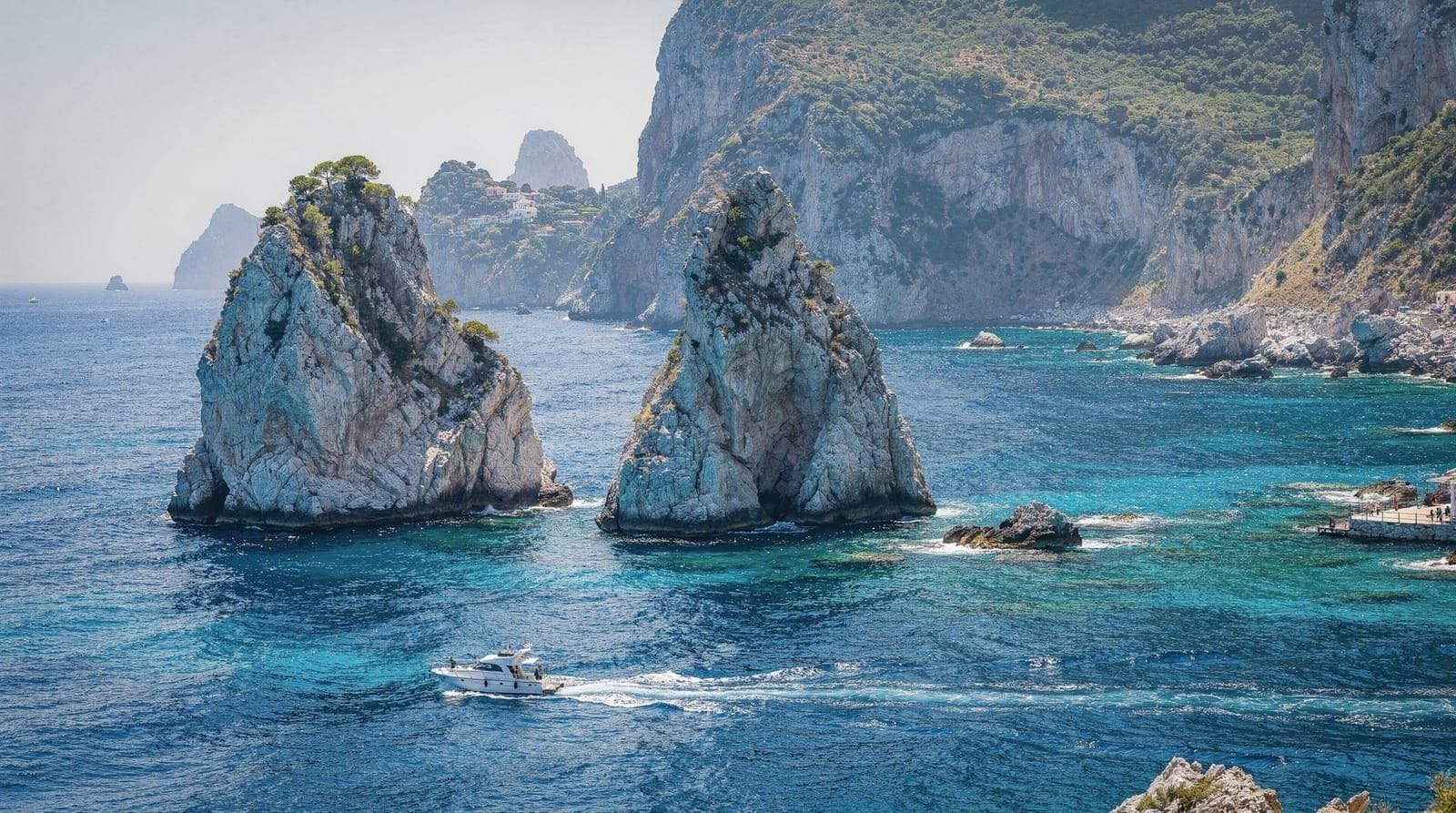
Some visitors weighing the Amalfi Coast should also consider Capri, reachable by ferry from Naples, Sorrento, or directly from Rome on some organised tours. Capri is a different kind of day — an island with the Blue Grotto, Anacapri, and the chairlift to Monte Solaro, rather than a coastal drive through cliffside villages. It shares some of the same logistics honesty as Positano: beautiful, heavily visited in summer, and best enjoyed with a plan rather than improvised on the day.
If you’re choosing between the two for a single day trip from Rome, Capri is slightly more self-contained (no coastal road traffic to worry about) while the Amalfi Coast offers more variety across several villages. Both share Naples as the practical gateway, and travellers with a bit more time often pair one of them with a Pompeii morning on the way down. Combining both properly needs at least two separate days — see the central Italy 10-day itinerary for how a longer trip can fit in Naples, Pompeii, Sorrento, Positano, and Capri without rushing any of them.
Pompeii and Amalfi Coast day tour by train from Rome is worth considering if you want to combine ancient history with the coast in a single organised day, accepting the fuller pace that comes with it.
Frequently asked questions about Sorrento & the Amalfi Coast
Is the Amalfi Coast doable as a day trip from Rome?
Yes, but it’s a long day. Plan on leaving Rome by 7:00 am and returning after 9:00 pm. You’ll spend roughly 4.5 hours in transit. Sorrento and Positano are achievable in one day; trying to add Amalfi town is usually too ambitious. If you find the idea of spending 4+ hours in transit for 5–6 hours on the coast acceptable, it works. Otherwise, stay one night.
What is the Circumvesuviana and is it safe?
The Circumvesuviana is a regional train connecting Naples to Sorrento via Pompeii. It’s the most direct route and perfectly safe — just crowded and not air-conditioned. The main thing to watch for is pickpockets: keep your bag in front of you and be aware in the Naples Centrale station lower level where the trains depart.
How do I get from Sorrento to Positano?
The easiest option in summer (April–October) is the ferry: roughly 35–45 minutes and €15–€20 one way. Boats depart from the main Sorrento port (Marina Piccola). The SITA bus is cheaper but much slower in summer due to coastal road congestion. Check ferry timetables at the port or at caremar.it.
What’s the best time to visit the Amalfi Coast?
Late May, June, and September–October are the sweet spots. The sea is warm, the wildflowers are out in May, and the crowds are manageable compared to July–August. Weekdays are always better than weekends on the coast.
Is Positano worth the extra travel?
For most people, yes — especially if you’ve come this far. The village aesthetic (pastel houses, cliff stairways, fishing boats) is genuinely what the photos show. But budget 2–3 hours there rather than trying to rush through in 90 minutes. The boat journey from Sorrento is part of the experience.
Are organised tours better than going independently?
For a first visit, organised tours remove a lot of logistics stress (Circumvesuviana timing, boat schedules, coastal bus delays). They also include a guide. For independent-minded travellers who’ve navigated Italian regional transport before, going solo costs roughly the same and offers more flexibility. The key advantage of a tour on this route is that a good operator builds in the timing buffers you’d otherwise have to figure out yourself.
Should I do a day trip or stay overnight on the Amalfi Coast?
If you have 5 or more nights in Italy and the coast is a real priority, one night in Sorrento is worth the extra cost — see the comparison table above. If your trip is shorter, the day-trip schedule in this guide is realistic and rewarding, just tiring.
Is Capri or the Amalfi Coast the better single-day option from Rome?
Both work well as a day trip, but they deliver different experiences: Capri is a self-contained island day without coastal-road traffic, while the Amalfi Coast offers more village variety at the cost of a longer, bus-and-boat-dependent journey. Neither is objectively better — choose based on whether an island or a coastal drive appeals more.
Top experiences
Bookable activities with verified prices and instant confirmation on GetYourGuide.