Esquilino neighborhood guide: multicultural Rome near Termini
Rome: City Sightseeing Hop-on Hop-off Bus with Audioguide
What is Esquilino like as a Rome neighborhood?
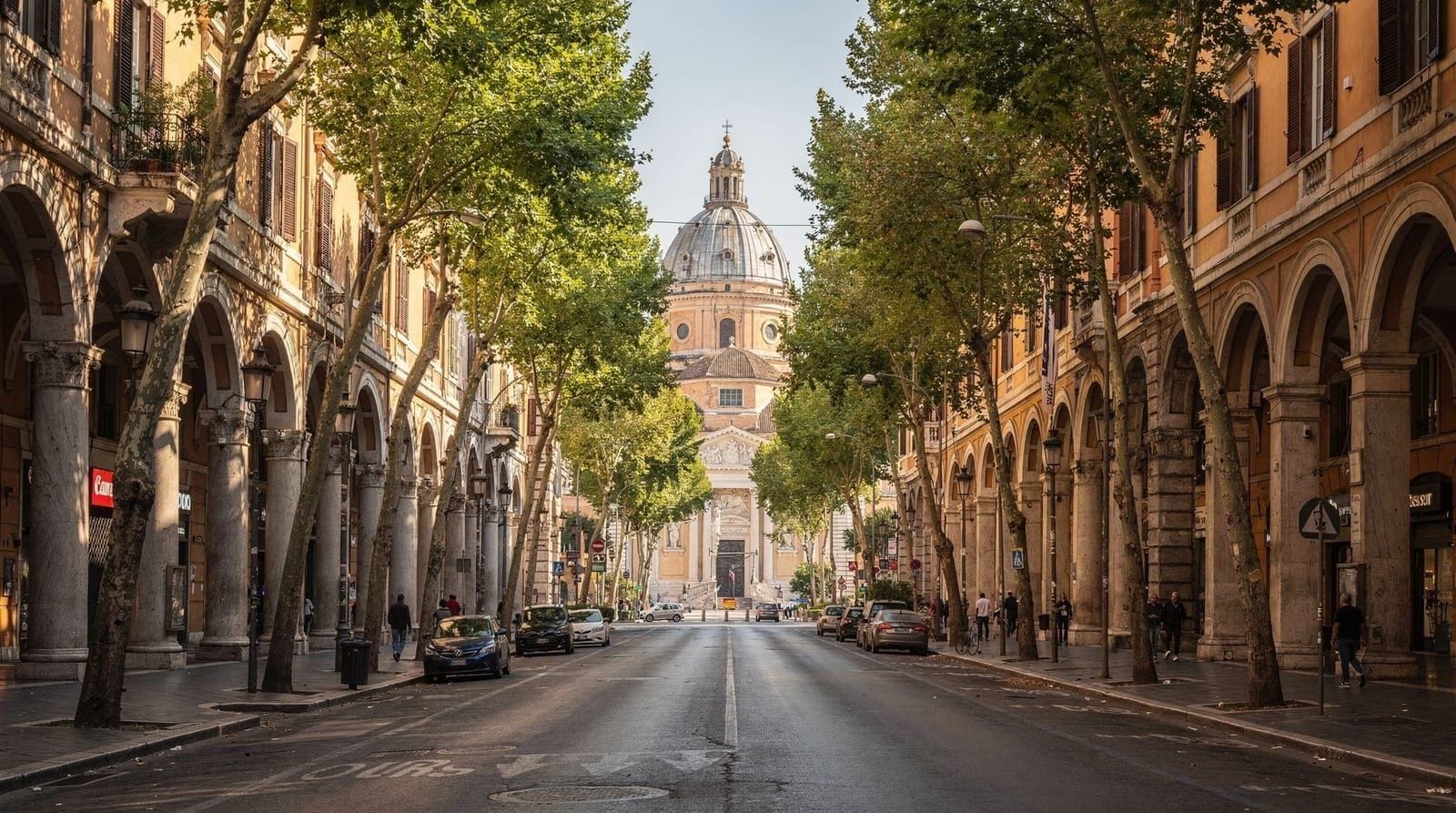
Esquilino is Rome's most multicultural neighborhood, surrounding the Termini station area and stretching toward Piazza Vittorio Emanuele II. It is practical, affordable, and genuinely Italian in the sense of real daily life — Bangladeshi, Chinese, Ethiopian, and Roman shops alongside each other. It has one extraordinary monument (Santa Maria Maggiore basilica), a good daily market, and the lowest accommodation prices of any central Rome neighborhood. The streets immediately around Termini are busy and require bag-awareness; further in, toward Piazza Vittorio, the area is residential and interesting.
The Rome that tourists skip, residents inhabit
The Esquilino is one of Rome’s oldest rioni (historic districts) — one of the seven hills of classical Rome, site of the gardens of Maecenas (Augustus’s cultural patron), and location of the imperial Domus Aurea. Today, it is primarily known to tourists as the area around Termini station, which is a fair but incomplete characterization.
The honest version: Esquilino is Rome’s most genuinely multicultural neighborhood. The streets around Piazza Vittorio Emanuele II function as a working-class immigrant district in the tradition of many European cities — Bangladeshi and Chinese shops occupy the same arcades as Roman hardware stores and Ethiopian restaurants. The neighborhood makes no effort to be charming for visitors. It is lived in, busy, functional, and interesting in ways that tourist-oriented neighborhoods are not.
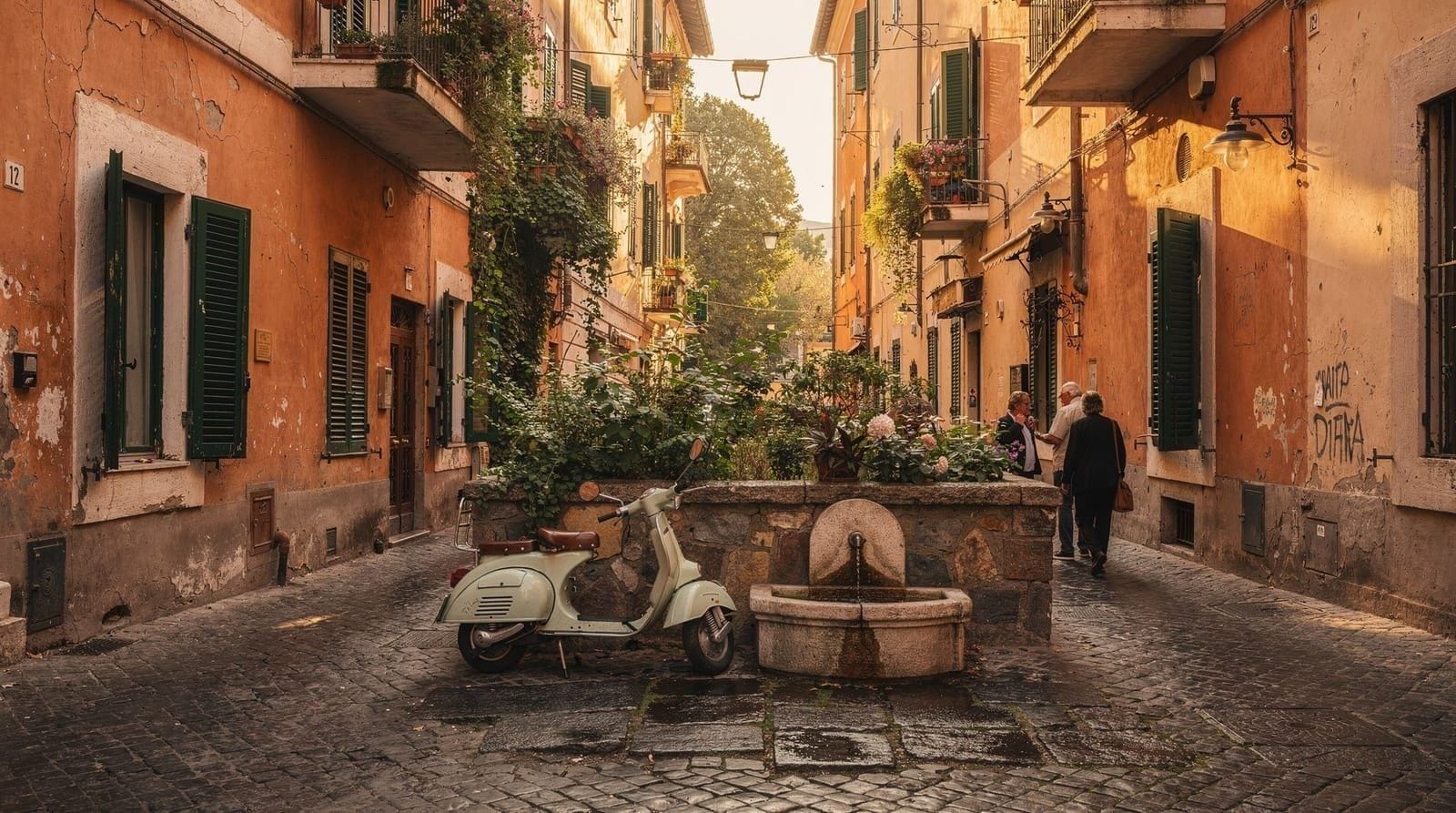
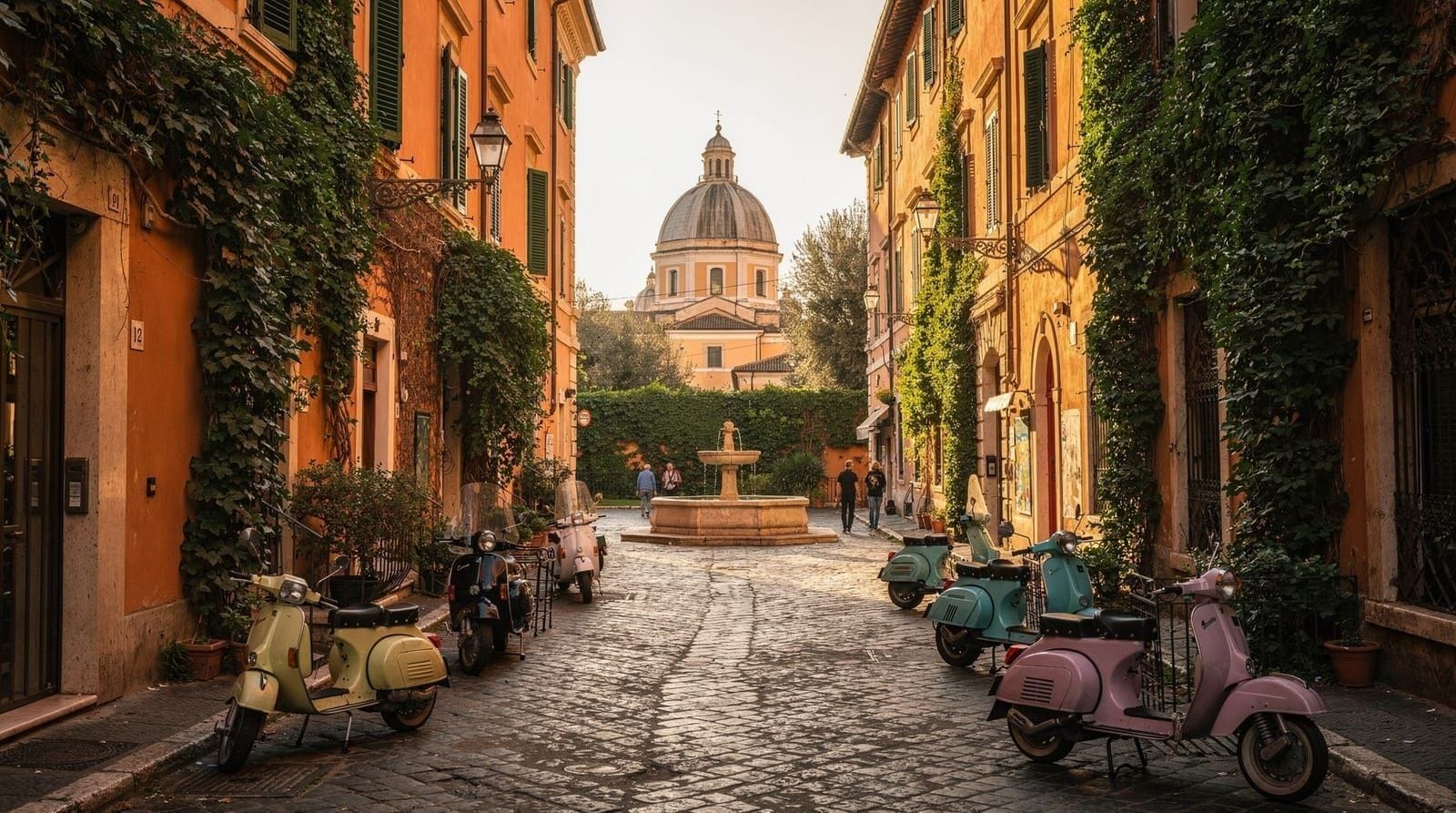
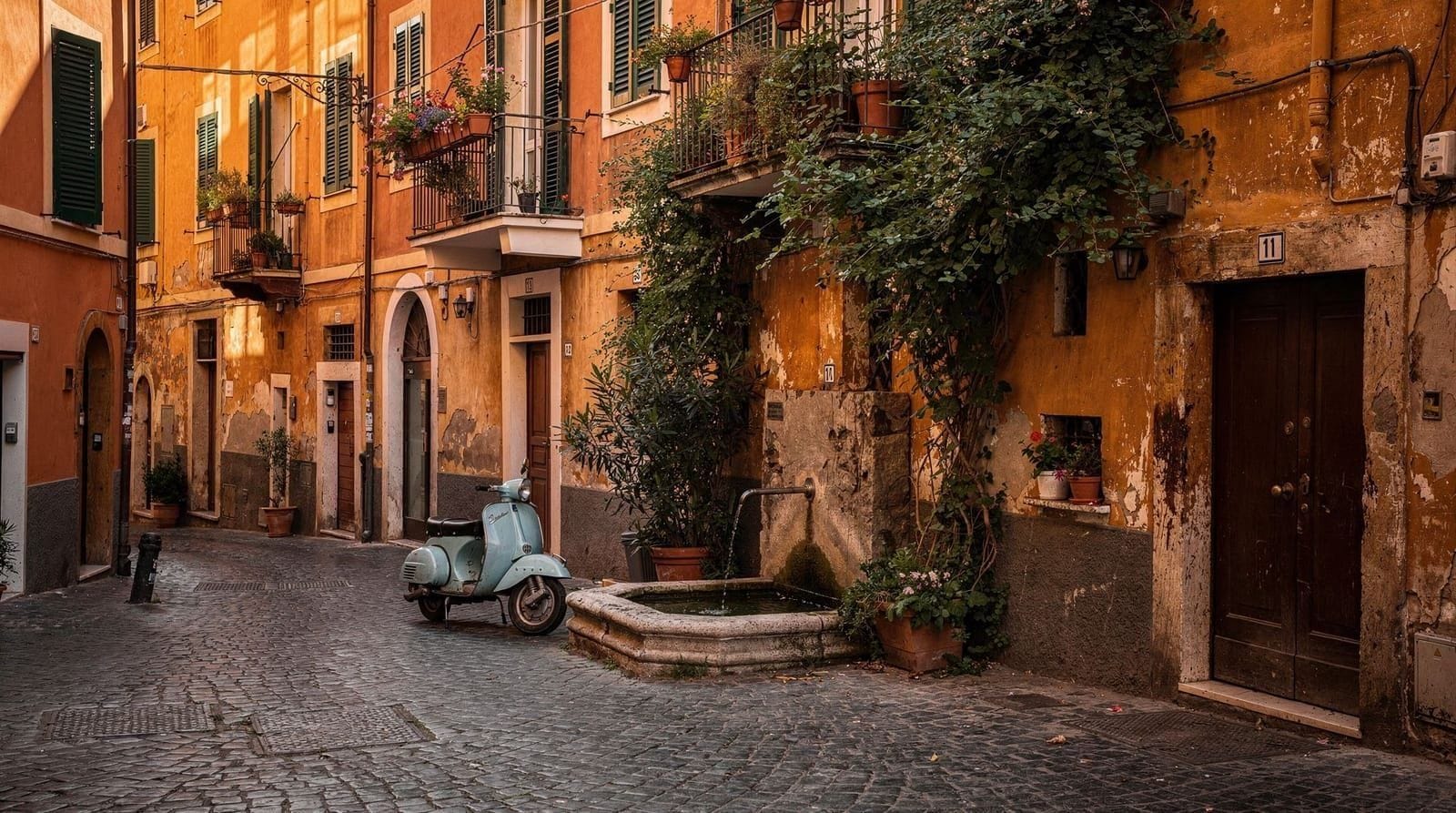
For travelers who want authentic daily-life Rome rather than the beautiful-but-staged version, Esquilino is a specific kind of reward. For travelers who want picturesque cobblestones and evening ambiance, it is the wrong choice.
| Where | East of Termini station, around Piazza Vittorio Emanuele II |
| Best for | Budget accommodation, transport connections, Santa Maria Maggiore |
| Accommodation | around €50–80/night budget, €90–130 mid-range |
| Getting there | Termini (Metro A/B, all mainline trains) |
| Watch for | Pickpockets near the Termini underpass and Metro A platforms |
The essential monument: Santa Maria Maggiore
Any guide to Esquilino must begin here. The Basilica di Santa Maria Maggiore sits at the top of the Esquilino Hill on Piazza di Santa Maria Maggiore — a 5th-century basilica that is simultaneously one of the most important and most undervisited of Rome’s great churches.
Most tourists pass the piazza on the way between Termini and Colosseum without entering. This is a significant loss.
What makes Santa Maria Maggiore exceptional:
The nave mosaics on the long nave walls date to the original 5th-century construction — these are among the oldest surviving monumental Christian mosaics in existence. The 27 panels (originally more, a few lost to later renovations) depict Old Testament scenes with a directness and technical sophistication that predates Byzantine stylization. These were created within living memory of Constantine’s legalization of Christianity — the church is practically young.
The apse mosaic (Christ crowning the Virgin, 13th century by Jacopo Torriti) is one of the great medieval mosaics of Rome.
The Borghese Chapel (Cappella Paolina) contains the famous icon of the Salus Populi Romani — a Byzantine-style Madonna traditionally attributed to St. Luke, venerated across centuries of Roman Catholicism.
The coffered ceiling, gilded with the first gold brought from the Americas (donated by Ferdinand and Isabella of Spain in the late 15th century), is both historically significant and visually overwhelming.
The crypt (accessible separately, small admission) contains the relic of the Santo Presepe — fragments held to be from the manger of Bethlehem, which gave the basilica its informal name “S. Maria Presepe” in early medieval Rome.
Practical notes: Free entry to the main basilica. Open daily from approximately 7 am to 7 pm. Dress code enforced. Usually significantly less crowded than Vatican or the Pantheon — on most mornings you can study the nave mosaics in relative quiet. The sacristy and museum (separate ticket) have additional historical objects.
Piazza Vittorio Emanuele II and the market district
Piazza Vittorio is Rome’s largest piazza by area — a grand 19th-century structure built during the post-unification construction of the national capital in the 1870s. The central garden (the Giardini di Piazza Vittorio) is a public park with trees, benches, and an improbable collection of objects: the ruins of a 2nd-century Roman nymphaeum (water display structure, known as the Trofei di Mario), a modern sculpture that has been controversial since its installation, and the Magic Door (Porta Alchemica) — a 17th-century gateway covered in alchemical inscriptions, installed by the Marquis of Palombara as an entrance to his garden. The inscriptions have never been definitively decoded.
The arcades surrounding the piazza on three sides contain Esquilino’s commercial spine — the multicultural shops that characterize the neighborhood. Bangladeshi spice merchants, Chinese wholesale clothing importers, Ethiopian grocery stores, halal butchers, and Roman wine shops coexist in a density of trade that feels more Istanbul or Cairo than the Roman postcards suggest.
Mercato Esquilino (via Principe Amedeo, one block from Piazza Vittorio): A covered market with honest food pricing and an excellent selection. Organic fruit vendors, fresh fish from Lazio coast suppliers, Roman cheese specialists, and a large international section with ingredients for South Asian and African cooking. Open Monday–Saturday 6 am–2 pm. Best between 7:30 and 10 am before produce is depleted. This is where to buy provisions if you are self-catering, or simply to walk through for a genuine encounter with how Romans actually shop.
National Roman Museum: Palazzo Massimo
At the corner of Piazza dei Cinquecento (the Termini square), the Palazzo Massimo alle Terme is one of the National Roman Museum’s four buildings — and arguably the most important museum in Rome that most tourists don’t visit.
The collections include:
The Boxer at Rest (1st century BCE): A Hellenistic bronze sculpture of a seated boxer, considered one of the finest surviving ancient bronzes. The realistic treatment of facial damage, the inlaid copper blood, and the exhausted posture make it one of antiquity’s most affecting works. It is here, often with a short queue of 5–10 people versus the thousands at the Vatican.
The Lancellotti Discobolus: One of the best Roman marble copies of Myron’s original bronze Discus Thrower.
Villa Livia frescoes (Sala delle Pitture): The underground floor contains reassembled fresco cycles from the Villa of Livia (wife of Augustus) at Prima Porta — an entire garden depicted on the walls of a garden room, with painted fruit trees, birds, and flowers. These were buried for millennia and survived in remarkable condition. They are among the most beautiful Roman paintings that exist.
Practical notes: Combined ticket with the other National Roman Museum branches (Palazzo Altemps, Crypta Balbi, Baths of Diocletian) — €10, valid for 3 days across all four sites. Closed Mondays. The permanent collection rarely has queues.
Eating in Esquilino: the honest assessment
Esquilino does not have a restaurant scene in the way that Trastevere or Testaccio do. The neighborhood’s eating options cluster around two types:
Tourist-facing restaurants near Termini: The streets immediately around Termini — via Marsala, via Giolitti, via Volturno — have numerous restaurants catering to transit travelers. Quality varies widely. The standard advice applies: check the menu for cover charges (coperto), avoid anywhere with a tout outside, and look at who is actually eating there.
Genuine local and international dining, further in: Move two or three streets from the station toward Piazza Vittorio and you find genuinely local options.
- Trattoria Monti (via di San Vito) — one of the best trattorias in Rome, specializing in cooking from the Marche region; small, reservations required, consistently excellent.
- Agata e Romeo (via Carlo Alberto) — a Roman institution, slightly formal, known for updated takes on Roman classics; expensive but serious.
- Kebab and international options on via Principe Amedeo and around Piazza Vittorio: Some of the city’s best Bangladeshi food, Chinese dumplings, and Ethiopian injera are available within a 10-minute walk of Termini at prices far below tourist Rome.
The practical food strategy for budget travelers based in Esquilino: use the market for breakfast provisions, eat lunch at the market counter stands or international spots around Piazza Vittorio (€6–12), and go to Testaccio for dinner (15 minutes by foot or tram 3).
For visitors curious about the range of international food specifically, the streets radiating from Piazza Vittorio hold one of Rome’s most concentrated clusters of non-Italian cooking: Bengali curry houses on via Principe Amedeo, Chinese noodle shops and dumpling counters toward via Ricasoli, and a scattering of Eritrean and Ethiopian restaurants serving injera with the same care Roman trattorias give to carbonara. This is not a curated “ethnic food district” designed for visitors — it is simply where Rome’s immigrant communities have settled and opened businesses serving their own neighbors, which means prices are set for locals rather than tourists and the food is generally more convincing than the international options found in more central, more visited parts of the city.
Esquilino and the ancient hill
The modern neighborhood sits on top of a hill with significant ancient history. The Esquilino (Mons Esquilinus) was the largest of Rome’s seven hills — a plateau that in Republican times was partly used for lower-class burials (described somewhat grimly by Horace) and partly for aristocratic gardens.
The gardens of Maecenas (Horti Maecenatis) — the famous literary patron of Augustus who befriended Virgil, Horace, and Propertius — were here. An auditorium (the Auditorium of Maecenas, via Merulana) survives in partial form and is occasionally open for visits.
Domus Aurea entrance: The entrance to Nero’s Golden House is at the base of the Esquilino Hill, adjacent to the Colosseum complex. See the Domus Aurea guide for detail. The national Roman museum guide covers all four branches including the Palazzo Massimo and what to prioritize in each.
The Esquilino’s ancient character is mostly buried — the hill was extensively built over in the 19th century — but fragments surface unexpectedly: an ancient wall incorporated into a modern building, a stretch of the Servian Wall (Rome’s 4th-century BCE defensive wall) visible near Piazza dei Cinquecento.
A half-day in Esquilino, if you are just passing through
If you are based elsewhere in Rome but have a spare morning near Termini — waiting for a train, checking out of a hotel, or with time before an airport transfer — Esquilino rewards a focused two-to-three-hour visit. Start at Santa Maria Maggiore (30–40 minutes for the nave mosaics and the Borghese Chapel), then walk 15 minutes to Piazza Vittorio for a coffee under the arcades and a walk through the Mercato Esquilino if it is still open (mornings only, closes at 2pm). From there, Palazzo Massimo is a further 10-minute walk back toward the station — budget an hour for the Boxer at Rest and the Villa Livia frescoes if ancient sculpture interests you. This sequence covers the neighborhood’s three genuine highlights without requiring an overnight stay here, and works equally well as a first-morning orientation for visitors who are staying in Esquilino for budget reasons but want to see the rest of Rome the same day.
Getting around from Esquilino
Esquilino’s primary practical advantage is connectivity. Termini station gives access to:
Metro Line A: Colosseum (Manzoni, then switch), Spanish Steps (Spagna), Vatican (Ottaviano), Borghese area (Flaminio). Note: Metro A between Termini and Ottaviano is the most common area for pickpockets in Rome — bag on front, phone in pocket.
Metro Line B: Colosseum direct (Colosseo station, 2 stops), EUR, further south.
Regional trains: Fiumicino airport (Leonardo Express, 32 minutes, €14 — direct from Termini). Civitavecchia. Tivoli (regional train FL2).
Bus: Roma Termini is the hub for numerous bus lines. Bus 40/64 to Campo de’ Fiori and Vatican. Tram 3 to Testaccio and Trastevere.
For airport arrival logistics, see the Fiumicino airport to Rome guide and Ciampino airport to Rome guide. For day trips that depart from Termini, see Tivoli day trip and Ostia Antica day trip — both are under 45 minutes by train.
Rome’s hop-on hop-off bus stops at Termini — a practical first-morning orientation if you are based in Esquilino and want to understand the city’s geography before navigating independently.Staying in Esquilino: practical notes
Hotels in Esquilino range from backpacker hostels (€20–35 dorm beds) to comfortable 3-star hotels (€80–130 double) to apartment rentals convenient for families or self-caterers. The concentration of options is highest within 500 meters of Termini.
Recommended approaches:
- For hostels: Mosaic Hostel and Termini Metro Hostel are consistently well-reviewed for budget travelers.
- For mid-range: Hotel Oceania (comfortable, quiet side street, reliable service), Hotel Diana (long-established, fair pricing, good location), iQ Hotel Roma (more business-style but good value).
- For families: Apartment rentals on via Cavour or around Piazza Vittorio give kitchen access and more space — search on standard rental platforms for 2–3 bedroom options.
The streets immediately east and south of the station (via Amendola, via Manin, around Piazza Vittorio) are quieter and feel more residential than the northwestern station area.
Esquilino versus Monti: the choice for central travelers
Esquilino and Monti share the same general quadrant of Rome — both are east of Centro Storico, within walking distance of the Colosseum, and served by Metro B. The difference is character.
Monti is boutique, artisanal, photogenic, and increasingly expensive. It has been discovered by the traveling class and prices reflect it. Esquilino is functional, multicultural, affordable, and not marketed to tourists. Both are genuinely safe neighborhoods with good transport.
| Esquilino | Monti | |
|---|---|---|
| Accommodation cost | Lower, €50–130/night | Higher, €100–200+/night |
| Atmosphere | Functional, multicultural, lived-in | Boutique, photogenic, artisanal |
| Evening ambiance | Limited, quiet after dark | Lively bars and aperitivo scene |
| Best for | Budget travelers, transport priority | Atmosphere-focused first-timers |
| Signature sight | Santa Maria Maggiore | Via del Boschetto artisan shops |
If budget is the deciding factor: Esquilino wins clearly. If neighborhood atmosphere matters as much as proximity: Monti wins clearly. If you want a base that gives you transport flexibility without a premium: Esquilino provides it at lower cost.
For a full comparison of all Rome neighborhoods, see the Rome neighborhoods overview. For advice on which area best fits your travel style, see best areas to stay in Rome and Rome for first-timers.
Rome’s e-bike Seven Hills tour is a good orientation from an Esquilino base — the departure point is near Termini, and the route covers all the classical hills including the Esquilino itself, giving you the topographic context of where your neighborhood fits in the ancient city.Frequently asked questions about Esquilino neighborhood guide: multicultural Rome near Termini
Is Esquilino safe for tourists?
What is Santa Maria Maggiore and why does it matter?
What is at Piazza Vittorio in Esquilino?
How is Esquilino for budget travelers?
What is via Merulana and why is it interesting?
Top experiences
Bookable activities with verified prices and instant confirmation on GetYourGuide.