Trastevere neighborhood guide: what it's really like to stay there
Trastevere: Food and Drink Tour
Is Trastevere a good neighborhood to stay in?
Yes, with one significant caveat: Friday and Saturday nights are genuinely loud until 1–2 am in most of the core. Trastevere is wonderful for atmosphere, food, and evening life — but book a courtyard-facing room or choose Sunday–Thursday stays if noise is a concern. Mid-range hotels run €130–220/night in peak season.
The neighborhood that makes people fall in love with Rome
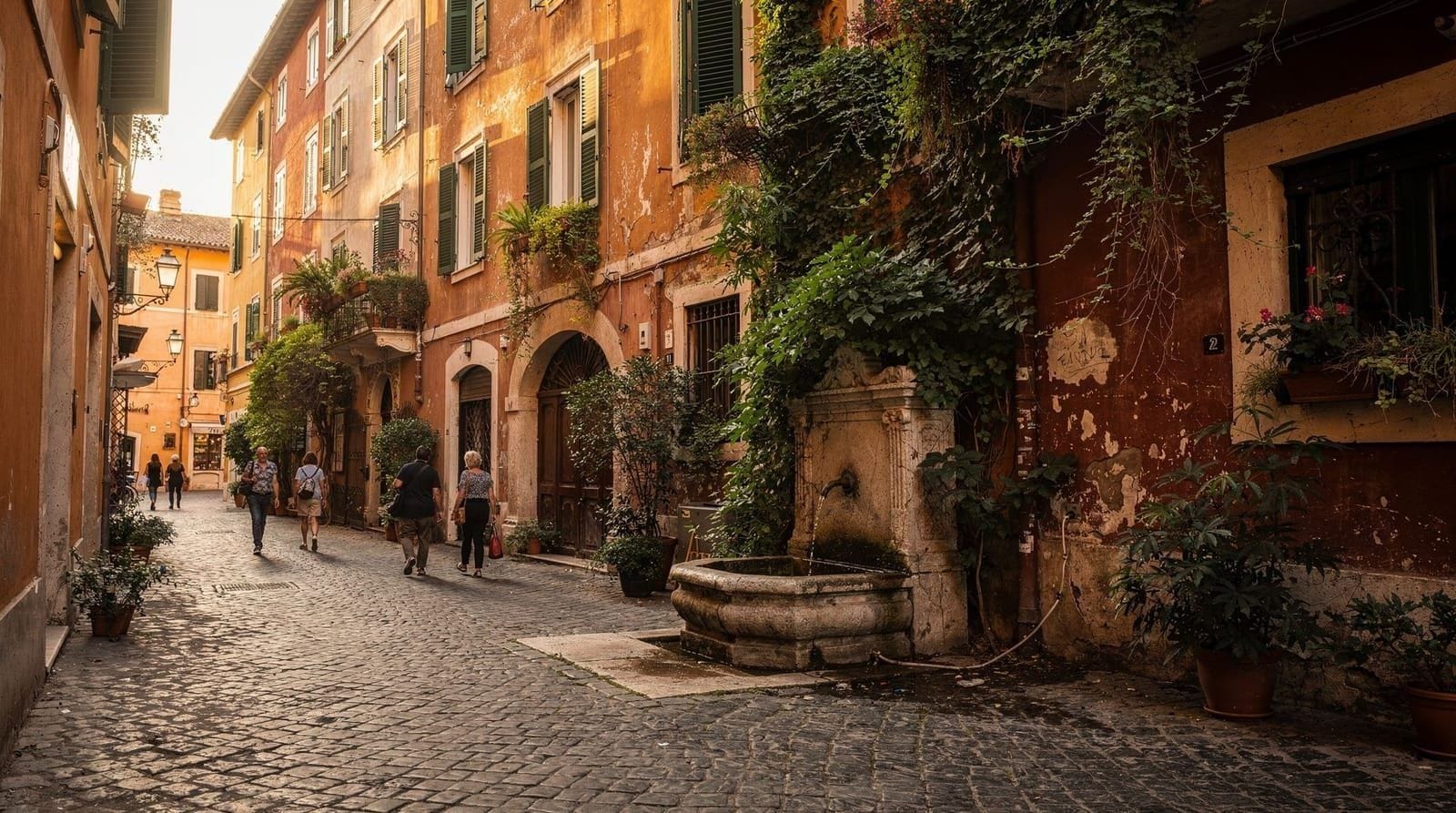
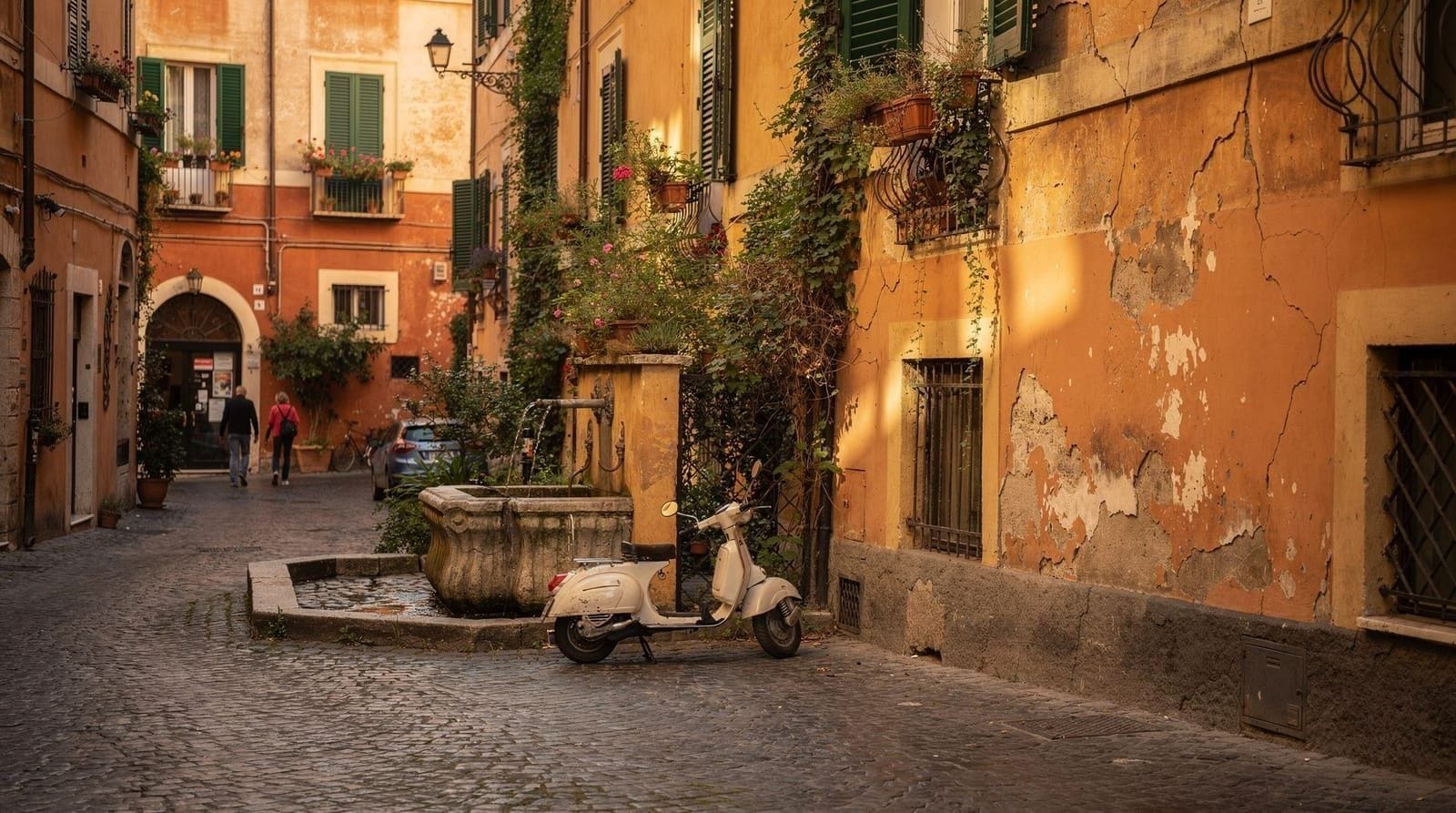
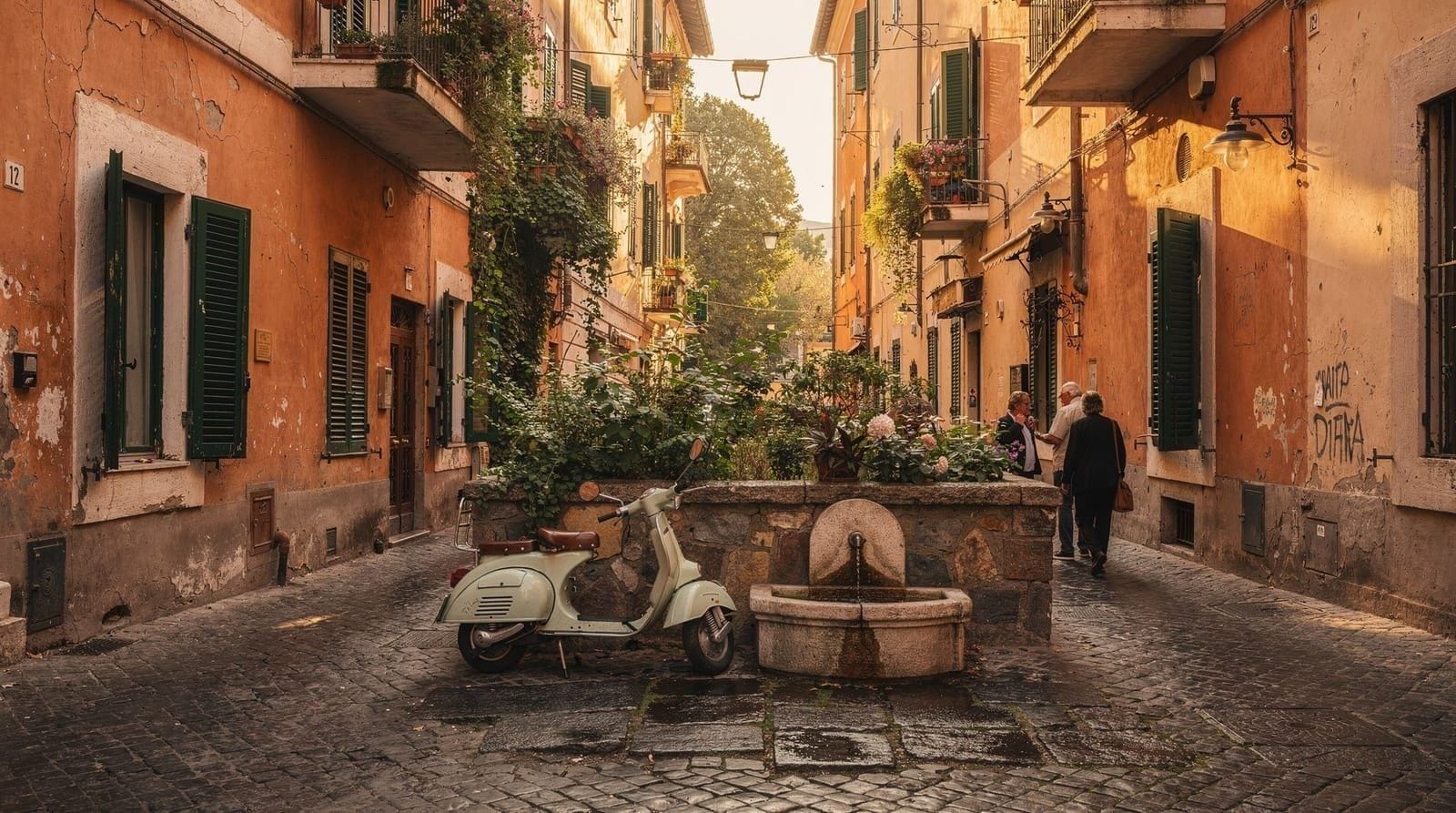
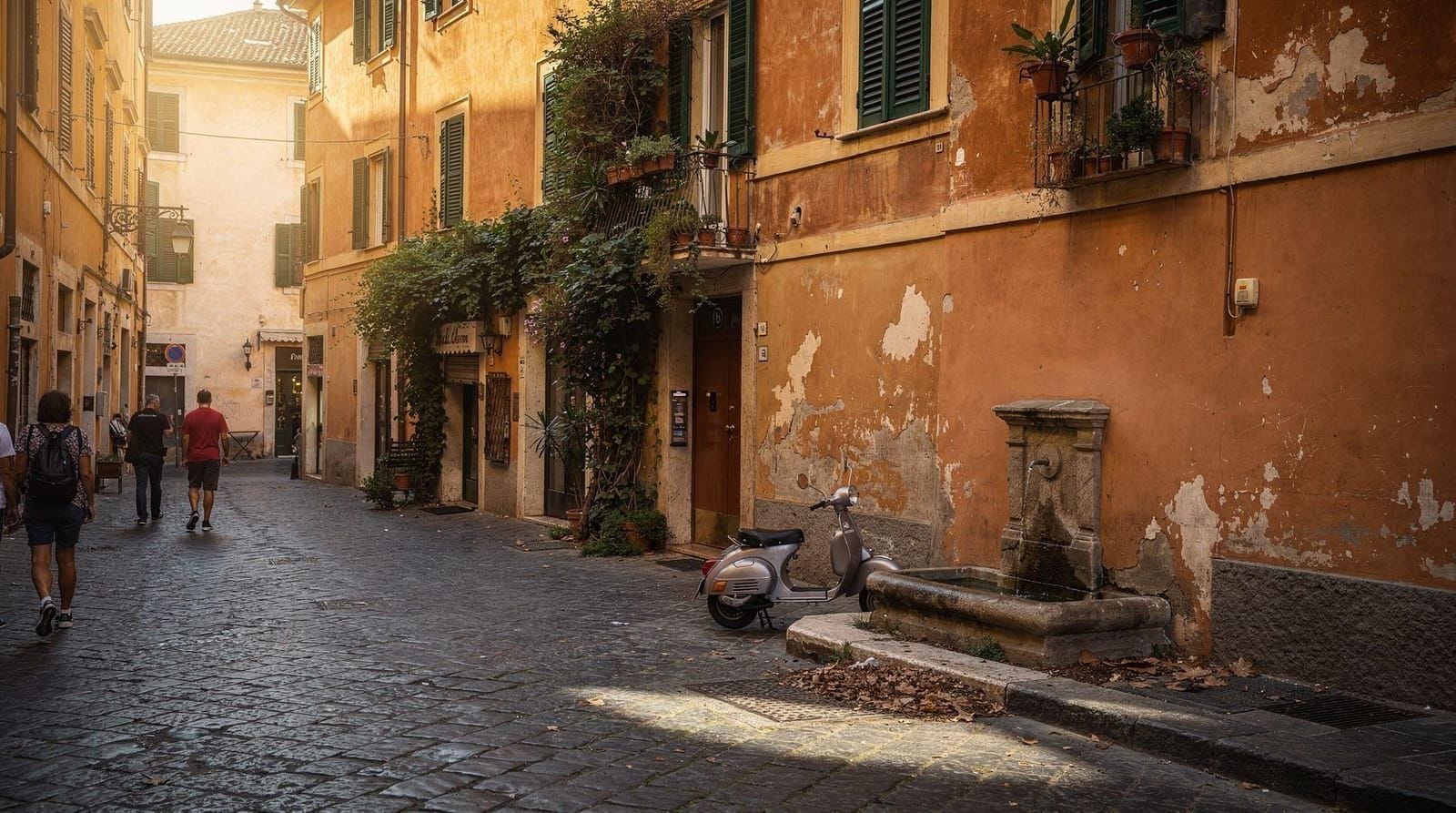
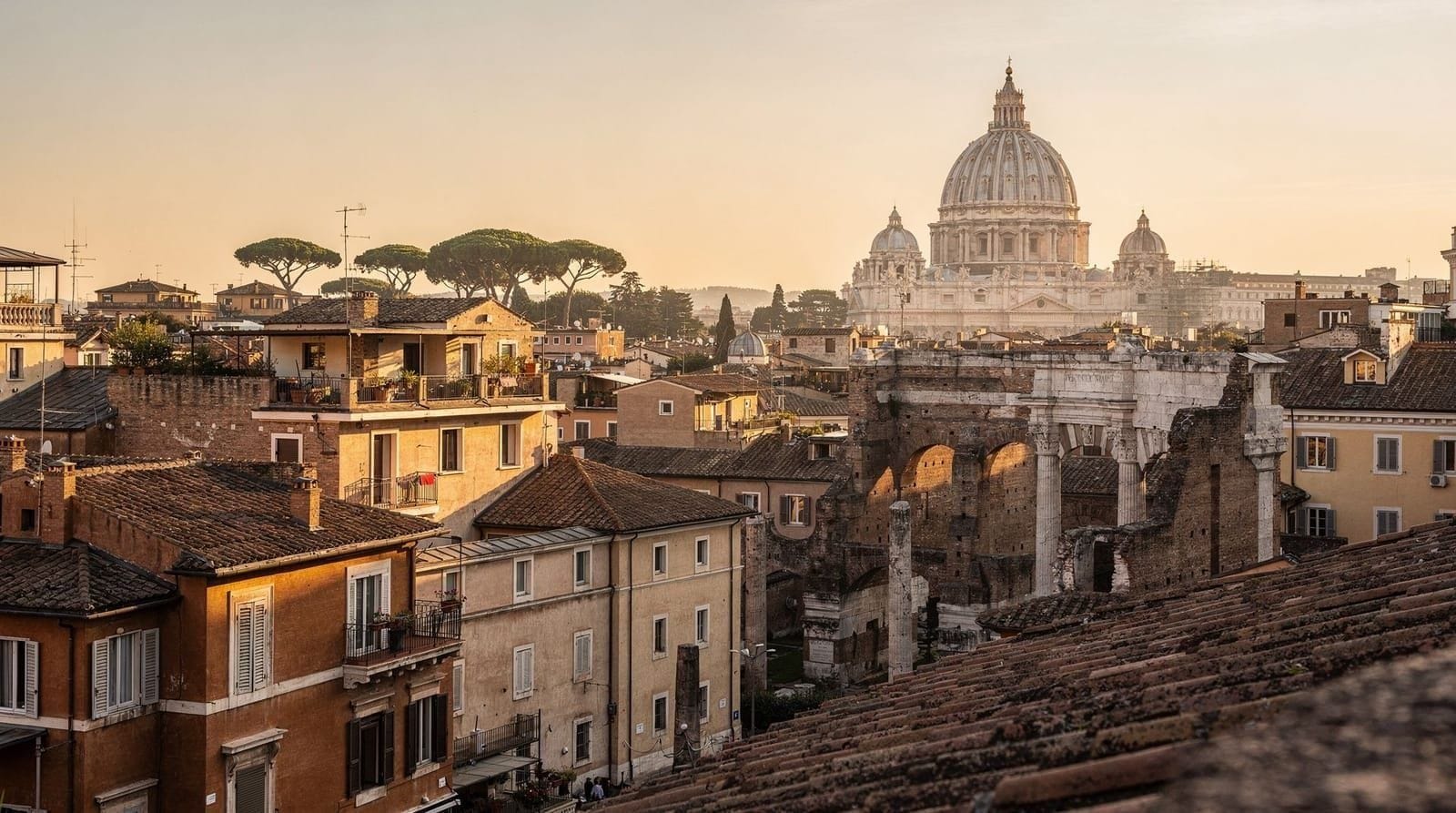
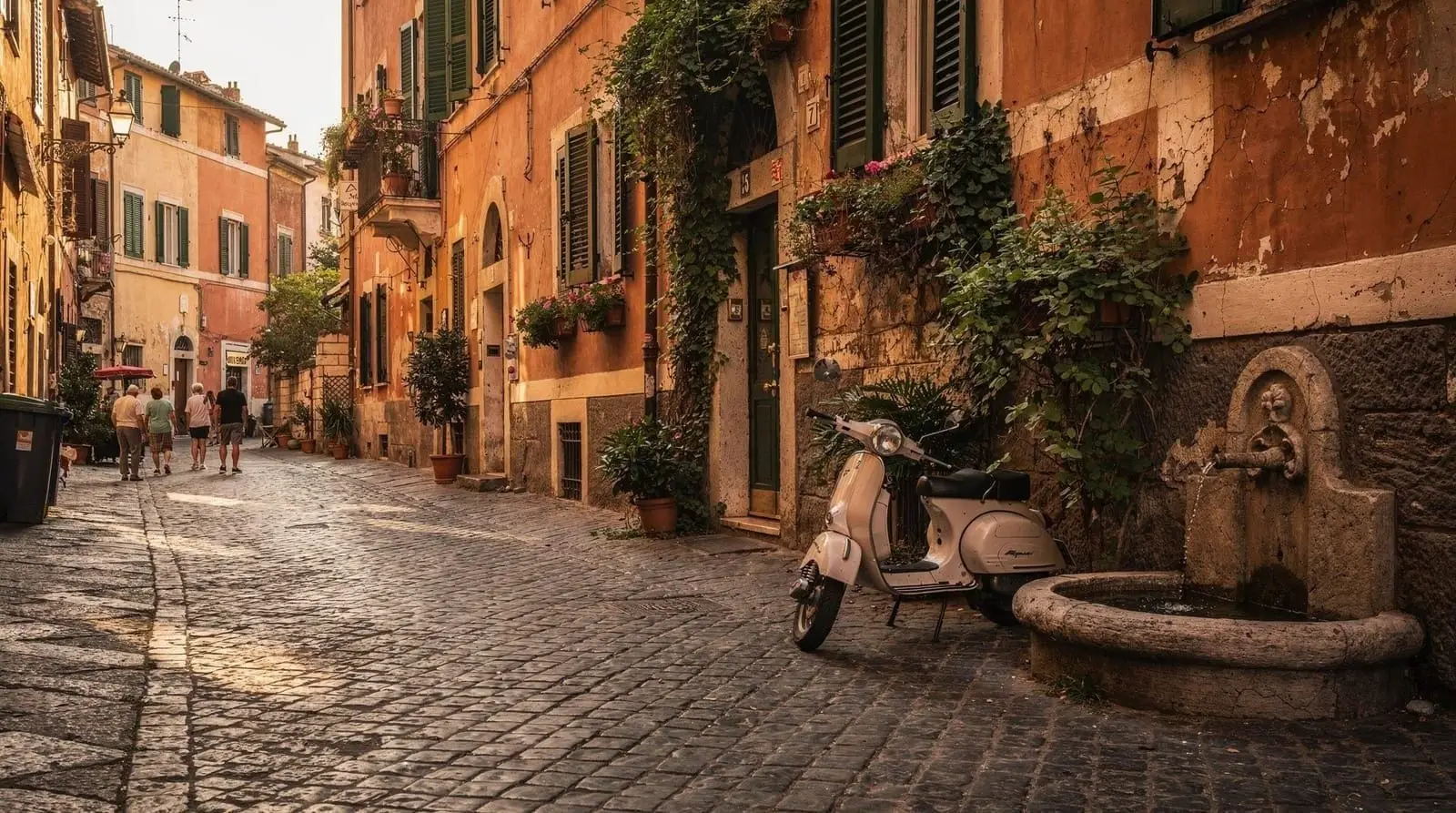
Trastevere is the answer most Romans give when tourists ask where to stay — and then immediately qualify. The cobbled lanes of terracotta and ochre, the laundry strung between shuttered windows four floors up, the church bells competing with Vespa engines, the smell of frying supplì at midnight: it is exactly what most people imagine when they picture Rome. But staying here requires going in with accurate expectations.
This guide is for people considering booking a hotel, B&B, or apartment in Trastevere. We cover what the experience of actually living in the neighborhood feels like — not just what to see as a day visitor.
| Best for | Atmosphere, food, evening life, Sun–Thu stays |
| Metro access | None — tram 8, bus H/23, or walking |
| Noise level | Loud Fri–Sat in the core; quieter south and toward Gianicolo |
| Mid-range hotel | around €130–260/night peak season |
| To Colosseum / Vatican | 25–40 min on foot or by tram/bus |
What Trastevere is, and where it came from
Trastevere literally means “across the Tiber” — trans Tiberim in Latin. It has been a working-class quarter since antiquity, populated by merchants, sailors, fishermen from the river, and artisans. Jewish and Syrian immigrant communities settled here in the Republican and Imperial periods. It was always slightly outside the Roman mainstream — across the river, separate in feel, its own thing.
That separation persisted through the medieval period and into the modern era. When the rest of central Rome was being transformed by 19th and early 20th-century urban development, Trastevere kept its medieval street pattern: narrow, irregular, organic, resistant to rationalization. The result is a neighborhood whose bones are genuinely ancient.
The modern era has brought tourism — significantly so in the past decade. The main piazza, Piazza di Santa Maria in Trastevere, and the immediately adjacent streets are firmly on the tourist circuit. The real Trastevere experience now involves walking further from the center of the tourist zone.
The geography you need to understand
Trastevere is bounded by the Tiber to the east, the Gianicolo hill to the west, Porta Portese and the river to the south, and the Villa Farnesina area to the north. Within those boundaries, the neighborhood splits usefully into zones:
The tourist core: Piazza di Santa Maria in Trastevere, via della Scala, via del Moro, via della Lungaretta. Restaurants, bars, and gelaterias aimed primarily at visitors. Loud on weekends.
The residential middle ground: Via dei Vascellari, via Anicia, via della Luce, Piazza in Piscinula. Still in Trastevere but a different mood — local bars, neighborhood alimentari, actual residents. This is where the good restaurants are.
The quiet south: Streets toward viale Trastevere and the Porta Portese area. More local, fewer tourists, less atmosphere but genuine neighborhood life.
The Gianicolo approach: Via Garibaldi climbing toward the hill. Increasingly residential and quiet, with excellent views as you climb.
Where to stay: the honest breakdown
Trastevere accommodation ranges from budget guesthouses to genuinely lovely boutique hotels. The single most important booking decision is not star rating or price — it is which street and which room orientation.
Avoid for sleep: Any room facing via del Moro, via della Scala, or the immediate surroundings of Piazza di Santa Maria in Trastevere. These streets have bar and restaurant noise until 1–2 am on Thursdays, Fridays, and Saturdays.
Request: Courtyard-facing rooms (internal courtyard). Upper floors. Streets toward the Gianicolo or south toward Porta Portese.
Hotels worth knowing:
Hotel Santa Maria (vicolo del Piede) — a former convent built around a courtyard planted with orange trees. The courtyard rooms are genuinely quiet even on weekend nights. Small pool area in summer. One of the most charming mid-range hotels in Rome. €180–260/night in peak season; book 2–3 months ahead.
Arco del Lauro — small B&B on a quieter Trastevere side street; good value, helpful owners; courtyard-facing rooms available; €110–160/night.
Residenza San Calisto — simple, basic, directly across from the church; honest value if budget is primary; €90–130/night.
Manfredi Suite & Rooms (via della Paglia) — clean, well-run; in the thicker of things, so request an upper floor; €120–170/night.
Ripa Hotel (via degli Orti di Trastevere) — larger, four-star on the quieter southern edge of Trastevere near viale Trastevere; better for sleep, slightly less atmospheric; €160–230/night.
Budget apartments: Self-catering apartments throughout Trastevere range from €80–150/night for a studio. Many are in converted medieval buildings with spiral staircases and no lift. Read carefully about access and verify the exact street before booking.
The food situation, honestly
Trastevere has Rome’s most concentrated restaurant scene outside of the Centro Storico — and also some of the most tourist-oriented. These two facts coexist block by block.
The rule: The further you walk from Piazza di Santa Maria in Trastevere, the better the ratio of locals to tourists and the more authentic the cooking.
The best trattorias:
Da Enzo al 29 (via dei Vascellari 29) — the most consistently praised restaurant in Trastevere among people who know Roman food. Very small (seats about 30). Menu covers the classics: cacio e pepe, oxtail (coda alla vaccinara), carciofi alla romana. Reservations required 1–2 weeks ahead. Prices are honest — expect €35–50 per person with wine.
Tonnarello (via della Paglia 1) — larger, livelier, slightly more touristy but genuinely good. Roman classics at fair prices. Walk-in friendly on weekdays; quicker tables turn. Outdoor seating in good weather.
Pizzeria Ai Marmi (viale Trastevere 53) — nicknamed “il morgue” by locals for its marble tables and brightly lit interior. Superb thin-crust Roman pizza, long waits, no reservations. Arrive at opening (7 pm) or be prepared to wait 30–45 minutes. Worth it.
Grazia & Graziella (via della Scala) — tiny, local, inexpensive, with a chalkboard menu that changes daily. The kind of trattoria that still exists in the residential pockets of Trastevere.
For breakfast: Bar San Calisto for cheap coffee (€1 standing at the bar). Biscottificio Artigiano Innocenti on via della Luce for pastries and biscotti — a genuine local institution.
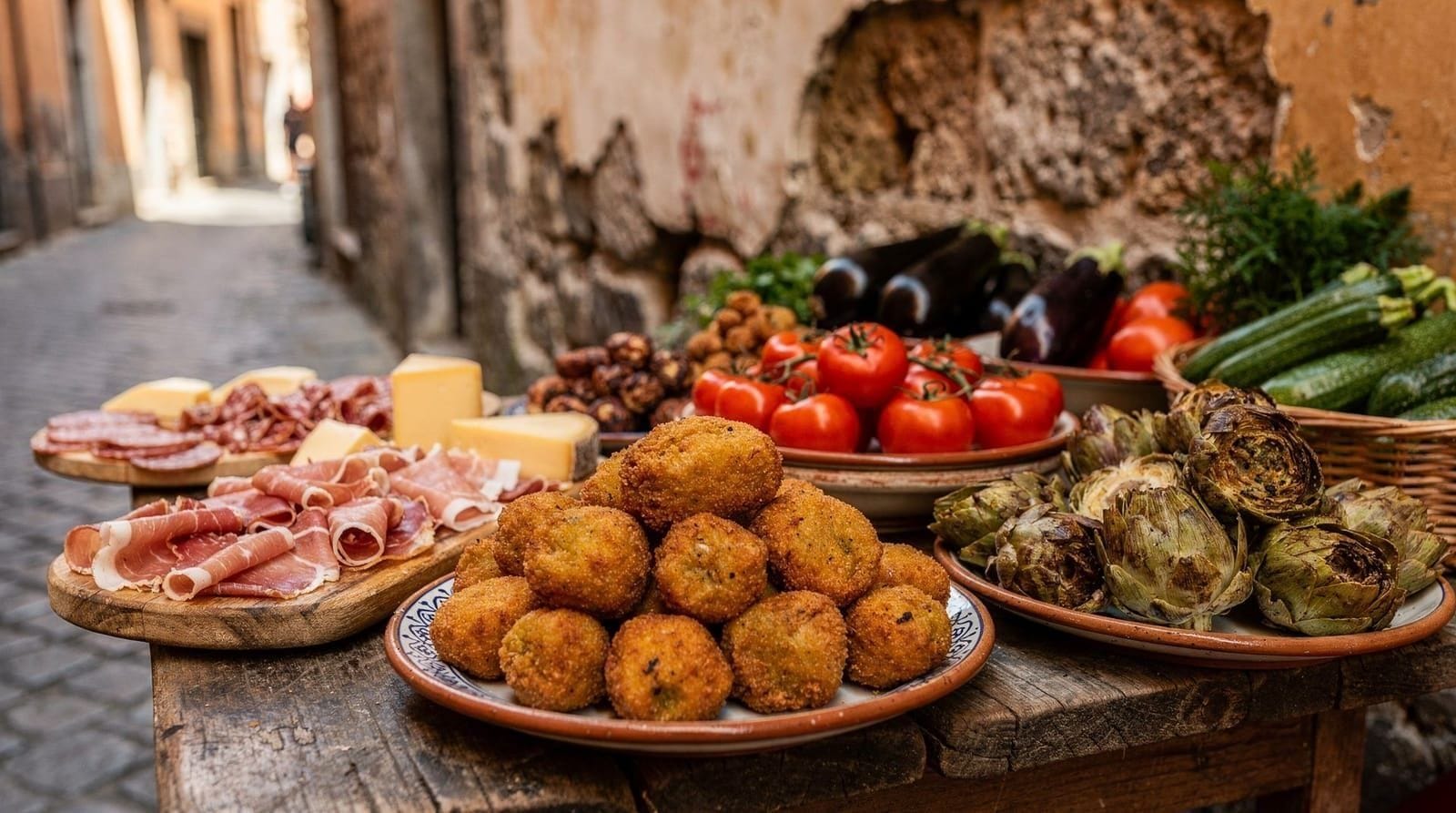
A Trastevere food and drink tour covers the neighborhood’s specialties methodically — supplì, pizza al taglio, cacio e pepe, local wine — with a guide who knows which producers are genuine.Nightlife and aperitivo: what staying here means after 9 pm
Trastevere’s nightlife is not a bug or a feature depending on your perspective — it is simply the neighborhood’s character. On weekends, it is one of the most social areas in Rome.
Freni e Frizioni (via del Politeama 4) — a converted auto-body shop with excellent cocktails and generous aperitivo snacks. Gets very busy after 8 pm; outdoor seating fills fast. Best visited on a weekday for a more relaxed experience.
Ma Che Siete Venuti a Fà (via Benedetta 25) — Rome’s first serious craft beer bar. Tiny inside, with a queue outside most evenings. No food, just beer, and they know their beer.
Bar San Calisto (piazza San Calisto) — the anti-cocktail bar. House wine at €1.50 a glass, locals and tourists mixed together, plastic chairs, direct service. Trastevere institution.
Enoteca Ferrara (piazza Trilussa) — wine bar with real wine selection and Roman small plates; appropriate for a slower evening.
If you are staying in Trastevere and value early sleep on weekends, this nightlife is your neighbor. The noise is not aggressive — it is just Rome being social. Pack earplugs or book Hotel Santa Maria’s courtyard rooms.
The sights, beyond Santa Maria in Trastevere
Santa Maria in Trastevere basilica is the neighborhood’s centerpiece — one of Rome’s oldest churches, with extraordinary 12th-century golden apse mosaics by Pietro Cavallini that deserve more attention than they typically receive. Entry is free. Sit for 20 minutes in the morning light.
Villa Farnesina (via della Lungara 230) — a Renaissance villa containing Raphael’s Galatea and the Loggia of Psyche — frescoes comparable in quality to Vatican works, visited by a fraction of the tourists. Entry €10. Closed Sunday afternoons and Mondays.
Gianicolo Hill — the terrace above Trastevere offers the best 270-degree panoramic view of Rome visible from ground level. Walk up via Garibaldi (20 minutes from the piazza). At noon, a cannon fires — a tradition since 1847. Ice cream cart at the top.
Santa Cecilia in Trastevere (piazza di Santa Cecilia) — the church built over the house of St. Cecilia, with Pietro Cavallini’s Last Judgment fresco (c. 1293) in the nuns’ choir above — one of the most important surviving pre-Giotto Italian paintings. Access has limited hours and requires a small fee; worth scheduling.
Porta Portese market — every Sunday morning from 6:30 am, along viale Trastevere and via Portuense. Furniture, vintage clothing, books, bikes. Go early (7–9 am) for serious finds. See our Porta Portese guide.
A walking food tour through Trastevere covers the neighborhood’s history alongside its food — useful for understanding why this quarter has the character it does, not just where to eat.Getting around from Trastevere
Trastevere has no metro station. This is the neighborhood’s main practical disadvantage if you are planning heavy daily commuting to sites on the east side of Rome.
Tram 8 from Piazza Sonnino or Largo Asdrubale (western Trastevere edge) to Largo Argentina: 10 minutes, runs frequently. Excellent connection to Centro Storico.
Bus H from viale Trastevere to Termini: 30 minutes in normal traffic; longer at peak times.
Bus 23 along the Lungotevere: connects Trastevere to Prati and the Vatican area, via the river road. About 20 minutes to the Vatican.
On foot: Centro Storico is 20–25 minutes walking via Ponte Sisto or Ponte Garibaldi. Testaccio is 20 minutes south via Lungotevere. The Colosseum is 35–40 minutes or requires a bus/tram combination.
Taxi: Rank at Piazza Sonnino. Viale Trastevere also has reliable taxi presence. App taxis (itTaxi, FREE NOW) are the most convenient option.
Trastevere vs. other neighborhoods: who should choose it
Choose Trastevere if: You want the most atmospheric Roman experience, you care about food and aperitivo life, you’re staying Sunday–Thursday, or you don’t mind noise and are night-owl compatible.
Consider Monti instead if: You want a local neighborhood feel without the tourist saturation or noise, and you want metro access to the Colosseum.
Consider Prati instead if: You need calm sleep and good Vatican access.
Consider Testaccio instead if: You want the genuine Roman working-class neighborhood experience with a focus on food, but without the tourist overlay.
| Neighborhood | Best for | Metro access | Noise level |
|---|---|---|---|
| Trastevere | atmosphere, food, nightlife | none | high on weekends |
| Monti | local feel, Colosseum access | yes | moderate |
| Prati | calm sleep, Vatican access | yes | low |
| Testaccio | genuine food scene, fewer tourists | limited | low-moderate |
For a full comparison of all neighborhoods with pricing and logistics, see our where to stay in Rome guide.
Trastevere in different seasons
September–October is the finest time to be in Trastevere. Summer heat has eased (temperatures drop from 32–36°C in August to 22–27°C in October), tourist numbers thin meaningfully after the first week of September, and the outdoor restaurant culture continues. The evening passeggiata along Piazza di Santa Maria feels manageable rather than overwhelming.
November–February is underrated. Rain is more frequent and temperatures drop to 8–14°C, but the neighborhood becomes genuinely local in a way impossible in summer. Restaurants are on their winter menus (hearty stewed meats, thick ribollita variations), prices drop 20–30% for accommodation, and the morning light on the piazza fountain has a quality that summer crowds make impossible to appreciate.
March–May brings spring produce to the local markets (artichokes from February, which is very much a Roman obsession), rising temperatures, and increasing visitors. The week around Easter is extremely crowded and hotel prices spike — compare with the calm weeks before and after.
June–August is the most beautiful and least comfortable combination. Long golden evenings, outdoor tables on every piazza, Rome at its most cinematically perfect — and temperatures above 30°C, crowds that mean queuing for the best restaurants and navigating shoulder-to-shoulder pedestrians on the main lanes. If you must come in summer, come in June or choose September.
Walking the neighborhood: a practical route
Starting at Piazza di Santa Maria in Trastevere: enter the basilica (morning, before 10 am, for the best light on the mosaics). Walk south on via dei Vascellari — this is the residential Trastevere, with a neighborhood bar (no sign, just plastic chairs), an alimentare, and actual apartments rather than short-let flats. At the end, Piazza in Piscinula has one of Rome’s oldest medieval towers.
Return north via via Anicia past the church of Santa Maria dell’Orto (a 16th-century sailors’ church; the facade topped with obelisks is unusual). Cross to via della Luce — smaller piazza, good bar.
From there, via della Scala west toward San Francesco a Ripa and the Bernini sculpture. Turn north up via Garibaldi toward the Gianicolo. Budget 30–40 minutes for the uphill walk; the view from the terrace at the top repays it in full.
This route takes 2–3 hours at a walking pace, covers the neighborhood’s depth, and never overlaps with the standard tourist path.
The practical bottom line
Trastevere is what it promises: atmospheric, photogenic, food-rich, socially alive. The trade-offs — noise on weekends, no metro, slightly higher accommodation prices than equivalent quality in Monti or Testaccio — are real. The people who love staying here are the ones who arrive knowing exactly what they are getting. The people who leave disappointed are usually the ones who didn’t read this far.
Working around the lack of a metro station
The absence of a metro stop is Trastevere’s single biggest practical drawback for visitors trying to cover a lot of Rome quickly. The workaround most experienced visitors settle on: use tram 8 to Largo Argentina as your default connector to Centro Storico and the metro network beyond, reserve taxis or app-taxis for early starts (before the Vatican or Colosseum opens) rather than waiting for a bus, and accept that a Trastevere base suits an itinerary weighted toward the historic center, food, and evening life more than one built around ticking off distant sights on a tight schedule. If your priority is efficient site-to-site movement across the whole city, weigh this against Monti’s direct metro access before booking.
Frequently asked questions about Trastevere neighborhood guide: what it's really like to stay there
Is Trastevere safe to stay in?
How do you get to Trastevere from the center?
What is the weekend noise situation in Trastevere?
Where should I eat in Trastevere?
How far is Trastevere from the Colosseum and the Vatican?
What is the best time of year to stay in Trastevere?
Is Trastevere walkable to the main Rome sights?
Are there family-friendly options for staying in Trastevere?
Top experiences
Bookable activities with verified prices and instant confirmation on GetYourGuide.