Popes and the papacy: how the Church shaped Rome
Rome: Vatican Museums and Sistine Chapel Tour with Ticket
How did the papacy shape the city of Rome as we see it today?
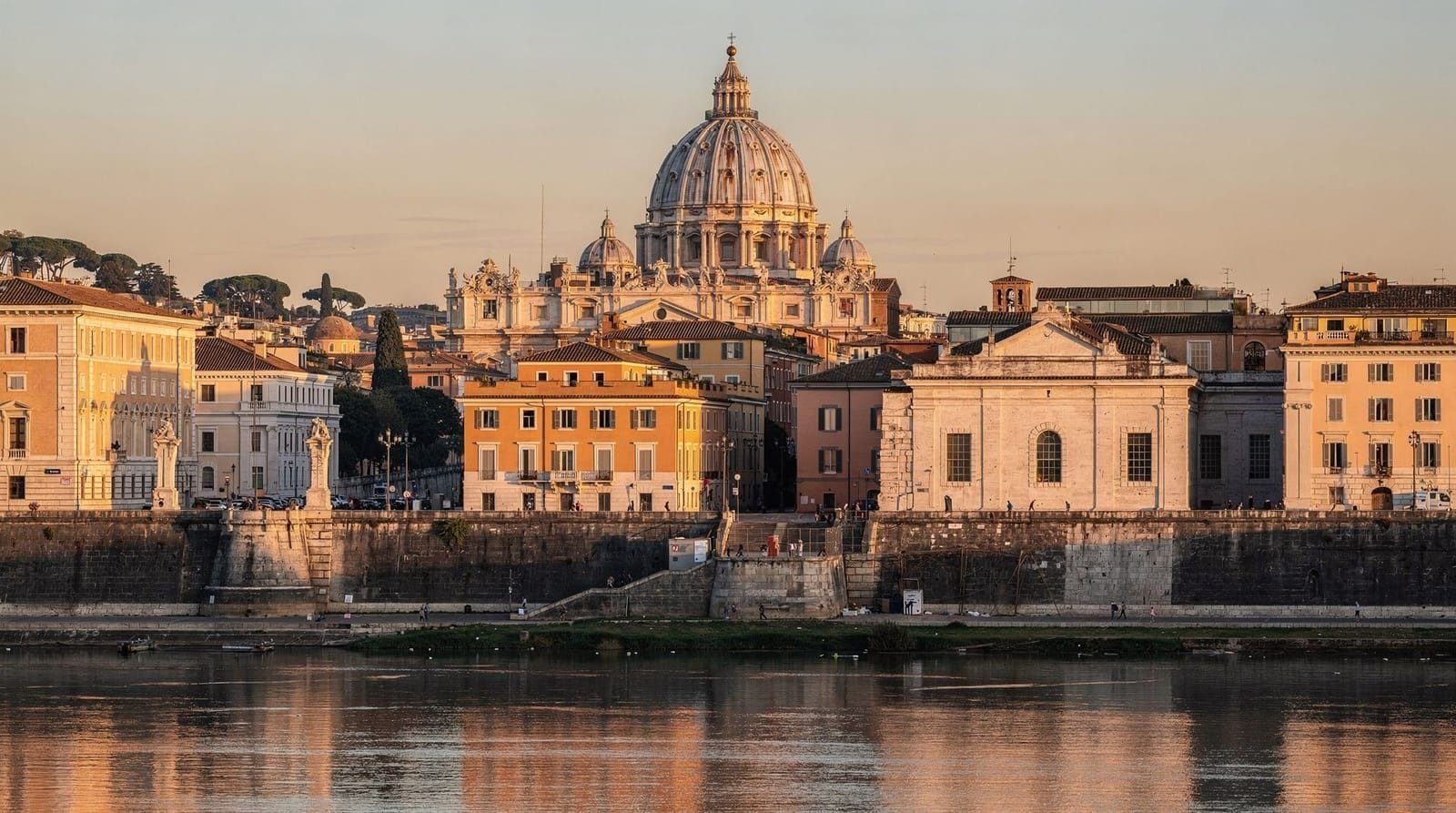
The popes governed Rome directly for roughly 1,400 years (from the collapse of Western Roman authority in the 5th century until Italian unification in 1870) and were its primary builders throughout. St. Peter's Basilica, the Vatican Museums, the Sistine Chapel, Castel Sant'Angelo, Piazza Navona, the Trevi Fountain, the great Baroque churches — all were commissioned or substantially transformed by popes. Without the papacy, Rome would likely be a modest Italian city built on impressive ruins rather than the monumental capital it is.
The longest-running government in Rome
When historians discuss Rome’s ancient civilisation, they typically mean a period of roughly 1,000 years (509 BCE to 476 CE). The papacy’s governance of Rome lasted longer: from the late 5th century to 1870 CE is approximately 1,400 years of continuous papal authority over the city.
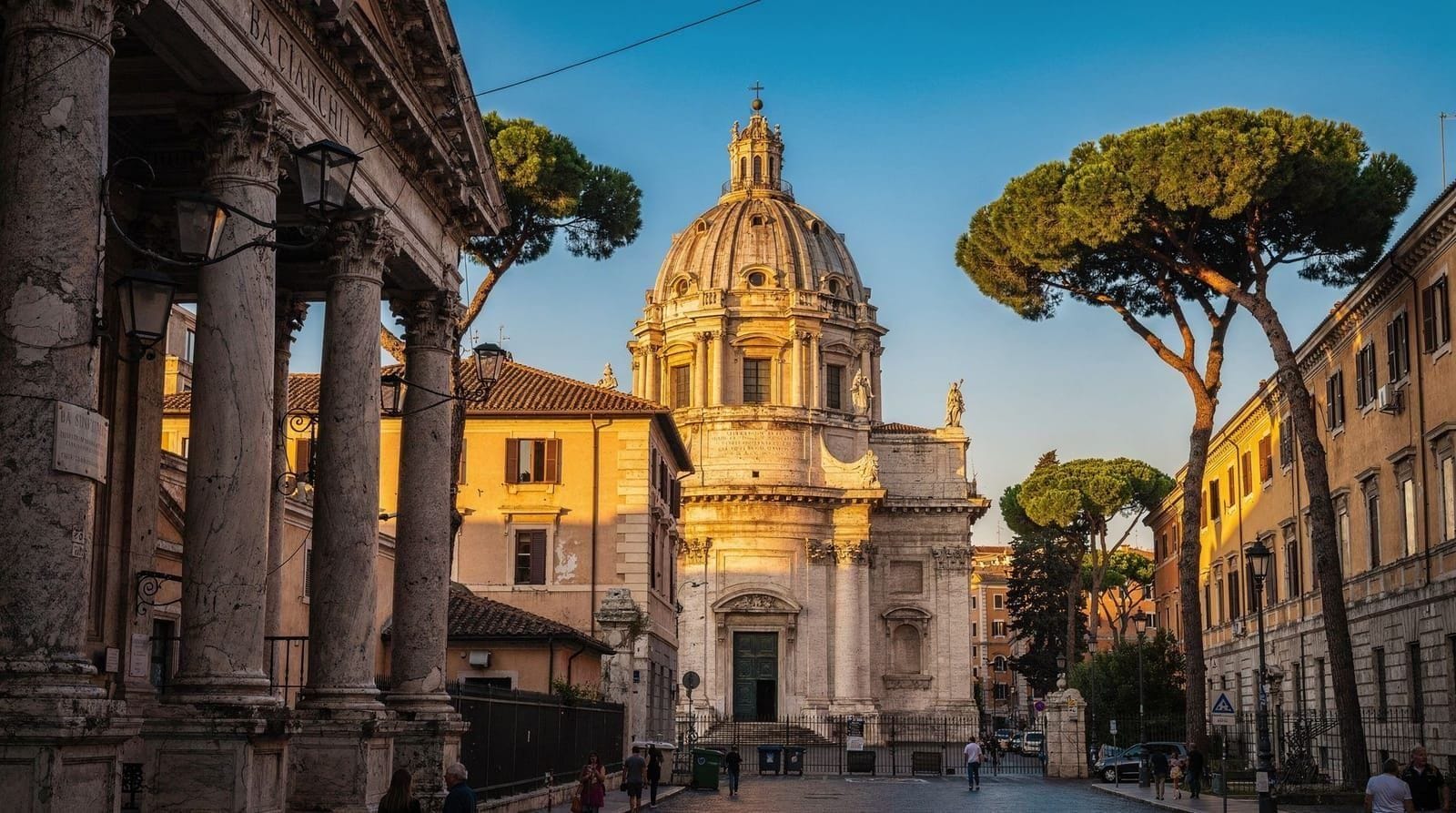
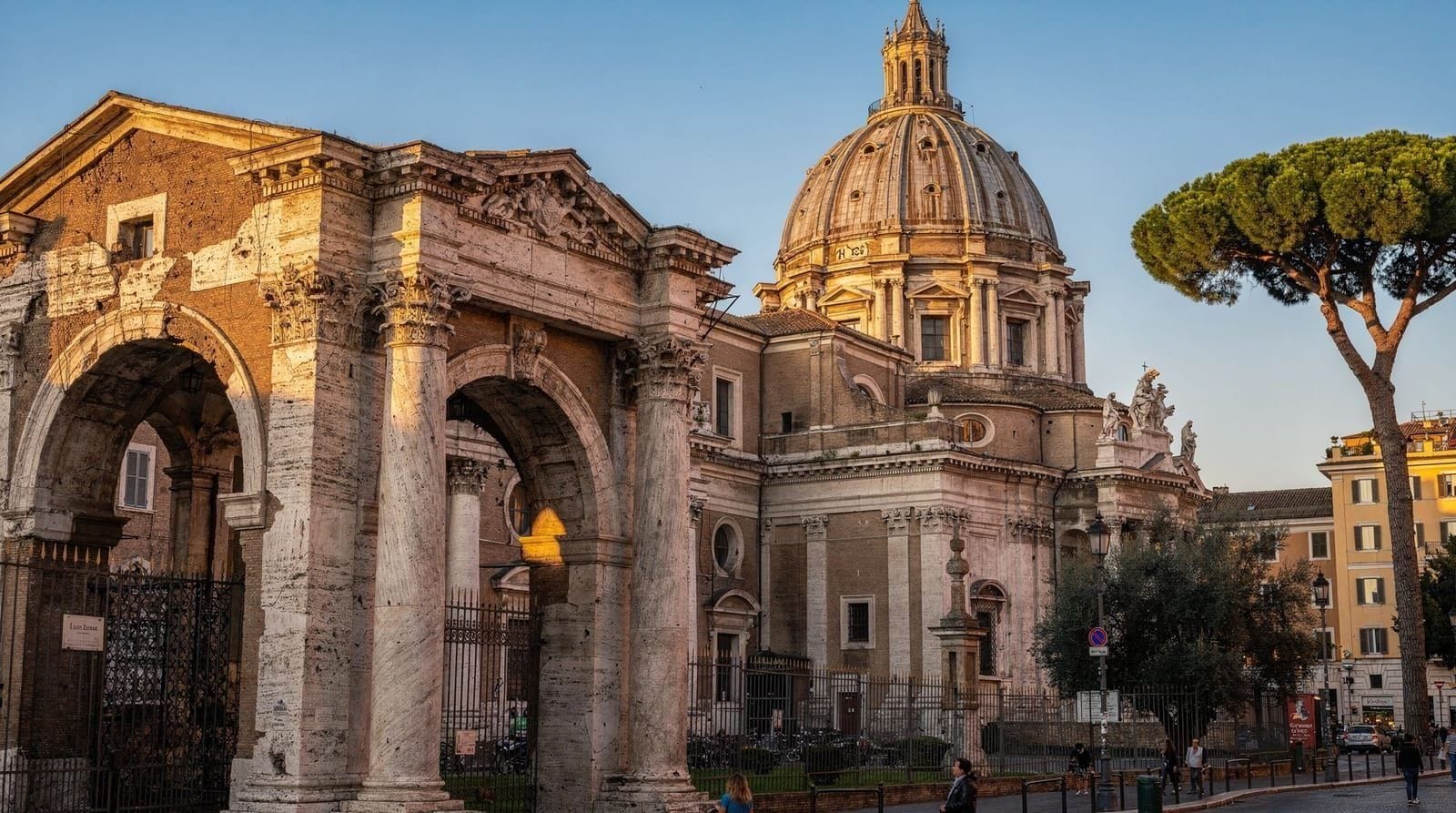
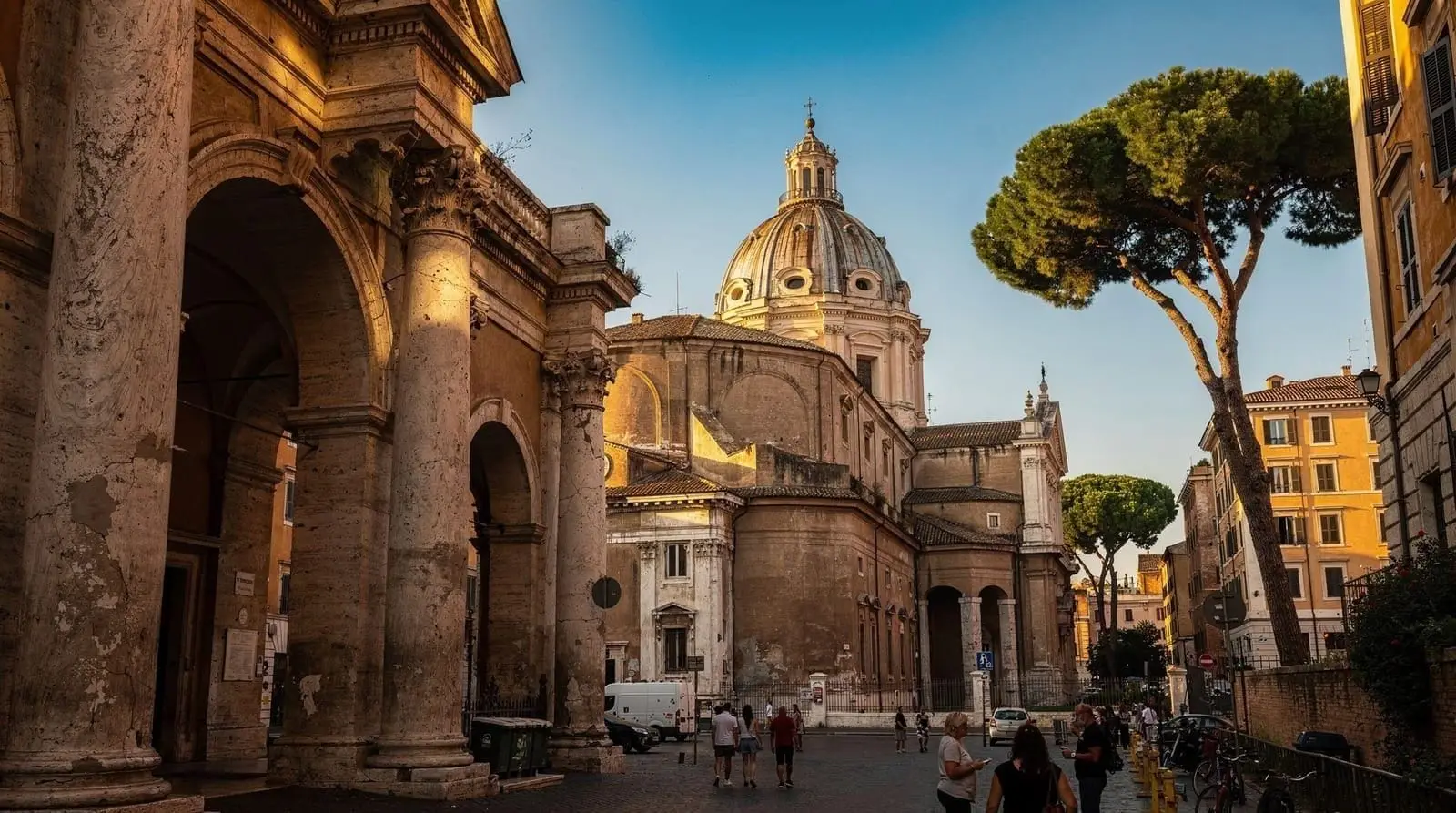
That longevity explains why so much of what visitors photograph in Rome is ecclesiastical. The ancient Romans built the Colosseum, the Forum, the Pantheon. The popes built St. Peter’s Basilica, the Vatican Museums, the Sistine Chapel, the Castel Sant’Angelo (as a fortress), the Trevi Fountain (via papal commission), Piazza Navona (in its current form), and most of the Baroque churches that define the Centro Storico. The city you see is as much a product of papal ambition as of imperial power.
| Span of papal rule | Roughly 1,400 years (5th century – 1870) |
| Key sites today | St. Peter’s, Vatican Museums, Castel Sant’Angelo, four papal basilicas |
| Best starting point | Vatican Museums and Sistine Chapel |
| Time needed | Half a day for the Vatican core, a full day with San Giovanni and Santa Maria Maggiore |
| Good to pair with | Castel Sant’Angelo, a former papal fortress and residence |
The early Church in Rome: Peter, Paul and the persecutions (1st–3rd centuries CE)
Christianity reached Rome within decades of the crucifixion. The letter of Paul to the Romans, written around 57 CE, addresses an established community already present in the capital. The tradition that the apostle Peter arrived in Rome and was its first bishop is not historically certain — the earliest written sources for this claim date from the late 2nd century — but it became the theological foundation of papal authority.
Both Peter and Paul were executed in Rome under Nero, traditionally in 64 CE following the Great Fire. Peter’s execution at Circus of Nero on the Vatican Hill (the area now occupied by St. Peter’s Basilica) gave the site its immense theological significance. The Vatican excavations beneath the current basilica, accessible on limited guided tours, have revealed what may be Peter’s tomb — a plain 2nd-century shrine surrounded by later devotional additions.
The persecutions of Christians under various emperors (most severely under Decius in 250–251 CE and Diocletian in 303–305 CE) produced Rome’s extensive network of catacombs. Christians buried their dead outside the city walls, as Roman law required, in underground galleries along the Via Appia and Via Ardeatina. The catacombs of Callixtus, Sebastiano, Priscilla and Domitilla are the most accessible today.
Constantine and the Church’s transformation (313–400 CE)
Emperor Constantine’s Edict of Milan in 313 CE legalised Christianity. In 380 CE, Emperor Theodosius made it the only permitted religion. These two acts transformed a persecuted minority movement into the state church of the world’s dominant empire.
Constantine initiated a major programme of Christian basilica construction in Rome. The original San Giovanni in Laterano (313 CE) — still the Pope’s official cathedral — and the original San Pietro in Vaticano (320–330 CE) were built on sites associated with Roman imperial property rather than in the city center, reflecting some political sensitivity about too visibly displacing existing Roman religion.
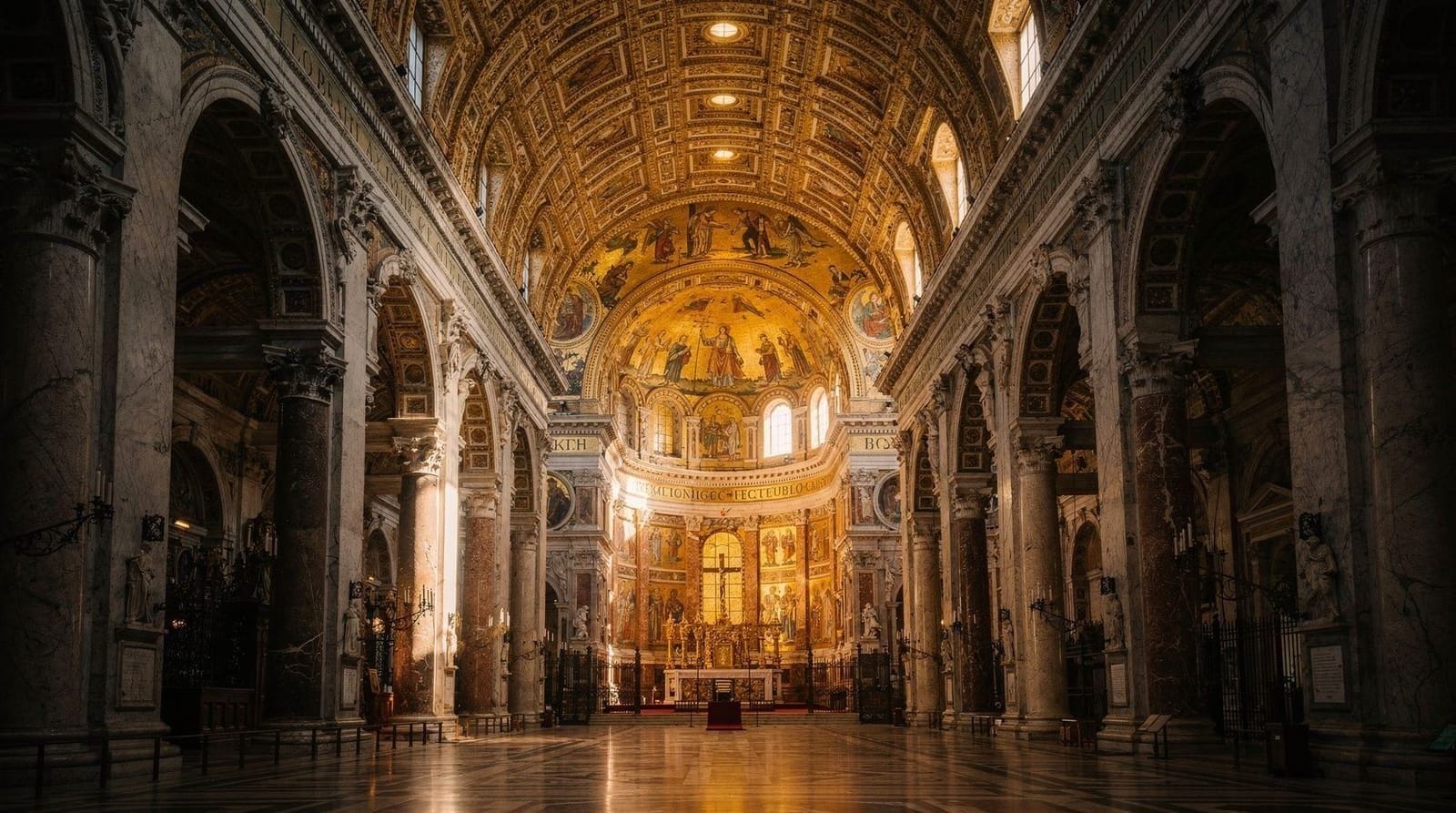
The architectural form these churches took — the basilica, a long hall with a central nave and side aisles ending in an apse — was borrowed directly from Roman civic architecture: the same building type used for law courts and commercial exchanges. Christianity’s adoption of Roman architectural forms was one of the key channels through which Roman culture survived the Empire’s political collapse.
The formation of papal power (5th–8th centuries)
With the Western Empire’s collapse, the Bishop of Rome found himself as the most organised authority in an increasingly chaotic landscape. Pope Gregory I (“the Great,” 590–604 CE) is the pivotal figure. He negotiated directly with the Lombard kings threatening Rome, organised food distribution for the city’s population, reformed the liturgy (Gregorian chant is named for him), and despatched missionaries to convert the Anglo-Saxons of Britain. In doing so, he established the papacy as a political institution, not merely a spiritual office.
The Donation of Pepin (756 CE) gave the papacy its first territorial holdings. The Frankish king Pepin the Short defeated the Lombards who had captured the former Byzantine exarchate of Ravenna, and donated these territories to the Pope rather than returning them to the Byzantine emperor. This was the origin of the Papal States — the secular territorial authority that the popes would exercise until 1870.
The Donation of Constantine — a document purporting to show that Emperor Constantine had granted Pope Sylvester I authority over western Rome and all its territories — circulated throughout the medieval period as justification for papal temporal claims. In 1440, the humanist scholar Lorenzo Valla demonstrated conclusively that the document was an 8th-century forgery. It continued to influence political arguments anyway.
Medieval papacy: power, schism and reform (9th–15th centuries)
Medieval papal history is a story of extraordinary institutional power punctuated by periods of crisis. At its peak, in the reign of Pope Innocent III (1198–1216), the papacy claimed authority over all temporal rulers: Innocent deposed and excommunicated multiple kings and emperors, launched the Fourth Crusade (which ended with the sack of Constantinople — a Christian city — by the Crusaders in 1204, a decision Innocent did not authorise and deeply regretted), and convened the Fourth Lateran Council, which among other things defined the doctrine of transubstantiation.
The Avignon Papacy (1309–1377) was a period of deep institutional crisis. Under French political pressure, Pope Clement V moved the papal court to Avignon in southern France, where it remained through seven successive popes. Rome without the papacy was effectively ungoverned; its population dropped to perhaps 17,000. The Italian poet Petrarch called Avignon “Babylon” and denounced it as a period of captivity. When Pope Gregory XI finally returned to Rome in 1377, the city had to be substantially rebuilt to accommodate a functional court.
The Great Schism (1378–1417) was worse: following Gregory XI’s death, two rival claimants were elected — one in Rome, one in Avignon — and for a period there were three simultaneous claimants. The Council of Constance (1414–1418) finally resolved the crisis by deposing all three and electing Martin V, who returned the papacy definitively to Rome.
Renaissance popes: patrons and builders (15th–16th centuries)
The 15th and 16th centuries produced the most artistically consequential papacy in history. The popes of this period were simultaneously spiritual leaders, temporal rulers of a significant Italian state, and the most ambitious patrons of art and architecture the world had seen since the emperors.
Nicholas V (1447–1455) began the rebuilding of Rome as a humanist project — translating classical texts, planning urban improvements, starting the process of rebuilding St. Peter’s.
Sixtus IV (1471–1484) built the Sistine Chapel (named for him, Sixtus) and commissioned the original fresco cycle on its walls by Botticelli, Perugino, Ghirlandaio and others. He also created the Vatican Library and built the Ponte Sisto over the Tiber.
Alexander VI (1492–1503) — Rodrigo Borgia — represents the Renaissance papacy at its most morally indefensible and its most politically effective. His reign involved nepotism on an extraordinary scale (he openly acknowledged his illegitimate children, including Cesare and Lucrezia Borgia), political intrigue, and at least one murder at papal instigation. He also oversaw the negotiation of the Treaty of Tordesillas (1494), dividing the New World between Spain and Portugal.
Julius II (1503–1513) is the pope most directly responsible for the artistic treasure that visitors come to see today. He commissioned:
- Michelangelo to paint the Sistine Chapel ceiling (1508–1512)
- Raphael to decorate the Stanza della Segnatura (1509–1511), including the School of Athens
- Bramante to design the new St. Peter’s Basilica (beginning 1506)
- Bramante’s Cortile del Belvedere, connecting the papal palace to the Villa Belvedere
Julius was a warrior-pope who personally led military campaigns in armour — a combination that horrified Erasmus, who wrote a satirical dialogue imagining Julius demanding entry to heaven and being turned away by St. Peter.
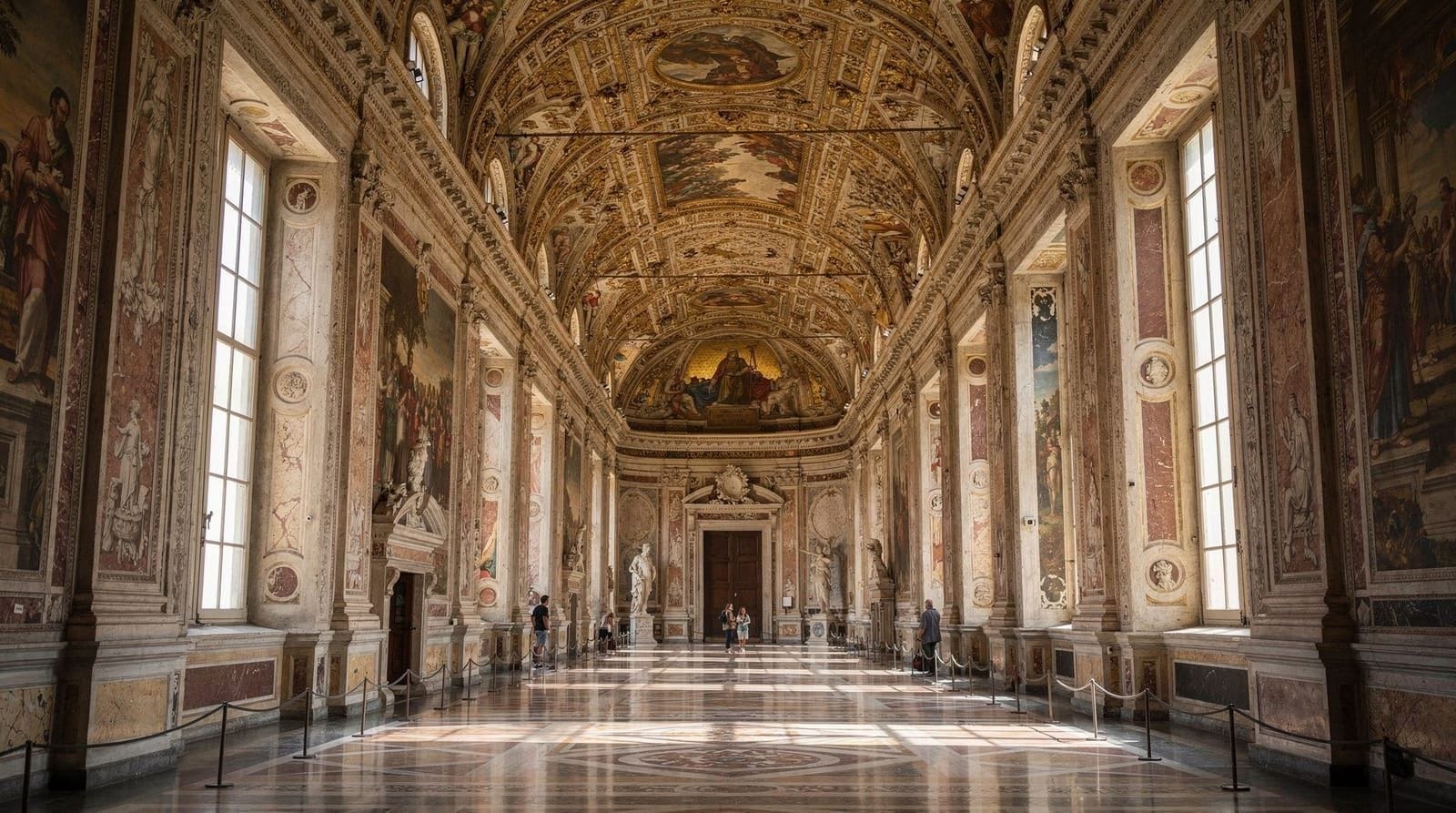
The Vatican Museums and Sistine Chapel tour covers the full scope of papal art patronage — from the ancient sculpture collection to the Raphael Rooms and Michelangelo’s ceiling.The Sack of Rome and the Counter-Reformation (1527–1600)
The Sack of Rome in May 1527, by troops of the Holy Roman Emperor Charles V (including German Lutheran mercenaries), was a catastrophic interruption. An estimated 40,000 of Rome’s 55,000 inhabitants fled; thousands were killed. The shock reverberated through European consciousness.
Pope Paul III (1534–1549) organised the Council of Trent (1545–1563), the Catholic Church’s comprehensive response to the Protestant Reformation. The Council’s decrees on doctrine and discipline, and its clear affirmation of Catholic tradition against Protestant challenges, shaped the Church — and Rome — for centuries. Paul III also commissioned Michelangelo to design the Piazza del Campidoglio (the existing buildings required rearrangement over subsequent decades) and to paint the Last Judgment on the Sistine Chapel altar wall (1536–1541).
The new Society of Jesus (Jesuits), founded by Ignatius of Loyola in 1540 and approved by Paul III, became the primary missionary and educational order of the Counter-Reformation. Their mother church, the Gesù in central Rome, became the template for Counter-Reformation church architecture — a single wide nave to accommodate large congregations for preaching, with Baroque decoration of overwhelming richness.
Baroque Rome: the papacy’s greatest buildings (1600–1700)
The 17th century was the papacy’s most architecturally productive period. Two figures dominate: the artist and architect Gian Lorenzo Bernini and the architect Francesco Borromini, rivals whose work defines the Baroque city.
Bernini worked for eight popes and gave Rome its most recognisable landmarks:
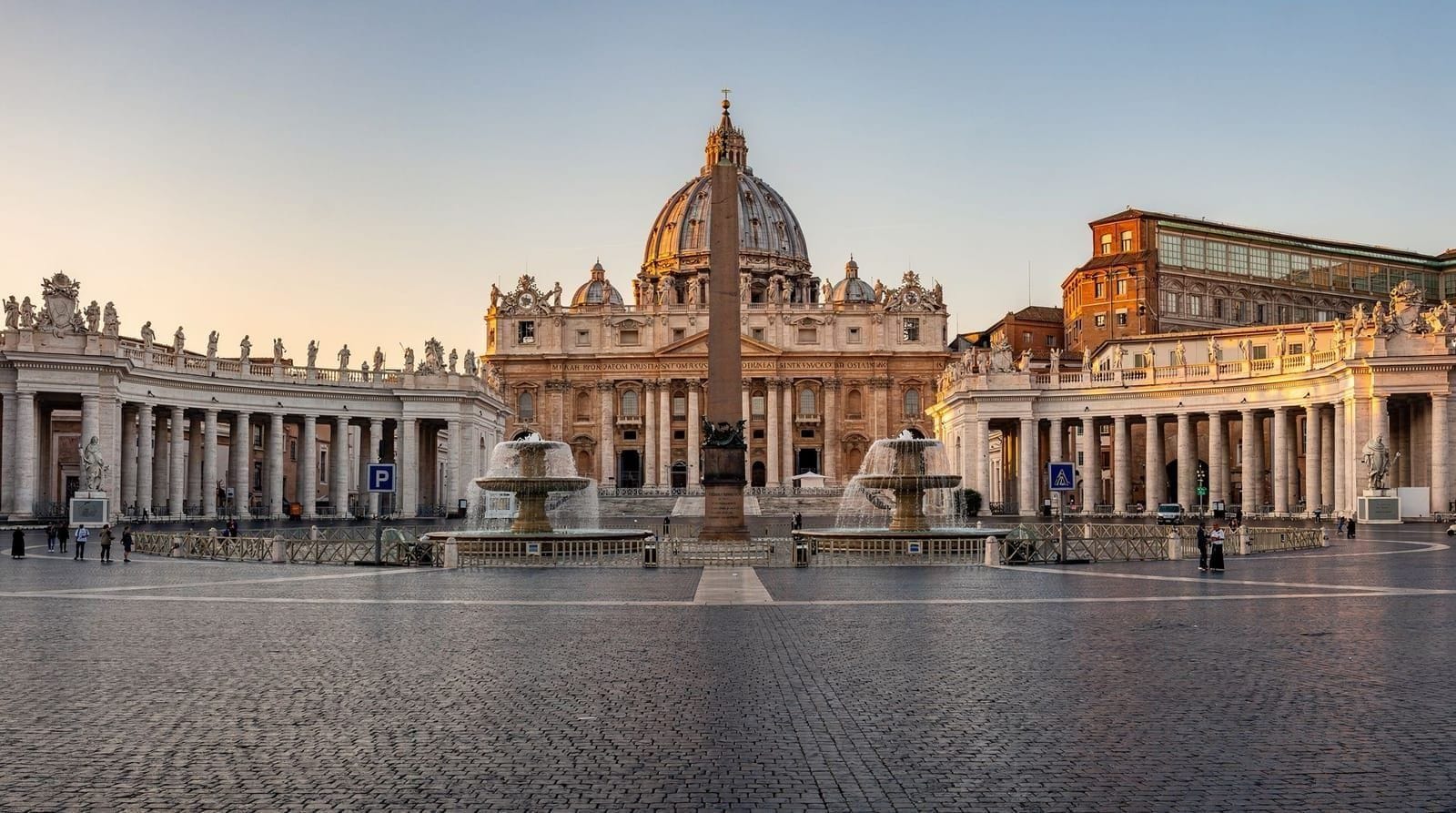
- The colonnade of St. Peter’s Square (commissioned by Alexander VII, 1656–1667) — two curved colonnades, 284 columns, 88 pilasters, 140 saints atop the cornices, creating one of the most theatrical urban spaces in the world
- The bronze baldachin over St. Peter’s tomb inside the basilica (Urban VIII, 1623–1634)
- The Fontana dei Quattro Fiumi in Piazza Navona (Innocent X, 1648–1651)
- The Fontana del Tritone in Piazza Barberini
- The decoration of the Ponte Sant’Angelo with angels (Clement IX)
Borromini, despite lifelong conflict with Bernini and a life ending in suicide, left several of Rome’s most architecturally inventive buildings:
- Sant’Ivo alla Sapienza, with its extraordinary helical spire
- San Carlo alle Quattro Fontane, which packs an astonishing geometric complexity into a tiny site
- The interior of San Giovanni in Laterano, transformed for the 1650 Jubilee
The Jubilee of 1650 drove much of this activity: popes competed to have the most impressive monuments for the influx of pilgrims, and the Baroque style — theatrical, emotional, designed to overwhelm — was the perfect instrument of that competition.
The 19th century and the end of temporal power
The Risorgimento (Italian unification movement) of the 19th century presented the papacy with an existential political challenge. Pius IX (1846–1878) began his pontificate with relatively liberal instincts but was radicalized by the Revolution of 1848, when a Roman Republic was briefly proclaimed and he was forced to flee Rome. He returned with French military help in 1849 and spent the next two decades as a determined opponent of liberalism, democracy and Italian nationalism.
In September 1870, with French troops withdrawn due to the Franco-Prussian War, Italian nationalist forces captured Rome. Pius IX withdrew to the Vatican, declaring himself a “prisoner” and forbidding Catholics to participate in Italian politics. The standoff lasted until the Lateran Treaties of 1929, when Mussolini and Cardinal Gasparri negotiated the creation of Vatican City (44 hectares) as an independent sovereign state, a financial settlement, and Concordat regulating Church-state relations in Italy.
The papacy today
The modern papacy has been shaped by the Second Vatican Council (1962–1965), convened by John XXIII and continued by Paul VI, which opened the Church to dialogue with modernity, reformed the liturgy (Mass in vernacular languages rather than Latin), and promoted ecumenism. John Paul II (1978–2005) — the first non-Italian pope since Adrian VI in the 16th century — travelled more than any previous pope and played a significant role in the collapse of communism in Eastern Europe.
Francis (elected 2013), the first Jesuit and first Latin American pope, has continued reforming the Church’s culture and governance while maintaining traditional doctrinal positions on many issues.
Vatican City today employs roughly 2,800 people, operates its own postal system and radio station, maintains diplomatic relations with most countries, and draws approximately 6 million visitors annually to the Vatican Museums alone.
A conclave — the closed-door process that elects each new pope — takes place inside the Sistine Chapel itself, sealed from the outside world, with cardinal-electors casting paper ballots that are burned after each round: black smoke from the Sistine Chapel chimney signals no decision, white smoke signals a new pope has been chosen. The tradition of sede vacante (the “vacant seat” period between a pope’s death or resignation and his successor’s election) briefly places day-to-day Vatican administration in the hands of the Camerlengo, a senior cardinal, until the conclave concludes — usually within a few days. Visitors curious about this process can look for the temporary chimney installed above the Sistine Chapel roof during an actual conclave, one of the few visible signs from St. Peter’s Square that the centuries-old ritual is under way.
For visiting the physical legacy of the papacy, the Vatican Museums and Sistine Chapel guide, the St. Peter’s Basilica guide, and the four papal basilicas guide cover the most important sites. The full context of Roman history that precedes the Church’s dominance is covered in the Rome history guide.
The Rome by Night walking tour passes many of the Baroque churches and piazzas shaped by papal patronage — when the evening light transforms the city’s stone facades into something genuinely extraordinary.The papacy at a glance: a working timeline
| Period | Era | What it left behind |
|---|---|---|
| c. 64 CE | Peter’s martyrdom | Site of St. Peter’s tomb, later the basilica |
| 313–400 CE | Constantine’s Church | San Giovanni in Laterano, original St. Peter’s |
| 756 CE | Donation of Pepin | Birth of the Papal States |
| 1309–1377 | Avignon Papacy | Rome’s depopulation, later reconstruction under Gregory XI |
| 1447–1513 | Renaissance popes | Sistine Chapel, Raphael Rooms, new St. Peter’s begun |
| 1600–1700 | Baroque papacy | St. Peter’s Square colonnade, Piazza Navona fountains |
| 1870 | End of temporal power | Vatican City’s modern borders take shape |
| 1929 | Lateran Treaty | Vatican City as a sovereign state |
Understanding papal titles and terms
Visitors often encounter terminology that isn’t explained on-site. The Holy See refers to the Pope’s authority as bishop of Rome and head of the worldwide Church — a distinct legal entity from Vatican City, the 44-hectare sovereign state created in 1929. A conclave is the closed-door election of a new pope by the College of Cardinals, held inside the Sistine Chapel; the phrase “sede vacante” (vacant seat) describes the period between a pope’s death or resignation and the election of a successor. A basilica is an honorific architectural title, not a rank — Rome has four papal (major) basilicas (St. Peter’s, San Giovanni in Laterano, Santa Maria Maggiore, San Paolo Fuori le Mura), each with its own Holy Door opened during Jubilee years, explained further in the Jubilee guide. Knowing these terms makes the plaques and guided commentary at every papal site far more legible.
Frequently asked questions about Popes and the papacy: how the Church shaped Rome
What is the Papal States and when did it exist?
Where is the Pope's actual seat of authority in Rome?
What happened to the papacy's temporal power in 1870?
How many popes have there been?
What is a Jubilee and how often does it happen?
Can visitors see the current Pope?
What is the difference between the Vatican and the Holy See?
Why are there four papal basilicas instead of one?
Top experiences
Bookable activities with verified prices and instant confirmation on GetYourGuide.