The Jewish Ghetto: Rome's most overlooked food neighbourhood
The Jewish Ghetto is one of Rome’s smallest neighbourhoods and, in the opinion of anyone who has eaten there properly, one of its most important for food. It sits between the centro storico and the Theatre of Marcellus, squeezed into a few streets that once formed one of the oldest continuously inhabited Jewish communities in the world. The community here dates to the second century BCE — predating Christianity, predating the Roman Empire, predating almost everything you’ll see during the rest of your trip.
What has emerged from 2,000 years of history, necessity, and culinary creativity is a cuisine that is genuinely its own thing: Roman-Jewish cooking, which shares some DNA with the broader cucina romana but diverged significantly because of the dietary laws and the limited ingredients available to a community that was at various points confined, taxed, and restricted in what it could buy and sell.
The result, paradoxically, is some of the most interesting food in the city.
| Where | between the centro storico and the Theatre of Marcellus |
| Signature dish | carciofi alla giudia, best January–May |
| Cost | around €10–16 for a full artichoke portion |
| Getting there | 5–10 min walk from Campo de’ Fiori, Pantheon, or Largo Argentina |
| Best time | morning before 11am, or evening from 7pm |
Start with the artichoke
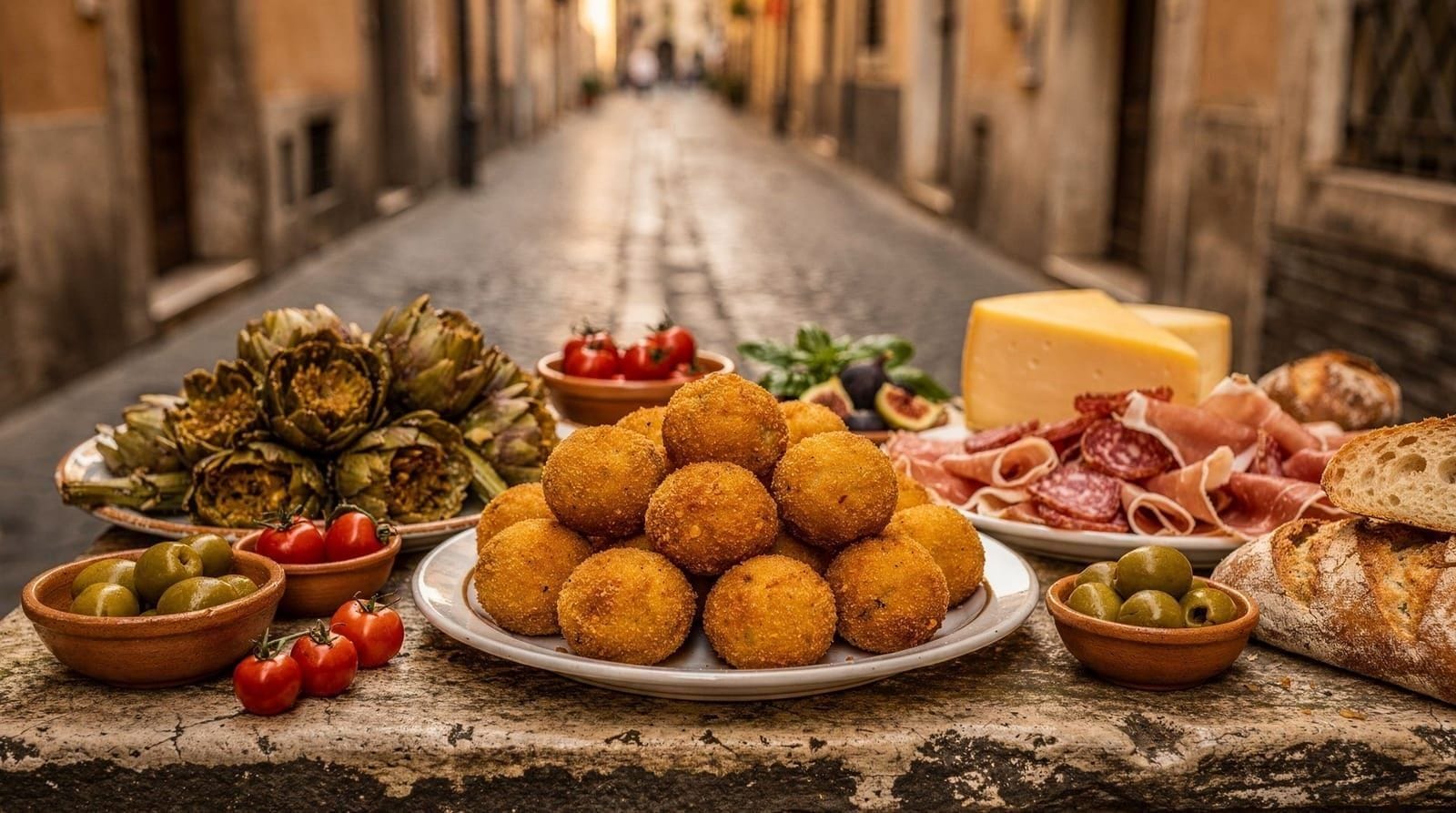
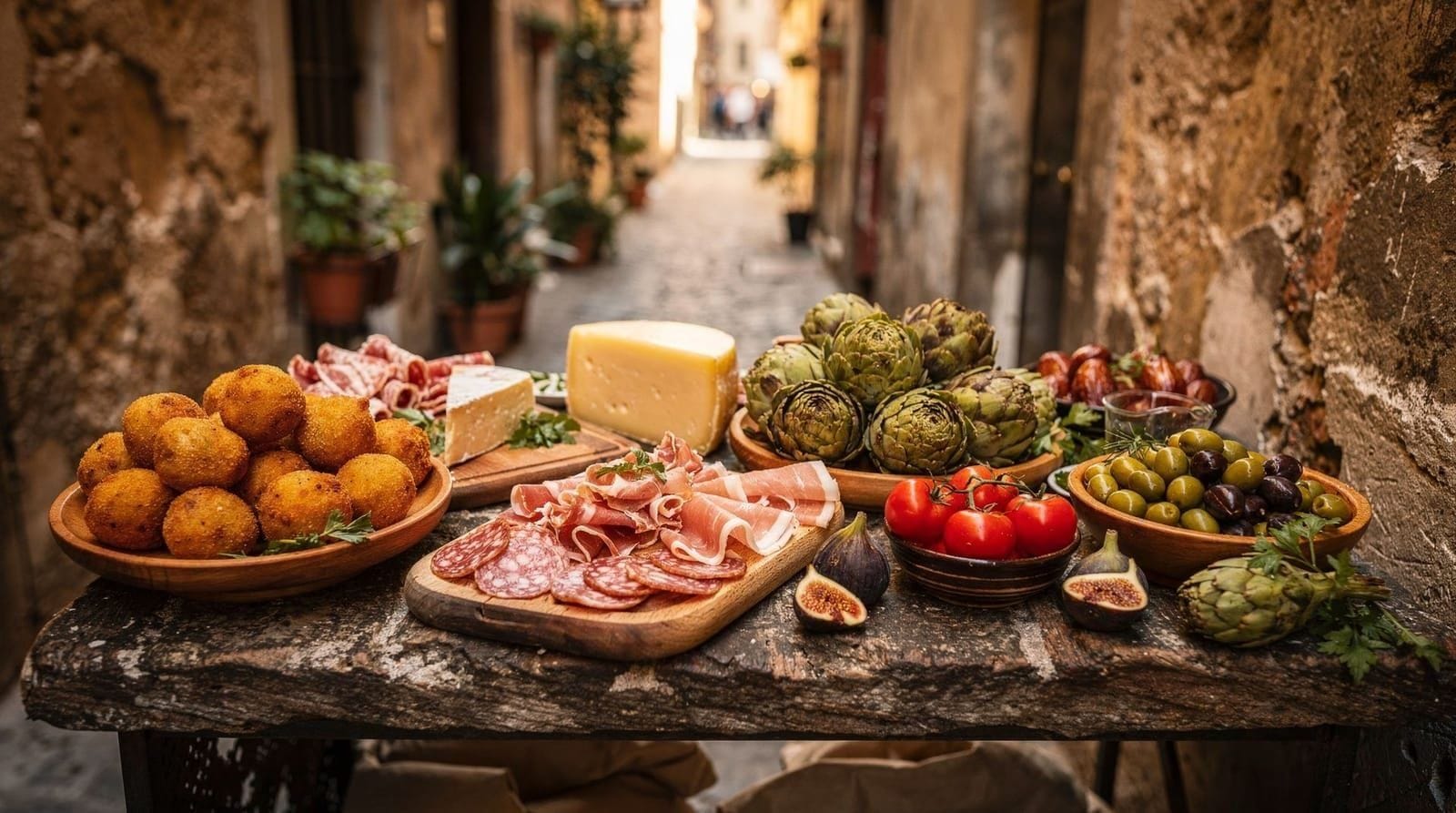
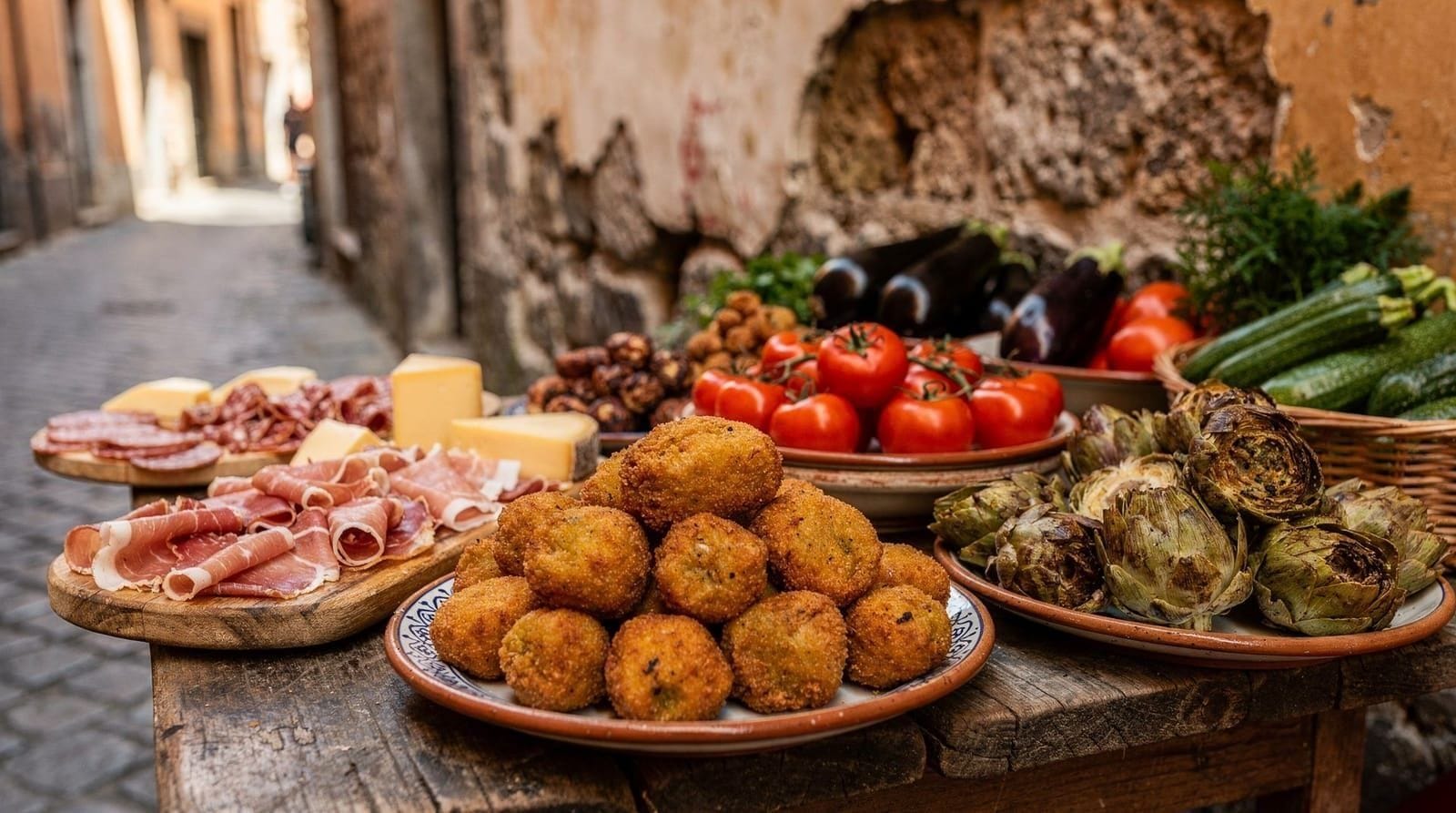
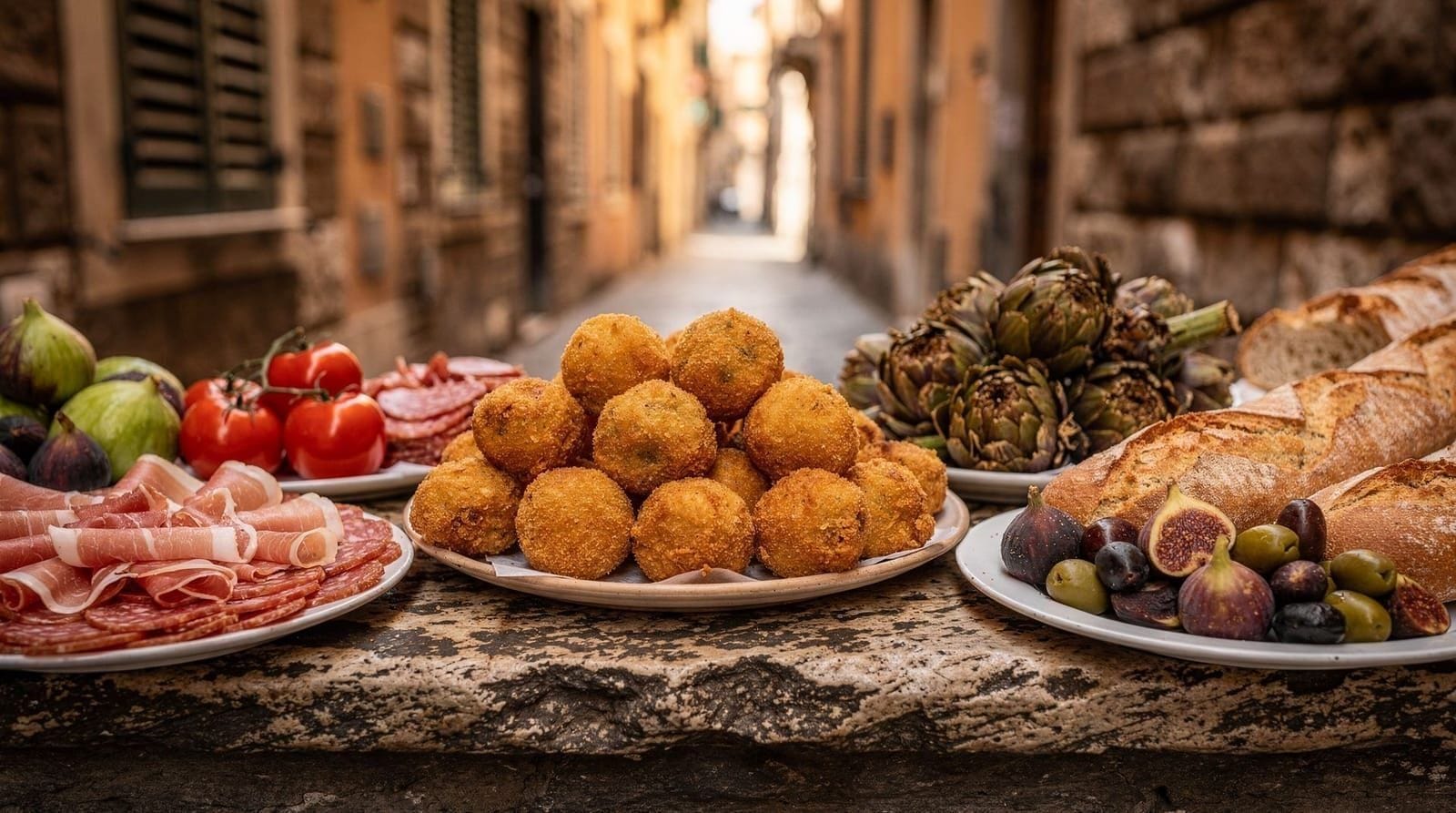
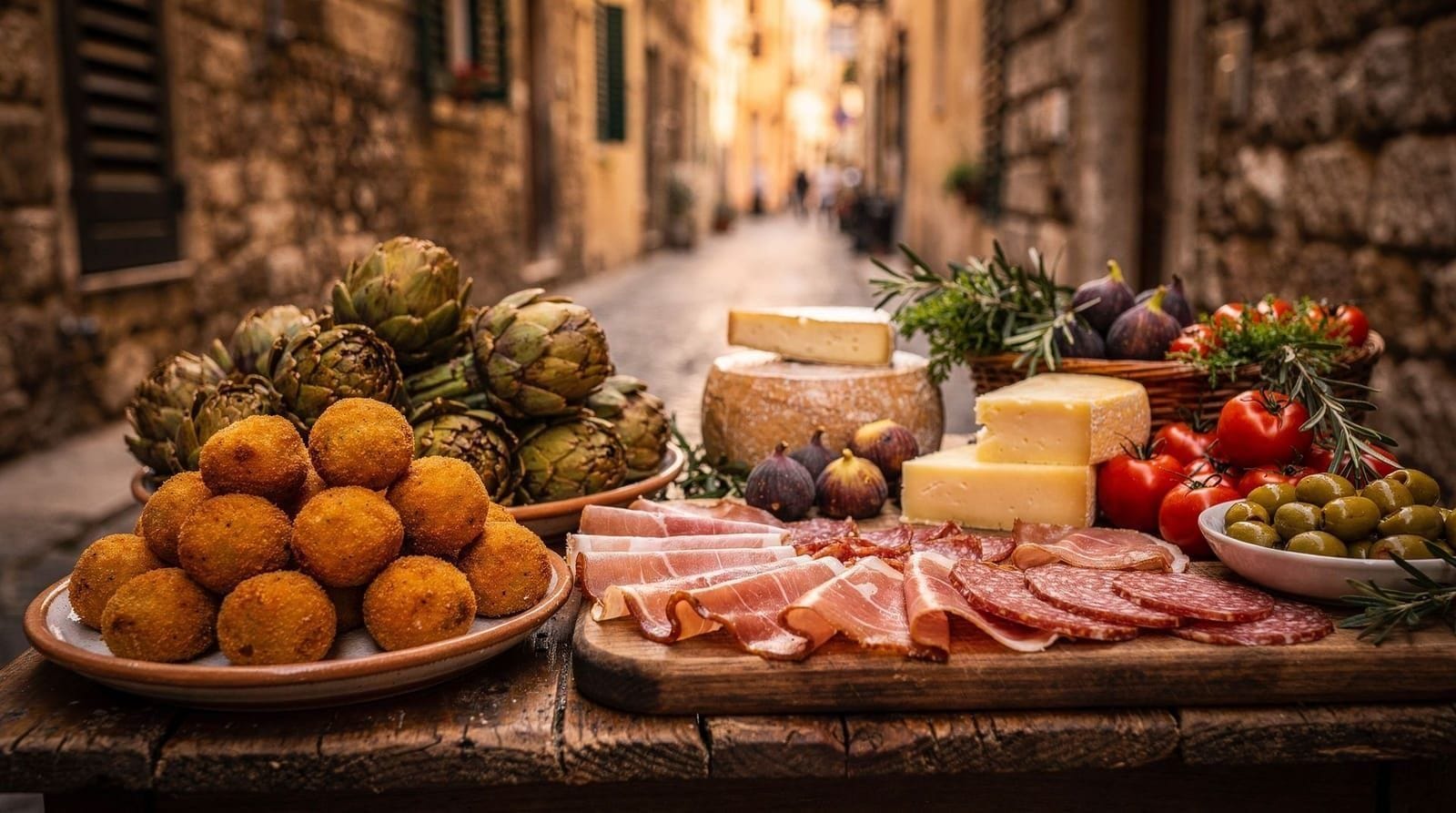
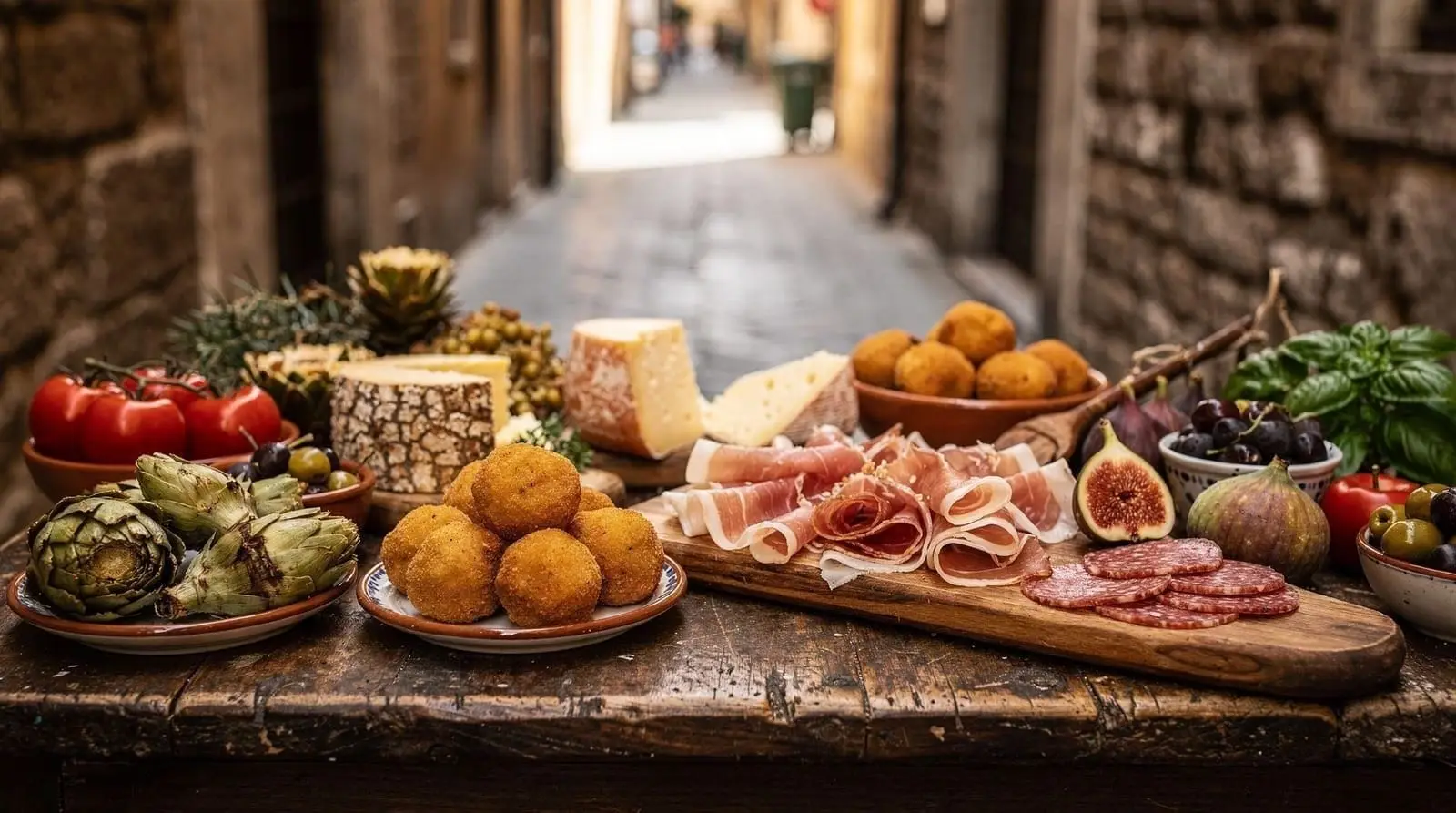
Carciofi alla giudia is the dish this neighbourhood is known for, and it deserves the attention. A Roman artichoke — the large, violet-tinged Romanesco variety — is flattened by pressing the head against a hard surface until the leaves splay outward like a flower, then deep-fried in olive oil until the outer leaves become crisp and the inner heart remains tender. The result is served hot, dressed with salt and lemon, and eaten whole: the crispy outer leaves like chips, the tender centre like a different vegetable entirely.
The dish originated in the Ghetto because Jews were barred from selling to the main markets in the city and had to make use of cheaper, seasonal ingredients. The artichoke — bitter, unfashionable, abundant in Lazio’s spring markets — became the raw material for something remarkable.
Where to eat them: Nonna Betta on Via del Portico d’Ottavia has been doing them correctly for decades. Sora Margherita on the same street is smaller and more cash-in-hand about the whole operation, which is either charming or annoying depending on your mood. Ba’Ghetto has expanded to multiple locations but still does the food well. All three are within a two-minute walk of each other.
The artichoke season runs roughly from January through May, peaking in March and April. Outside of this window you will find frozen artichokes at some restaurants, which are edible but not the same. If your trip falls in spring, prioritise this.
The rest of the cucina giudaico-romanesca
Beyond the artichoke, the Roman-Jewish kitchen has its own specific canon. Filetti di baccalà — salt cod fillets dipped in a light batter and fried — are available as street food from a few spots on Via del Portico d’Ottavia and make an excellent standing snack. Concia di zucchine is a sweet-and-sour fried courgette dish that appears as an antipasto at most of the neighbourhood’s restaurants. Spaghetti alla carbonara and cacio e pepe exist here too, but the things worth seeking out are the dishes you won’t find everywhere else in Rome.
Aliciotti con l’indivia — fresh anchovies baked with endive — sounds austere and is actually quite beautiful: the bitter green and the salty fish balancing each other in a way that feels very old. Tortine di ricotta e visciole (ricotta and sour cherry tarts) appear in the small bakeries and cafés and are one of the better pastry experiences in Rome.
The Pasticceria Boccione on Via del Portico d’Ottavia is the neighbourhood’s historic bakery. It looks almost deliberately uninviting: no menu in the window, mismatched opening hours, queues that form before the metal shutters go up. Inside, they sell dense ricotta cakes, almond biscuits, and a pine-nut-and-raisin pastry called pizza ebraica that bears no resemblance to anything else called pizza. These are not delicate things. They are substantial, slightly rough-edged, and very good.
The neighbourhood itself
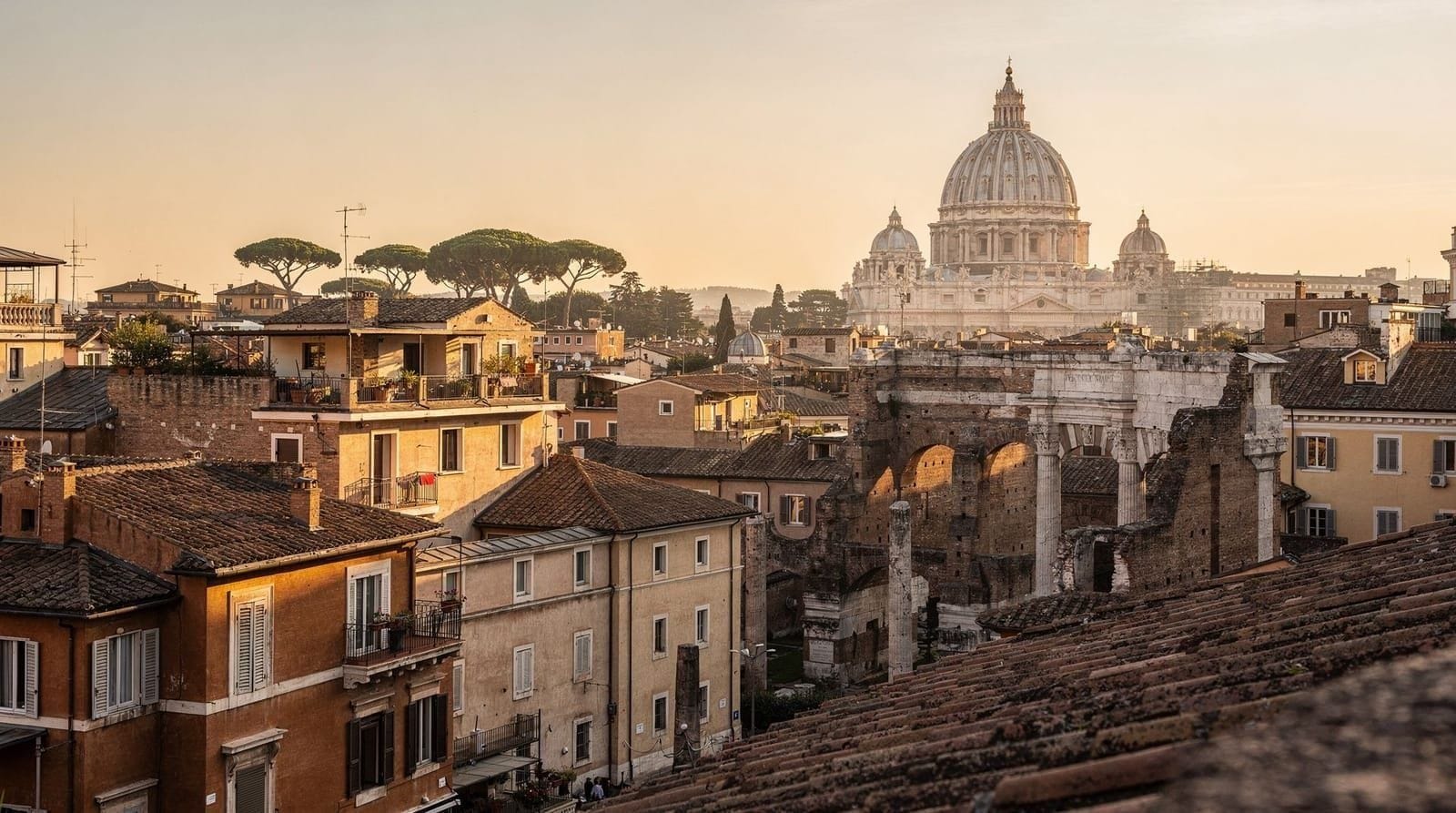
The Ghetto covers only a few streets but packs in a remarkable density of history. The Portico d’Ottavia — a colonnade built by Augustus in honour of his sister in 27 BCE — forms the western edge of the neighbourhood. The Great Synagogue of Rome (Tempio Maggiore) sits on the Tiber embankment and has a museum attached that traces the community’s history from antiquity to the twentieth century. It’s worth the entry fee and often overlooked by visitors focused on the Christian monuments of the city.
The Theatre of Marcellus, just south of the Portico d’Ottavia, is one of those Rome buildings that defies casual comprehension: a first-century BCE theatre that was later converted into a fortress, then a palace, and now contains residential apartments in its upper storeys. People live inside an ancient Roman theatre. This is not unusual in Rome, but it is remarkable.
The piazza in front of the Portico d’Ottavia — Piazza di Monte Savello — is where the neighbourhood comes to life in the evening. Tables from the surrounding restaurants spread onto the pavement, the Portico is lit up, and the whole thing looks slightly too beautiful to be real.
When to go
The Ghetto is at its best in the morning (before 11am, when the food shops and bakeries are fresh) and in the early evening (from 7pm, when the tables fill up and the lighting turns golden). Midday on a weekday can feel slightly deserted; midday on a weekend, when tour groups pass through on their way between Campo de’ Fiori and the Pantheon, can feel overwhelmed.
Friday afternoon the neighbourhood starts preparing for Shabbat and some businesses close early. Saturday is Shabbat; the synagogue is closed to visitors, some restaurants close, and the whole area is quieter. Sunday morning is a good time: the bakery is open, the restaurants start their lunch service around noon, and the tourist pressure hasn’t yet built to Campo de’ Fiori levels.
Rome Trastevere secret food tour — if you want a guided introduction to Roman food culture in the neighbouring streets of Trastevere, this kind of food tour builds on the context the Ghetto provides and helps explain how Roman cooking actually works.
How it fits Rome’s wider food scene
The Ghetto is one entry point into Roman-Jewish cuisine specifically, and the standalone Jewish Ghetto food guide goes deeper into individual dishes, restaurant-by-restaurant comparisons, and the history behind specific recipes if this piece has only whetted your appetite. Zooming out, the where to eat in Rome guide places the Ghetto in the context of the city’s other serious food neighbourhoods, and the Rome street food guide is the natural companion if you want to graze rather than sit down — several of the Ghetto’s best bites (the filetti di baccalà, the pizza ebraica) work perfectly as street food eaten while walking. For the architecture and history around the food, the Centro storico guide covers the wider neighbourhood the Ghetto sits within.
Getting there and around
The Jewish Ghetto is walkable from almost anywhere in the centre. From Campo de’ Fiori: ten minutes east. From the Pantheon: ten minutes south. From Largo Argentina: five minutes southwest. There is no metro nearby; this is an area for walking.
Via del Portico d’Ottavia is the spine of the neighbourhood. Walk it slowly, stop at the bakery, look up at the Portico columns, and then sit down somewhere with a glass of house white and a plate of carciofi alla giudia. That’s the correct way to spend a morning in this part of the city.
The Testaccio neighbourhood is about a fifteen-minute walk south and makes a natural afternoon pairing — another Rome neighbourhood where the food is serious, the restaurants are local-facing, and the tourist infrastructure is thin enough that you feel like you’re actually in the city rather than the performance of it.
FAQ
What is the best dish to try in the Jewish Ghetto? Carciofi alla giudia — a whole Roman artichoke pressed flat and deep-fried until the outer leaves are crisp and the heart stays tender — is the neighbourhood’s signature dish and worth prioritising, especially in season from January to May.
Is the Jewish Ghetto open on Saturdays? Restaurants and shops are generally open, but it’s quieter than other days since it’s Shabbat: the Great Synagogue is closed to visitors, and some Jewish-owned businesses close or reduce their hours out of observance.