Rome's nasoni: the free drinking fountains that locals use every day
Every August, I watch the same scene play out near the Colosseum: tourists queuing at a minimarket to pay €2.50 for a 500ml plastic bottle of water, then drinking it in about four minutes because they are genuinely hot and thirsty. A nasone — one of Rome’s cast-iron drinking fountains, unmistakable with its curved spout — stands twenty metres away, running cold, clean water continuously and completely free. Nobody is using it.
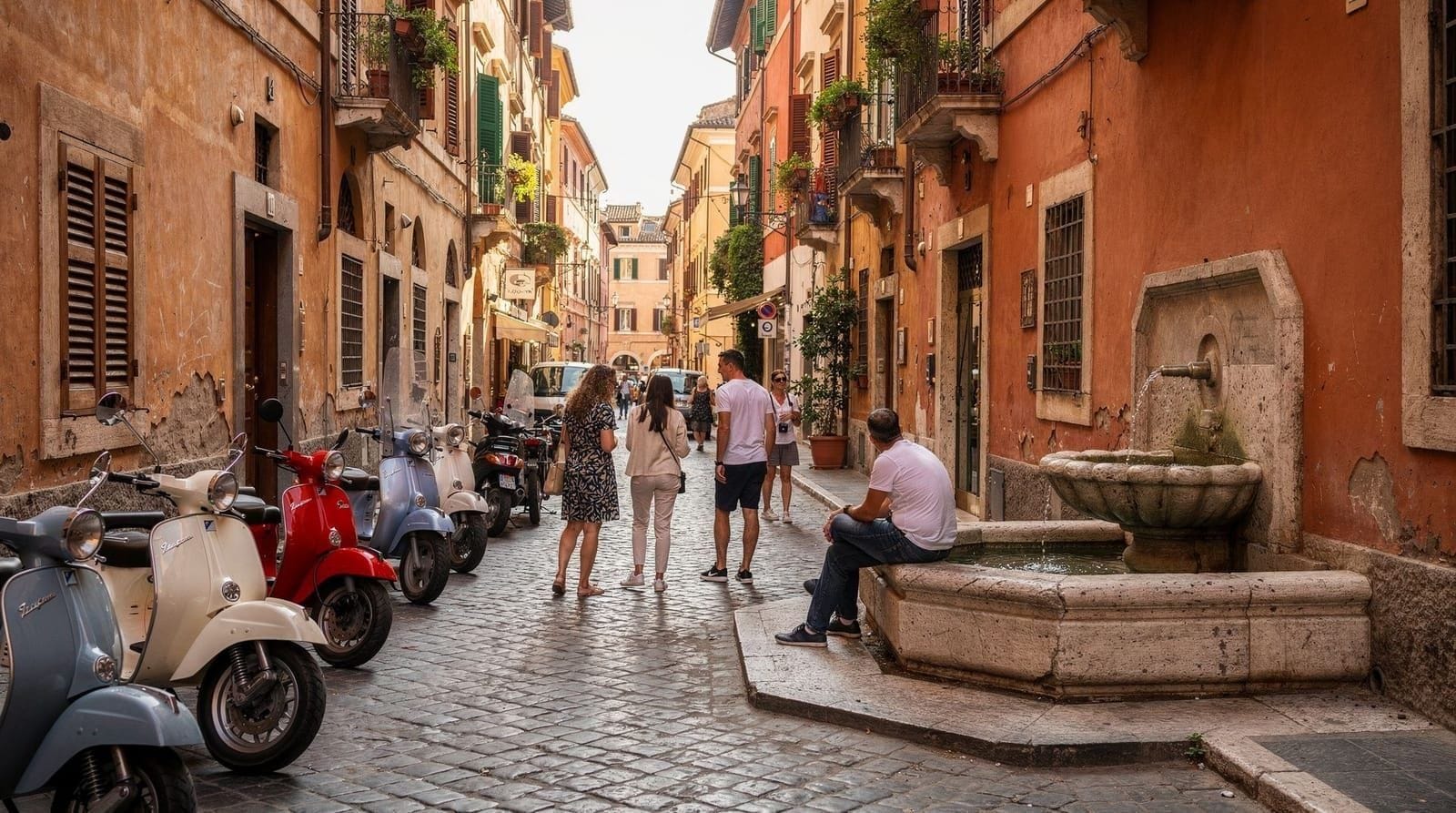
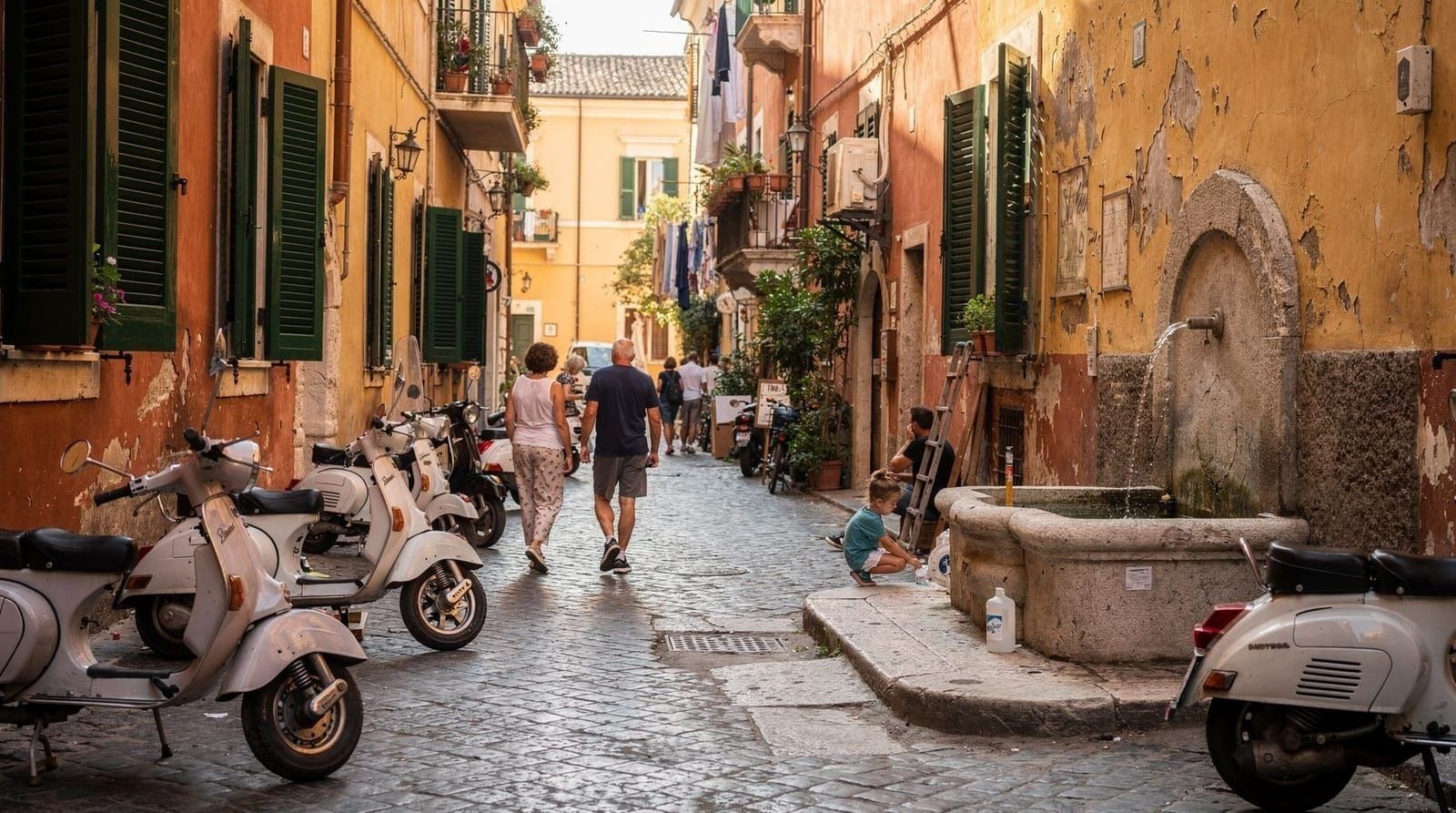
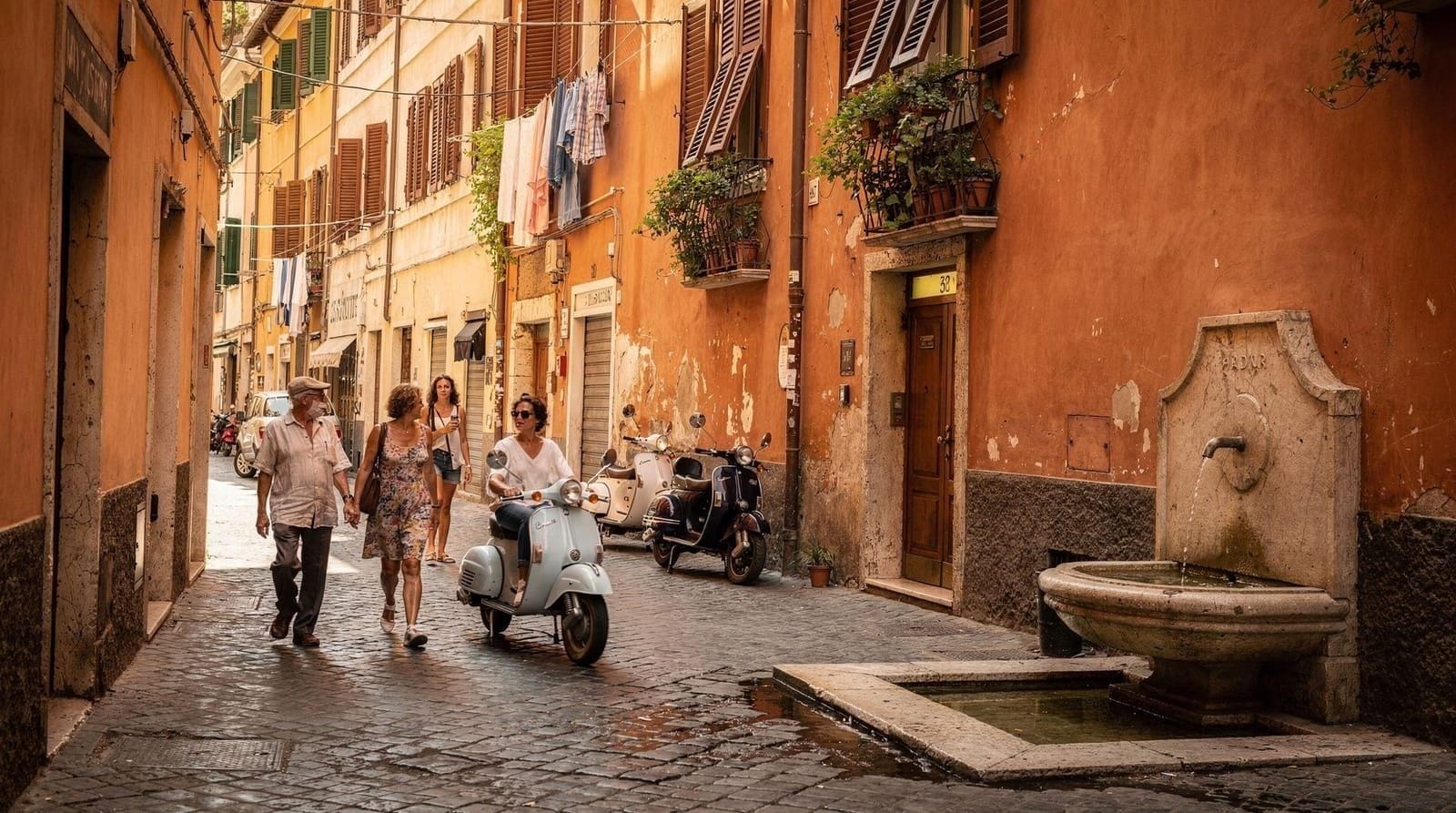
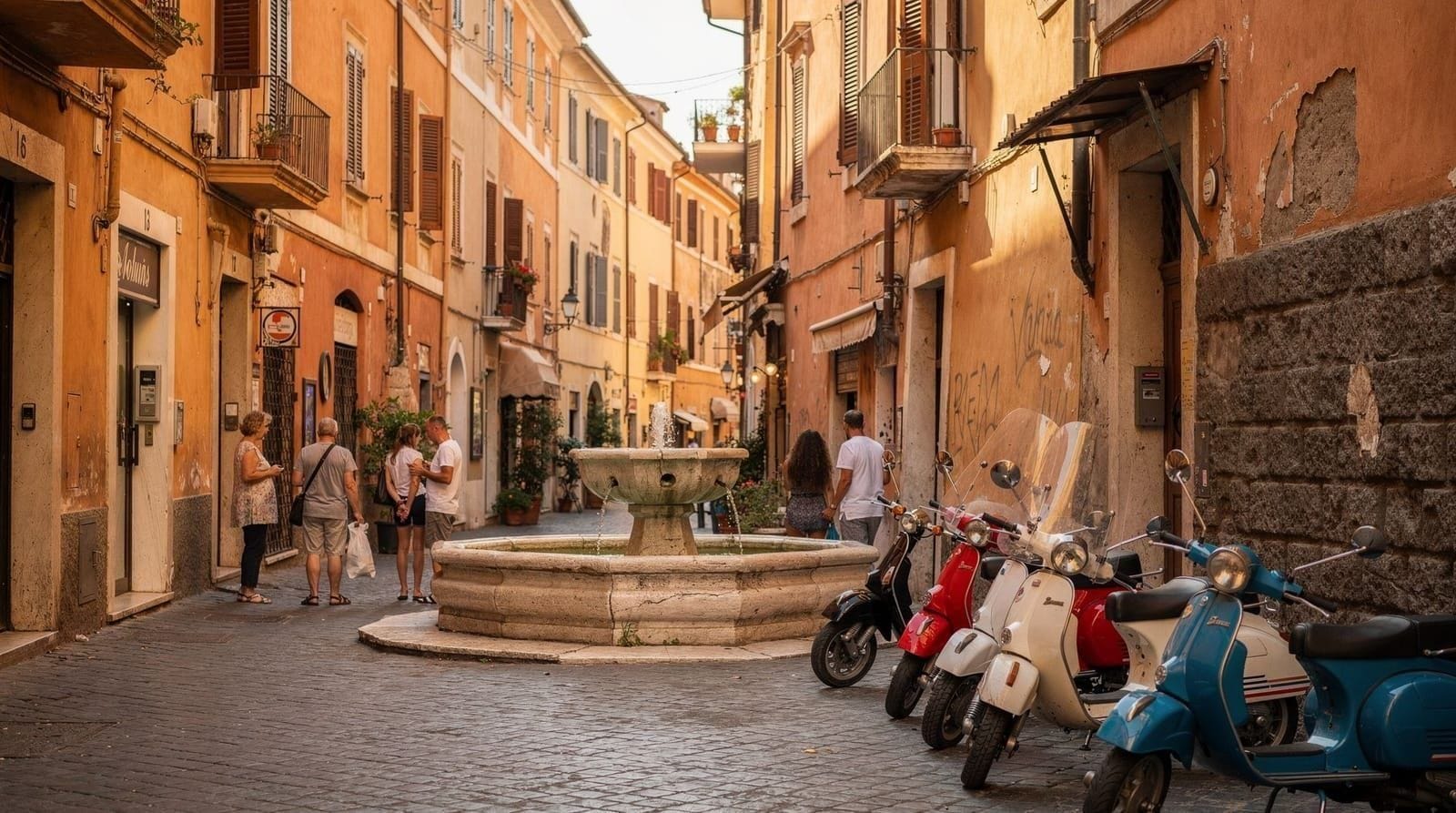
This is not a secret. Romans use nasoni constantly, reflexively, as part of daily life. The fountains appear in almost every piazza, at the foot of many churches, along most tourist routes, and at regular intervals throughout the city’s residential neighbourhoods. There are over 2,500 of them. You almost certainly walked past several today without registering what they were.
| Cost | free, always |
| Water quality | potable, regularly tested municipal supply |
| Availability | 24/7, year-round, roughly every few streets in the centre |
| What to bring | any reusable bottle, wide-mouthed is easiest |
| Best use | fill up each morning before you start walking |
What nasoni actually are
The name means “big noses” in Roman dialect, a reference to the short curved spout that gives each fountain its profile. The design is cast iron, largely unchanged since the late nineteenth century when Rome’s municipal water authority installed the first ones across the city. They connect to the same aqueduct system — derived from ancient Roman engineering — that supplies tap water to Roman homes and restaurants.
The water is cold, potable, and tested regularly. It comes from mountain springs in the hills around Rome, primarily via the Acqua Vergine aqueduct (the same source that feeds the Trevi Fountain) and the Acqua Marcia system. Romans drink tap water without hesitation, and the nasoni are essentially outdoor taps with the same supply.
The flow runs continuously by design — there is no tap to turn on or off. The small hole on top of the spout serves a purpose: if you block the main outlet with your thumb, a thin jet of water shoots upward from that hole so you can drink directly without bending to the spout. It takes about thirty seconds of practice to master and then becomes second nature.
Where to find them
The honest answer is: nearly everywhere. In the centro storico, you will encounter nasoni near Piazza Navona, along the streets around Campo de’ Fiori, throughout the Jewish Ghetto, and in several spots around Piazza Venezia. Near the ancient monuments, there are fountains close to the main entrance areas of the Colosseum district, along the Via Sacra, and near the Circus Maximus in Aventino & Circus Maximus.
In Trastevere, the neighbourhood is dense with them — there are clusters near Piazza di Santa Maria in Trastevere and along the main pedestrian streets. The same is true in Monti, the neighbourhood directly north of the Colosseum, where nasoni appear every few streets and the locals use them for everything from drinking to rinsing fruit.
In Testaccio, they are part of the daily market rhythm — you will find them near the covered market on Via Galvani and along the streets connecting to the riverbank. The Vatican area has several, including near Castel Sant’Angelo and along the approaches to St. Peter’s Square.
For more formal mapping, the ACEA (Rome’s water authority) app and several mapping resources show nasoni locations across the city. The Roma mobile app also includes a fountain finder function. But honestly, if you are in central Rome, you are rarely more than a three-minute walk from one.
The practical logistics
Fill a reusable bottle before you start walking each morning. This is genuinely the move. The bottles marketed specifically for Rome are fine but unnecessary — any wide-mouthed bottle works. Hold it under the spout at a slight angle; the water pressure is modest and predictable.
In summer, the water runs cool rather than cold — it is not refrigerated, and the pipes warm slightly through the day. In the cooler months it is noticeably colder. Either way, it is a significant improvement on the €2.50 minimarket bottle that has been sitting in a warm storeroom.
The nasoni run twenty-four hours a day, year-round. They never close. In a city where many things require planning and queuing, this is something you can simply rely on.
One thing to note: the water pressure varies by location. Fountains fed by the Acqua Vergine system, which runs at relatively low pressure, have a gentler flow than those on other networks. If a fountain seems to have very low flow, find another nearby. There will be one.
What this saves you
The numbers are not complicated. A tourist spending three days in Rome in July might reasonably drink two litres of water a day — more if they are walking seriously. At €2.50 per 500ml bottle from a tourist-area minimarket (the regular price at non-touristy shops is closer to €0.60, but you will not be shopping there), that is €10 per person per day, €30 for three days. For a couple: €60 on water. Filling a reusable bottle from nasoni costs nothing.
This also fits into the broader honesty about Rome on a budget — the city has genuine free things, not watered-down half-experiences, and the nasoni are among the most genuinely useful. The water feeding the Trevi Fountain, which tourists pay nothing to see, is the same water they can drink a few streets away for free. That seems like the right kind of symmetry.
The larger point about tourist traps
The bottled water situation near Rome’s major sights is symptomatic of a wider pattern worth being clear about. The streets immediately around the Colosseum, the Vatican, the Trevi Fountain, and the Spanish Steps are full of vendors and shops calibrated entirely for people who have not done any preparation. The prices are not illegal or scandalous — they are simply the market rate for convenience, and you pay a significant premium for not having planned ahead.
The nasoni are one of Rome’s genuine gifts — infrastructure built by the city for its residents that happens to be entirely available to visitors. Locals do not think twice about using them. The tourist who stands at a nasone filling their bottle while a tour group files past towards a minimarket is, in this specific moment, doing Roman life correctly.
If you are spending serious time in Testaccio or wandering through the catacombs area along the Appian Way, the fountains along those routes are particularly welcome. The Appian Way stretch is warm in summer with limited shade, and the nasoni near the entrance to the catacombs site is one of the more useful ones in the city.
Rome evening guided walking tour through the centro storicoEvening walking tours are one of the genuinely good-value ways to cover central Rome — the guides point out things you would otherwise miss, including several nasoni with interesting histories, and the temperature is far more comfortable than midday. The Trevi Fountain crowd thins noticeably after 9pm.
Nasoni etiquette (and why the sustainability case matters)
There isn’t much etiquette involved, which is part of the appeal, but a few things are worth knowing. Don’t put your mouth directly on the spout — use the thumb-and-jet method described above, or cup your hands. Don’t linger blocking the fountain if there’s a queue behind you, especially in the busiest piazzas. And don’t be surprised if a Roman filling a bottle beside you strikes up a brief conversation about the water; it’s a genuinely shared piece of civic life, not an oddity. For the wider unwritten rules of moving through the city politely, the Rome etiquette and customs guide covers this alongside dress codes, tipping, and church behaviour.
There is also a real environmental case here beyond the money saved: every refill is one less plastic bottle in a city that already struggles with tourist-season waste. It costs nothing extra to bring a bottle from home, and it is one of the simplest ways a visitor can reduce their footprint without changing anything else about the trip.
A note on the nasoni and Roman life
There is something worth paying attention to in how Romans relate to these fountains. They are not tourist attractions. They are not particularly photogenic. They are water infrastructure, and the city treats them accordingly — maintaining them, repairing them when they break, and expecting that everyone from schoolchildren to office workers to elderly residents will use them without ceremony.
Fitting into that rhythm, even for a few days, is one of the smaller but more authentic ways to experience the city. Refill your bottle at the nasone near Piazza Navona before walking to Campo de’ Fiori. Stop at the one in Centro Storico on your way between monuments. Drink the city’s water the way the city drinks it.
It costs nothing and it works perfectly. In Rome, that combination is rarer than you might expect.
FAQ
Is nasoni water safe to drink? Yes. It comes from the same tested, potable municipal aqueduct supply — including the historic Acqua Vergine — that feeds tap water across Rome, and it is monitored regularly by the city’s water authority.
Do I need a special bottle for nasoni? No. Any reusable bottle works; a wide mouth makes filling faster, but there’s no special “Rome bottle” required despite what some souvenir shops suggest.