Free things to do in Rome: a genuinely useful list
Rome: Catacomb of St. Callixtus and Appian Way Guided Tour
What are the best free things to do in Rome?
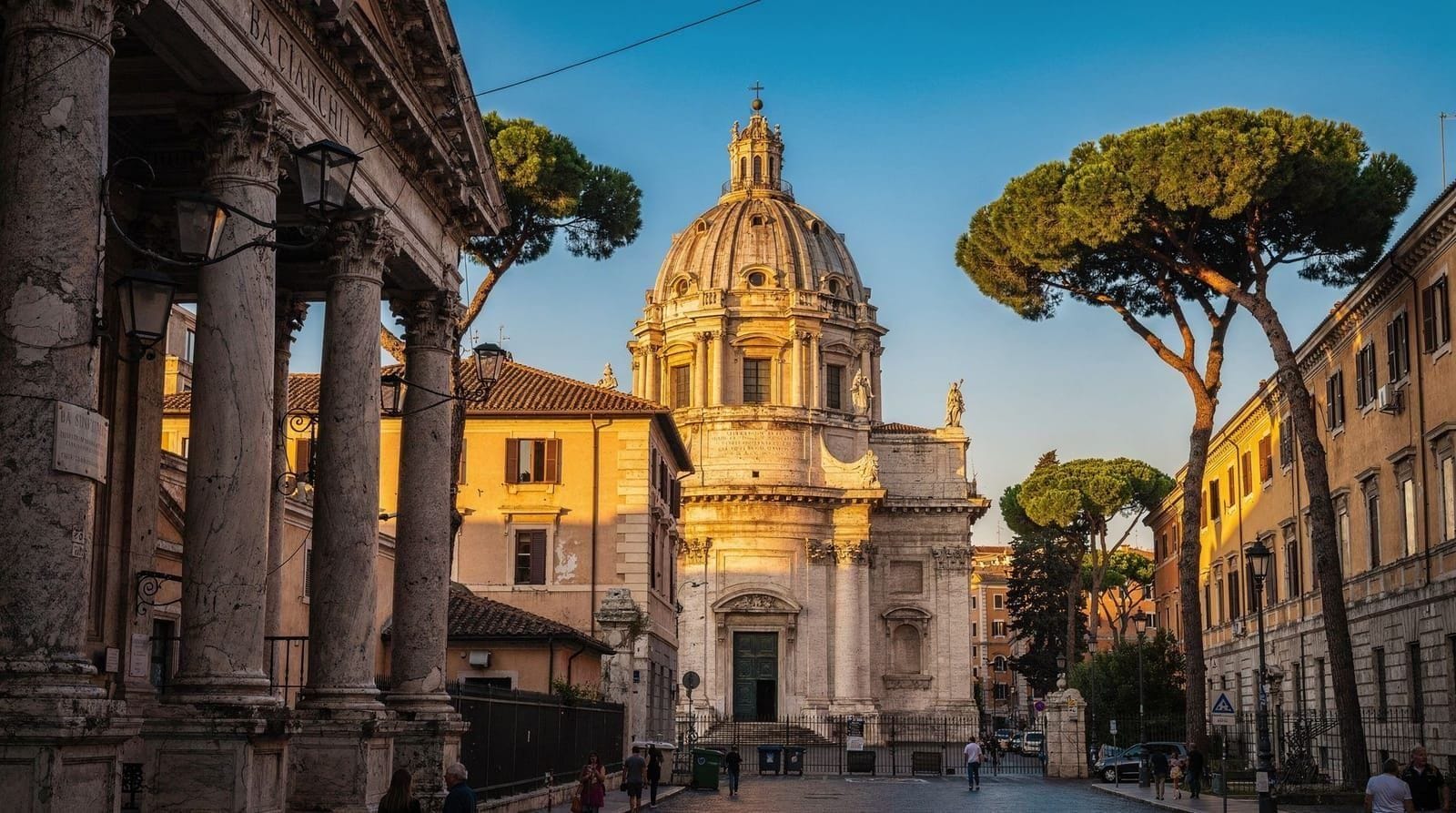
The genuinely great free options: the Pantheon's exterior and square (the interior now costs 5 €), all of Rome's major basilicas including San Giovanni in Laterano and Santa Maria Maggiore, the Appian Way on Sunday morning, the Capitoline Hill viewpoint, the Borghese Gardens, the nasoni free drinking fountains, the Aventino keyhole view of St. Peter's Dome, and Caravaggio in three free churches. No queue, no booking, no money.
The honest premise
Rome is expensive to visit if you do it wrong. If you do it right, it is one of the most affordable major cities in Europe for the sheer density of quality experiences that cost nothing. The monuments, churches, piazzas, gardens, and viewpoints that made Rome famous for centuries were built to impress the world — not to extract a ticket price.
This is a specific list. Every item below is genuinely free, genuinely worth doing, and genuinely not a “hack” that requires getting up at 04:00 or arriving in the wrong season.
| Where | Citywide — churches, piazzas, hills and parks |
| Cost | €0 for everything on this list, beyond an optional coffee or coin for chapel lights |
| Time needed | A genuinely full free day, or spread across a trip |
| Getting there | Walkable core sites; bus 118/218 for the Appian Way |
| Best time | Morning for churches and markets, sunset for viewpoints, after 21:00 for piazzas |
Churches with world-class art: genuinely free, genuinely magnificent
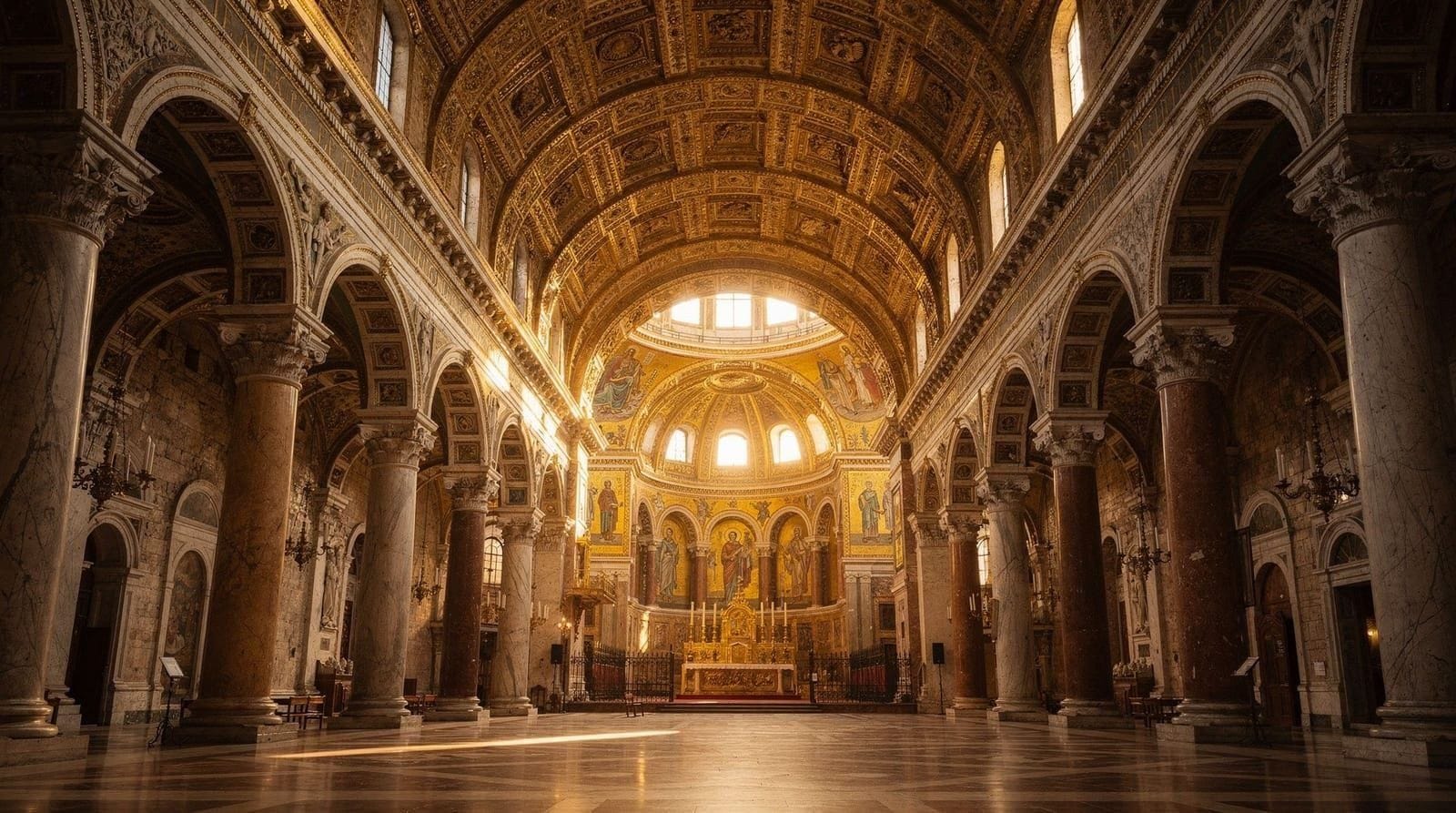
Rome has over 900 churches, and the best of them are free to enter at any time (outside masses). They contain more significant art than most national museums — and the art is often in better context in the building it was made for.
San Luigi dei Francesi, near Piazza Navona. Three paintings by Caravaggio — the Calling of Saint Matthew, the Inspiration of Saint Matthew, and the Martyrdom of Saint Matthew — hang in the Contarelli Chapel at the back of the left nave. These are not prints or minor works. They are three of the most important paintings of the 16th century, in the city they were made for, for free. Coin-operated lights (50 cents) illuminate the chapel. Open daily except during masses.
Santa Maria del Popolo, at Piazza del Popolo. Contains two Caravaggio masterpieces in the Cerasi Chapel: the Crucifixion of Saint Peter and the Conversion of Saint Paul. The latter — a horse, a prostrate man, a beam of light — is among the most psychologically intense paintings in Western art. Also contains the Chigi Chapel designed by Raphael and sculptures by Bernini.
Sant’Agostino, near Navona. Caravaggio’s Madonna di Loreto (1604) — showing the Virgin Mary barefoot at the door of a house with dirty-footed pilgrims kneeling before her — is one of the most radical religious paintings ever made in Rome. Free, often uncrowded.
The four Papal Basilicas:
- San Giovanni in Laterano (Rome’s cathedral, older than St. Peter’s) — free entry to the church, cloisters cost 3 €
- Santa Maria Maggiore — free entry
- San Paolo fuori le Mura — free entry to the church; treasury costs a small fee
- St. Peter’s Basilica — free entry (Vatican Museums are not free, but the Basilica itself is)
For a comprehensive church-art itinerary, see our Caravaggio trail Rome guide.
The Appian Way: ancient Rome without an entrance fee
The Appian Way (Via Appia Antica) is closed to cars on Sundays and available for walking, cycling, and running. You can walk over original Roman basalt paving stones between intact sections of ancient aqueducts, tombs, and countryside that has not materially changed since the Republic.
The first section is accessible from the Catacombs of San Callisto bus stop (bus 118 from the Circo Massimo metro). The Catacombs themselves require a ticket, but walking the road between them and the ruined Circus of Maxentius costs nothing. On a Sunday morning in spring or autumn, this is one of the genuinely transcendent Rome experiences.
If you want a guided experience of the Appian Way including Catacomb access with context, this tour covers both with a licensed guide — the catacombs themselves are not possible to enter independently.Viewpoints that cost nothing
Gianicolo Hill: Rome’s best full-city panorama. Accessible by bus (23 or 115) or a steep 25-minute walk from Trastevere up Via Garibaldi. The terrace at Piazzale Garibaldi gives you the full city spread — from the Vittoriano monument to the domes of the Vatican. Free, uncrowded compared to other viewpoints, and even more dramatic at sunset. A cannon fires here at noon daily — Roman tradition since 1847.
Capitoline Hill terrace: The Piazza del Campidoglio (redesigned by Michelangelo) has an open terrace at its back that overlooks the Roman Forum directly below. Free, no ticket required. Best late afternoon when the light is warm on the ruins. See our Capitoline Hill guide for combining with the paid Capitoline Museums.
Pincio Hill terrace, Borghese Gardens: At the edge of the gardens facing west, the terrace overlooks Piazza del Popolo with the twin churches and the roofline of the Centro Storico behind. Best at sunset. Free.
The Aventino keyhole: As mentioned in the FAQ. The priory door at Piazza dei Cavalieri di Malta, on Aventino Hill. The framed view of St. Peter’s is one of the most perfectly composed sights in the city. Small queue usually, takes 30 seconds per person, entirely free. Walk five minutes south to the Rose Garden (Roseto Comunale) for another free view of the Circus Maximus and Palatine Hill below.
The Borghese Gardens: free by design
The Borghese Gardens are Rome’s answer to Central Park or Hyde Park — 80 hectares of former papal hunting grounds turned public park, free to enter at all times. You can spend an entire morning here without paying anything: formal gardens, woodland paths, a small lake with rowing boats (rental fee), fountains, viewpoints, and a complete lack of tourist hustle.
The Borghese Gallery inside the park is decidedly not free (17 € entry plus mandatory booking), but the gardens themselves have no gate or fee. Enter from Viale del Museo Borghese near Villa Medici, from the Spanish Steps side (staircase up from Trinità dei Monti), or from Via Pinciana.
Nasoni: free water infrastructure
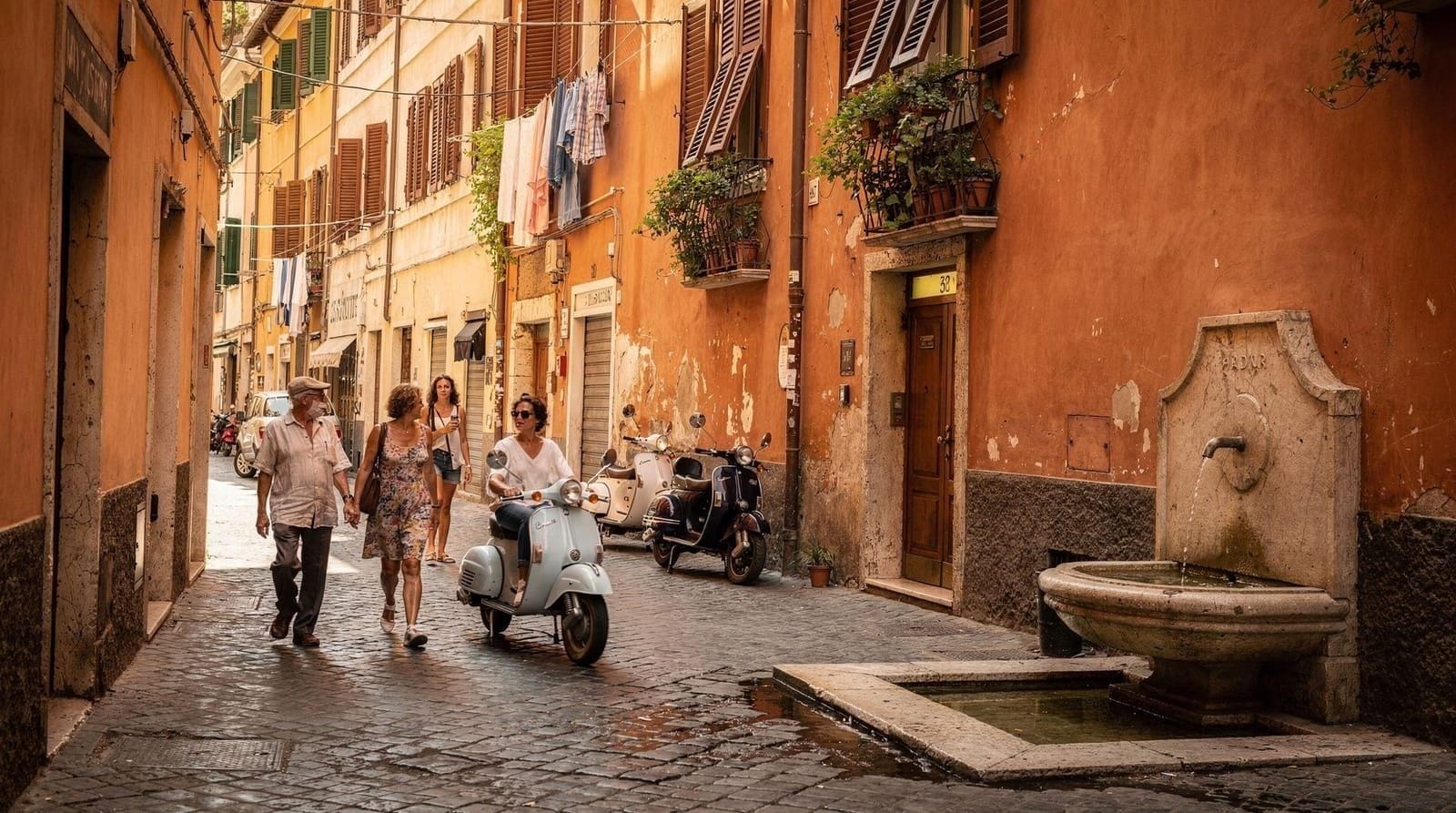
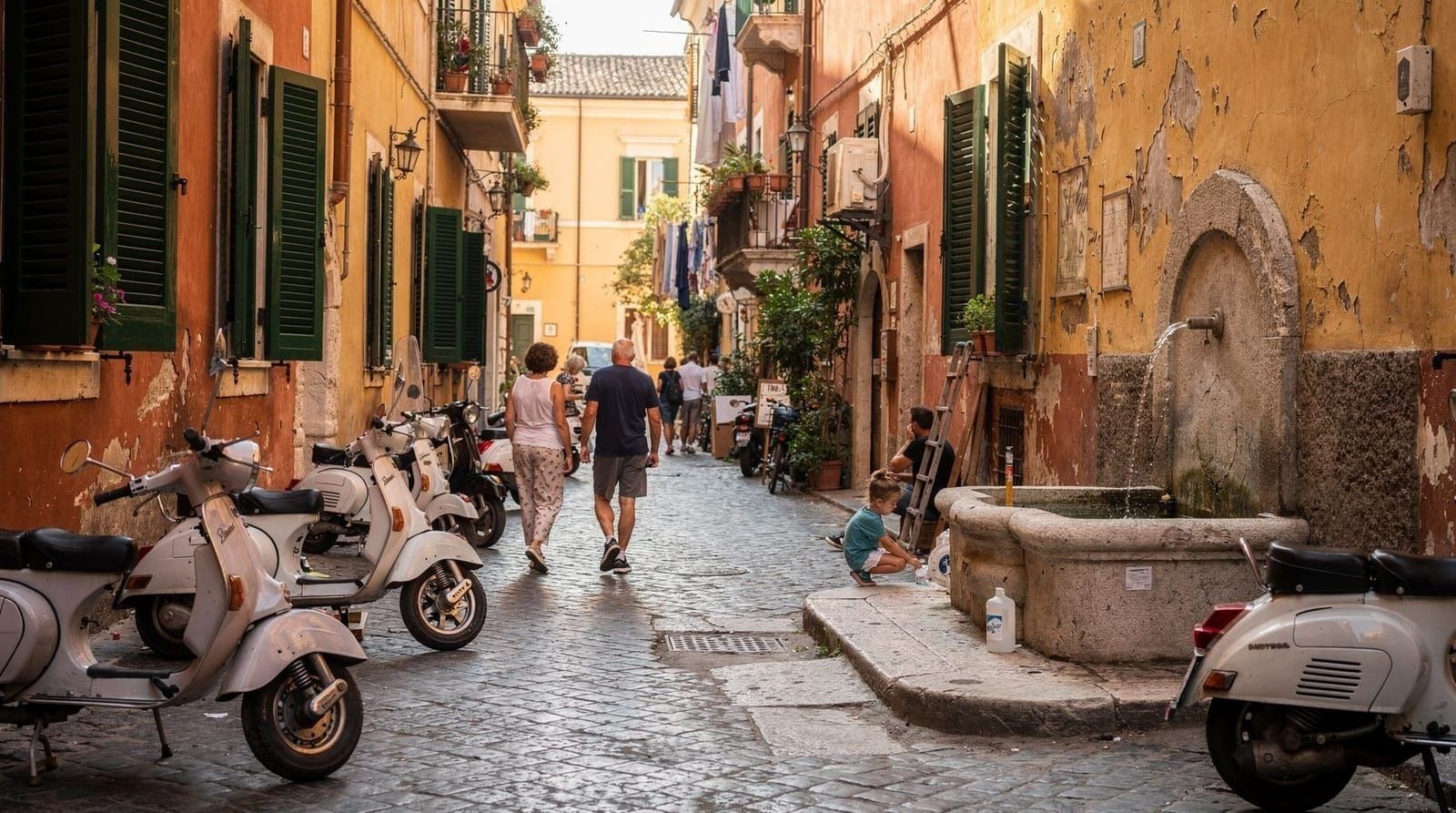
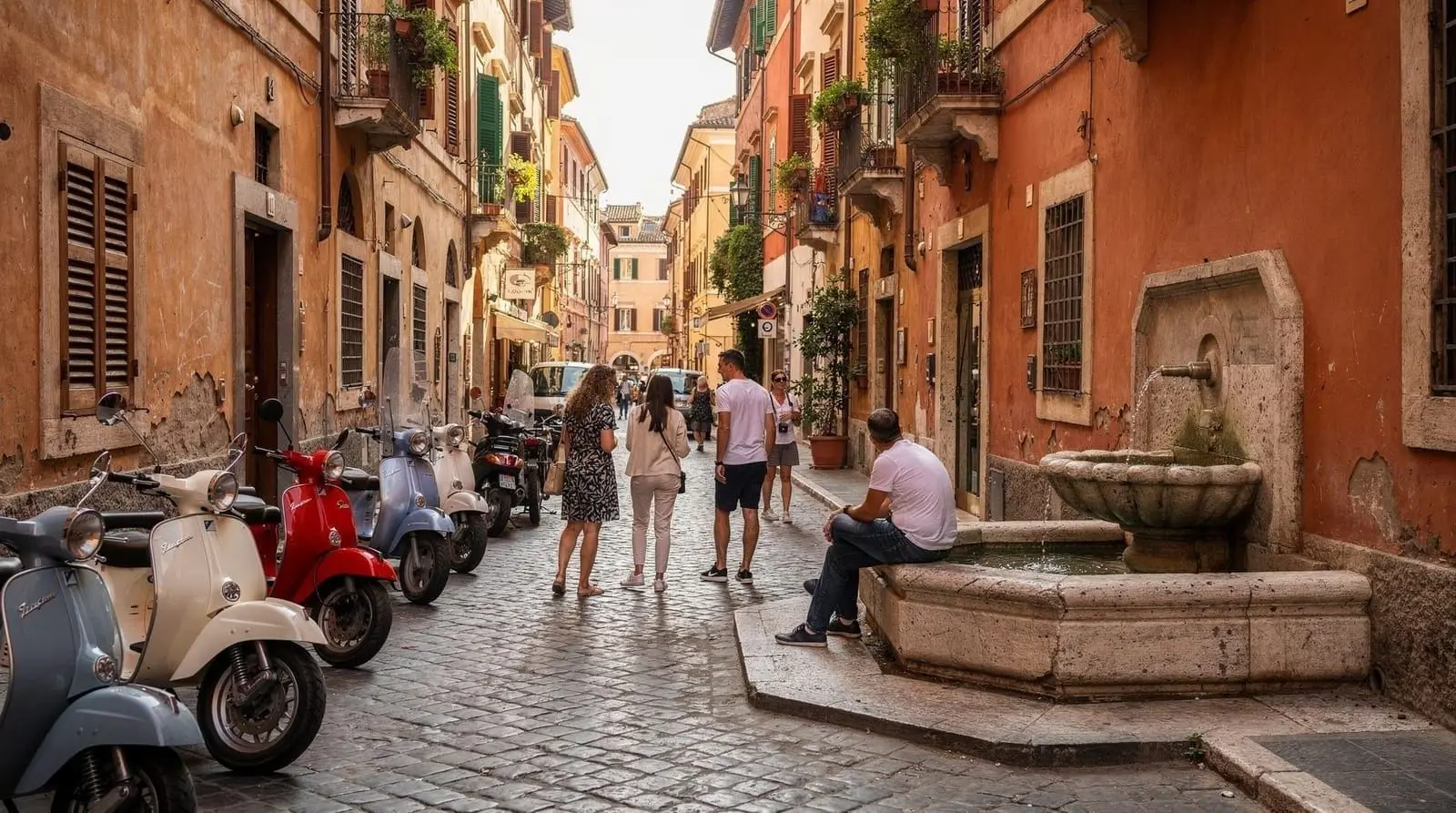
Rome has approximately 2,500 nasoni — small bronze drinking fountains, named for their nose-like spout, providing continuous free potable water throughout the city. The water comes from the same Apennine mountain springs as bottled water. It is cold, clean, and tastes good.
The economic implication: carrying a reusable water bottle and refilling at nasoni eliminates 8-15 € of daily water spending. The tourist-facing behaviour of buying 1.50 € plastic bottles every few hours is entirely unnecessary.
Nasoni maps are available on the ACEA website and on several free apps. You can find them at every major monument and throughout all neighbourhoods. The city designed this system specifically for pedestrians — use it.
The free districts: walking and atmosphere
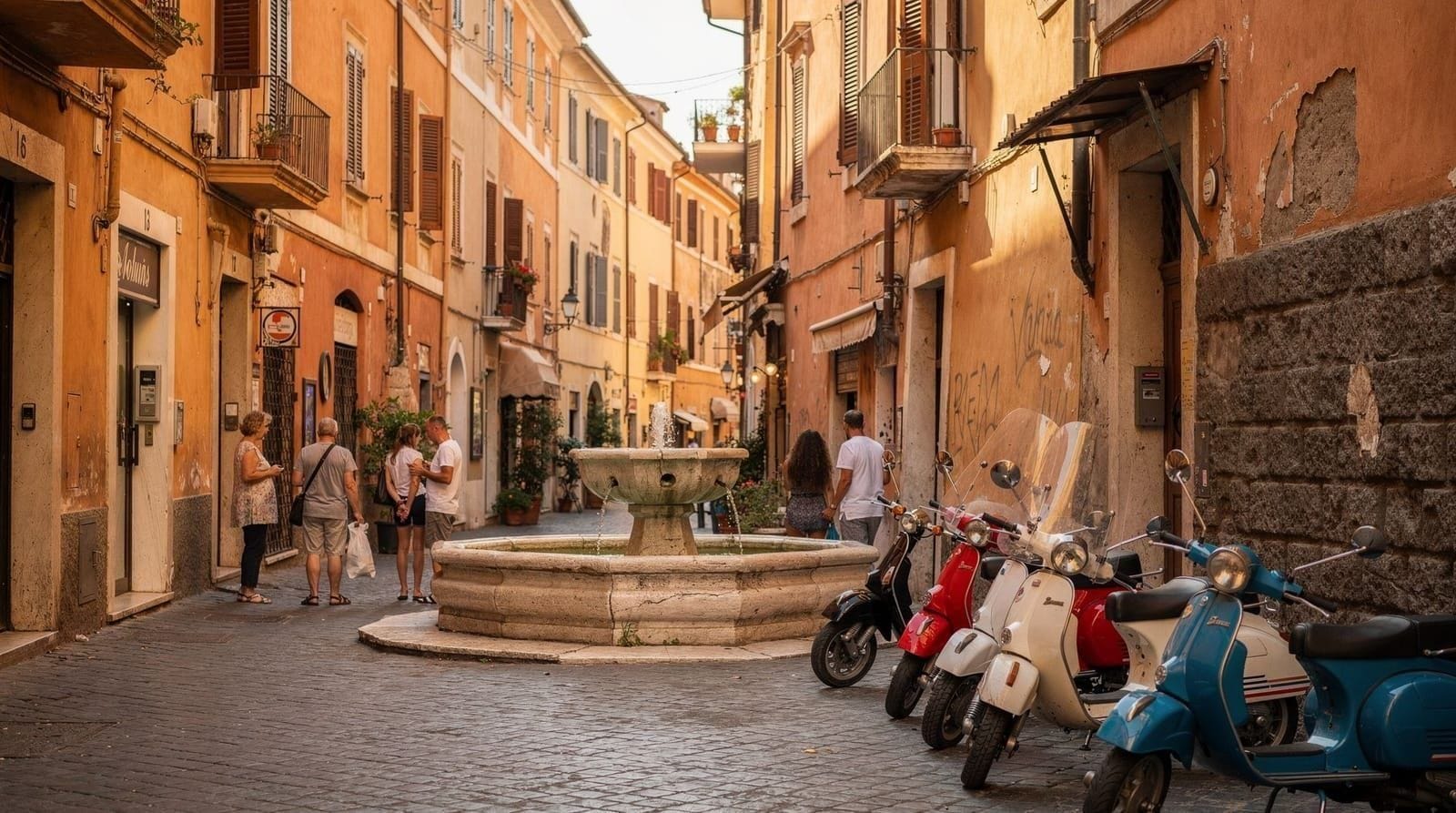
Trastevere is most beautiful on foot and entirely free to walk. The neighbourhood character — medieval lanes, ochre and terracotta buildings, washing lines, neighbourhood bar culture — costs nothing and cannot be replicated in a museum. The Trastevere neighbourhood guide has a specific walking route.
Monti, the neighbourhood between the Colosseum and Termini, has Rome’s most interesting independent shopping, café culture, and evening aperitivo scene. Walk Via del Boschetto and Via dei Serpenti. No admission required. See the Monti neighbourhood guide.
Testaccio is Rome’s food neighbourhood. The covered market (Mercato di Testaccio, Via Galvani) is free to walk through on weekday mornings. Even if you buy nothing, it is a genuinely Roman experience. The nearby Monte Testaccio — a hill made entirely of ancient broken amphorae — is visible from the outside for free.
Roman piazzas: outdoor living rooms
The great piazzas of Rome — Piazza Navona, Piazza del Popolo, Campo de’ Fiori, Piazza Farnese, Piazza Santa Maria in Trastevere — are free public spaces. Sitting on the fountain rim at Piazza Navona is free. Watching the Bernini fountains costs nothing.
The trap is sitting at a café table in these squares, where prices are significantly above neighbourhood rates. Bring water from a nasoni, sit on the piazza itself, and look at the fountains. That is the experience. The €5 coffee on a tourist terrace adds nothing to it.
Campo de’ Fiori has a market on weekday and Saturday mornings (until around 13:00) that is genuinely local, with Rome’s best artichoke vendors and decent quality produce. Free to walk through.
Covering Rome’s free viewpoints and neighbourhoods by e-bike is one of the most efficient and enjoyable ways to see the city — the tour covers all seven hills in three hours at a reasonable price.Free Sunday museums: how to make them work
The first Sunday of each month (national museums) and the last Sunday (Vatican) offer free entry. To make either worthwhile:
For national museums (first Sunday): Arrive at the Colosseum at 08:50 for 09:00 opening — not 09:15. The queue forms from 07:30 on popular months. The Roman Forum is included in the free admission and often less overwhelmed than the Colosseum itself. The Baths of Caracalla and other lesser-visited sites are dramatically quieter on free Sunday and well worth the visit.
For Vatican last Sunday: Arrive by 06:30. The museums open at 09:00 but the queue for free entry starts at 06:00-07:00. If you are not prepared to queue two hours before opening, the free entry is not actually accessible in any practical sense. See our Vatican best time to visit guide for the full strategy.
See our dedicated Rome free entry days guide for the complete calendar of free access days across all major sites.
Less obvious free entries
Circus Maximus: The ancient chariot-racing venue (300,000 spectator capacity in its day) is free to enter and walk around. The physical remains are modest compared to the Colosseum, but the scale — 600 metres long — is still striking. The Circus Maximus Experience exhibition inside charges separately.
Palatine Hill from the Farnese Gardens entrance (when accessible): Occasionally the upper entrance to the Farnese Gardens is open for free access to the hill’s gardens only, without the archaeological zones. This is not consistent — check local information on arrival.
Protestant Cemetery (Cimitero Acattolico): Near the Pyramid of Cestius in Testaccio. A small donation (2-3 €) is suggested but not mandatory. Keats and Shelley are buried here. The garden is beautiful and entirely off the tourist circuit.
The Vittoriano monument: Free entry to the main monument. The roof terrace (Roma dal Cielo) costs 9 €, but the interior rooms, the Tomb of the Unknown Soldier, and the front terrace are all free and give an extraordinary perspective on Piazza Venezia.
When you do spend money on food in Rome, the Trastevere food tour puts it in a neighbourhood where quality is genuine and prices are honest.Free Rome by night
Some of Rome’s best free experiences are available specifically after dark. The city’s monuments, piazzas, and fountains are illuminated from approximately 20:00, and the crowd levels at most outdoor sites drop significantly after 21:00.
Trevi Fountain at night: dramatically lit, reduced to a few dozen rather than several thousand people, and genuinely beautiful. The narrow streets approaching it from Via della Muratte and Via del Lavatore are pleasantly atmospheric without the daytime crush.
Piazza Navona at night: the Bernini fountains illuminated, local families sitting on the piazza benches, restaurants beginning their evening service (the square is busy but manageable after 22:00). The light on the church of Sant’Agnese in Agone is particularly good after dark.
The Tiber embankment: the Lungotevere promenade along the river has a local walking and cycling culture in the evenings, particularly in the Trastevere section. The bridges are lit; the Castel Sant’Angelo glows against the night sky. Entirely free, excellent for the hour before or after dinner.
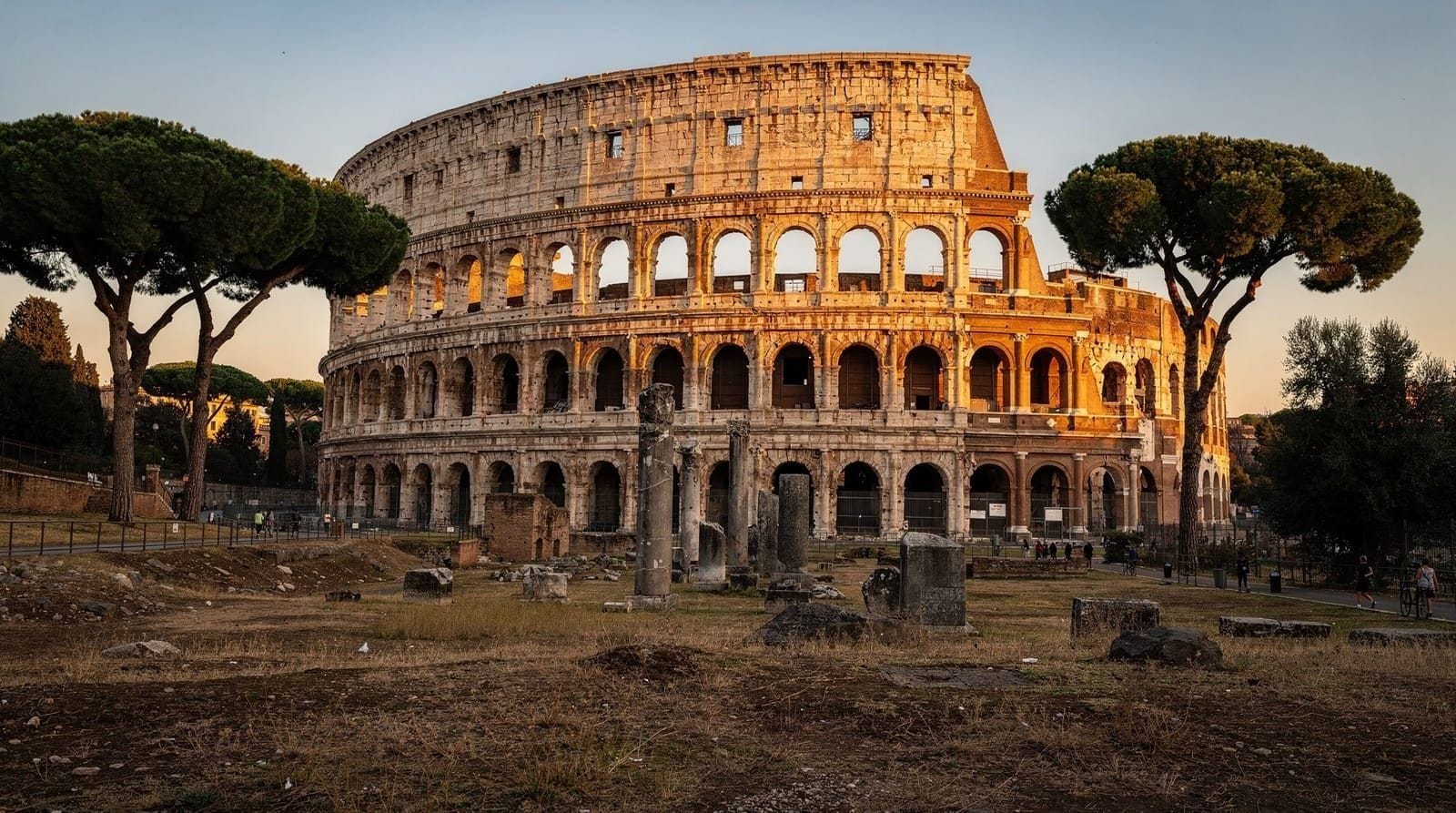
The Roman Forum from outside: Via Sacra and the approaches to the Colosseum are free to walk at any hour. The Colosseum is dramatically illuminated at night, visible from multiple approach routes without entering. The via dei Fori Imperiali boulevard is car-free in the evenings and provides a free (if somewhat touristy) perspective on the archaeological zone.
Free street art and contemporary Rome
Rome is not typically marketed as a street art city, but the Ostiense district (around Via del Porto Fluviale, near the Gasometro) has a substantial outdoor mural programme known as Wunderkammern and Big City Life. Pieces by internationally recognised artists — including Os Gemeos, Blu, and others — are displayed on building facades throughout the neighbourhood. Free to walk, open at all hours.
The area around Testaccio and Ostiense also has independent galleries and studio spaces that are open to the public on evenings and at weekend events. The Ex-Mattatoio (former slaughterhouse, now a cultural centre) hosts periodic free exhibitions. MACRO Asilo, the Museum of Contemporary Art Rome’s Asilo programme, has had free entry periods and public programming.
The free river
The Tiber (Tevere) is an underused asset. During summer (approximately June to September), a stretch of the river bank between Ponte Sisto and Ponte Mazzini in Trastevere hosts “La Longarina Tiberina” and similar seasonal riverside areas — bars, food stalls, cultural events — with free or low-cost entry. The temporary installations and events along this section of the river are a genuinely local summer institution.
The Isola Tiberina (Tiber Island), in the middle of the river accessible from Trastevere Bridge, is a peculiar ancient island with a hospital (Fatebenefratelli) operating since the medieval period, the church of San Bartolomeo, and café terraces. Free to visit. The island hosts summer cinema and events.
Free seasonal events worth timing your trip around
Beyond the year-round list, Rome has a calendar of free events that reward visitors who plan around them rather than stumbling into them by accident. Estate Romana, the city’s umbrella summer festival programme, runs roughly June to September and includes free open-air cinema screenings, concerts in parks, and riverside cultural events — the riverside “Longarina Tiberina”-style installations mentioned above are part of this wider programme. Christmas brings free nativity scenes (presepi) displayed in dozens of churches, with the Vatican’s official nativity in St. Peter’s Square among the most elaborate, plus the Christmas market atmosphere around Piazza Navona (the stalls charge, but browsing costs nothing). Holy Week around Easter fills the city with free public religious processions, most dramatically the Via Crucis at the Colosseum on Good Friday, presided over by the Pope and open to anyone willing to stand in the crowd. None of these require booking — they simply require knowing the dates before you land, so check them against your travel window using our best time to visit Rome guide.
Combining a free day with kids or limited mobility
Many of the sites above work well for families or travellers with limited mobility, with some caveats worth knowing in advance. The Borghese Gardens, Villa Ada and the Circus Maximus are flat, stroller-friendly and genuinely enjoyable for children without any admission cost. The Gianicolo and Aventino viewpoints both involve a real climb (steps or a steep street), so travellers with mobility constraints may prefer the flatter Pincio terrace, reached by a gentle path from Piazza del Popolo. Cobbled streets in Trastevere and Monti are uneven and can be slow going with a wheelchair or stroller — budget extra time rather than avoiding the neighbourhoods altogether. Families planning a longer stay should also see our Rome with kids guide and our accessible Rome guide for site-by-site accessibility notes that go beyond what’s covered here.
Free versus paid: what a realistic day costs either way
Comparing a genuinely free day against a typical ticketed day makes the value clearer than a list alone:
| Day type | What it includes | Rough cost/person |
|---|---|---|
| Fully free day | Churches, Gianicolo viewpoint, Trastevere walk, nasoni water, piazza sitting | €0 |
| Mixed day | Colosseum + Forum (booked), plus a free evening walk | ~€20–25 |
| Vatican day | Museums + Sistine Chapel (booked), Basilica free | ~€25–35 |
| Free Sunday gamble | National museums free but 2+ hour queues, lost morning | €0, high time cost |
The mixed day is usually the best value: one well-chosen paid attraction in the morning, then free neighbourhood time for the rest of the day. Trying to stack several paid sites in one day is where costs and fatigue both spike — see our Rome on a budget guide for a fuller daily-budget breakdown, and our Rome tourist traps guide for where paid experiences genuinely aren’t worth it.
A simple free-day itinerary
If you want one ready-made plan rather than a checklist: start at San Luigi dei Francesi and Sant’Agostino before 10:00 while they’re quiet, walk to Piazza Navona and Campo de’ Fiori for the tail end of the morning market, cross to Trastevere for lunch and a wander through the Trastevere neighbourhood, climb the Gianicolo for the panorama, and finish back across the river at the Tiber Island and Isola Tiberina at golden hour. It is a genuinely full day, costs nothing beyond food, and covers three of Rome’s best neighbourhoods. Pair it with our Rome hidden gems guide if you have a second free day to fill.
The honest calculus
A full day in Rome entirely free — church visits, viewpoints, market walking, piazza-sitting, water from nasoni — is entirely achievable and often preferable to a paid day at major monuments surrounded by crowds. The experiences above include some of the most artistically and historically significant things in the city.
The paid experiences — Borghese Gallery, Colosseum, Vatican Museums, Baths of Caracalla — are absolutely worth doing for their content. The point is not that free is better than paid. It is that Rome’s free inventory is so extraordinary that spending every available hour in ticketed attractions would actually be a worse day.
Plan your Rome trip so that paid attractions — properly booked in advance — sit within a framework of free neighbourhood walking, church visiting, and piazza time. That balance is how the city actually works.
The one paid day trip that is worth singling out for its value ratio: the Appian Way with Catacombs. The Appian Way itself is free; the Catacombs require a ticket (around 8 €) and a guide. The combination of ancient road, early Christian underground burial chambers, and countryside feels qualitatively different from anything available in the city centre. Our Appian Way guide covers the planning in detail.
Frequently asked questions about Free things to do in Rome: a genuinely useful list
Is the first Sunday free museum entry actually worth using?
Is the Pantheon still free?
What free Caravaggio churches should I visit?
Are the Vatican museums ever free?
What free viewpoints are genuinely worth seeing?
What is the Aventino keyhole?
Top experiences
Bookable activities with verified prices and instant confirmation on GetYourGuide.