The keyhole on the Aventine that perfectly frames St Peter's dome
There are two kinds of travel discoveries: the ones you work for and the ones that feel, improbably, like they were placed there just for you. The keyhole on the Aventine hill belongs in the second category.
| Where | Piazza dei Cavalieri di Malta, Aventine hill |
| Cost | free, no ticket, no booking |
| Time needed | 30 seconds at the keyhole, 2–2.5 hrs for the full hilltop walk |
| Getting there | ~10 min walk uphill from Circo Massimo Metro (Line B) |
| Best time | early morning, weekdays, to avoid the small queue |
On the Piazza dei Cavalieri di Malta — a quiet square at the top of the Aventino hill, designed by the eighteenth-century artist and architect Giovanni Battista Piranesi — there is a large wooden door in a high stone wall. The door belongs to the Villa del Priorato di Malta, the headquarters of the Sovereign Military Order of Malta, which is one of those peculiar sovereign entities that exists in the middle of Rome without technically being part of it.
If you crouch slightly and look through the keyhole in this door, you see the following: a perfectly framed tunnel of hedges, at the end of which St. Peter’s Basilica appears as if staged, its dome impossibly centered. It sounds like a minor thing. It is, in person, quietly astonishing — partly because of the geometry of it, which is almost too perfect to be accidental, and partly because you are just standing on a public street, looking through a keyhole, and finding Michelangelo’s dome framed as precisely as if someone had designed this specific view.
Which, of course, someone did. The hedge tunnel lining the garden is deliberately planted to create this alignment. Whether Piranesi engineered the entire thing as a visual joke or genuine homage is still debated. The Order of Malta claims the keyhole view is entirely incidental to the garden design. Almost nobody believes them.
Getting there
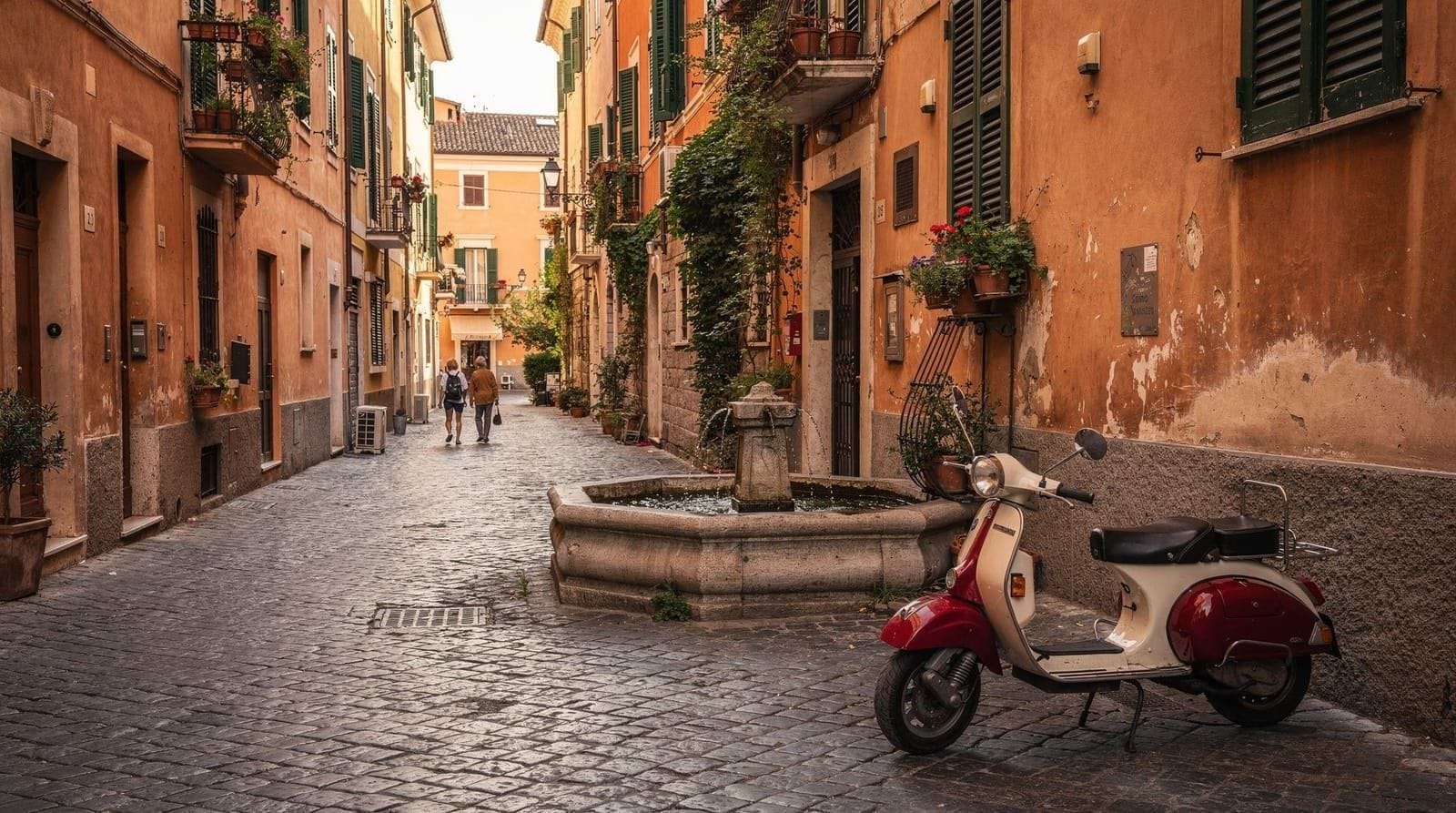
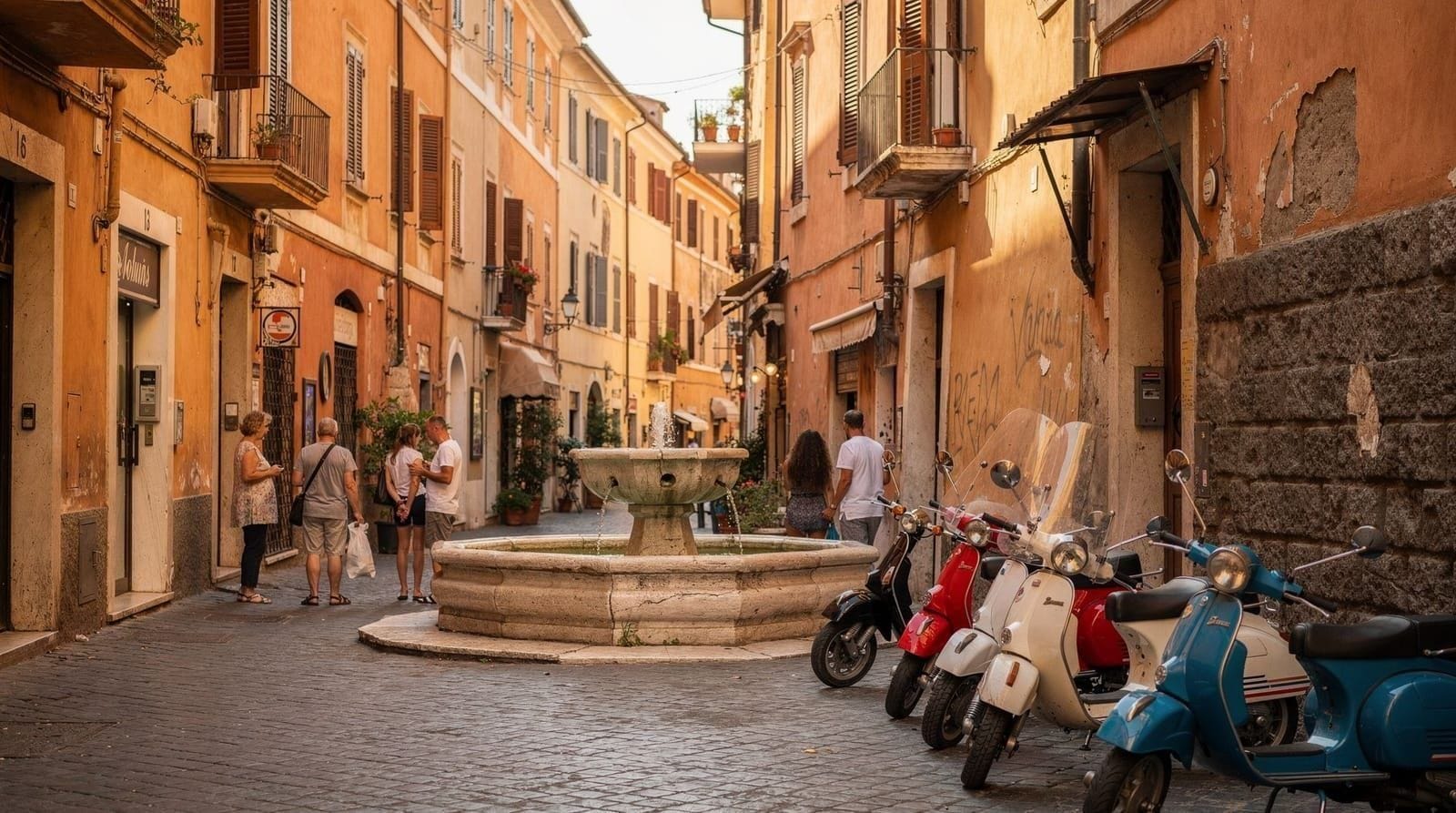
The Piazza dei Cavalieri di Malta is at the top of the Aventine hill, about a ten-minute walk from Circo Massimo Metro station (Line B). It’s a real neighbourhood — residential, very quiet, almost entirely free of tourist infrastructure — which means no souvenir stalls, no queues, and no entry fee of any kind.
Walk up Via Santa Sabina from Circo Massimo, past the Basilica of Santa Sabina (which is worth entering; it has some of the oldest wooden doors in Christendom, carved in the fifth century, and beautiful early Christian mosaics). Continue uphill to the orange garden at the top — the Parco Savello, which Romans sometimes call the Giardino degli Aranci — for another famous view of the city. Then walk south along Via di Santa Sabina to the Piazza dei Cavalieri di Malta.
The keyhole is in the large green door on the right as you enter the piazza. There’s usually a small queue — this is not, strictly speaking, a secret any more — but it moves quickly because each person takes approximately thirty seconds to look through it and feel quietly delighted.
No ticket. No booking. No opening hours. It’s a door in a wall on a public street. You can go any time.
The orange garden above
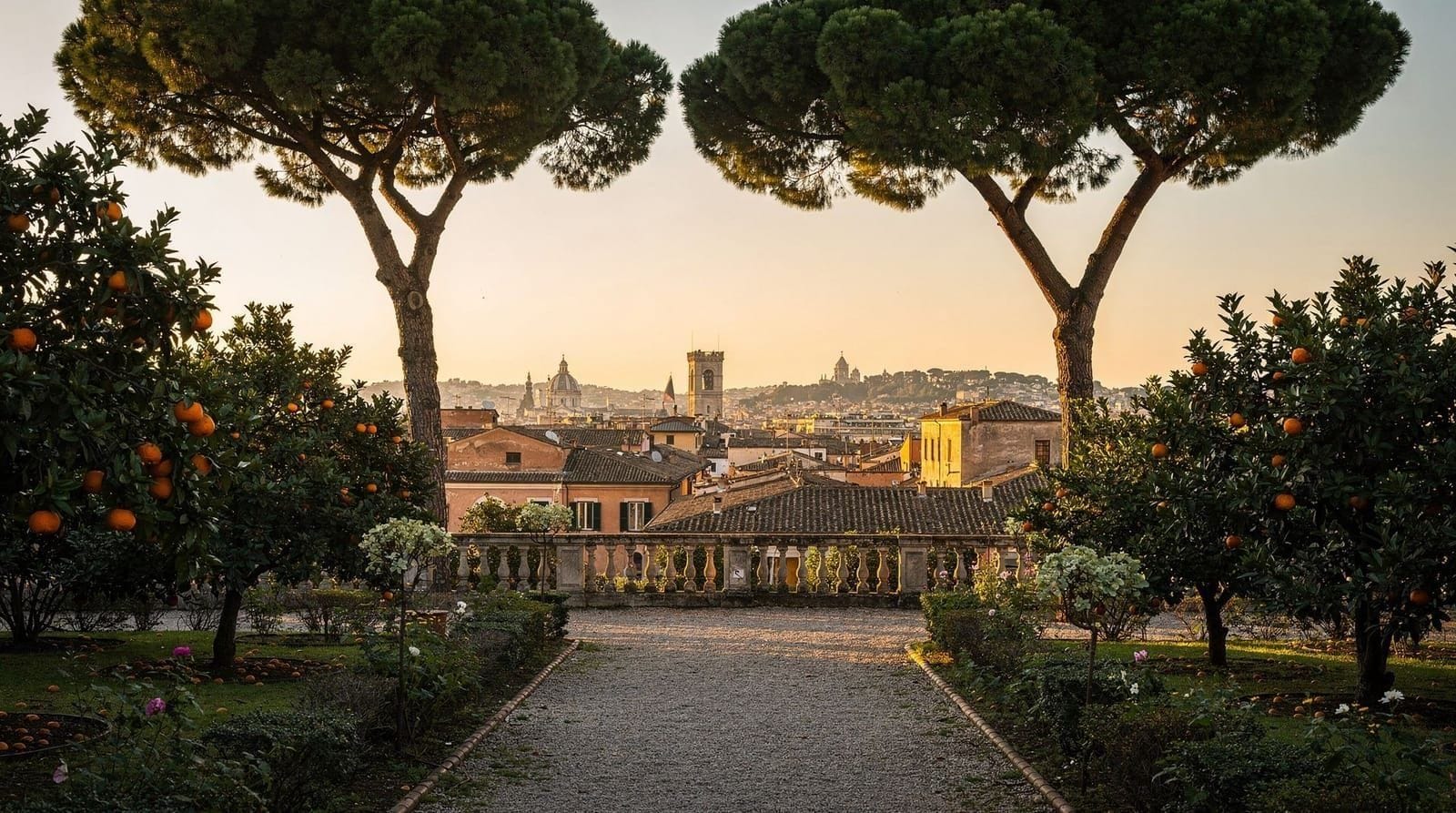
If you are walking this corner of the Aventine in spring (late March through May), the Parco Savello is worth lingering in. The park is planted with bitter orange trees — not for eating but for making bergamot oil — and in May the blossom fills the whole hilltop with a smell that is very hard to describe except as “exactly what you hoped Rome would smell like.”
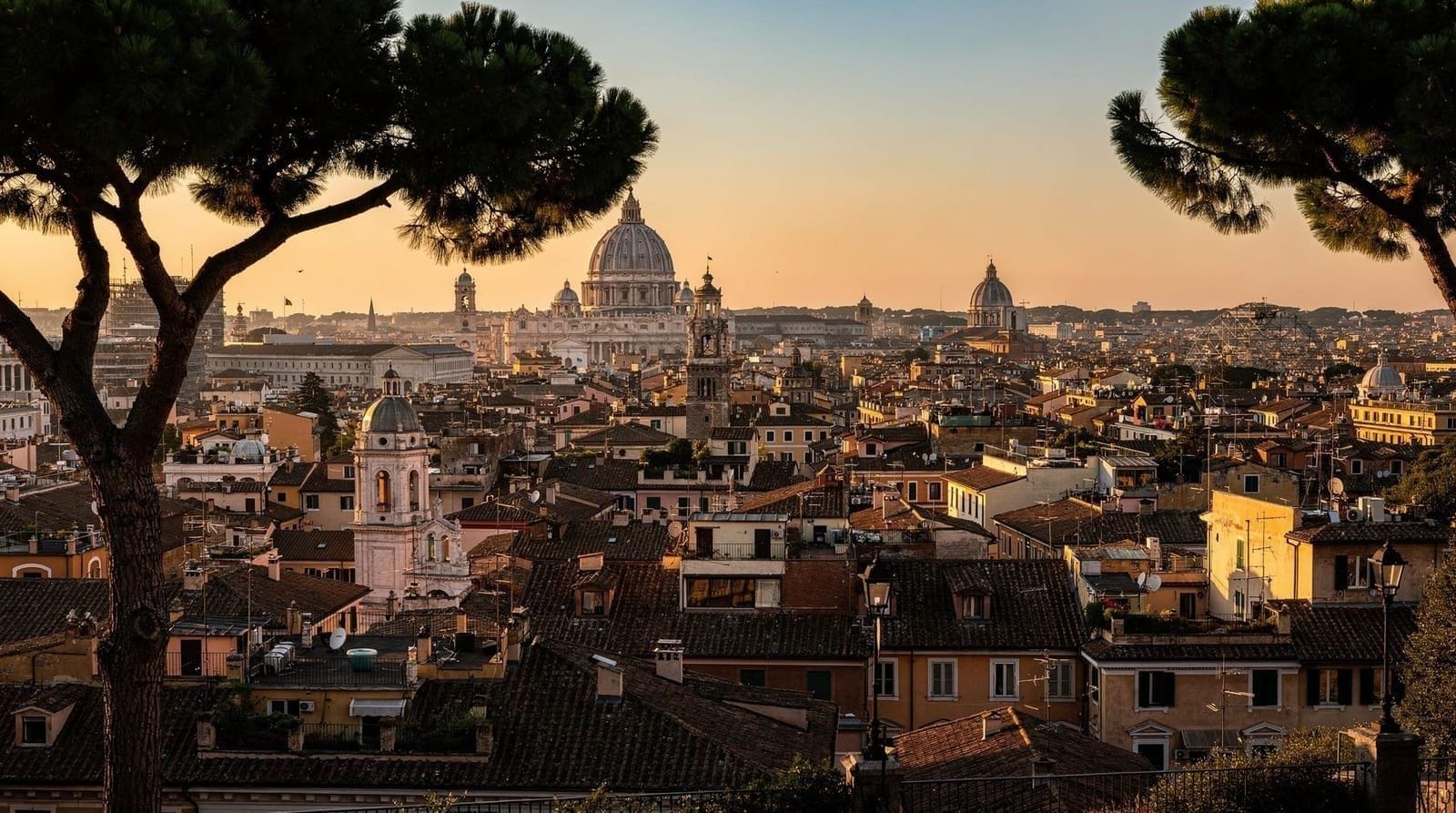
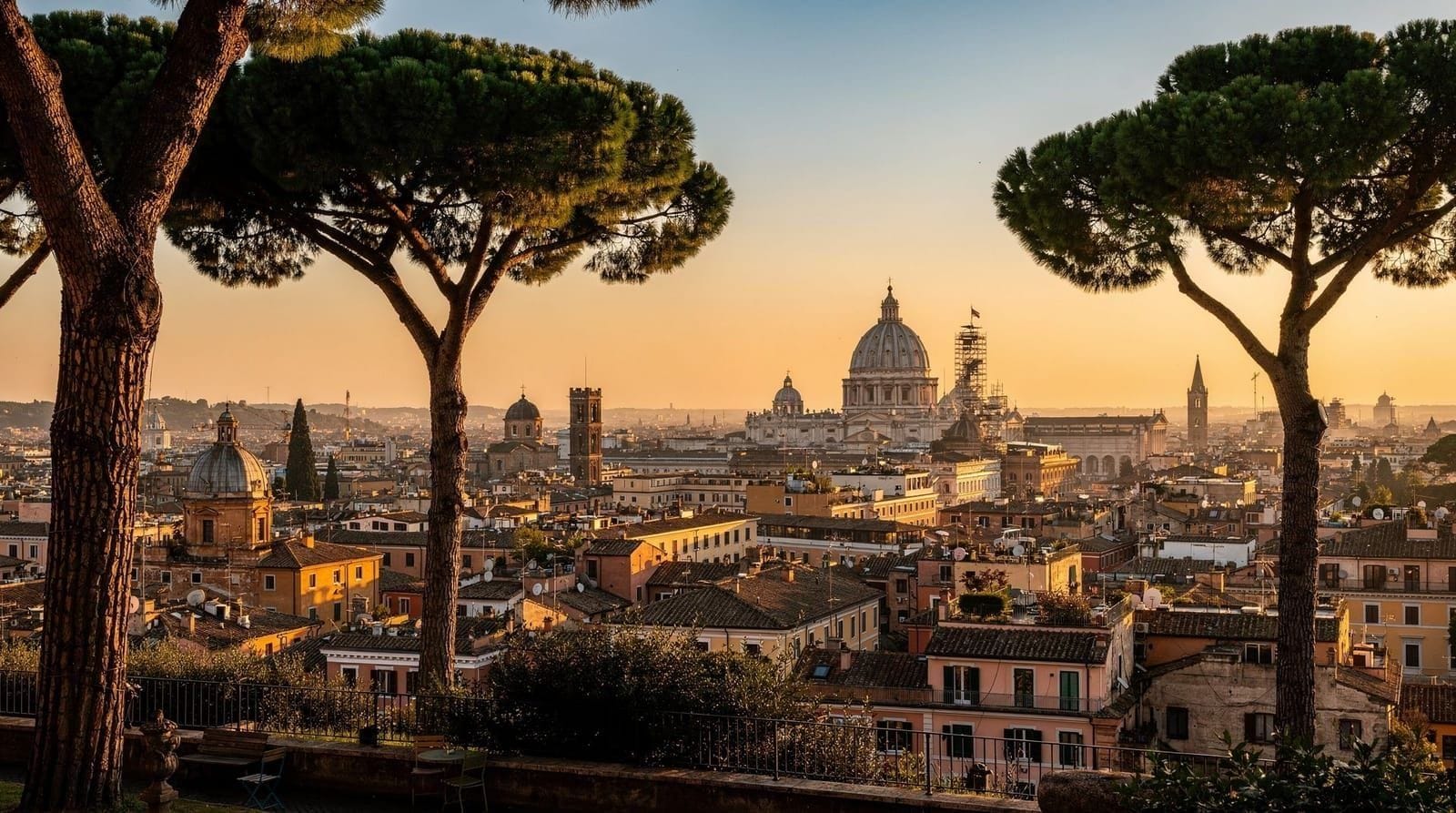
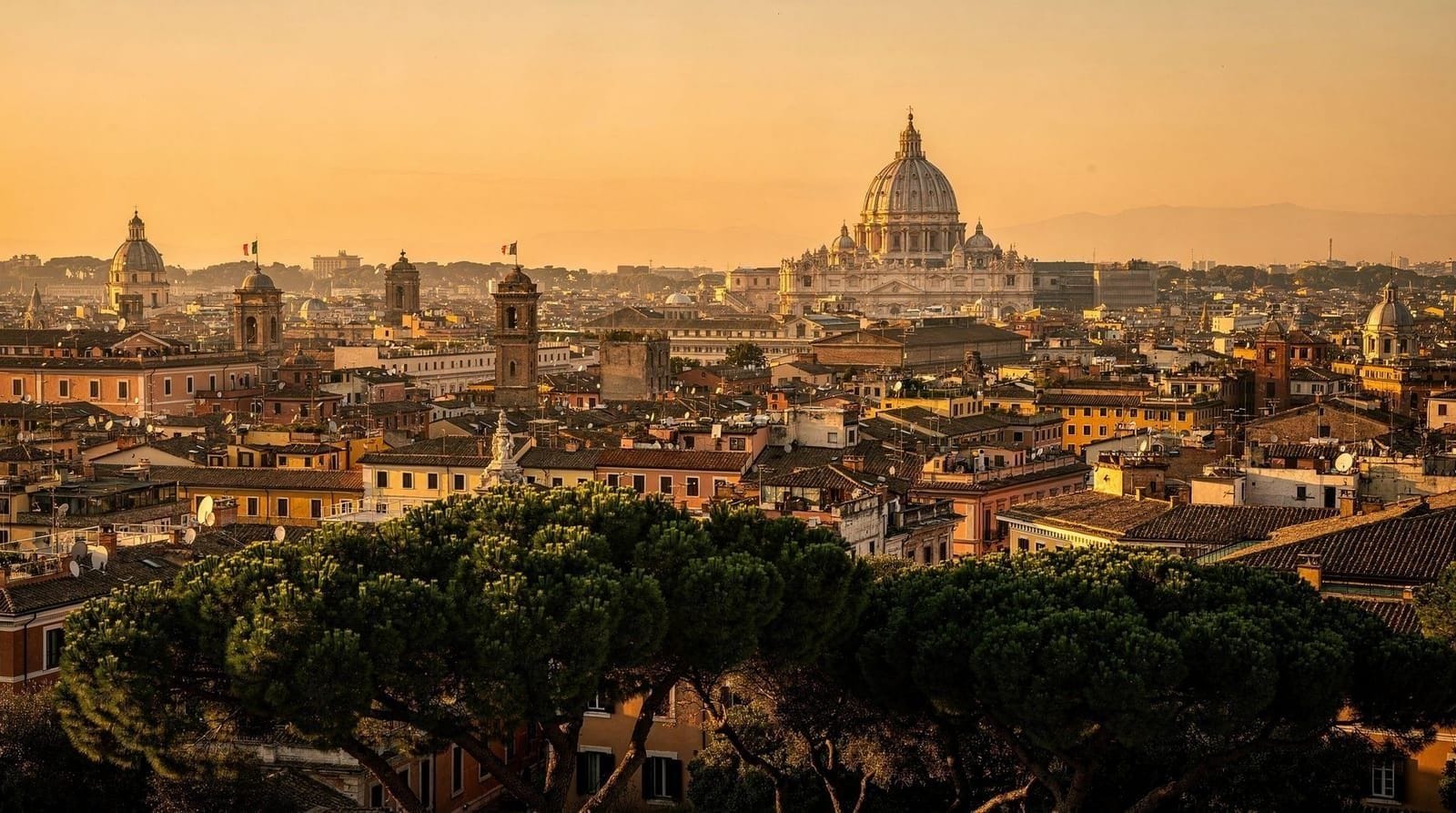
The terrace at the far end of the garden has a view across the city and the Tiber toward the Vatican and the dome that the keyhole below has already introduced. On a clear morning or evening, this is one of the better views available for free in the entire city.
The garden opens at 6:30am and closes at sunset — times vary by season but are posted at the entrance. Weekday mornings before 9am are extremely quiet; weekends bring Roman families and the occasional photographer with a tripod.
What else is on the Aventine
The Aventine hill is one of Rome’s seven original hills and one of its least-touristed neighbourhoods. It was historically the working-class hill during the Republic period — a sharp social distinction from the patrician Palatine hill across the valley — which gives it a slightly different character from the tourist-facing centre.
The Basilica of Santa Sabina is the main ecclesiastical draw: a fifth-century church with wooden doors that retain their original carved panels (the depiction of the Crucifixion on the left-hand door is one of the earliest images of that subject anywhere in Christian art). The interior is serene and largely unrestored — columns from an earlier Roman temple, clear early Christian windows, no baroque overlays. Entry is free. Dress code applies.
The garden of the Villa del Priorato di Malta itself is occasionally open for visits, though this requires advance booking through the Order’s official website and is not always available. The Priory church inside the wall, Santa Maria del Priorato, was redesigned by Piranesi and is his only surviving architectural work in Rome. If you can get inside the gate, it’s worth seeing.
Sant’Anselmo, a Benedictine monastery at the western end of the hilltop, holds Gregorian chant services on Sunday mornings (typically at 9:30am). These are open to visitors who arrive quietly and stay for the duration. The combination of Gregorian chant in a working monastery and the view from the orange garden twenty meters away makes for an unusually good Sunday morning.
Why the Aventine feels different
Most of what makes the keyhole memorable isn’t the keyhole itself — it’s the neighbourhood around it. The Aventine neighbourhood guide is worth reading before you come, because it explains why this hill, unlike the Trevi-to-Pantheon corridor, still feels residential: quiet streets, orange trees, laundry on balconies, almost no shops selling anything to tourists. If you want to understand where the keyhole fits among Rome’s other free viewpoints, the best views of Rome guide and the best photo spots in Rome guide both cover it alongside alternatives for different times of day and different crowd tolerances.
At the base of the hill, the Circus Maximus guide covers the vast flat expanse of the ancient chariot-racing stadium, which you’ll walk past on the way up from the Metro — it’s free, always open, and gives useful context for how this hill related to the valley below in antiquity.
Morning vs evening
The keyhole works at any time of day, but the light framing the dome changes. Morning light is cleaner and crisper; the hedge tunnel is in partial shade and the dome appears bright against a blue sky. Late afternoon in summer, the light goes golden and the dome seems to glow through the hedge frame. Both are excellent.
If you’re going to combine the keyhole with the orange garden view and Santa Sabina, early morning is better — cooler, quieter, and you can walk back down the hill for breakfast in Testaccio, which is immediately below and one of Rome’s best neighbourhoods for an honest Roman breakfast.
Rome e-bike tour of the seven hills — the Aventine is one of the seven hills, and a guided e-bike tour is the best way to put the whole topography of the ancient city into context while covering ground comfortably.
The wider Aventine walk
A full morning walk on the Aventine, combining the keyhole, orange garden, Santa Sabina, and Sant’Anselmo, takes about two to two-and-a-half hours at a slow pace. From Circo Massimo Metro station, add ten minutes uphill each way. There is nowhere to buy coffee on the hilltop itself — bring a bottle of water and have breakfast before you come, or descend to Testaccio after.
The Appia Antica begins at the southern end of the Aventine area, about fifteen minutes’ walk from the keyhole. If you have a full morning, the combination of the keyhole view, a walk through the Appia Antica park, and lunch in Testaccio makes one of the most satisfying non-museum days available in Rome — entirely free except for whatever you eat.
This is Rome at its best: no reservation required, no queue, no ticket, just a keyhole in a wall on a quiet hilltop, perfectly framing a dome you’ve seen in photographs your whole life.
FAQ
Is the keyhole view free? Yes. There is no ticket, no booking, and no fee of any kind — it’s a public street and a door in a wall, accessible any time of day.
How long is the queue at the keyhole? Usually short. Each visitor takes about thirty seconds to look through, so even a dozen people ahead of you means only a few minutes’ wait. Early mornings on weekdays are close to queue-free.