The best views of Rome — ranked honestly
Most lists of Rome’s best views are written by people who want to fill their article with rooftop bars. The rooftop bars are fine — some are genuinely good — but they are not the best views of the city. The best views are mostly free, reached on foot, and known to anyone who has spent real time in Rome rather than photographing it from a Negroni-height terrace.
Here is the honest ranking, with full transparency about what you’re getting and how to get there.
| Best overall | Gianicolo Hill — widest panorama, free |
| Most photogenic | Pincio Terrace, hour before sunset |
| Most unique | Aventine keyhole — St. Peter’s framed by trees |
| Best value paid view | Altare della Patria roof (€7) |
| Best time | Hour after sunrise or hour before sunset |
Comparing the top viewpoints
| Viewpoint | Cost | Best for | Crowd level |
|---|---|---|---|
| Gianicolo Hill | Free | Widest single panorama | Low–moderate |
| Pincio Terrace | Free | Composed, photogenic foreground | Moderate |
| Aventine keyhole | Free | A unique framed novelty view | High (queue) |
| Giardino degli Aranci | Free | Quiet, shaded, Forum-facing | Low |
| Altare della Patria roof | ~€7 | Most comprehensive 360° | High |
1. Gianicolo Hill — the definitive panorama
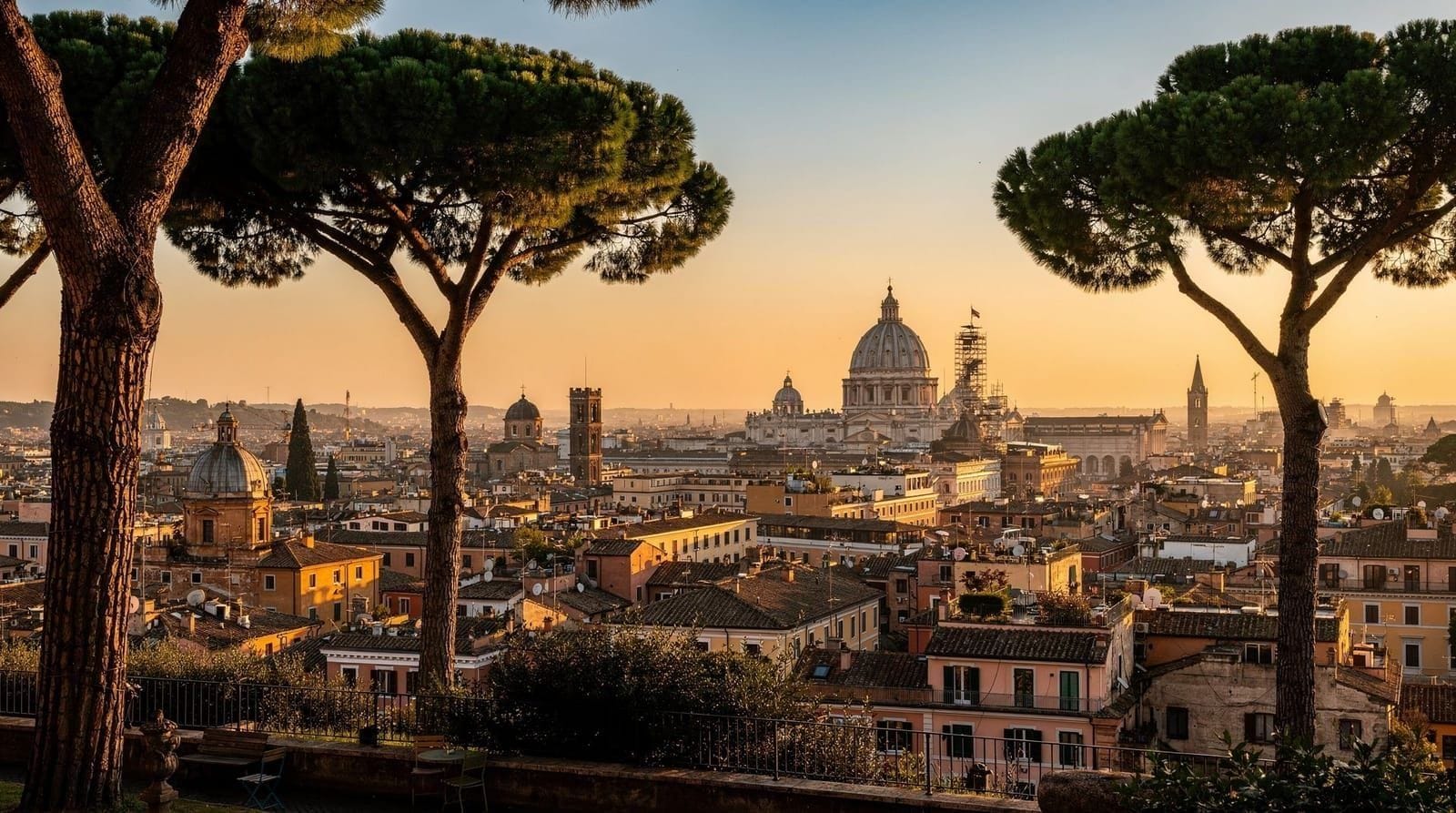
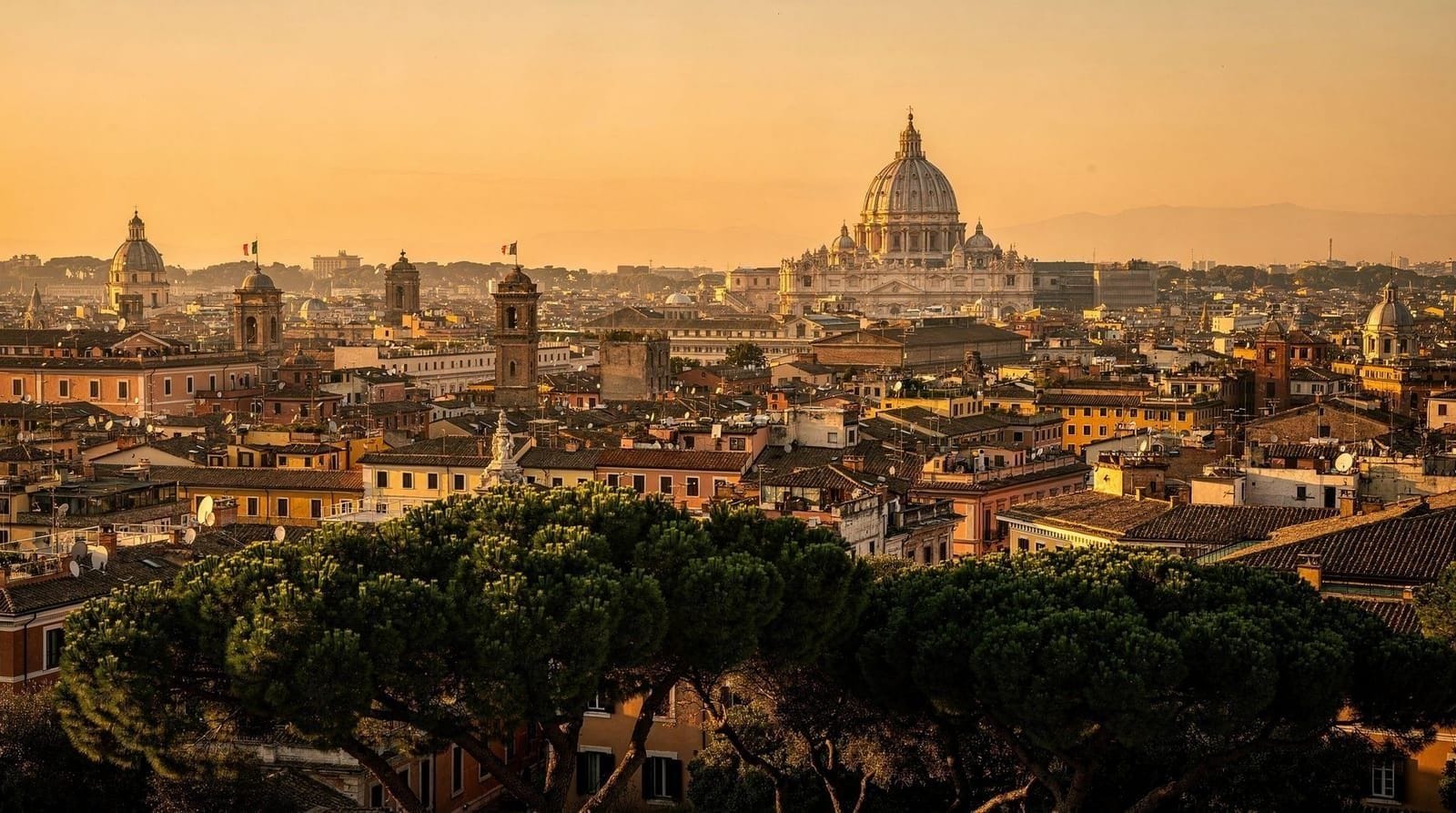
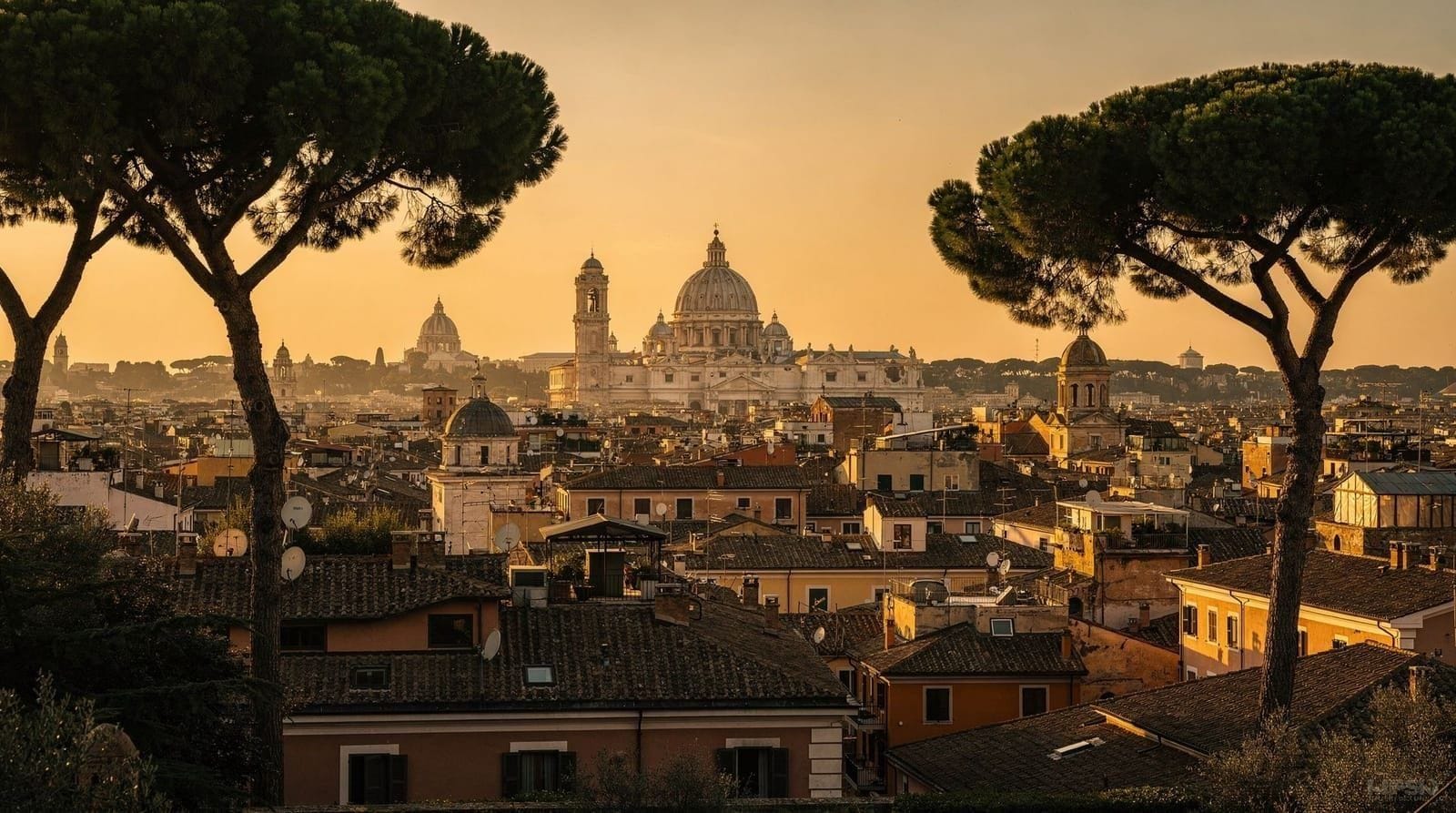
The Gianicolo (Janiculum Hill) is the highest point from which you can see the whole of Rome spread below you. The terrace at the top, Piazzale Garibaldi, has a 180-degree view across the city towards the Alban Hills. On a clear day you can see from the Vatican in the west to the Castelli Romani in the southeast. The dome of St. Peter’s Basilica sits directly in your sightline.
There is no entrance fee. The hill is accessible on foot from Trastevere via a steep 20-minute climb, or by bus. The view is best in the morning when the light comes from the east and hits the terracotta rooftops at an angle that makes the whole city look like a Piranesi etching. It is also excellent at sunset, though the light then comes from behind you rather than illuminating the city.
There is a daily cannon fired at noon from the Gianicolo — it has been fired every day since 1847. You can watch it if you happen to be there. It is moderately impressive and very loud.
The only honest criticism: the terrace itself is a car park with benches. There are snack vendors and a decent gelateria nearby. It is not a beautiful space to stand in. You turn away from the space and look at the view, which is magnificent. This is the right priority.
2. Pincio Terrace — the view that includes the piazza
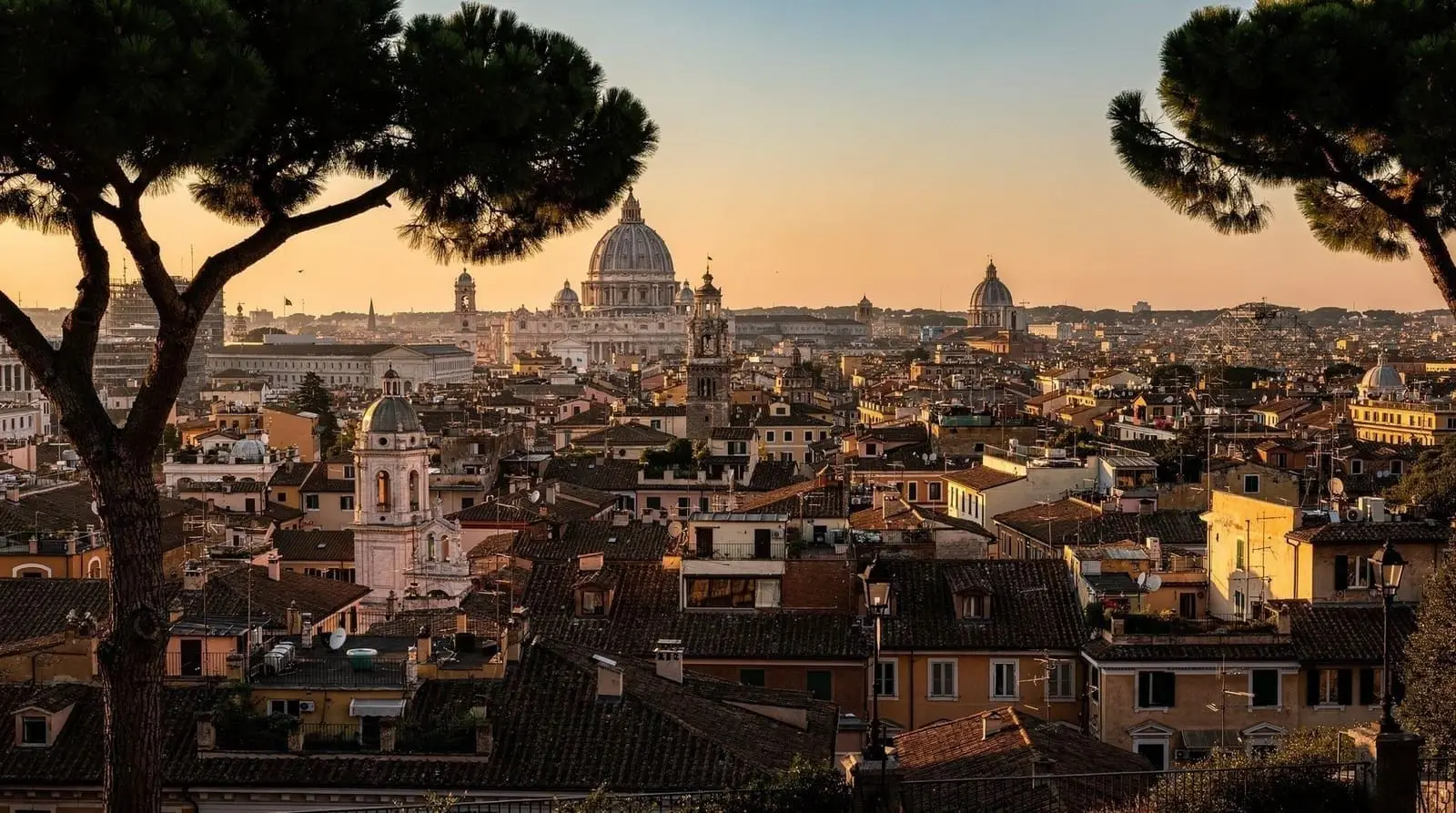
The Pincio Terrace at the top of the Villa Borghese gardens looks out over Piazza del Popolo below and the city beyond. Unlike the Gianicolo, the foreground of this view is elegant — the twin baroque churches of Santa Maria dei Miracoli and Santa Maria in Montesanto frame the piazza, and behind them the city climbs away in layers toward the Palatine and Aventine hills.
Getting there: walk up through the Villa Borghese from Piazza del Popolo (about 15 minutes), or enter the gardens from the north end near the Borghese Gallery. The terrace is open access at all hours.
This view is at its best about an hour before sunset on a clear day, when the churches in the piazza catch the warm light. It is not the most comprehensive panorama — you can see less of the city than from the Gianicolo — but it is the most aesthetically composed view in Rome. The combination of baroque architecture, open piazza, and distant city makes it genuinely photogenic in a way that the Gianicolo isn’t.
Worth noting: the Pincio is heavily used by tourists and joggers from the Borghese gardens. It is rarely empty, though it rarely feels crowded either. The noise from the city below is surprisingly distant.
3. The Knights of Malta Keyhole on the Aventine
The view through the keyhole of the headquarters of the Knights of Malta on the Aventine Hill is the most specific great view in Rome. Through a small brass keyhole in a wooden door, you see a perfectly framed avenue of trees leading to — by accident of alignment — the dome of St. Peter’s Basilica in the distance. The dome appears to float at the end of the hedged garden avenue, centred with a precision no photographer could arrange.
The queue forms from about 09:00 and can be 40 minutes long in high season. The view itself takes about 15 seconds. Whether it is worth 40 minutes is a question only you can answer, but the answer most people arrive at is yes. It is genuinely extraordinary.
Getting there: Piazza dei Cavalieri di Malta on the Aventino. The keyhole is in the door on the left as you face the building. Free. The Aventino neighbourhood itself is worth exploring — the Roseto Comunale (public rose garden, free entry) and the Giardino degli Aranci (Garden of Oranges) are both on this hill and offer their own views across the city toward the Tiber.
4. The Giardino degli Aranci (Garden of Oranges)
The Garden of Oranges, also on the Aventine, offers a different view: looking northeast across the city toward the Palatine Hill and the ancient ruins of the Roman Forum. The garden is small, shaded, and not widely known outside Rome. It is almost always quieter than the Pincio or Gianicolo.
The orange trees provide shade in summer. There are benches. The view is partially framed by trees, which some people find charming and others find frustrating. I find it charming. You can see the dome of the Pantheon in the middle distance on clear days.
5. The Altare della Patria roof terrace
The Altare della Patria — the enormous white marble monument to Victor Emmanuel II at the northern end of the Capitoline Hill — has a paid roof terrace (€7 as of 2026). The view from the top is 360 degrees and encompasses the Roman Forum and Palatine Hill directly below, the Colosseum to the east, the Capitol to the west, and the centro storico to the north.
This is the most comprehensive view of the historic centre. It is also the view with the most tourists, the slowest lifts, and the price tag. None of these things make it a bad view — it is genuinely excellent — but the price and crowds push it below the free alternatives in my ranking.
The Capitoline Hill itself offers a partial view from the terrace overlooking the Roman Forum at no charge, which is a reasonable trade-off if the rooftop queue is long.
Rooftop bars — an honest assessment
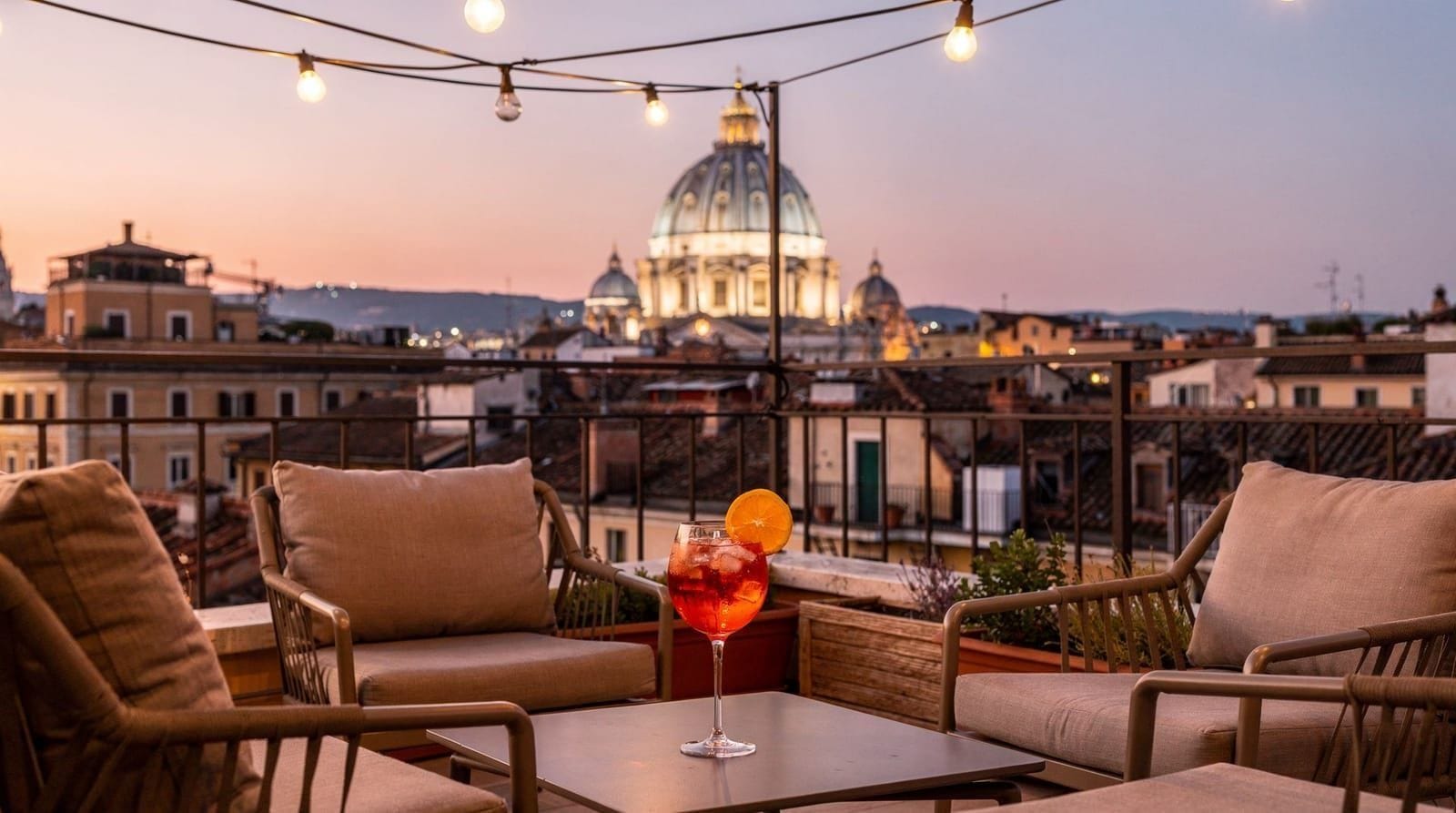
Rooftop bars with views of Rome include the Minerva Roof Garden at Hotel Minerva (facing the Pantheon), the Terrazza Borromini overlooking Piazza Navona, and several others in the centro storico. The views from these places are real and good. The drinks are expensive — €18–25 for a Negroni is standard — and the service pace reflects the captive nature of the audience.
Rome: evening walking tour with aperitif — if the rooftop bar experience appeals but you want some structure around it, a guided evening tour that includes an aperitif gives you the sunset city views with context and a drink included in the price.
The honest case for rooftop bars is not the view — you can get equivalent or better views for free — but the sitting-down-with-a-cold-drink part, which has its own merits after a long day of walking cobblestones.
When to go for views
The best photography light is the hour after sunrise and the hour before sunset — this is universal photographic advice and it applies very clearly to Rome’s skyline views. The Pincio at golden hour before sunset is close to optimal. The Gianicolo in the first light of the morning, when the city is quiet and the air is still clear, is even better.
For general sightseeing rather than photography, midday light is flat and harsh. Views are perfectly visible at any time but less atmospheric. The photography guide covers this in more detail.
If you’re doing a first-timer itinerary and trying to fit in a great view with minimal time, the Gianicolo is your answer — it’s near Trastevere, free, and the best single panorama in the city. Everything else is supplementary.
Sunrise and sunset spots beyond this list
If you want to plan a view specifically around the light rather than the location, the Rome sunrise and sunset spots guide cross-references these viewpoints against exact timing through the seasons — useful if you only have one golden hour in your schedule and want to be certain you’re standing in the right place. For anyone building a photography-focused day around the city’s skyline, the best photo spots guide and the Rome Instagram spots roundup both expand on framing and timing beyond the honest ranking here.
Combining a view with a neighbourhood
None of these viewpoints need to be a stand-alone errand. The Gianicolo pairs naturally with an afternoon in Trastevere below it; the Aventine keyhole pairs with a walk through the Aventino neighbourhood itself, including the Rose Garden and Circus Maximus. Treat the view as the end of a walk rather than the entire outing, and the time investment feels worthwhile even with the keyhole queue.
Frequently asked questions
Which is the single best free view of Rome if I only have time for one? The Gianicolo Hill. It’s the widest panorama, it’s free, it’s near Trastevere, and it works well at both sunrise and sunset — the most flexible choice if your schedule is tight.
Is the Aventine keyhole worth the queue? Most people say yes — the view itself takes 15 seconds but the framing (St. Peter’s dome centred at the end of a hedged avenue) is genuinely unique and can’t be replicated elsewhere. If the queue looks over 40 minutes, the nearby Giardino degli Aranci offers a quieter, queue-free alternative view on the same hill.