Rome in 2 Days
Rome: Guided Tour of Colosseum, Roman Forum & Palatine Hill
Quick answer: Two days gives you Rome’s two great pillars — ancient and papal — with enough time to eat and wander properly. Day one covers the Colosseum, Roman Forum, Pantheon and the evening piazzas of Centro Storico. Day two is Vatican morning (book early entry to beat the crowds), St. Peter’s Basilica, and Trastevere for dinner. Both days need advance bookings for timed entry; the Vatican especially sells out weeks ahead.
| Where to base yourself | Monti (best balance of both days) |
| Cost | Around 180-260 € per person for entries, food and drinks |
| Time needed | 2 full days, moderate-heavy walking each day |
| Booking priority | Vatican first (2-4 weeks ahead), then Colosseum (1+ week ahead) |
| What’s skipped | Borghese Gallery, Capitoline Museums, Testaccio — save for a return trip |
Two days is the minimum that allows Rome to feel like a city rather than a highlights reel. You can see the Colosseum and the Vatican properly, eat at least one unhurried meal, and have enough time to get lost in the right way. What you won’t do is cover everything — the Borghese Gallery, the Capitoline Museums, Testaccio, and a dozen other things will have to wait for a return visit, and that’s fine.
Two days vs three days: what the extra day buys
| Rome in 2 days | Rome in 3 days | |
|---|---|---|
| Included | Colosseum/Forum, Vatican, Trastevere | + Borghese Gallery, Aventino, Testaccio |
| Pace | Full but manageable | More breathing room |
| Best for | Weekend trips, first taste of Rome | First full visit, couples, families |
If two days feels rushed once you see the hour-by-hour plan, the 3-day itinerary adds the Borghese Gallery and a genuinely slower final afternoon. If two days is truly all you have and even this feels like a lot, dropping to Rome in 1 day means choosing between ancient Rome and the Vatican rather than fitting both in.
The structure here puts ancient Rome on day one and the Vatican on day two. This is deliberate: the Vatican requires energy and focus, and you want to be fresh for it. A Saturday–Sunday trip should plan around Sunday Vatican hours (the complex closes or has limited access on certain Sundays; check ahead) and the Roman Forum’s occasional special Sunday events.
Both the Colosseum and the Vatican Museums require booked timed-entry tickets. Book the Colosseum at least a week ahead. Book the Vatican 2-4 weeks ahead in high season — it sells out completely on the best morning slots.
Day 1: Ancient Rome and Centro Storico
7:30 — Breakfast near Colosseum
Base yourself in Monti or Celio if possible. Start with a standing cappuccino and cornetto at a neighbourhood bar — Via Cavour or Via dei Serpenti have several good ones within walking distance of the Colosseum. Budget 2-3 €.
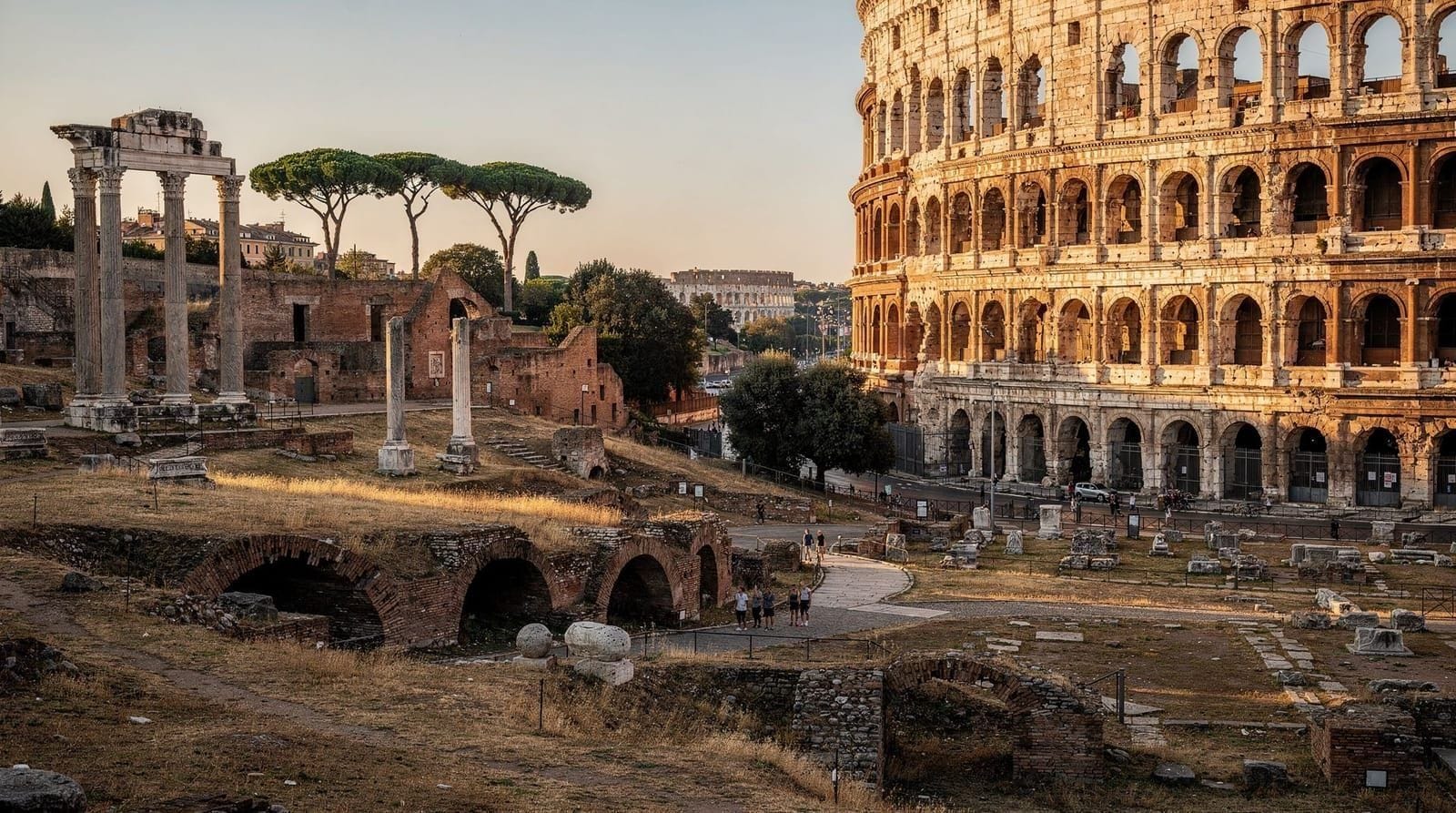
8:00 — Colosseum, Roman Forum, Palatine Hill (3.5 hours)
Arrive at your timed Colosseum slot. The standard ticket (18 €) covers all three sites. Spend about an hour inside the Colosseum, then descend to the Roman Forum and follow the Via Sacra northeast to southwest — the Arch of Titus, the Temple of Saturn, and the Rostra are the highlights. Allow at least 75 minutes for the Forum; it is larger and more rewarding than most visitors expect. Palatine Hill adds a further 30-40 minutes and the best elevated views of the Forum valley.
A guided Colosseum, Forum and Palatine tour with skip-the-line access combines all three in a structured 3-hour experience, which makes the ruins legible in a way they aren’t if you’re working from a map alone.
12:00 — Lunch in Monti
Walk north through Monti for lunch. This neighbourhood has the best value-to-quality ratio for a sit-down meal close to the archaeological zone — look for trattorias on Via del Boschetto, Via della Madonna dei Monti, or around Piazza della Madonna dei Monti itself. Cacio e pepe (pasta with pecorino and black pepper) is the simplest and often the best thing on the menu. Budget 15-22 € per person for pasta and wine.
13:30 — Capitoline Hill, then walk north
A 15-minute walk west from Monti brings you to the Capitoline Hill, where the Piazza del Campidoglio offers a free view over the Forum from above — the best aerial perspective you can get without buying a museum ticket. The Capitoline Museums are excellent but require 2-3 hours; skip them today and return on a future trip.
Walk down to the Tiber and follow it north, or cut through the streets toward the Pantheon (2.2 km from the Forum exit, about 25 minutes on foot).
14:30 — Pantheon (45 minutes)
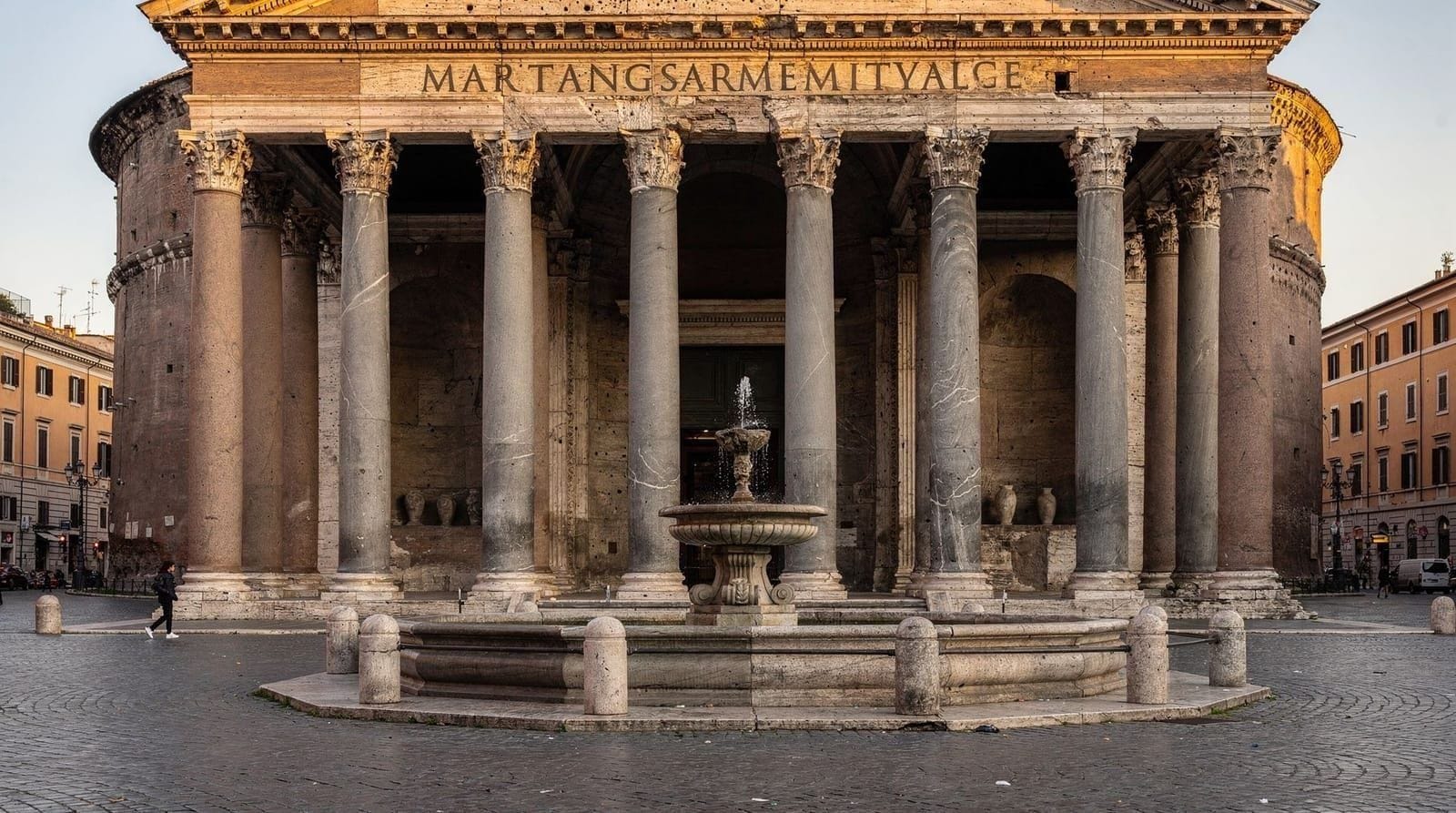
The Pantheon is now entry-ticketed (6 € online). Book the day before if you can — the queue for on-the-door tickets is significant in peak season. The interior is unlike anything else in Rome: the unreinforced concrete dome, the oculus, the tombs of Raphael and the Italian kings. Spend 45 minutes here and don’t hurry out.
15:30 — Piazza Navona and Campo de’ Fiori
Walk 5-8 minutes west to Piazza Navona. Bernini’s Fontana dei Quattro Fiumi is the centrepiece — one of Rome’s finest baroque set pieces, flanked by two rival churches that face each other across the long piazza. Sit at the north end of the square away from the tourist restaurant tables. Then walk 8 minutes south to Campo de’ Fiori for a late-afternoon coffee and a look at the market square that becomes a bar scene by night.
17:00 — Trevi and Spanish Steps
Walk east 10 minutes to Trevi Fountain. This is the most photographed spot in Rome and unavoidably crowded, but it’s worth the chaos up close — especially the full sculptural programme of the rear wall rather than just the central figures. Late afternoon light hits the stone beautifully in spring and autumn. Then walk northwest 10 minutes to the Spanish Steps. Climb to the top for the view down Via Condotti; the Pincio Terrace is another 5 minutes north.
19:30 — Aperitivo and dinner in Centro Storico
The area around Via del Governo Vecchio and Vicolo della Pace has Rome’s best density of reliable restaurants at honest prices within the historic centre. Aperitivo (Campari spritz or a negroni) at one of the bars in this area runs 8-12 €. Dinner in a proper trattoria here is 30-45 € per person with wine. Avoid anything with an outdoor tout, illustrated menus, or a location on Piazza Navona itself.
21:00 — Evening stroll
End the day on foot. A guided 3-hour evening walk through Trastevere, the Tiber, and the illuminated piazzas is a natural close to a first day — the streets are different after dark and the guides know the angles and the stories.
Day 2: Vatican and Trastevere
7:30 — Early breakfast in Prati
The Vatican neighbourhood Prati is Rome’s most pleasant area for an early breakfast — wide Haussmann-style streets, good bars, considerably fewer tourists than Centro Storico. Bar San Pietro on Via della Conciliazione opens early and is a reliable choice. A standing breakfast is 2-3 €.
8:00 — Vatican Museums and Sistine Chapel (3.5 hours)
This is your most important booking. The Vatican Museums require timed entry, and the early morning slots (8:00-9:00) are the best: the Sistine Chapel is quieter before the tour groups arrive en masse from 10:30 onward.
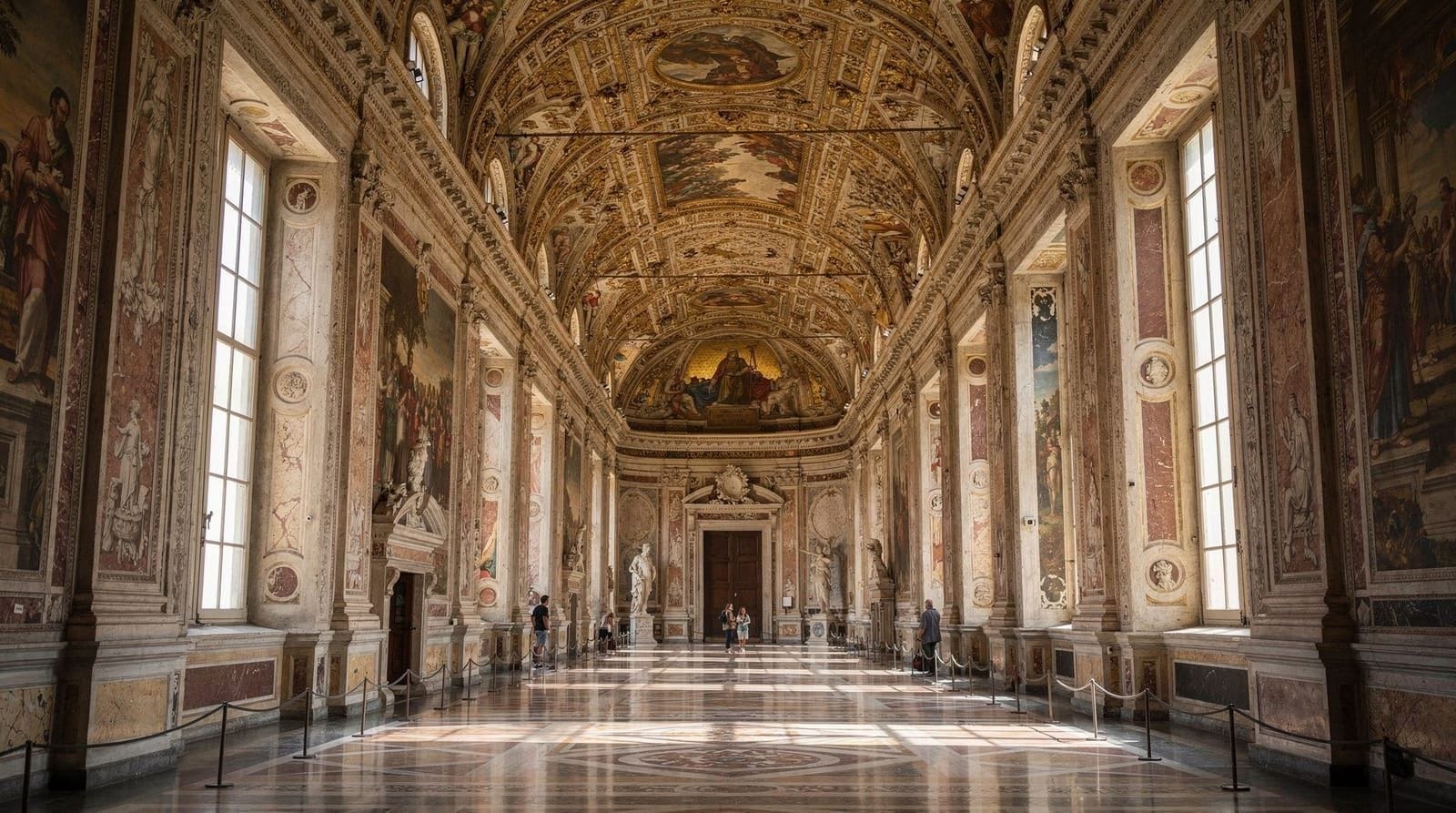
A guided Vatican Museums, Sistine Chapel and St. Peter’s Basilica tour is the most efficient way to do all three with context. The Museums alone cover 7 km of galleries; without a guide or a strict route, it is easy to spend two hours in Egyptian antiquities before reaching the Raphael Rooms. The Sistine Chapel ceiling (Michelangelo, 1508-1512) and the Last Judgment wall (1534-1541) are the reasons you came; don’t let the preceding galleries eat your energy.
Ticket prices: Vatican Museums entry is 20 € standard online, more with a guided tour. Early-morning tours run 55-85 €. Book 2-4 weeks ahead.
11:30 — St. Peter’s Basilica and Dome (2 hours)
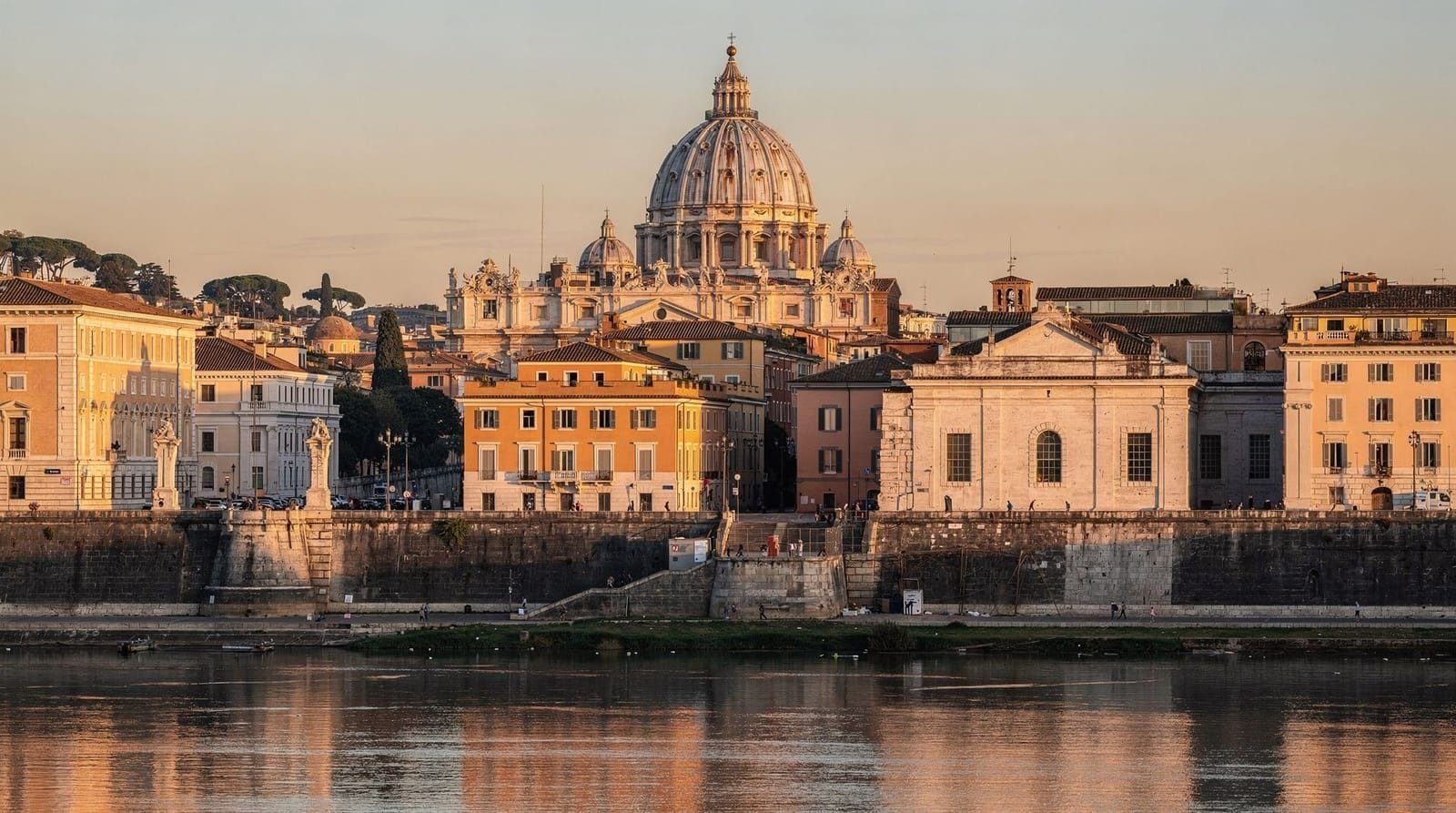
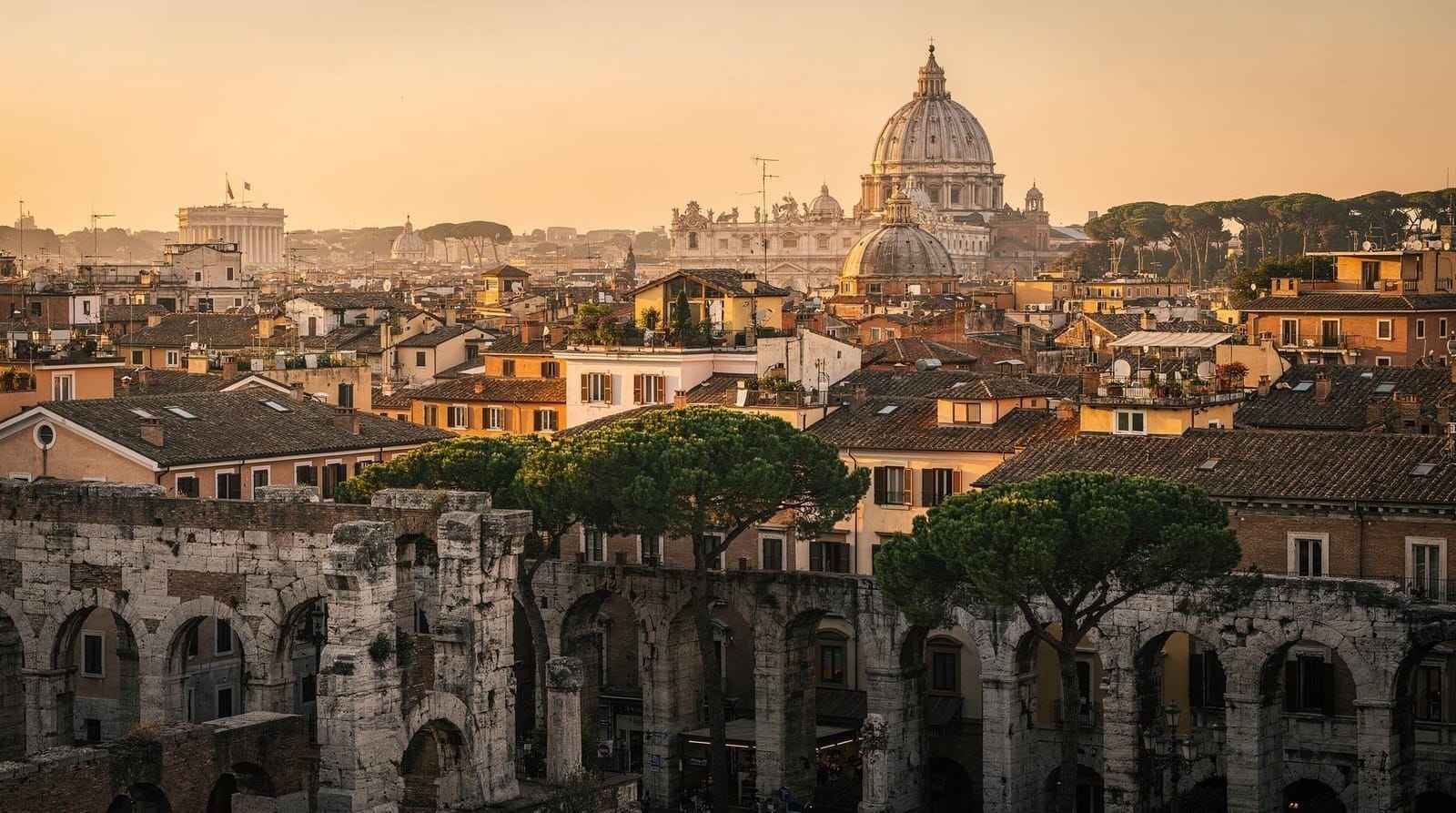
St. Peter’s is free to enter (entry from Piazza San Pietro; bag check required). The interior is on a scale that is genuinely difficult to comprehend — Michelangelo’s Pieta is behind glass in the first right chapel. Allow 45-60 minutes inside the Basilica. The dome climb (8 € by stairs, 10 € by lift + stairs) adds extraordinary views over the piazza and city; the 537 steps to the top are worth it, but the 300-step interior drum section is tight and hot.
If you have energy after the dome, Castel Sant’Angelo is a 10-minute walk southeast along the Tiber — the circular fortress-mausoleum of the Emperor Hadrian converted into a papal castle, with excellent views from the top. Allow 1-1.5 hours if you include it.
13:30 — Lunch in Prati
The streets behind St. Peter’s in Prati — particularly Via Cola di Rienzo — have good delis and pizzerie al taglio where you can eat Roman-style pizza by the slice for 3-6 €. A proper sit-down lunch here runs 20-30 € per person. Avoid the restaurants immediately on Via della Conciliazione; they are tourist traps.
15:00 — Walk to Trastevere (45 minutes)
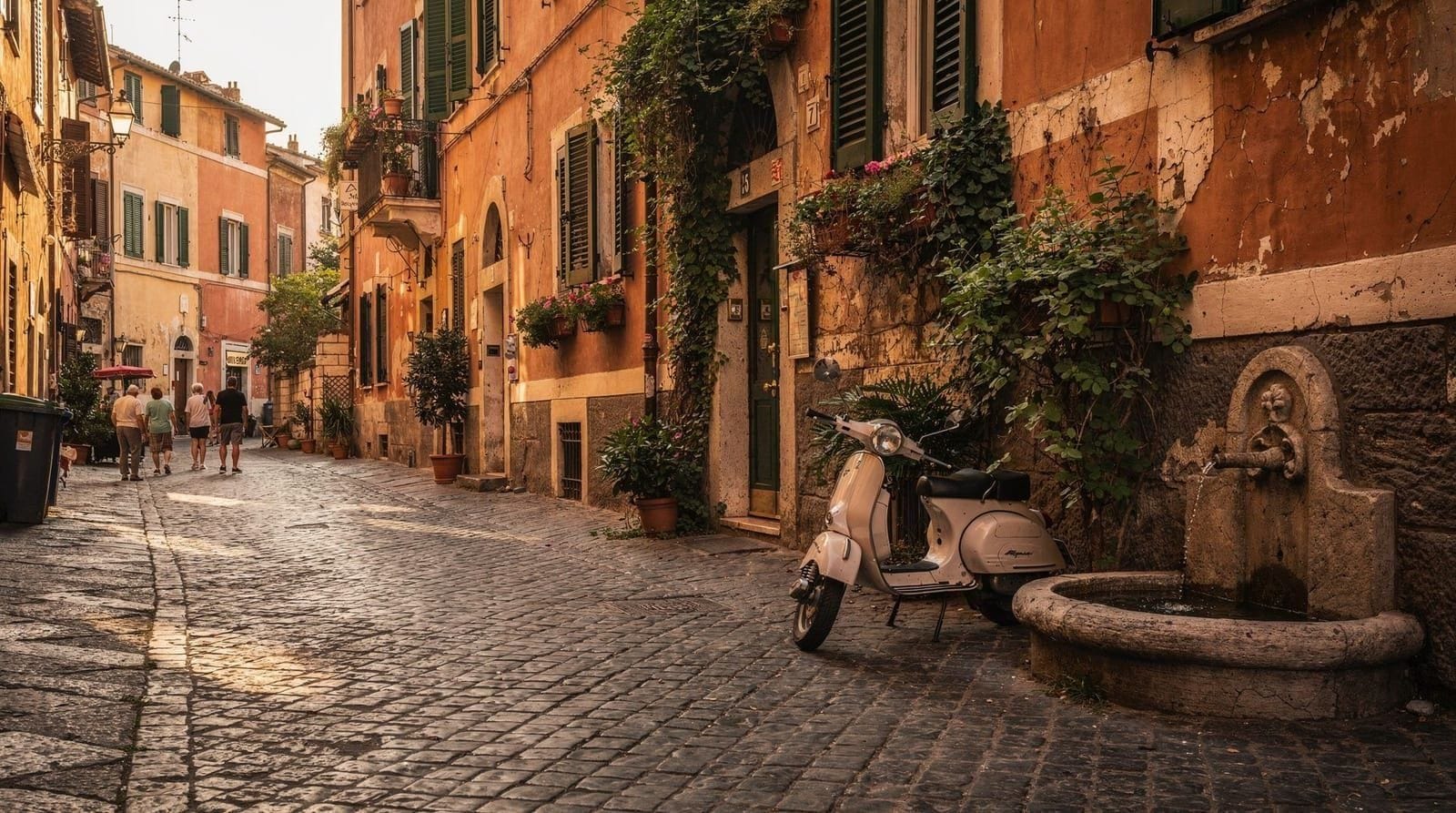
Cross the Tiber at Ponte Sisto (20-minute walk from Prati) and enter Trastevere. This neighbourhood — medieval lanes, ivy-covered buildings, the best evening aperitivo scene in central Rome — is best experienced slowly on foot. Walk to the Basilica di Santa Maria in Trastevere at the neighbourhood’s heart: the 12th-century gold mosaics inside are extraordinary and the church is free. The piazza outside is Rome’s most pleasant place to sit with a coffee.
17:00 — Wander Trastevere
Trastevere has the most coherent old-Rome atmosphere of any neighbourhood in the centre. Explore the lanes around Via della Scala and Piazza di Sant’Egidio. The Gianicolo hill, a 15-minute walk uphill from the neighbourhood, offers the best panoramic view of the city in any direction — worth the climb if your legs have anything left.
19:30 — Dinner in Trastevere
A Trastevere food tour is a good option if you want to be guided through the neighbourhood’s eating culture — pasta, supplì, local wine, artichokes — with someone who knows which restaurants are genuine. Alternatively, book ahead at Da Enzo al 29 or Grazia & Graziella for reliable Roman cooking at honest prices. Expect 35-50 € per person with wine.
The walk back to Centro Storico or Monti takes 25-35 minutes through Trastevere’s atmospheric evening streets or across Ponte Sisto — a perfectly fitting close to two days in Rome.
Where to stay
Monti is the best base for this itinerary: 15 minutes to the Colosseum on foot and 15 minutes by metro or bus to the Vatican, with the best neighbourhood restaurants for both nights. Book ahead — the best hotels here fill fast in spring and autumn.
Prati makes sense if the Vatican is your priority on both days. It’s quieter and slightly cheaper than Monti, but adds commute time to the Colosseum area.
Centro Storico hotels are more expensive and logistically central for the evening programme but farther from both the Colosseum and Vatican than they appear on a map.
Avoid Termini-area hotels for this itinerary unless budget is the only constraint. The neighbourhood is functional but adds travel time in both directions.
What to do if the Vatican sells out
The most common planning failure on a two-day trip is discovering the Vatican’s best morning slots are gone once you finally sit down to book. If this happens, don’t abandon the Vatican entirely — check availability for the afternoon (13:00-15:00 slots often remain later than morning ones, though the Sistine Chapel is busier) or shift Day 2’s order so the Vatican becomes an afternoon visit and Trastevere moves to the morning instead. What you should not do is skip the pre-booking altogether and try a walk-up: the Vatican’s walk-up queue routinely runs 90-120 minutes, which would consume most of your second day. If nothing at all is available for your dates, the Colosseum tickets guide and Vatican tickets guide both cover secondary booking channels worth checking before you give up on either sight.
FAQ
Which booking should I prioritise if I’m short on planning time? The Vatican, without question — it sells out its best morning slots 2-4 weeks ahead in high season, while the Colosseum has more flexibility at 1+ week ahead. Book the Vatican the moment your dates are fixed, then the Colosseum.
Is it better to do the Vatican or ancient Rome on day one? This itinerary puts ancient Rome first deliberately: it’s the more forgiving day logistically, and it means you’re fresh for the Vatican’s genuinely demanding 3.5-hour museum route on day two. Reversing the order works if your Vatican slot only exists on day one, but plan a lighter day two if so.
Can I fit the Borghese Gallery into these two days somehow? Not without cutting something else substantial — Trastevere or the full Centro Storico evening, most likely. If the Borghese Gallery matters to you, the 3-day itinerary is built around fitting all three anchors properly rather than compressing them.
Top experiences
Bookable activities with verified prices and instant confirmation on GetYourGuide.