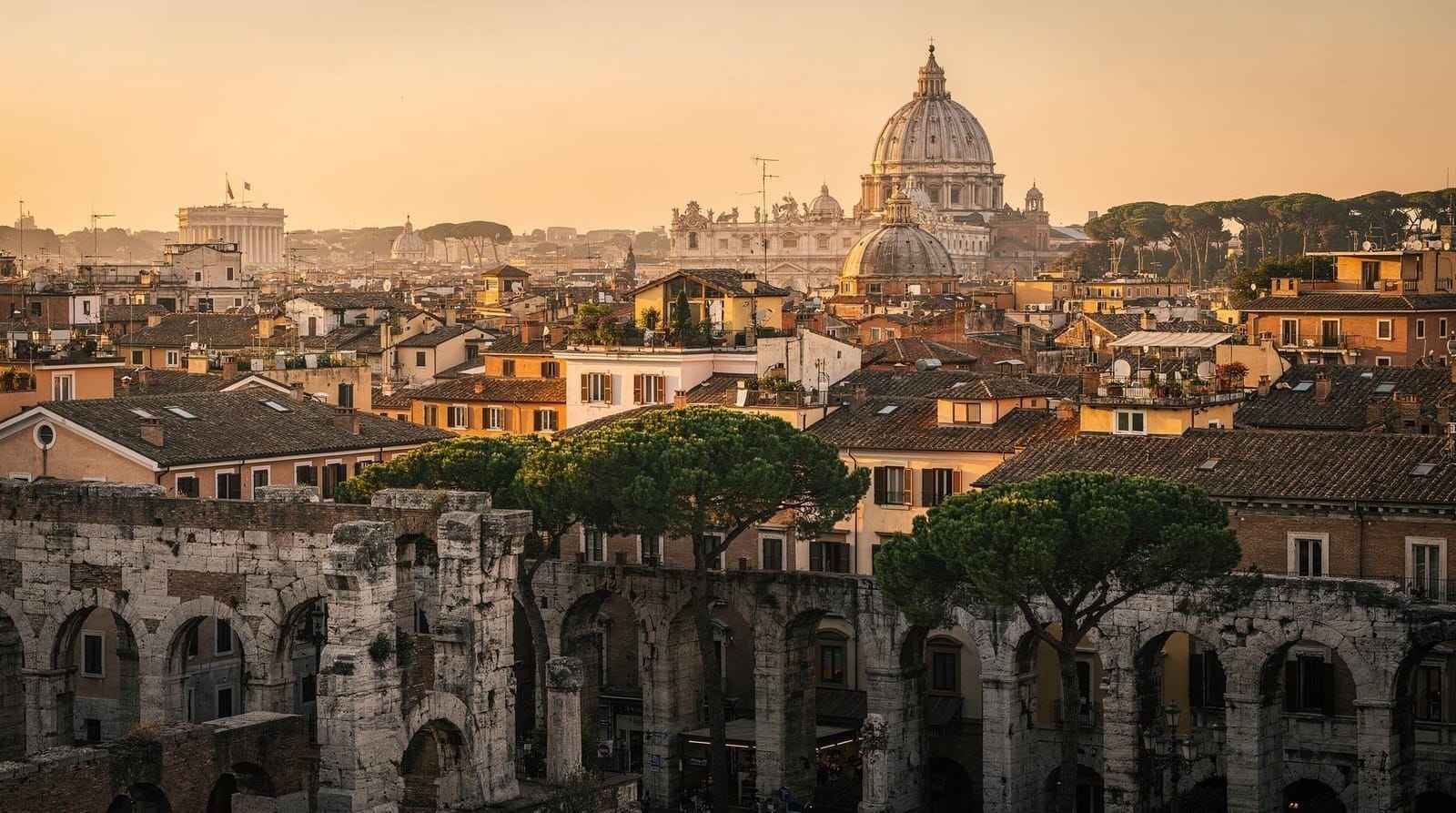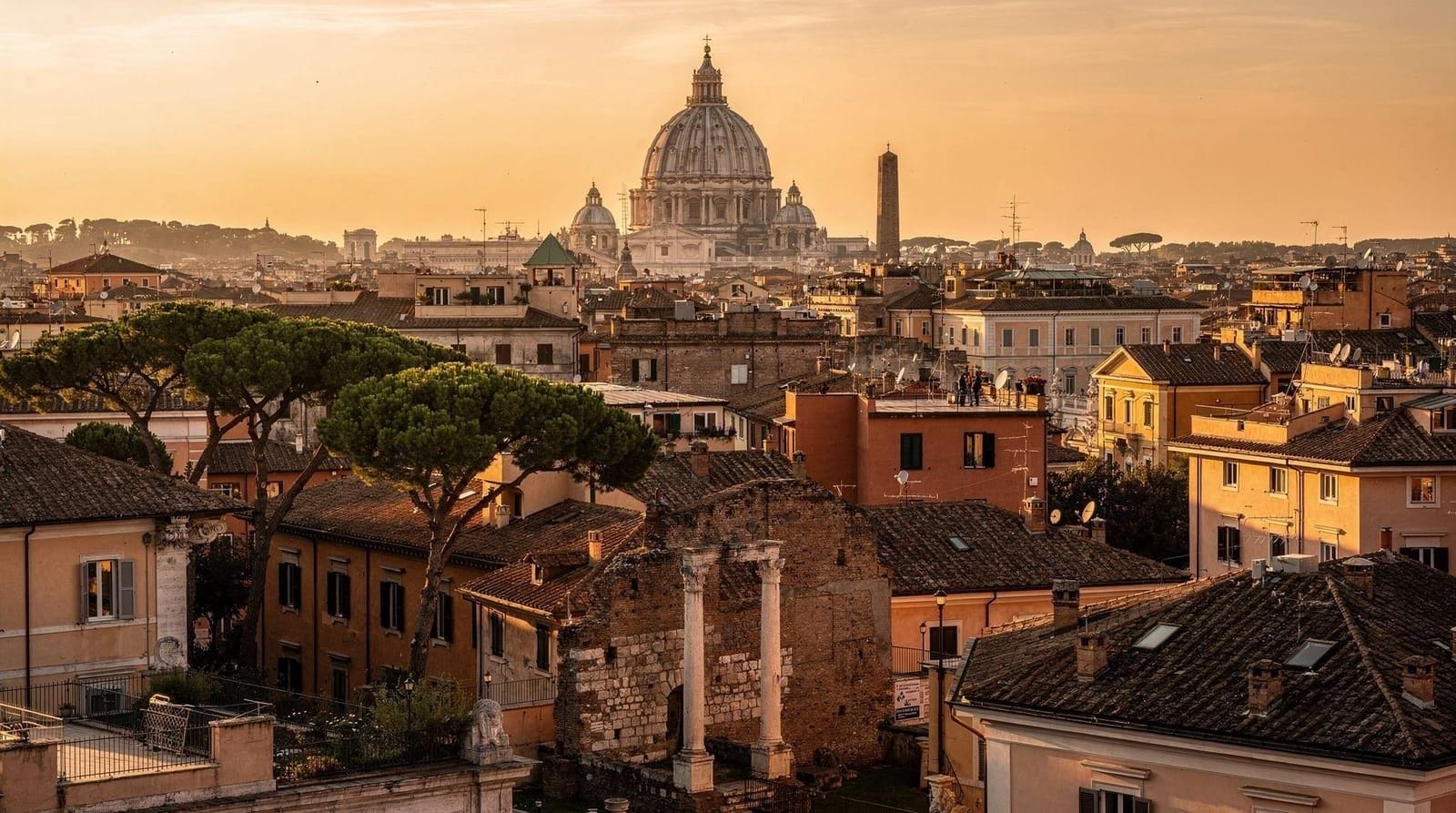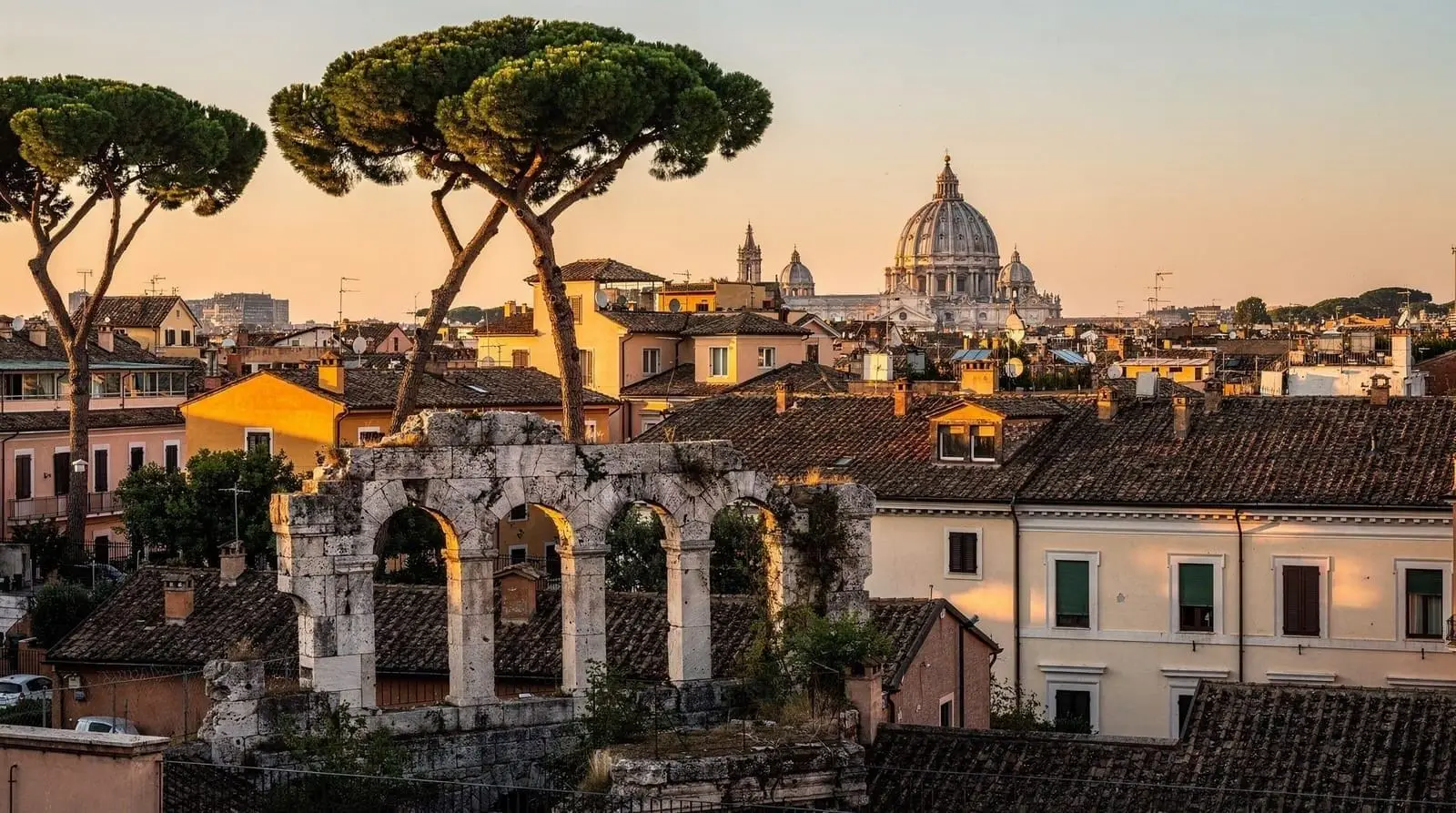
Rome in 1 Day
Rome: Guided Tour of Colosseum, Roman Forum & Palatine Hill
Quick answer: One day in Rome is genuinely doable if you’re ruthless about priorities and book ahead. Hit the Colosseum and Roman Forum in the morning — timed entry, no queuing — then walk north through Monti to the Pantheon, grab lunch near Campo de’ Fiori, and spend the afternoon drifting between Trevi Fountain, Piazza Navona, and the Spanish Steps. Finish with a slow evening stroll through the same streets after dark, when the crowds thin and the monuments glow.
| Where | Colosseum → Monti → Pantheon → Centro Storico → Spanish Steps |
| Cost | Around 60-90 € per person for entries, lunch, dinner and drinks |
| Time needed | A full day, roughly 10-12 km on foot |
| Getting around | Entirely on foot; no public transport needed |
| Booking priority | Colosseum timed entry — book 1-2 weeks ahead in high season |
Twenty-four hours sounds brutal for a city that took two thousand years to build, but Rome is unusually compact at its core. The Colosseum, the Pantheon, Piazza Navona, Trevi Fountain and the Spanish Steps all sit within a 3 km radius. With a bit of planning — and the right tickets booked before you land — you can cover the essential layer of the city and still eat well and feel the atmosphere rather than just ticking boxes.
How this compares to more time in Rome
| Rome in 1 day | Rome in 2 days | Rome in 3 days | |
|---|---|---|---|
| Anchors covered | Colosseum + Forum only | + Vatican | + Borghese Gallery |
| Pace | Fast, no downtime | Moderate | Comfortable |
| Best for | Layovers, cruise days, add-ons to a longer non-Rome trip | Short breaks | First full visits |
If you have any flexibility at all, Rome in 2 days adds the Vatican and considerably reduces the rush; this one-day version genuinely works best as a layover, a cruise-day alternative to Civitavecchia’s cruise-day itinerary, or a deliberate taste-test ahead of a longer trip later.
Two caveats worth stating plainly. First: you need to book the Colosseum timed-entry ticket before you arrive. Walk-up queues in 2026 are long enough to eat two hours out of your single day. Second: if you are visiting in July or August, start at 8:00 as instructed here and be inside somewhere air-conditioned by noon. The afternoon heat between Trevi and Navona in July is real and draining.
This itinerary is designed for someone arriving the night before or very early in the morning and leaving late evening. It is on foot the whole way — Rome’s historic centre is small enough that a taxi or bus between sites would cost more time than it saves.
Day 1: Colosseum to Spanish Steps
7:30 — Breakfast near the Colosseum
Start in Celio and the Colosseum district rather than queuing outside. Grab a cornetto and cappuccino at one of the bars on Via Cavour or Via dei Serpenti — standing at the counter costs around 2 € and is the correct Roman way to do it. Avoid the cafés right on the Piazza del Colosseo; they charge tourist prices.
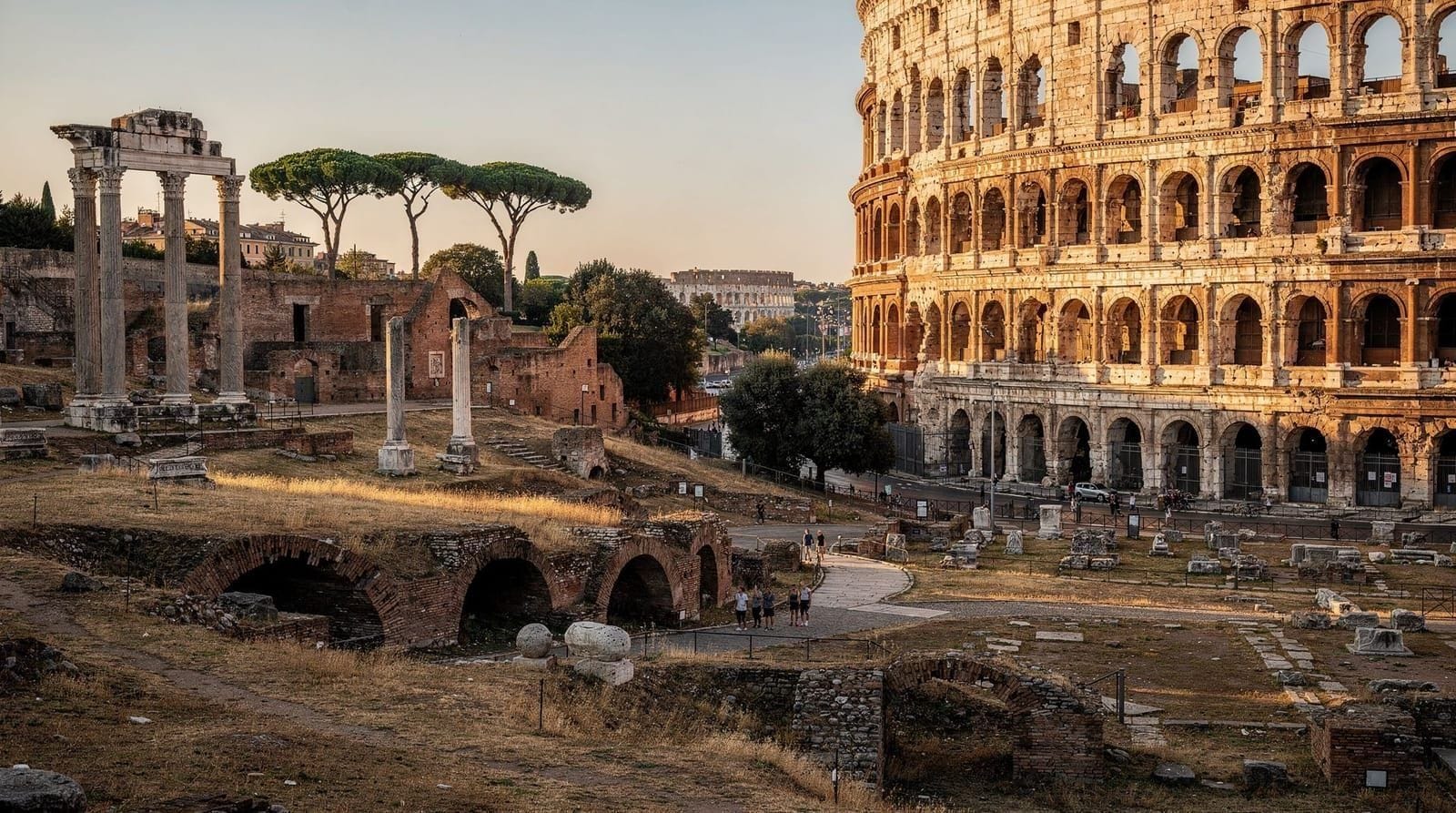
8:00 — Colosseum, Roman Forum and Palatine Hill (3-4 hours)
Your timed Colosseum ticket covers all three sites: the Colosseum itself, the Roman Forum stretching below it, and Palatine Hill. Arrive at your entry time exactly — the queues at the ticket redemption points are still significant even with a reservation.
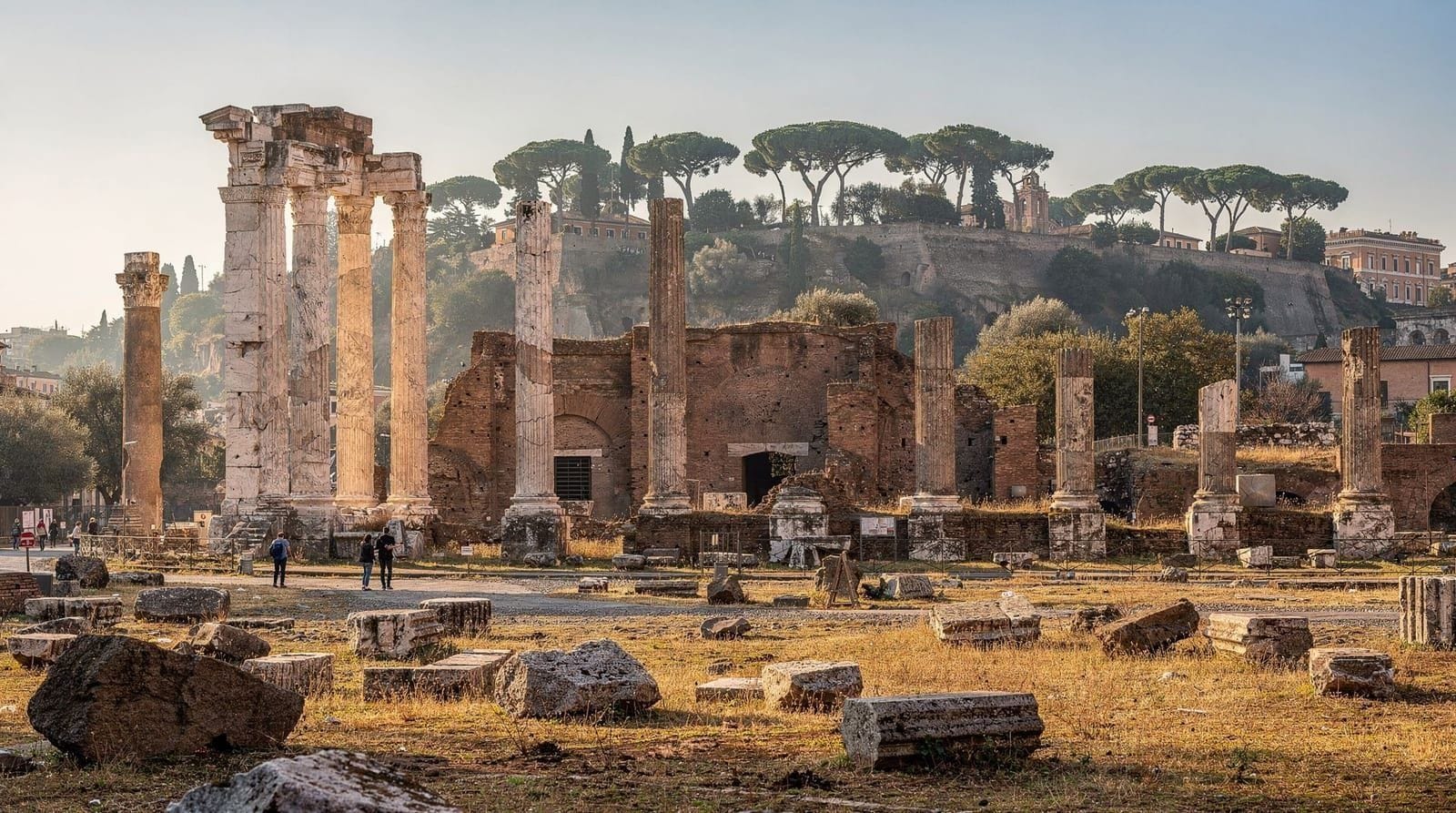
Spend 45-60 minutes inside the Colosseum proper, walking both the lower and upper tiers. The arena is on a separate ticket; for a one-day trip the standard interior view is enough. Then descend into the Roman Forum — allow 60-75 minutes to walk the main Via Sacra, look up at the Arch of Titus, and stand where the Senate sat. Palatine Hill above offers good views over the Forum and the city; 30 minutes here is sufficient if time is short.
Book a skip-the-line guided Colosseum and Forum tour if you want the context and the timed entry handled together. A knowledgeable guide in the Forum makes the scattered ruins legible in a way a self-guided visit cannot.
Colosseum entry is 18 € standard, or around 28-38 € with a guided tour. Book at least 1-2 weeks ahead in high season; the site sells out.
12:00 — Walk through Monti, lunch
Exit the Forum toward Via Sacra and head northwest on foot. The walk to the Pantheon is about 2.2 km and takes 25 minutes at a comfortable pace — this is a good time to let the neighbourhood of Monti drift past you. It’s Rome’s most likeable inner-city neighbourhood: independent boutiques, wine bars, and the kind of trattorias where locals still eat. Stop at one of the side-street spots on Via del Boschetto or Via dei Serpenti for a pasta lunch — cacio e pepe or amatriciana, both originals from Lazio. Budget around 15-20 € for a pasta and a glass of house wine.
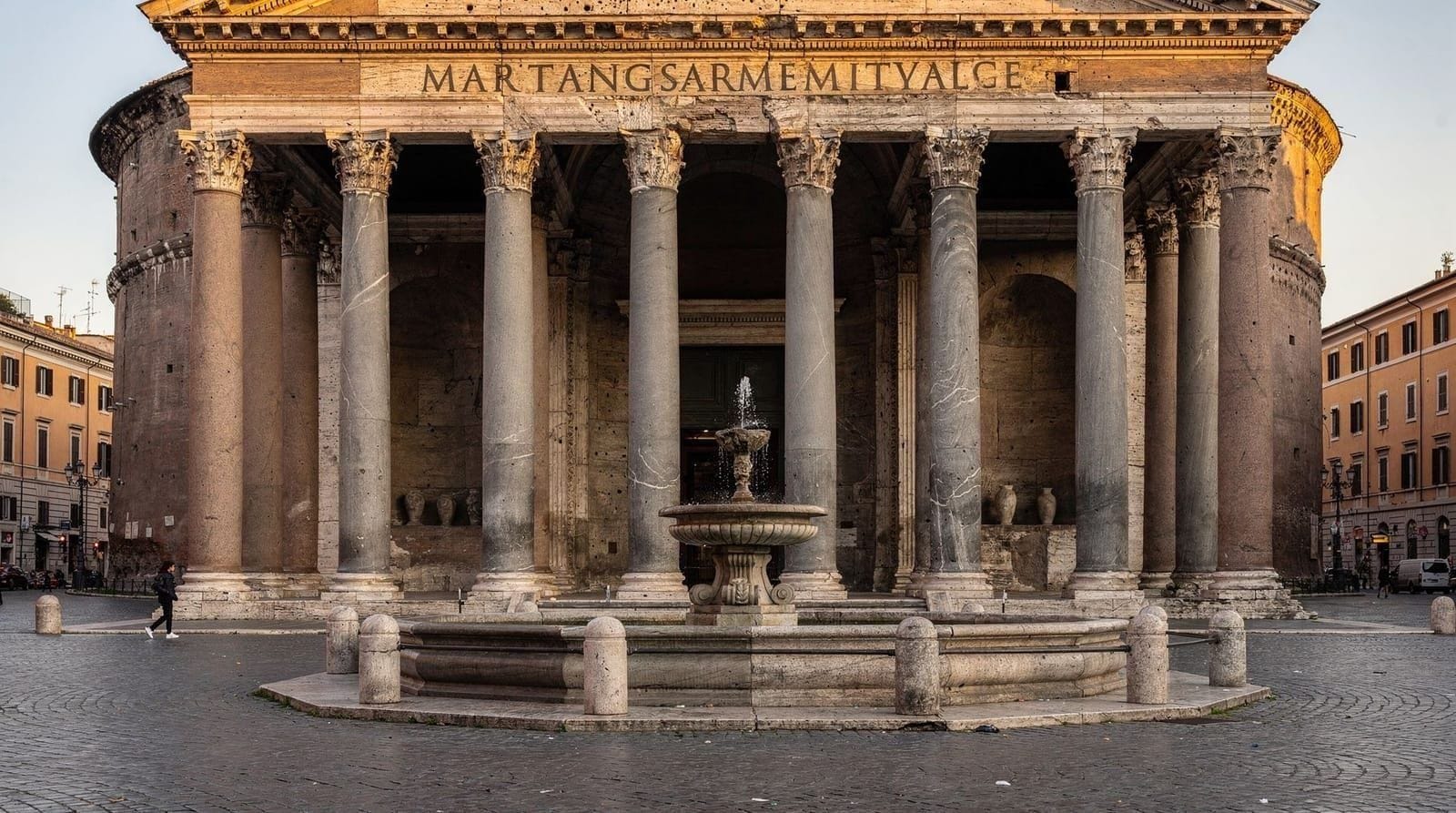
13:30 — Pantheon (45 minutes)
The Pantheon is now ticketed (6 € online, 8 € at the door — book online the day before at minimum). The interior is extraordinary in a way photographs don’t capture: the oculus in the 43-metre dome floods the floor with a single shaft of light that moves through the day. There is no longer free entry; timed entry queues exist even for pre-booked tickets, so aim to arrive slightly before your slot.
A Pantheon guided tour with skip-the-line entry takes about 1 hour and is worth the fee if it’s your only time inside.
14:30 — Campo de’ Fiori and Piazza Navona (1 hour)
Walk 8 minutes west to Campo de’ Fiori, Rome’s most lived-in square. The market finishes around 14:00 but the piazza itself has a different character to Piazza Navona — more local, slightly scruffy, good for a coffee or gelato. Then stroll 5 minutes north to Piazza Navona: Bernini’s Fontana dei Quattro Fiumi at the centre is one of the finest pieces of public sculpture in any European city. Walk the whole length of the piazza and look into Sant’Agnese in Agone if it’s open.
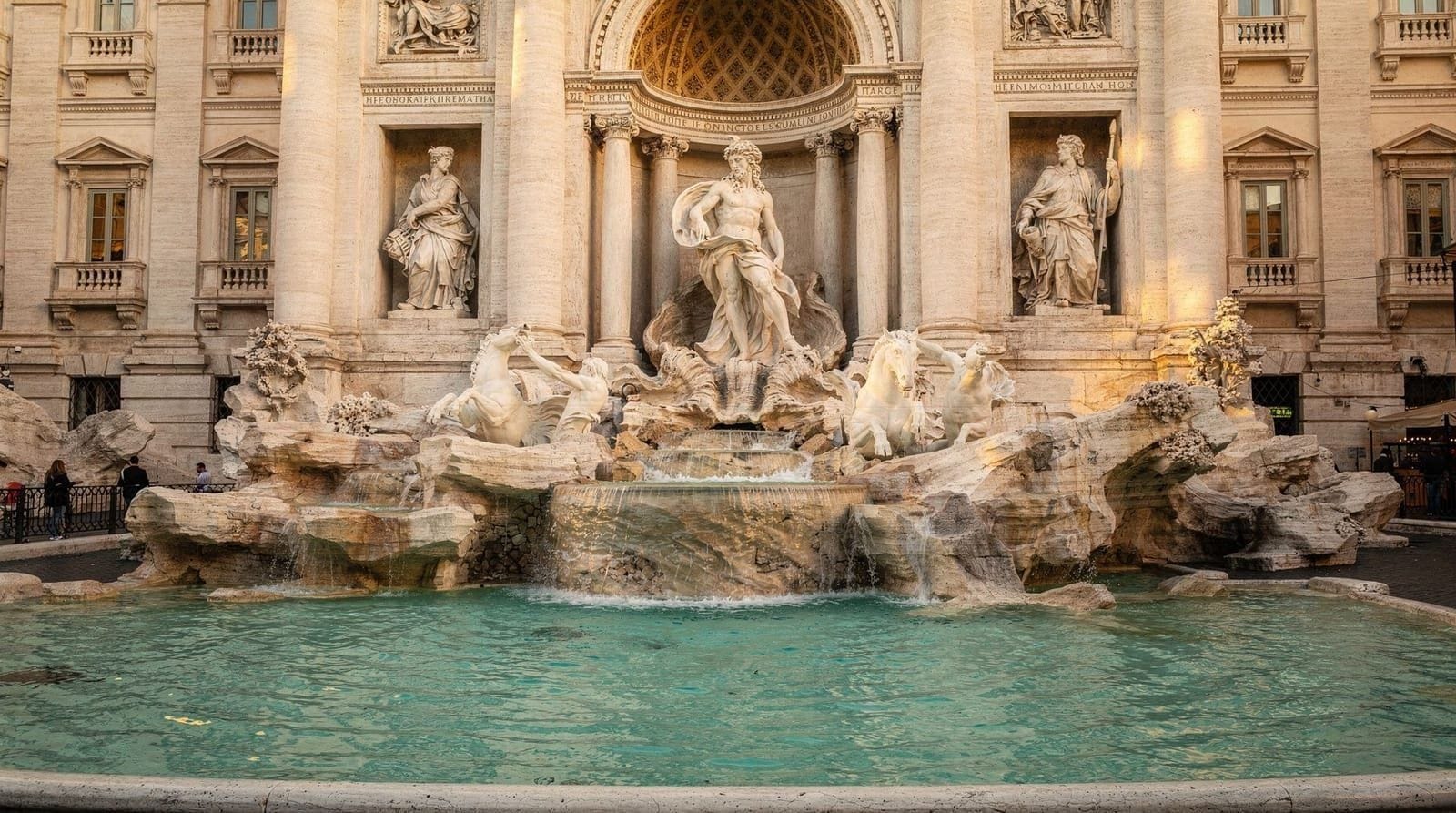
15:30 — Trevi Fountain
It is 10 minutes on foot east to the Trevi Fountain. There is no avoiding the crowd here — it is one of the most visited sites in the world — but the fountain is genuinely spectacular at close range, and the bas-relief of the whole rear wall is worth examining carefully. Arrive, stay 15-20 minutes, and accept that selfie sticks are part of the aesthetic. Throwing the coin is optional but traditional (it goes to the Red Cross). Do not linger at the surrounding overpriced bars.
Refill your water at any nasone — the small iron fountains that appear every few hundred metres across Rome. The water is municipal and cold. In July and August this habit becomes essential.
16:00 — Spanish Steps and Pincio Hill
A 10-minute walk northwest brings you to the Spanish Steps — the 135-step staircase connecting Piazza di Spagna below to the Trinità dei Monti church above. The steps are more pleasant to sit on than to photograph from the bottom; climb to the top for the view back down Via Condotti toward the obelisk and the fountain. From there, a 5-minute walk leads to the Pincio Terrace, the best free viewpoint in Centro Storico and a quieter alternative to the Gianicolo.
17:30 — Aperitivo break
By late afternoon you’ll have covered 10-12 km on foot. Use this hour to sit down properly. Rome’s aperitivo culture is not as developed as Milan’s, but any decent bar will serve a Campari spritz or Aperol with snacks for 8-12 €. The area around Via della Croce and Via del Babuino near the Spanish Steps has a concentration of good options.
19:00 — Dinner
Return toward Monti or Centro Storico for dinner. Avoid the tables right on Piazza Navona — they are aimed at tourists and priced accordingly. The streets one block back (Via della Pace, Via del Governo Vecchio) have trattorias that charge honest prices and serve proper Roman pasta. Expect to pay 25-40 € per person with wine.
21:00 — Rome by night
The city changes character completely after 9 pm. The monuments are lit, the tour groups largely gone, and the squares become social spaces for Romans rather than sightseeing checkpoints. A guided 3-hour Rome by night walking tour is a good way to see the city in this state with someone who knows the back-street context — Trevi, Navona, the Campo, and the Tiber bend look different in the dark.
Alternatively, simply retrace the afternoon route on foot. Trevi Fountain at 22:00 is still busy but incomparably better lit than at 15:00, and the long evening light of Italian summer means dusk doesn’t arrive until past 20:30 in May and June.
Practical notes for a one-day visit
Tickets and bookings. Colosseum standard timed entry is 18 € and must be booked in advance at coopculture.it or via a tour operator. The Pantheon is 6 € online. Both should be purchased before you arrive. If you are buying a guided Colosseum tour, the booking is typically included in the tour price — check before purchasing separately.
Transport inside Rome. For a single day in this itinerary you do not need any public transport. The route from the Colosseum to the Spanish Steps is entirely walkable (about 3.5 km of actual movement, though you’ll cover 10-12 km in total with doubling back). If your feet give out, the Metro Line A runs from Barberini (near Trevi) to Termini, and a single ticket is 1.50 €. Taxis are white, metered vehicles; official flat rate from Fiumicino airport to the centre is 55 €.
What to eat and what it costs. Roman pasta (cacio e pepe, amatriciana, carbonara, gricia) is the thing to order for every lunch and dinner. A full pasta dish with a carafe of house wine runs 15-22 € in neighbourhood trattorias, 25-35 € in the historic centre, and over 40 € on any tourist square. A coperto of 1-3 € per person appears on every restaurant bill — this is a legal table charge, not a scam. Tipping is optional (5-10 % if the service was good). A standing espresso at any bar is 1-1.50 €; sitting at a table doubles the price.
Rome in summer. If you are visiting in July or August, this itinerary needs to be adjusted. Be inside the Colosseum by 8:30 and inside the Pantheon by 13:30. Between noon and 15:00 the sun on the open piazzas is punishing — a long lunch inside a restaurant is not laziness but sensible planning. Carry water and refill at the nasoni fountains.
Where to stay
For a single day you want to be as central as possible. The triangle formed by Monti, Centro Storico, and Trastevere gives you walking access to every major site. Monti specifically is the sweet spot: close to the Colosseum in the morning and to Trevi/Navona in the afternoon, with Rome’s best neighbourhood restaurants for dinner.
Budget options cluster around Termini station (15-20 min walk from the Colosseum) — the area is scruffier but the transport links are excellent and prices significantly lower.
Mid-range hotels in Monti and around Via Nazionale offer the best value-to-location ratio. Expect to pay 120-200 € for a decent double in 2026 peak season.
The golden rule for a single day: do not stay near the Vatican or in Prati unless the Vatican is your morning priority. The walk from Vatican area to the Colosseum is 4 km and eats 50 minutes of your limited time.
Should you even try the Vatican on a one-day trip?
Cutting the Vatican is the single hardest decision in this itinerary, and it is the right one for genuinely one day. The Vatican Museums alone need two to three hours minimum, plus a 15-20 minute walk each way from the centro storico, plus its own timed-entry booking separate from the Colosseum’s. Trying to fit both into a single day means rushing one or both, and the Colosseum-to-Vatican transit alone can cost 40-50 minutes each way on foot or by metro. If St. Peter’s and the Sistine Chapel genuinely matter to you, this itinerary is the wrong template — look at Rome in 2 days instead, which builds the Vatican in as its own half-day rather than squeezing it into an already full ancient-Rome day.
FAQ
Can I really do the Colosseum and the Vatican both in one day? Not comfortably. Each needs its own timed-entry booking and 2-4 hours on site, and the transit between them (roughly 4 km) eats 40-50 minutes each way. This itinerary deliberately picks the Colosseum and centro storico over the Vatican for a single day — if the Vatican is non-negotiable for you, look at Rome in 2 days instead.
Is walking 10-12 km in one day realistic for most travellers? For most reasonably fit adults, yes, especially since it’s spread across a full day with a lunch stop and an aperitivo break built in. If that pace sounds daunting, cut the Spanish Steps and Pincio Hill from the afternoon and end at Trevi instead — you’ll lose one viewpoint but keep the essential Colosseum-Pantheon-Navona-Trevi sequence intact.
What if my only day in Rome falls in July or August? Follow the same route but shift everything earlier: Colosseum by 8:00 sharp, Pantheon by 13:00, and treat the 12:00-15:00 window as a long, air-conditioned lunch rather than sightseeing time. The plan in this guide already accounts for this, but summer visitors should treat the timings as a hard ceiling, not a suggestion.
Top experiences
Bookable activities with verified prices and instant confirmation on GetYourGuide.