Roman pasta food tour — the honest guide
Rome: Food Tour in Trastevere 20+ Tastings Free Flowing Wine
What are the four Roman pastas and where should I eat them?
The Roman quartet is cacio e pepe, gricia, carbonara and amatriciana — all built on guanciale and pecorino romano. For honest versions, try Flavio al Velavevodetto (Testaccio), Da Enzo al 29 (Trastevere) or Tonnarello (Trastevere). Avoid anywhere with an English photo-menu outside and no Italian speakers inside.
The four Roman pastas — what you’re actually eating
Rome’s culinary identity is built on four pasta dishes that look simple and taste like they took a lifetime to perfect. They share two ingredients — guanciale (cured pork cheek, not pancetta, not bacon) and pecorino romano (sharp aged sheep’s milk cheese) — and diverge from there.
Cacio e pepe is the most minimal: pasta, cheese, black pepper, starchy cooking water to create an emulsion. No butter, no cream, no olive oil on the traditional version. Getting it wrong means a greasy clump or a gluey mess. Done right, it’s one of the most satisfying things you can eat in Italy.
Gricia is cacio e pepe’s older sibling: add rendered guanciale and its fat to the equation. Known as the “white amatriciana,” it likely predates tomatoes arriving in Italy (post-Columbus). It’s richer than cacio e pepe but less famous to foreign visitors, which means restaurants cut fewer corners on it.
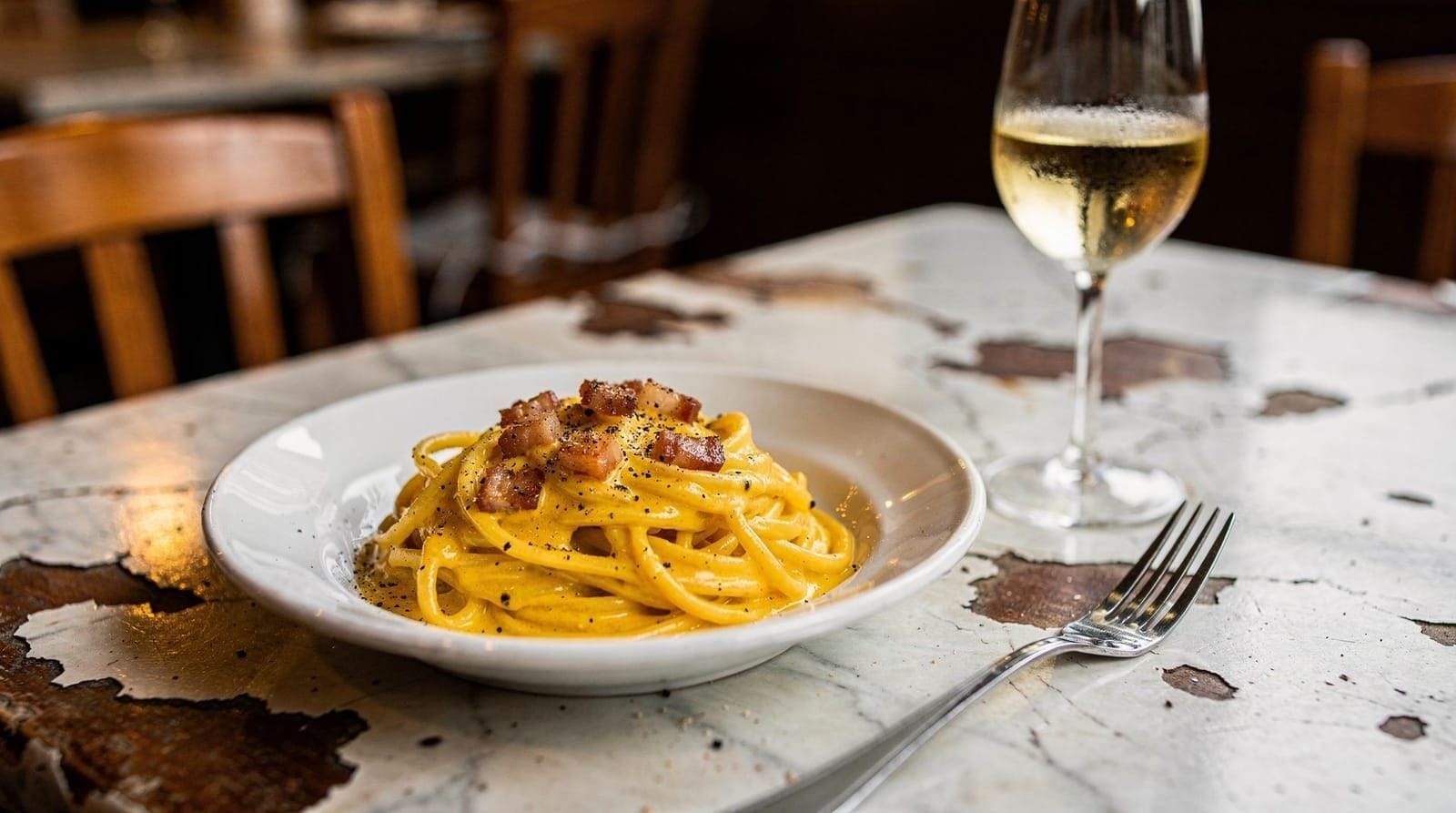
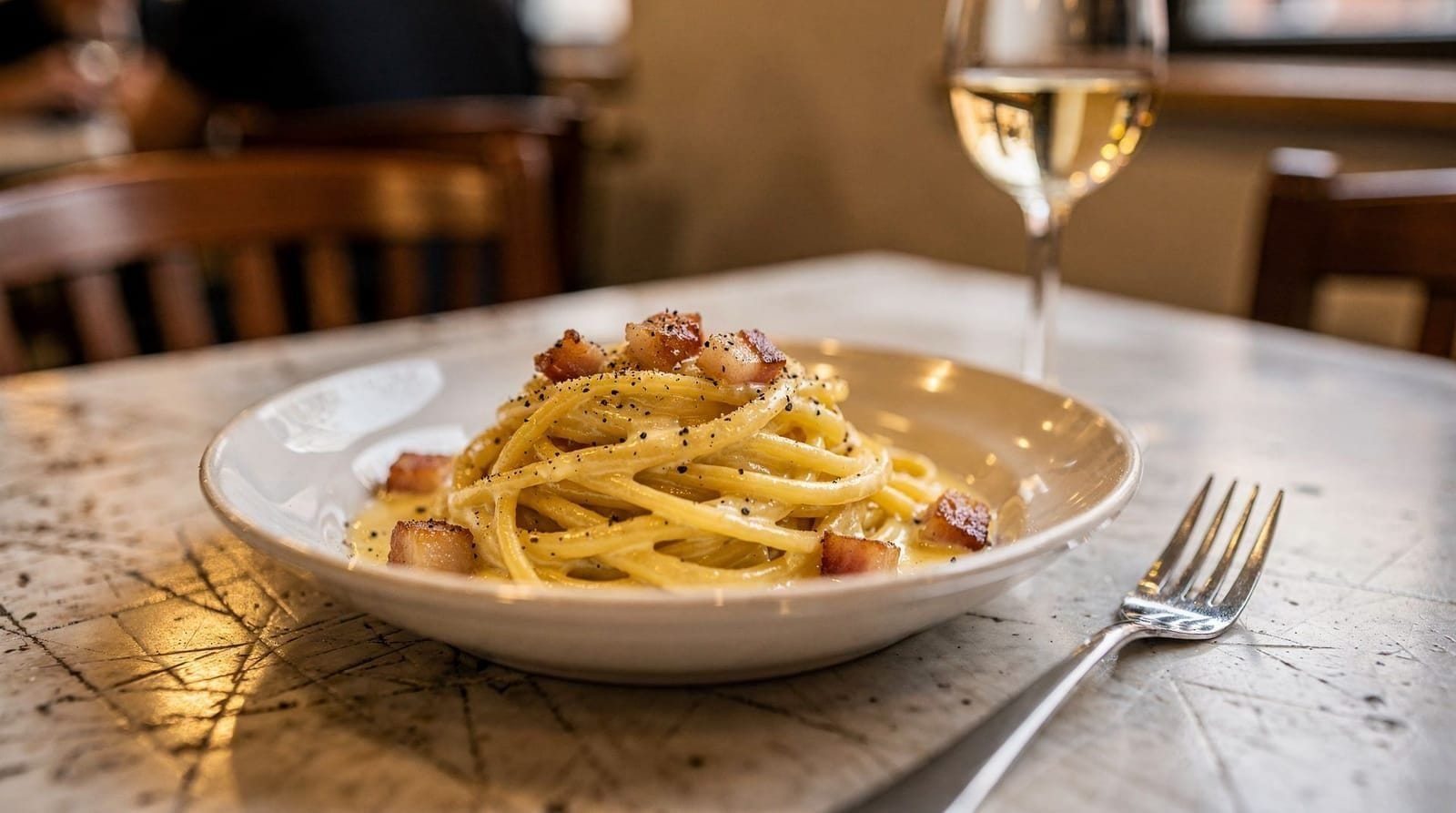
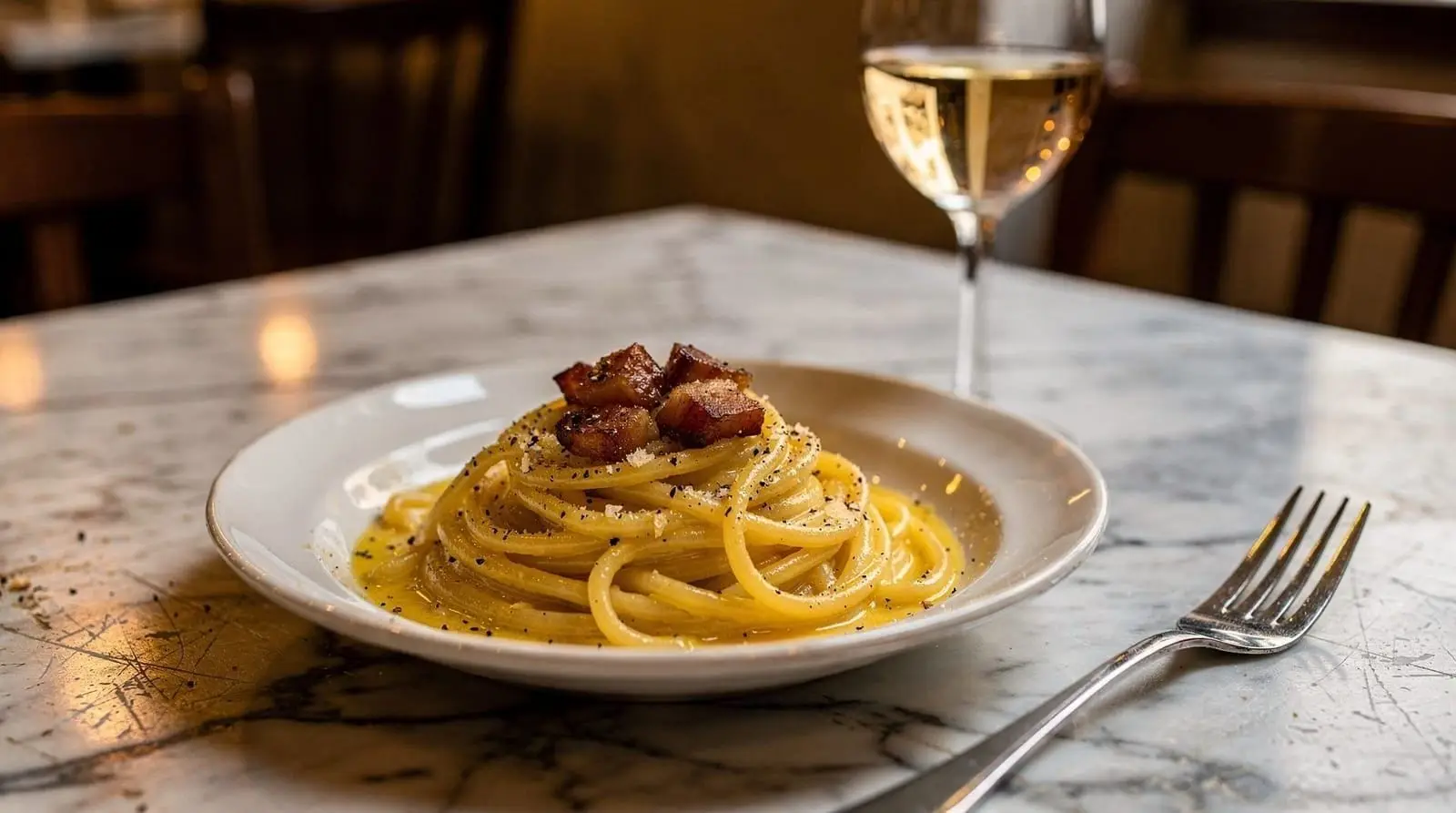
Carbonara adds egg yolk to gricia. The silkiness comes from tempering the yolk off the heat — too much heat and you get scrambled eggs. The dish became Roman in the postwar period, possibly influenced by American GI rations (eggs and bacon), though purists dispute the origin story. There is no cream. There has never been cream. If your carbonara has cream, you are not eating carbonara.
Amatriciana completes the quartet: guanciale, pecorino and tomato (peeled San Marzano). It originated in Amatrice, a mountain town in Lazio, and traditionally uses bucatini (hollow thick spaghetti) or rigatoni. The 2016 earthquake devastated Amatrice; the pasta is now a point of civic pride and solidarity.
For a deeper dive into any single dish’s history and variations, see our five Roman pastas guide and the dedicated carbonara and cacio e pepe guide.
| Best neighborhood overall | Testaccio — lower prices, fewer tourists |
| Typical pasta price | €10–16 at an honest trattoria |
| Best for atmosphere | Trastevere, if you choose carefully |
| Avoid | Photo-menu restaurants, “menu turistico” under €20 |
| Guided option | 3.5-hour Trastevere tasting tour, best on an evening slot |
Where to eat them — honest picks by neighborhood
The problem with Rome food recommendations is that every article sends you to the same six places in Trastevere, which now have the prices and tourist density to match. Here’s a more useful map.
Testaccio — where Romans eat
Testaccio is Rome’s working-class food heartland, built around the former slaughterhouse (Mattatoio) and Mercato di Testaccio. It has none of Trastevere’s Instagram polish and about twice the value.
Flavio al Velavevodetto (Via Monte Testaccio 97) does one of the most technically correct carbonara in Rome — served on rigatoni, made table-side. Reservations are essential for dinner. Coperto €2, pasta €13–16. Closed Sunday evening.
Osteria degli Amici (Via Nicola Zabaglia 25) is a neighborhood institution: no frills, €12–14 pasta, full trattoria menu. You’ll hear Italian being spoken at every table.
Da Remo (Piazza di Santa Maria Liberatrice 44) is technically a pizza place but its supplì (fried rice balls, €2 each) are as good as the best dedicated suppliers. Join the queue that forms before 19:30 on weekends.
Mercato di Testaccio (Piazza Testaccio): the covered market that replaced the old open-air one in 2012. Box 66 (Mordi e Vai) has legendary sandwiches with Roman offal fillings. The gelato stall (Fatamorgana does a nearby outpost) and the supplì counter deserve a dedicated stop. Open Monday to Saturday, roughly 07:00–14:00. Entrance free.
Trastevere — where to find honest spots among the tourist places
Trastevere has the atmosphere but you need to choose carefully. The main squares (Piazza di Santa Maria in Trastevere, Piazza di Piscinula) are surrounded by overpriced tourist-menu restaurants. The side streets are where the honest spots survive.
Da Enzo al 29 (Via dei Vascellari 29) is the gold standard for this neighborhood: small room, Roman classics done perfectly, €14–16 pasta, modest wine list. Book weeks in advance for dinner — it’s that well known, even among locals.
Tonnarello (Via della Paglia 1–2) is larger and louder but honest: big portions, €10–14 pasta, typically packed. The gricia on tonnarelli is particularly reliable. Tables outside on the alley.
Osteria Fernanda (Via Crescenzo del Monte 18) is quieter and a touch more formal: excellent amatriciana on bucatini (€15), good abbacchio (Roman lamb, seasonal), a small wine list with fair markups.
Monti — the go-to if you’re near the Colosseum
Walking distance from the Forum, Monti is bohemian but not tourist-trap territory — yet. Osteria dell’Enoteca and a cluster of trattorias on Via dei Serpenti are safe bets for honest pasta at €11–15. Alle Carrette does respectable Roman-Jewish dishes.
Campo de’ Fiori — mostly for tourists, with exceptions
Campo de’ Fiori itself is a morning market (open until ~13:30) that used to be the working city’s vegetable hub and is now 70% tourist trinkets and overpriced sandwiches. The restaurants ringing the square are tourist-menu territory. For honest eating nearby, walk toward Via dei Giubbonari or Largo dei Librari.
The Jewish Ghetto — a different Roman food tradition entirely
Rome’s Jewish Ghetto has its own distinct culinary tradition, older in parts than the pasta quartet above, shaped by centuries of Roman-Jewish cooking. Carciofi alla giudia (fried whole artichokes) is the signature dish, but the neighborhood’s baccalà (salt cod) and concia (marinated courgette) dishes are equally worth seeking out. It pairs naturally with a Ghetto walk rather than a pasta crawl — see our Jewish Ghetto food guide for the full picture, including which restaurants keep genuinely kosher and which simply serve Roman-Jewish-style dishes.
For a broader map of where to eat across the whole city rather than neighborhood by neighborhood, our where to eat in Rome guide covers the full landscape, and the Testaccio food guide and Trastevere food guide go deeper on those two specific areas than this overview does.
The tourist traps to know and avoid
Photo menus with pictures of pasta and pizza outside the door. This is almost a universal signal for industrially prepared food and inflated prices. Romans don’t need pictures of spaghetti to know what spaghetti is.
“Menu turistico” at €15–20 for three courses. That price point in central Rome means frozen pasta and pre-cooked meat. A proper bowl of cacio e pepe takes ten minutes of active work; no kitchen turning 200 covers an evening can do it right for €6.
Guanciale vs pancetta confusion. Some restaurants knowingly substitute pancetta (belly) or even cubed bacon for guanciale. If the carbonara or amatriciana has pink cubes rather than irregular strips that rendered down in the pan, you’ve been substituted. It’s not catastrophic but it’s not the dish.
Parmesan in everything. Pecorino romano and parmigiano reggiano are used for different dishes. Carbonara, cacio e pepe, gricia and amatriciana all use pecorino (or a pecorino/parmesan blend). If a waiter offers you a parmesan grinder unprompted over carbonara, that’s a signal.
Coperto inflation. €1–3 per head is normal and legal. If your coperto is €5 and there’s also a “servizio” line item on the bill, ask them to explain it. In Rome, servizio is customarily included in menu prices; an explicit “15% service charge” added to the total is non-standard and worth questioning.
Taking a guided food tour — is it worth it?
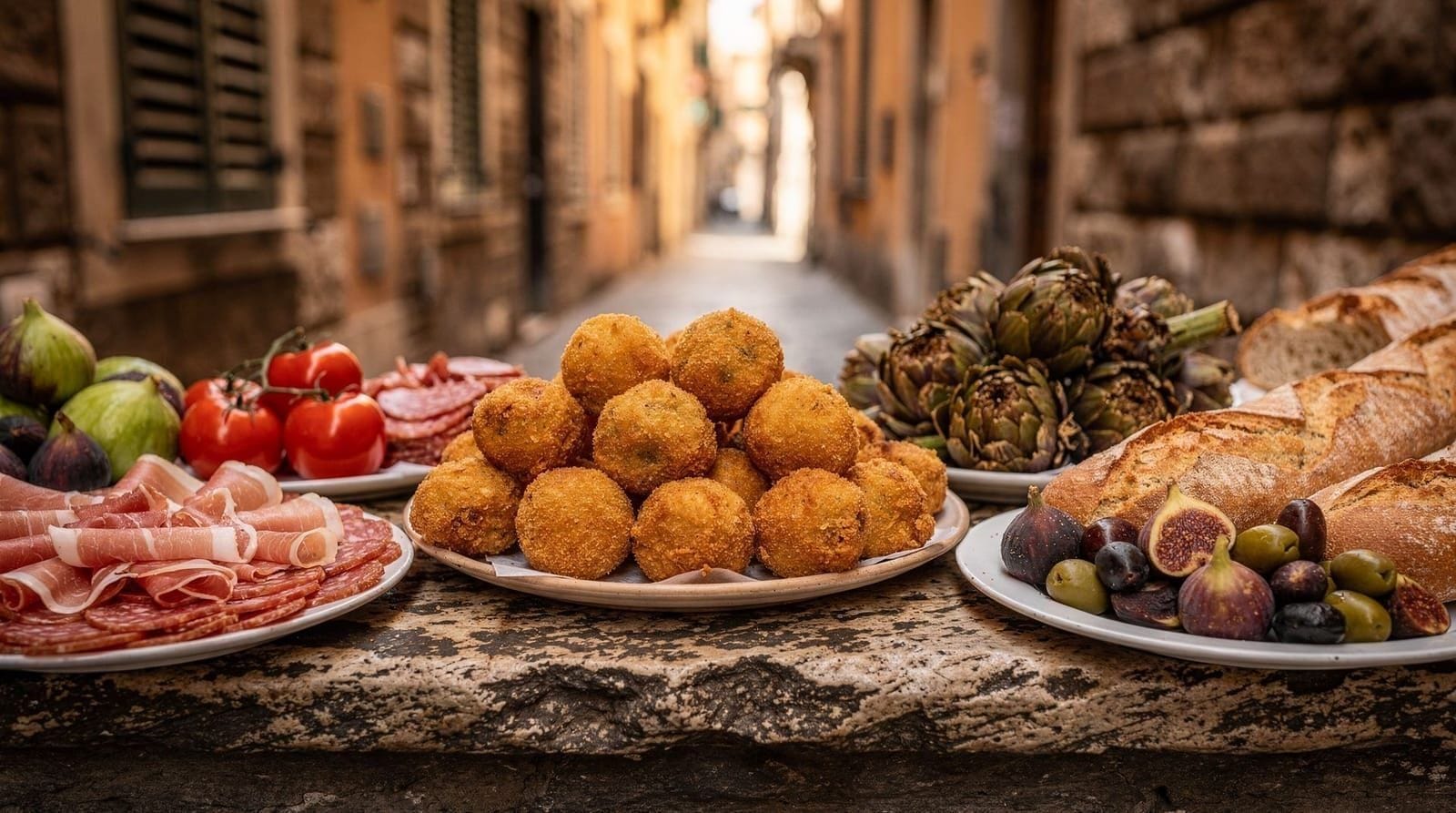
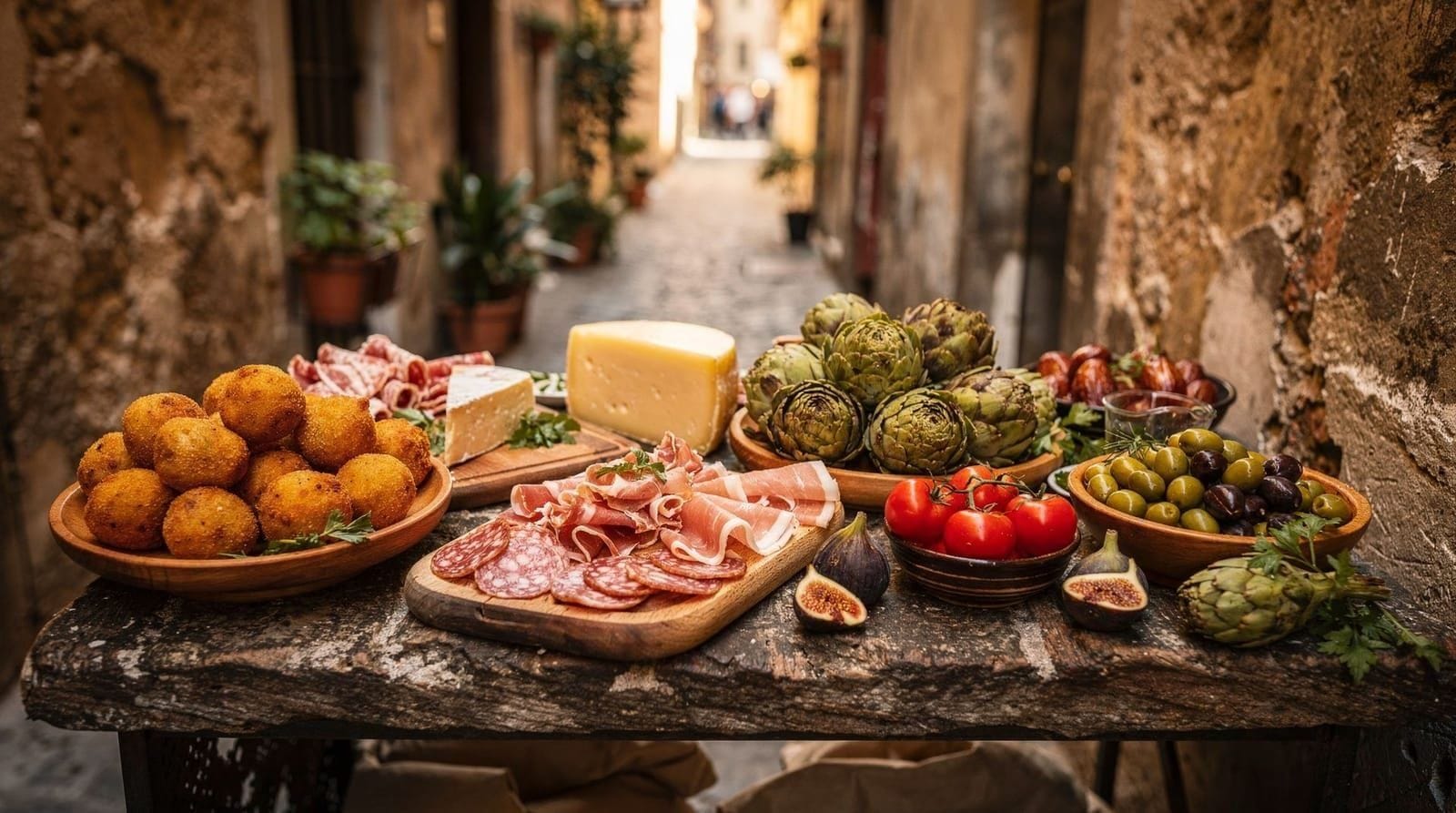
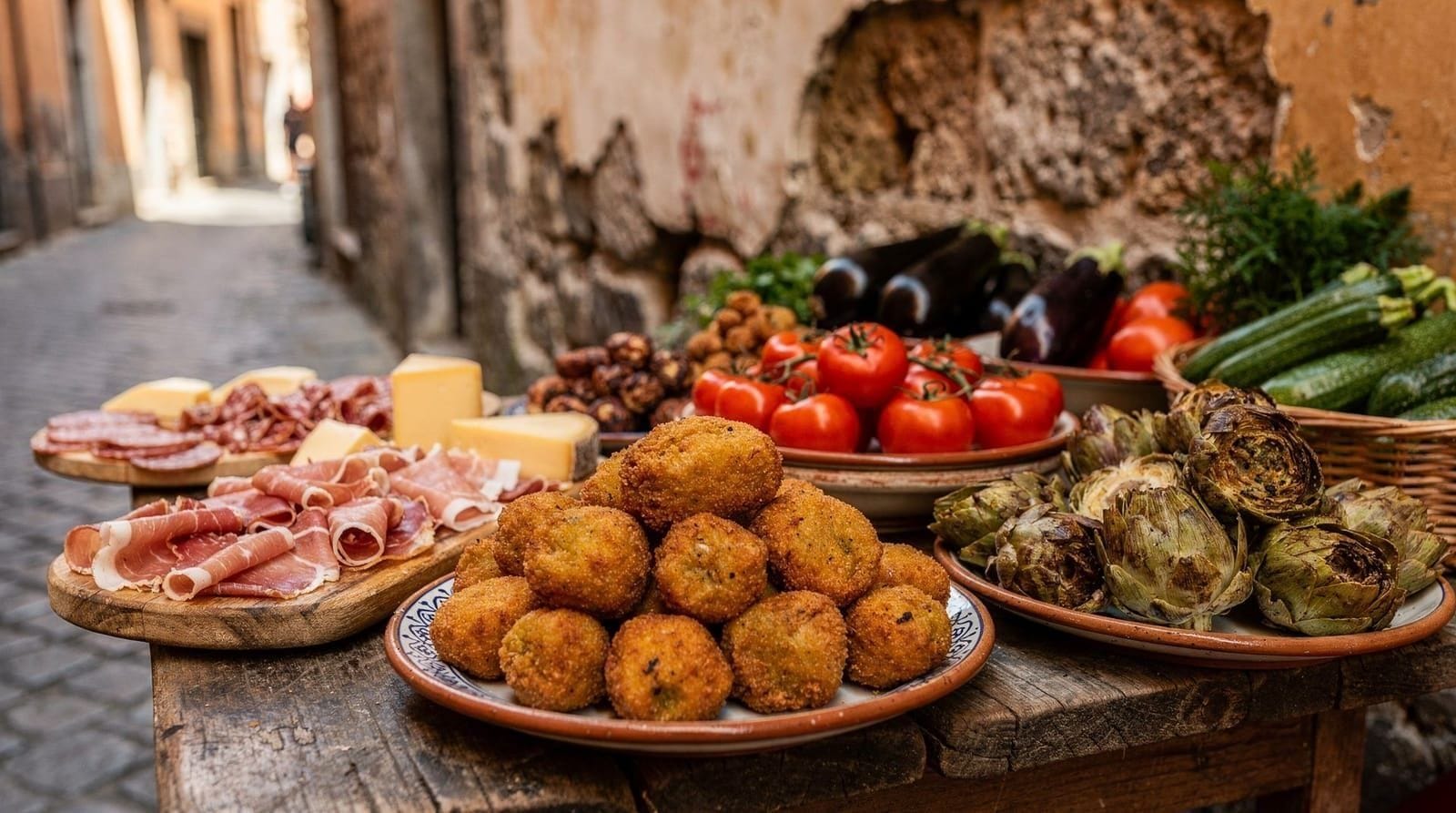
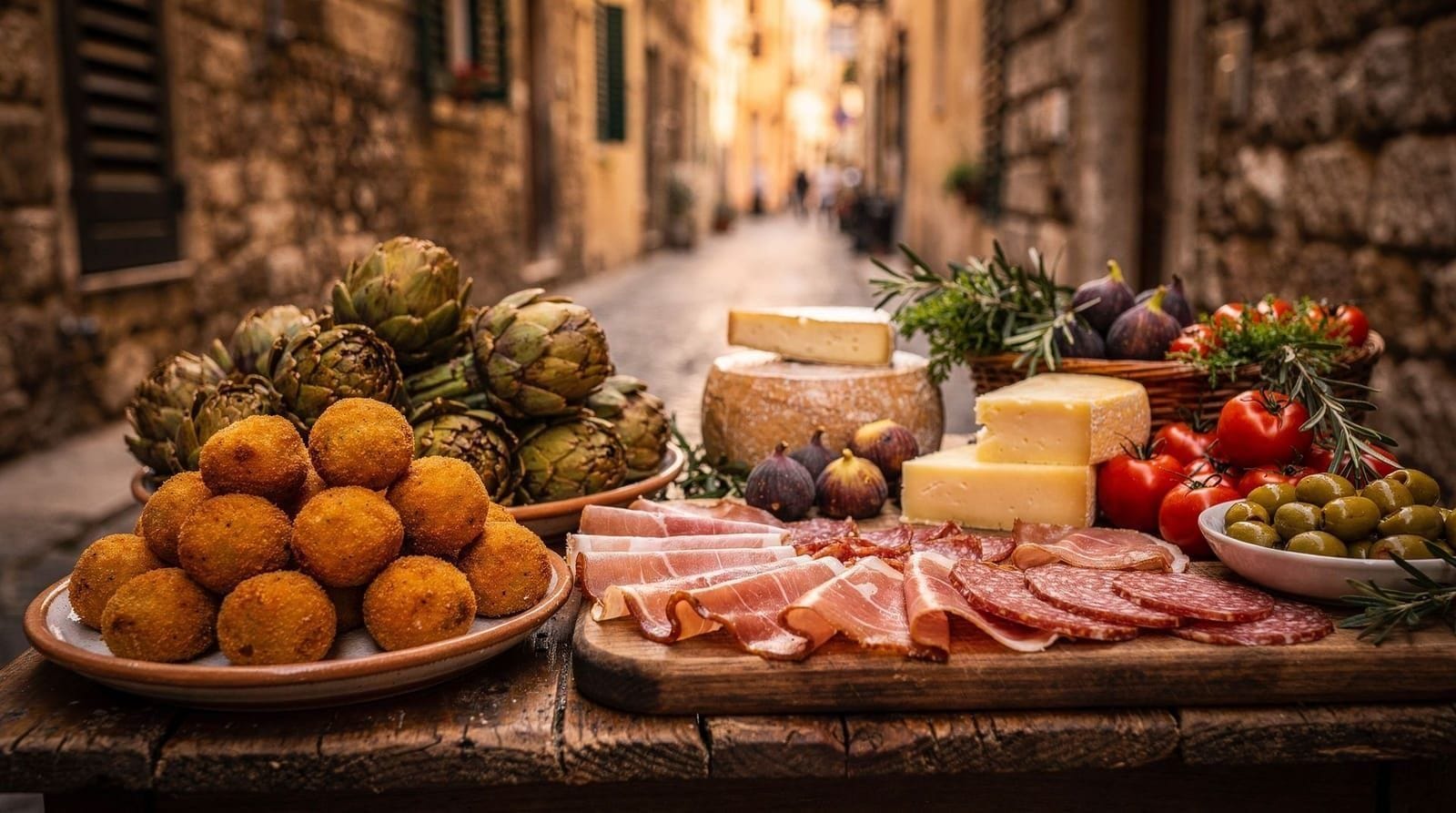
A good Rome food tour does two things a map cannot: it gets you into spots that don’t have visible English signage and explains what you’re eating with context. The best tours in the city focus on Trastevere and include 15–20 tastings across multiple stops — wine, cured meats, supplì, artichoke dishes, gelato and pasta.
The Trastevere 20-tasting tour is the most-booked food experience in Rome on GetYourGuide and consistently rated above 4.8. It runs about 3.5 hours, includes a full sit-down pasta course and wine stops at historic enoteche. Maximum 12 people. Evening departures are the best option — you eat at the pace the restaurants want, not when the tourist rush is highest.
The twilight Trastevere food tour covers similar ground but leans into the evening atmosphere — you end up in the neighborhood’s best-lit streets as the market shutters and the bars open. Slightly smaller groups; good if you’ve already been to Rome and want a curated night-time food experience.
If you want to cook rather than just eat, the options are genuinely good:
The pizza and pasta cooking class near Campo de’ Fiori runs 4 hours, covers two pasta shapes and pizza, includes wine throughout and finishes with tiramisu. The kitchen is a working professional setup near Piazza Navona. The €65–75/person price is honest for what’s included.
What to avoid in the food tour market: “Rome highlights” tours that include a 15-minute stop at a random cheese shop as their “food component,” and “market tours” that take you to Campo de’ Fiori without feeding you anything. For a fuller side-by-side of what’s actually on offer, see our Rome food tours compared guide.
Comparing the tour options
| Tour | Length | Best for |
|---|---|---|
| Trastevere 20-tasting tour | ~3.5 hours | First-timers wanting the fullest overview |
| Twilight Trastevere food tour | ~3 hours | Repeat visitors wanting evening atmosphere |
| Pizza and pasta cooking class | 4 hours | Anyone who wants to cook, not just eat |
| Trastevere secret food tour | ~3 hours | Smaller groups, off-the-main-drag stops |
The Trastevere secret food tour takes smaller groups to stops off the main squares — a good option if you’ve already done a larger tasting tour on a previous trip and want something quieter.
Street food worth stopping for
Rome’s street food tradition is older than most of the tourist infrastructure built to sell it.
Supplì are fried rice balls with a ragù filling and melted mozzarella center. They should weigh about 100–120g, be hot through, and crunch when you bite. The standard is €1.50–2.50 each. Supplì Roma (Via di San Francesco a Ripa 137, Trastevere) is a good standalone supplier; Mercato di Testaccio’s internal stalls are equally reliable.
Pizza al taglio (pizza by the cut, sold by weight at ~€3–5/100g) is covered in its own guide — our pizza al taglio guide — but worth mentioning here: the quality split between a good shop and a bad one is enormous. Look for a crust with proper blistering, toppings that aren’t waterlogged, and a counter where the pizza is turned over quickly (fresh every hour or two). Pizzarium (Via della Meloria 43, near Ottaviano metro) is still the reference point for Roman-style al taglio.
For the wider street food scene beyond supplì and trapizzino, see our Rome street food guide.
Trapizzino (Via Branca 88, Testaccio; also Trastevere) invented a pocket-pizza filled with Roman braises — the coda alla vaccinara (oxtail), pollo alla cacciatora and carciofi versions are all excellent. €3.50–4 each.
Carciofi alla giudia: fried whole artichokes, crispy to the outer leaves, sweet at the heart. Only in the Jewish Ghetto, only spring-fresh (February to April). Restaurants including Nonna Betta and Sora Margherita do the canonical version.
Maritozzo con la panna: a sweet brioche bun split and crammed with unsweetened whipped cream. It’s a breakfast food, not a dessert, and Romans eat it standing at the bar from about 07:00. Price: €2.50–4. Any serious bar in Rome does a respectable version.
Gelato — reading the signs right
Gelato is made with lower butterfat and less air than industrial ice cream, giving it a denser, more intense texture. The critical rule: if the flavors in the display case are piled up in tall, brightly colored mounds, it’s likely industrial (made from powder bases) or at minimum not artisanal. Artisanal gelato sits in covered metal pans at or below the counter surface, in muted colors — pistachio is greenish-grey, not neon green.
The other red flag is color-for-flavor: blue “blueberry,” bright turquoise “mint,” candy-pink “strawberry.” Natural ingredients don’t produce those colors. You’re eating food coloring and sugar.
For honest gelato near the major sights: Gelateria del Teatro (Via dei Coronari 65, near Piazza Navona) uses seasonal, locally sourced ingredients and has been consistently credible. Fatamorgana (multiple locations, the Prati branch is convenient for Vatican visitors) does unusual flavor combinations with genuinely good-quality bases. Giolitti (Via degli Uffici del Vicario 40) is one of Rome’s oldest and still does the classics cleanly.
Avoid any gelato stand clustered around the Trevi Fountain that doesn’t have a visible “artigianale” or “produzione propria” sign. These are almost all industrial. For a fuller shortlist across the city, see our best gelato in Rome guide.
Coffee in Rome — the fast rules
An espresso at the bar is €1–1.50. Sitting down at a bar in the center doubles the price. This is legal and expected — always ask to stand at the bar (al banco) unless you want table service.
Cappuccino is a morning drink. Ordering one after lunch or dinner marks you immediately as a tourist; Italians don’t do this, and while no one will refuse to make it, the barista’s expression will tell you something. After a meal, drink espresso.
Caffè corretto (espresso with a shot of grappa or sambuca) is the old-school Roman after-dinner compromise. It’s good.
Practical planning
Lunch vs dinner: Lunch (12:30–14:30) is generally cheaper and less crowded than dinner at the same restaurant. Set lunch menus at trattorias can be €12–16 for two courses; the same dishes at dinner run €20–28. Locals eat dinner at 20:00–21:30; arriving at 18:30 will get you a table but the kitchen may not be fully running.
Reservations: For the top-rated spots (Da Enzo, Flavio al Velavevodetto, any place with a 4.6+ TripAdvisor rating and fewer than 40 covers), book at least a week in advance for dinner. For lunch, same-day is often fine.
How much to budget for food: Mid-range dinner with wine, pasta and a secondi: €35–45/person at a proper trattoria. Budget lunch at a mercato stall: €8–12. A full food tour with 20 tastings: €65–85/person and replaces both lunch and several snacks.
Water: Rome’s tap water is excellent. The nasoni — roughly 2,500 cast-iron street fountains throughout the city — run continuously with cold, clean drinking water. Bring a refillable bottle. Paying €3 for a 500ml bottle at a restaurant when you can refill from a nasoni is unnecessary.
Frequently asked questions about Roman food tours
What are the four Roman pastas?
Cacio e pepe (pecorino and pepper), gricia (guanciale and pecorino), carbonara (guanciale, pecorino and egg — no cream) and amatriciana (guanciale, pecorino and tomato). All built on guanciale; substituting pancetta or bacon is incorrect.
What is the best neighborhood for authentic Roman food?
Testaccio is the most consistent: lower prices, fewer tourists and a covered market (Mercato di Testaccio) that is genuinely alive as a working market. Trastevere has great spots but requires more navigation to avoid tourist traps.
How do I know if a gelato shop is artisanal?
Look for gelato stored in flat metal pans with lids, not piled in tall colorful mounds. Natural pistachio is greenish-grey; natural strawberry is pale pink. Signs saying “artigianale” or “produzione propria” are a good indicator. Avoid any stand near the Trevi or Pantheon that doesn’t show those signs.
Is tipping expected in Rome restaurants?
Tipping is not mandatory. Rounding up or leaving €1–2 is appreciated at casual spots; 5–10% for exceptional service at a proper sit-down restaurant. You do not need to tip at a bar for coffee.
What should I eat for breakfast in Rome?
Maritozzo con la panna (sweet brioche with whipped cream) or a plain croissant (cornetto) with espresso or cappuccino, standing at the bar. This will cost €2.50–4. Do not go to a hotel breakfast buffet unless included.
When is the best time to visit Testaccio market?
The market opens around 07:00 and the best selection is before 12:00. By 13:30–14:00 most stalls are packing up. Monday to Saturday only — it’s closed on Sundays.
Is it rude to ask a restaurant if their guanciale is real?
No — asking “è guanciale vero?” is a normal, respectful question in Rome and a good honest restaurant will answer plainly and often appreciate the interest. It’s a far better approach than guessing from the dish’s appearance alone, and most kitchens that use the real thing are happy to confirm it.
Can I find good Roman pasta near the main tourist sights, or do I have to travel to Testaccio or Trastevere?
It’s harder but not impossible. The immediate areas around the Colosseum, Pantheon and Trevi Fountain are dominated by tourist-menu restaurants, but Monti — a short walk from the Colosseum — has several honest options, and a 15–20 minute walk or short taxi to Testaccio or Trastevere is usually worth the detour for a proper meal rather than settling for whatever is nearest the monument.
Top experiences
Bookable activities with verified prices and instant confirmation on GetYourGuide.