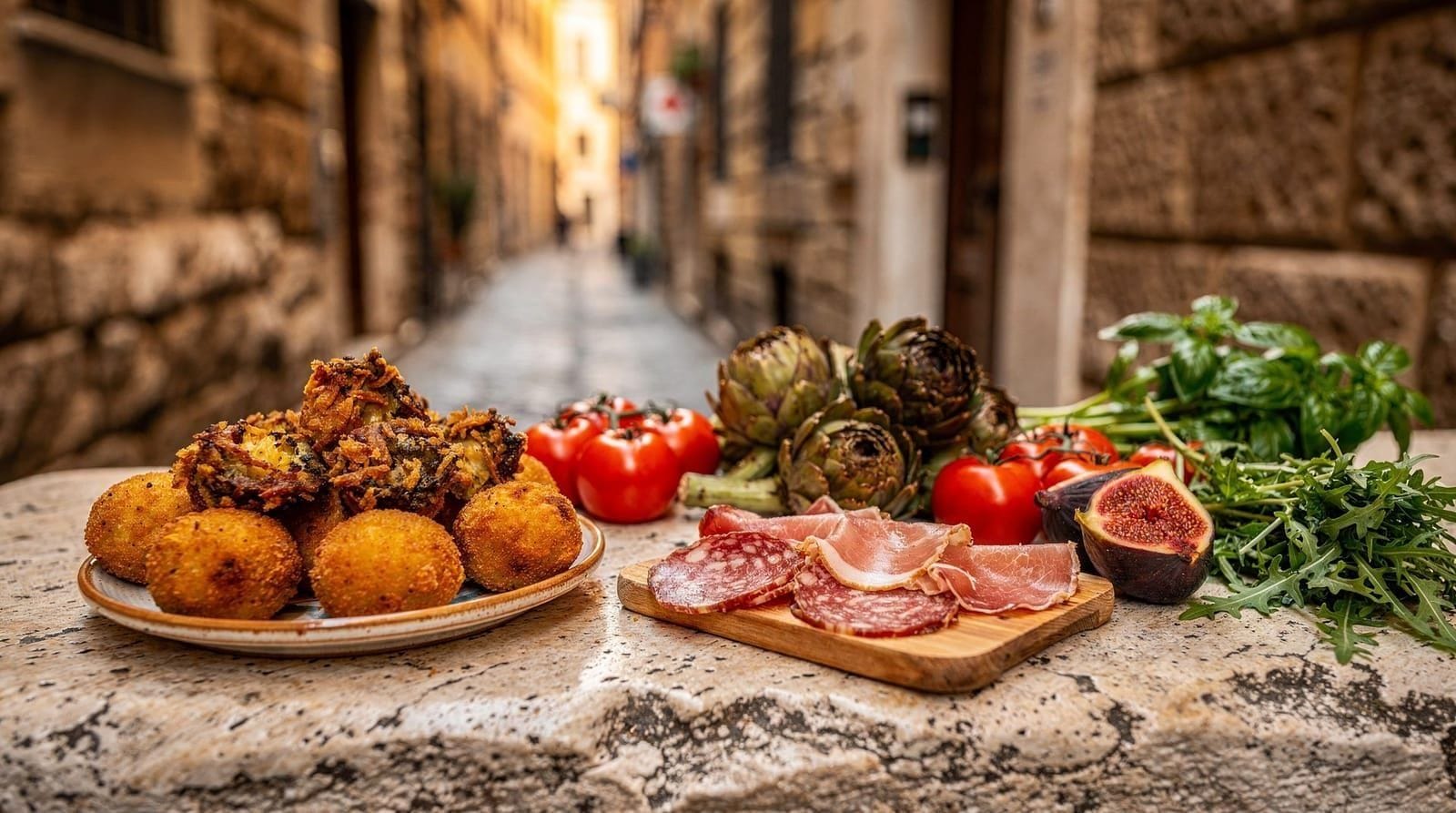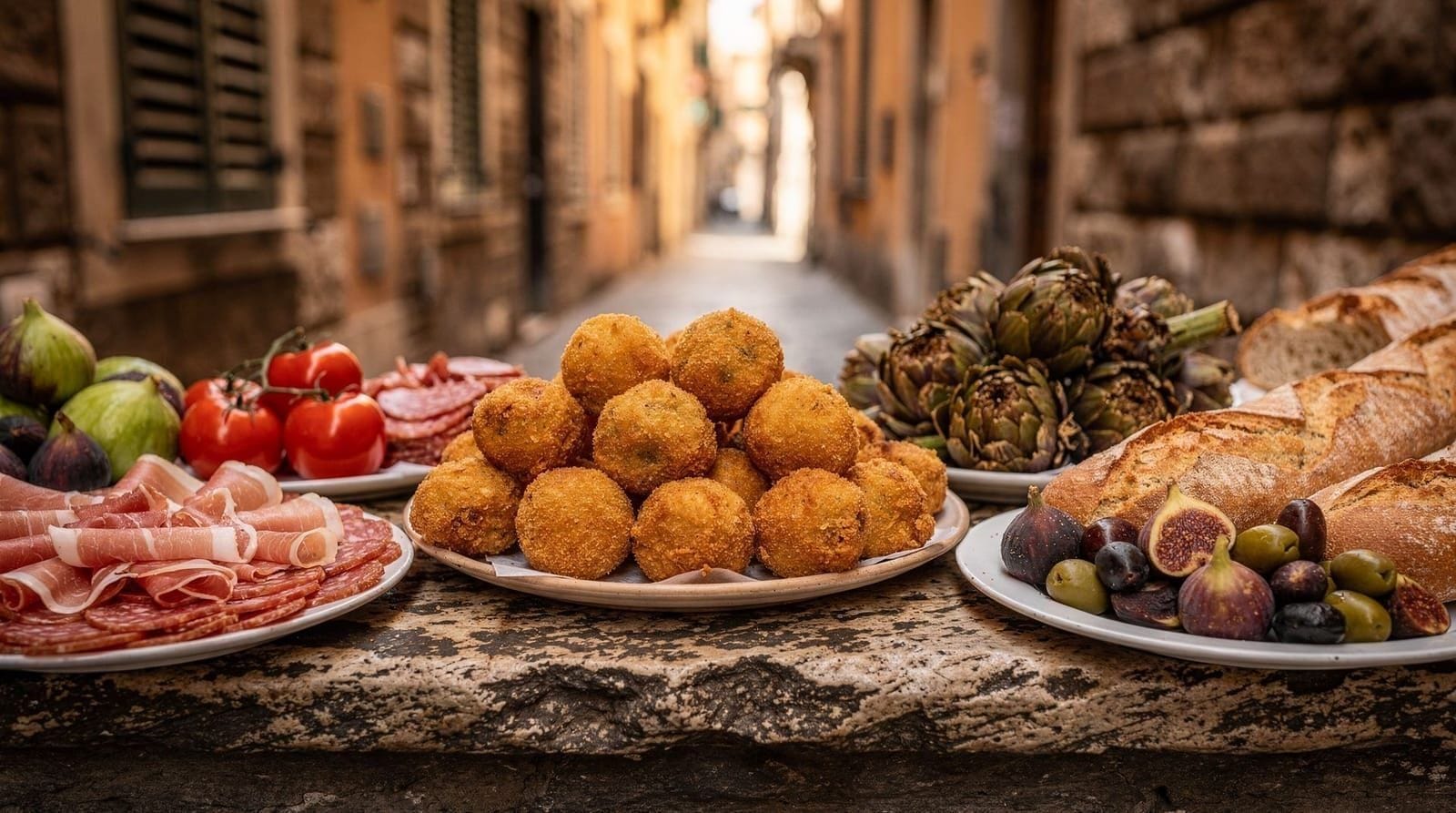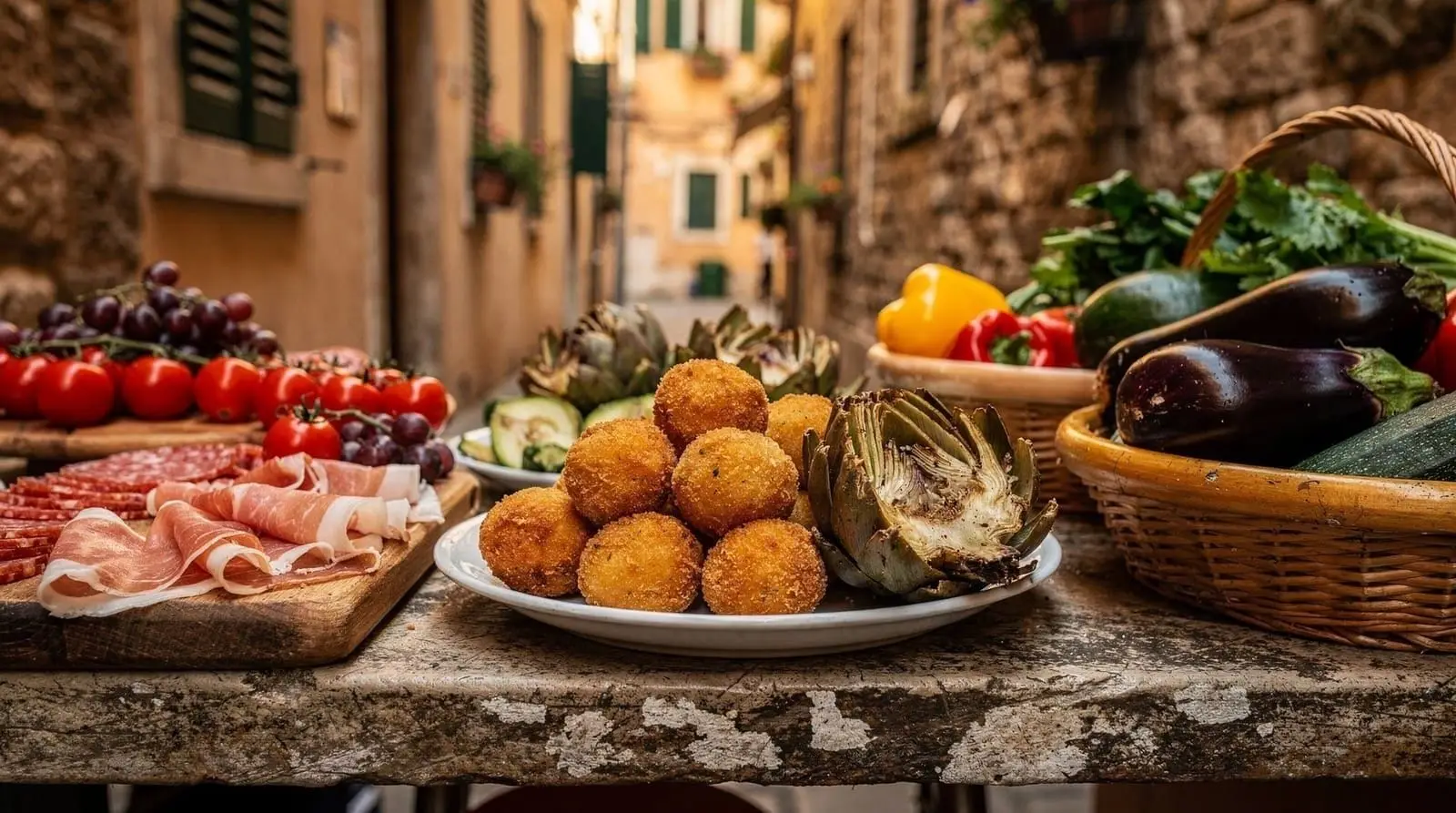
Rome food tours compared: which one is worth it?
Trastevere: Food and Drink Tour
Which Rome food tour is the best value?
The Trastevere 20-tasting tours (3–4 hours, €65–85/person) consistently deliver the most food per euro. They cover multiple stops, include a sit-down pasta or antipasto course and wine pairings, and use guides who know where the real spots are. Tours marketed as 'market experiences' or priced under €45 typically deliver very little actual food and are not worth booking.
The food tour problem in Rome
Rome has more food tours listed on booking platforms than almost any other European city. The range in quality is enormous. Some are genuinely among the best organised food experiences in Italy. Others are premium-priced walking tours where the “tastings” are three squares of cheese and a cracker.
This guide compares the main tour formats honestly — what you actually get, what the money buys, and which categories to skip.
| Best value | Trastevere 20-tasting evening tour, €65–85 |
| Group size to look for | Under 15, ideally 8–12 |
| Avoid | ”Highlights” tours with food as a minor add-on, under €55 |
| Best season | Spring (artichokes) and autumn (produce, fewer crowds) |
| Dietary needs | Notify at booking, not on arrival |
The tour categories: what’s on offer
Category 1: Multi-stop Trastevere tasting tours
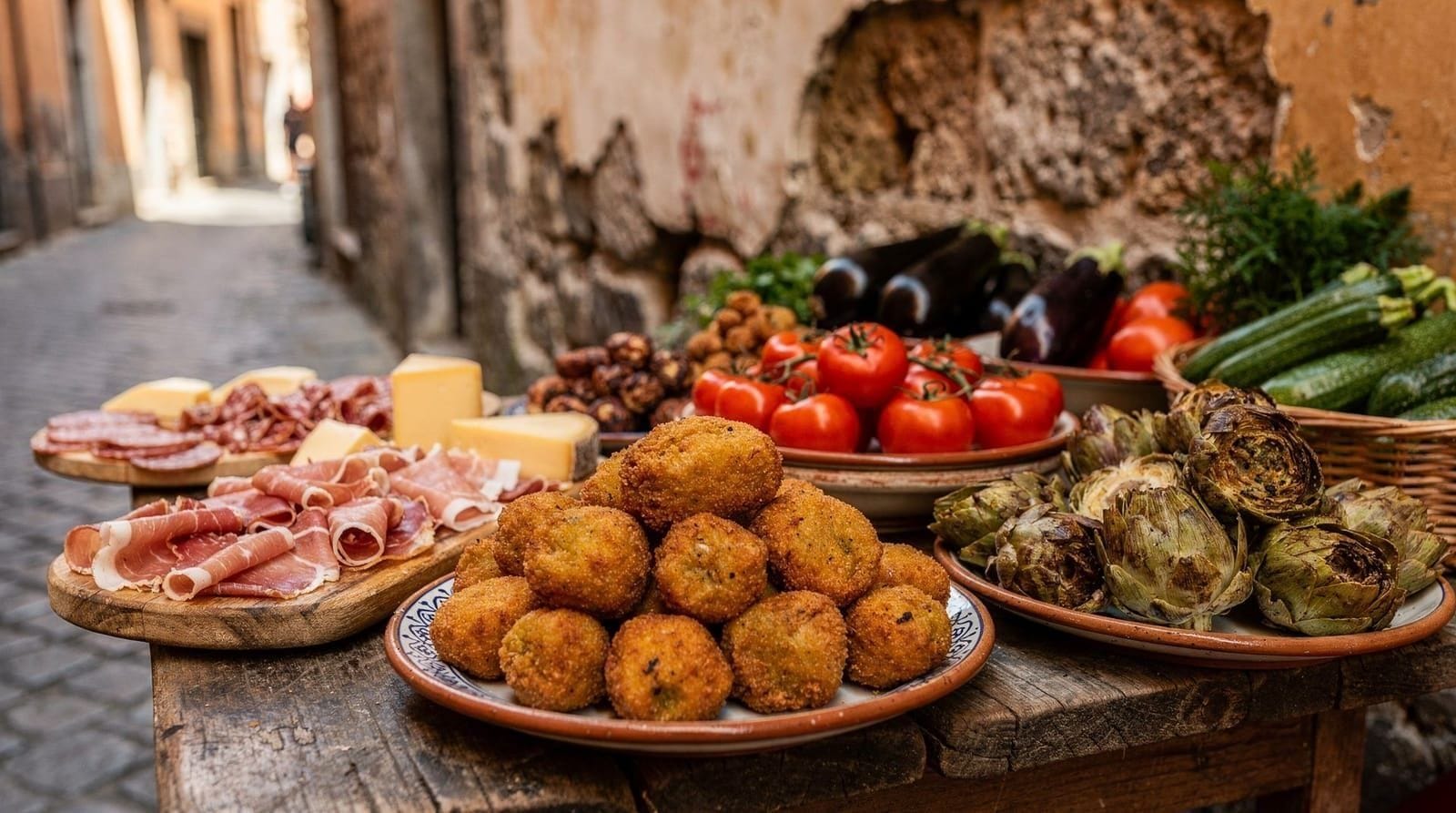
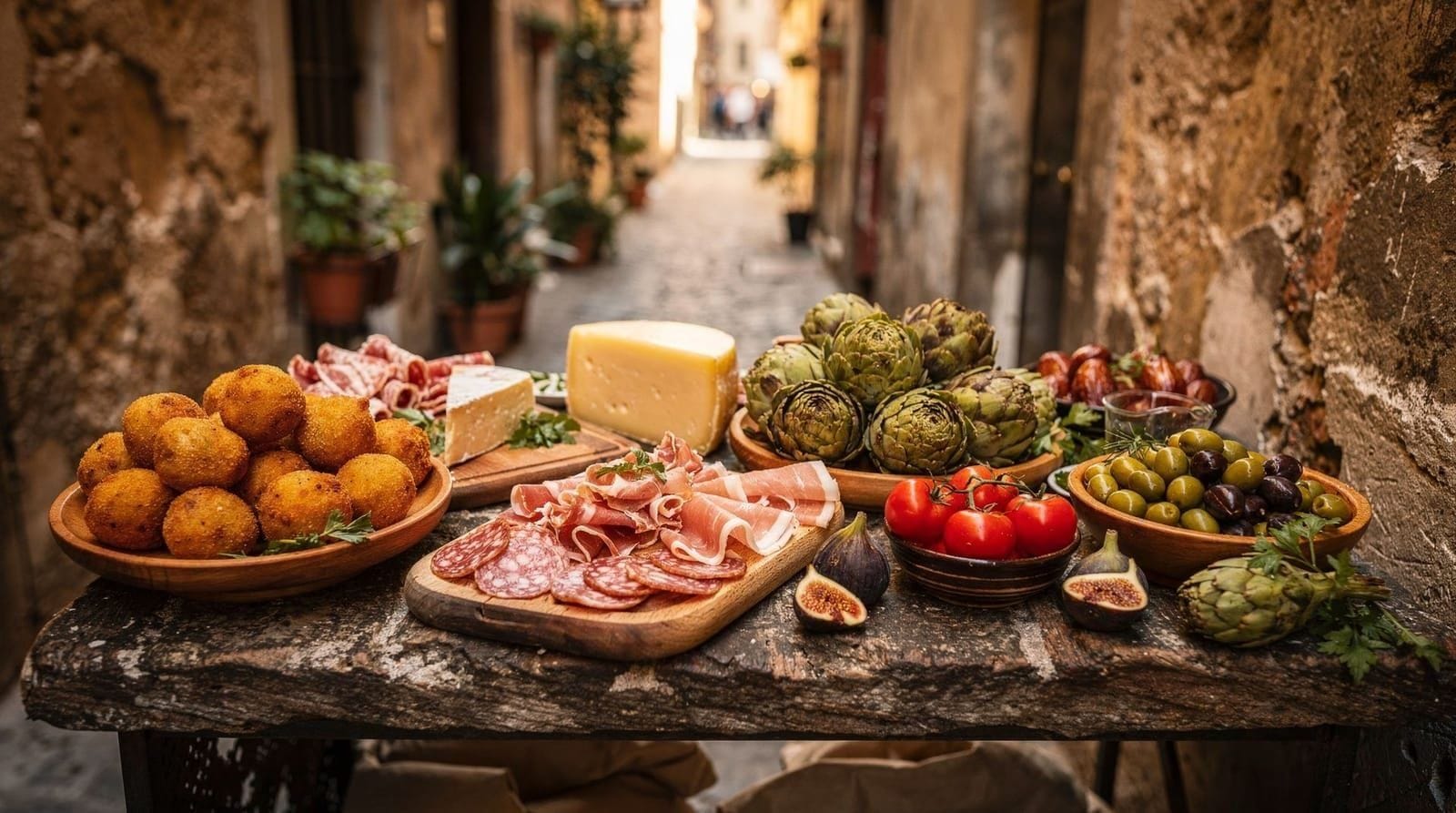
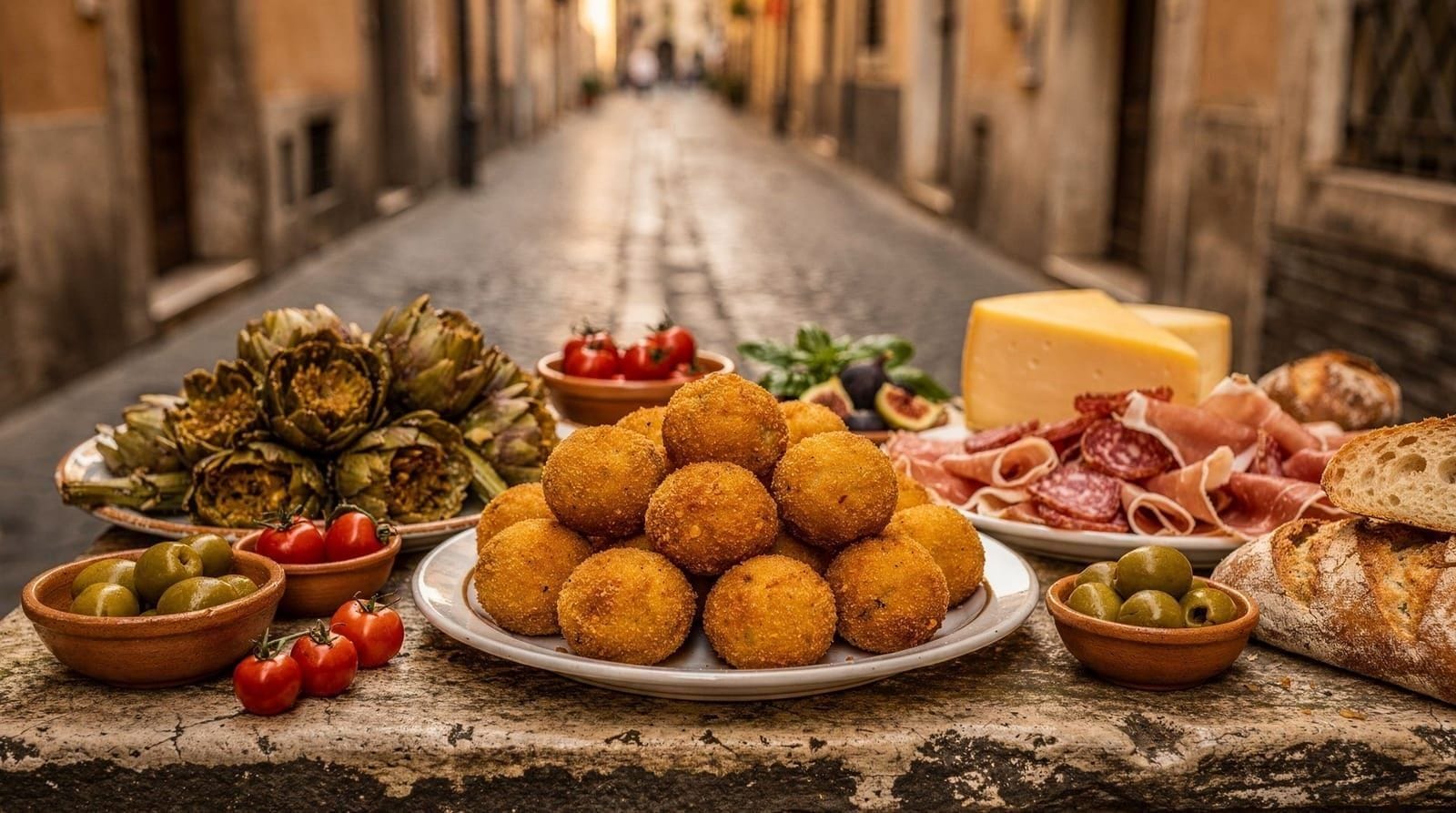
The most common and, at the top end, the most consistently good format. These tours take groups of 8–15 people through Trastevere over 3–4 hours, stopping at multiple venues for tastings that include Roman pasta, supplì, local cheeses, cured meats, wine and gelato. The best versions include a sit-down component — an actual pasta course at a trattoria, not a standing nibble.
What to look for: 15+ tastings explicitly listed in the tour description. Maximum group size under 15. Verified ratings of 4.8+. Clear mention of wine included (not just “optional wine purchase”). A sit-down element rather than all standing tastings.
What to avoid: Tours that list “many tastings” without specifying how many. Large groups (20+). “Highlights” tours that include Trastevere as one stop among six.
Price range: €65–90/person for 3–4 hours. This replaces the cost of a full trattoria dinner plus market snacks.
The Trastevere food and drink tour runs 3–3.5 hours with local guide commentary, covering wine stops, Roman street food and classic neighbourhood spots. Well-organised with verified high ratings.Category 2: Twilight and evening food tours
The same format as category 1 but timed for the late afternoon and evening — typically departing around 17:00–18:00 and running through dinner hour. The advantage is timing: Trastevere’s atmosphere peaks after the market crowds leave and the evening light hits the stone buildings. The disadvantage is that some venues are busier and less accessible for groups.
The evening format also suits visitors who want to see the neighbourhood at its best. A 4-hour twilight tour that ends at 21:00 is a complete evening’s entertainment, not just a meal supplement.
The twilight Trastevere food tour runs 4 hours with evening timing, covering Roman food across multiple stops as the neighbourhood transitions from afternoon market to evening aperitivo. The best option for atmosphere and pacing.Category 3: Secret or off-the-beaten-path tours
A subset of Trastevere tours that emphasise lesser-known spots — side-street trattorias without English signage, neighbourhood vendors that don’t appear on maps, wine bars that serve regular customers, not tourists. These tours require a guide with genuine local knowledge, not just someone following a laminated route card.
The meaningful distinction is whether the stops are actually off the standard tourist map or just rebranded as such. Check reviews for specifics — “the guide took us to a place I could never have found on my own” versus “we went to three spots I’d already seen in every article.”
The Trastevere secret food tour focuses on the neighbourhood’s lesser-known stops — spots that don’t market themselves to tourists and that require local knowledge to access. Rated consistently well for the quality of the actual spots visited.Category 4: Campo de’ Fiori and street food tours
Tours that combine Trastevere with Campo de’ Fiori, the morning market and street food. This format makes geographic sense — the two areas are walkable and cover different traditions.
The honest caveat: Campo de’ Fiori itself is now 60–70% tourist trinket market in the mornings, with declining produce quality. Tours that spend significant time here explaining the market’s history are padding around what’s left of a real market. Good tours use Campo de’ Fiori as a brief stop for context, not the centrepiece.
Tours combining Trastevere with Campo de’ Fiori street food can work well as evening options when the market stalls are closed and the neighbourhood’s restaurant life takes over.
Category 5: Market-focused tours
These tours are centered on visiting a food market with a guide who explains the produce, artisans and regional food traditions. They appeal to food-interested visitors who want context rather than volume of tasting.
The Rome-specific problem: the main tourist-accessible market at Campo de’ Fiori is no longer primarily a food market (see above). Mercato di Testaccio is the real food market and is navigable independently without a guide. Porta Portese is a flea market, not a food market.
A market tour that takes you through Testaccio with a guide who knows the vendors personally can be excellent. One that takes you to Campo de’ Fiori with a lecture about olive oil is not.
Category 6: “Highlights” tours that include food as a component
Some walking tours of Rome’s highlights (Trevi, Navona, Pantheon) are packaged with a food component — a gelato stop, a market visit, a wine tasting at a pre-arranged venue. These are generally not worth booking as food experiences. The food element is incidental; the tour is a city walking tour. If you want to see Rome’s sights and also eat, book these separately.
The cooking class alternative
If you want to eat at the end but also want the skill transfer, a cooking class is a different category entirely. See the Rome cooking classes guide for a detailed comparison of the main options.
The relevant distinction: a good cooking class (3–4 hours, professional kitchen, real technique instruction) costs €65–90/person and produces a full meal you’ve cooked. A food tour of equivalent price produces a full meal you’ve eaten at multiple venues. Both are valid; they satisfy different objectives.
What the ratings actually tell you
GetYourGuide’s rating system is useful with caveats. An experience with 500+ reviews and a 4.8+ average is reliably good. Experiences with fewer than 100 reviews and ratings between 4.3–4.6 are riskier — the sample is too small to be fully meaningful, and the lower rating may reflect operational issues that persist.
For food tours specifically, read the text of the reviews more than the star rating. Look for:
- Comments on how much food was actually served (“we were genuinely full by the end” is a positive signal)
- Comments on the specific venues visited (“the guide took us to a tiny place you’d never find” versus “we went to the usual tourist spots”)
- Comments on group size as it actually was (“there were 18 of us which felt too many”)
- Comments on the guide’s actual knowledge versus scripted delivery
Ignore reviews that focus primarily on the guide’s personality rather than the tour’s substance. A charming guide is good, but a charming guide who takes you to tourist-trap restaurants is still a bad food tour.
The honest verdict by format
| Format | Worth booking? | Best for | Price range |
|---|---|---|---|
| Trastevere 20-tasting evening | Yes, strongly | First-time Rome visitors | €65–85 |
| Twilight/evening format | Yes | Atmosphere + food combined | €70–90 |
| Secret/off-map tours | Yes, if reviews are specific | Repeat visitors | €70–85 |
| Campo + street food | Yes, for evenings | Grazing over a neighbourhood | €55–75 |
| Market-focused | Only if Testaccio | Food-interested visitors | €50–70 |
| Highlights tour with food | No | Not a real food experience | €35–55 |
| Cooking class | Different category | Skill + meal combined | €65–90 |
Tipping the guide
Tipping is not built into most Rome food tour prices and is not strictly obligatory, but a genuinely good guide who has taken the group to real neighbourhood spots and answered questions knowledgeably is customarily tipped €5–10 per person for a group tour, or more generously for a private one. This is separate from any gratuity already included at the restaurants themselves. Cash is preferred; carry small notes, since guides on walking-based tours rarely have a card reader on hand.
Avoiding the common booking mistakes
Booking on price alone. The €35 “food tour” that promises a tasting experience is almost always a walking tour with two small bites. The €75 tour that specifies 20+ tastings is a meal. These are not comparable products at different price points — they’re different products.
Not checking the departure time. Morning food tours make sense for market visits and breakfast items. Evening food tours (17:00–21:00) make sense for restaurant-focused experiences. Booking a restaurant-focused tour at 10:00 because it was the only slot available is suboptimal — the restaurants aren’t running at full capacity and the energy is wrong.
Choosing large-group tours to save money. Tours with 20+ participants save €5–10 off the per-person price but lose access to the smaller, better venues. Smaller groups (8–12) go places larger groups can’t.
Not reading the cancellation policy. Rome weather can surprise. A food tour in rain is substantially less comfortable than in dry weather. Check whether free cancellation extends to the day before — the better operators offer this.
What makes a guide worth following
The quality of a Rome food tour depends almost entirely on the guide. The tour format — the neighbourhood, the number of stops, the timing — is a framework. The guide fills it with actual knowledge (or doesn’t).
Signs of a genuinely knowledgeable guide:
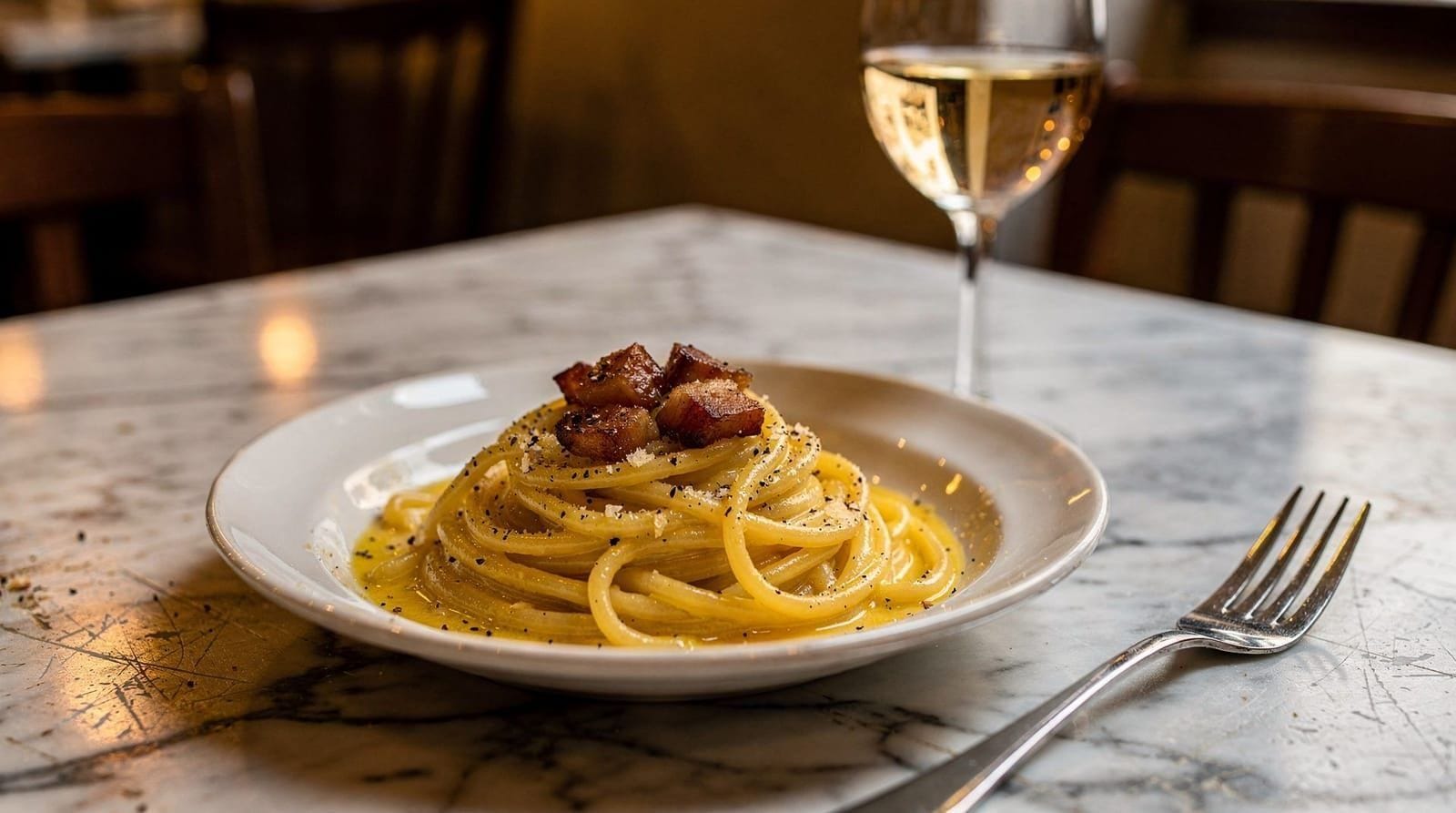
They can answer questions about the food. Not just “this is cacio e pepe” but why the emulsion works, why guanciale instead of pancetta, why the specific pasta shape matters for each sauce. A guide with real food knowledge handles questions differently from one working off a script.
The stops are places they have a genuine relationship with. Not just pre-arranged tourist stops, but vendors or trattoria owners who know them personally — you can usually tell by how the guide is greeted and whether the interaction is warm or transactional.
They navigate the group efficiently. In narrow Trastevere streets with a group of 12, getting from one stop to the next without losing people or creating a pedestrian obstruction is a skill. Experienced guides do this invisibly.
They adjust. If a vendor is unusually busy, or a trattoria is closed unexpectedly, a good guide has alternatives. Bad guides don’t.
You can’t assess this before booking, which is why text reviews matter more than star ratings for food tours. Look specifically for reviews that describe specific moments — what the guide said about a particular dish, how they handled a substitution, what question they answered. Abstract praise (“great guide, very friendly”) tells you nothing useful.
The seasonal dimension
Rome’s food tours are affected by season in ways that aren’t always obvious.
Spring (March to May): Peak artichoke season. Trastevere and the Jewish Ghetto food stops are at their best — carciofi alla giudia at Nonna Betta or Sora Margherita, carciofi alla romana at market stalls. Tours in April have access to the full spring vegetable selection. Busiest tourist season; book further ahead.
Summer (June to August): Heat makes long food tours uncomfortable. Evening tours (departing 17:30 or later) are substantially better than afternoon departures. The food quality at established spots doesn’t change, but the pacing matters more. July and August are peak tourist season — groups are largest, venues most crowded.
Autumn (September to October): The best season overall. Weather is ideal, tourists are slightly fewer, and autumn produces excellent produce: porcini mushrooms (sometimes featured at market stops), late-season tomatoes, new wine. October’s market availability makes Testaccio-focused tours particularly good.
Winter (November to February): Quieter tours, smaller groups and lower prices. Some outdoor stops are less pleasant. Artichoke season starts in late February — if you’re visiting in late winter, check whether the tour you’re booking has access to fresh artichokes.
Food tours and dietary restrictions
Most Rome food tours are built around a set tasting sequence that assumes no restrictions — plenty of pork (guanciale, prosciutto), wheat, dairy and egg. This does not mean gluten-free, vegetarian or vegan visitors should skip food tours, but it does mean the booking step matters more than usual. Tell the operator your restriction when you book, not when you arrive at the first stop — a guide who knows in advance can plan substitutions into the route; one who finds out mid-tour is improvising in front of the group. The better operators explicitly note dietary accommodation in their tour description; treat its absence as a signal to message the operator directly before booking. For the fuller picture of navigating Rome’s food culture with a dietary restriction, see the gluten-free and dietary needs guide.
Guided vs self-guided: the honest time and cost comparison
| Approach | Cost | Time investment | Best for |
|---|---|---|---|
| Guided food tour | €65–90/person | 3–4 hours, zero research | First-time visitors, no time to research restaurants |
| Cooking class | €65–90/person | 3–4 hours, produces a skill | Visitors who want to cook Roman food at home |
| Self-guided with this site’s guides | €30–50/person (meal cost only) | Requires 1–2 hours of pre-trip reading | Repeat visitors, confident navigating menus independently |
| Mixed approach | Varies | One guided tour + independent meals | Most visitors — use the tour as orientation, then explore alone |
The mixed approach is what most experienced visitors settle on: book one guided tour early in the trip for orientation, then use what you learned to choose independently for the rest of the stay.
Where food tours fit in a broader Rome food strategy
A guided food tour is best used as an orientation — it shows you what the neighbourhood’s best looks like and gives you reference points for eating independently afterward. After a good Trastevere food tour, you know which kind of spot to look for when choosing a restaurant on your own.
The Trastevere food guide and Testaccio food guide work as independent resources for visitors who prefer to navigate without a guide. The Jewish Ghetto food guide covers the Roman-Jewish tradition, which is slightly less well served by group food tours.
For understanding what you’re eating before you go, the five Roman pastas guide and the carbonara and cacio e pepe guide are the right preparation. The Rome street food guide covers the independent options for daytime eating without a guided tour.
Frequently asked questions about Rome food tours compared: which one is worth it?
How much should I expect to pay for a good food tour in Rome?
How many people are typically on a Rome food tour?
What neighbourhoods do Rome food tours cover?
What is the difference between a food tour and a cooking class?
Are Rome food tours good value compared to eating independently?
Do I need to eat anything before a food tour?
Are there food tours suitable for vegetarians?
Can I do a food tour if I have coeliac disease or a gluten allergy?
Should I book a food tour or explore Rome's food independently?
Top experiences
Bookable activities with verified prices and instant confirmation on GetYourGuide.