Rome's best wine bars and enoteche: where to drink well
Rome: Gourmet Food and Wine Tasting Tour in Trastevere
Where are the best wine bars in Rome?
For local Lazio wines in a relaxed setting, Il Sorì (Trastevere), Enoteca Buccone (Prati), and Trimani (Nomentano) are consistently reliable. For natural wine, Trastevere and Monti have the highest concentration of interesting bottles. Avoid the wine bars in tourist corridors around Piazza Navona and the Pantheon — prices are inflated and the selection is generic.
Wine in Rome is a local affair — if you know where to look
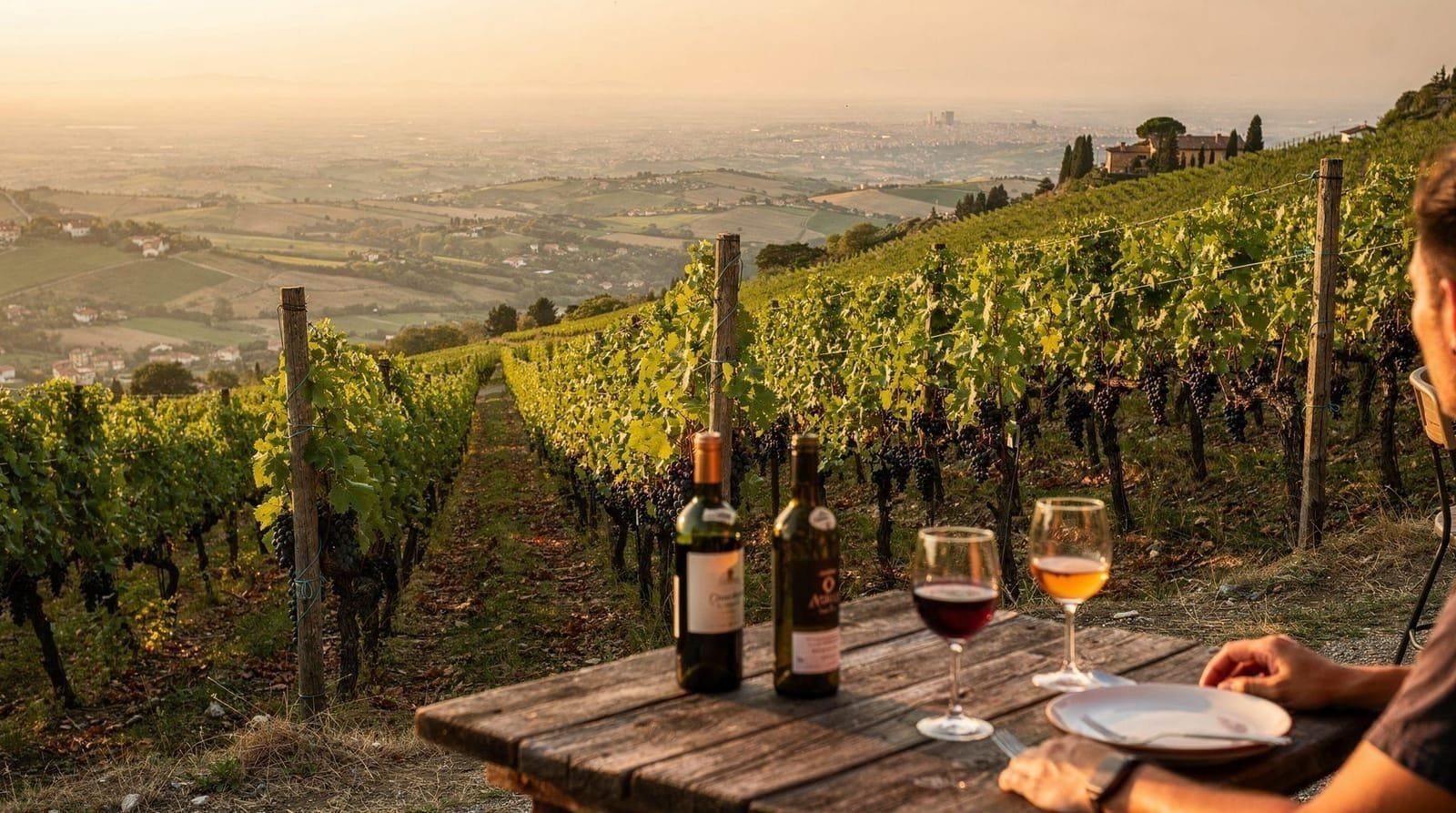
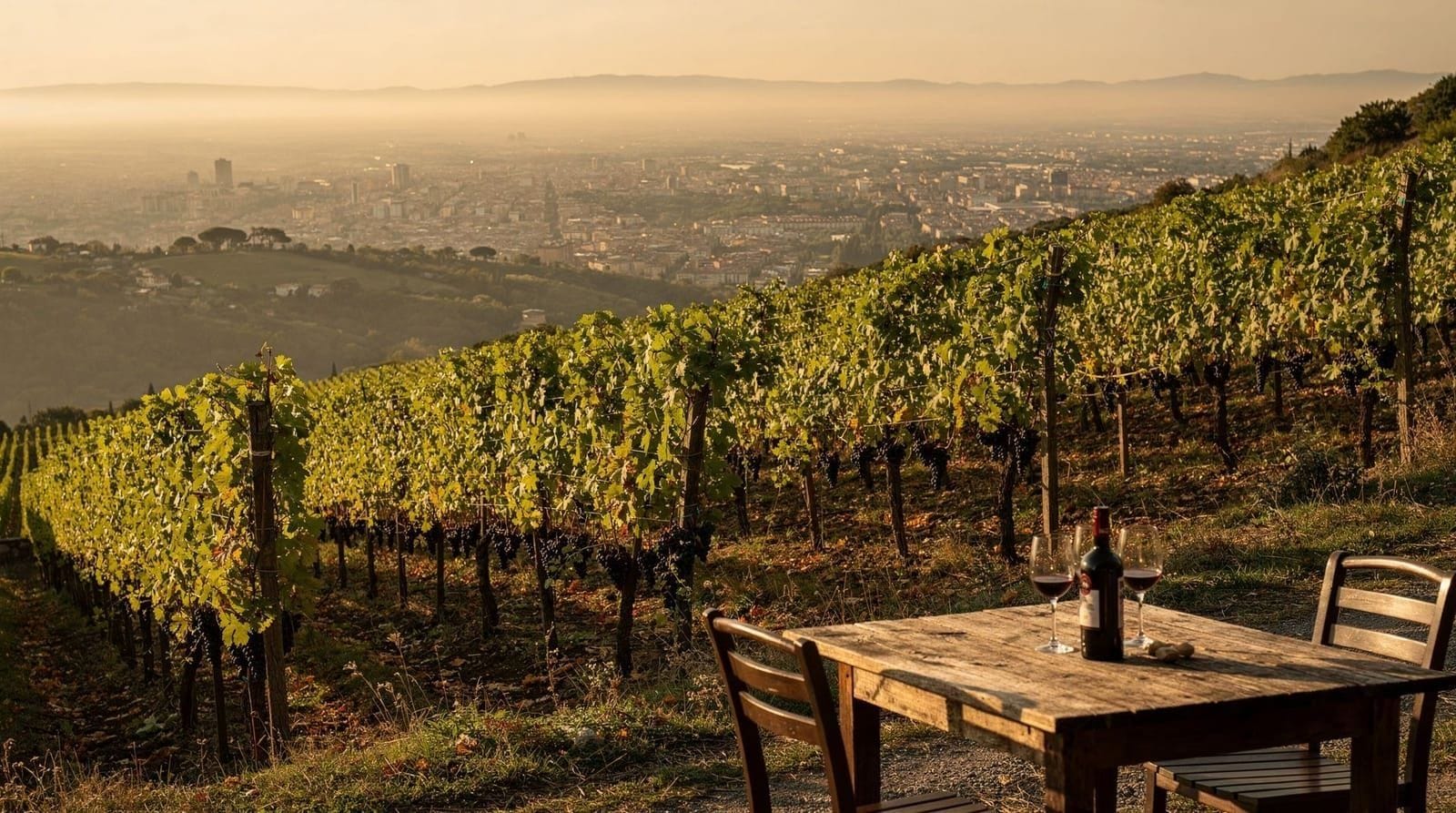
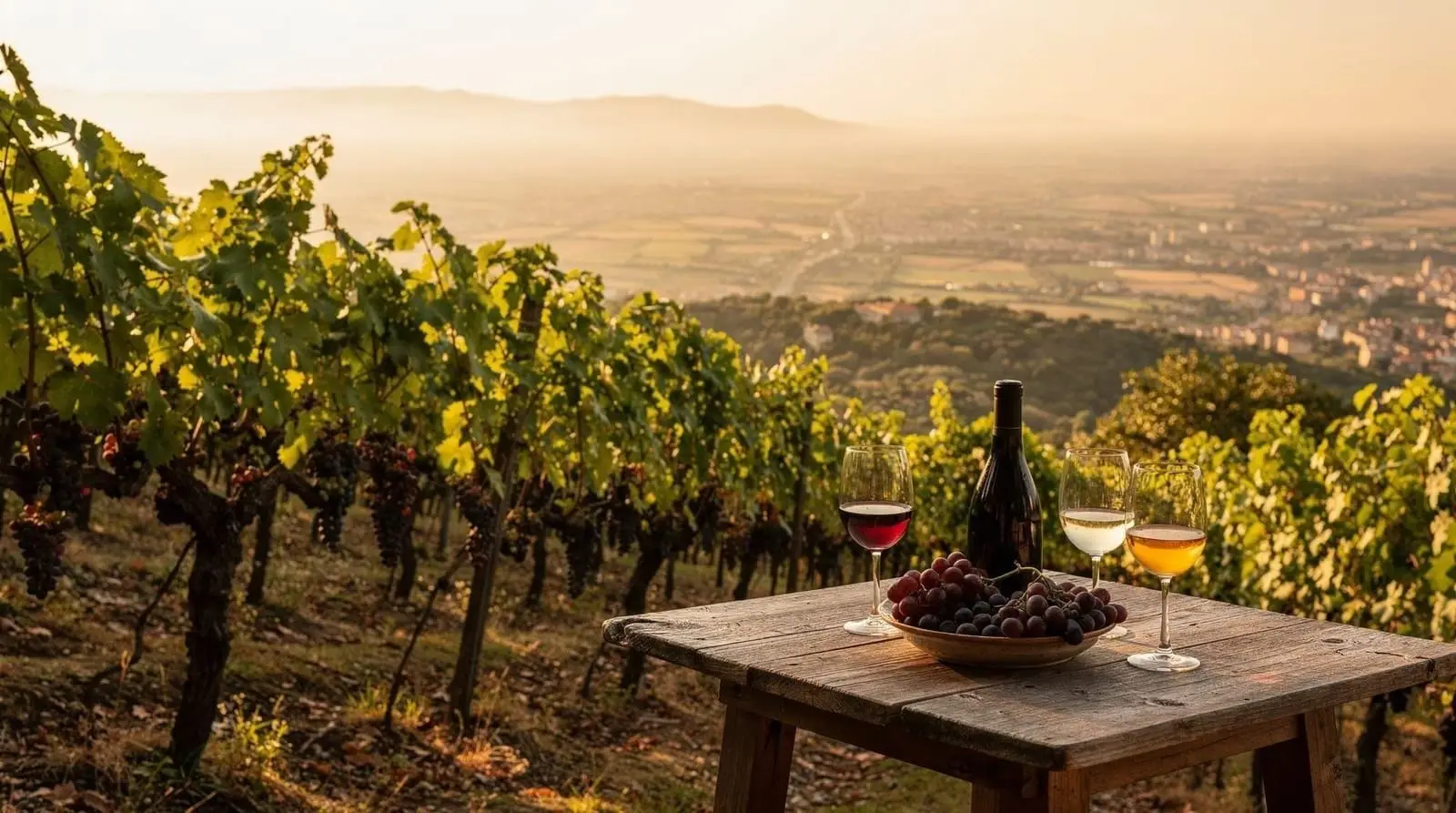
Rome’s wine scene is not Tuscany’s, and it is not trying to be. The city’s enoteche operate with a different logic: they are neighbourhood institutions, places where locals drink Cesanese on a Tuesday and argue about football, where the woman behind the counter knows the producer personally and will tell you if this year’s Frascati is worth the money.
This guide covers real wine bars in real neighbourhoods — not the tourist-corridor operations with a bottle of Chianti propped in the window and a markup that would embarrass a London hotel. If you want honest wine at honest prices, you need to walk five minutes from the landmarks.
| Where | Trastevere, Monti, Prati, Testaccio, Monteverde, Pigneto |
| Cost | 3–4 € carafe pour; 12–18 € considered glass; bottles 20–50 € at a wine bar |
| Best time | Aperitivo hour, 18:00–20:00 |
| Avoid | Wine bars within a few blocks of Piazza Navona, Pantheon and Campo de’ Fiori |
| Coperto | 1.50–3 € per person at most sit-down wine bars, standard and legitimate |
Trastevere: the obvious choice, still mostly worth it
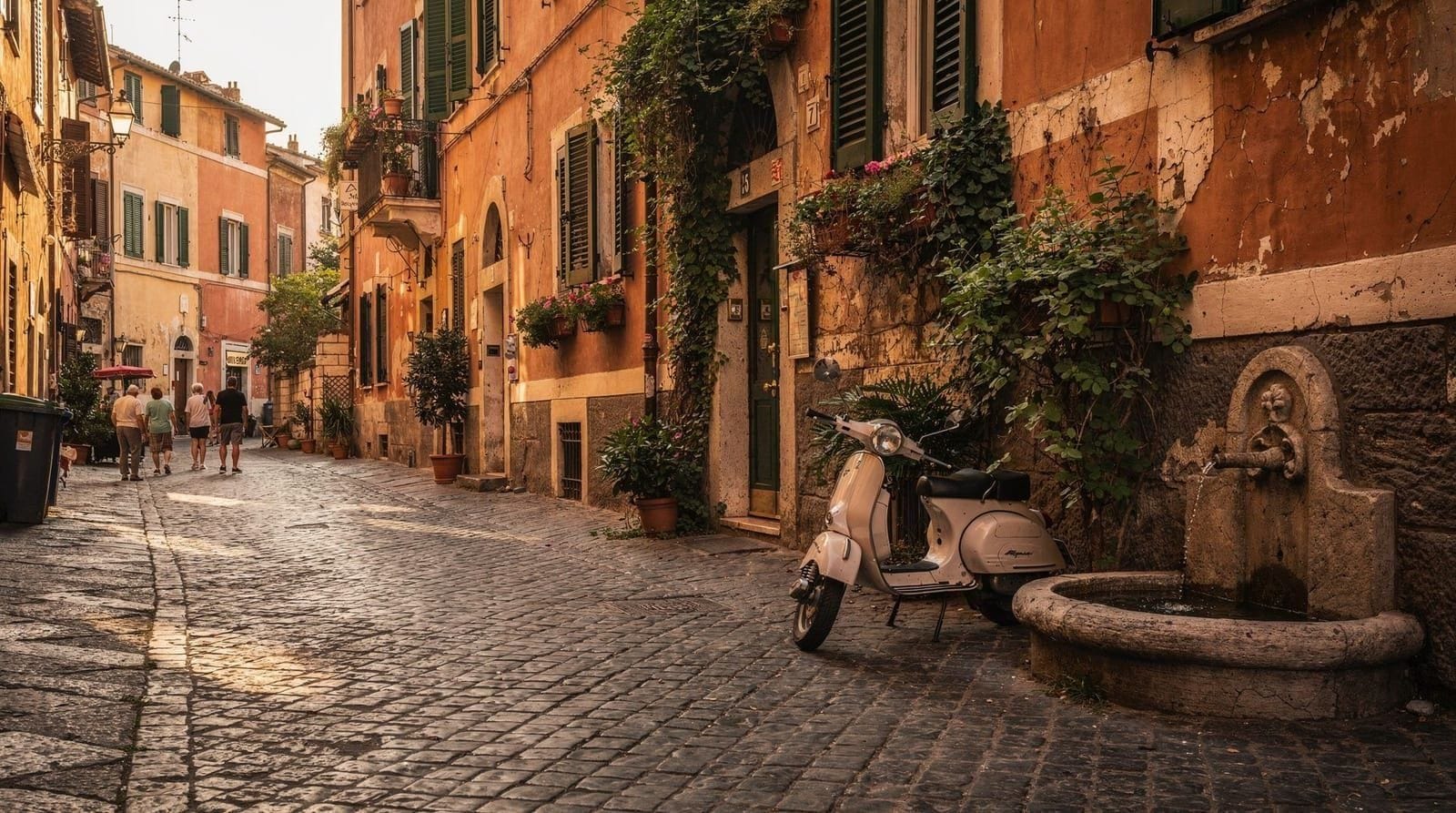
Trastevere has been Rome’s wine-drinking neighbourhood for as long as anyone can remember, and it retains genuine enoteche alongside the tourist restaurants that have colonised its main streets. The trick is getting off the Via della Lungaretta corridor.
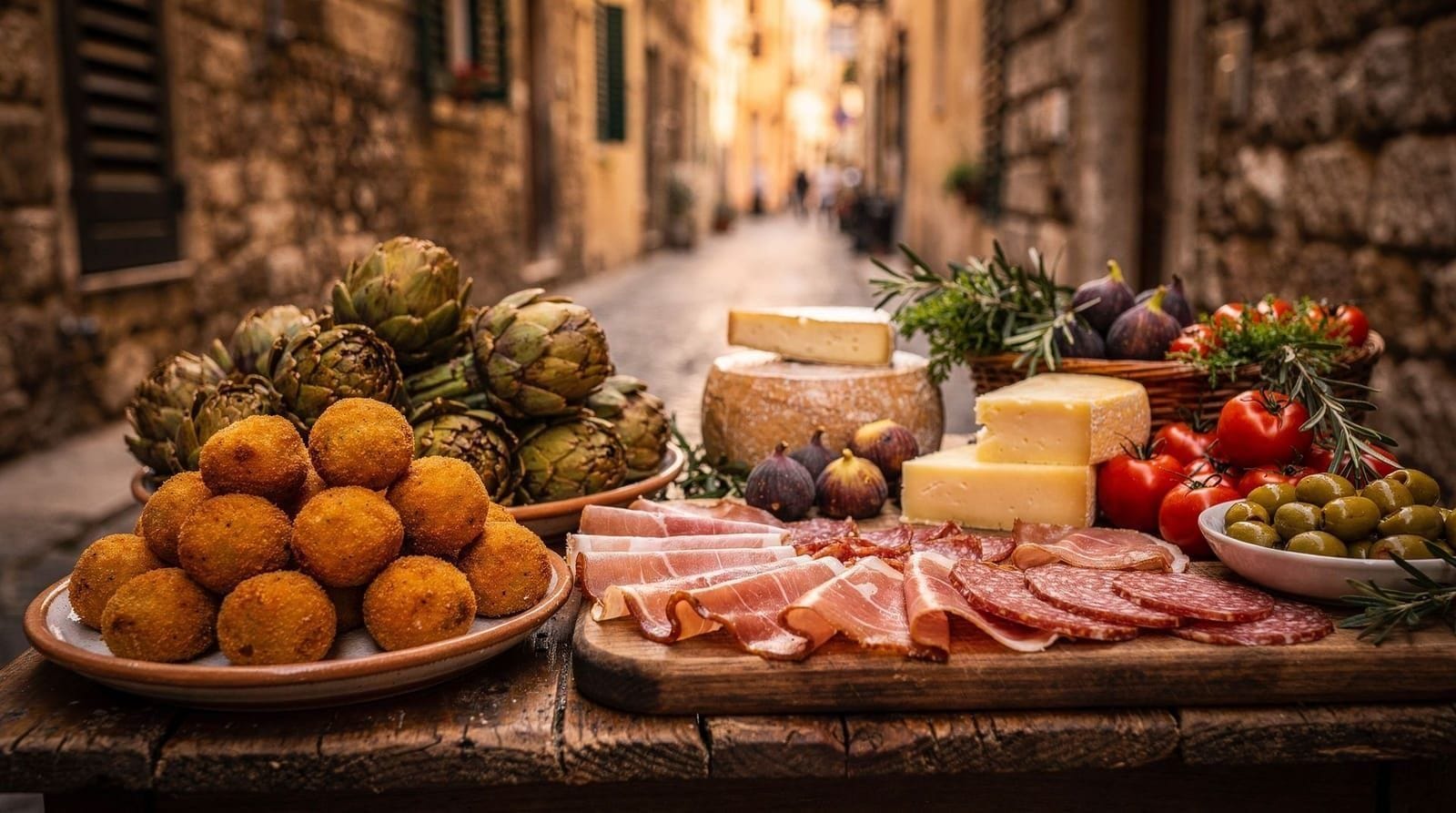
Il Sorì (Via del Moro, Trastevere) is a small natural wine bar run by young owners who know their producers. The list changes frequently, focuses on Italian small producers and is one of the few places in Trastevere where you will find Cesanese del Piglio alongside obscure Friulian whites. Food is simple — good charcuterie and cheese boards. Gets busy after 20:00 on weekends; arrive early.
Spirito DiVino (Via dei Genovesi): A wine bar incorporated into a space above ancient Roman ruins — they have excavations beneath the restaurant, visible through glass in the floor. The wine list is serious, focusing on Lazio and central Italy with a few international additions. Worth it for the setting even if the food menu is slightly overpriced.
Enoteca Ferrara (Piazza Trilussa, Trastevere): Large, conveniently located near the Tiber, with a broad Lazio-heavy wine list and solid kitchen. Can feel tourist-adjacent given the location, but the actual wine selection is genuine and the staff know it. Good for a longer evening.
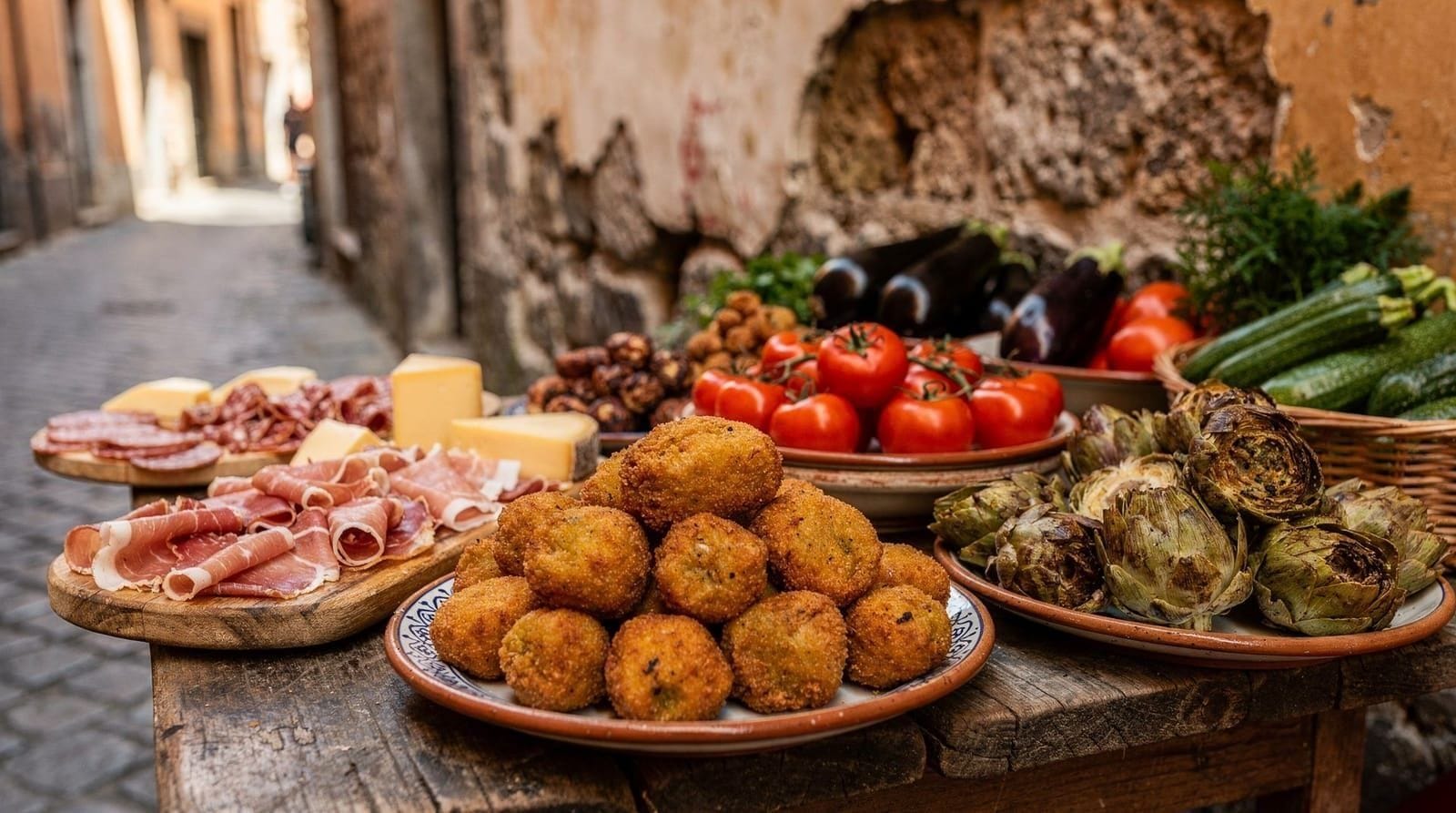
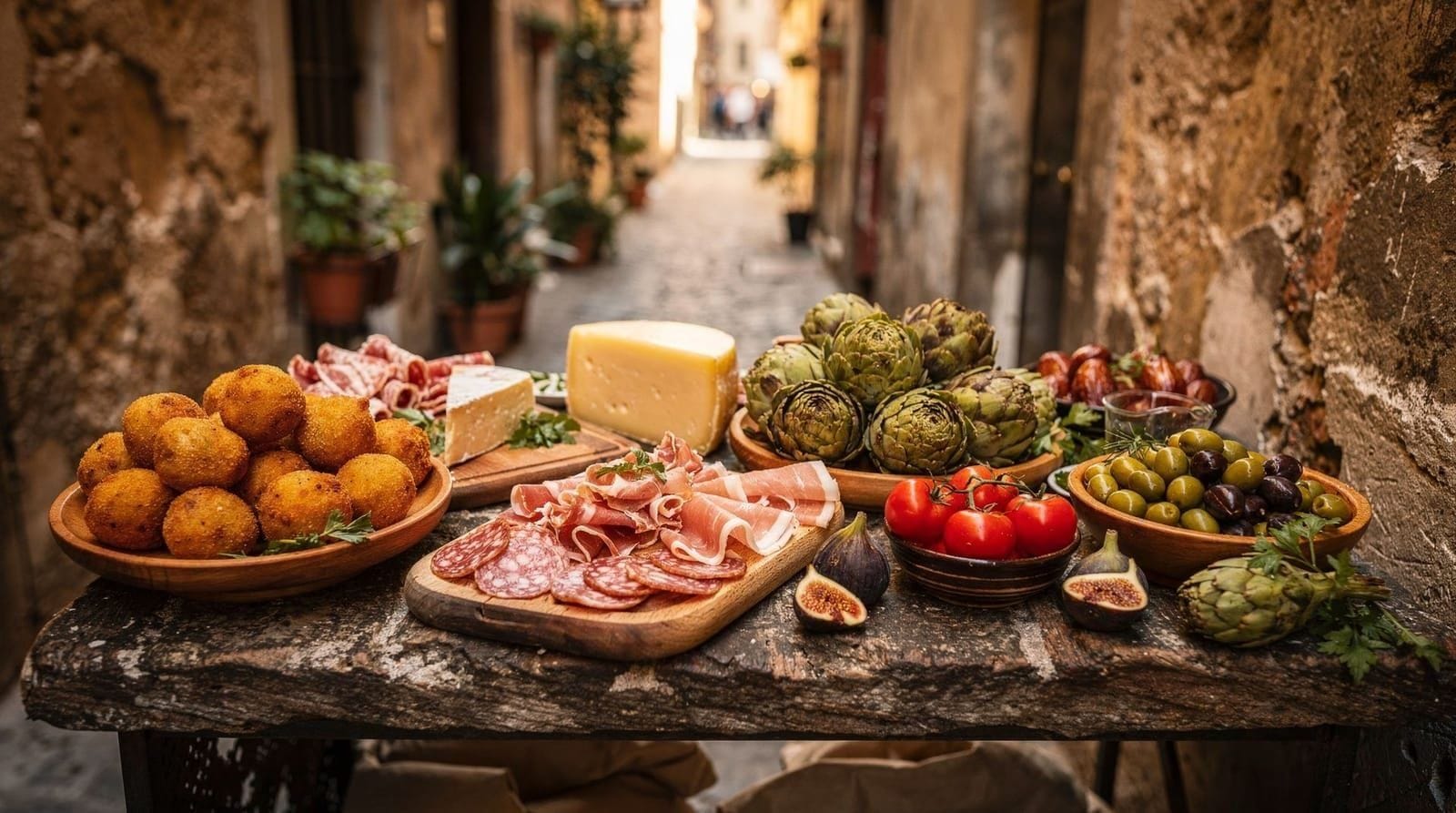
For a structured way to explore Trastevere’s food and wine scene, the walking tours that cover the neighbourhood are worth the money — guides know which doors lead to the honest spots.
Gourmet food and wine tasting tour in Trastevere — a guided way to find the neighbourhood’s best producers and pairings without trial and error.Monti: Rome’s best neighbourhood for natural wine
Monti is the neighbourhood between the Colosseum and Termini that gentrified over the past 15 years while somehow remaining more Italian than Trastevere. The wine bar concentration is high and the quality varies; the following are consistently reliable.
Ai Tre Scalini (Via Panisperna): An old-school Monti institution — rough tables, wine by the carafe, good porchetta sandwiches. Not a refined enoteca in the modern sense but an honest wine bar where you will drink local red without pretension. Crowded in the evening; go early or be patient.
Vino Roma (Via in Selci): This is primarily a wine school and tasting room run by Hande Leimer, who organises structured wine-by-the-glass experiences focused on Italian appellations. Not a traditional bar but an excellent educational option if you want to understand Lazio and Italian wine systematically. Booking required.
Bacchanal Monti (Via dei Serpenti): A newer arrival with a natural wine focus and an informed staff. Smaller bottles from independent producers, mostly Italian but with French and Spanish additions. The food menu is minimal — cheese, charcuterie, a dish or two. Evening-only.
Prati: serious wine near the Vatican
Prati is the orderly residential neighbourhood west of the Vatican, home to a different demographic than Trastevere — more Roman families, fewer backpackers. The wine bars here reflect that: quieter, more formal in the old sense, with older clientele.
Enoteca Buccone (Via di Ripetta, near Piazza del Popolo, technically on the edge of Prati’s zone): One of Rome’s classic wine shops, operating from a historic premises with bottles stacked floor to ceiling. The selection covers all of Italy with good Lazio depth. They sell by the bottle primarily, but you can drink on the premises. The staff are knowledgeable and generally helpful in English.
Sciascia Caffè (Via Fabio Massimo, Prati): This is primarily a coffee institution but their late-afternoon wine service is a neighbourhood favourite — a glass of white or red from a modest but carefully chosen list, served with a small snack. Very Roman in the best sense.
For a broader introduction to the Prati neighbourhood and its daily life, see our Prati neighbourhood guide.
Testaccio: where Romans drink seriously
Testaccio was the working-class slaughterhouse district of Rome, now a food-obsessed neighbourhood with excellent local restaurants and some of Rome’s most honest wine bars. The tourists who find it are usually food-motivated; the wine bars benefit.
Roscioli Salumeria con Cucina (Via dei Giubbonari, just outside Testaccio, near Campo de’ Fiori): Technically not Testaccio, but Roscioli’s wine list is exceptional — one of the best in Rome for Italian small producers, with appropriate depth in Lazio, Piedmont and Campania. The salumeria/restaurant hybrid is expensive but the wine-focused counter service at aperitivo hour is more accessible. Reserve ahead for dinner.
Flavio al Velavevodetto (Testaccio): A trattoria rather than a wine bar strictly, but their house wine selection — always local Lazio — is better than most dedicated wine bars in tourist areas. Roman cucina, decent Cesanese, honest prices. See our Testaccio neighbourhood guide and Testaccio food guide.
Centro Storico: navigating the tourist zone
The historic centre is not hopeless for wine — it just requires more navigation.
Borghese Enoteca (Via della Croce, near the Spanish Steps): A refined wine shop with bottles available to drink on premises. Strong Piedmont and Tuscany selection, reasonable Lazio depth. The setting is calm and professional — a genuine escape from the crowds a few blocks away.
Rimessa Roscioli (Via del Conservatorio, near Campo de’ Fiori): A wine bar run by the Roscioli group with a focus on natural and biodynamic producers. Tastings, pairings, a full bar. More concept-driven than neighbourhood-bar in feel, but the wines are serious.
Enoteca al Parlamento Achilli (Via dei Prefetti): One of Rome’s oldest wine shops, dating from 1890, with a cellar that stocks some remarkable older vintages. The selection is broad and the prices are what you would expect from a heritage establishment near the Parliament. Worth visiting even if you only browse.
Rome food tour in Trastevere with 20+ tastings and free-flowing wine — an efficient way to encounter local producers across multiple stops in one evening.What to order: a practical guide
Lazio whites to request: Frascati Superiore DOCG, Marino DOC, Bellone (look for Casale del Giglio’s version), Grechetto di Todi. If they have Winemaker Sergio Mottura’s Civitella d’Agliano white, it is worth ordering.
Lazio reds: Cesanese del Piglio DOCG is the region’s best red — Coletti Conti and Casale della Ioria are the benchmark producers. Nero Buono di Cori is an obscure indigenous grape worth trying if you encounter it. For everyday drinking, Montepulciano d’Abruzzo is technically not Lazio but shows up everywhere and is reliable value.
Aperitivo drinks: In Rome, a Negroni (Campari, vermouth, gin) or Campari Soda is the traditional aperitivo. Aperol Spritz is everywhere but is considered a northern Italian import by Romans who have strong opinions. Wine at aperitivo is entirely acceptable — ask for a calice di bianco o rosso della casa and you will get something drinkable.
House wine and carafes: In traditional osterias and trattorie, a half-litre carafe of house wine typically costs €4–8. This is usually local Lazio wine. It is not going to be interesting but it will be food-appropriate and honest. Order it when you are at a traditional table eating pasta; order a bottle from the list when you are focused on drinking.
Pairing wine bars with a walking route
The most natural wine-bar evening in Rome involves starting in Monti at aperitivo hour (18:00), walking to the Tiber for a second glass somewhere on the embankment, then either crossing to Trastevere for dinner at an enoteca or heading south to Testaccio. This covers three of Rome’s best food-and-wine neighbourhoods in an easy walk.
For a planned evening itinerary combining wine with Rome’s illuminated streets, our Rome evening tours guide covers nighttime options in the historic centre. For food context across all neighbourhoods, see our where to eat in Rome guide.
If you want to taste wines from the Castelli Romani — Frascati, Marino — at the source rather than in a city bar, our Frascati and Castelli Romani wine guide covers that as a full day trip.
Twilight Trastevere food tour with wine tasting — four hours covering the neighbourhood’s best spots at the best time of day.Honest pricing context
Wine by the glass in Rome ranges from €3–4 for a carafe pour in a local bar to €12–18 for a considered glass in a good enoteca. A bottle at a wine bar typically runs €20–50 for something genuinely interesting; the premium for drinking in-house versus buying retail is modest at most good enoteche, which see themselves as shops as much as bars.
The tourist-area premium is real. The same bottle of Cesanese that costs €22 in an enoteca in Testaccio can appear at €45 in a wine bar in the Pantheon shadow. This is not unique to Rome — it is a universal tourist-site economics reality — but it is worth knowing before you sit down.
Coperto (cover charge) applies in most sit-down wine bars: expect €1.50–3 per person, which covers bread and the table. This is standard and legitimate.
The natural wine scene
Rome’s natural wine scene grew substantially over the 2010s and is now serious enough to warrant its own territory. Natural wine in Rome means primarily: low-sulphur or no-added-sulphur wines, minimal intervention in cellar, organic or biodynamic viticulture, and a preference for indigenous Italian varieties over international ones.
The scene is concentrated in Monti, Trastevere and — increasingly — in emerging neighbourhoods like Pigneto and Ostiense east and south of the centre. The most interesting places for natural wine that are accessible to visitors:
Osteria di Monteverde (Monteverde Vecchio, beyond Trastevere): A neighbourhood osteria that transitioned to a serious natural wine list without losing its Roman character. Worth a taxi ride.
Litro (Via Fonteiana, Monteverde): One of Rome’s original natural wine bars, open since 2013. The selection is Italian-focused with particular depth in Lazio, Emilia-Romagna and Sicily. Food is good and unpretentious.
Vivi Bistrot (Viale della Memoria, accessible from EUR): An unexpected natural wine outpost in Rome’s 1930s modernist district. Unusual address, worth knowing.
The Pigneto neighbourhood (east of the centre, accessible by tram 5/14 or bus) has a cluster of independent bars and small restaurants with natural wine focus that serve a local creative-class demographic. It is not yet tourist territory; that is part of the point.
Neighbourhood comparison at a glance
| Neighbourhood | Character | Best for | Crowd |
|---|---|---|---|
| Trastevere | Classic, some tourist overlap | A structured evening with dinner | Mixed local/visitor |
| Monti | Natural wine, informal | Casual carafe drinking, early evening | Young, mixed |
| Prati | Quiet, formal in the old sense | Serious bottle shopping, calm conversation | Local, older |
| Testaccio | Food-forward, honest | Pairing wine with a proper Roman meal | Food-motivated visitors + locals |
| Monteverde/Pigneto | Natural wine frontier | Discovering small producers, no tourist pricing | Almost entirely local |
Booking and timing in practice
Most of the neighbourhood wine bars above do not take reservations for a glass at the counter — arrive at aperitivo hour (18:00–19:00) to beat the post-20:00 crowd, or accept a short wait at the more popular spots like Il Sorì or Bacchanal Monti. If you plan to stay for a full dinner rather than a glass and a board, book ahead at Roscioli, Spirito DiVino, or any of the Trastevere enoteche with a kitchen — walk-ins on Friday and Saturday evenings often face an hour’s wait or no table at all. Vino Roma in Monti is the one exception on this list that requires booking regardless of day or time, since it runs structured, seated tasting sessions rather than casual walk-in service.
Wine and food tours as a shortcut
If trial and error is not appealing, a guided food and wine tour removes the research entirely — a good guide already knows which producers are pouring their best bottles that week and which doors lead to the honest spots described throughout this guide. This is particularly useful in Trastevere, where the ratio of genuine enoteche to tourist-facing wine bars is harder to judge on a short visit than in Monti or Testaccio, where the local character is more immediately visible from the street. See the Rome food tours compared guide if you want to weigh a wine-focused tour against a broader street-food itinerary before booking.
Wine vocabulary: reading a Roman wine list
Italian wine lists range from one line (house wine: bianco/rosso) to multi-page explorations of Italian appellations. For enoteche and wine bars, a few terms help:
Sfuso (loose/draught): Wine from a barrel or large container, poured directly. Often the house wine at a traditional bar. Not a quality marker in itself — good sfuso exists.
In bottiglia (bottled): The label tells you producer, appellation and vintage.
DOC/DOCG: Denominazione di Origine Controllata and Controllata e Garantita — Italy’s appellation system. DOCG is theoretically the higher tier. In practice, a producer operating outside the DOC system (sometimes labelled IGT, Indicazione Geografica Tipica) may make better wine than the appellation leader.
Vendemmia or annata: Vintage year. For most Lazio whites, drink the most recent vintage. For Cesanese del Piglio reds, 2–5 years from harvest is often the sweet spot.
Biologico/bio: Organic certification. Common on labels at natural wine bars; genuinely relevant for Lazio where some conventional producers use significant pesticide loads on volcanic soils.
Rifermentato in bottiglia: Naturally re-fermented in bottle — the method that produces slight effervescence in pétillant naturel wines. Common in natural wine bars and worth trying if you enjoy lower-alcohol, fizzy whites.
For the Lazio appellations specifically — what to order by name and why — our Lazio wine guide provides the context for navigating a serious wine list with confidence.
Frequently asked questions about Rome's best wine bars and enoteche: where to drink well
What is the difference between an enoteca and a wine bar in Rome?
Do Rome wine bars serve food?
Is house wine in Rome worth drinking?
What Lazio wines should I look for?
When is aperitivo hour in Rome?
Are there good wine bars near the main tourist sights?
Do I need to book a table at Rome's best wine bars?
What is the typical cover charge at a Rome wine bar?
Top experiences
Bookable activities with verified prices and instant confirmation on GetYourGuide.