Rome evening and night tours compared
Rome by Night: 3-Hour Guided Walking Tour
Duration: 3 hours
Which Rome evening tour is worth booking?
The 3-hour guided walking tour is the best all-around value (€25–40): covers Trevi, Navona, the Pantheon and Spanish Steps with expert commentary in the best light. The aperitif-included walking tour adds a social dimension and is a strong choice for first visits. The Vespa sidecar by night is the most memorable experience option. Tiber dinner cruises are pleasant but pricey for what you get.
Why evening tours make sense in Rome
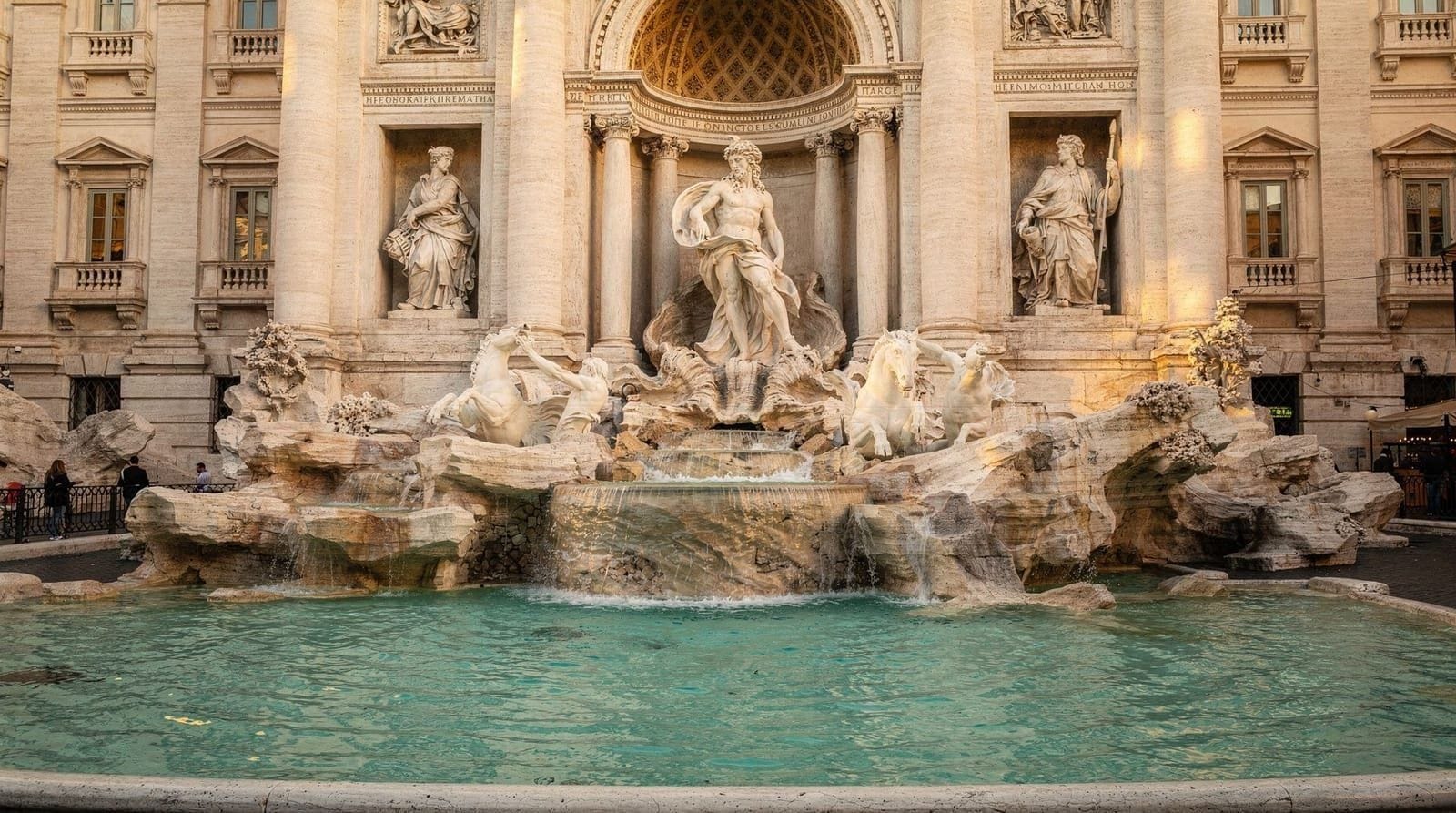
Rome at 21:00 is a different city from Rome at 11:00. The travertine warms to honey, the fountains are lit from within, the crowds at Trevi and Navona have thinned from midday peak, and the entire Centro Storico operates at a more human tempo. A good evening guide does not just show you things — they give you time to actually feel the spaces rather than photograph them while being elbowed.
That said, not every Rome evening tour is worth the money. This guide runs through all the main categories — walking tours, aperitif tours, boat/river options, vehicle tours and performance experiences — with honest assessments of what each delivers and for whom.
| Best value | 3-hour walking tour (€25–40) |
| Most memorable | Vespa sidecar by night (€80–120) |
| Best for groups | Golf cart or hop-on hop-off, evening slot |
| Booking window | 1–2 weeks for Colosseum by Night; 24–72hrs for most others |
| Season | Runs year-round; outdoor formats peak April–October |
Walking tours: the baseline option
Standard evening walking tour (2–3 hours, €20–40)
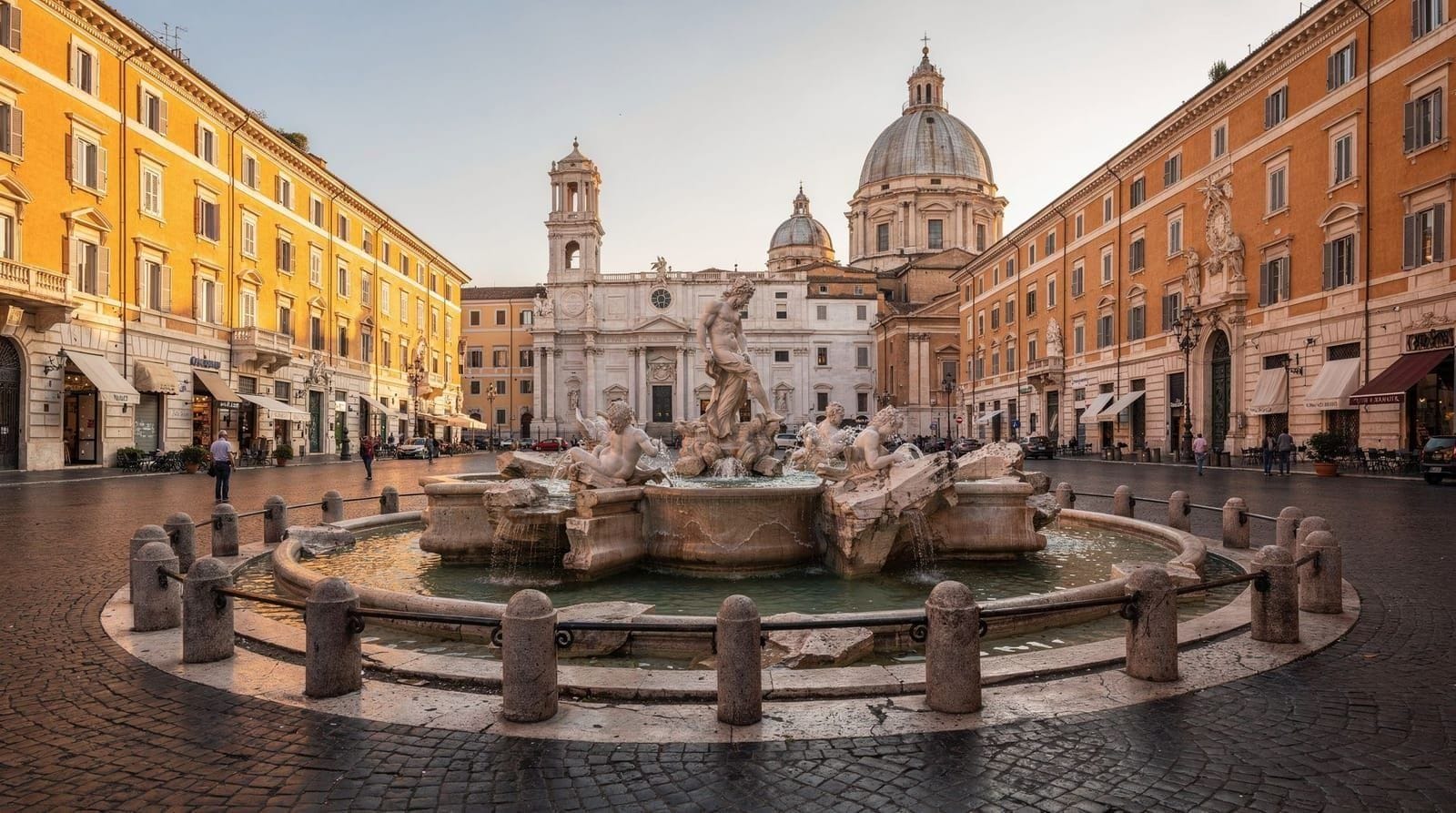
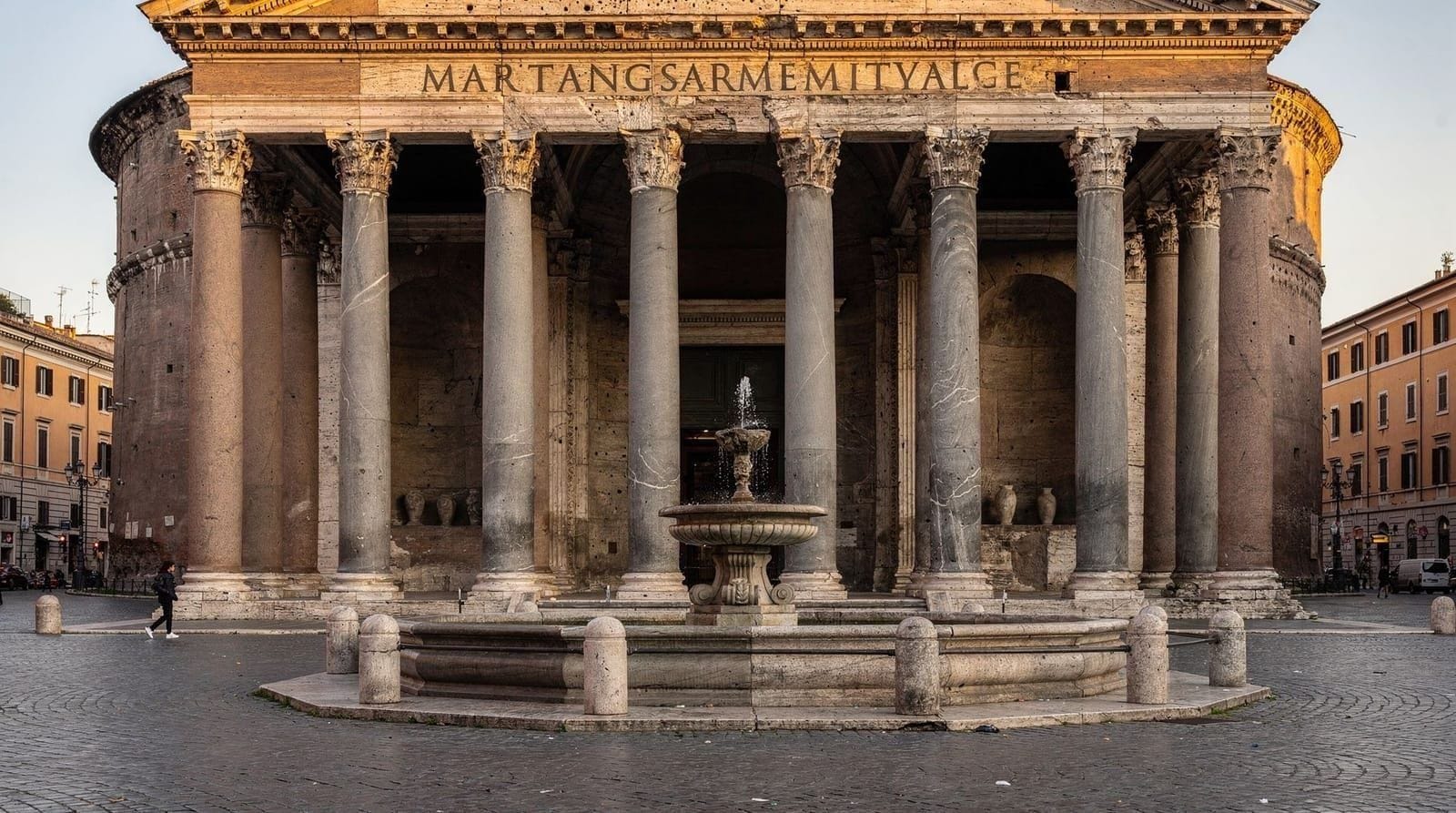
The core evening circuit covers Spanish Steps, Trevi Fountain, Piazza Navona and the Pantheon area. This route is essentially the greatest-hits of Roman nighttime scenery, and a knowledgeable guide transforms what would otherwise be a selfie-collecting exercise into something with genuine depth.
What you get: professional commentary on the architecture, history and mythology of each site; a logical walking sequence that connects the sites in 2–3 kilometers; and someone who knows where to stand at Trevi to get the best view without blocking thirty other people.
What you do not get: access to closed sites, alcohol (unless the tour includes it), or much spontaneity — these tours follow set routes with set timings.
Best for: First-time visitors who want to understand what they are looking at. Excellent for couples and small groups.
A 3-hour guided night walk of Rome — Spanish Steps, Trevi Fountain, Piazza Navona, the Pantheon — the most efficient way to experience Rome’s historic center after dark with expert commentary.Aperitif-included evening walking tour (2–2.5 hours, €35–55)
The same route as above but with a stop at a bar for an aperitif included in the price. This works well as a structured evening starter — you have context from the guide, a drink and snack in a decent bar, and the rest of the evening free.
The aperitif quality varies by tour operator: some include a basic spritz with bar snacks, others have arrangements with better bars and a proper aperitivo spread. Check the description before booking.
Best for: Social evenings, first-time visitors who want a combined introduction-and-aperitivo, groups.
Rome evening walking tour with an aperitif included — guided walk through the Centro Storico with a structured bar stop. An efficient way to start a Rome evening.Moonlight/small-group night tours
Several operators run small-group (6–12 people) night tours with an emphasis on atmosphere rather than information density. These feel less like lectures and more like guided walks with a knowledgeable companion. They often extend to include the Janiculum Hill view or the Ponte Sisto area for the Trastevere roofline.
Best for: People who dislike large group tours but want some guidance.
A small-group guided day or night walking tour of Rome’s historic center — flexible format, personalized attention.Vehicle tours at night
Golf cart tours (2–3 hours, €50–80 per person)
The golf cart offers a middle ground between walking and full-speed driving: you cover more ground than a walking tour, but slowly enough to absorb the scenery and stop for photos. The open-top carts are particularly pleasant on warm evenings in May–June and September–October.
Night golf cart tours typically cover: Trevi Fountain, Piazza Navona, Campo de’ Fiori, the Colosseum area, Circus Maximus and the Aventino. The Colosseum at night from a golf cart is one of the better nocturnal impressions of the monument — the scale reads better from a moving vehicle at low speed than on foot.
Drawback: the commentary is guide-to-passenger conversation rather than a full lecture, and vehicle noise means some commentary gets lost. The experience is more mood-based than information-based.
Best for: Couples, people with mobility limitations, those who want to cover more of the city in an evening.
Rome by night in an open golf cart — covering the Colosseum, Trevi, Navona and the major piazzas at a pace that allows photography and atmosphere.Vespa sidecar by night (2–3 hours, €80–120 per person)
The most cinematic option. Two-person sidecars offer the vintage-Rome film aesthetic at night — the sidecar creates an immersive experience that a walking tour cannot replicate. Operators typically run sunset departures (19:00–20:00) timed to catch the golden hour and then the illuminated monuments.
The experience is lighter on information than a walking or golf cart tour with commentary, but heavier on atmosphere. If you have already seen the main sights by day and want to re-encounter them at night in a memorable way, this is the standout choice.
Best for: Special occasions, romantic evenings, people who have already done the walking tour and want something different.
The aperitivo and nightlife guide covers how to combine this with a pre-tour aperitivo for a complete evening.
River options
Tiber river aperitif and dinner (2–3 hours, €80–150 per person)
Several operators run Tiber river experiences that combine aperitif, dinner and the river setting. The view of Rome from the Tiber — Castel Sant’Angelo, the bridges, the lights reflecting on the water — is genuinely beautiful, and the boat setting creates a romantic intimacy that is hard to match in a restaurant.
The honest caveats: food quality varies significantly by operator (some are good, some mediocre), and the prices are high relative to what you get on the plate. A private dinner cruise (€100–150 per person) is a different proposition from a group boat dinner (€80–90): the former can be excellent, the latter depends heavily on the group.
Best for: Couples celebrating a special occasion, those who specifically want the river setting. Book the private options for the best food experience.
The romantic Rome guide covers the river dinner option in the context of a full romantic evening plan.
Performance experiences
Terrazza Borromini open-air opera (2 hours, €35–60)
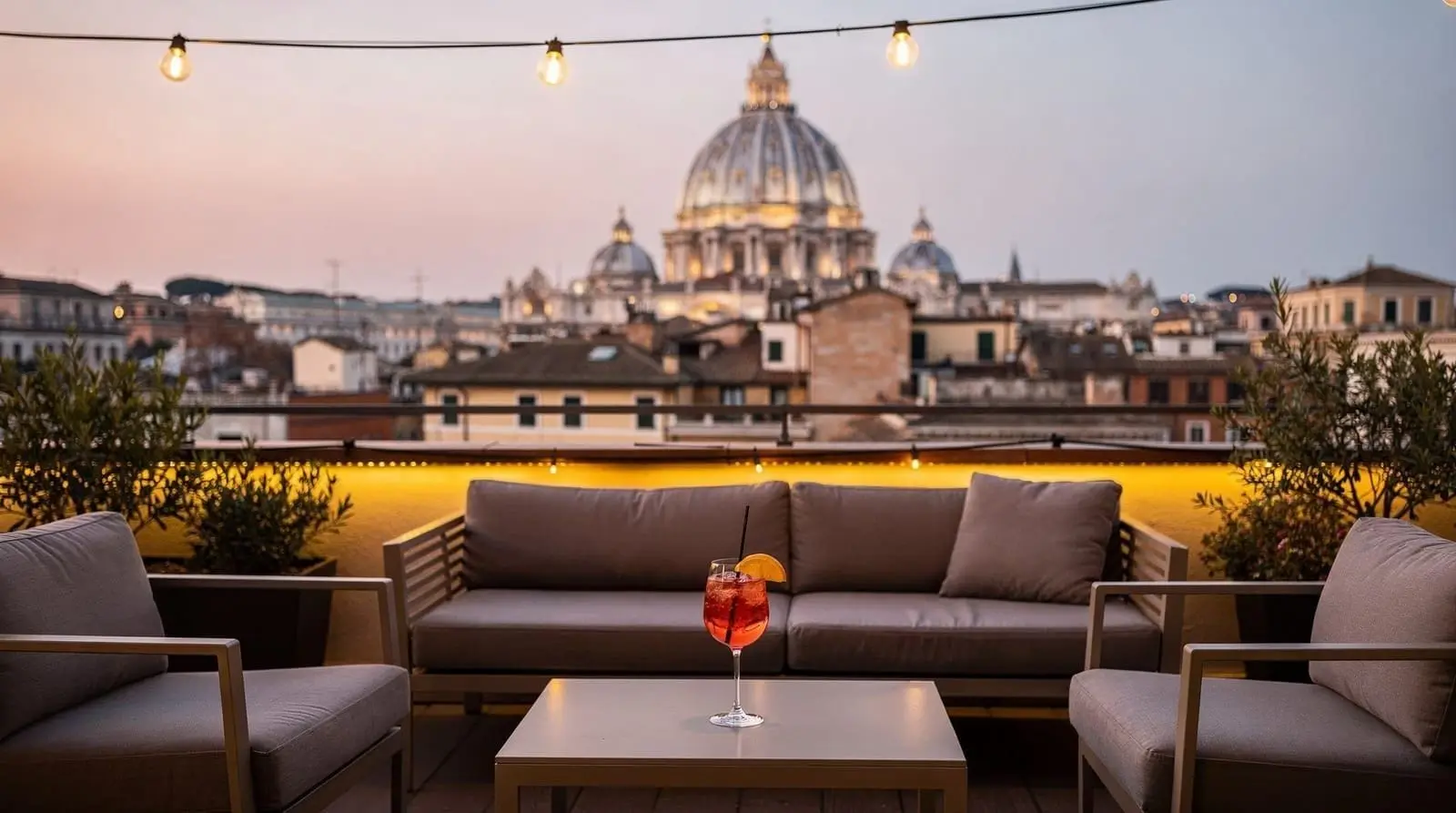
A live opera performance above Piazza Navona with aperitif included. The combination of venue (one of the best rooftop views in Rome), live performance and included drink makes this one of the strongest evening experiences in the city.
The opera is typically arias and duets rather than a full production — a condensed performance designed for the setting. Quality is high: the performers are professional. This is not a tourist-trap “opera” in a church basement; it is a genuine outdoor event with production values.
Best for: Special occasions, couples, anyone who wants an evening experience that goes beyond a bar or restaurant.
The rooftop bars guide covers the Terrazza Borromini in more detail if the aperitivo element is your primary interest.
Opera concert and dinner combinations
Several operators combine a traditional Italian opera concert with a dinner at a historic venue. The format varies: some are dinner first then concert, some are interleaved. Quality depends heavily on the venue and operator.
The best options tend to be in historic palazzos with intimate seating — these feel genuinely theatrical. The worst are large-group dinner-shows in undistinguished rooms. Check reviews on GetYourGuide specifically for the musical quality, not just the dinner.
Colosseum by night
The Colosseum night tours deserve specific mention because they are a distinct ticketed experience rather than a standard tour add-on. Night access is restricted to specific evening openings (Thursday–Sunday, typically March–October) and sells out quickly.
The atmosphere inside the Colosseum at night — dramatic lighting, reduced crowd, the arena floor visible — is excellent. Underground access is the most impressive (the gladiator tunnels and mechanical systems below the arena floor).
Book 1–2 weeks ahead in peak season. See the Colosseum tickets guide for detailed booking instructions.
Practical comparison: what to choose
| Experience | Cost/person | Duration | Best for |
|---|---|---|---|
| Evening walking tour | €20–40 | 2–3 hrs | First-timers |
| Aperitif walking tour | €35–55 | 2–2.5 hrs | Social, first visits |
| Golf cart night tour | €50–80 | 2–3 hrs | Couples, mobility |
| Vespa sidecar | €80–120 | 2–3 hrs | Romance, special occasions |
| Tiber aperitif/dinner | €80–150 | 2–3 hrs | Romantic evenings |
| Opera + aperitivo | €35–60 | 2 hrs | Special occasions |
| Colosseum by night | €40–70 | 2–3 hrs | Ancient Rome fans |
The best bars areas guide covers what to do for the rest of the evening once a tour ends. Most evening tours finish by 22:00–23:00, leaving time for a post-tour drink in Monti, Trastevere or wherever you are based.
For independent evening planning without a tour, see the aperitivo and nightlife guide which covers the full picture of how Rome’s evenings work neighborhood by neighborhood.
What makes a good Rome evening tour: quality markers
Not all evening tours are equal, and Rome has a significant spread in quality between operators. Before booking, check for:
Group size: Tours of 15 or fewer people are substantially more enjoyable than 30-person walking groups. Smaller groups hear the guide better, stop more naturally, and feel less like a cattle run.
Guide qualification: Licensed Roman guides have completed formal certification (local license required by law for professional guiding in Italy). This is not just a formality — a certified guide typically knows the sites in considerably more depth than an informal tour leader. Look for “licensed guide” in the tour description.
Duration and pace: 2-hour tours tend to rush; 3-hour tours allow for stops that feel genuine rather than photo-pause-and-move. The best evening tours have at least one extended stop at a major site (Trevi, Navona) rather than a constant procession.
Meeting point and logistics: Check that the meeting point is easy to find and the tour does not require you to sprint from a monument to make the start time. Good operators have sensible meeting logistics.
Reviews for evening tours specifically: Reviews for the daytime version of a tour can differ significantly from the evening experience. Check that the reviews are for the evening format you are booking.
Booking timing: when to book which tours
Colosseum by night: Book 1–2 weeks ahead in peak season (April–October). These sell out reliably.
Terrazza Borromini opera: Book 3–5 days ahead in summer, 24 hours in shoulder season.
Vespa sidecar: Book 48–72 hours ahead in season.
Standard walking tours: 24 hours is usually enough, though specific popular operators fill up. Weekends book faster than weekdays.
Tiber cruise/dinner: Book 48–72 hours ahead; private options require more lead time.
Off-season (November–March): Much easier to book last-minute; many tours have smaller minimums and better guide availability.
Money-saving approaches
Rome’s evening tour market has a significant price spread. A few approaches to reduce cost without sacrificing quality:
Free walking tours: Several operators run free-plus-tip evening tours of the Centro Storico. Quality varies considerably, but the best are genuinely good — a local guide walking a small group through Navona and Trevi with enthusiasm. Tip €10–15 per person for a good guide; €5 for average.
Group tours over private: Private tours are typically 3–5x the cost of group tours. For couples who specifically want a private experience, the cost is justified. For solo travelers and larger groups, joining an organized small-group tour gives similar quality at significantly lower per-person cost.
Timing: Some operators offer discounted tickets for early-evening departures (17:00–18:00) rather than peak-hour departures (19:00–20:00). The lighting is different but not worse — a 17:00 tour in summer ends in golden hour rather than blue hour.
Package combinations: Some operators combine an evening walking tour with a Colosseum day ticket or Vatican entry as a package at a small discount. These can work well if the schedule aligns.
The Colosseum at night: the specific case
The Colosseum by Night deserves expanded treatment because it is a distinctly different experience from the standard ticket and one that many visitors overlook.
The night openings (typically Thursday to Sunday, April through October) provide access to parts of the Colosseum on a guided-tour-only basis. The most impressive is the underground: the tunnel network beneath the arena floor where gladiators and animals waited before their entrance through the trap doors above. The underground is only accessible on guided tours regardless of whether you visit by day or night; the night version adds dramatic lighting and a smaller crowd.
The arena floor itself, lit at night with the upper tiers dark, gives a different spatial impression than the day visit — the scale reads differently, and the central space feels more contained. Photography at night requires either a camera with good low-light capability or acceptance that you are there for the experience rather than the documentation.
The Colosseum tickets guide covers the booking process in detail. Book directly from the official operator’s website rather than third-party resellers to avoid inflated prices.
Evening tours for specific interests
Photography focus: Several operators run dedicated photography tours at golden hour and blue hour — a guide leads a small group to the best light positions at the major monuments with guidance on settings and composition. These are not cheap (€60–100 per person) but are excellent for travelers who specifically came to photograph Rome. See the best photo spots guide as a complement.
History focus: If the primary interest is depth of history rather than the visual experience, consider a daytime walking tour of the Roman Forum and Palatine Hill combined with a self-guided evening walk. The Forum closes at sunset, so combining history-focused touring in the day with atmosphere-focused exploration in the evening is the most information-efficient approach.
Food-and-evening combination: Several operators run evening food tours that combine a walk through a neighborhood (typically Trastevere or the Centro Storico) with food stops — gelato, supplì (fried rice balls), pizza al taglio, wine — at each location. These work well as an introduction to Roman street food culture. See the Rome food tours compared guide for the full breakdown.
Families: The golf cart tours and open-top bus options are the most practical for families with children in the evening. Children typically find the Vespa sidecar exciting (minimum ages apply); the Tiber cruise options require children to be comfortable on boats. The standard walking tours are appropriate from ages 8–10 upward for 2-hour durations.
Solo travellers: which format works best
Solo travellers often assume evening tours are built for couples and groups, but several formats work well alone. Group walking tours are the easiest solo option — you join a small group, the social dynamic is light, and the per-person cost is the same as for a couple. Golf cart and Vespa sidecar tours are typically priced per vehicle or per seat, so check whether a solo traveller pays a “single supplement” — some operators charge the full two-person Vespa sidecar rate for one rider, which changes the value calculation significantly. Free walking tours (tip-based) are the lowest-commitment solo option and a good way to meet other travellers before deciding whether to book something more structured for a later evening.
Accessibility for mobility-limited travellers
Walking tours covering 2–3 km of cobblestones over 2–3 hours are genuinely demanding for anyone with limited mobility. The golf cart tours are the best accessible option in the evening category — seated throughout, covering the same major sights at a gentler pace, with easy step-in access for most carts. The Vespa sidecar requires a reasonable degree of mobility to get in and out of a low sidecar seat and is not a good fit for significant mobility limitations. Tiber river cruises are seated and relatively accessible, though boarding a boat can require a step down from the dock — check with the operator if this is a concern. Always contact the operator directly ahead of booking to confirm specific accessibility needs; group tour descriptions rarely spell this out in enough detail on their own.
Weather and rain contingency
Rome’s evening tours mostly proceed in light rain — walking tours carry on with umbrellas, and guides are used to it. What changes with weather: golf cart tours may be cancelled or rescheduled in heavy rain (open-top vehicles), Vespa sidecar tours are the most weather-sensitive and are the most likely to be rescheduled for safety, and Tiber river cruises may be paused in genuinely severe weather but tolerate drizzle. Check the specific operator’s weather policy before booking, and prefer operators offering free rescheduling over those offering only a partial refund — Rome’s autumn and winter can bring sudden downpours with little warning.
After the tour: extending the evening
Most Rome evening tours finish by 22:00–22:30. If you want to extend the evening, the most natural continuation depends on where the tour ends:
Tour ending near Navona/Pantheon: Walk west 10 minutes to Campo de’ Fiori for a late-night drink. The square is lively until 01:00. Continue to Via dei Giubbonari for quieter bars.
Tour ending near Trevi/Spanish Steps: Walk south through the Centro Storico streets, which are atmospheric late at night even with shops closed. Catch a taxi to Trastevere or Monti for a post-midnight drink.
Tour ending near the Colosseum: Take Metro B or a taxi to Testaccio for late-night options, or walk to the Aventino for a quiet late evening.
The best bar areas guide has the specific streets and bars for each district that work at 22:30–midnight.
Frequently asked questions about Rome evening and night tours compared
How much do Rome evening tours cost?
Are Rome night tours better than seeing the sights by day?
Can I visit the Colosseum at night?
Are Rome evening walking tours good for families with children?
What is the best Rome tour for a special occasion evening?
Do Rome evening tours operate year-round?
Are Rome evening tours good for solo travellers?
What happens to an evening tour if it rains?
Top experiences
Bookable activities with verified prices and instant confirmation on GetYourGuide.