Frascati and the Castelli Romani wine country: a guide from Rome
Frascati Food & Wine: Full-Day Rome Countryside Tour
How do I visit Frascati and the Castelli Romani wine country from Rome?
Regional trains from Roma Termini reach Frascati in about 40 minutes (roughly €2.60 each way). For wine estate visits you need a car or organised tour, since the best cantinas are on back roads outside town. Allow a full day: morning in Frascati town and its enotecas, afternoon at a winery, return by train in the evening. Half-day tours departing Rome are also available and practical if you don't drive.
Rome’s overlooked wine country sits 20 kilometres from the city centre
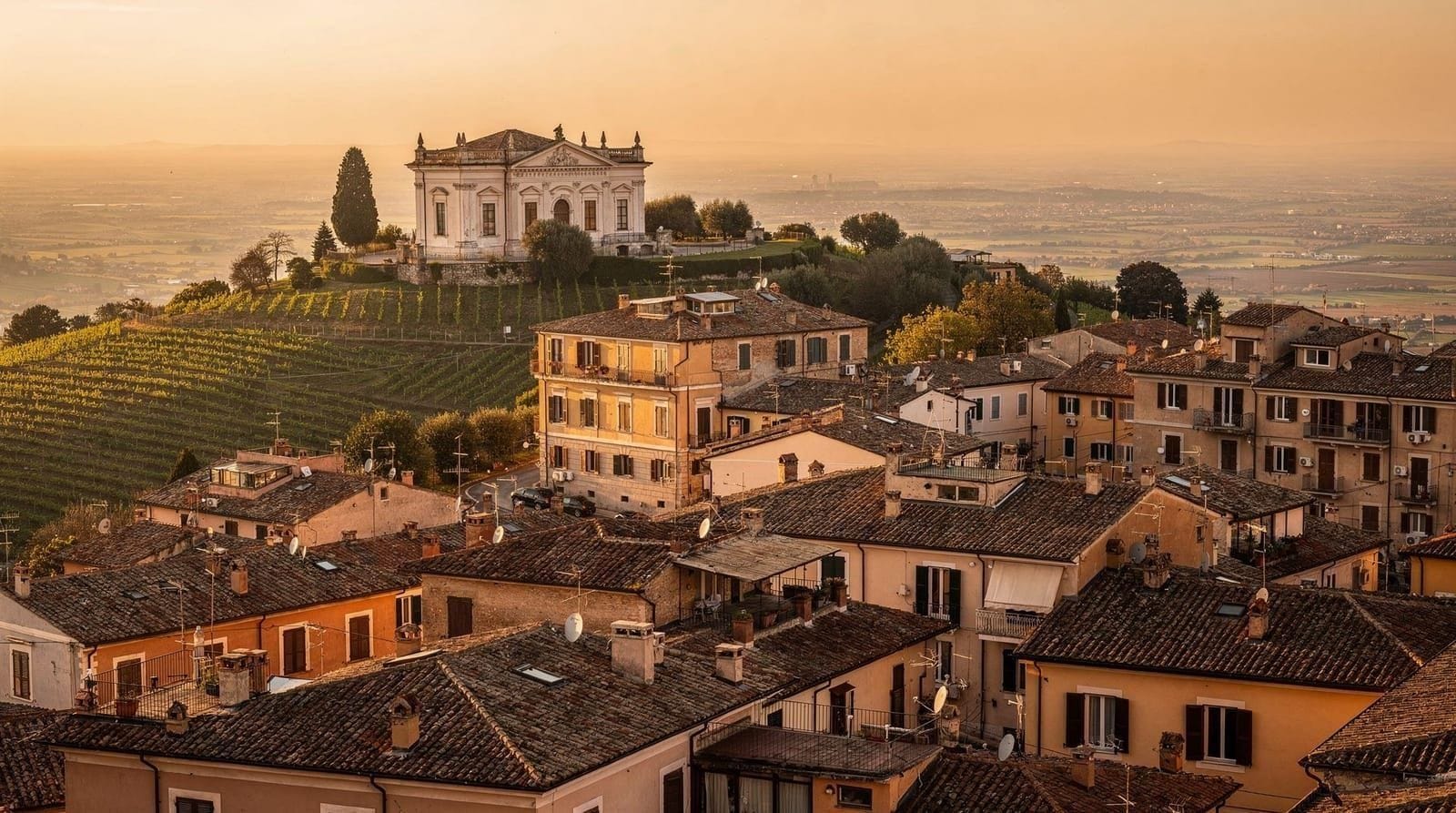
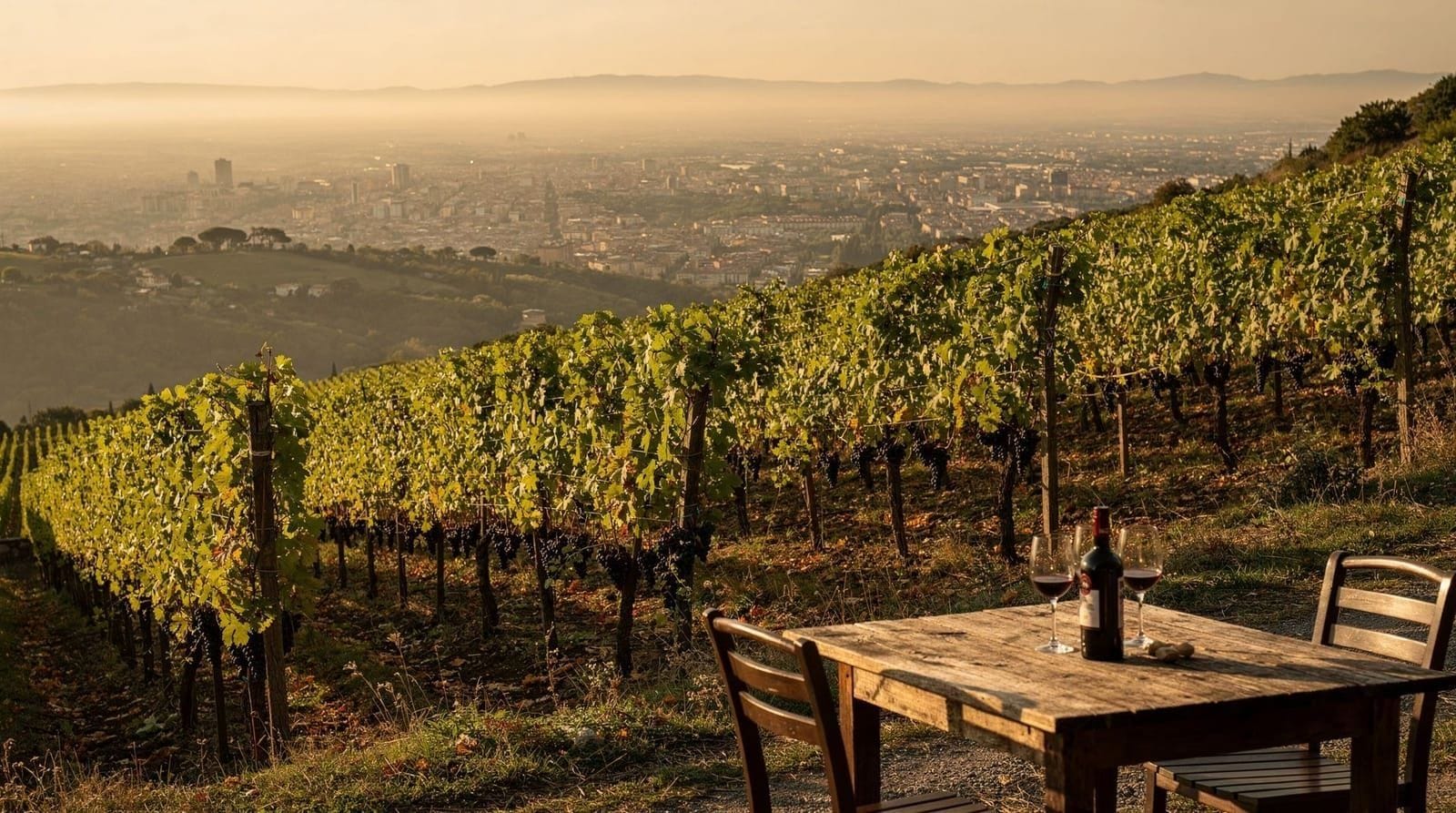
Most visitors to Rome don’t make it to Frascati. They know it as a cheap white wine name on a restaurant list, or perhaps from the label on a house carafe. Very few go to the source. That is a mistake, because the Castelli Romani hills — the ancient Alban Hills southeast of Rome — constitute one of Italy’s most accessible wine regions, with DOC and DOCG status, serious producers alongside honest fraschette, and a landscape that looks nothing like what you have been staring at in central Rome.
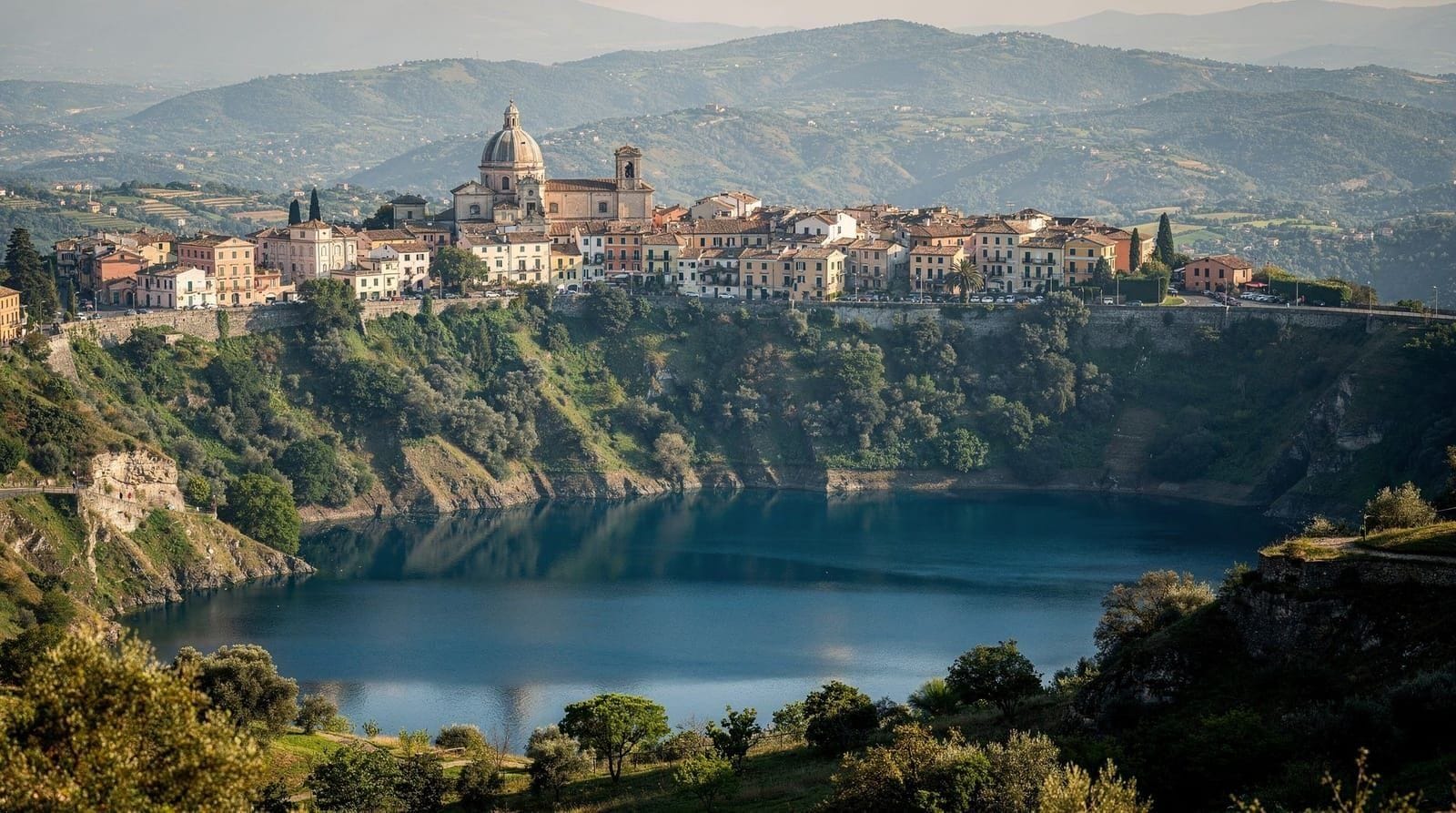
The drive or train ride delivers you in under an hour from Termini to a medieval hill town above volcanic lakes, surrounded by vineyards and chestnut forests, with porchetta sandwiches at road stalls and tables in family-run cantinas. It is the kind of day that reminds you why Italy is worth the effort.
This guide covers the practical reality: what the wines are, which estates are worth visiting, how to get there without a car, and what not to bother with.
| Where | Castelli Romani hills, 20km southeast of Rome |
| Cost | Train ~€2.60 each way; guided day trip around €90–140/person |
| Time needed | Half day for Frascati town alone; a full day for estates + a second town |
| Getting there | Regional train to Frascati (35–40 min) or car/tour for the wider circuit |
| Best time | April–June or September–October; avoid August weekend afternoons |
What Frascati DOC actually is
Frascati has been producing wine for at least 2,000 years — Roman poet Horace wrote enthusiastically about Alban wine, and the hills supplied Roman tables throughout the Empire. The modern appellation is more structured.
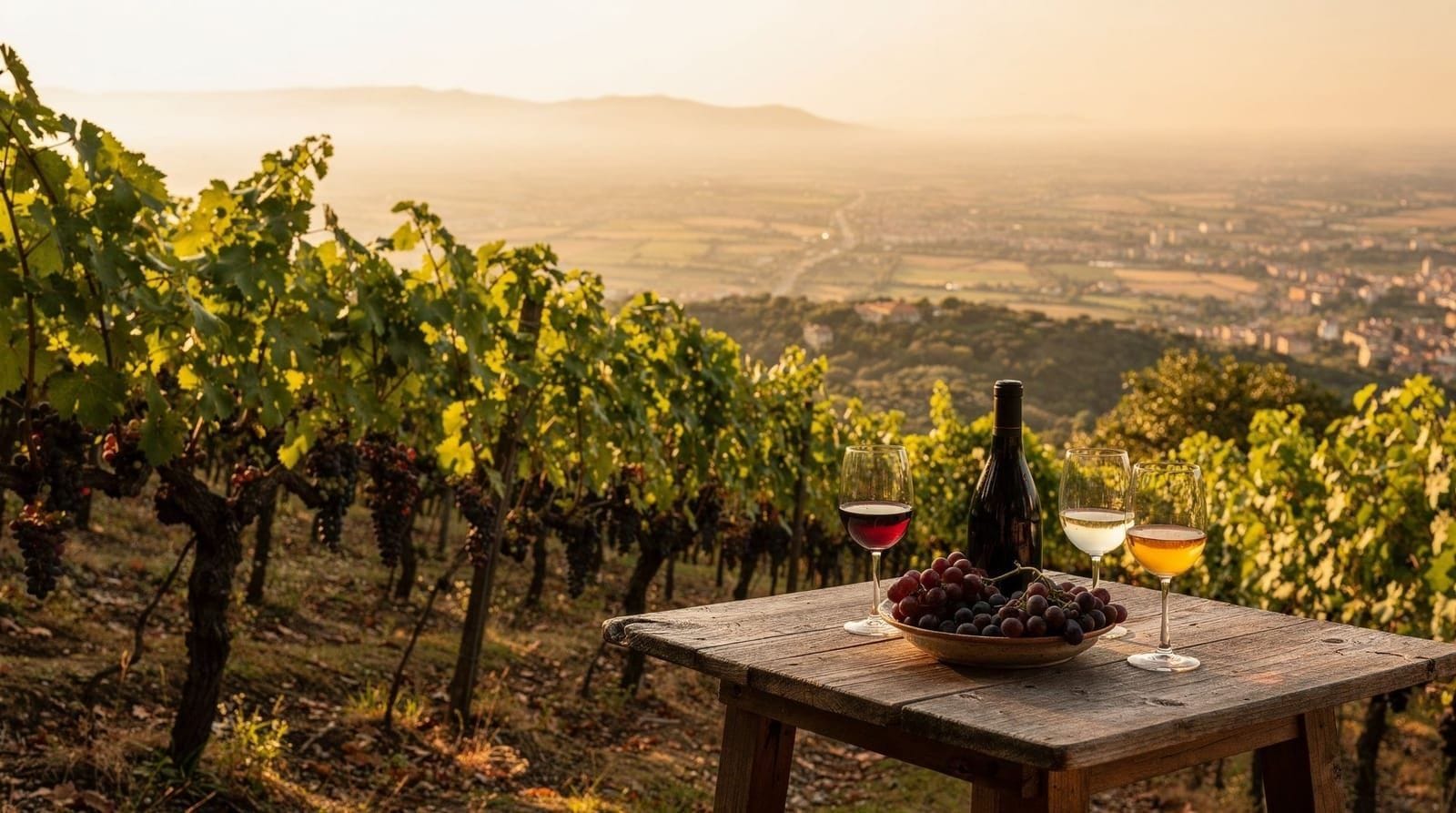
Frascati DOC covers dry and semi-sweet whites made primarily from Malvasia Bianca di Candia and Malvasia del Lazio, with permitted Trebbiano Toscano and Greco Bianco. Standard Frascati is light, often neutral, and not a serious collector’s wine — but it is refreshing, honest table wine that pairs naturally with Roman antipasto.
Frascati Superiore DOCG is the more ambitious designation, requiring lower yields, higher minimum alcohol and better-sited vineyards. Producers like Poggio Le Volpi, Casale Marchese and Castel de Paolis make Frascati Superiore that can be genuinely interesting — mineral, with a bitter almond finish typical of Malvasia del Lazio.
Cannellino di Frascati DOCG is a sweet passito-style wine from late-harvested or partially dried grapes. It is made in small quantities, not widely exported and worth seeking out if you visit in autumn.
The broader Castelli Romani DOC covers the entire Colli Albani zone, including Marino DOC, Colli Albani DOC and Velletri DOC. Marino’s whites compete with Frascati and are sometimes considered more characterful. Velletri also produces red wines, which is uncommon in this predominately white-wine territory.
Getting there: train versus car versus tour
By train: Regional trains from Roma Termini to Frascati run hourly and cost roughly €2.60 each way. Journey time is 35–40 minutes. This gets you to Frascati town and its enotecas comfortably. The station is at the foot of the hill; a short walk or taxi ride takes you to the centro storico.
By car: The A1 and Via dei Laghi (SR217) give access to the Castelli from central Rome in 30–45 minutes, traffic permitting. Be aware that ZTL (limited traffic zones) apply in Frascati’s historic centre on certain days — check local signage or use a GPS that shows ZTL boundaries. Parking is available outside the ZTL. A car opens up the wider Castelli circuit: Ariccia, Genzano, Nemi, Castel Gandolfo and the more remote wine estates.
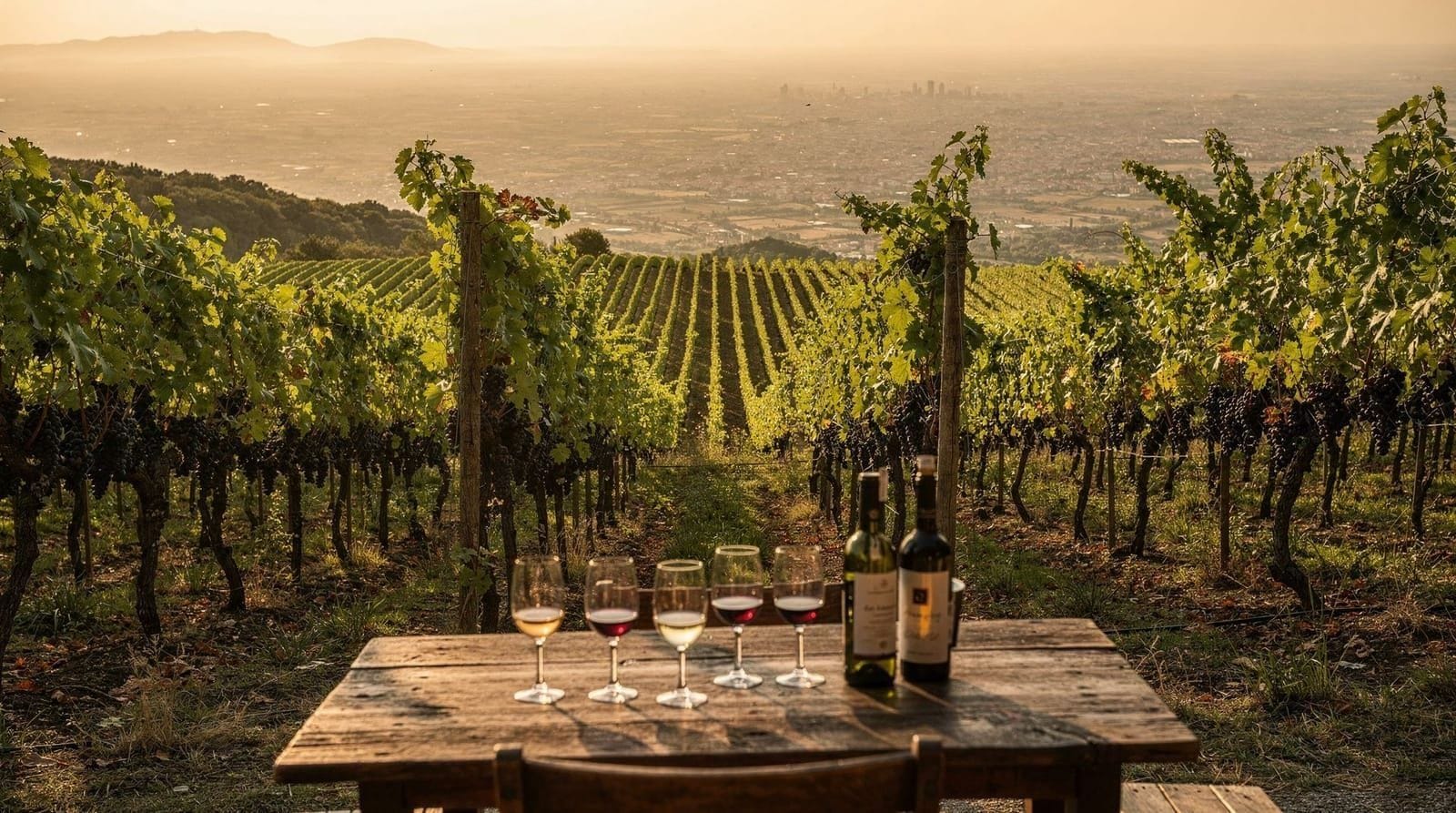
By organised tour: For a wine-focused day without the logistics, guided tours from Rome make practical sense. They handle transport, estate appointments and translation, and often include a lunch stop. Half-day and full-day formats are both available.
Full-day Frascati food and wine tour from Rome — includes transport, winery visit with tasting, and a traditional lunch in the Castelli Romani countryside.Frascati town: what to do and what to skip
Piazza Marconi is the main square and orientation point. It offers a broad view south over the Roman countryside toward the coast on clear days. The town is small — the key sights take two hours on foot.
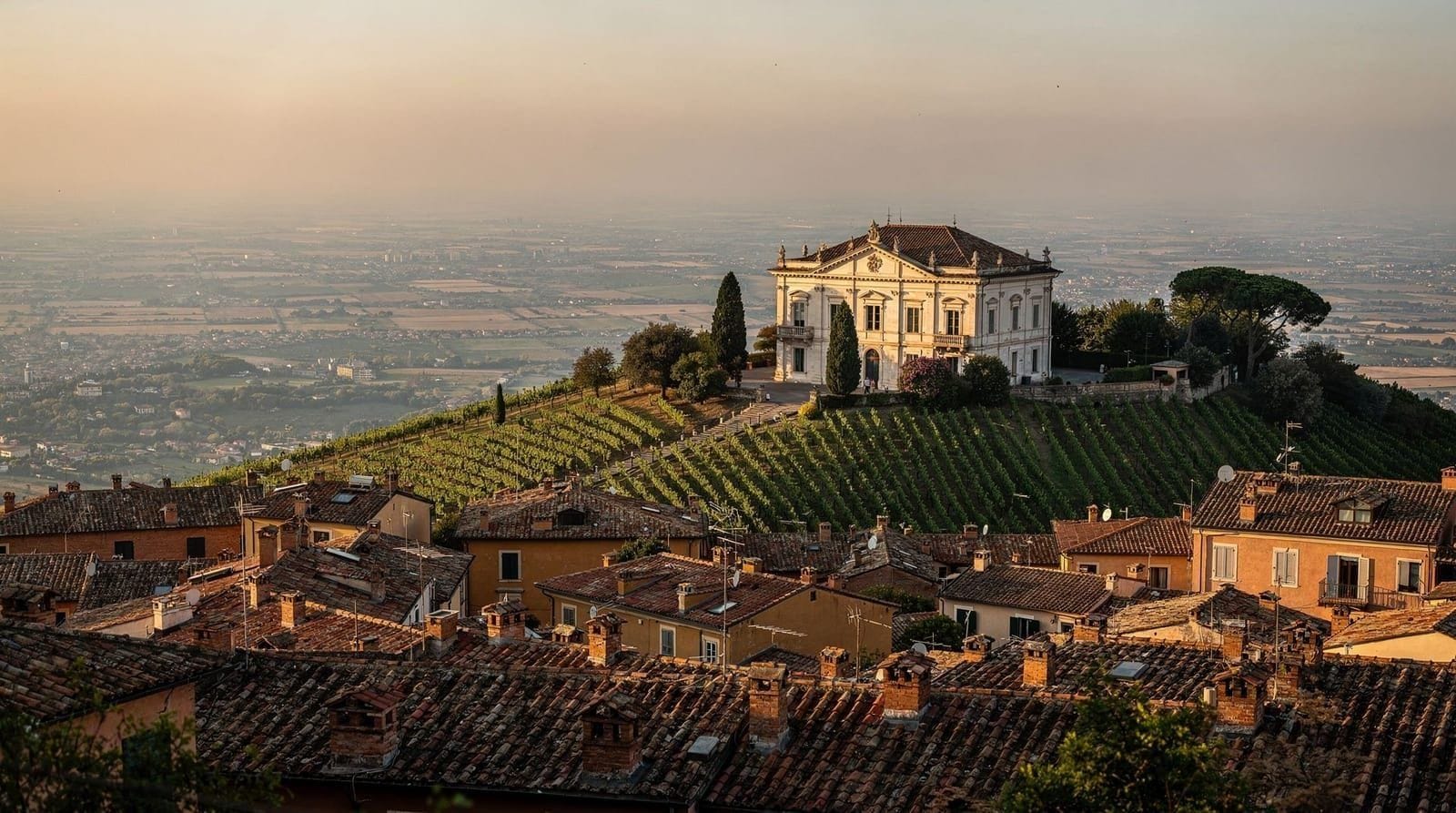
Cattedrale di San Pietro Apostolo contains a mosaic by Domenichino and is worth a brief visit. More interesting architecturally is the Villa Aldobrandini, a late Renaissance villa on the hill above town with baroque water gardens — the gardens are open to visitors with free admission, while the villa itself is private. The formal terraced gardens are among the finest examples of Italian landscape design outside Rome.
Wine shopping in town: Several enotecas in the centro storico stock Frascati DOC and Frascati Superiore DOCG alongside Lazio olive oil and local charcuterie. They are a convenient way to taste before buying. Enoteca Gazzè on Via Giuseppe Battisti is a long-established local favourite. For a broader selection of Castelli wines, the co-operative Cantina Produttori Frascati has a shop near the train station.
What to skip: The tourist restaurants immediately around Piazza Marconi are mediocre and overpriced relative to options a short walk away. The same applies to the souvenir shops. Frascati is a functional hill town, not a polished tourist centre — which is part of its appeal.
Wine estates worth visiting
Several estates in and around Frascati accept visitors by appointment or through organised tours. These are the producers consistently cited by Italian wine writers:
Casale Marchese (Frascati): An organic estate producing reliable Frascati Superiore and interesting Lazio reds. English-speaking staff. Tastings by appointment, but accommodating for small groups.
Poggio Le Volpi (Monte Porzio Catone): One of the benchmark Frascati Superiore producers. Their Frascati “Epos” is the wine that converted some sceptics about this appellation. The estate also makes good Lazio reds. Visits require advance booking.
Castel de Paolis (Grottaferrata): A biodynamic estate making some of the most ambitious wines in the Castelli Romani. Their “Vigna Adriana” is a single-vineyard Frascati Superiore that ages well. The estate also produces Syrah-based reds unusual for the zone. The tasting room is informal and welcoming.
Cantina Sociale di Marino: A large co-operative in Marino producing honest, affordable Marino DOC whites. Less glamorous than the boutique estates but useful for understanding what the appellation produces at volume. The shop is open without appointment.
Private Frascati wine region tour from Rome with wine tasting — smaller groups, flexible pace and estate access that independent visits can’t match.The wider Castelli Romani circuit
Frascati is one node in a larger hill-town circuit that deserves at least a full day if you have a car.
Castel Gandolfo sits on the rim of Lago Albano crater, with dramatic views down to the water. It is most famous as the papal summer residence — the Vatican Gardens at Castel Gandolfo are now open to the public via timed visits, following Pope Francis’s 2014 decision to open them to tours. The town itself is pleasant; lunch at a restaurant with a lake view is a reasonable indulgence. See our Castel Gandolfo destination guide for details.
Ariccia is essential for food rather than wine. The town straddles a baroque bridge designed by Bernini and is surrounded by chestnut woodland. Porchetta di Ariccia has protected geographic status — the roast pork is seasoned with garlic, rosemary and black pepper, and eaten in bread rolls at fraschette (simple roadside taverns). Locanda dello Spuntino and Osteria Della Porta Romana are among the most-cited local addresses.
Nemi perches above a crater lake that was the site of Roman emperor Caligula’s famous floating palace barges (recovered in the 1930s, destroyed in WWII). In late May and June the town is full of wild strawberry vendors and festival activity. At other times it is very quiet — one of those places that rewards visitors who arrive without crowds.
Genzano di Roma hosts an extraordinary annual flower festival (Infiorata, usually the Sunday after Corpus Christi, late May/June) during which the main street is carpeted in flower-petal designs. Outside festival time, it is a quiet town but worth passing through for Pane di Genzano IGP — a locally certified bread with a hard crust and dense interior that is taken seriously by Roman food writers.
For a comprehensive overview of the area, see our Castelli Romani day trip guide and the Castelli Romani destination guide.
Which Castelli town matches your day
The circuit is bigger than most visitors realise, and not every town suits every kind of day. Use this to prioritise if time is tight:
| Town | Best for | Time needed | Car needed? |
|---|---|---|---|
| Frascati | Wine tasting, enotecas, easy train access | Half day | No |
| Castel Gandolfo | Lake views, papal history, a relaxed lunch | 3–4 hours | Helpful, not essential |
| Ariccia | Porchetta, baroque architecture | 2–3 hours | Helpful |
| Nemi | Quiet crater-lake views, wild strawberries (May/June) | 2 hours | Yes |
| Grottaferrata | Byzantine abbey, serious wine estates | 2–3 hours | Yes for estates |
| Genzano | Flower festival (late May/June), Pane di Genzano bread | 1–2 hours | Yes |
If you only have half a day and no car, Frascati town by train is the realistic choice. With a full day and a car, Frascati plus Castel Gandolfo or Ariccia makes a satisfying loop without feeling rushed.
Planning a realistic day: a suggested schedule
A day trip that actually works, rather than one that looks good on paper, tends to follow a simple rhythm. Take the mid-morning train from Termini (avoid the earliest departure — enotecas and estates don’t open before 10am), arrive in Frascati by mid-morning, and spend an hour or two walking the centro storico and Villa Aldobrandini gardens before the day gets hot. Book a winery visit for early afternoon, when tasting rooms are least rushed, and plan lunch either at the estate (some include it) or at a fraschetta rather than the piazza-front restaurants. If travelling by car, add Castel Gandolfo or Ariccia on the way back rather than trying to fit three towns into one day — the Castelli reward a slower pace, and rushing between towns is the single most common mistake visitors make.
Booking matters more than most people expect: weekend estate tours from April to October fill up, sometimes days in advance, while a Tuesday in November can be booked the same morning. If you’re relying on public transport, check the return train times before you commit to a winery slot — services thin out in the early evening, and missing the last convenient train back turns a relaxed day into a stressful one. Travellers on a tighter budget should compare this against other low-cost outings in our Rome on a budget guide, and those weighing organised tours against independent travel more broadly may find our tour versus train comparison useful before booking.
Honest assessment: what this trip is and isn’t
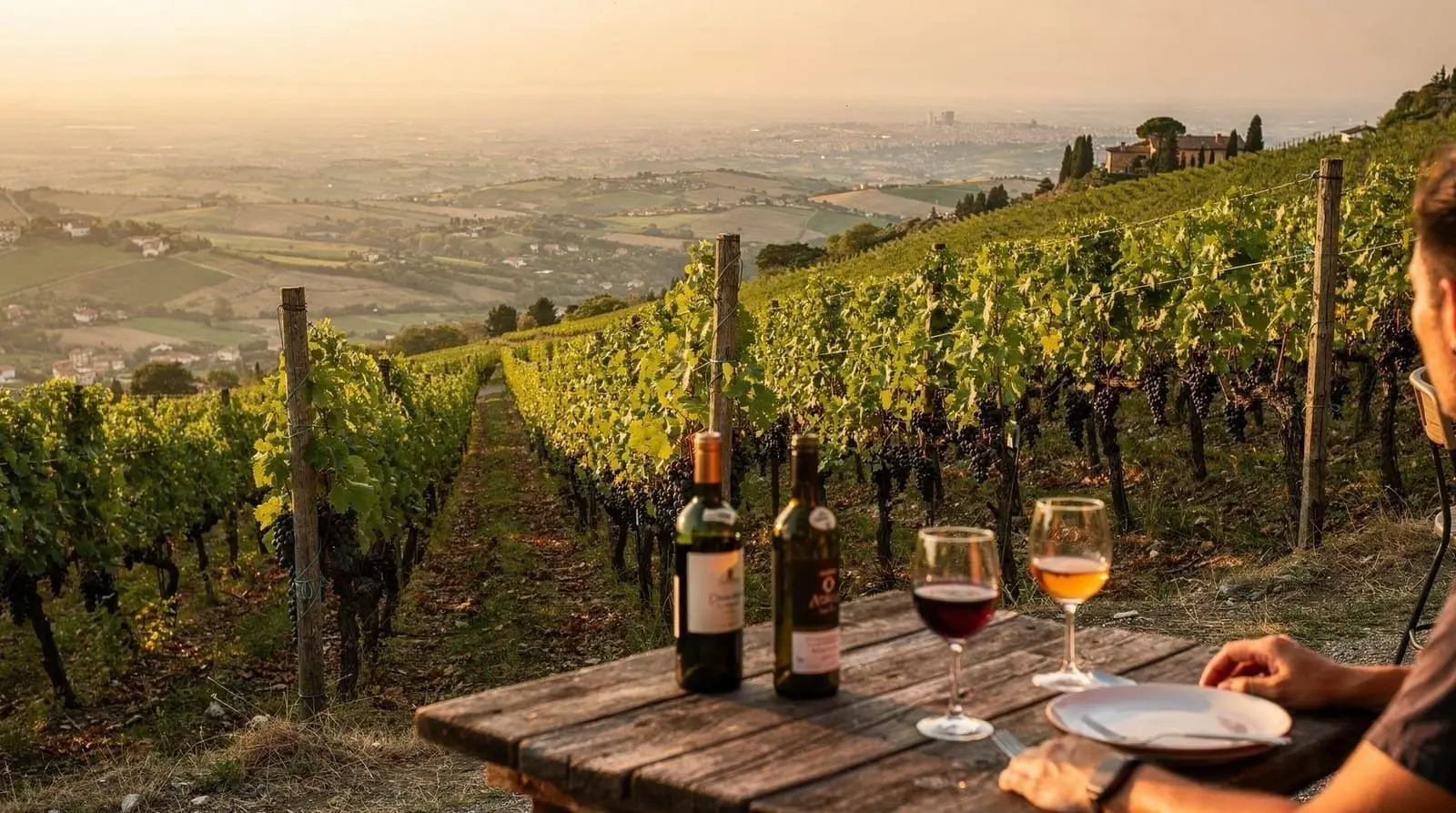
The Castelli Romani wine trip is not a Barolo weekend. The wines are pleasant, food-friendly and inexpensive — they are not complex or age-worthy enough to interest serious collectors. What makes Frascati worth visiting is the combination: accessible hill-town landscape 20 minutes from the sprawl of Rome, genuinely regional food (not restaurant approximations), and the chance to drink Frascati at the source rather than in a tourist trattoria.
The organised wine tours from Rome work well for most visitors because they handle the logistics. If you hire a car, the freedom to wander the Castelli circuit at your own pace is worth the planning. Going by train to Frascati town and spending the day in the enotecas and on foot is a perfectly satisfying low-effort option.
What it is not worth doing is rushing through on a two-hour excursion between Colosseum visits. Give it a day and combine it with lunch. The Lazio countryside is better experienced slowly.
Private wine tour to Frascati and the Castelli Romani — tailored to your pace, with flexibility to visit specific estates or towns.When to go
April through June is excellent — vineyards are green, temperatures are pleasant (18–25°C), and Nemi’s strawberry festival runs in late May/June. The landscape at this time has the specific lush quality of Italian late spring.
September and October is harvest season. Estates are active, roadside stalls sell fresh grapes, and the air is cooler. Sagre (local food festivals) happen in many Castelli towns in September and October — Marino holds its famous Sagra dell’Uva (Grape Festival) in early October, during which the town fountain famously runs with wine.
July and August are hot and the hills offer some relief from Rome’s heat, but the experience is less pleasant than spring or autumn. Avoid weekend afternoons in August when half of Rome drives up for lunch.
November through February is quiet, some estates are closed to visitors, but the Castelli are at their least crowded and most atmospheric — mist in the valleys, chestnuts at roadside stalls, empty restaurants where the food is often better because the kitchen isn’t rushed.
For broader guidance on timing your Rome trip, see our best time to visit Rome guide.
Pairing the Castelli with Rome’s wine bars
If you can’t make the day trip or want to taste Frascati and Castelli Romani wines in the city first, Rome’s enoteche stock local Lazio wines alongside Piedmont and Tuscany — see our Rome wine bars guide for specific addresses where Lazio wine gets proper attention. This is also a useful way to calibrate your expectations before visiting estates in person.
For context on how Lazio wine fits into Italy’s broader wine map, our Lazio wine guide covers DOC and DOCG appellations across the entire region.
Frequently asked questions about Frascati and the Castelli Romani wine country: a guide from Rome
What wine is Frascati known for?
Is a car necessary to visit the wine estates?
What are the best towns to combine with Frascati?
What food should I eat in the Castelli Romani?
Are the wine tours from Rome worth booking in advance?
How far is Frascati from Rome?
Top experiences
Bookable activities with verified prices and instant confirmation on GetYourGuide.