National Roman Museum: four sites, one ticket
Rome: Castel Sant'Angelo Ticket with Vatican/Pantheon Option
How does the National Roman Museum work?
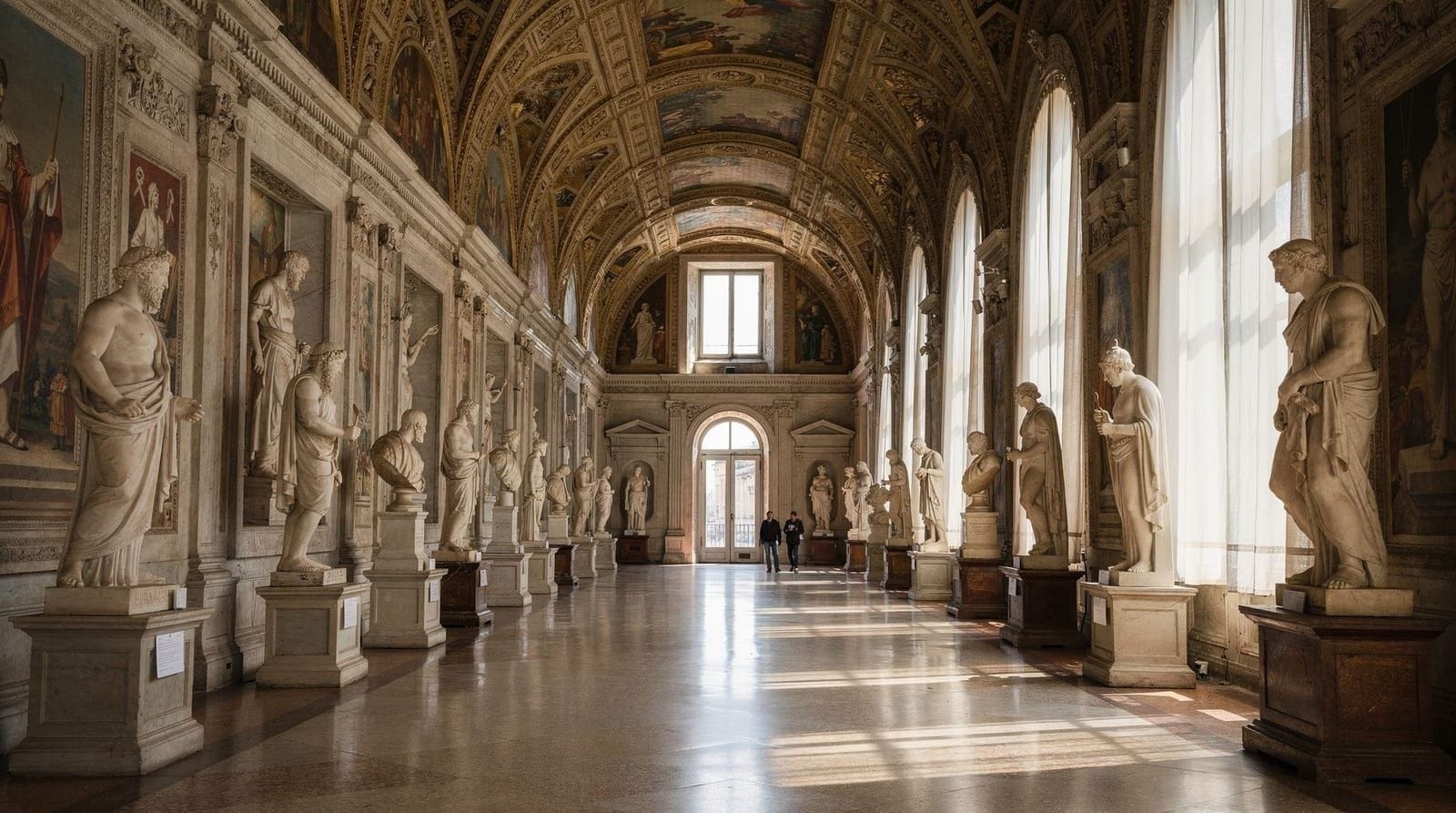
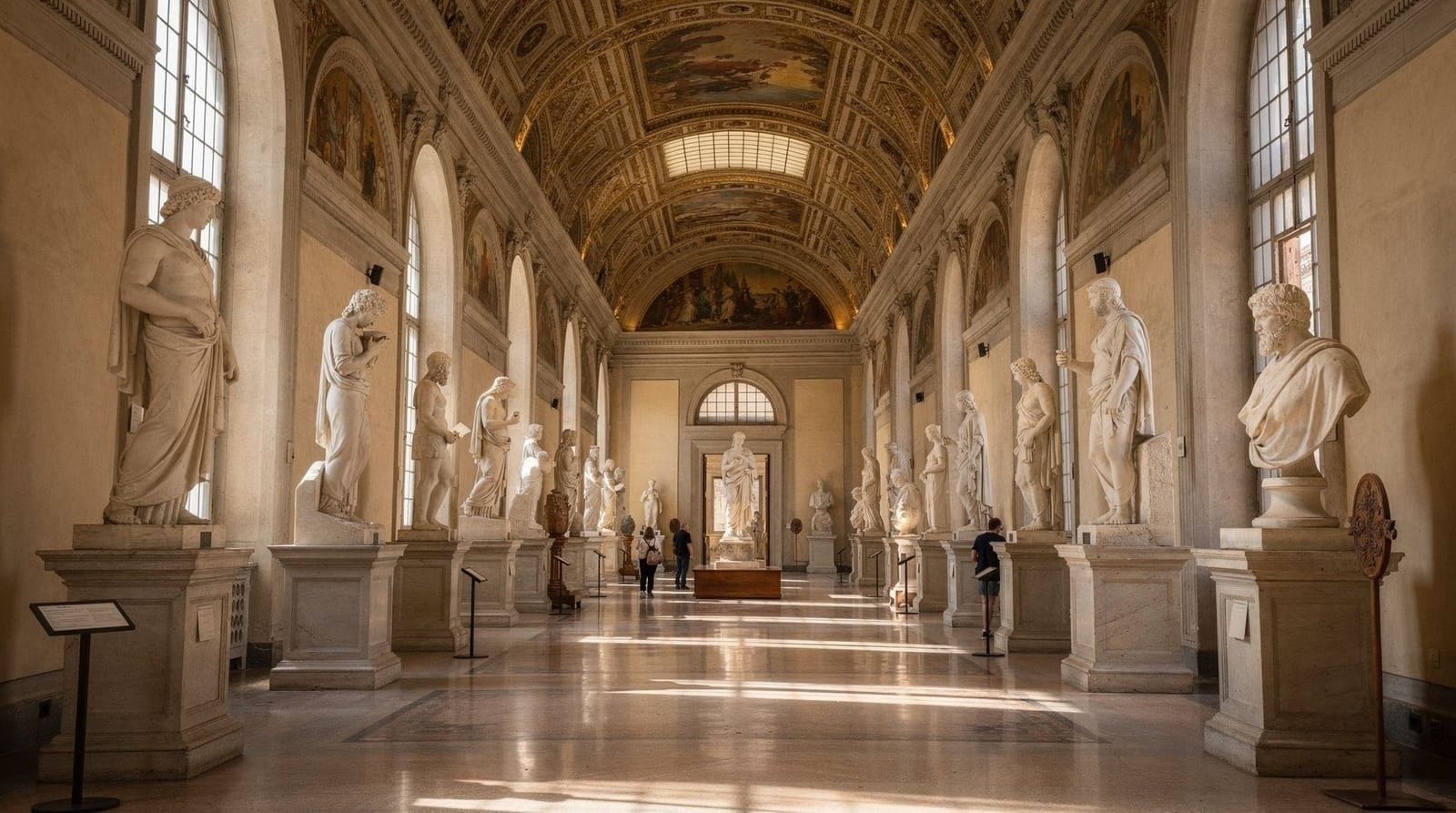
The National Roman Museum (Museo Nazionale Romano) is not a single building but a network of four separate sites: Palazzo Massimo alle Terme (the main collection — statuary, mosaics, frescoes), Terme di Diocleziano (Diocletian's Baths, with epigraphic collections), Palazzo Altemps (ancient sculptures in a Renaissance palace), and Crypta Balbi (medieval Rome and early medieval archaeology). A single ticket (€12) covers all four sites for three days. You do not need to visit all four; Palazzo Massimo is the essential stop.
Four museums, one ticket, and most visitors miss three of them
The National Roman Museum is Rome’s primary repository for ancient Roman sculpture, painting, and portable antiquities — and most visitors to Rome never hear of it, or if they do, conflate it with the Capitoline Museums (a different institution entirely).
This is partly a marketing problem and partly a logistics problem. The museum is not a single building. It is four separate sites spread across different parts of the city, held together by a ticket system, a shared curatorial mission, and the central fact that between them they contain some of the most important works of art and archaeology in the world.
This guide explains what is at each site, which to prioritise, and what you will see when you go.
| Sites | 4 — Palazzo Massimo, Terme di Diocleziano, Palazzo Altemps, Crypta Balbi |
| Cost | €12, all four sites, valid 3 days |
| Time needed | 90–120 min for Palazzo Massimo alone; 2 days for all four |
| Getting there | Palazzo Massimo is 5 min walk from Termini |
| Closed | Mondays |
The four sites explained
Palazzo Massimo alle Terme
Priority: Essential. Visit if you visit nothing else.
Palazzo Massimo is the flagship site, located a five-minute walk from Termini station in a late 19th-century palazzo built to house the collections from Rome’s ongoing archaeological excavations. It opened as a museum in 1998 and contains material covering the full span of Roman art from the Republic through the late Empire.
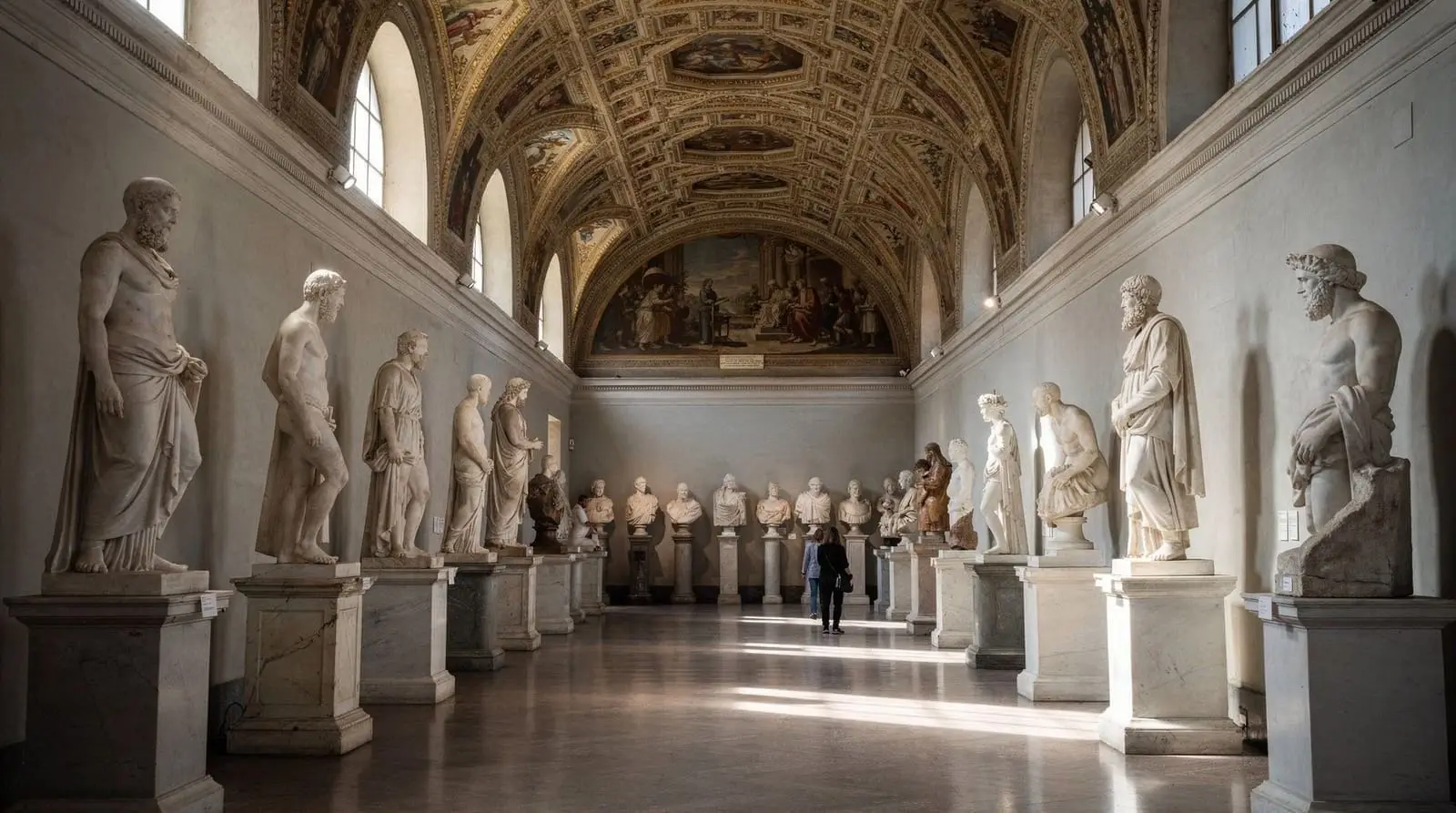
Ground floor — sculpture and portraiture: The ground floor introduces the collection with Republican-era and early Imperial portraiture — the busts and heads that are one of ancient Rome’s distinctive contributions to art history. Roman portraiture differs from Greek idealization in its unflinching realism: we see men with double chins, verrucas, asymmetrical features, and expressions of calculation. These are faces you might recognise on a busy street. Several of the heads are veristic portraits of extraordinary quality, capturing individuals with something approaching photographic precision.
First and second floors — Imperial collections: Moving up, the collection develops through the Imperial period. The second floor contains the famous Boxer at Rest — a Greek bronze of around 330–50 BCE showing a seated boxer after a fight, his face battered, copper inlaid into the bronze to suggest blood and cuts. It is one of the great bronzes of antiquity, psychologically raw in a way that official imperial statuary rarely is.
Also on the upper floors: the Hellenistic Prince, another exceptional bronze; the Discus Thrower (Lancellotti Discobolus), a Roman marble copy of a lost Greek bronze by Myron; significant collections of coins, jewelry, and decorative objects; and a series of rooms dedicated to the mosaics found in Roman villas, including hunting scenes and elaborate geometric floors of remarkable preservation.
Basement floor — the frescoes: The basement is the revelation. Temperature and humidity are controlled to protect the pigments, and the rooms are appropriately dim. What you encounter is ancient Roman wall painting in a state of preservation that is simply not available anywhere else in Italy outside of Pompeii.
The most important room contains the complete fresco cycle from the triclinium (dining room) of the Villa of Livia at Prima Porta, Augustus’s wife’s suburban villa north of Rome, painted around 30–20 BCE. The frescoes depict a continuous garden landscape on all four walls — fruit trees, birds, flowers, a low fence suggesting the boundary between interior and exterior — with extraordinary trompe-l’oeil naturalism. The effect is of standing in a garden; the space of the room dissolves into the painted distance.
These frescoes are not copies or fragments — they are the original paintings, removed from the villa for preservation in the 19th century. Their completeness and quality are unique. Spend at least 20 minutes in this room. Come back if you have time.
Other basement rooms show frescoes from other villas: a cycle showing garden scenes with fountains, a bedroom from a villa at Boscoreale, scenes of mythological figures in architectural settings. The quality varies, but the sheer fact of seeing intact ancient painting at this scale and in this condition is consistently astonishing.
Palazzo Altemps
Priority: High, particularly for sculpture in context.
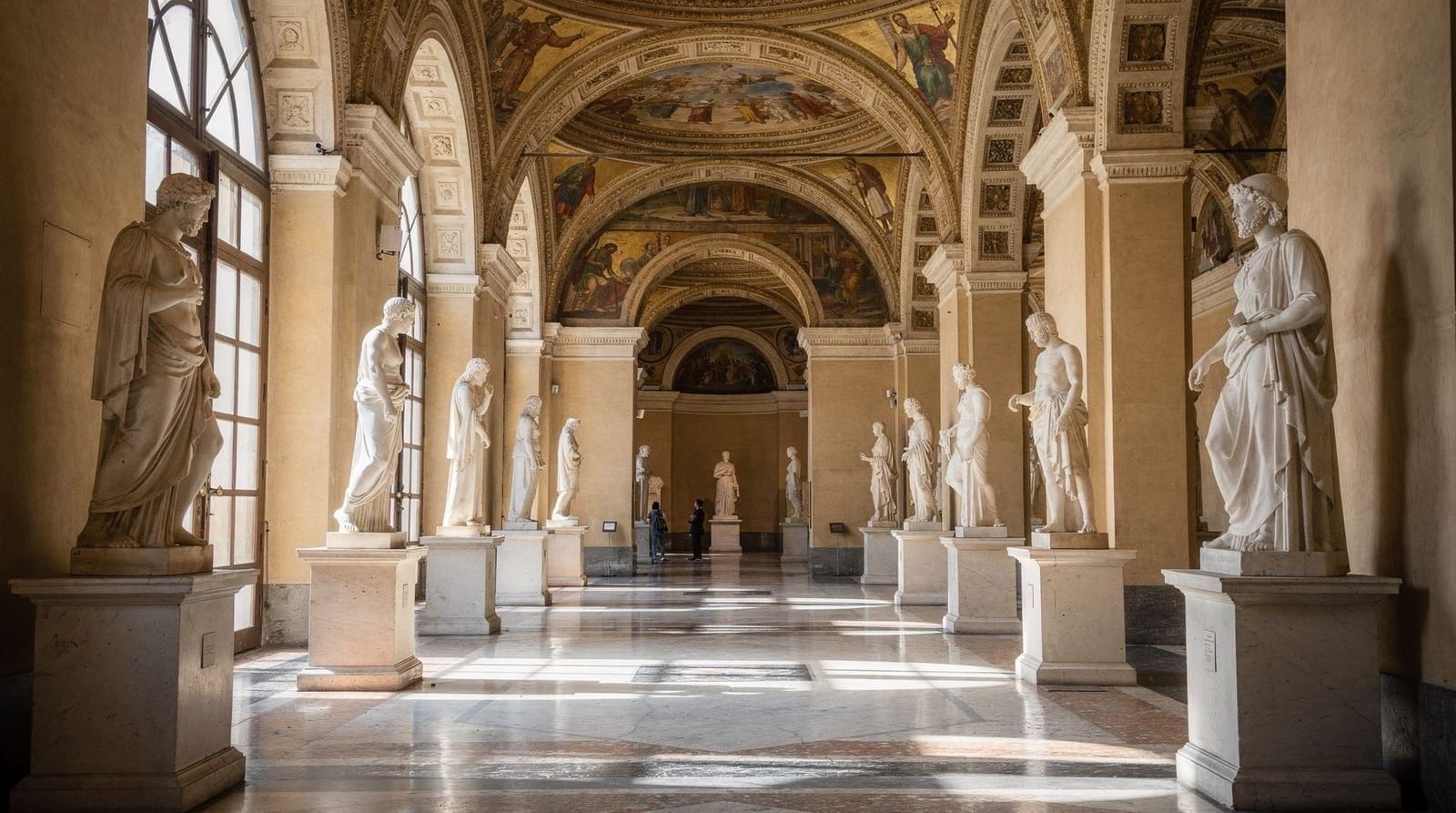
Palazzo Altemps is in the Centro Storico near Piazza Navona, a 15-minute walk from the Campo de’ Fiori in a well-preserved Renaissance palace that itself merits attention. The museum opened in 1997 and displays ancient sculpture — primarily from the Altemps, Mattei, and Boncompagni Ludovisi family collections, some of Rome’s great patrician collections of the 16th–18th centuries.
The display philosophy differs from Palazzo Massimo. At Altemps, the sculptures are exhibited in the original palace rooms, against frescoed walls and polished stone floors, in a setting that is historical in its own right. This contextualises the ancient objects differently: you are seeing them as a Renaissance nobleman would have seen them — as art objects displayed for cultural prestige in a domestic setting.
The highlights include:
The Ludovisi Throne: A 5th-century BCE Greek marble carved relief, long thought to be an altar, showing a female figure (possibly Aphrodite) rising from the sea flanked by two attendants. The quality of the carving — the transparency of wet drapery, the tenderness of the gesture — is exceptional. Its authenticity has been periodically questioned by scholars but its visual quality is undeniable.
The Galatian Suicide group: A Roman marble copy of a Greek bronze group showing a Galatian warrior killing himself after killing his wife to prevent her capture. The drama and technical virtuosity of the composition are characteristic of Hellenistic sculpture at its most emotionally ambitious.
The collection rooms: Moving through the palace, each room presents a different aspect of ancient collection practice — from mythological subjects to Roman imperial portraiture. The Renaissance decor surrounding the ancient objects creates a complex layering of historical periods.
Terme di Diocleziano
Priority: Medium — essential for architecture, optional for collections.
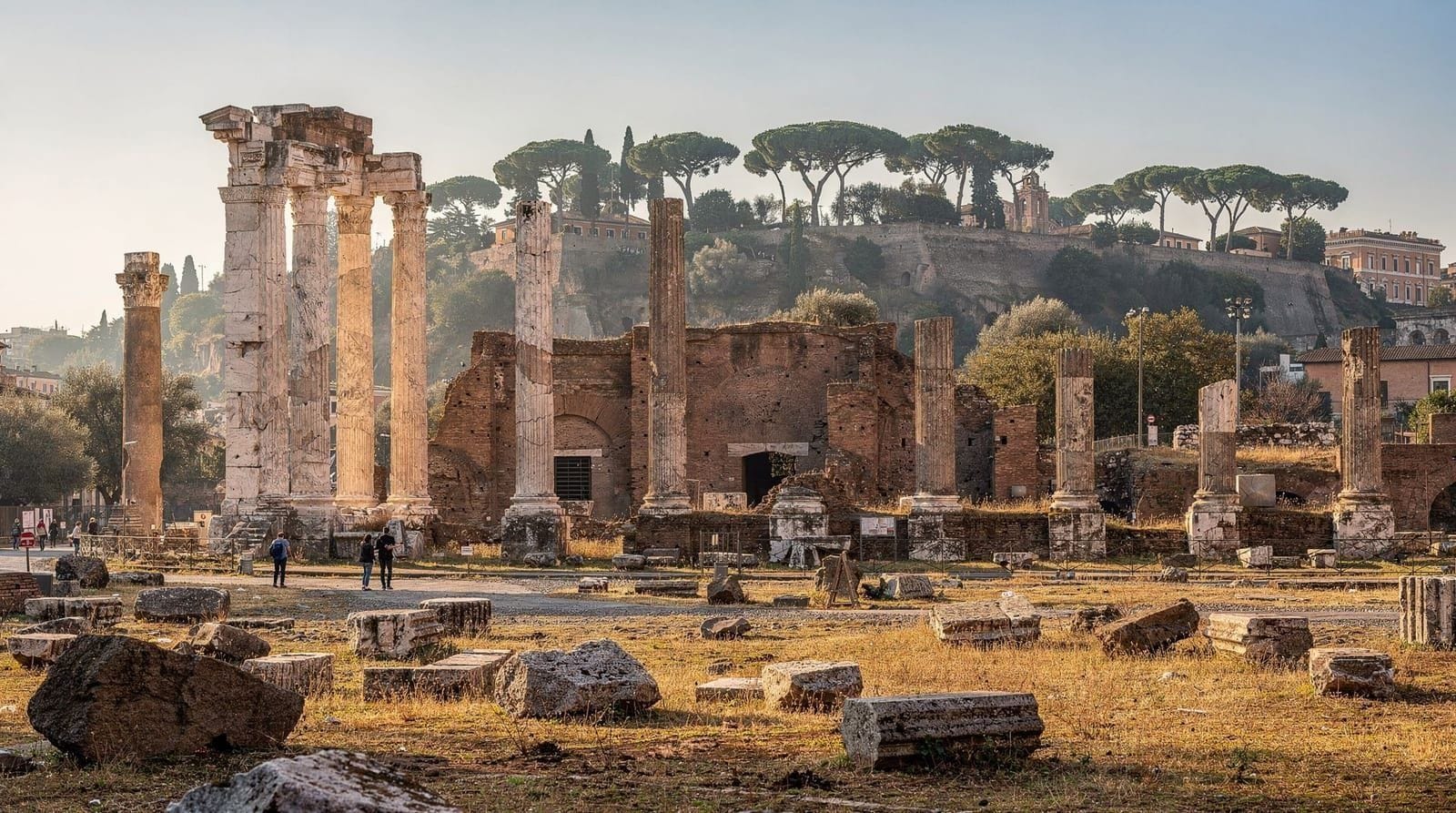
The Baths of Diocletian (Terme di Diocleziano) were the largest public baths complex in ancient Rome, built between 298 and 306 CE and capable of accommodating 3,000 bathers simultaneously. The site covers an enormous area of what is now the neighbourhood around Piazza della Repubblica.
The National Roman Museum uses a portion of the ancient building for its epigraphic collection — the largest collection of Latin inscriptions in the world. For most general visitors, “world’s largest collection of Latin inscriptions” is not an immediate draw. But the building itself, and the concept of its reuse over 1,700 years, is worth understanding.
Michelangelo converted the main hall of the baths into the church of Santa Maria degli Angeli in the 1560s — a project in which he retained much of the ancient structure. The museum occupies an adjacent cloister (also originally by Michelangelo) and some of the ancient tepidarium and cloister spaces. The combination of ancient brick vaults, Renaissance architecture, and open-air archaeological fragments is unusual and atmospheric.
The Aula Ottagona (Octagonal Hall), a short walk away on Via Romita, is a separate free-standing ancient building connected to the baths complex — a domed octagonal hall that survived because it was used as a storage space by the Fascist-era finance ministry. It reopened as an exhibition space and contains significant ancient bronzes and sculpture. Entry is included with the National Roman Museum ticket.
Crypta Balbi
Priority: Low for most visitors; essential for those interested in medieval Rome.
The Crypta Balbi is physically a theatre built by Lucius Cornelius Balbus around 13 BCE — one of several theatres clustered in the area of Largo Argentina. Over the following 2,000 years, the theatre was demolished, the crypta (the portico behind the stage) was converted into a housing complex, and the entire area was buried and built over repeatedly.
The museum uses this stratigraphy as its core concept: an exhibition showing how Rome developed from the ancient theatre through early medieval settlement to medieval workshop district to Renaissance and later buildings, with the layers visible in the excavation below the current museum floor level.
It is a brilliant museum concept for anyone interested in how Rome’s urban layers work — the kind of site where you genuinely understand that Rome is not built on ancient Rome but built through it, layer by layer, for twenty consecutive centuries. For visitors focused primarily on antiquity or art, it may not be an immediate priority.
Comparing the four sites at a glance
| Site | Priority | Time to allow | Best for |
|---|---|---|---|
| Palazzo Massimo alle Terme | Essential | 90–120 min | Frescoes, portraiture, the Boxer at Rest |
| Palazzo Altemps | High | 45–75 min | Sculpture in a Renaissance palace setting |
| Terme di Diocleziano | Medium | 45–60 min | Architecture, inscriptions, Michelangelo’s cloister |
| Crypta Balbi | Low (unless medieval Rome interests you) | 45–60 min | Understanding Rome’s layered urban history |
If you only have time for one site, the table above resolves the question in Palazzo Massimo’s favour every time. If you have a full two days for museums, Palazzo Massimo and Altemps pair well on day one (both are manageable in a single afternoon if timed carefully), leaving Terme di Diocleziano and Crypta Balbi for a second, more specialist day.
Practical visit planning
Ticket purchase: Buy online in advance for Palazzo Massimo — the site is well-trafficked and the basement frescoes in particular have controlled access. Walk-in is generally possible for Palazzo Altemps, Terme di Diocleziano, and Crypta Balbi.
Ticket validity: Three consecutive days for all four sites. If you visit Palazzo Massimo on day one and decide to visit Palazzo Altemps the following day, the same ticket works.
Hours: All four sites operate Tuesday–Sunday, approximately 09:00–19:45. Closed Mondays. Check the official Museo Nazionale Romano website for current hours and any temporary closures.
Audio guide: The audio guide for Palazzo Massimo (€5) is strongly recommended for the fresco gallery, where explanations of the Villa of Livia context and the painting techniques significantly enhance the experience.
Photography: Permitted in most areas. The fresco rooms at Palazzo Massimo are dimly lit; a camera with good low-light performance is helpful. Tripods are not permitted.
Accessibility: Palazzo Massimo and Palazzo Altemps both have lift access to upper floors, though some sections of the historic buildings retain original stairs; check ahead if step-free access is essential. Cloakrooms are available at Palazzo Massimo for bags and coats, useful given the temperature-controlled fresco rooms.
With children: The Boxer at Rest and the garden frescoes tend to land well even with children who find most sculpture galleries tiring — the “blood” copper inlay and the trompe-l’oeil garden room have an immediate, tangible appeal that abstract statuary often lacks.
Castel Sant’Angelo and the National Roman Museum form an excellent pairing for a museum-focused day — both are central, both offer a different dimension of Roman history, and both are significantly less crowded than the Vatican or Colosseum.Palazzo Massimo versus the Capitoline Museums: which first?
This is a genuine choice for visitors with limited time. Both are world-class collections of ancient Roman art, and the overlap in material means you may feel a degree of repetition if you visit both in quick succession.
The key difference: the Capitoline Museums (covered in our Capitoline Museums guide) are stronger on monumental sculpture, the equestrian statue of Marcus Aurelius, and Etruscan material. Palazzo Massimo is stronger on painting (unique), portraiture, bronzes, and the experience of the fresco galleries.
If you visit one: Palazzo Massimo gets the nod for the frescoes alone, which are irreplaceable and nowhere else replicated.
If you visit both: Capitoline first (for the overview of Roman civilization and the Tabularium with its Forum views), then Palazzo Massimo the following day for the painting and bronze masterworks.
Connecting the sites to Rome’s wider museum picture
The National Roman Museum’s four sites cover ancient Rome’s material culture comprehensively but incompletely — there are significant ancient objects elsewhere, notably the Capitoline Museums and the Ara Pacis.
For medieval and Renaissance Rome, the Doria Pamphilj Gallery and Palazzo Barberini fill the chronological gap. For baroque sculpture, the Borghese Gallery is the essential destination.
The best museums in Rome guide synthesises all of this into a prioritised list for visitors with different amounts of time and different interests. For visitors sequencing a broader ancient-Rome day, see our guides to the Roman Forum and Palatine Hill, or the compressed ancient Rome in one day itinerary — Palazzo Massimo pairs naturally with either since it sits a short Metro or bus ride from the Colosseum area, and shares the same Termini-adjacent Esquilino/Termini neighbourhood.
Borghese Gallery entry ticket — the natural baroque-sculpture counterpart to Palazzo Massimo’s ancient collections, on a separate dayThe National Roman Museum, at €12 for four sites over three days, is Rome’s best-value museum ticket. The Villa of Livia frescoes in the Palazzo Massimo basement justify the ticket price alone, and the Boxer at Rest is one of the great works of ancient art anywhere in the world. Do not leave Rome without seeing both.
How this fits a longer Rome stay
For a first-time visitor building a broader itinerary, the National Roman Museum works best slotted into a day that is not already saturated with major sights — pairing Palazzo Massimo with a relaxed morning near Termini rather than squeezing it in after the Colosseum and Forum. See our Rome in 3 days overview for how museum time typically fits around the headline ancient sites, and getting around Rome for the bus and Metro links between the four sites (Palazzo Massimo and Terme di Diocleziano are adjacent; Palazzo Altemps and Crypta Balbi require a bus, tram, or a 15–20 minute walk from Termini). Readers wanting the deeper historical throughline of the objects on display — how Republican Rome became Imperial Rome, told through its art — should also read our Rome history guide.
Frequently asked questions about National Roman Museum: four sites, one ticket
Which National Roman Museum site should I prioritise?
How much does the National Roman Museum cost?
Where are the four National Roman Museum sites?
What is in Palazzo Massimo alle Terme?
What is the Boxer at Rest?
How long does the National Roman Museum take?
Is the National Roman Museum well-signposted in English?
Top experiences
Bookable activities with verified prices and instant confirmation on GetYourGuide.