The best museums in Rome: an honest ranked guide
Borghese Gallery Skip-the-Line Entry Ticket; Rome
What are the best museums in Rome?
The Borghese Gallery is Rome's finest single museum experience — Bernini sculptures, Caravaggio paintings, and a strict two-hour slot that forces focus. Second is the Vatican Museums (enormous, overwhelming, but contains the Sistine Chapel and Raphael Rooms). Third, the Capitoline Museums for Roman history and the best Forum views. Fourth, the National Roman Museum's Palazzo Massimo for ancient painting. After these four, the field opens: Palazzo Barberini, Doria Pamphilj, and Castel Sant'Angelo round out the essential tier.
How to approach Rome’s museums without losing your mind
Rome has more world-class museums per square kilometre than any other city on earth. This is both its great gift and its practical problem: you cannot see everything, and attempting to will exhaust you before you have seen anything properly.
This guide takes an honest approach. It ranks Rome’s major museums not by prestige or size but by the quality of the visitor experience they actually deliver — accounting for crowds, booking requirements, what is actually on display, and whether the visit justifies the time and money it requires.
It also tells you which museums to skip if you are short on time, and why some extremely famous institutions deliver a worse experience than their reputation suggests.
| Must-book | Borghese Gallery (10–14 days ahead) |
| Strongly advised | Vatican Museums (3–4 weeks in peak season) |
| Time budget | 2 major museums + 2–3 smaller ones over 4 days |
| Cheapest essential | Palazzo Massimo, €12 for all 4 National Roman Museum sites |
| Skip if short on time | EUR Museum of Roman Civilisation (mostly plaster casts) |
Tier 1: Essential — the four you must see
1. Borghese Gallery
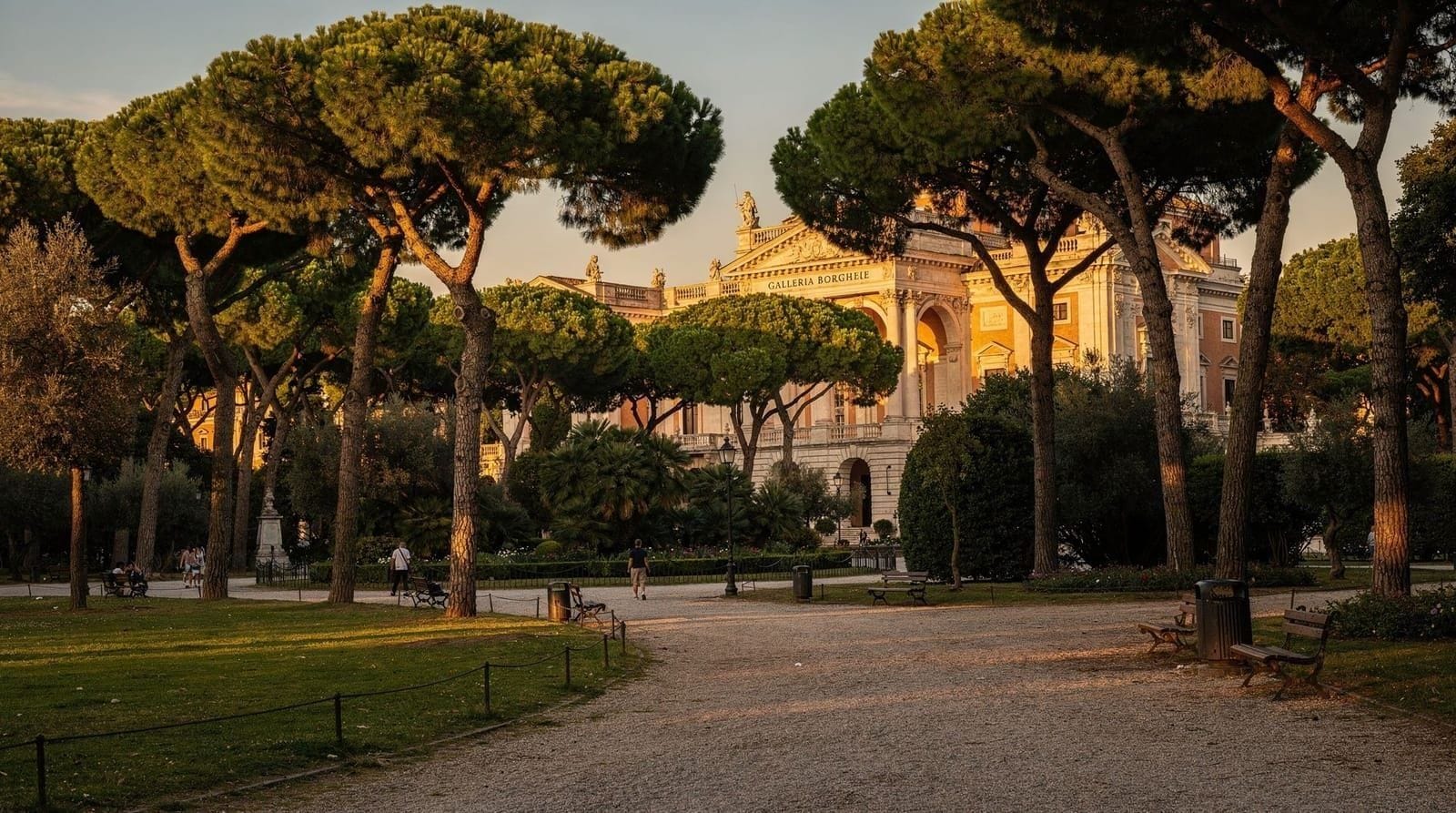
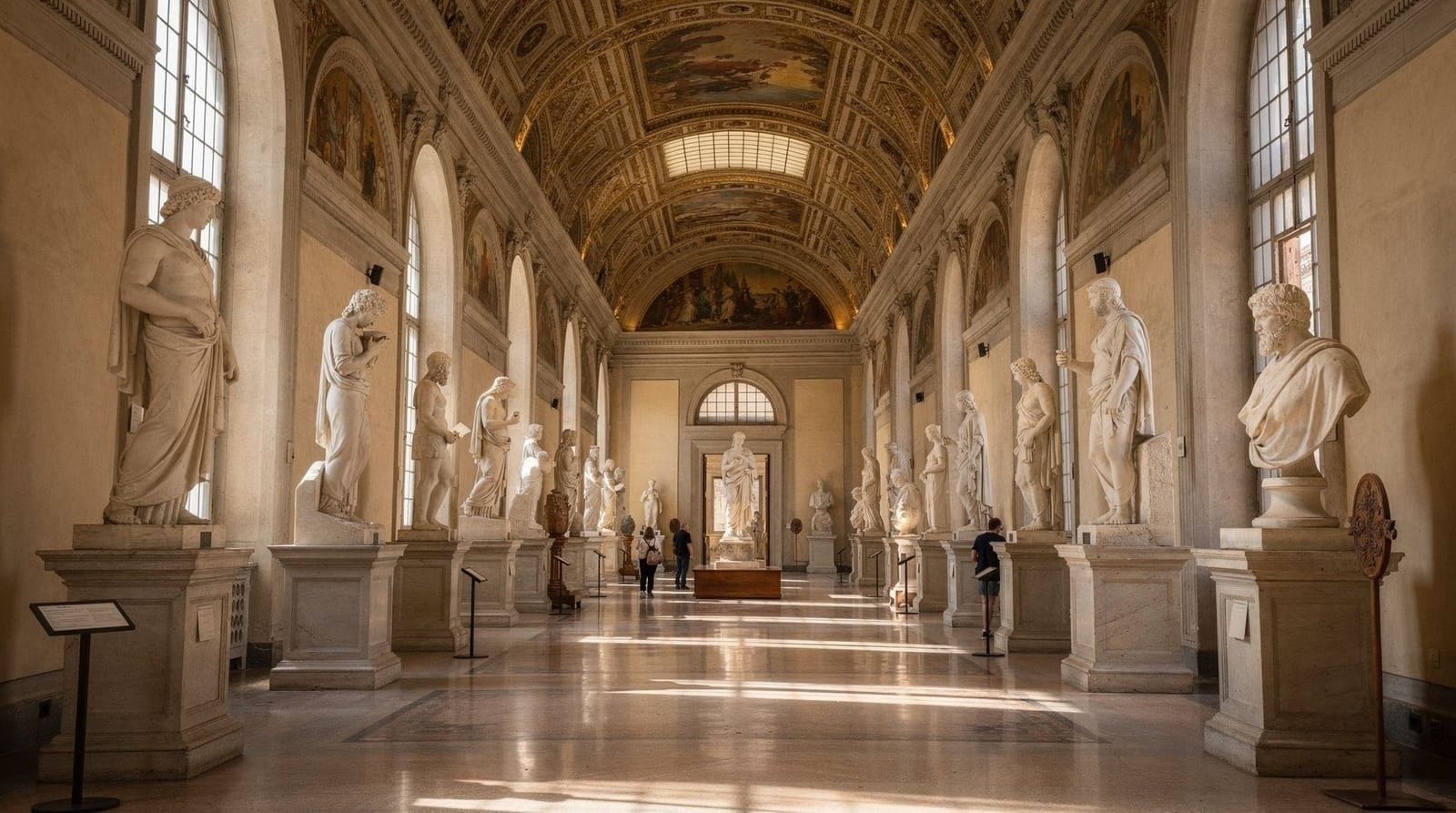
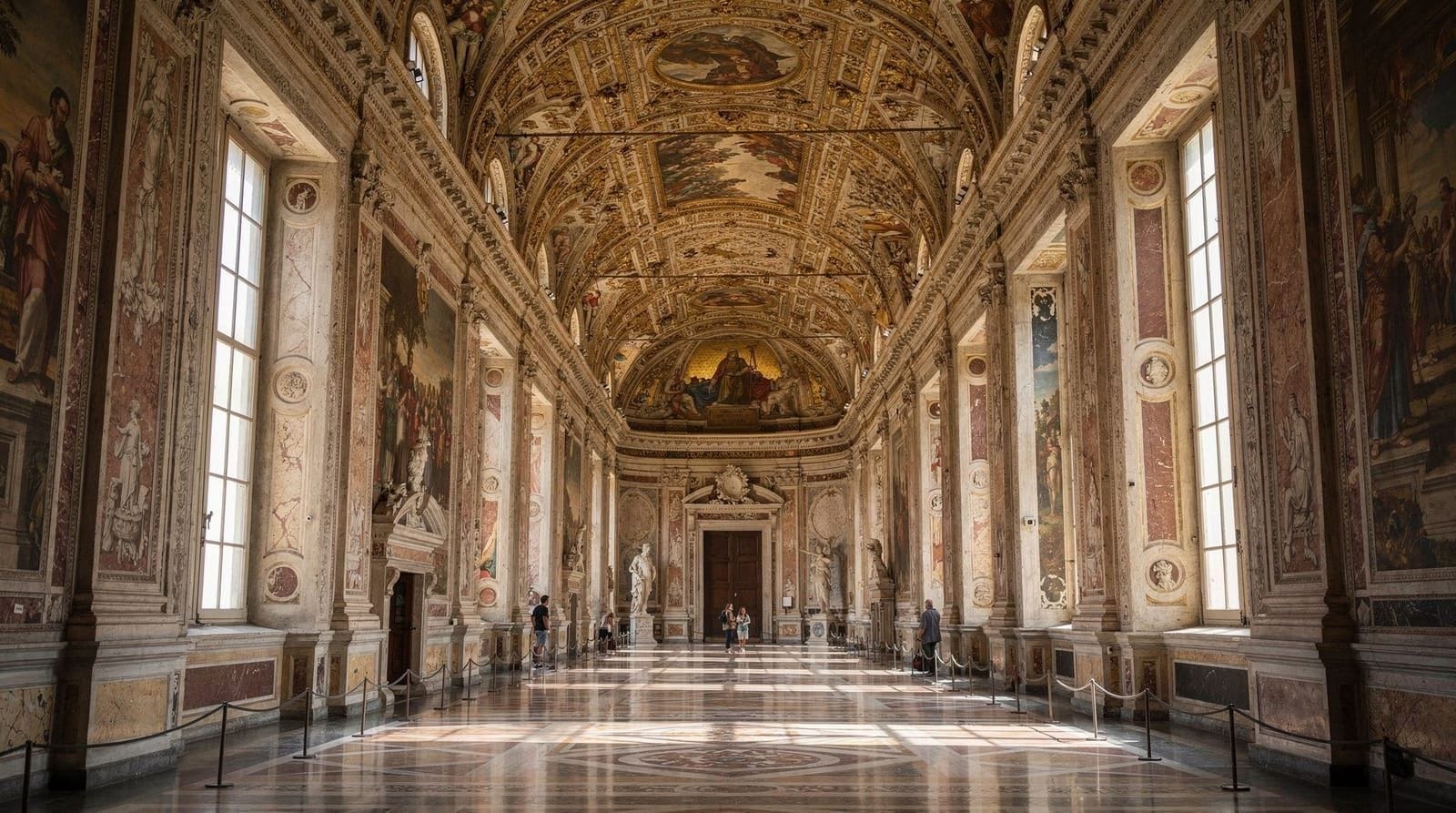
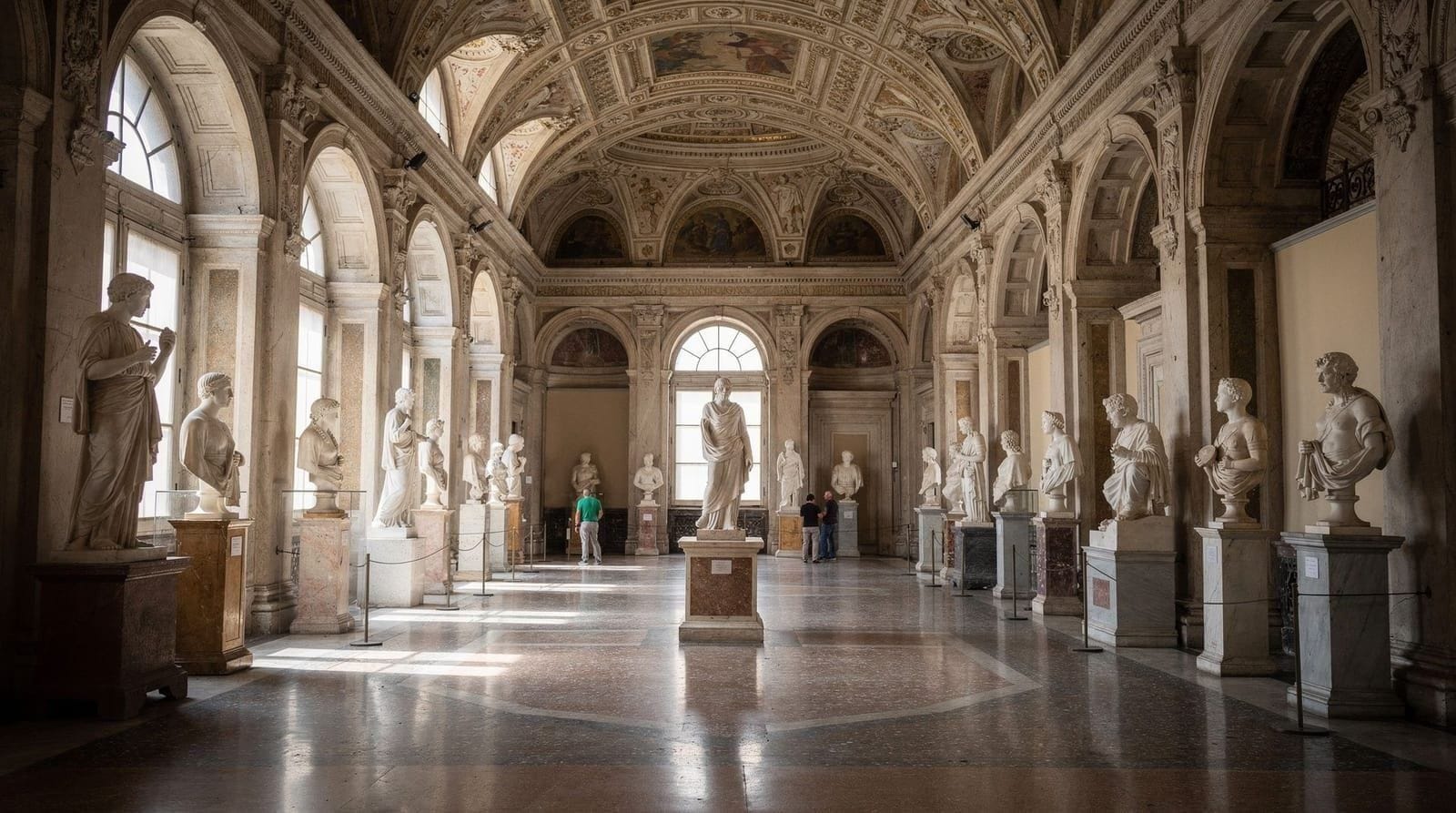
Why it tops the list: The Borghese Gallery does something no other Rome museum quite achieves: every object in it is a masterwork. There is no mediocre filler. The collection was assembled by Cardinal Scipione Borghese in the early 17th century and has remained substantially intact — an extraordinary act of cultural luck, since most comparable Italian aristocratic collections were dispersed across Europe by the 19th century.
The Bernini marbles — Apollo and Daphne (1622–25), The Rape of Proserpina (1621–22), David (1624) — are the highlights. These are not sculptures in the academic sense; they are physical performances. Apollo and Daphne in particular achieves something that should be impossible in marble: the moment of transformation, bark and leaves erupting from human flesh, frozen in a medium that seems antithetical to motion. It is one of the most astonishing objects in the history of art.
The Caravaggio paintings — Boy with a Basket of Fruit, David with the Head of Goliath, St. Jerome, and others — are among his finest Roman period works. Raphael, Titian, Correggio, and Rubens fill the upper rooms.
The two-hour slot system is not a limitation but an advantage: you leave before museum fatigue sets in, having seen only world-class work.
Booking: Mandatory. Limit 180 visitors per two-hour session. Book via the official site or via GetYourGuide. See the Borghese booking guide for step-by-step instructions.
Book your Borghese Gallery slot well in advance — this is the most important museum booking in Rome and it regularly sells out 10–14 days ahead in peak season.Time needed: Two hours (enforced). Best slot: 09:00 (first entry, freshest energy) or 11:00 (allows a morning in the Villa Borghese gardens first).
Ticket price: €13 museum ticket + €2 booking fee = €15.
2. Vatican Museums and Sistine Chapel
Why it matters: The Sistine Chapel ceiling is one of the most significant paintings in human history. Michelangelo’s project (1508–12) and The Last Judgment on the altar wall (1536–41) define a moment in art that cannot be overstated. The Raphael Rooms — four rooms painted by Raphael for Pope Julius II — are comparably important: the School of Athens alone is worth crossing continents for.
The Vatican Museums also contain the Gallery of Maps (topographically staggering), the Pinacoteca (a painting collection including Caravaggio’s Entombment of Christ), and the Egyptian and Etruscan collections. There is more significant art here than you can properly absorb in a single visit.
The honest downside: The Vatican Museums are enormous and often crushingly crowded. The path to the Sistine Chapel is long — you walk approximately 4–7 km depending on your route. The Sistine Chapel itself is routinely so packed that standing and looking upward feels precarious. Guards shout for silence every few minutes, which is surreal in a sacred space. The exit process is chaotic.
None of this negates the experience — the ceiling remains overwhelming regardless of crowds. But go in with accurate expectations.
Booking: Essential in peak season. Three to four weeks ahead for April–June and September–October. The early morning tours (before standard opening) are significantly better — the Sistine Chapel with 40 people rather than 400 is a different experience.
Skip-the-line Vatican Museums and Sistine Chapel entry — booking online is essential in peak season and saves at least 1–2 hours of queue time.Time needed: Three to four hours minimum; allow a full morning.
Ticket price: €20 standard online ticket (€17 base + €3 online booking fee). Early access tours €80–120. See the Vatican tickets guide for all options.
3. Capitoline Museums
Why they matter: The Capitoline Museums are the world’s oldest public museums (established by Pope Sixtus IV in 1471) and contain one of the most significant collections of ancient Roman sculpture. The equestrian statue of Marcus Aurelius is the best-preserved ancient bronze in Rome. The Capitoline Wolf (though its dating is now debated — possibly medieval rather than ancient) remains an iconic image. The Dying Galatian is one of the most moving ancient sculptures anywhere.
Beyond the objects, the Capitoline Museums offer the single best interior view of the Roman Forum — from the Tabularium (ancient records office) incorporated into the museum, you look directly down into the Forum from above. This view contextualises everything you see when you subsequently walk the Forum at ground level.
The Capitoline Hill itself, designed by Michelangelo, is one of Rome’s great civic spaces.
Time needed: Two to three hours.
Ticket price: €16 standard adult. Included in the Roma Pass.
See our Capitoline Museums guide for the full visit breakdown.
4. National Roman Museum — Palazzo Massimo
Why it makes Tier 1: The Villa of Livia frescoes in the basement are unlike anything else in Rome — complete, intact ancient wall paintings of extraordinary quality, showing a garden landscape in continuous illusionistic perspective. These are the originals, not copies, removed from Augustus’s wife’s villa and preserved here. Nowhere in Rome can you see ancient Roman painting at this scale and quality outside of specialist excavations.
The museum also holds the Boxer at Rest (a Greek bronze of the 4th–3rd century BCE, found on the Quirinal Hill) — arguably the single most psychologically powerful ancient sculpture you will see in Rome outside the Borghese.
Time needed: 90–120 minutes for Palazzo Massimo alone.
Ticket price: €12, covering all four National Roman Museum sites for three days.
See our National Roman Museum guide for the complete four-site breakdown.
Tier 2: Highly recommended — go if you have time
5. Palazzo Barberini
Caravaggio’s Judith Beheading Holofernes, Raphael’s La Fornarina, Holbein’s Henry VIII, and Pietro da Cortona’s ceiling in the Gran Salone. An undervisited gem with short queues and reasonable admission (€12). See our Palazzo Barberini guide for what to prioritise.
6. Castel Sant’Angelo
Technically a fortress, a papal residence, and a mausoleum before it was a museum. The Castel Sant’Angelo has a confusing history precisely because it has been so many things. The collection inside is secondary to the building itself and the views from the rooftop terrace over the Tiber and the Vatican dome. The Passetto di Borgo (the elevated passageway connecting the castle to the Vatican) is visible from outside and adds narrative context to the visit.
The museum is also the closest Rome gets to a medieval experience — the spiral ramp ascending through the ancient mausoleum structure is extraordinary architecture. Ticket is €16. See our Castel Sant’Angelo guide for detail.
7. Doria Pamphilj Gallery
An intact aristocratic collection in a palazzo still owned by the Pamphilj family — the audio guide is narrated by a current family member. The key works are Velázquez’s portrait of Pope Innocent X (the sitting pope when the collection was assembled) and the Room of Mirrors, a baroque interior of significant ambition. Admission €13. Rarely crowded.
See the Doria Pamphilj guide for the visit details.
8. Ara Pacis Museum
Augustus’s altar of peace housed in Richard Meier’s controversial glass pavilion. The altar’s processional friezes are among the most accomplished surviving examples of Augustan-era sculpture. See our Ara Pacis guide. Admission €12. Light crowds.
Tier 3: Worth considering for specific interests
9. MAXXI — Museum of 21st Century Art
For contemporary art and architecture, MAXXI is the essential Rome destination — Zaha Hadid’s 2010 building is a masterwork in its own right, and the collections include significant Italian contemporary art and the world’s finest Italian architectural archives. See our MAXXI guide. Admission €15.
10. Museo di Roma (Palazzo Braschi)
The history of Rome from the medieval period to the 19th century, in a neoclassical palazzo on Piazza Navona. Strong on 18th–19th century painting and decorative arts; good for understanding pre-modern Rome. Admission included in some Rome passes.
11. Palazzo Altemps
Part of the National Roman Museum network, Palazzo Altemps shows ancient sculpture in a Renaissance palace setting near Piazza Navona. The Ludovisi Throne and the Galatian Suicide are the highlights. Covered by the €12 National Roman Museum ticket.
12. National Gallery of Ancient Art — Palazzo Corsini
The sister institution to Palazzo Barberini, across the Tiber in Trastevere. A smaller collection with good examples of 16th–17th century painting. Covered by the combined Barberini–Corsini ticket (€15).
Museums to approach with realistic expectations
The Museum of Rome in Trastevere: Occupies a beautiful medieval convent, but the collection (Roman popular traditions, historical photographs) is of limited interest to most visitors. Worth the courtyard even if you do not go inside.
The EUR Museum of Roman Civilisation: Huge, distant from the centre, and contains primarily plaster casts of ancient sculptures rather than originals. The large-scale model of ancient Rome (one of the most complete ever made) is the reason to go; the rest of the collection is reference material.
Practical planning: a museum calendar for four days
Day 1 (morning): Vatican Museums and Sistine Chapel — start at 09:00, allow four hours. Afternoon: rest, or walk the Apostolic Palace gardens if included.
Day 2 (morning): Borghese Gallery at 09:00 or 11:00 (pre-booked). Two-hour enforced visit. Afternoon: walk Villa Borghese gardens, then Monti for dinner.
Day 3 (morning): Capitoline Museums, with time for the Forum view from the Tabularium. Afternoon: walk the Forum (separate Colosseum–Forum–Palatine ticket or time to absorb the area on your own).
Day 4 (any time): Choose two from: Palazzo Barberini, Palazzo Massimo (National Roman Museum), Ara Pacis, Castel Sant’Angelo. All are under two hours each. The Palazzo Massimo + Ara Pacis combination works well geographically if you base yourself around the Termini–Esquilino area.
See our Rome in 4 days itinerary for a day-by-day schedule that integrates museums with the rest of the city.
Museums with kids: what actually works
Not every museum on this list suits a family visit, and being honest about that saves a difficult afternoon. The Borghese Gallery’s strict two-hour slot and hushed, contemplative atmosphere is hard for younger children, though its manageable size (unlike the Vatican) makes it workable for curious 10+ year-olds. The Vatican Museums are long and exhausting even for adults; families should budget extra time, skip sections rather than power through, and consider a private or small-group tour with a guide experienced at pacing for children. The Capitoline Museums work well for most ages — the Marcus Aurelius bronze and the Forum view from the Tabularium terrace hold attention, and the visit is naturally shorter. Domus Romane at Palazzo Valentini (a separate archaeological site, not strictly a museum) is genuinely one of Rome’s best family experiences: the multimedia projection format engages children far more than static display cases.
Skip-the-line tickets: when the premium is worth paying
Several Rome museums offer a standard ticket and a “skip-the-line” or guided version at a premium, typically €10–25 more per person. The premium is worth paying for the Vatican Museums in peak season (April–October), where the standard queue can run 60–90 minutes even with online booking, because guided skip-the-line groups enter through a separate, faster channel. It is generally not worth paying extra for the Capitoline Museums or Palazzo Barberini, where queues are rarely more than 15–20 minutes even without booking. For the Borghese Gallery, there is no meaningful “skip-the-line” premium to pay — the strict slot system means everyone enters at the same controlled pace regardless of ticket type, so buy the standard timed ticket and save the difference.
Booking summary for 2026
| Museum | Booking required | Lead time (peak) | Price |
|---|---|---|---|
| Borghese Gallery | Mandatory | 10–14 days | €15 |
| Vatican Museums | Strongly advised | 3–4 weeks | €20 |
| Capitoline Museums | Optional | Walk-in often OK | €16 |
| Palazzo Massimo | Online recommended | 3–5 days | €12 |
| Palazzo Barberini | Optional | Walk-in usually fine | €12 |
| Castel Sant’Angelo | Optional | Walk-in usually fine | €16 |
| Doria Pamphilj | No booking needed | Walk-in always OK | €13 |
| MAXXI | Optional | Walk-in possible | €15 |
| Ara Pacis | Online recommended | 2–3 days | €12 |
For the complete guide to booking tickets and skip-the-line options, see Rome skip-the-line tickets.
The bottom line: Rome’s museums are world-class and varied enough to occupy weeks of serious visiting. For most four-to-five day visits, the Borghese, Vatican, and Capitoline are the non-negotiables. Everything else is gain. Start with those three, plan properly in advance, and let the rest of the city fill the spaces between.
Frequently asked questions about The best museums in Rome: an honest ranked
How many museums can I realistically visit in Rome?
Which Rome museum requires the most advance booking?
Are there free museums in Rome?
What is the difference between the Capitoline Museums and the Vatican Museums?
Is the Borghese Gallery really better than the Vatican Museums?
Can you do the Vatican Museums and Borghese Gallery on the same day?
What is the best lesser-known museum in Rome?
Is the Roma Pass worth buying for museum access?
Top experiences
Bookable activities with verified prices and instant confirmation on GetYourGuide.