Capitoline Museums: the world's oldest public museum
Rome: Guided Tour of Colosseum, Roman Forum & Palatine Hill
How much does the Capitoline Museums cost and how long does a visit take?
Standard admission is €15 adult (includes temporary exhibitions). There is no compulsory timed slot — you can usually arrive and buy a ticket on the day, though online pre-booking (tickets.museiincomuneroma.it) saves queuing. Allow 2.5–3 hours for a full visit across both palace buildings and the rooftop terrace. The Capitoline Tabularium passage provides a free view into the Roman Forum if you already hold a combined Colosseum ticket.
The oldest public museum in the world, on Rome’s most storied hill
In 1471, Pope Sixtus IV donated a group of ancient bronze sculptures to the Roman people and placed them on the Capitoline Hill. That act of public donation is generally considered the founding moment of the Capitoline Museums — making them the oldest public art museums in the world by several decades, predating the Louvre and the British Museum by centuries.
The collection has grown considerably since 1471. Today the Musei Capitolini occupy two Renaissance palaces (Palazzo dei Conservatori and Palazzo Nuovo) connected by an underground passage through the Tabularium — the ancient Roman state archive whose galleries open directly above the Roman Forum. The combination of world-class ancient sculpture, Renaissance painting, and incomparable Forum views makes the Capitoline one of Rome’s most rewarding museum visits, and one that is still significantly less crowded than the Vatican or the Colosseum.
| Where | Piazza del Campidoglio, Capitoline Hill, above the Roman Forum |
| Cost | €15 adult, free first Sunday of the month, included on the Roma Pass |
| Time needed | 90 minutes for the essentials, 2.5 hours for the full collection |
| Getting there | 10-min walk from the Colosseum via Via Sacra, or bus to Piazza Venezia |
| Best time | Weekday morning at opening (09:30) for the quietest galleries |
The Capitoline Hill and Piazza del Campidoglio
Before entering either palace, spend 15 minutes in the piazza itself. Michelangelo’s design, commissioned in 1536 and not completed until 1654 (long after his death), is a masterwork of Renaissance urban planning.
The slightly trapezoidal shape of the square is intentional — it creates an impression of greater regularity than the actual geometry allows. The oval paving pattern radiates from the central plinth where the equestrian Marcus Aurelius replica stands. The two flanking palaces are angled slightly outward rather than parallel, which amplifies the sense of the space opening toward the visitor ascending the ramp.
The Cordonata (the broad ramp accessible to horses and sedans rather than stairs) was designed to allow Pope Paul III to ride up on horseback. At the top of the ramp, the Dioscuri — two large 4th-century CE statues of Castor and Pollux — stand as entrance sentinels.
The balustrade at the far end of the piazza, behind the Palazzo dei Senatori, offers one of the best free views of the Roman Forum in Rome: the Temple of Saturn’s dark columns, the Arch of Septimius Severus, the Basilica of Maxentius — all visible in a single sweep. This viewpoint is free and accessible at any time.
Palazzo dei Conservatori: the essential building
The Palazzo dei Conservatori houses the most important objects in the collection. Enter here first.
The Marcus Aurelius
The gilded bronze equestrian statue of Emperor Marcus Aurelius (161–180 CE) is the star attraction. Displayed in the glass-roofed courtyard just inside the entrance, the horse and rider stand 4.2 metres tall. The gilding is partially intact — the surviving traces of gold on the horse’s muscles and the emperor’s robes give some sense of how overwhelming the fully gilded original must have appeared.
The statue survived because medieval Christians misidentified it as Constantine, the first Christian emperor. Statues of pagan emperors were routinely melted down for bronze; this one was spared by theological error. When the correct identification as Marcus Aurelius was established in the 8th century, the statue was too famous to destroy.
The replica now in the piazza was installed in 1990; the original was moved inside for conservation when acid rain damage became critical. Compare the two — the original’s surviving details, particularly the horse’s open mouth and the reins’ traces, are far more visible than the exterior copy suggests.
The Capitoline Wolf
The Lupa Capitolina is in the Palazzo dei Conservatori’s upper floor rooms. The bronze she-wolf with two infant figures at her teats (Romulus and Remus) has been Rome’s civic symbol for centuries — her image appears on the city’s official seal.
The controversy about dating (see FAQ above) does not diminish the object’s historical importance: regardless of when it was made, it has been Rome’s symbolic foundation image since at least the medieval period, and the two infant figures are demonstrably 15th-century Renaissance additions. The statue is smaller than most visitors expect — roughly life-sized for a large wolf, not monumental.
The Capitoline Brutus
The so-called “Capitoline Brutus” — a bronze portrait bust of stern, compressed intensity — is one of Rome’s most discussed ancient portraits. Whether it actually depicts Junius Brutus (the founder of the Roman Republic) is debated; it is likely a generic “severe Republican” portrait type. But the expression — unflinching moral seriousness — made it a Republican symbol for centuries. Michelangelo reportedly called it the greatest portrait in existence.
The Spinario
A bronze boy removing a thorn from his foot — simple, charming, and one of the most copied ancient bronzes in history. It has been in Rome’s public collection since 1165, making it one of the longest-continuously-displayed ancient objects in the world. The natural, absorbed pose — the boy entirely focused on the thorn, unselfconscious about being observed — was unprecedented in ancient sculpture when it was made.
The Palazzo dei Conservatori painting galleries
The upper floor picture gallery contains significant works including Titian’s Baptism of Christ, Rubens’ Romulus and Remus Fed by the Wolf, Caravaggio’s St John the Baptist (one of two versions in Rome — compare with the Borghese version in the Borghese Gallery guide), and Guercino’s St Petronilla. These are not the museum’s primary draw but are worth 20–30 minutes if painting is your interest.
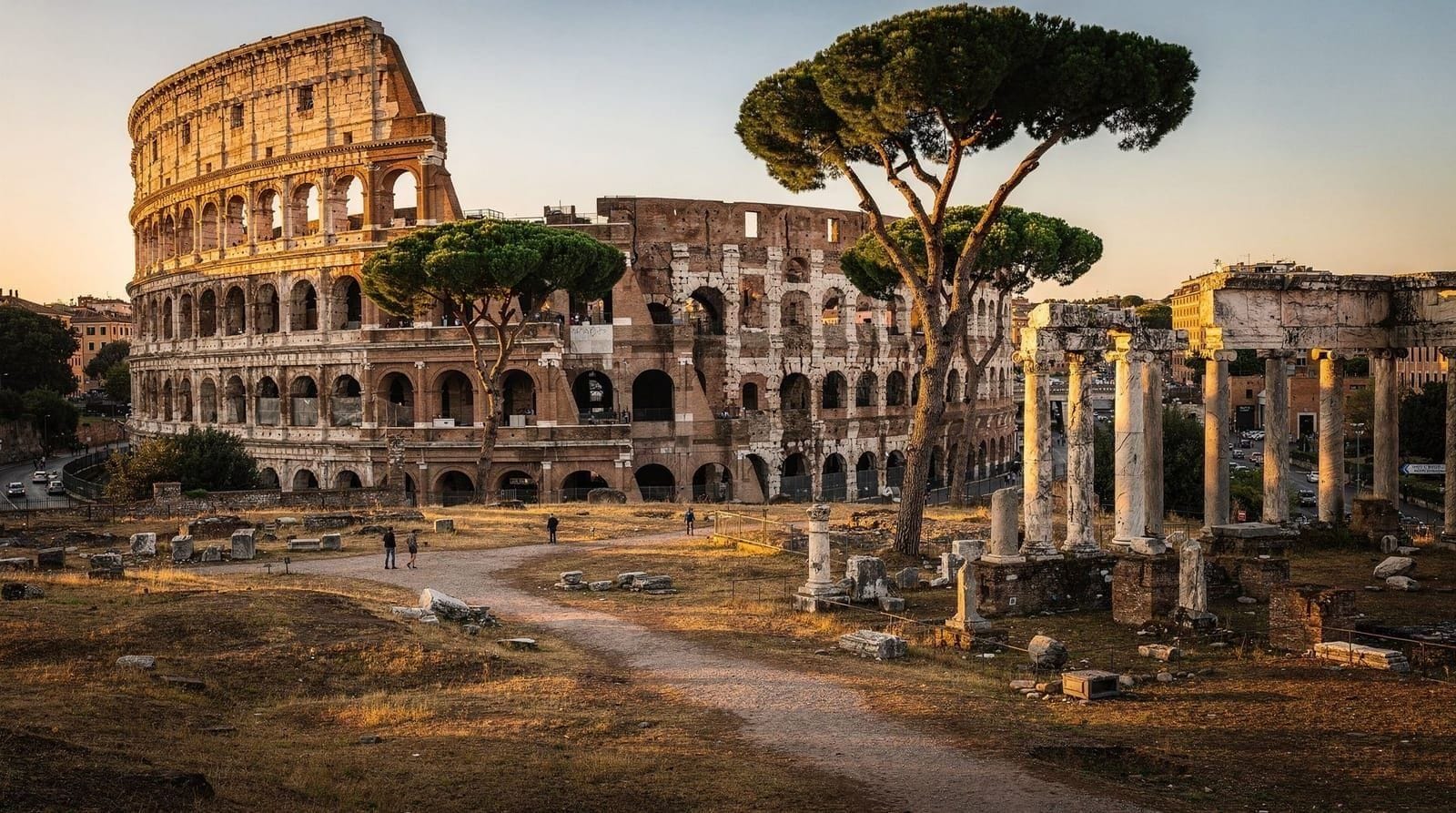
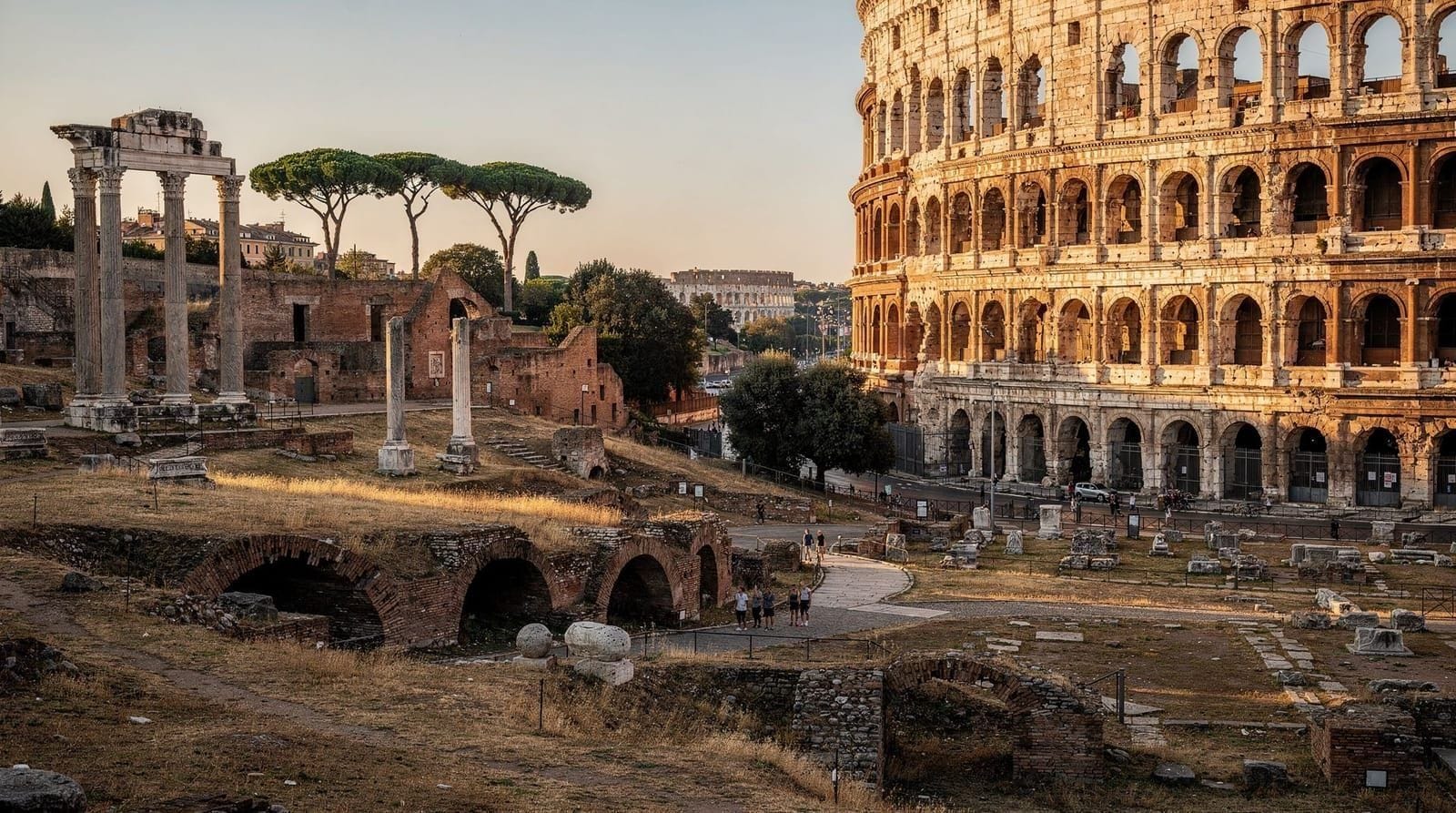
Colosseum, Roman Forum and Palatine Hill group tour — the essential ancient Rome context for understanding what the Capitoline Museums’ objects meant in their original settingThe Tabularium: walking above the Roman Forum
The underground passage connecting the two palace buildings passes through the Tabularium, Rome’s ancient state archive building (78 BCE). This is one of the most atmospheric spaces in the museum — a vaulted stone corridor with windows opening onto the Forum below.
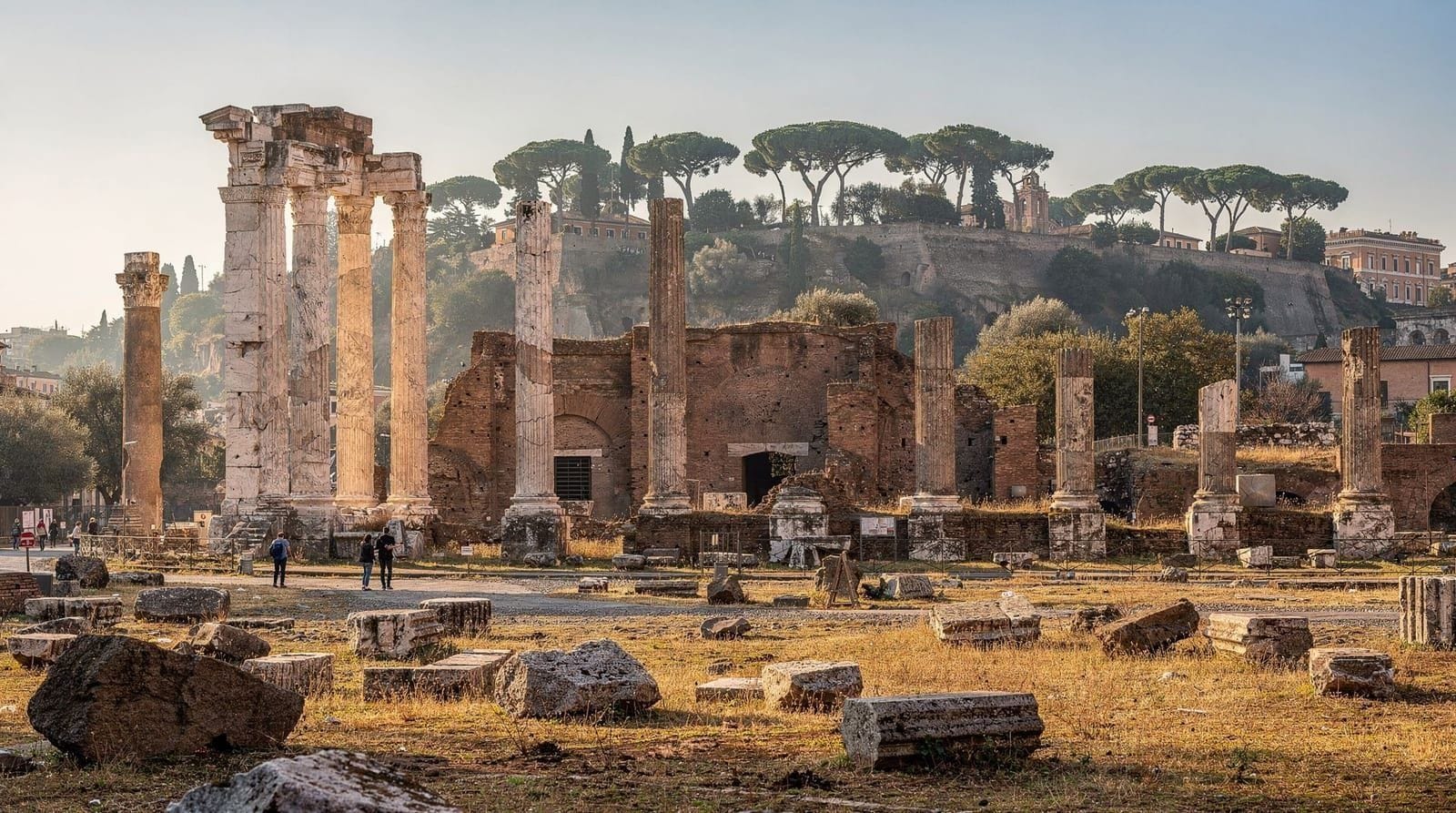
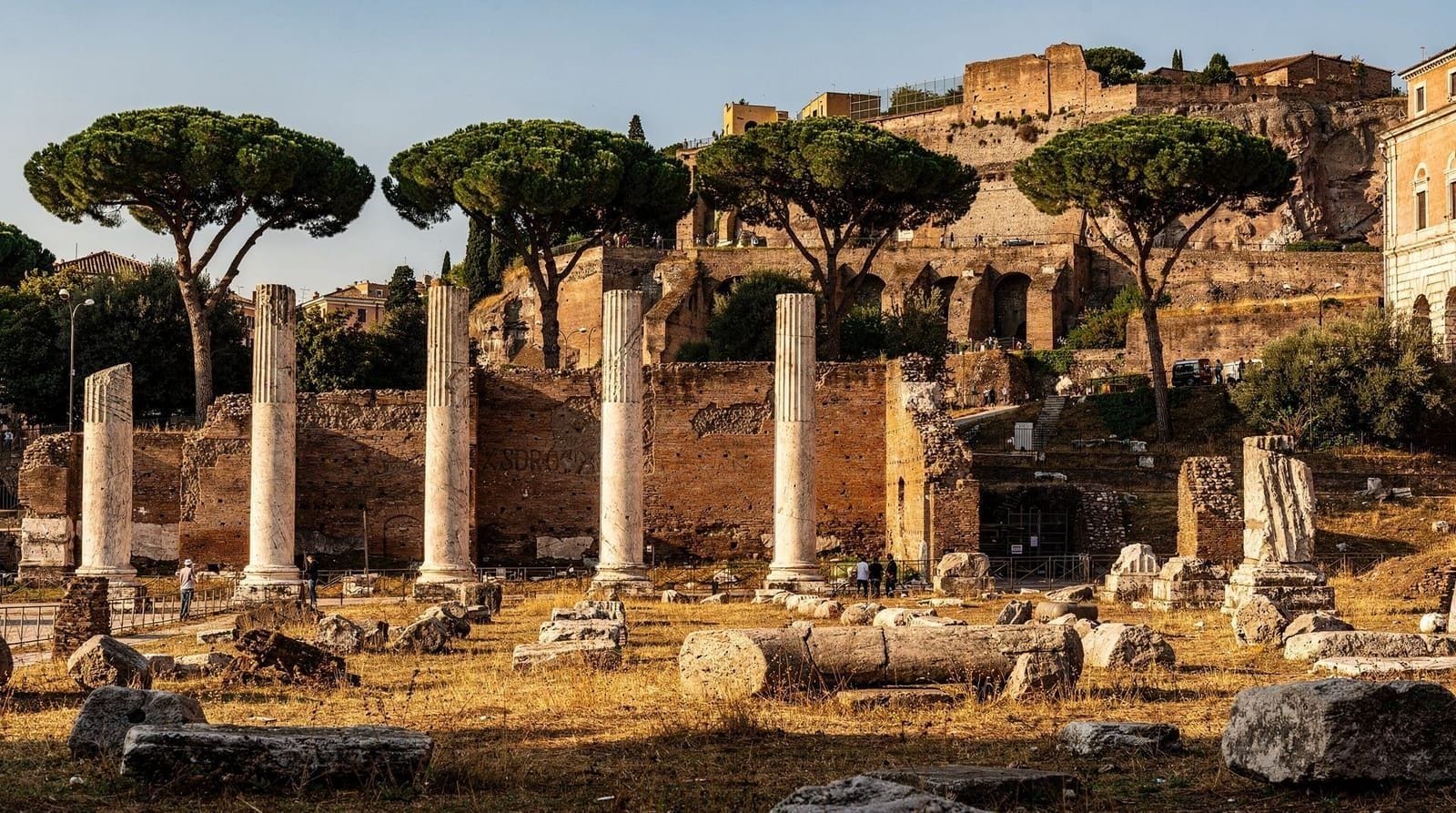
The gallery runs along the top of the ancient building, looking down through arched openings at the Temple of Saturn, the columns of the Temple of Vespasian, and the broader Forum. The view changes as you walk the length of the gallery, revealing different aspects of the Forum’s western end.
The Tabularium passage is included in the standard Capitoline Museums ticket and is underused by visitors who rush through on their way between the two palaces. Allow 15 minutes here; it is one of the best vantage points in Rome for understanding the Forum’s topography.
For a complete Forum visit at ground level, the Roman Forum guide covers every major structure from the Via Sacra. The combined Colosseum–Forum–Palatine ticket allows entry to the Forum from the Tabularium side.
Palazzo Nuovo: the classical sculpture collection
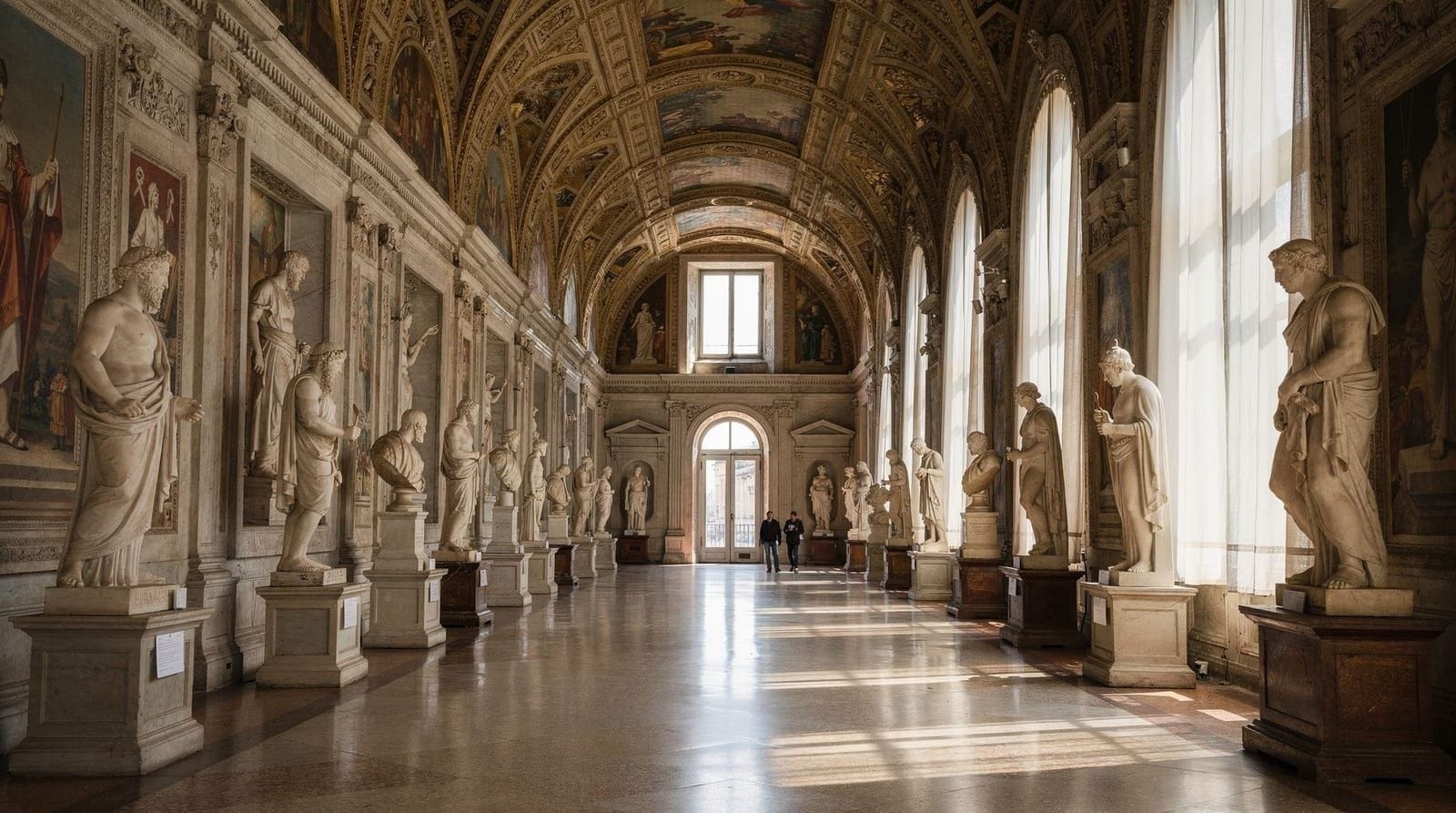
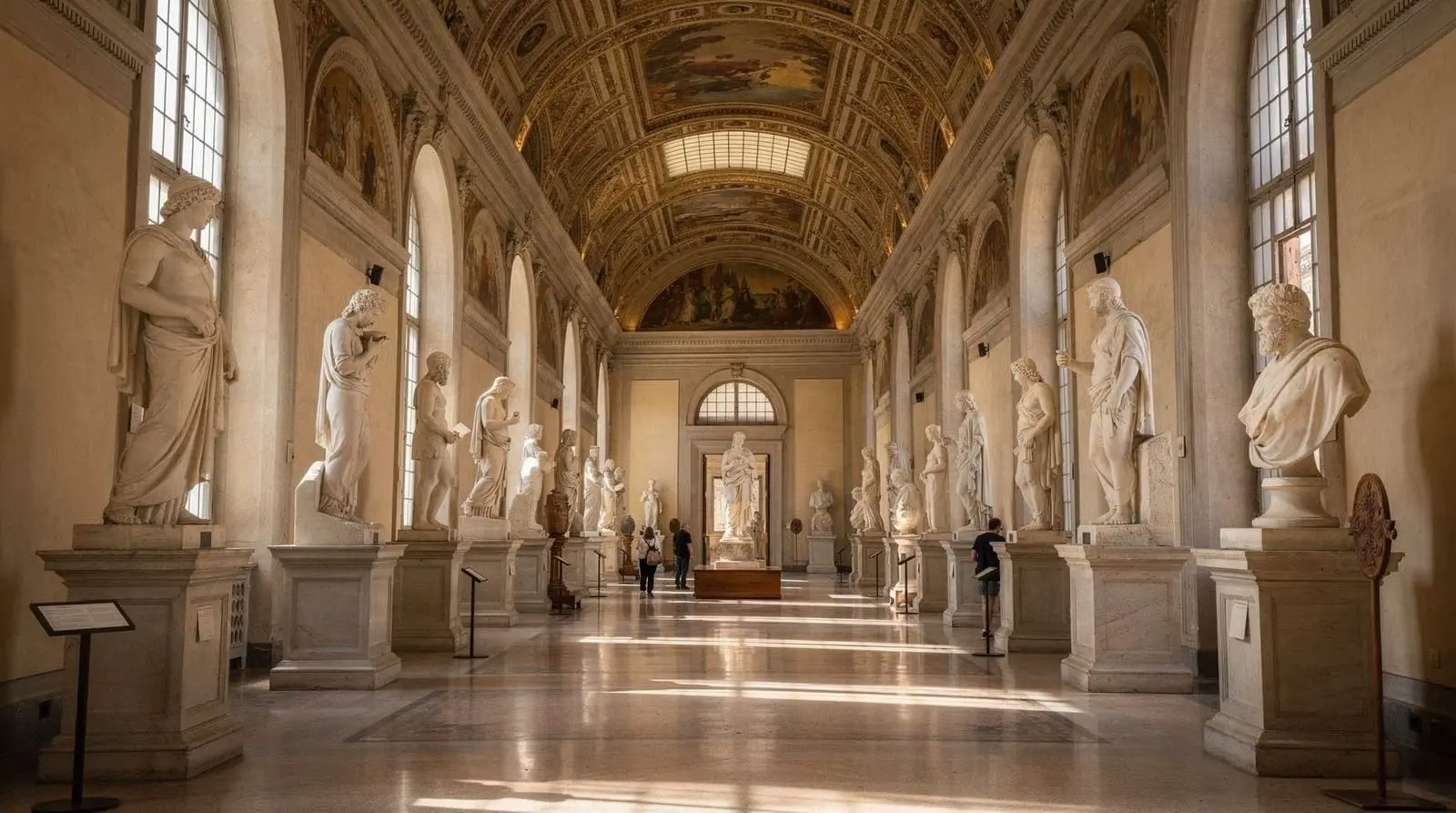
The Palazzo Nuovo, across the piazza from the Conservatori, houses the classical sculpture collection — primarily Roman copies of Greek originals, along with imperial portrait busts and the Capitoline Gaul.
The Dying Gaul
The Capitoline Gaul (Dying Gaul) is arguably the most emotionally affecting ancient sculpture in Rome outside the Borghese Gallery. A wounded Gallic warrior sits collapsed on his shield, one arm supporting his weight, blood flowing from the wound in his side. The helmet and torque (neck ring) identify him as non-Roman — a foreigner, an enemy — but the expression is not contemptible defeat; it is dignified suffering.
The figure is a Roman marble copy of a 3rd-century BCE Greek bronze, part of a group originally commissioned by the King of Pergamon to commemorate his victories over the Gauls. The technical quality of the copy is exceptional — the coiled trumped beneath the figure and the intricate torque around his neck are remarkable in marble.
The Capitoline Venus
The Capitoline Venus — a 2nd-century CE Roman marble copy of a Hellenistic original — stands in a circular room on the ground floor of the Palazzo Nuovo. The figure shows Venus emerging from a bath, momentarily surprised by observation, covering herself instinctively. The pose (known as Venus Pudica — modest Venus) influenced European sculpture for centuries and was the model for Botticelli’s Birth of Venus.
The circular room was designed specifically for this statue and its proportions — the dome above, the curved walls — create an intimate rotunda that focuses attention entirely on the figure.
The Hall of Emperors and Hall of Philosophers
Two galleries of portrait busts covering nearly the entire Roman imperial line and a parallel series of Greek philosophers provide a remarkable visual record. The emperors range from Augustus (calm, idealised) through Nero (bloated, self-satisfied) to Caracalla (brutally cropped, eyes suspiciously sideways) — the portraits track not just individual appearances but also changing fashions in imperial self-presentation.
The philosophers hall includes portraits attributed to Socrates, Plato, and others — most are generic portrait types rather than actual likenesses, but they were how educated Romans imagined these figures and decorated their homes and libraries accordingly.
The rooftop terrace and café
The Palazzo dei Conservatori has a rooftop terrace with a café that is one of Rome’s better museum views. Looking across the rooftops of the historic centre toward St. Peter’s dome, with the Forum’s ruins immediately below, it is a good place for a coffee break mid-visit. The terrace is also accessible without entering the museum proper — enter through the museum’s main entrance and ask for rooftop access only.
Prices are museum café prices (€3–5 for coffee, €5–9 for snacks) — not a bargain but not outrageous by Rome tourist-area standards.
Practical information for 2026
Tickets: €15 adult, includes temporary exhibitions. Free first Sunday of each month (queues can be significant). Online pre-booking at tickets.museiincomuneroma.it adds a small booking fee (approximately €1–2) but saves queuing at the ticket desk. Roma Pass holders: the Capitoline is included as one of the two free museums on the 48-hour pass.
Hours: Tuesday–Sunday 09:30–19:30 (last entry 18:30). Closed Monday. Check the official site for holiday closures — the museum closes on certain public holidays (Christmas Day, New Year’s Day, 1 May).
How long to visit: 2–2.5 hours for a full visit across both palaces and the Tabularium. 90 minutes is sufficient for the essential highlights: Marcus Aurelius, Capitoline Wolf, Dying Gaul, and the Tabularium Forum view.
Audio guide: Available (€6) and recommended. The free official app (Musei Capitolini) also provides audio content for key works.
Accessibility: Both palaces have lift access. The Tabularium passage has some uneven ancient flooring; the main galleries are flat. The cordonata ramp provides step-free access to the piazza.
Colosseum and ancient Rome tour — skip-the-line access with expert guide, ideal for building the historical context that makes the Capitoline Museums’ collection come aliveCombining the Capitoline with other ancient Rome sites
The Capitoline Museums sit at the precise junction between the historic centre and the ancient city, making them the natural anchor point for an ancient Rome day.
Morning: Arrive at Capitoline Museums at 09:30 opening — 2.5 hours covers the full collection.
Lunch: Descend toward the Forum area. Several reasonable trattorie on Via dei Fori Imperiali and in the Celio neighbourhood (15 minutes’ walk) — avoid the touristy spots immediately at the Colosseum entrance.
Afternoon: Enter the Roman Forum and Palatine Hill complex using the combined ticket. The Tabularium passage you walked through this morning looks entirely different from Forum level. See our Roman Forum guide for the key structures.
Late afternoon: Colosseum, 2–3 hours. This is a long day (8–9 hours) but covers ancient Rome comprehensively. Consider splitting across two days and spending more time in the Capitoline picture galleries and the Capitoline Hill gardens (free, on the south side of the Palazzo dei Senatori) if your interest runs deep.
For the ancient Rome one-day itinerary, see ancient Rome in one day.
How the Capitoline compares to Rome’s other major museums
| Museum | Ticket price | Booking pressure | Best for |
|---|---|---|---|
| Capitoline Museums | €15 | Low — walk-up usually fine | Ancient sculpture, free Forum views |
| Borghese Gallery | €17 | Very high — book weeks ahead | Bernini and Caravaggio in a 2-hour slot |
| Vatican Museums | From €21 | High for morning slots | Sistine Chapel, unmatched scale |
Of Rome’s three flagship museum experiences, the Capitoline is consistently the least stressful to plan around — it rarely requires the weeks-ahead booking discipline that the Borghese demands. See our Rome best museums guide for the full citywide comparison, and our companion Capitoline Hill and Campidoglio guide for the piazza and surrounding hill in more depth.
Extending the visit: Palatine Hill and the wider ancient city
Visitors who find the Capitoline’s imperial portrait galleries and Forum views compelling often want more of the same texture without another full museum. The Palatine Hill, a short walk down into the Forum complex, offers the residential counterpart to the Capitoline’s civic and religious history — the ruins of the imperial palaces where the same emperors whose busts line the Capitoline’s halls actually lived. For the fuller narrative connecting the Republic through the Empire, our Roman Empire explained guide and Rome history guide give the political and chronological framework that makes individual objects like the Marcus Aurelius or the Capitoline Brutus click into place.
If you’re sequencing the Capitoline alongside other timed-entry sights on the same trip, our Rome skip-the-line tickets guide covers the booking order that avoids wasted time.
Visiting with limited mobility or a stroller
The museum’s lift access to both palace buildings makes the Capitoline one of the more accommodating major sights in ancient Rome for visitors with mobility considerations, but a few practical notes help. The Tabularium passage’s ancient flooring is uneven in places — take it slowly rather than rushing between the two palaces. The Cordonata ramp up to the piazza is step-free and was originally designed for horses, so it’s a gentler climb than the staircase alternative from Piazza d’Aracoeli. Strollers are permitted throughout the galleries; the rooftop terrace has a small step at the café entrance that staff can usually help navigate.
Skip-the-line versus standard tickets
Because the Capitoline rarely sells out, a skip-the-line ticket buys convenience rather than access — worth it primarily if you’re visiting during a peak period (weekday mornings in high season can still see a 15-20 minute queue at the ticket desk) or simply prefer not to deal with any queue at all after a busy morning elsewhere. On quieter days, particularly weekday afternoons, a same-day walk-up ticket is functionally identical and saves the small online booking fee.
Frequently asked questions about Capitoline Museums: the world's oldest public museum
What is the most important object in the Capitoline Museums?
What is the Capitoline Wolf and why is it important?
Can I see the Roman Forum from the Capitoline Museums?
Are the Capitoline Museums suitable for children?
What is Piazza del Campidoglio and who designed it?
How do I get to the Capitoline Museums?
Top experiences
Bookable activities with verified prices and instant confirmation on GetYourGuide.