Capri from Rome: how to reach the island in a day
From Rome: Capri Island Day Trip
Is Capri doable as a day trip from Rome?
Feasible, but genuinely demanding. The journey takes 3h–3h30 each way (high-speed train to Naples, then hydrofoil to Capri). You get 4–5 hours on the island if you leave Rome by 07:00. The island is extraordinarily beautiful and the boat tour of the grottos is memorable — but if you have flexibility, one night in Capri or Anacapri is significantly better. A guided tour that includes the train and boat is the least stressful way to do it as a day trip.
Capri: worth the journey, but know what you are signing up for
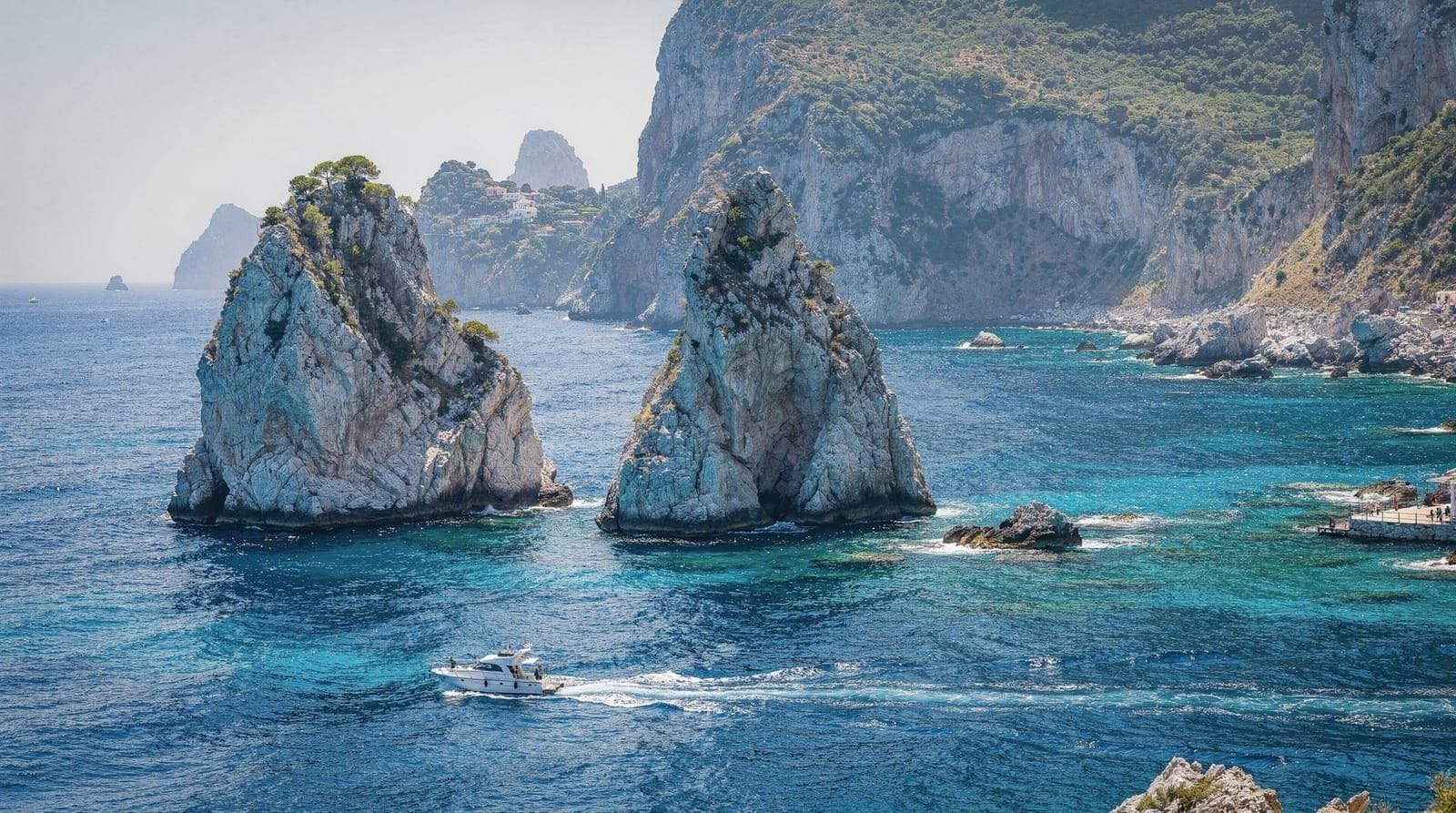
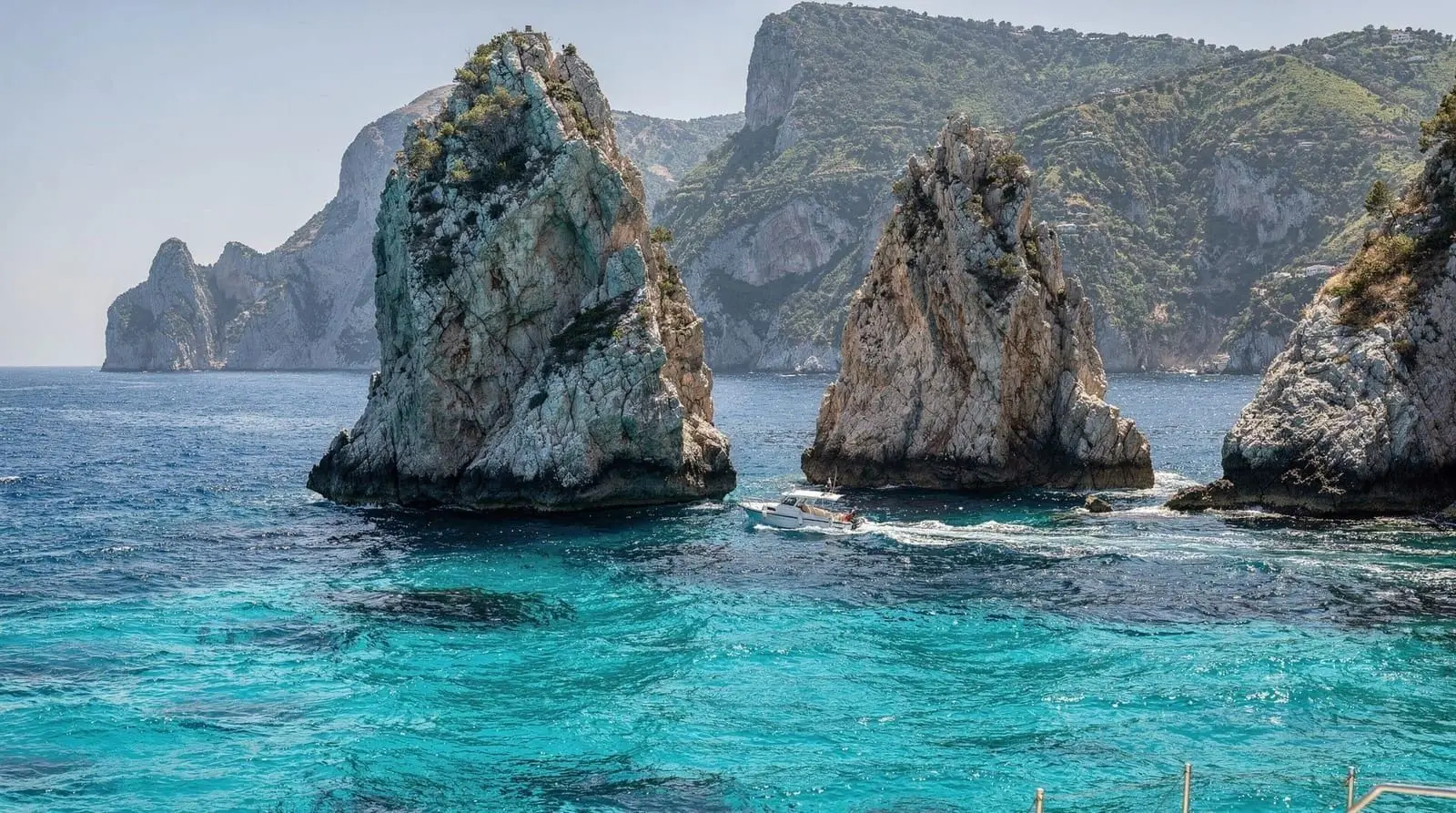
Capri is one of those destinations that lives up to its reputation. The Faraglioni — three limestone rock stacks rising from the sea at the island’s eastern tip — are genuinely as dramatic as every photograph suggests. The boat tour of the Blue Grotto is a peculiar, memorable experience. The views from Monte Solaro across to the Amalfi Coast and the Bay of Naples are the kind of vistas that justify air travel from across the world.
The question for Rome visitors is whether the logistics of getting there — 3h+ each way by train and hydrofoil — make sense for a single day. The honest answer is: it depends on your tolerance for transit. If you enjoy the journey as part of the experience (and the Naples metro and hydrofoil are both interesting), a day trip works. If you resent spending time in transit, two nights in Capri would transform your impression.
| Where | Bay of Naples, reached via Naples by high-speed train + hydrofoil |
| Cost | Around €80-120 round trip DIY (train + hydrofoil + Blue Grotto); €90-160 guided |
| Time needed | Full day, 6-8 hours on the island if leaving Rome by 07:00 |
| Getting there | Frecciarossa/Italo to Naples (1h10), then hydrofoil to Capri (45-50 min) |
| Best time | Late April-early June or September-October; avoid peak July-August crowds |
The route from Rome to Capri: step by step
Step 1: Rome to Naples
Take a Frecciarossa or Italo high-speed train from Roma Termini to Napoli Centrale. Journey time: 1h10–1h15. Trains run approximately every 30 minutes from around 06:00. Fares: from €14.90 one way on Italo advance purchase, typically €20–35 on Frecciarossa depending on class and booking timing.
Book tickets on italotreno.it or trenitalia.com well in advance in summer — early morning trains on Friday and Sunday sell quickly.
Step 2: Naples station to Molo Beverello
From Napoli Centrale, the hydrofoil port (Molo Beverello) is approximately 15–20 minutes away. Options:
- Metro line 1 from Garibaldi station to Piazza Municipio (3 stops, approximately €1.20)
- Taxi (approximately €8–12, fixed rate)
- On foot (approximately 20-minute walk along Via Depretis to the waterfront)
Molo Beverello is the main hydrofoil/ferry terminal. Signs for “Capri” are clearly posted. Carriers include SNAV, Caremar, and NLG.
Step 3: Naples to Capri by hydrofoil
Hydrofoil (aliscafo) to Marina Grande, Capri: approximately 45–50 minutes, roughly €22–24 one way. The service runs frequently in summer (every 30–45 minutes in peak season). Buy tickets at the Molo Beverello ticket booths or on the carrier websites — some booking options are available online but many travellers buy at the port.
Alternative: ferry from Sorrento
If you are routing via the Amalfi Coast or making a combined trip, the Circumvesuviana train from Naples to Sorrento (approximately 1h10) connects with frequent hydrofoils from Sorrento to Capri (25 minutes, approximately €22 one way). This adds journey time from Rome but can be useful for combined itineraries.
Total Rome → Capri journey time: 2h45–3h15 depending on connections and any waiting time at Naples station or Molo Beverello.
What to do on Capri in one day
A day trip with 6–8 hours on the island needs clear priorities. Here is an efficient route:
Marina Grande (arrive, 10:00–10:30)
Marina Grande is the main port. The funicular to Capri town (€2.20, 5 minutes) leaves from here. Before heading up, make a decision about the Blue Grotto:
- If you want the Blue Grotto, this is the time to join a boat transfer (small orange boats depart from the pier, approximately €15–20 per person for the transfer, plus €13 grotto entrance, plus rowing boat fee inside — total approximately €30–35 per person).
- If the queue looks more than 90 minutes, or if the grotto is reported closed (ask at the port), skip it and proceed to Capri town.
The Blue Grotto is magic — the electric-blue bioluminescent light inside is unlike anything else — but the 5–10 minute experience inside does not always justify a 2-hour queue in summer. Go early or skip it on crowded days.
Capri town (10:30–13:00)
Take the funicular from Marina Grande to the Piazzetta — Capri’s famous miniature main square, ringed with bars and filled with tourists photographing each other. It is crowded and pleasant. Walk the lanes behind it for the actual residential character of the town.
Key stops:
- Giardini di Augusto (Gardens of Augustus): terraced gardens with direct views down to the Faraglioni and the south coast. €1 entry. One of the best viewpoints on the island.
- Via Krupp: the famous zigzag path down the cliff from the Gardens to Marina Piccola (currently often closed for restoration — check before planning). Views are extraordinary even if the path is closed.
- Chiesa di Santo Stefano: the baroque church on the Piazzetta — simple but the tiled dome is beautiful.
Lunch in Capri town: Da Gemma (Via Madre Serafina 6, homemade pasta since 1872), Lo Sfizio (Via Li Campi 6, pizza and simple Caprese dishes), or the terrace at La Pergola in the Gardens area. Budget €15–25 per person for a simple lunch with wine.
Anacapri (13:30–16:00, optional)
Bus from Capri town (Piazza Vittoria, 15 minutes, approximately €2.20) to Anacapri. The main draw is the Monte Solaro chairlift — a single-seater open-air lift rising 589m above sea level with views across the entire Bay of Naples, the Amalfi Coast, and on clear days, Ischia and the distant Apennines. Tickets approximately €14 return, 12 minutes each way.
Anacapri town itself is quieter than Capri and more pleasant to wander. The Villa San Michele (Axel Munthe’s remarkable early 20th-century villa, now a museum) is worth 45 minutes and costs €8.
Return (16:00–17:00 departure)
Back to Marina Grande by bus (from Anacapri) or funicular (from Capri town). Hydrofoil back to Naples: aim for a 17:00–17:30 departure to catch a late afternoon or early evening Frecciarossa back to Rome (arriving around 21:00–22:00).
Capri island day trip from Rome — includes high-speed train, hydrofoil transfer, and free time to explore at your own pace.The guided tour option: what it includes and costs
Several GetYourGuide operators run Capri day trips from Rome that include the high-speed train, hydrofoil to the island, and optionally a boat tour of the island’s sea grottos. Prices range from €90–160 per person depending on inclusions.
The case for a guided tour:
- Train and hydrofoil tickets are pre-booked and included — you do not need to navigate Naples
- Some tours include a boat tour of the Faraglioni and Blue Grotto area from the water
- Group logistics are handled by a tour leader
The case against:
- You lose flexibility over timing and pace
- The island is easy to navigate independently
- Cost is significantly higher than booking trains and ferries yourself
For confident travellers, the DIY route is perfectly manageable. For those unfamiliar with Italian regional transport or travelling with children, a tour removes real logistical stress.
Capri boat tour from Rome by high-speed train — combines transport, hydrofoil, and a guided boat tour of the island’s grottos and Faraglioni.The Blue Grotto: what it actually is
The Grotta Azzurra (Blue Grotto) is a sea cave on the island’s northwest coast, approximately 54 metres long and 30 metres wide. The remarkable electric-blue colour of the water comes from refracted light entering through an underwater opening in the cave wall — sunlight passes through the water and is reflected upward, creating the blue effect.
The cave was known to the Romans (Emperor Tiberius used it as a private swimming bath) and was “rediscovered” by tourists in the 1820s. You reach it by small rowing boat, lying flat to pass through the 1.3m-high entrance. Inside, the rowing boat circles slowly — you have about 5–10 minutes. The boatman usually sings. It is genuinely surreal.
Practical details:
- Accessible only by rowing boat from the sea entrance (the road access on the cliff above is only used for the ticket purchase when it operates)
- Total cost from Marina Grande: approximately €30–35 per person (boat transfer + entrance + rowing boat fee)
- Closed when swell exceeds safe entry height — common in spring and autumn, rarer in summer
- Queue time in peak season: 45 minutes to 2 hours
- Best chance of shorter queues: before 10:30 or after 15:30
Is one night on Capri worth it?
Yes, plainly yes. The island after 18:00 — when the last hydrofoils have taken the day-trippers back to Naples — is a different place. The Piazzetta empties and becomes an actual piazza. The lanes are walkable without shoulder-to-shoulder crowds. The restaurants shift from tourist turnover mode to local-pace service.
Accommodation on Capri ranges from genuinely expensive (Hotel Quisisana, from €400 per night in peak season) to merely pricy (smaller hotels and B&Bs from €150–200). If budget is a concern, Anacapri is slightly cheaper and has the advantage of being away from the Capri town crowds.
If your Rome trip has even one spare night for a southern excursion, using it for Capri rather than a rushed day trip produces a categorically better experience. Our 5-day Rome, Naples and Pompeii itinerary includes a Capri night as part of a structured southern loop.
Capri vs the Amalfi Coast: which should you choose?
If you have one day for the south and are choosing between Capri and the Amalfi Coast, the considerations are:
Capri: Island experience, boat tours, distinctive character, self-contained — you reach it, you explore it, you leave. The logistics (train + hydrofoil) are actually simpler than the coastal road logistics for Amalfi.
Amalfi Coast: Continuous coastal landscape, multiple villages, better for swimming off the coast road, more flexible routing. The coastal road in summer is significantly more stressful than the Capri hydrofoil.
Our Amalfi Coast from Rome guide gives the full honest assessment of that option. For comparing all southern Italy day trips in detail, see our best day trips from Rome guide.
Practical details for 2026
Booking train tickets: Frecciarossa via trenitalia.com; Italo via italotreno.it. Book at least 2–3 weeks ahead for summer morning trains. 06:15 or 06:30 departure from Termini is the earliest useful connection.
Hydrofoil tickets: Available online (SNAV: snav.it; NLG: navlib.it) or at Molo Beverello ticket windows. In peak season, the 09:00–11:00 sailings fill up — having a pre-booked ticket removes stress.
Weather: Capri’s hydrofoil services are weather-dependent. Rough sea conditions can cancel or delay sailings, particularly in spring and autumn. If you are travelling in a shoulder month, have a contingency plan (Naples itself is an excellent alternative destination).
Luggage: Do not take large luggage on a day trip to Capri — the funicular and narrow lanes are not luggage-friendly. Day bag only.
Cash: Carry cash. Small boats, rowing boats at the grotto, and various small vendors do not accept cards.
For train network details and the full picture of what is reachable from Rome by rail, see our day trips by train from Rome guide.
Capri vs Pompeii vs Naples: which day trip suits you
Capri is one of several southern day-trip options from Rome, and it’s worth being honest about how it compares rather than assuming it’s automatically the best choice for every traveller. Pompeii is a shorter, less transit-heavy day (roughly 2 hours each way by train) and suits visitors more interested in history than scenery. Naples itself — often skipped entirely by day-trippers rushing through to Capri or Sorrento — has genuine food and street-life appeal and requires no boat connection at all. If your interest is coastal scenery specifically, Sorrento and the Amalfi Coast offer a similar look and feel to Capri without the hydrofoil dependency, at the cost of a more stressful coastal road.
DIY train and ferry vs a guided package: the honest tradeoff
Beyond the specific tour options listed above, it’s worth stepping back on the general DIY-vs-guided question for this particular trip. Capri’s logistics — one train change in Naples, one hydrofoil booking — are genuinely manageable for a confident independent traveller, more so than many other Rome day trips that involve multiple bus transfers or unpredictable regional trains. Where a guided package earns its premium is less about navigation and more about time: a tour operator’s pre-purchased hydrofoil allocation and coordinated timing remove the risk of missing a sold-out sailing in peak season, which is the single most common way an independent Capri day trip goes wrong. Our train vs. tour day trips guide covers this tradeoff in more general terms across all of Rome’s popular day-trip destinations.
Should you do Capri instead of, or alongside, Amalfi?
Because both are frequently compared, it’s worth being explicit: they are not mutually exclusive if your Rome trip has more than a single spare day. A structured two-day southern loop — Capri as an overnight, then a coastal day along Amalfi via Sorrento — avoids the single-day compromise that dogs both destinations when rushed. Our day trip vs overnight Amalfi guide walks through the same tradeoff that applies almost identically to Capri: the island rewards an overnight stay far more than the extra logistics cost.
Packing and practical extras for the crossing
The hydrofoil crossing itself is smooth in calm conditions but can get choppy in spring and autumn winds — travellers prone to seasickness should sit toward the centre of the cabin and consider motion sickness tablets if the forecast shows any swell. Sun protection matters more on Capri than it might seem from Rome: the white limestone paths and open viewpoints at Monte Solaro and the Gardens of Augustus offer little shade, and the reflected sea glare adds to the exposure. A refillable water bottle is worth carrying, since bars and cafés in Capri town charge tourist prices for bottled water. Comfortable, closed-toe shoes matter more than sandals for the funicular, the chairlift boarding platform, and the uneven paving of the older lanes.
Frequently asked questions about Capri from Rome: how to reach the island in a day
How do I get from Rome to Capri?
How many hours does a day trip to Capri give you?
Do I need to book the Blue Grotto in advance?
Is Capri worth it for just one day?
What is the difference between Capri town and Anacapri?
Is the Blue Grotto always open?
What is the best time to visit Capri?
Can I swim in Capri?
Top experiences
Bookable activities with verified prices and instant confirmation on GetYourGuide.