Vatican or Colosseum: which to prioritise if time is short
Vatican Museums & Sistine Chapel Skip-the-Line Entry Ticket
Should I prioritise the Vatican or the Colosseum if time is short?
For a single afternoon with no prior booking, neither — both require advance reservations. If you have planned ahead, prioritise the Vatican on your first morning (it takes 3–4 hours minimum and is best done early before afternoon crowds). The Colosseum works well for a morning or afternoon slot. If you genuinely must pick one, the Vatican offers more sheer volume of art and history for the time invested.
| Time needed, Vatican | 4–5 hrs (Museums + Sistine + St. Peter’s) |
| Time needed, Colosseum | 4–5 hrs (Colosseum + Forum + Palatine) |
| Cost, Vatican | €17–20 entry, €45–90 guided/early |
| Cost, Colosseum | €18–20 combined, €35–50 guided |
| Booking window | 3–4 weeks (6–8 in July/August) |
The two essential Rome experiences — and a genuine prioritisation problem
Ask any veteran Rome visitor which two sites define the city, and the Colosseum and Vatican Museums will be the answer almost every time. This makes the prioritisation question particularly pointed: if a shortened itinerary or a late booking forces you to choose one first, or to weight your available energy toward one over the other, which one should it be?
This is not a question with an obvious answer. Both sites are mandatory. Both are logistically demanding. Both require advance planning that most visitors underestimate. The choice of which to prioritise — and on which day — has real consequences for what you actually experience.
What the Vatican actually involves
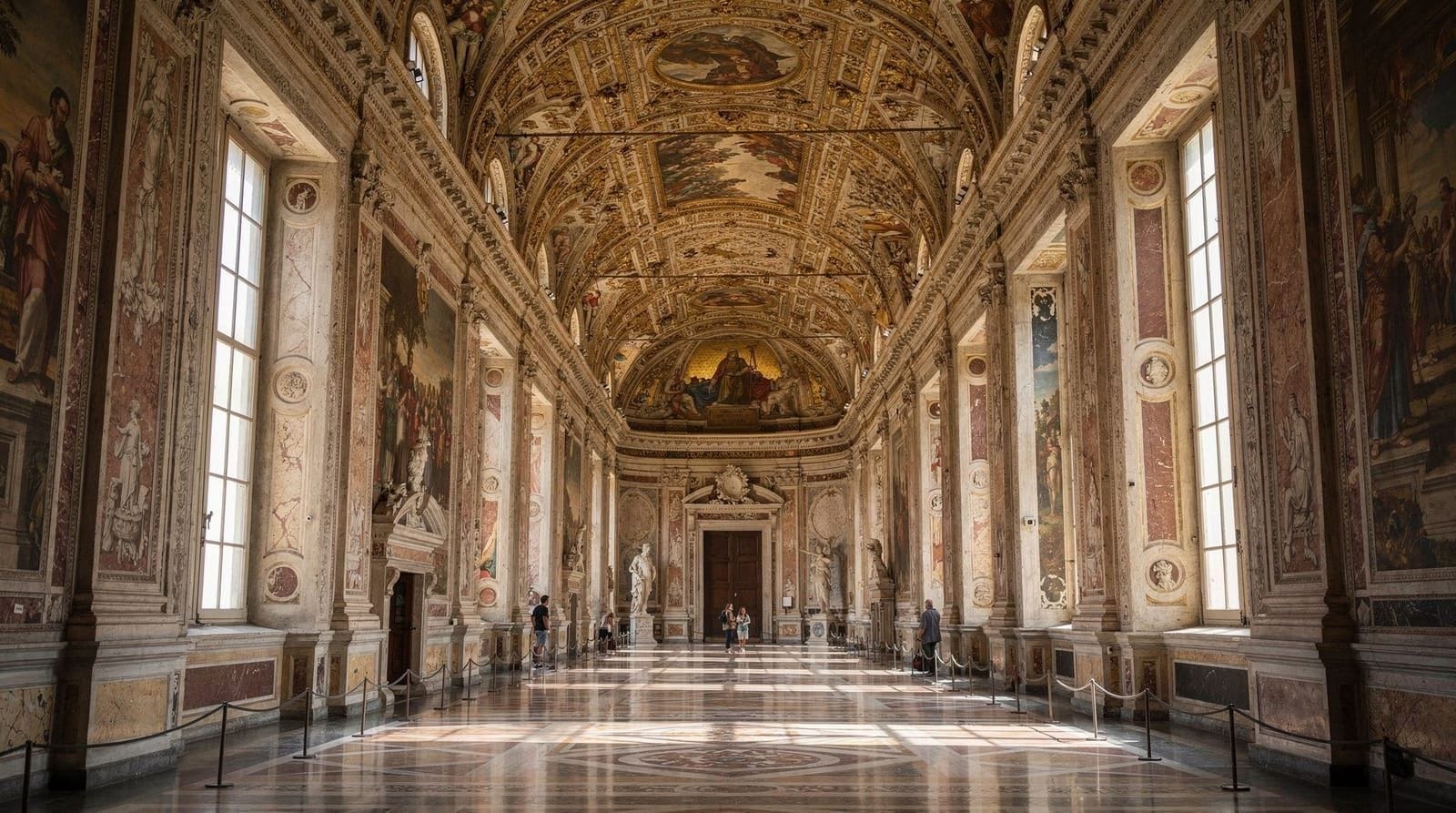
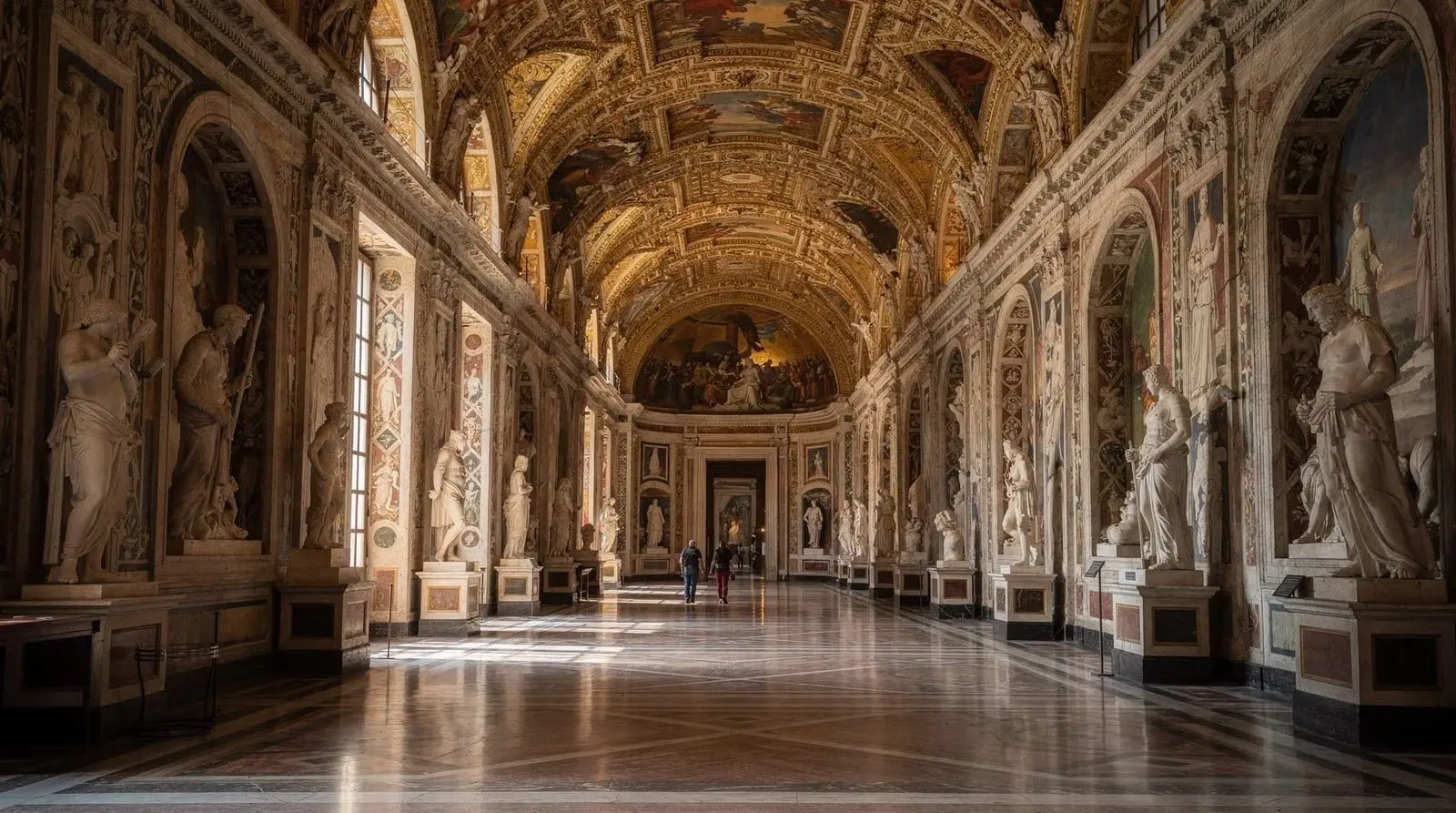
The Vatican Museums are not a single attraction. They are a complex of 54 galleries and collections arranged around a series of interconnected courtyards and corridors, accumulated over 500 years of papal patronage beginning with Pope Julius II in the early 16th century. The standard visitor route runs approximately 4 km from the entrance near the Pinecone Courtyard to the Sistine Chapel and St. Peter’s Basilica at the far end.
The route’s major highlights:
Pinecone Courtyard (Cortile della Pigna): The enormous bronze pinecone from the 1st century CE, originally from the area of the Pantheon. The sphere sculpture by Arnaldo Pomodoro in the centre is a striking contrast of ancient and modern. This is where most visitors begin.
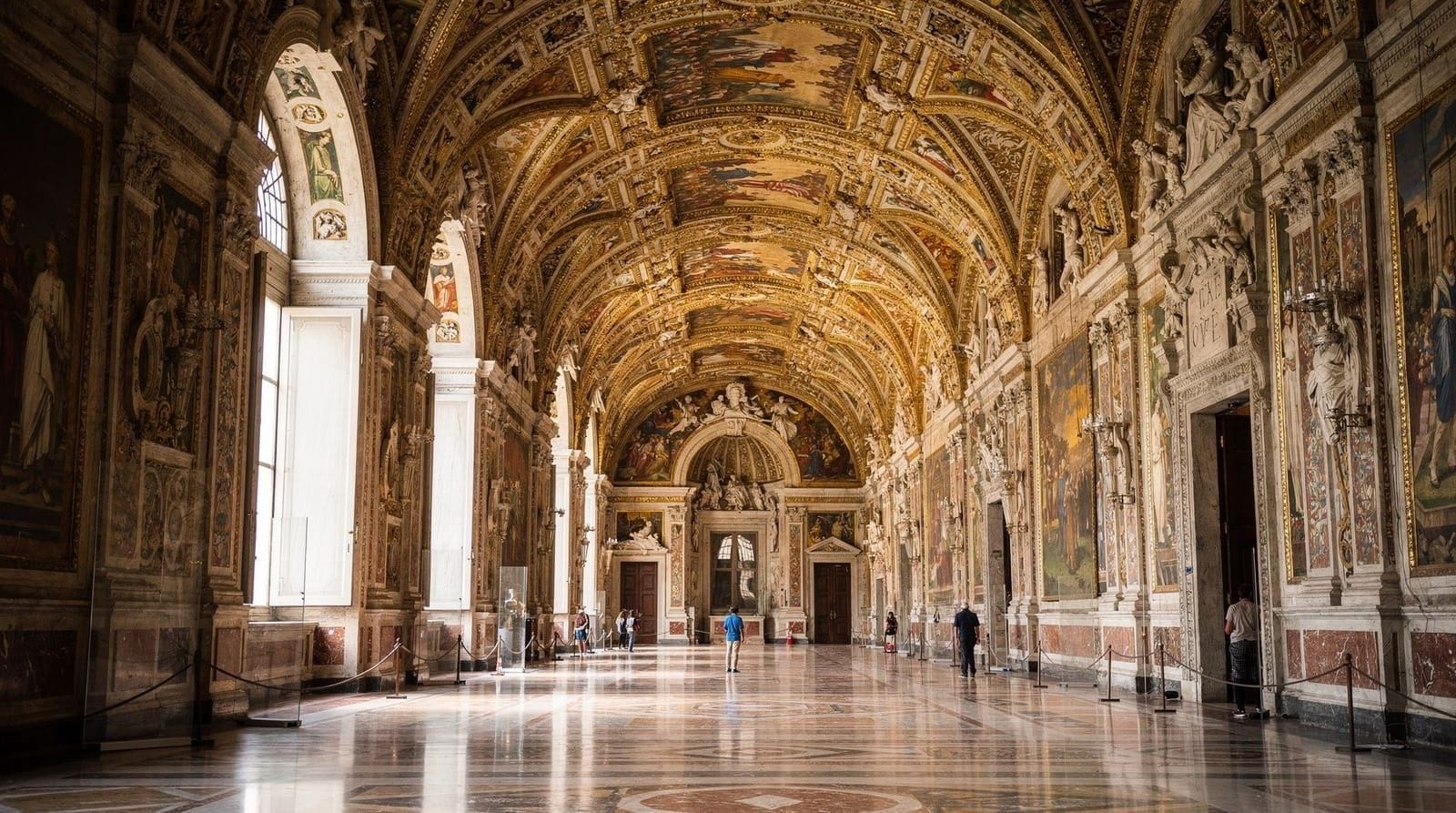
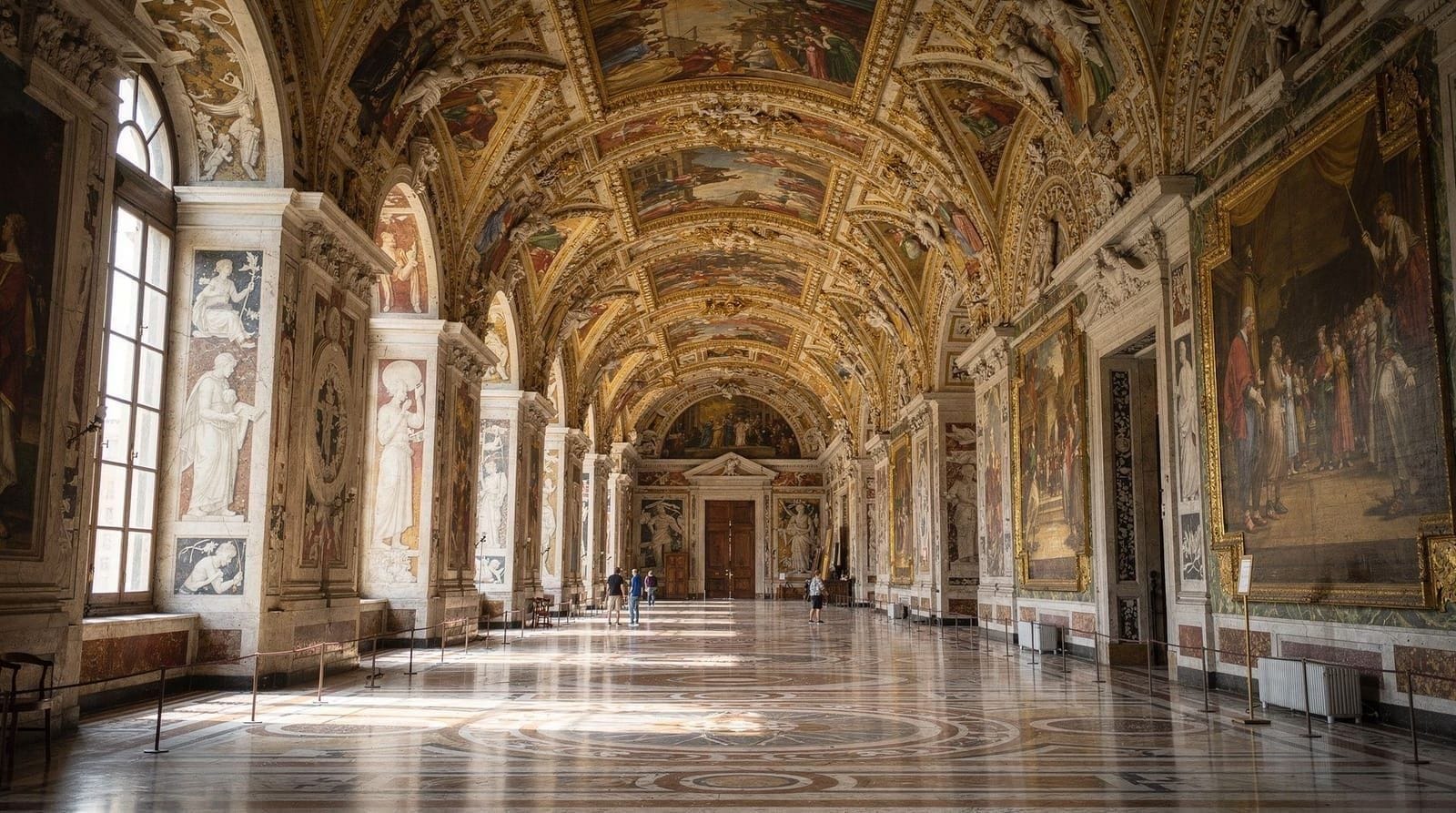
Gallery of Maps (Galleria delle Carte Geografiche): A 120-metre corridor lined entirely with 16th-century painted topographical maps of Italian regions, commissioned by Pope Gregory XIII between 1580–1583. The maps are technically accurate and visually extraordinary — most visitors rush through this gallery in their anxiety to reach the Sistine Chapel, which is a significant mistake. Budget 15–20 minutes here.
Raphael Rooms (Stanze di Raffaello): Four rooms painted by Raphael and his workshop between 1508–1524, commissioned by Pope Julius II. The School of Athens in the Stanza della Segnatura — depicting the philosophers of ancient Greece in a painted architectural space that synthesises the philosophy of the ancient world with Renaissance artistic technique — is one of the defining paintings of Western art. The Expulsion of Heliodorus from the Temple (1512–1514) is arguably more dramatically powerful but is less famous. Allow 30–40 minutes for the Raphael Rooms.
Sistine Chapel: The 40-metre × 14-metre chapel painted by Michelangelo between 1508–1512 (ceiling) and 1536–1541 (Last Judgement on the altar wall). The ceiling’s nine scenes from Genesis — including the Creation of Adam, the most reproduced image from the entire Vatican collection — were painted in approximately four years by Michelangelo lying on scaffolding with paint dripping onto his face. The Last Judgement, painted 25 years later, is a different work by a different man: darker, more tormented, and less celebrated but in many ways more powerful. No photography is officially permitted, though enforcement is inconsistent. Silence is requested; guards announce “Silenzio!” regularly. Allow 20–30 minutes minimum.
St. Peter’s Basilica: Technically a separate attraction (free entry, no ticket required), accessible directly from the Sistine Chapel exit on certain routes or via the Piazza San Pietro. The largest church in Christendom by interior floor area, consecrated in 1626 on the site of the earlier 4th-century Constantinian basilica. Michelangelo’s Pietà (1498–1499) is in the first chapel on the right, behind thick glass since a 1972 attack. Bernini’s baldachin (1626–1633) over the papal altar is the defining Baroque interior feature of Rome. The dome climb (€8 on foot up 551 steps, €10 by lift plus 320 steps) offers the best panoramic view of Rome available anywhere — rooftop level, looking over the entire city.
Total time for Museums plus Sistine Chapel plus Basilica: 4–5 hours at a reasonable pace. Add 90 minutes if including the dome climb.
Vatican Museums and Sistine Chapel skip-the-line entry ticket — the essential advance booking for Rome’s most visited attraction; sells out weeks ahead during peak seasonWhat the Colosseum complex actually involves
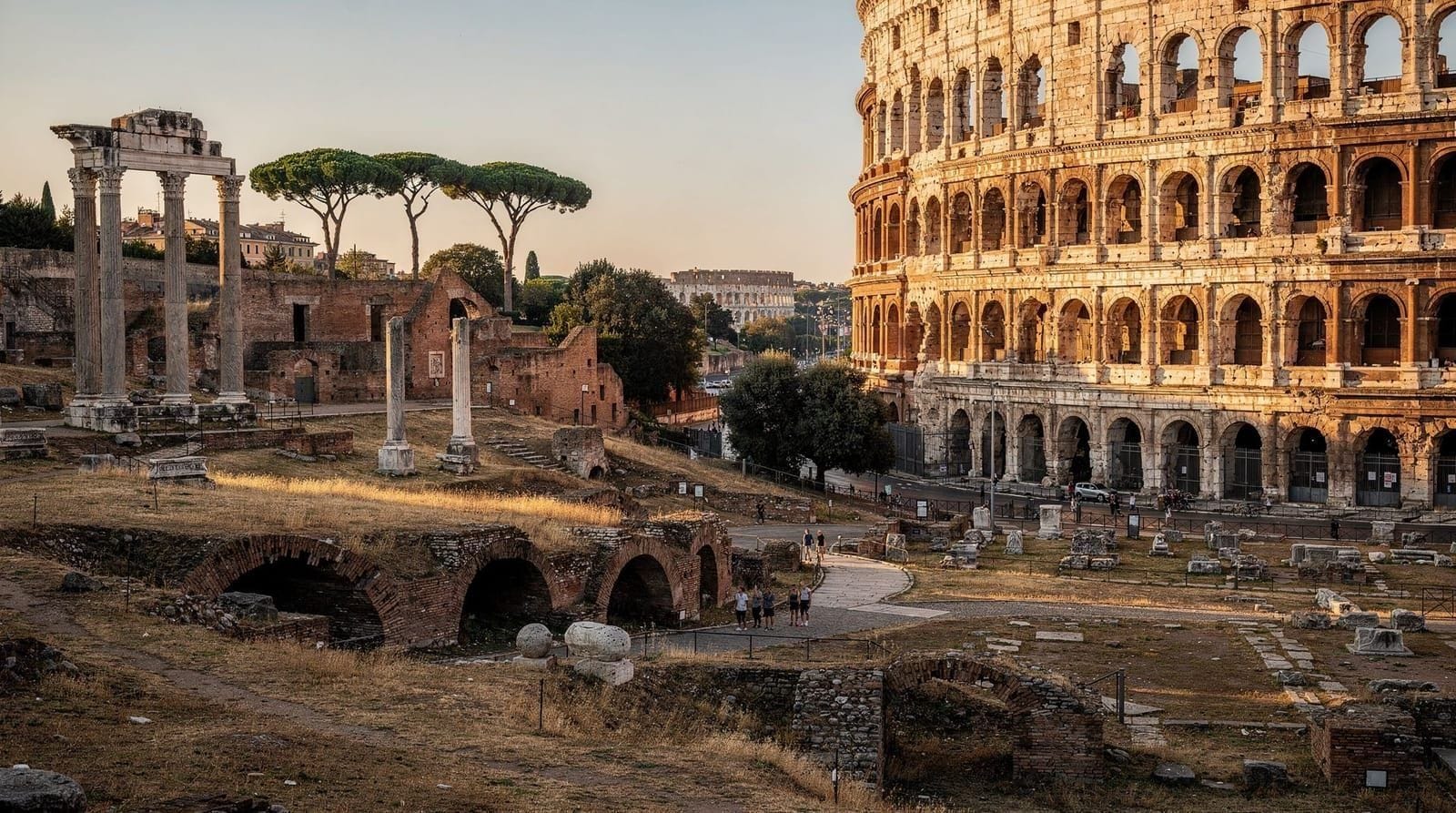
The Colosseum, Roman Forum, and Palatine Hill together form a single combined ticket complex covering the core of ancient Rome. They are adjacent and connected, best walked as a continuous itinerary starting from the Colosseum.
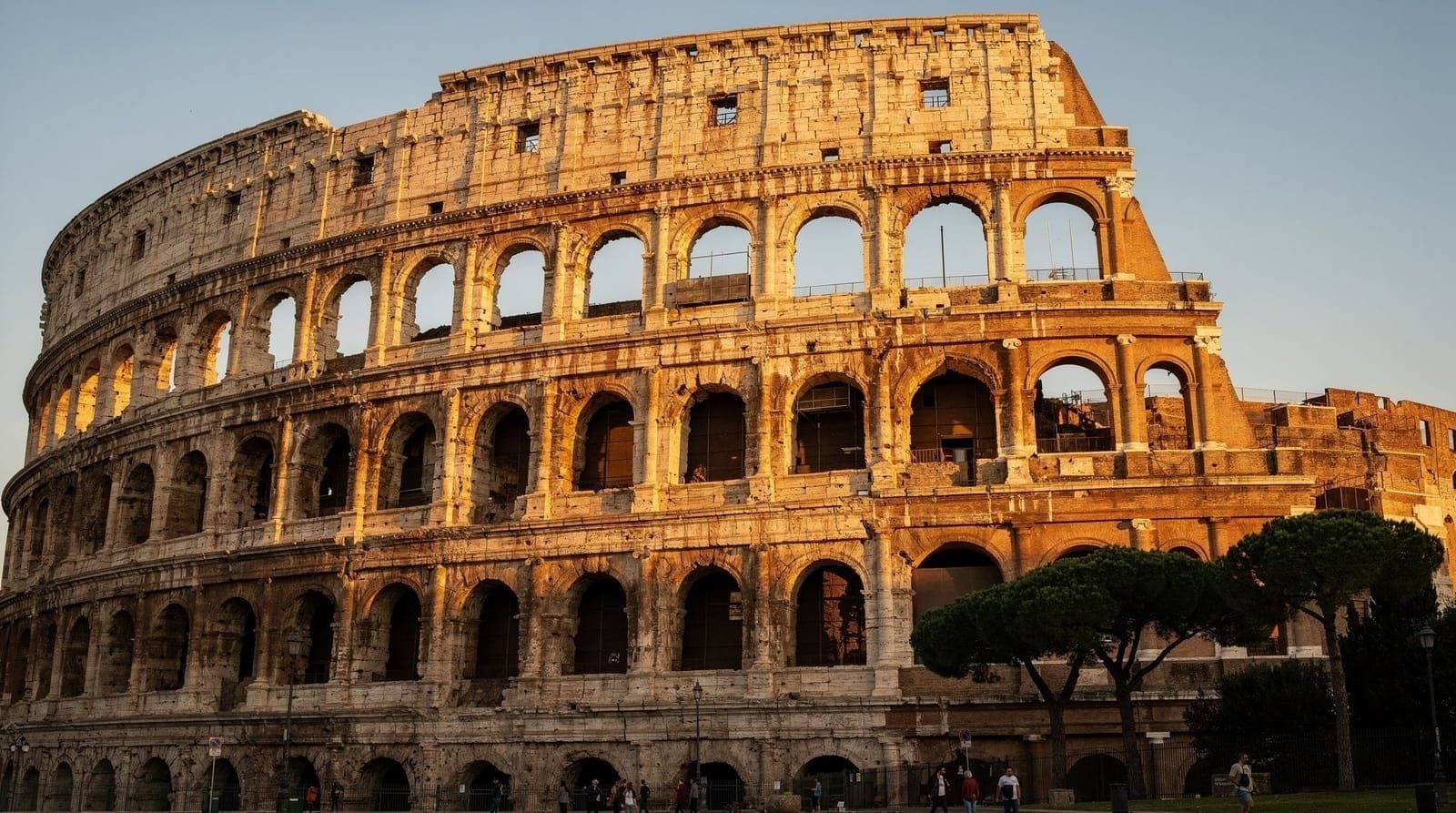
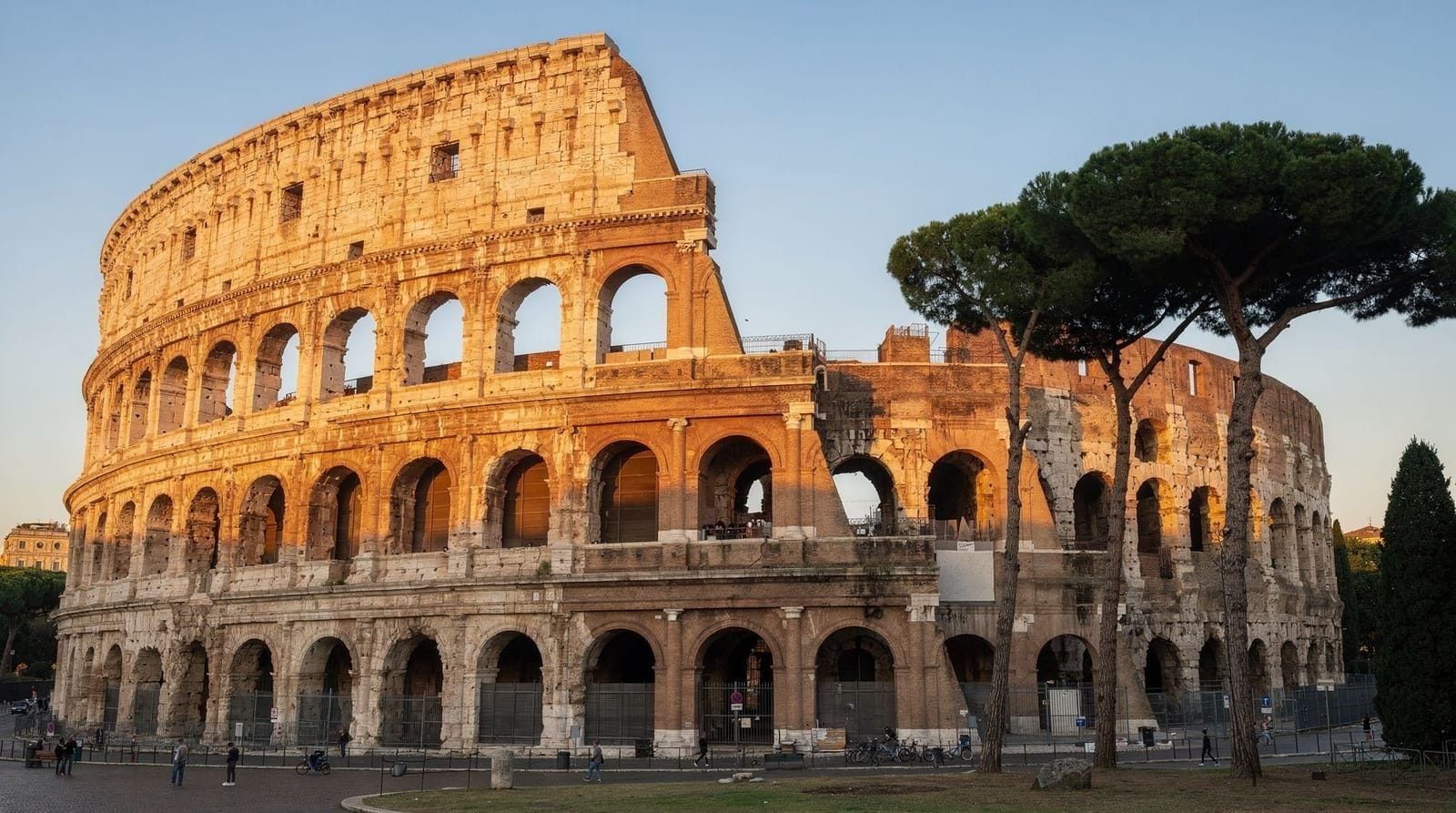
The Colosseum (80 CE): Emperor Vespasian began construction around 70 CE; his son Titus inaugurated it in 80 CE with 100 days of games in which an estimated 9,000 animals were killed. At its peak seating capacity of 50,000–80,000 spectators, it was the largest amphitheatre in the Roman world. The standard visit covers the arena level (partially restored with wood planking over the hypogeum) and the first and second tiers. The structural engineering — 80 numbered arched entrances (vomitoria) allowing the entire amphitheatre to empty in approximately 15 minutes, the retractable canvas awning (velarium) operated by sailors from the Misenum naval base, the hypogeum of underground tunnels and lifts below the arena — is as impressive as the site’s historical function.
Roman Forum: Rome’s civic centre for over a thousand years, from the early Republic (6th century BCE) through the late Empire. For detailed guidance on what to see and the best walking sequence, see our Roman Forum guide.
Palatine Hill: The residential hill above the Forum, where Rome’s emperors built their palaces from Augustus onward. The Farnese Gardens terraces on Palatine Hill give the best elevated view of the Forum and Colosseum from any included site. See our Palatine Hill guide.
Total time for all three: 4–5 hours minimum. The Colosseum alone takes 1–1.5 hours.
The honest comparison across key factors
Volume of content and diversity: The Vatican Museums contain more — the 54 galleries span Egyptian antiquities, Etruscan artefacts, Greek sculpture (the Laocoön, Apollo Belvedere), Roman bronzes, medieval and Renaissance painting, and the modern collection, before you even reach the Raphael Rooms and Sistine Chapel. The Colosseum complex covers a more focused historical period but covers it with physical immersiveness that gallery-based art cannot replicate.
Indoor vs outdoor: The Vatican Museums are almost entirely indoor, with air conditioning in the main galleries — a decisive advantage in July and August when Rome reaches 35–38°C. The Colosseum’s stone interior is hot in summer; the Roman Forum is fully exposed. If visiting in high summer, prioritising the Vatican on the hottest days is genuinely sensible.
Queue and crowd management: Both sites can have significant queues at security even with advance tickets — Vatican security (bag scanning, full security measures) adds 20–30 minutes even with a pre-booked ticket. Colosseum security is faster, typically 5–10 minutes. Factor buffer time into both visits.
The Sistine Chapel problem: The Sistine Chapel at mid-morning contains hundreds of people in a space measuring 40 × 14 metres. The official prohibition on talking is enforced by periodic announcements from guards that themselves create noise. At 08:00 on a weekday, via an early-access tour, the Sistine Chapel with 20 people in it is an entirely different experience. This single factor — the difference between experiencing the Sistine Chapel early and experiencing it at 11:00 — is the strongest argument for prioritising the Vatican on your earliest day with the earliest available booking.
Best for first-time visitors: For visitors with no specialist focus, the Colosseum complex wins on the basis of uniqueness — you cannot replicate the experience of standing in a Roman amphitheatre anywhere else, while the Vatican’s art tradition, however superior in quality, exists in other European museums. But the Vatican’s combination of Raphael, Michelangelo, and 500 years of papal collecting is also genuinely unreplicable anywhere. Both are justified answers.
Which day for which site
Vatican on Day 1 of your trip: The Vatican is best visited when you have maximum energy and the earliest possible slot. Early-entry tours (08:00) are available through various operators and cost €45–65 per person — they include a licensed guide and early access before general opening, meaning the Sistine Chapel at 08:00 with approximately 20 people rather than 300+. See our Vatican early access guide for options.
Even if you cannot get an early-entry tour, the standard Vatican Museums ticket at 09:00 is significantly better than at 11:00. Book the earliest available slot when you book at museivaticani.va.
Colosseum on any morning slot: The 09:00 or 09:30 Colosseum slot is optimal for heat and crowd management. The 14:00 or 15:00 afternoon slot works too — by mid-afternoon in spring and autumn, the morning wave has cleared and the site is more comfortable. In high summer, the afternoon heat at the Forum makes an afternoon slot harder.
Guided Colosseum, Roman Forum and Palatine Hill tour — covers all three ancient sites efficiently in 2.5–3 hours with skip-the-line entryCan you genuinely fit both into a two-day Rome trip?
Yes, with discipline. The standard approach:
Day 1: Vatican Museums early (08:00–13:00 including St. Peter’s), lunch in Prati, afternoon at leisure or St. Peter’s Dome climb (€8–10, free basilica entry). Prati has Rome’s best casual lunch options near the Vatican.
Day 2: Colosseum at 09:00–10:30, Roman Forum 10:30–12:30, Palatine Hill 12:30–14:00, lunch near Celio & the Colosseum area, afternoon walk to Circus Maximus, evening in Testaccio.
This covers the mandatory sites but leaves no room for the Borghese Gallery, Trastevere, any neighbourhood exploration, or any site beyond the Vatican–Colosseum axis. For a less compressed Rome, see the Rome in 3 days guide.
Booking logistics in full
Vatican Museums (museivaticani.va):
- Standard entry: €17 (morning), €20 (afternoon/last entry)
- Early-entry tours through licensed operators: €45–65, includes guide and 08:00 access
- Children under 6: free; ages 6–18: reduced price
- Book 3–4 weeks ahead in peak season (May–October), 1–2 weeks in winter
- Ticket includes Sistine Chapel; St. Peter’s Basilica is free and separate
Colosseum (coopculture.it):
- Combined Colosseum + Forum + Palatine: €18 + €2 booking fee = €20 adult
- Select specific date and timed entry slot (most slots are 09:00–17:30 in 30-minute increments)
- Arena floor access: available on specific products with supplementary fee
- Underground hypogeum: available on specific tours, higher cost, books out quickly
- Guided tour options available on the same platform
Both sites: download your ticket to your phone before arriving. QR code entry. Both allow entry within approximately 15 minutes either side of your slot.
For the step-by-step Colosseum booking process, see Colosseum booking step by step. For Vatican booking options, see Vatican tickets guide.
The official guided Colosseum and ancient Rome tour — expert commentary on the Colosseum and Forum with skip-the-line access includedWhat happens if you do not book in advance
The most common Rome travel mistake is failing to book the Vatican and Colosseum before arriving. The consequences differ between the two sites.
Vatican without advance booking: The Vatican Museums queue for same-day tickets forms at Via dei Bastioni di Michelangelo, adjacent to the museum entrance. In peak season (May–October), this queue regularly exceeds 2 hours. Since you cannot enter until your position in the queue reaches the ticket window, there is no certainty about when (or if) you will get in on a specific day. The Vatican is closed on Sundays (except the last Sunday of each month, when entry is free and the crowds are extreme). Walking up without a booking is a genuine gamble in busy months.
Colosseum without advance booking: Since 2012, the Colosseum requires a timed entry slot booked at coopculture.it. On-the-day slots are not sold at the entrance. Physical ticket booths were phased out. Same-day slot availability through the app exists occasionally (if a slot opens from a cancellation) but cannot be relied upon. The workaround of joining a guided tour that includes entry (which some third-party operators provide) exists, but these tours are more expensive than direct booking and also sell out at peak periods.
The bottom line: Both sites require advance planning that most casual visitors underestimate. For a trip between May and October, book 3–4 weeks ahead. For a trip in July or August, book 6–8 weeks ahead, especially for Vatican early-entry tours and Colosseum arena floor access.
The Borghese Gallery: the third site that cannot be forgotten
Any Rome visit that prioritises Vatican versus Colosseum is at risk of overlooking the Borghese Gallery — Rome’s third essential site and the one most often sacrificed when itineraries are compressed.
The Borghese Gallery holds Bernini’s four greatest marble sculptures (Apollo and Daphne, Pluto and Persephone, David, Aeneas Anchises and Ascanius) and six Caravaggios, in a villa whose interior decoration is itself an extraordinary work of art. It is limited to 360 visitors at a time in 2-hour sessions, which means it is both more intimate than the Vatican or Colosseum and more difficult to book at short notice.
If you have 3 days in Rome and can only prioritise two sites, the mathematically correct choice remains Vatican and Colosseum. But if you have 4 days, the Borghese Gallery fills day 4 morning more rewardingly than any other single site in the city. Book at tosc.it/borghese, typically 10–14 days ahead minimum. See our Borghese booking guide for the full process.
What to do with the hours adjacent to each site
Near the Vatican (afternoon after visit): The Prati neighbourhood is the best-kept food secret adjacent to the Vatican. Via Cola di Rienzo is Prati’s main shopping street with good delis (alimentari), bakeries, and the excellent Mercato Trionfale food market (Via Andrea Doria, Tues–Sat morning) — Rome’s largest local food market. After the Vatican, lunch in Prati rather than at the tourist cafes adjacent to the museum entrance saves €10–15 per person and is a significantly more pleasant experience.
St. Peter’s Basilica (adjacent to the Museums, free entry) can be visited after the museum exit if you did not enter via the museum route. The afternoon is good for the Basilica — less crowded than the morning Vatican rush.
Castel Sant’Angelo (15 minutes’ walk from St. Peter’s Square along the river) is a logical afternoon addition to a Vatican day: the circular medieval fortress on the Tiber with panoramic views of Rome from the ramparts. Entry €15, book at coopculture.it.
Near the Colosseum (afternoon after visit): The Celio neighbourhood immediately south of the Colosseum has the best lunch options near the ancient site — Via della Navicella and the streets around San Giovanni e Paolo basilica have small trattorie serving neighbourhood locals. Avoid the tourist restaurants on Via dei Fori Imperiali.
After lunch, the Circus Maximus is 15 minutes on foot south — the largest entertainment venue of the ancient world (250,000 spectators), now a long grassy oval used for concerts. Free entry, always open. The Aventino neighbourhood above the Circus Maximus contains the famous Knights of Malta keyhole view — a keyhole in a garden door through which the dome of St. Peter’s is perfectly framed across the city — and the Orangerie Garden (Parco Savello) with its free views over Rome’s rooftops.
Ticket options at each site, compared in detail
Neither site has a single “correct” ticket — both have an entry-only tier, a guided tier, and a premium tier. Our dedicated guides break down every option: Vatican skip-the-line tickets and Vatican tickets guide cover the Vatican’s four ticket tiers in full, including the early-morning upgrade discussed above. For the Colosseum side, Colosseum booking step by step walks through the coopculture.it process and the arena-floor and underground add-ons.
Getting to each site and why that affects your choice
Transit logistics quietly influence which site deserves the earlier slot. The Vatican sits on Metro A (Ottaviano), the single most pickpocket-prone stretch of Rome’s metro network between Termini and Ottaviano — an early-morning ride before the crowds build is genuinely calmer and safer than a mid-morning commute. The Colosseum sits on Metro B (Colosseo), a shorter and less congested line, and is also walkable from much of the historic centre and from Monti or Celio. If your accommodation is closer to one site than the other, that alone can be a reasonable tiebreaker: give the nearer site the earlier slot and save transit time for the one requiring a longer journey.
If you are travelling with children
The comparison shifts meaningfully with kids in the itinerary. The Colosseum’s scale and gladiator narrative tend to hold younger children’s attention better than the Vatican’s gallery-heavy route, but both sites are manageable with the right preparation. See our dedicated Vatican with kids guide for age-specific strategies, timing, and which parts of the Vatican route to prioritise or skip with young children.
Dress code: one more reason to give the Vatican your best morning
Unlike the Colosseum, the Vatican Museums and St. Peter’s Basilica enforce a strict dress code — shoulders and knees covered, no exceptions, regardless of ticket price. Guards will turn away non-compliant visitors even with a paid, timed-entry ticket. Check the Vatican dress code guide before your visit so an avoidable wardrobe issue does not cost you your booked slot.
Frequently asked questions about Vatican or Colosseum: which to prioritise if time is short
Do I need to book both the Vatican and the Colosseum in advance?
How long does each site take?
Can I visit both the Vatican and the Colosseum in one day?
Which is more physically demanding?
Which is better for children?
Which is more expensive?
Should first-time visitors book the early-morning Vatican option?
Does dress code affect which site to prioritise?
Top experiences
Bookable activities with verified prices and instant confirmation on GetYourGuide.