St. Peter's dome climb — stairs, elevator, and what to expect at the top
Rome: Guided Tour of St. Peter's Basilica with Dome Climb
How do you climb St. Peter's dome and how much does it cost?
You can climb via full stairs (551 steps, €8) or elevator partway then stairs (€10, saves about 200 steps). The climb takes 30–45 minutes to the top at 136 metres. Go early morning or after 16:00 for shorter queues at the dome entrance on the Basilica roof.
Before you climb: what the dome actually is
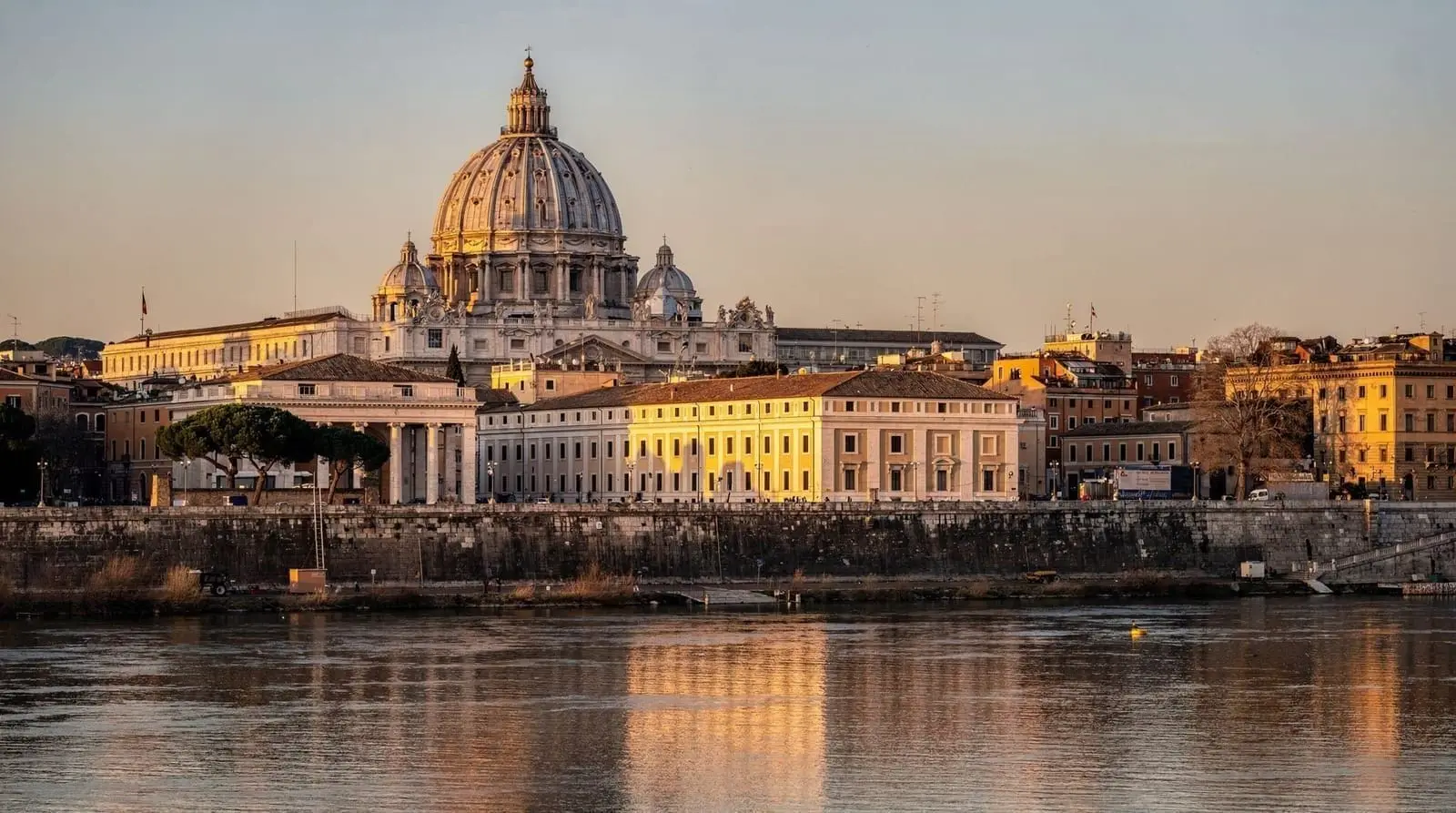
The dome of St. Peter’s Basilica was designed by Michelangelo, who took over the project at age 71 and died before it was completed in 1590. At 42 metres in diameter and 136 metres from floor to lantern, it remains one of the largest domes ever constructed. Visiting the top is one of Rome’s most rewarding physical experiences — but it requires honest preparation.
The climb is not casual. The final section is a tight, spiralling staircase that follows the curve of the dome, with walls that lean inward noticeably. If you are claustrophobic or have mobility issues, this section can be difficult.
| Where | Rooftop entrance inside St. Peter’s Basilica, Vatican City |
| Cost | €8 (full stairs) or €10 (elevator + stairs) |
| Time needed | 45–60 minutes round trip |
| Getting there | Metro A to Ottaviano–San Pietro, then walk to St. Peter’s |
| Best time | Opening at 08:00, or after 16:00 |
Tickets and access
The dome is accessed from inside St. Peter’s Basilica. The Basilica entrance is free; the dome requires a separate ticket purchased at the Basilica roof level (not at the main entrance).
Prices (2026):
- Full stairs, 551 steps: €8
- Elevator to rooftop + stairs to summit: €10
There is no advance booking for the dome — tickets are purchased on the day at a small kiosk on the Basilica rooftop. Card and cash accepted.
Guided tour of St. Peter’s Basilica with dome climb includedStairs vs elevator: the honest comparison
Taking the elevator (€10)
The elevator takes 60 seconds and deposits you on the Basilica rooftop at approximately 50 metres — the level of the dome drum. From here you walk across the rooftop (with its own views over St. Peter’s Square) to the staircase entrance.
You still face approximately 320 steps from the rooftop to the top of the lantern — this includes the external staircase around the dome drum, then the narrow internal spiral. The elevator saves about 200 of the 551 total steps but does not eliminate the hardest section.
Taking the full stairs (€8)
The full staircase begins at Basilica floor level. The first section is wide and manageable. As you ascend, the staircase curves and narrows. By the time you reach the drum level (where elevator users join), you have done the “easy” portion. The remaining spiral to the top is the same for everyone.
Verdict: Save €2, choose stairs. The exercise difference is modest; the top section is identical regardless of which route you take.
The climb in detail: what happens on each level
Level 1 — Basilica rooftop (~50 metres)
After taking the stairs or elevator, you emerge onto the Basilica’s rooftop. This is a wide terrace with views over St. Peter’s Square, the colonnade, and the Vatican Gardens. The statues that line the Basilica’s façade are enormous at close range (4–5 metres tall); they look decorative from below but monumental up close. Allow 10 minutes here.
Level 2 — Interior walkway around the drum (~70 metres)
A walkway circles the interior of the dome at the base of the mosaics. From here you look straight down 70 metres to the Basilica floor below. The mosaics are enormous at this distance — each figure is 2–3 metres tall. You can read the Latin inscription clearly. This level is also the point at which the staircase becomes noticeably narrower and the walls begin to tilt inward.
Level 3 — The lantern and external terrace (~136 metres)
The final staircase is a single-file spiral with low ceilings and walls that lean at a tangible angle — the inside wall of the dome curves around you. This takes 10–15 minutes of steady climbing. At the top, you emerge onto a narrow circular terrace around the lantern.
The terrace is narrow (roughly 1.5 metres wide) with metal railings. Views encompass Vatican City, the Castel Sant’Angelo, Piazza Navona, the Pantheon, the Vittoriano monument, and on clear days the Alban Hills (~20 km southeast). It is one of the highest publicly accessible viewpoints in central Rome.
Best time to climb
Shortest queues: Open at 08:00; arrive by 08:15. The dome queue is typically under 10 minutes at opening.
Avoid: 10:00–15:00 in peak season (May–October). The queue on the rooftop can extend to 30–45 minutes during this window, and the narrow staircase becomes uncomfortably crowded.
Light quality for photography: Late afternoon (16:00–17:30) gives warm golden light on the city’s terracotta rooftops. The dome terrace faces west, so late afternoon looking toward the city (eastward) is good; directly west into the setting sun is less useful for photography.
Weather consideration: The terrace is open-air and fully exposed. In wind or rain, the experience is unpleasant and views are limited. Check forecast before committing the morning to this climb.
Is it suitable for children?
Children from approximately 8–10 years old typically manage the climb without difficulty. The tight spiral at the top can feel scary for younger children or those with vertigo. The narrow staircase is single-file and does not accommodate turning back easily once committed.
Do not attempt with strollers. Baby carriers work for infants on the lower sections but not in the spiral.
For more family-specific Vatican planning, see the Vatican with kids guide. If mobility or vertigo rules out the climb for anyone in your group, the accessible Rome guide covers alternative viewpoints and how to plan around attractions that aren’t step-free.
Combining the dome climb with the rest of the Vatican visit
Recommended sequence
- Vatican Museums + Sistine Chapel (morning, 08:00 entry, 3.5 hours)
- Exit Sistine Chapel directly into Basilica (~11:30)
- Basilica interior: Pietà, baldachin, grottoes (1 hour, ~12:30)
- Lunch in Prati neighborhood (1 hour, ~13:30)
- Return to Basilica rooftop for dome climb (14:30–15:30, avoiding worst midday crush on the terrace itself)
This uses the afternoon light well and avoids trying to rush the dome while still tired from the Museums. For the Museums portion specifically, see our Vatican Museums and Sistine Chapel guide and the broader Vatican best time to visit guide for choosing your entry slot.
Dome without Vatican Museums
If you are only doing St. Peter’s (not the Museums), arrive at the Basilica by 08:00. Visit the interior for 1 hour, then climb the dome before queues build. You are done by 10:30, well before the midday peak.
St. Peter’s Basilica, dome climb and crypts — combined guided tourThe view: what you can identify from the top
Looking roughly north-northeast from the lantern terrace:
- Castel Sant’Angelo — the cylindrical fortress on the Tiber, ~900 metres away
- Piazza del Popolo — the twin churches and obelisk visible on a clear day
- Villa Borghese gardens — the wooded park northeast of the centro storico
Looking south and east toward the city centre:
- Vittoriano monument (Altare della Patria) — the white marble monument on the Capitoline
- Pantheon dome — identifiable as a grey hemisphere in the centro storico (~3 km)
- Column of Marcus Aurelius (visible with binoculars)
- Colosseum — 4.5 km southeast, visible on clear days
Looking down onto Vatican City:
- Vatican Gardens — 23 hectares of formal and informal garden, only accessible via guided tour (see Vatican Gardens tour guide)
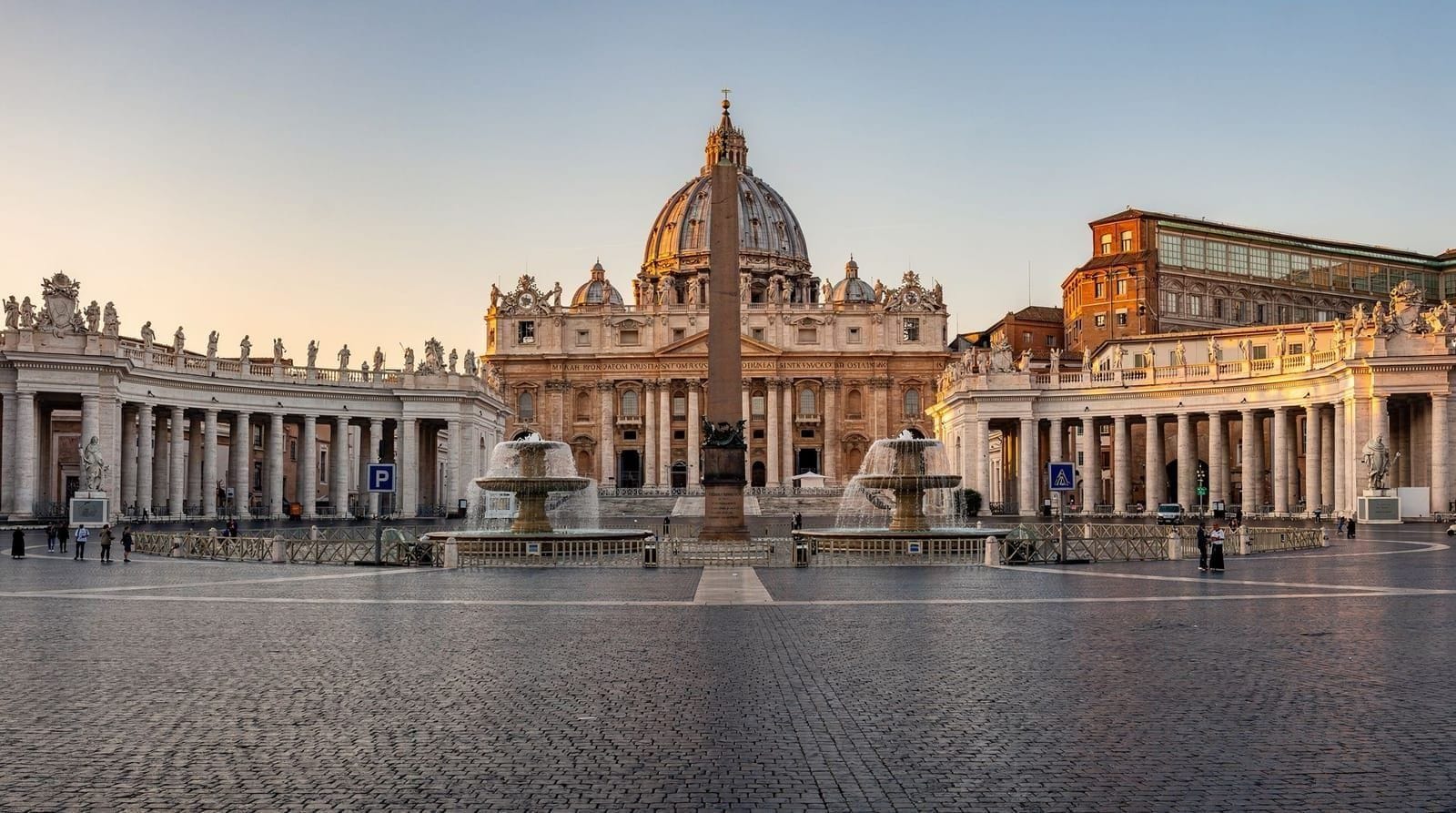
- St. Peter’s Square and Bernini’s colonnade from directly above — the best vantage point for understanding the elliptical geometry of the space
Binoculars (10x42 compact) are genuinely useful for identifying landmarks and appreciating the mosaic detail on the dome interior during the walkway section.
Photography on the dome: technical notes
The dome terrace presents specific photography challenges worth knowing before you climb.
Wide-angle is essential. The terrace is 1.5 metres wide and circular — there is no room to step back for context shots. A wide-angle lens (24mm equivalent or wider on a full-frame camera; the ultra-wide setting on modern phones) is needed to get the dome lantern and surrounding cityscape in the same frame.
The dome surface itself (looking upward from the terrace) is photographically difficult — you are too close, the curve is too steep, and the light reflecting off the white travertine is harsh in midday sun. The best dome surface photography is from the drum-level walkway inside, looking up at the mosaics with diffused interior light.
St. Peter’s Square from above is best photographed in the first 1–2 hours after opening (07:30–09:30) when the square receives direct morning light and the crowd in the square itself is minimal. The elliptical colonnade reads most clearly from directly above at the center of the lantern terrace.
Avoid midday sun (11:00–14:00): Strong overhead light flattens the textures on the lead roof and the stone below. The same view in early morning or late afternoon golden hour is dramatically better for photography.
A word on phone photography on the terrace: Wind at 136 metres can be significant. Hold your phone with both hands; do not hold it over the railing edge for a dramatic angle. This sounds obvious — but the combination of excitement and smartphone habits creates avoidable risks.
What to bring, and what not to bother with
Pack light for the climb: a bottle of water, a compact camera or phone, and a light layer if visiting in cooler months, since the exposed terrace is windier and colder than street level even in mild weather. Leave large backpacks, tripods, and anything bulky at your accommodation or expect to carry them awkwardly through the narrow spiral — there is no luggage storage at the dome entrance itself. Binoculars are the one accessory genuinely worth bringing if landmark-spotting from the top matters to you; a 10x42 compact pair adds real value for identifying the Colosseum, the Pantheon, and other distant sights that are otherwise just grey shapes. Sunscreen is worth applying before you start climbing if visiting around midday, since the terrace offers no shade at all.
Combining the dome climb with Castel Sant’Angelo
A natural half-day itinerary: St. Peter’s Basilica (09:00 entry, 1 hour interior) → dome climb (10:00–11:00) → walk 15 minutes east along the Tiber to Castel Sant’Angelo (11:15 entry, 1–1.5 hours) → lunch in Prati.
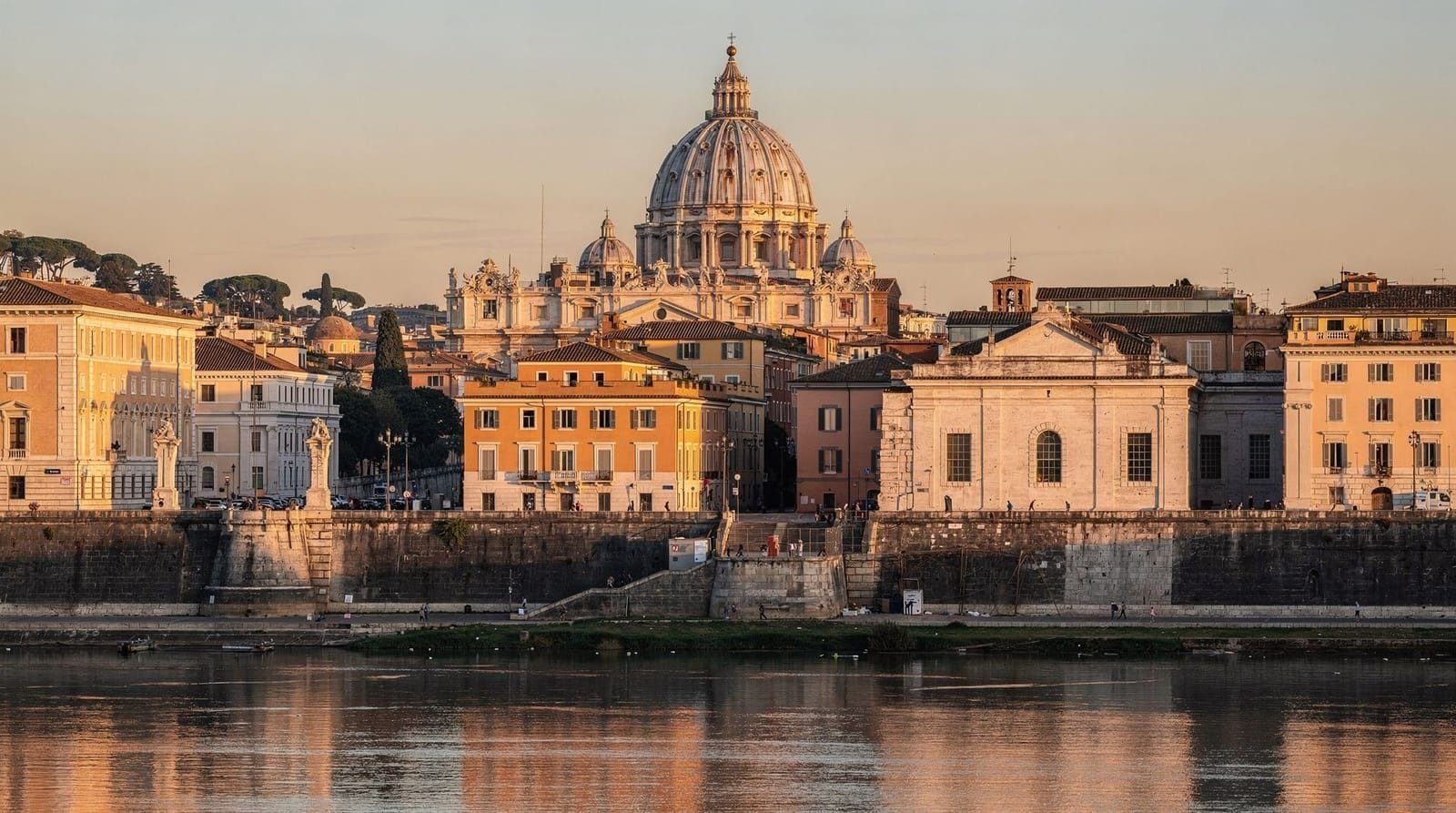
From Castel Sant’Angelo’s upper terrace, you can look back at St. Peter’s dome from the outside — a perspective that complements the view from the dome itself. The relationship between the castle and the Vatican is significant: the Passetto di Borgo (the elevated escape corridor above Via della Conciliazione) was the pope’s emergency route between the two buildings.
Castel Sant’Angelo also has its own 58-metre viewpoint from the terrace — less dramatic than St. Peter’s dome but free with the castle entry ticket and with distinctive views toward the Vatican. For anyone doing both in the same morning, the comparison of viewpoints from different heights is genuinely interesting: from the dome you look down on the whole complex including the castle itself, while from the castle terrace you look back up at the dome you just descended, giving a rare sense of the relationship between the two structures across the centuries.
See the St. Peter’s Basilica guide for the Basilica visit and our full guide to the Castel Sant’Angelo for that half of the morning.
Frequently asked questions about the St. Peter’s dome climb
Is the dome climb included in the Vatican Museums ticket?
No. The Vatican Museums ticket covers the Museums and Sistine Chapel only. The dome requires a separate ticket purchased on the Basilica rooftop (€8 stairs, €10 elevator + stairs). St. Peter’s Basilica entry itself is free.
How long does the dome climb take?
Plan 45–60 minutes for the full round trip from the Basilica floor — 30–40 minutes climbing, 10 minutes at the top, 15 minutes descending. Add time on the rooftop terrace if you want to explore the statues and views there.
Can I book the dome climb online?
No advance booking is available for the dome itself. Tickets are purchased on arrival at the Basilica roof. Some guided tours that include the dome climb (via tour operators) handle the process as part of the tour — this is the only way to “pre-book” the dome experience.
Is the dome climb wheelchair accessible?
No. The spiral staircase is not accessible for wheelchairs or those with significant mobility impairments. The rooftop terrace level (reachable by elevator) is partially accessible and offers its own views, but the dome summit is only reachable via stairs.
What is the earliest I can climb the dome?
The dome opens at 08:00 daily (Basilica opens at 07:00). The ticket kiosk on the rooftop opens at 08:00. Arriving at 07:45 and going straight to the rooftop gives you first-access to the dome queue.
Do I need to book a guided tour to climb the dome?
No — the dome can be visited independently. However, a guided tour is useful if you want interpretation of what you are seeing from the top, the mosaic programme, and the engineering history of the dome construction.
How does the dome view compare to Castel Sant’Angelo’s terrace?
St. Peter’s dome is nearly 80 metres higher and gives a 360-degree panorama including a direct overhead view of St. Peter’s Square’s elliptical geometry — something no other viewpoint in Rome offers. Castel Sant’Angelo’s terrace is lower and less dramatic, but is free with the castle’s entry ticket, less physically demanding to reach, and offers the reverse perspective — looking back at St. Peter’s dome from outside. Doing both on the same morning, as described below, gives a genuinely complementary pair of views.
Is the dome climb worth doing if I’ve already seen St. Peter’s Square from ground level?
Yes, for most visitors — the ground-level square and the aerial view read completely differently. From the ground you experience Bernini’s colonnade as an enclosing embrace at eye level; from the lantern terrace you see the same colonnade’s precise elliptical geometry laid out like a diagram, which is difficult to appreciate any other way.
The engineering story: how Michelangelo’s dome was built
Michelangelo accepted the commission to design the dome in 1546, at age 71, without a fee. He died in 1564 before construction reached the drum. His design was inherited by Giacomo della Porta, who completed the dome in 1590 under Pope Sixtus V.
Michelangelo’s design drew directly from Brunelleschi’s earlier dome in Florence (completed 1436) — both are double-shell constructions with an inner and outer dome separated by a cavity. The space between the two shells is what visitors walk through on the staircase. The cavity serves both structural and thermal functions: it reduces weight compared to a solid dome and provides insulation.
The structural challenge was considerable. The drum sits on four massive piers that extend down through the floor of the Basilica to the foundations. The lateral thrust of the dome — the outward force that pushes the walls apart — is contained by iron chains embedded in the base of the dome at construction.
In the 17th century, cracks began to appear in the structure. By the 18th century, Pope Benedict XIV commissioned Giovanni Poleni to analyse the dome. Poleni recommended additional iron chains (chains 5 and 6, visible today in the climbing staircase) to reinforce the earlier set. The repairs stabilised the dome. Later engineering surveys, including 20th-century studies, confirmed the dome is not currently at risk.
The tiles you walk on during the terrace section are the original 16th-century limestone pavers, maintained continuously since 1590.
How the dome climb compares to other high viewpoints in Rome
Rome has several viewpoints that compete for attention, and each answers a different need:
| Viewpoint | Height | Cost | Effort |
|---|---|---|---|
| St. Peter’s dome | 136 m | €8–€10 | High — 320–551 steps |
| Castel Sant’Angelo terrace | ~58 m | Included in castle ticket | Low — ramps and short stairs |
| Gianicolo Hill (free) | ~85 m | Free | Low — short walk uphill |
| Vittoriano rooftop | ~70 m | Free (lift) | Very low — lift access |
If your only goal is a panoramic photo without physical effort, the Gianicolo or the Vittoriano deliver a comparable payoff for far less work. What makes St. Peter’s dome distinct is the combination of height, the direct overhead view of Bernini’s colonnade, and the sense of having earned the view through the climb itself — none of the easier alternatives replicate that.
The mosaic programme: what you walk past on the way up
The interior dome surface at the drum level (the walkway level reached by either stairs or elevator) carries an enormous mosaic programme. Most visitors rush past this section without looking closely — a mistake, because the mosaics here are technically remarkable.
The main figures on the drum level represent the four evangelists and their symbolic animals: Matthew (man/angel), Mark (lion), Luke (ox), John (eagle). Each figure is approximately 8 metres tall — visible from the chapel floor below but dwarfing at close range from the walkway.
The Latin inscription at the drum level reads in full: “TV ES PETRVS ET SVPER HANC PETRAM AEDIFICABO ECCLESIAM MEAM ET TIBI DABO CLAVES REGNI CAELORVM” — “You are Peter and upon this rock I will build my Church and I will give you the keys of the Kingdom of Heaven” (Matthew 16:18-19). The letters are approximately 2 metres tall; from the floor of the Basilica they are legible but small.
At close range the tesserae (individual mosaic tiles) are visible — each roughly 1–2 cm square, creating the impression of painting from a distance while revealing their constituent parts up close. The mosaic technique in the Vatican dome uses glass tesserae with gold-leaf backing for the gold passages, the same technique used in Byzantine mosaics centuries earlier.
Physical preparation: what to know before attempting the climb
The dome climb involves 320–551 steps depending on whether you use the elevator. The final section requires bending slightly and the ceiling of the staircase angles inward. There is no air conditioning in the staircase.
Heat consideration: In summer, the staircase temperature inside the dome can reach 35–40°C in the upper sections by midday. Bring water. Wear breathable clothing. If you are not comfortable in confined, warm spaces, go at 08:00 before the heat builds.
Passing other climbers: The staircase is single-file in most sections. If someone ahead of you needs to stop, the group behind stops with them. There is a separate down staircase on some sections and a shared staircase on others — listen to staff directions at the entrance.
Shoes: Leather-soled shoes on the smooth stone staircase become slippery with wear. Rubber-soled trainers or walking shoes give better grip.
Vertigo on the terrace: The external terrace at 136 metres is narrow (~1.5 metres) with metal railings. The view is vertiginous — you are looking directly down at St. Peter’s Square from a height equivalent to a 45-storey building. Most people find this exhilarating; some find it difficult. If you have significant height anxiety, the rooftop terrace (~50 metres) is a satisfying alternative that does not require the full climb.
Top experiences
Bookable activities with verified prices and instant confirmation on GetYourGuide.