Rome in the Rain: Off-Season 2 Days
Rome: Domus Aurea Guided Tour and Virtual Reality Experience
Duration: 2 hours
Quick answer: Rain in Rome is a feature, not a problem. The city’s underground layers, covered museums, and dim church interiors are genuinely better in wet weather — fewer crowds, better light for photography, and the grey sky makes the stone look exactly as dramatic as it should. A wet-day itinerary leans on tunnels, crypts, galleries, and covered routes, and works better than most sunny-day plans.
| Best months | November-February |
| Temperature | Around 8-15°C |
| Cost | Mid-range; hotel rates drop 30-40% versus summer peak |
| What to bring | Compact umbrella, waterproof layer, grippy waterproof shoes |
| Booking priority | Domus Aurea and Borghese Gallery still need advance booking despite low season |
November through February is Rome’s quietest season. Temperatures sit around 8-15 °C, rainfall is moderate, and the city belongs to itself again after the summer crush. A rainy two-day visit is not a compromise — it is, honestly, a better way to see certain parts of Rome than competing with 30,000 people on a July afternoon.
Off-season month by month
| Month | Weather | Crowd level | Notes |
|---|---|---|---|
| November | Cool, wettest month | Low | Best value hotel rates of the year |
| December | Cold, festive | Moderate (Christmas) | Presepi in churches, markets, busier around holidays |
| January | Coldest, quiet | Lowest | Best month for short queues everywhere |
| February | Cold, some rain | Low-moderate | Carnival events add some crowds late in the month |
If you’d rather visit in better weather and accept the crowds that come with it, the best time to visit Rome guide covers the shoulder-season trade-offs in more detail.
The underground sites close under dry conditions anyway; the Domus Aurea, the Catacombs, the underground layers of San Clemente, the Capuchin Crypt, and the excavations beneath Palazzo Valentini are all indoor or subterranean and completely unaffected by weather. The Vatican Museums, Borghese Gallery, and Capitoline Museums are equally good in any conditions. Most churches are free, covered, and among the best Caravaggio repositories in the world.
Rome in off-season is also a better city to eat in. November through February, restaurants are running for locals — the tourist menus have disappeared, the prices are honest, and the kitchen teams are cooking for discerning regulars rather than passing groups. Reservations are easier to get and the rooms are calmer. The Rome in winter guide covers what to expect by month, including Christmas in Rome (presepi in churches, Vatican Christmas Mass access, the market at Piazza Navona) and carnival in February.
What to bring: a compact umbrella, a waterproof layer, and comfortable waterproof shoes. Rome’s cobblestones are genuinely slippery when wet — good grip matters. Everything else on this itinerary works regardless of what the sky is doing.
Day 1: Underground Rome and the Ancient Layers
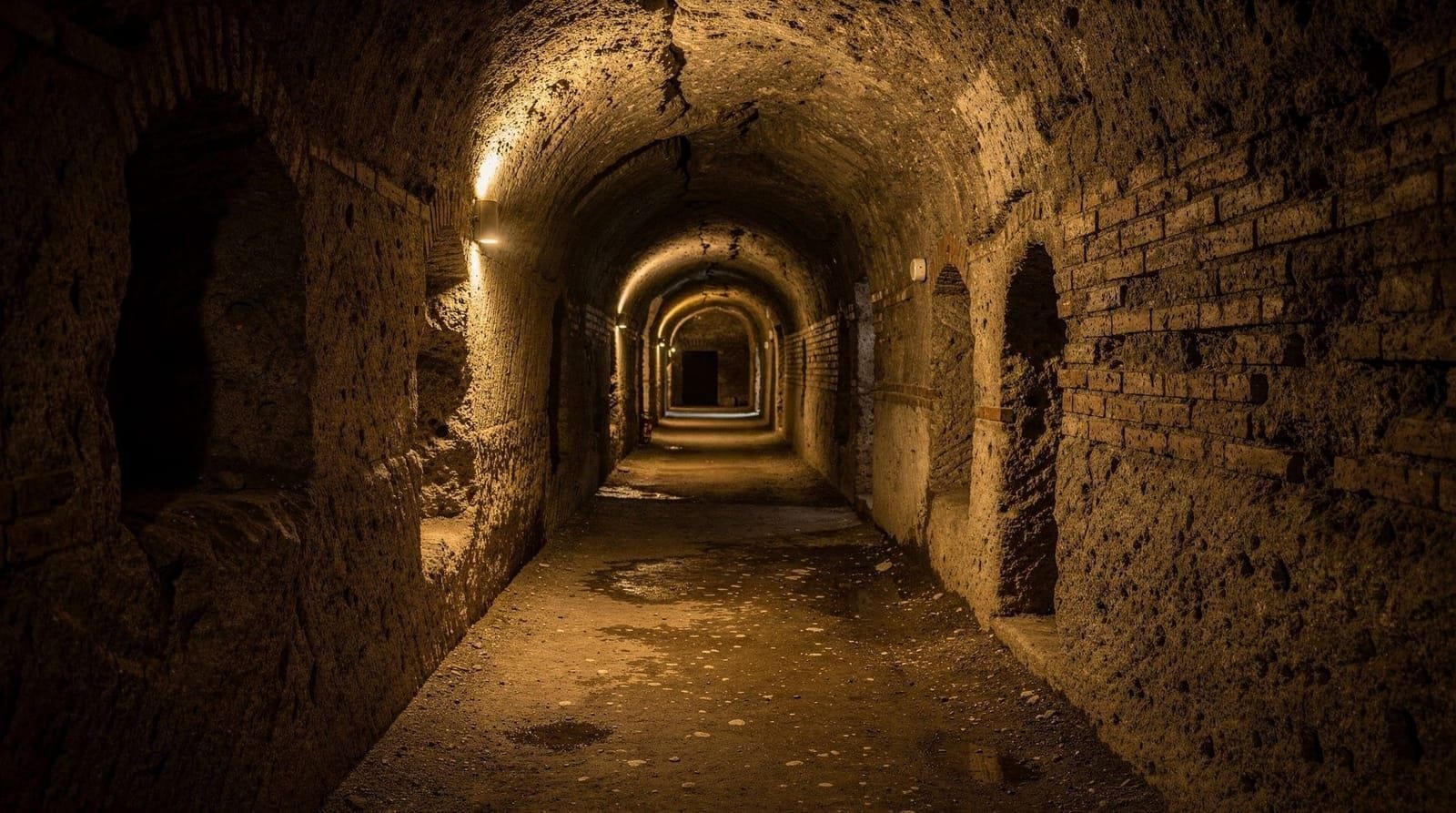
Start underground. The Domus Aurea — Nero’s Golden House, buried beneath the Oppian Hill — is one of Rome’s most atmospheric experiences and exists entirely below ground. The 2-hour guided tour with virtual reality overlay shows you the original painted rooms and the scale of the palace before Trajan buried it to build his baths on top. Book ahead; slots are limited and this is not something you can walk in for.
Domus Aurea guided tour with virtual reality experienceAfter the Domus Aurea, walk 10 minutes to San Clemente — one of Rome’s most extraordinary archaeological sites. Three layers of history in a single building: a 12th-century basilica at street level (with Masaccio-era frescoes), a 4th-century basilica below that, and at the bottom an active Mithraic temple from the 1st-2nd century AD with a running underground stream that you can hear from within the excavation. Entry to the underground layers costs 10 €; the basilica above is free. Allow 90 minutes. This is among the best-value archaeology experiences in Rome and has almost no queue even in high season, let alone on a rainy November afternoon. For comparison with other underground sites, see Rome underground tours compared.
Lunch: the Monti neighborhood is three minutes’ walk north of San Clemente. This is the right neighborhood for a proper sit-down lunch — wine bars, good trattorie, and no tourist menus. In wet weather a long lunch is part of the plan.
Afternoon: the Capuchin Crypt on Via Veneto. The Museo e Cripta dei Frati Cappuccini holds six underground chapels decorated entirely with the bones of 3,700 Capuchin friars — walls, ceilings, and columns constructed from femurs, vertebrae, and skulls, arranged with a kind of devotional artistry that is extraordinary and completely unlike anything else in Rome. Entry 8 €, no photography. Allow 45-60 minutes.
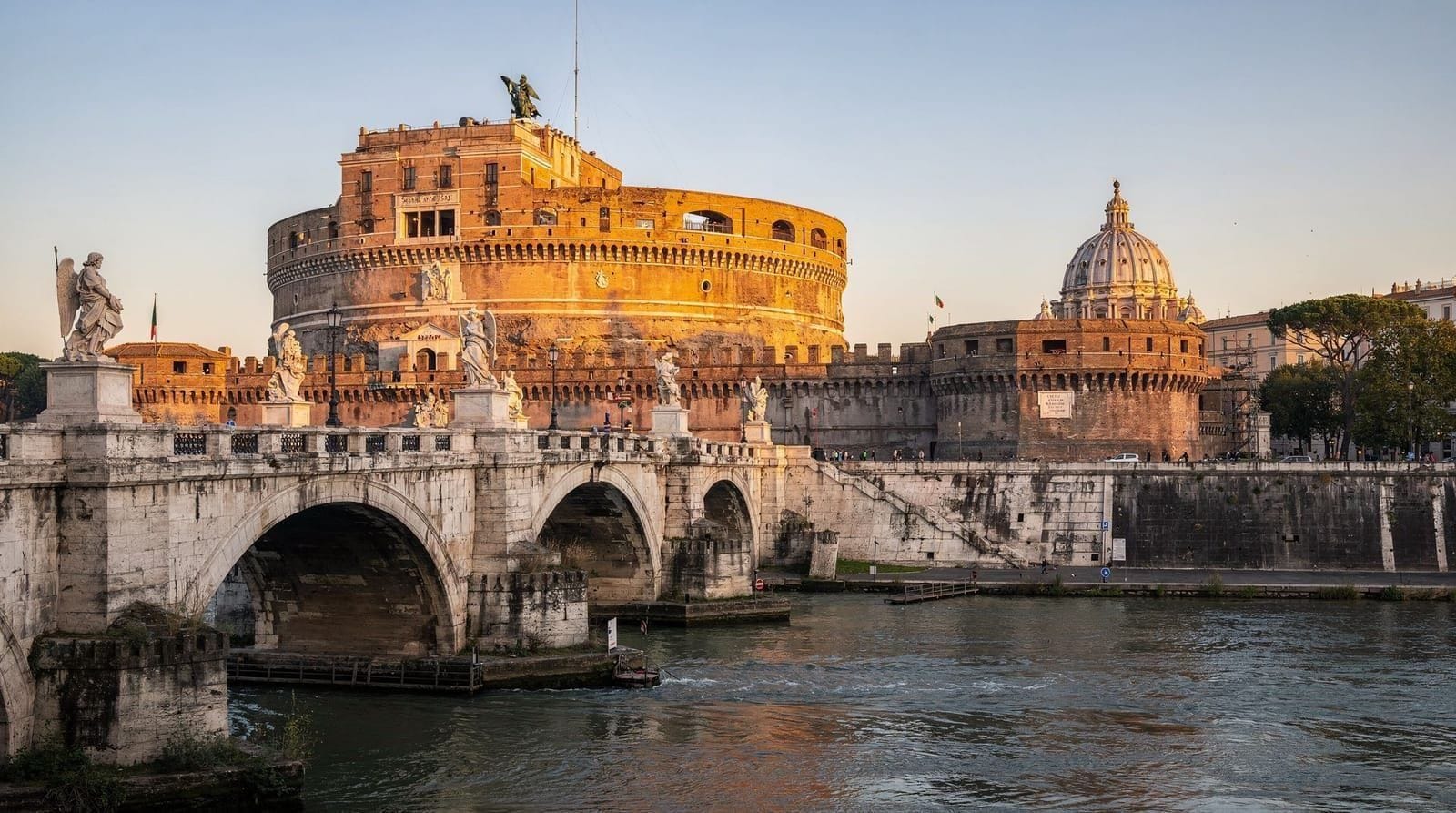
Rome: Capuchin Crypts and Catacombs tour with transfersLate afternoon: Castel Sant’Angelo is one of Rome’s best rainy-day stops — a cylindrical fortress by the Tiber, converted from Hadrian’s mausoleum through various incarnations as a papal castle and prison, with interior rooms you can explore for 90 minutes without any weather concerns. The terrace view over the Tiber is good even under cloud, and the interior café has decent coffee.
Castel Sant’Angelo entry ticket and digital audioguideDinner in Prati, the neighborhood directly north of the Vatican. Prati is a proper Roman residential district without the tourist markup of the historic center — good pizza and trattorie at honest prices. In winter the neighborhood has a different feel from the summer version: the outdoor seating is gone, the restaurants are full of regulars rather than tourists, and the menus shift toward heavier Roman staples — coda alla vaccinara (oxtail stew), trippa alla romana (tripe with tomato and mint), and abbacchio al forno (roast lamb) that the warm-weather menus often skip in favor of more tourist-palatable options. Off-season winter dining in Rome, if you lean into it, is some of the best the city offers.
Day 2: Vatican, Churches, and Covered Galleries
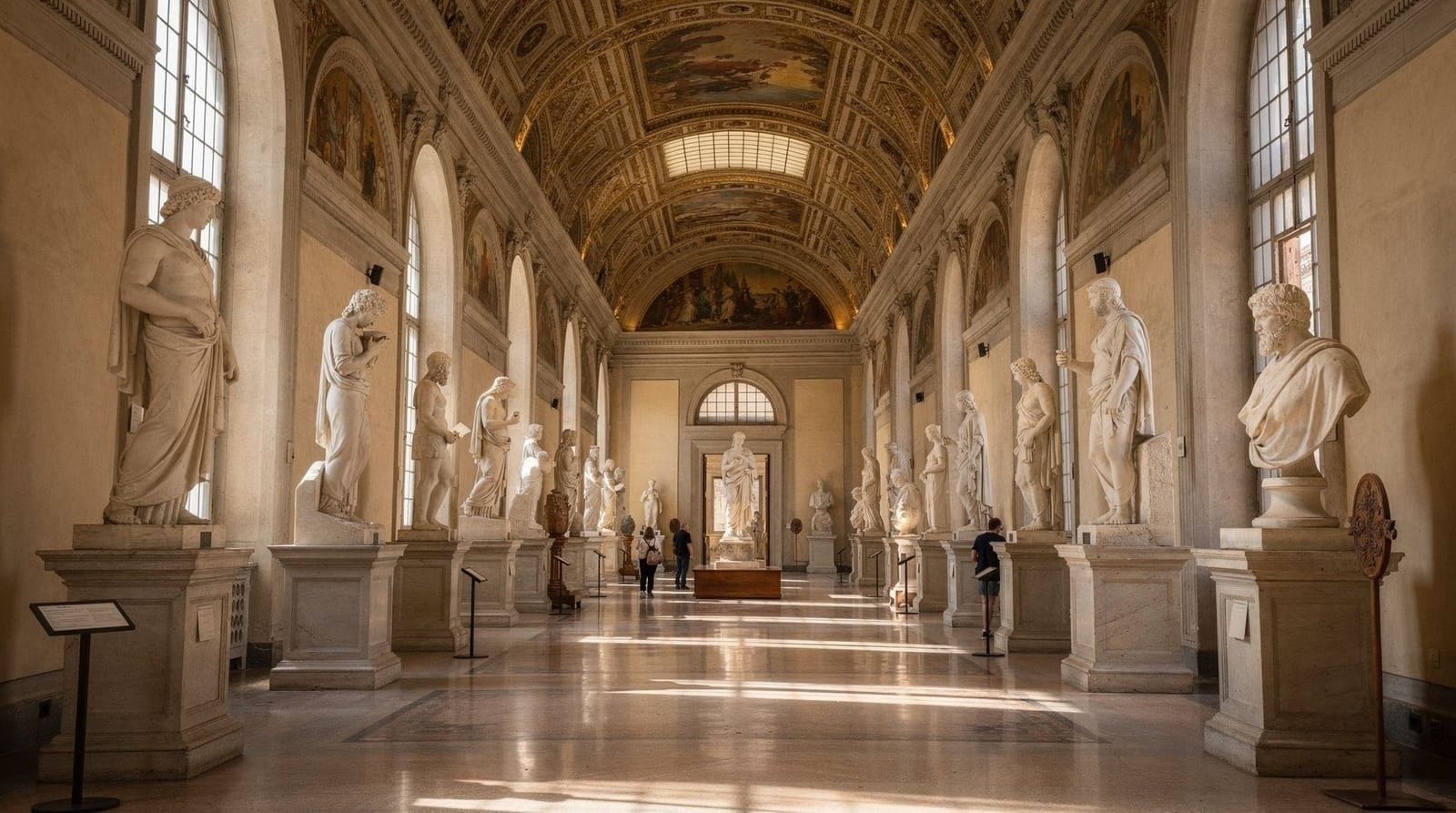
The Vatican Museums on a wet day in November or February are the best version of themselves: entry is faster, the galleries are emptier, and the Sistine Chapel can occasionally be seen without the usual shoulder-to-shoulder density that characterizes April-September visits. An early morning small-group tour gives you the best conditions and the cleanest light in the Chapel before the main crowds arrive.
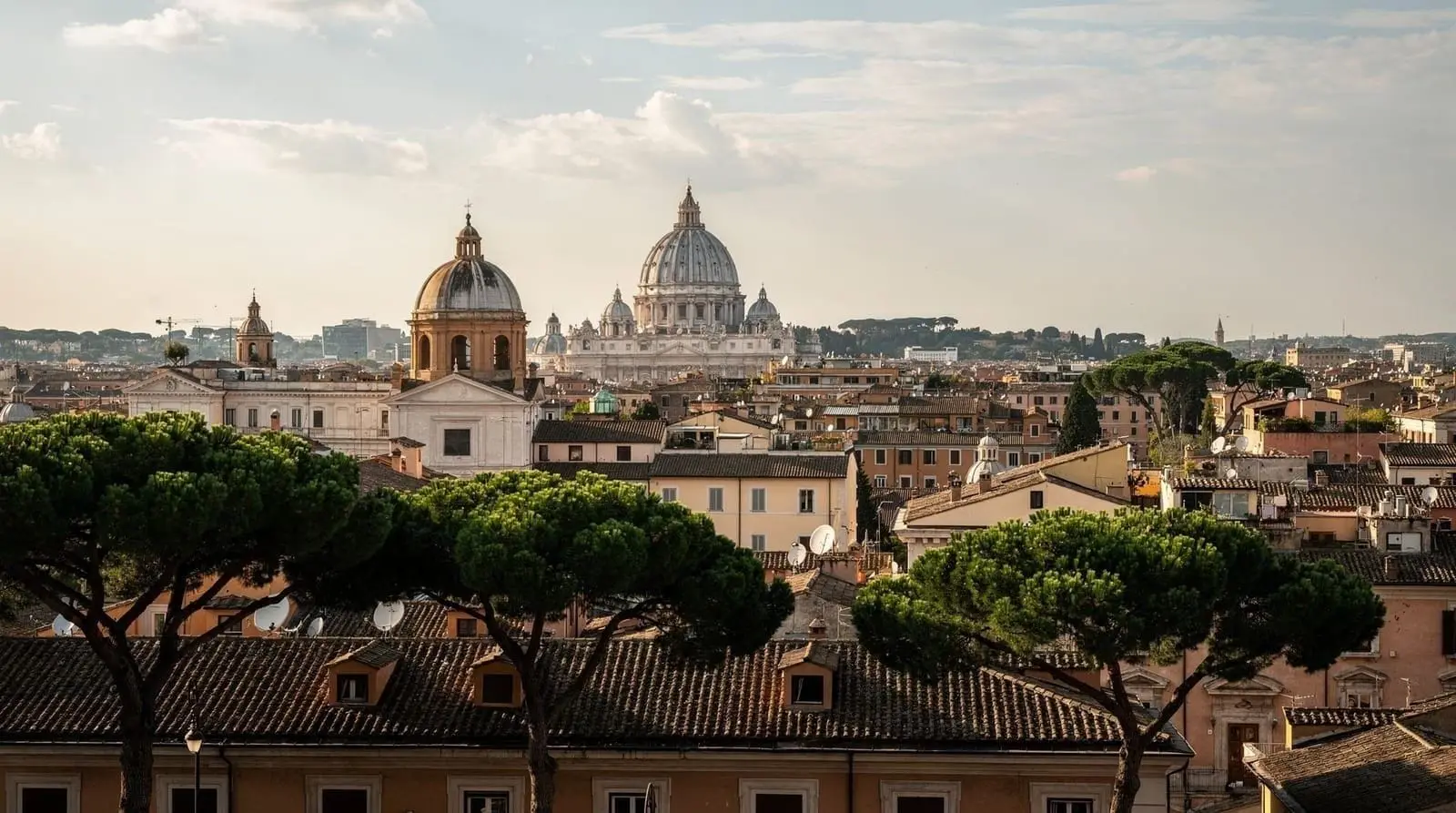
Vatican, Sistine Chapel, and St. Peter’s early morning small-group tourAllocate three hours minimum: the Gallery of Maps (its own extraordinary experience — 40 topographical maps of Italy painted on 120 meters of corridor wall), the Raphael Rooms, and the Sistine Chapel. St. Peter’s Basilica itself is free after the Museums; the dome climb adds an additional 6-8 € with stairs (5 €) or lift (8 €) and is impressive even in cloud, though a clear day is better for the view.
Afternoon — choose one major gallery:
Option A: Capitoline Museums. The best Roman sculpture collection in the world: the original Marcus Aurelius equestrian statue (the only surviving large-scale Roman bronze from antiquity in its original form), the Capitoline Wolf (Etruscan bronze, 6th century BC), the Dying Gaul (a Roman copy of a lost Hellenistic masterpiece), and the original gilded bronze of Hercules. The palace complex sits at the top of the Capitoline Hill designed by Michelangelo, with a covered walkway connecting the Palazzo dei Conservatori and Palazzo Nuovo over the Forum below. The tabularium passageway above the ancient Forum is one of the best and least-known views in Rome. Allow 2-3 hours. Entry 15 €, pre-booked recommended in peak season.
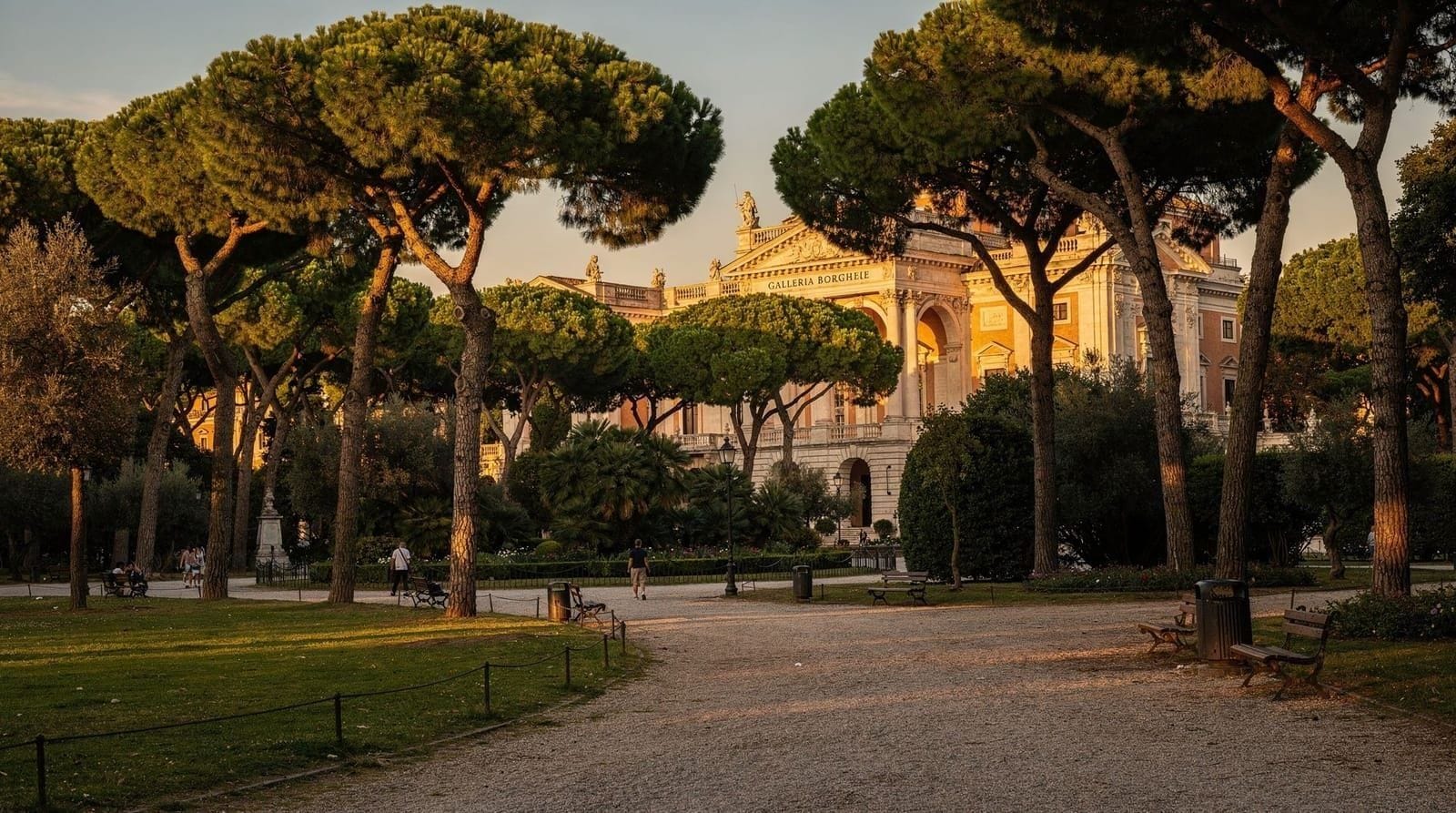
Option B: Borghese Gallery. Bernini’s Baroque sculpture rooms — Daphne and Apollo, Pluto and Persephone, David — plus Caravaggio’s early work including Boy with a Basket of Fruit and the Sick Bacchus, and Raphael’s Entombment of Christ, all in a villa in the Borghese gardens. This is not a large museum — the building is a 17th-century casino — but every room is extraordinary. Strictly timed 2-hour entry; book the afternoon slot at least 10 days ahead. Entry 15 € plus booking fee 2 €. See Borghese booking guide for the step-by-step reservation process.
After your gallery, Rome’s churches provide covered, free, and extraordinary art. On a rainy afternoon, a slow walk through Centro Storico — ducking into San Luigi dei Francesi for the Caravaggio Calling of St. Matthew, then Sant’Agostino for another Caravaggio (the Madonna of Loreto, with pilgrim figures in dirty feet that scandalized Rome when it was unveiled in 1604-06), then Santa Maria sopra Minerva (Rome’s only Gothic church, with a Michelangelo Christ at the altar and Fra Angelico’s tomb in the side chapel) — covers more great art than most Northern European museums, entirely free and entirely covered from the rain. For a structured version of this self-guided route, see the Caravaggio trail in Rome, which maps the seven major Caravaggio canvases still in the Roman churches where they were painted.
Dinner: Centro Storico in November-February is less chaotic than summer; restaurants have space, prices dip slightly at off-season, and the city feels genuinely lived-in rather than performed. A long dinner over cacio e pepe and a half-bottle of local wine is the right ending.
Off-season Rome: honest observations
What’s better in the rain and off-season:
- Underground sites (always better with fewer people)
- Vatican Museums (shorter queues, more space in the Sistine Chapel)
- Restaurants (easier to get a good table without booking weeks ahead)
- Street photography (the light is lower, the streets are emptier, the reflections on cobblestones are genuinely beautiful)
- Prices (hotel rates drop 30-40 % between November and February vs. summer peak)
What’s genuinely not good in bad weather:
- Walking outdoor archaeological sites like Ostia Antica or the Appian Way in heavy rain is cold and muddy
- Borghese gardens are less pleasant in steady rain
- Day trips to Pompeii, Tivoli, and Ostia are best rescheduled if the forecast is persistent rain
What’s unaffected:
- The Colosseum interior (covered in most areas), though the Roman Forum is outdoor
- All the churches (all indoor, all free)
- The Vatican Museums entirely
- All underground sites
- All galleries
See Rome in winter for the full seasonal breakdown including December (Christmas markets, presepi in churches, Christmas Day access to Vatican), and best time to visit Rome for the month-by-month overview.
Getting between sites in the rain
Rome’s Metro (lines A and B) and buses run regardless of weather. A 48-hour transit pass costs 7 € and covers unlimited travel. The Metro is useful for the Vatican-Colosseum corridor (Ottaviano to Colosseo stations). Taxis and rideshares are plentiful; factor 8-12 € for crosstown journeys.
Getting around Rome has full details on the transit network, including which neighborhoods are comfortably walkable versus which require transport.
Where to stay for a short rainy visit
Centro Storico: Walking distance to everything in Day 2; you rarely need to go outdoors between sites except to cross piazzas. Best for minimizing transit time on wet days.
Vatican-Prati: Puts you within 5 minutes of the Vatican Museums for an early morning slot, with easy access to Castel Sant’Angelo and the Prati neighborhood for eating. Slightly far from the Capitoline and Centro Storico but manageable via Metro Line A.
Monti: Best if Day 1’s underground circuit (Domus Aurea, San Clemente, Capuchin Crypt) is your priority — the neighborhood sits between these sites and is excellent for dinner.
Extending this to three or four days
If your off-season trip runs longer than two days, the underground and covered-site logic extends naturally. A third day could add the Ostia Antica guided tour on a morning with a lighter forecast (it’s outdoors but far less crowded off-season, and the site’s own museum is covered if rain arrives mid-visit), or a proper 2-3 hour visit to the Capitoline Museums if you only had time for one gallery option on Day 2. Off-season is also the easier time to add the Borghese Gallery on a separate day rather than choosing between it and the Capitoline — booking windows shrink to a week or so ahead in January and February, compared to 10-14 days in spring and autumn. Anyone building a longer winter trip should also look at the first-timer 3-day itinerary and simply swap its outdoor-heavy afternoons for this guide’s indoor alternatives on the wettest days.
FAQ
Is it actually worth visiting Rome in the rain rather than rescheduling? Yes, for most of what matters. The Vatican Museums, the Domus Aurea, San Clemente, the Capuchin Crypt, the Capitoline Museums, the Borghese Gallery and every church in the city are entirely unaffected by rain, and several — the Vatican especially — are meaningfully better with smaller crowds. The exceptions are open-air sites like the Roman Forum, Ostia Antica and the Appian Way, which are simply less pleasant wet.
Do the big bookings (Vatican, Borghese, Domus Aurea) still sell out in winter? Less often, but they can still fill on weekends and around Christmas and Carnival. Book the Domus Aurea and Borghese Gallery at least a week ahead even in low season — both run hard visitor caps regardless of the time of year.
What’s the biggest mistake visitors make planning a rainy or off-season trip? Building the itinerary as if it’s a scaled-down summer trip, with the same outdoor-heavy days minus a few crowds. The right approach, as this itinerary does, is to invert the priorities entirely — underground sites and covered galleries first, open-air ruins only on the days the forecast actually cooperates.
Top experiences
Bookable activities with verified prices and instant confirmation on GetYourGuide.