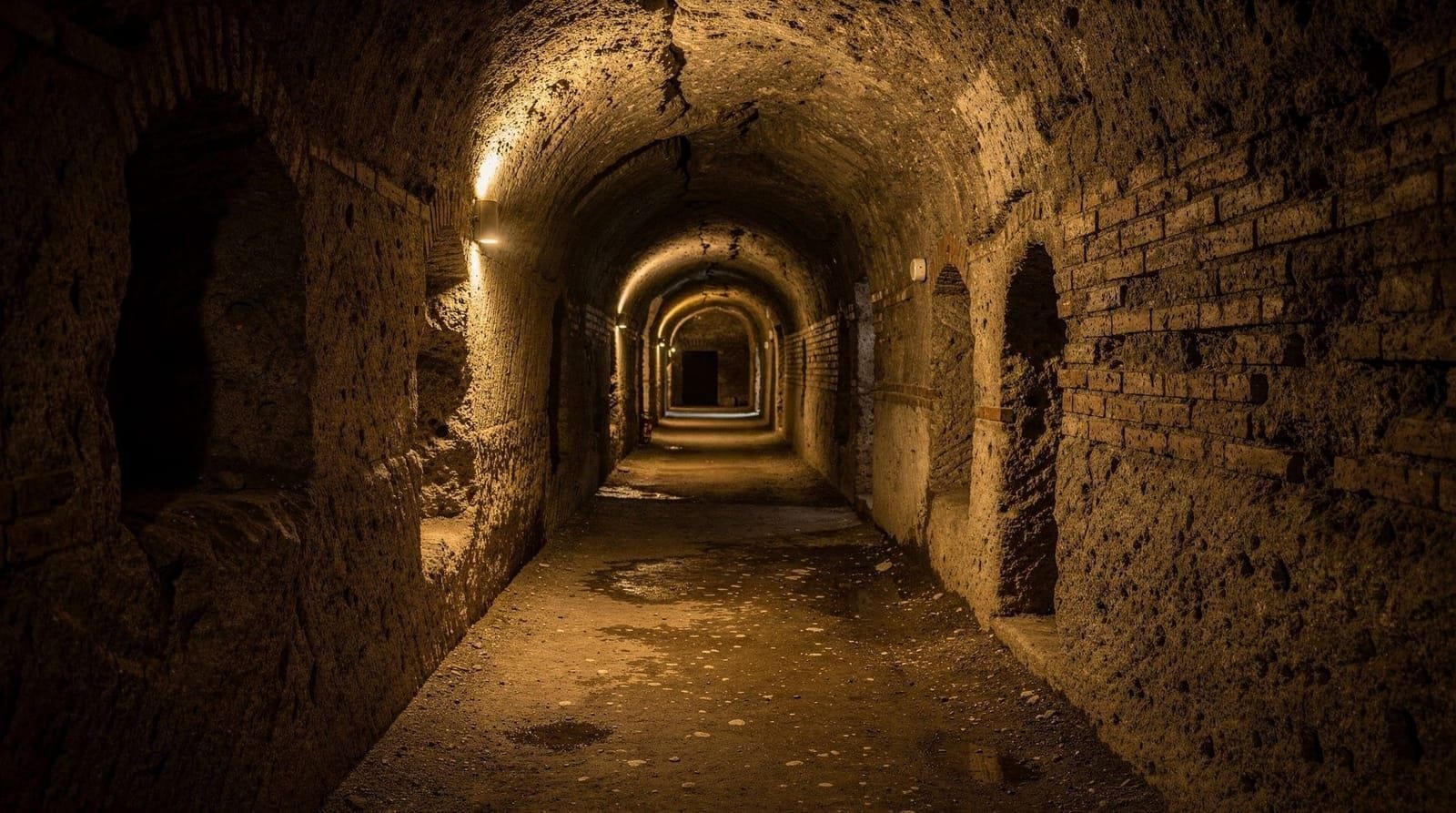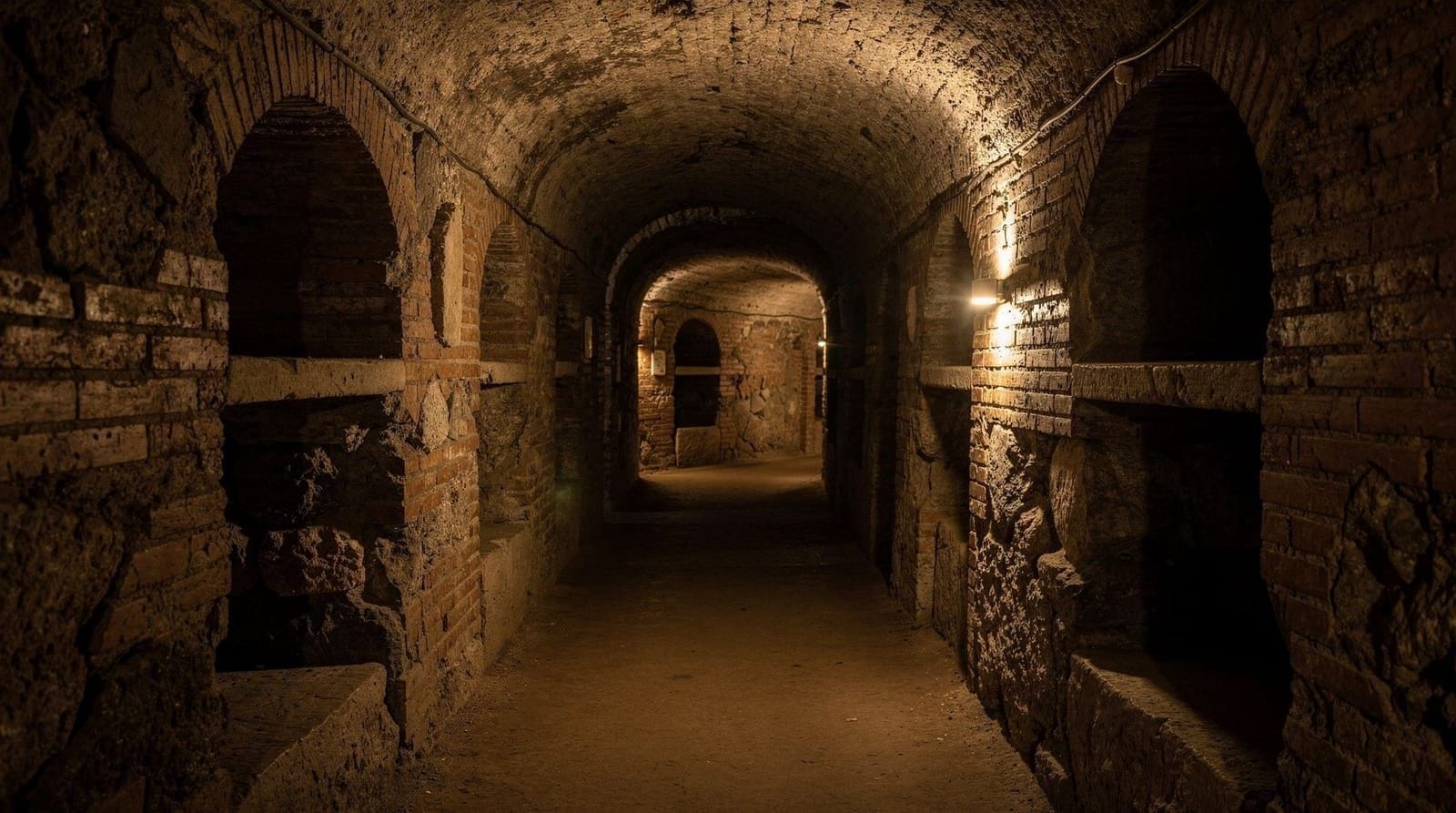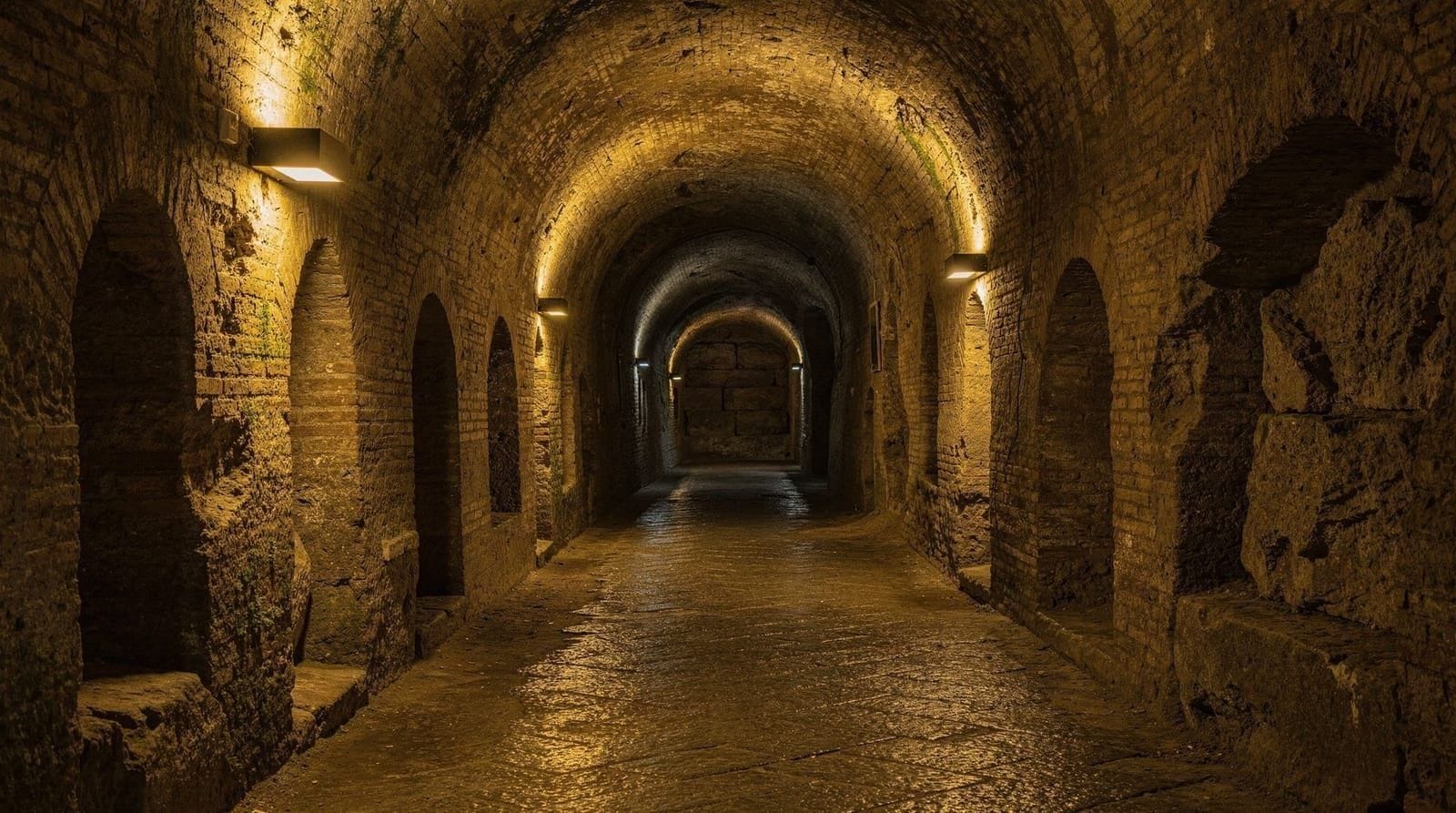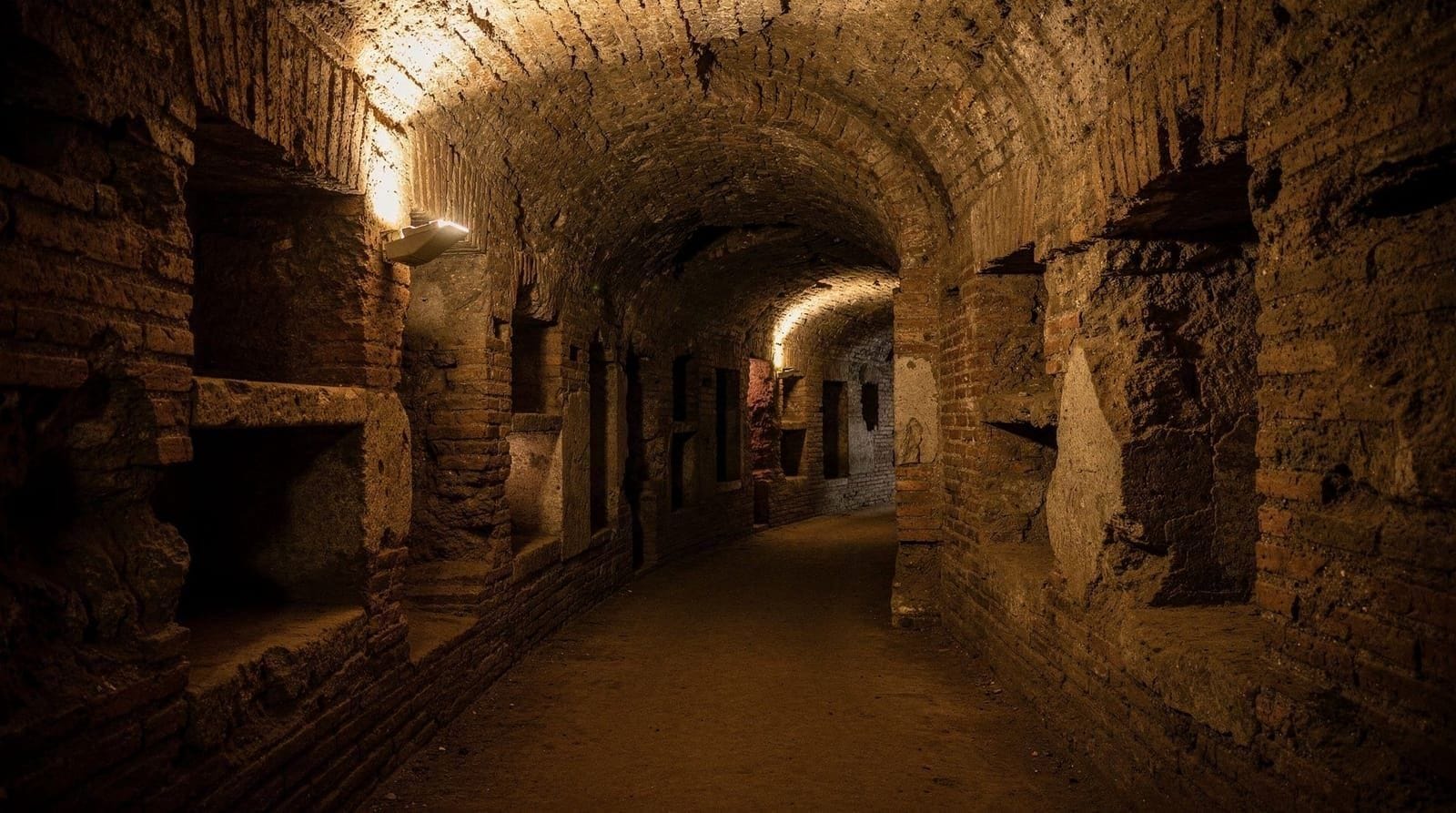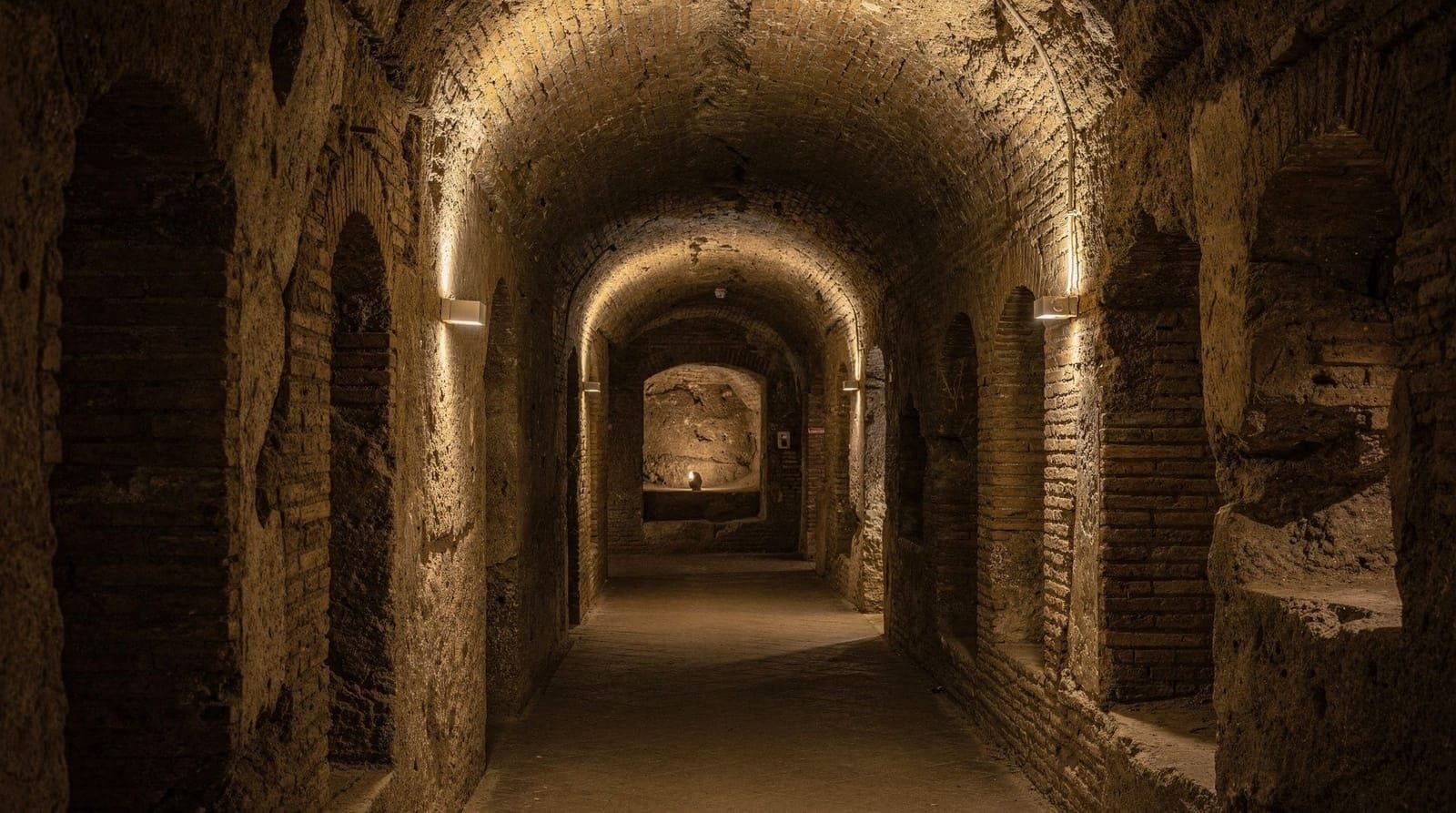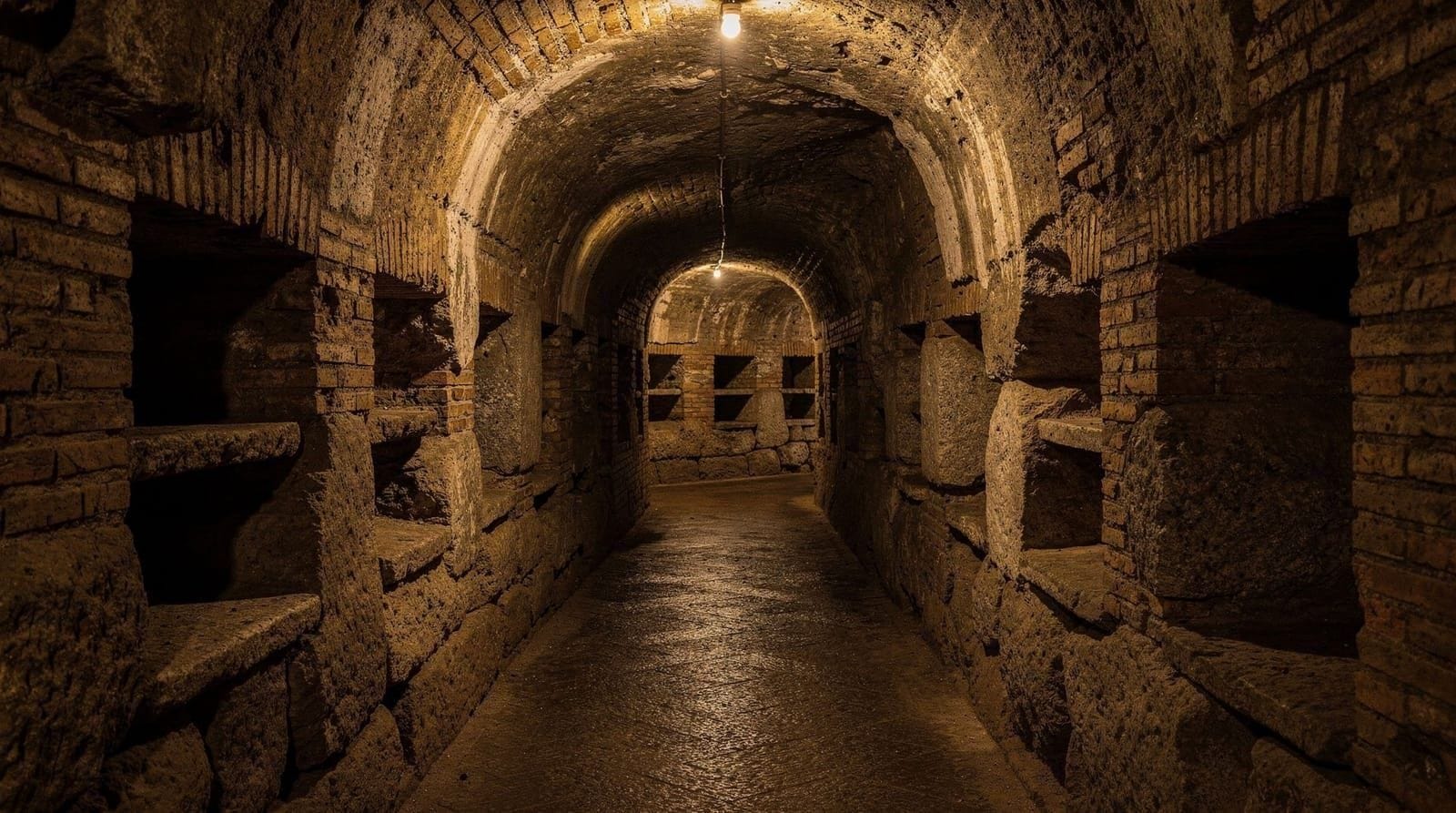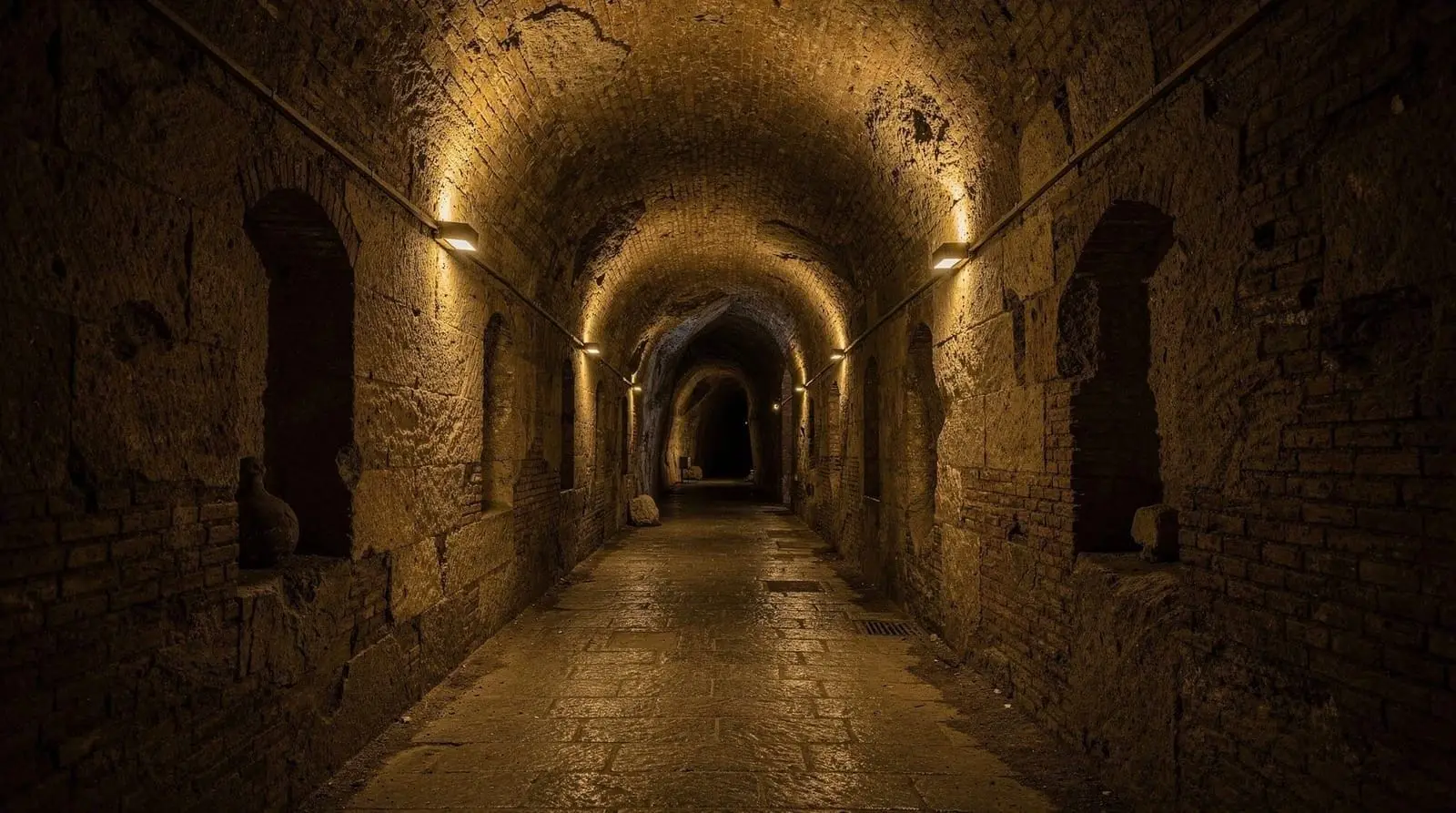
Underground Rome tours compared: catacombs vs crypts vs domus
Rome: Catacombs Skip-the-Line Tour in English
Which underground Rome tour or site should I prioritize?
If you have time for only one: the Catacombs of St. Callixtus (Appian Way) for historical weight and scale, or the Basilica of San Clemente for sheer architectural surprise. If you have a full underground day: San Clemente in the morning (combine with Colosseum), Capuchin Crypt in the afternoon (Barberini area). The catacombs require a separate half-day due to transport time.
The underground options, honestly assessed
Rome’s underground sites are numerous, varied, and spread across the city. Making a sensible plan requires understanding what each site actually is, what it offers, and what its practical limitations are. This guide compares the main options head-to-head and recommends specific combinations based on different travel priorities and time constraints.
The sites covered: Catacombs of St. Callixtus, Catacombs of Domitilla, Catacombs of St. Sebastian, Capuchin Crypt, Basilica of San Clemente (underground), Domus Romane at Palazzo Valentini, and the mithraeum network.
| Where | Appian Way (catacombs), Via Veneto (Capuchin Crypt), Celio (San Clemente), Piazza Venezia (Palazzo Valentini) |
| Cost range | 8–12 EUR per site |
| Time needed | 30–90 minutes per site, plus transport for the catacombs |
| Getting there | Taxi/bus for the Appian Way sites; on foot or metro for the rest |
| Best time | Weekday mornings, and November–February for the quietest catacombs |
Site-by-site comparison
Catacombs of St. Callixtus
What it is: The official papal cemetery of the early Church, with papal burial crypts, early Christian fresco cycles, and 20 kilometres of tunnels on multiple levels.
Duration: 30-45 minutes guided tour
Cost: 8 EUR adult (tour included)
Transport required: Yes — 25-35 minutes from the centre by taxi or infrequent bus
Guided mandatory: Yes — continuous groups in multiple languages
Photography: No
Best for: Historical importance, early Christian archaeology, seeing where popes were actually buried
Honest limitation: The physical experience of the tunnels is atmospheric but confined. All tours follow the same route; you cannot explore independently. The frescoes are modest in scale.
Closed: Wednesdays
Catacombs of Domitilla
What it is: The largest catacomb complex in Rome, with the best-preserved fresco painting of any catacombs and entry through an early Christian basilica.
Duration: 30-45 minutes guided tour
Cost: 8 EUR adult
Transport required: Yes — close to St. Callixtus on Via Appia Antica, easy to combine
Guided mandatory: Yes
Photography: No
Best for: Fresco art, the earliest Good Shepherd image, the architectural entry via the basilica
Closed: Tuesdays
Catacombs of St. Sebastian
What it is: The site where the remains of Sts. Peter and Paul were temporarily stored, with a remarkable wall of devotional graffiti and intact pagan mausoleums predating Christian use.
Duration: 30-40 minutes guided tour
Cost: 8 EUR adult
Transport required: Yes — same Appian Way area as St. Callixtus and Domitilla
Guided mandatory: Yes
Photography: No
Best for: Apostolic history, the Peter-Paul graffiti wall, the pagan-to-Christian transition
Closed: Sundays
Capuchin Crypt
What it is: Six small chapels decorated with the arranged bones of approximately 3,700 Capuchin friars, plus a museum with a Caravaggio painting.
Duration: 45-60 minutes self-guided
Cost: 9 EUR adult (museum + crypt)
Transport required: No — 5 minutes from Barberini metro
Guided mandatory: No (self-guided)
Photography: No (inside the bone chapels)
Best for: Unusual visual experience, memento mori tradition, combining with Barberini/Trevi area
Honest limitation: The space is very small. It is memorable and unusual but over quickly. Do not make it the sole reason for a special journey.
Closed: Open daily
Basilica of San Clemente (underground)
What it is: Three archaeological levels — 12th-century basilica, 4th-century basilica with significant frescoes, 2nd-century mithraeum — in a single visit descending through 1,000 years of history.
Duration: 60-90 minutes (upper basilica + underground)
Cost: Free (upper basilica) + 10 EUR (underground archaeological zone)
Transport required: No — 10 minutes from Colosseo metro
Guided mandatory: No (self-guided with information panels)
Photography: Permitted (check with staff, no flash)
Best for: The most architecturally remarkable single site; the layered Roman history in physical form; the mithraeum experience
Honest limitation: The underground is self-guided, which means the depth of understanding depends on your preparation. The information panels are good but not as rich as an in-person guide.
Closed: Sundays morning (opens 12:00)
Domus Romane at Palazzo Valentini
What it is: Two Roman patrician houses (1st-4th century CE) beneath a 16th-century palazzo, with a multimedia projection system reconstructing the interiors.
Duration: 60-75 minutes guided tour
Cost: 12 EUR adult
Transport required: No — central location near Trajan’s Column
Guided mandatory: Yes (timed guided sessions, advance booking required)
Photography: Permitted (encouraged — the projected ruins photograph well)
Best for: Roman domestic life, families with older children, multimedia-enhanced archaeology
Honest limitation: The ruins themselves are modest without the multimedia layer. Visitors expecting physical grandeur on the scale of the Forum will be disappointed — the magic is in the interpretation technology.
Closed: Mondays
Mithraeum at San Clemente (included in San Clemente visit above)
What it is: Best-preserved accessible mithraeum in Rome, set in the lowest level of the San Clemente complex.
Duration: Included in San Clemente visit
Cost: Included in 10 EUR San Clemente underground ticket
Comparison table
| Site | Cost | Duration | Transport needed | Photography | Booking needed | Kids 8-12 |
|---|---|---|---|---|---|---|
| St. Callixtus | 8 EUR | 40 min | Yes (taxi/bus) | No | Optional | Good |
| Domitilla | 8 EUR | 40 min | Yes | No | Optional | Good |
| St. Sebastian | 8 EUR | 40 min | Yes | No | Optional | Good |
| Capuchin Crypt | 9 EUR | 45 min | No | No (bones area) | No | From 10+ |
| San Clemente UG | 10 EUR | 90 min total | No | Yes (check) | No | Good |
| Palazzo Valentini | 12 EUR | 70 min | No | Yes | Required | Best |
| Caracalla UG | Included with Caracalla | 30-45 min add-on | No | Yes | Yes | Good |
Which combination is right for you?
You have half a day and want the single best underground experience
Go to San Clemente. Combine with a Colosseum visit in the same half-day — both are 10 minutes from each other and from the Colosseo metro. The upper basilica is free; add the underground for 10 EUR. You will leave with the most complete picture of Rome’s religious layering that any single site can provide.
You have half a day and want the quintessential catacomb experience
Go to the Catacombs of St. Callixtus. Take a taxi (15 EUR) or book a guided tour with transfer. Walk along the Via Appia Antica to the Tomb of Cecilia Metella while you are in the area. Allow 2.5-3 hours including transport.
Skip-the-line English catacombs tour — the most straightforward way to visit the Appian Way catacombs without transport hassle.You have a full day for underground Rome
Morning: Colosseum + San Clemente (Celio area) Early afternoon: Return to centre Afternoon: Capuchin Crypt (Barberini) or Palazzo Valentini (Piazza Venezia)
This covers the two strongest single sites (San Clemente and St. Callixtus/Capuchin) without requiring a long taxi journey, and gives a varied experience across mithraeum, medieval layers, and either bone chapel or Roman domestic reconstruction.
You have two days for underground Rome
Day 1: Appian Way catacombs half-day (St. Callixtus + Domitilla, taxi or tour with transfer). Return to centre for afternoon: Palazzo Valentini.
Day 2: Morning San Clemente (combine with Colosseum). Afternoon Capuchin Crypt (Via Veneto area). Optional evening after-hours underground tour.
Capuchin Crypts and catacombs tour with transfers — covers both sites with transport included and an expert guide.You are visiting with children (8-14)
Priority 1: Palazzo Valentini (Domus Romane) — the projection technology is genuinely engaging for this age group, and the domestic Roman subject matter is accessible.
Priority 2: San Clemente — the concept of three layers is immediately grasped by curious older children. The mithraeum is unusual enough to hold attention.
Priority 3: Catacombs of St. Callixtus — suitable for older children who understand burial context. Manage expectations about the content.
Skip or defer: Capuchin Crypt — the bone arrangements are genuinely unsettling for some children; this is better for adults.
You are primarily interested in history and archaeology
The full underground archaeology itinerary:
- St. Callixtus (papal history, early Christian burials)
- Domitilla (best fresco art)
- San Clemente (three-layer archaeology, mithraeum)
- Palazzo Valentini (Roman domestic life)
- Caracalla underground (imperial bath infrastructure + mithraeum)
This covers the major categories: Christian burial, pagan mystery religion, domestic patrician life, and imperial infrastructure. Allow at minimum three half-days.
The honest limitations of underground Rome tours
A few things that tour marketing does not always mention clearly:
The catacombs take time to reach. If you are basing yourself in the historic centre, the Appian Way catacombs require 25-35 minutes of travel each way. This is not prohibitive, but it needs to be in your planning. Arriving at the catacomb entrance and finding a 45-minute wait for the next English tour adds to the logistics.
The underground sites are cool but not cold. Fifteen degrees Celsius requires a layer but is not uncomfortable. The more significant issue in summer is the contrast — going underground from 35°C heat means arriving damp with sweat and then cooling rapidly. A light jacket handles this.
The Capuchin Crypt is smaller than most visitors expect. The six chapels are memorable but occupy a short corridor. It is not a long or strenuous visit. Plan it as an addition to a day that includes other content, not as the day’s primary activity.
Palazzo Valentini requires the multimedia system to be compelling. If the projection equipment is malfunctioning (rare but possible), the physical ruins alone are relatively modest. Check recent reviews before booking.
Catacombs guided tour with transfer and Capuchin option — a flexible half-day underground Rome tour with both main sites accessible.Accessibility across the underground sites
Mobility is a genuine constraint underground, and it varies enormously by site. The catacombs involve uneven stone floors, low passages in places, and steps at the entrance — none of the three main Appian Way catacombs are wheelchair accessible, and visitors with significant mobility limitations should expect a difficult visit even with assistance. The Capuchin Crypt has a short flight of steps and a compact, narrow route, which is manageable for most but not step-free. San Clemente’s underground descends via a fixed staircase through the three levels with no lift — visitors who can manage stairs at a museum pace generally do fine, but it is not viable for wheelchair users. Palazzo Valentini is the most accommodating of the group: the guided route is level in most sections and the multimedia auditorium seating is a welcome rest point partway through. If accessibility is a primary concern for your trip, our accessible Rome guide and Rome for seniors and mobility guide cover step-free alternatives across the whole city, including which ground-level ancient sites (the Roman Forum’s main paths, for instance) substitute reasonably well for an underground visit.
How far ahead to actually book each site
Booking lead times vary more than most visitors expect. The three Appian Way catacombs generally accept same-week booking outside peak season (June–September) but sell out English-language morning slots two to three days ahead in high summer. Palazzo Valentini’s timed guided sessions are the tightest: book at least a week ahead in shoulder season and two weeks ahead in peak summer, since group sizes are capped and sessions run on a fixed schedule. San Clemente and the Capuchin Crypt are self-guided or walk-up friendly and rarely require advance booking outside of major holiday weeks, though buying a timed ticket online still saves a short queue at both. If your itinerary depends on a specific underground site on a specific day, treat Palazzo Valentini as the one to lock in first.
After-hours underground Rome
Several operators offer evening tours of the underground sites, particularly the Capuchin Crypt and a combined crypt/catacombs route. The after-hours experience is meaningfully different: quieter, darker, and with an atmosphere that daytime crowds with mobile phones typically prevent.
For visitors with the interest and tolerance for it — and an itinerary that allows a late afternoon departure — an after-hours underground Rome tour is one of the more unusual and memorable experiences the city offers.
The full underground Rome guide covers all sites in more depth. For planning your broader Rome itinerary, see the Rome itinerary planning guide and how many days in Rome. For a wider historical framing before you descend, our catacombs of Rome guide, Capuchin Crypt guide, Basilica of San Clemente guide, Palazzo Valentini Domus Romane guide, and mithraeum guide each go deeper on their single site than the comparisons above allow. If you would rather combine an underground site with a day above ground, both ancient Rome in one day and Rome with day trips show where it fits.
Frequently asked questions about Underground Rome tours compared: catacombs vs crypts vs domus
Can I combine the catacombs and the Capuchin Crypt in one day?
Which underground Rome site is best for a history enthusiast?
Are underground tours in Rome good value for money?
What is the best underground Rome tour for families with children?
Can I do all the underground Rome sites in a single trip?
Do I need a guided tour, or can I visit these sites independently?
Which underground Rome site is least touristy?
Are any of Rome's underground sites wheelchair accessible?
How far ahead should I book Palazzo Valentini specifically?
Top experiences
Bookable activities with verified prices and instant confirmation on GetYourGuide.