Rome shopping guide: from artisan workshops to designer streets
Rome: Trastevere & Campo de Fiori Street Food Walking Tour
What are the best areas for shopping in Rome?
Via Condotti and the streets around Piazza di Spagna for luxury brands. Via del Corso for high street (H&M, Zara, Italian chains). Trastevere and Monti for artisan workshops, boutique fashion and independent shops. Testaccio and Pigneto for local food shops and everyday Roman commerce. For souvenirs that are not generic: seek out artisan ceramics (not mass-produced), handmade leather goods, food products with denominazione di origine, and linen from small workshops.
Shopping in Rome: honest expectations and genuine opportunities
Rome is not Milan. The fashion infrastructure, the concentration of flagship stores, the specific style obsession that makes Milan the shopping capital of Italy — Rome has elements of this but in a different register. Roman shopping is more artisan, more neighbourhood-specific, less fashion-week adjacent.
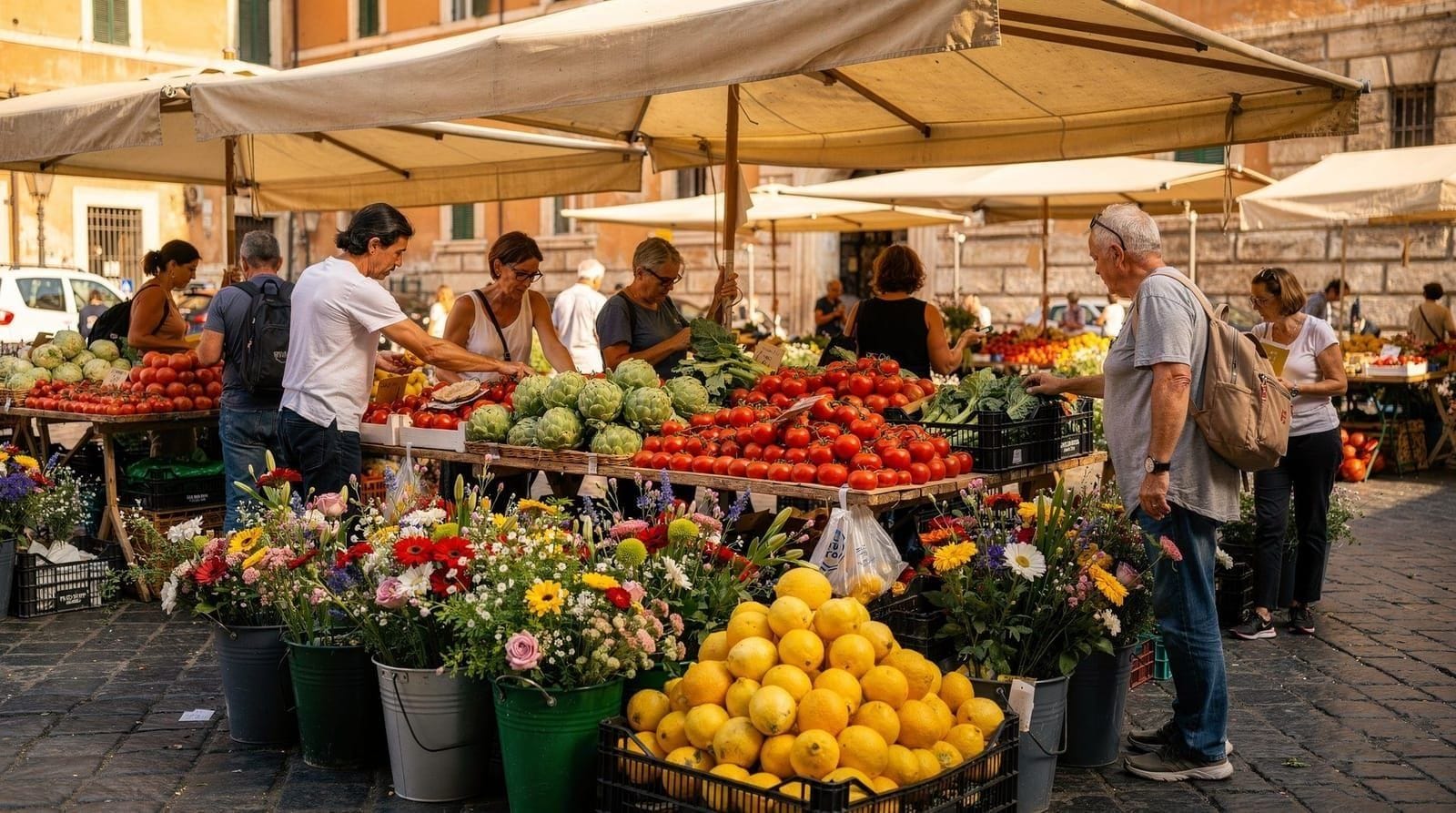
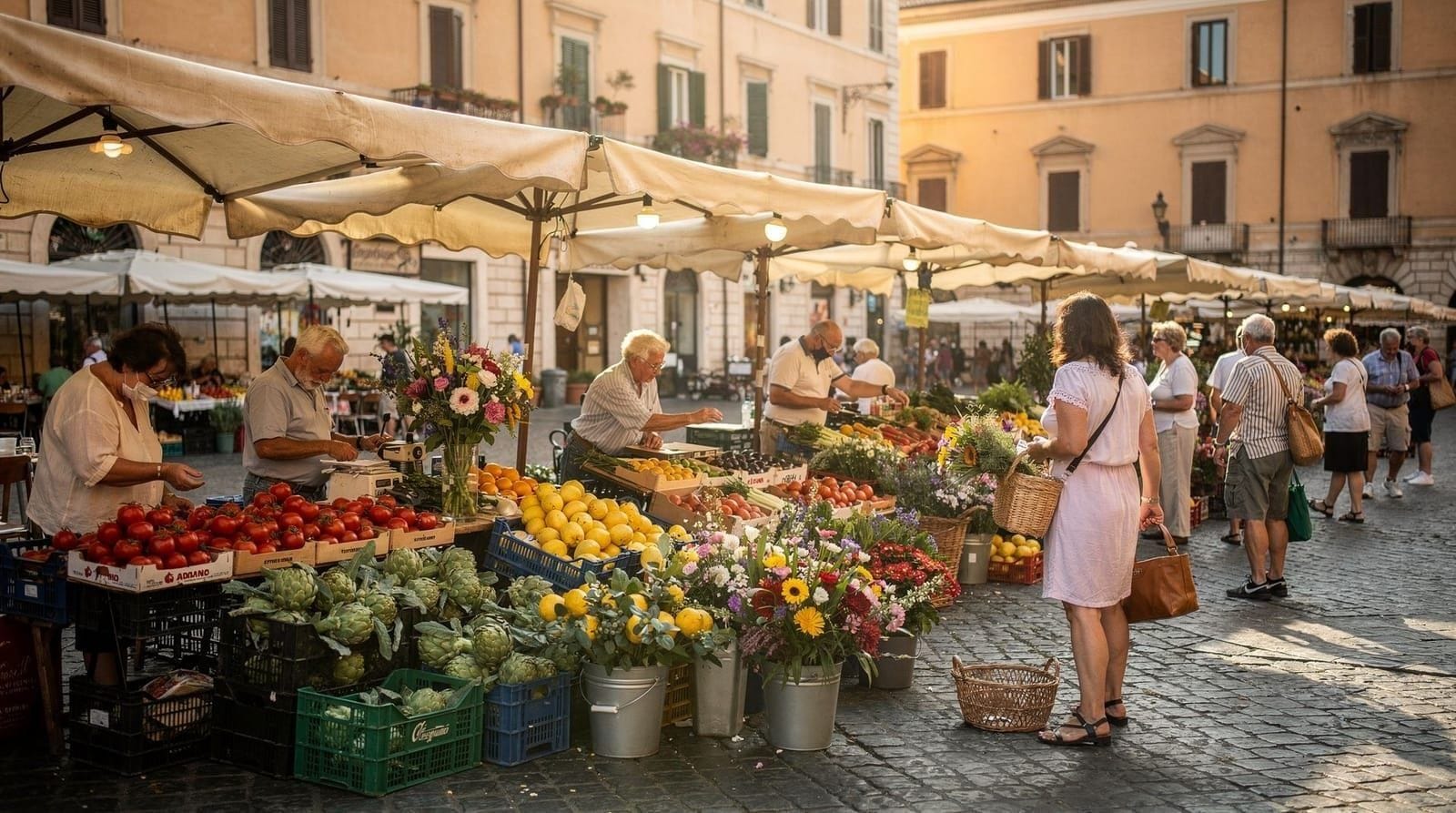
That said, Rome has Via Condotti, one of Europe’s most concentrated luxury streets, and the city is home to Fendi, Bulgari and Valentino. The artisan tradition is genuine: you can still find workshops making shoes to measure, binderies stitching leather notebooks by hand, ceramics studios producing original work rather than tourist copies. The food shopping is outstanding. The markets (see our Rome best markets guide) are a genuine resource.
This guide covers where to go for what, with honest assessments of where tourist-trap merchandise dominates and where genuine value exists.
| Luxury | Via Condotti and Via Borgognona, near the Spanish Steps |
| Independent fashion & artisan | Monti (Via del Boschetto), Trastevere backstreets |
| Food to bring home | Olive oil, guanciale, Pecorino Romano, bottarga — buy from a proper food shop, not a souvenir stand |
| Avoid | Leather and ceramic “souvenirs” within 200m of major monuments |
| VAT refund | 10–22% for non-EU visitors on purchases over €154.94 at participating shops |
Luxury shopping: Via Condotti and environs
Via Condotti runs from the base of the Spanish Steps to the Corso Rinascimento, and it is the most concentrated luxury shopping street in Rome. Gucci, Prada, Louis Vuitton, Hermès, Bulgari, Cartier, Salvatore Ferragamo and Rolex are all represented along this short stretch. The shopping quality is indistinguishable from these brands’ stores elsewhere in Europe.
Via Borgognona (parallel to Condotti): Versace, Dolce & Gabbana, Etro, Valentino. Also Tod’s, which is worth visiting for Italian shoes.
Via della Croce and Via della Vite (perpendicular streets between Condotti and the parallel streets): More accessible luxury and premium Italian brands — Marella, Max Mara, Malo for cashmere, Fratelli Rossetti for shoes.
Bulgari deserves specific mention as a Roman house, founded in Rome in 1884 — the flagship on Via Condotti is the proper place to see the full collection including the Rome-specific jewellery pieces. Even without buying anything, the ground-floor display is worth five minutes.
Tax refund: For non-EU visitors spending over €154.94 at a participating store, VAT refunds of 10–22% are available. Ask at the cashier for a Global Blue or Premier Tax Free form. On luxury purchases of €500+, the saving is material.
The Spanish Steps area: navigating the crowds
The streets around Piazza di Spagna are Rome’s most tourist-saturated shopping zone. Luxury is genuine here; souvenir merchandise is everywhere; the crowds are formidable on summer afternoons. Strategy: go early morning (08:30–09:30) when shops are just opening and the piazza is manageable, or late afternoon after 17:30 when tour groups have dispersed.
The Keats-Shelley Memorial House at the base of the Spanish Steps (to the right as you face the staircase) is worth a brief visit — the museum occupies the rooms where Keats died in 1821 and contains a remarkable collection of Romantic-era manuscripts. Free most days; check opening hours.
Monti: the neighbourhood for independent shopping
Monti — the neighbourhood between the Colosseum, the Esquiline Hill and Termini station — has developed over 20 years into Rome’s best neighbourhood for independent fashion, artisan goods and interesting small shops.
Via del Boschetto and Via Leonina are the main shopping streets. Expect: small-batch Italian fashion labels, artisan leather goods, vintage clothing, hand-printed textiles, small jewellery ateliers, and design objects produced locally. The quality varies but the concentration of non-chain, non-mass-produced merchandise is higher than almost anywhere else in central Rome.
Specific addresses worth finding: SBU (Strategic Business Unit, Via di San Pantaleo area — technically just outside Monti but in the same spirit) for high-quality denim and Italian workwear. Fulvio di Filippi for hand-printed scarves. Marta Ray for shoes made in small quantities by Italian artisans.
For broader neighbourhood context, see our Monti neighbourhood guide.
Trastevere: artisan workshops among the tourist restaurants
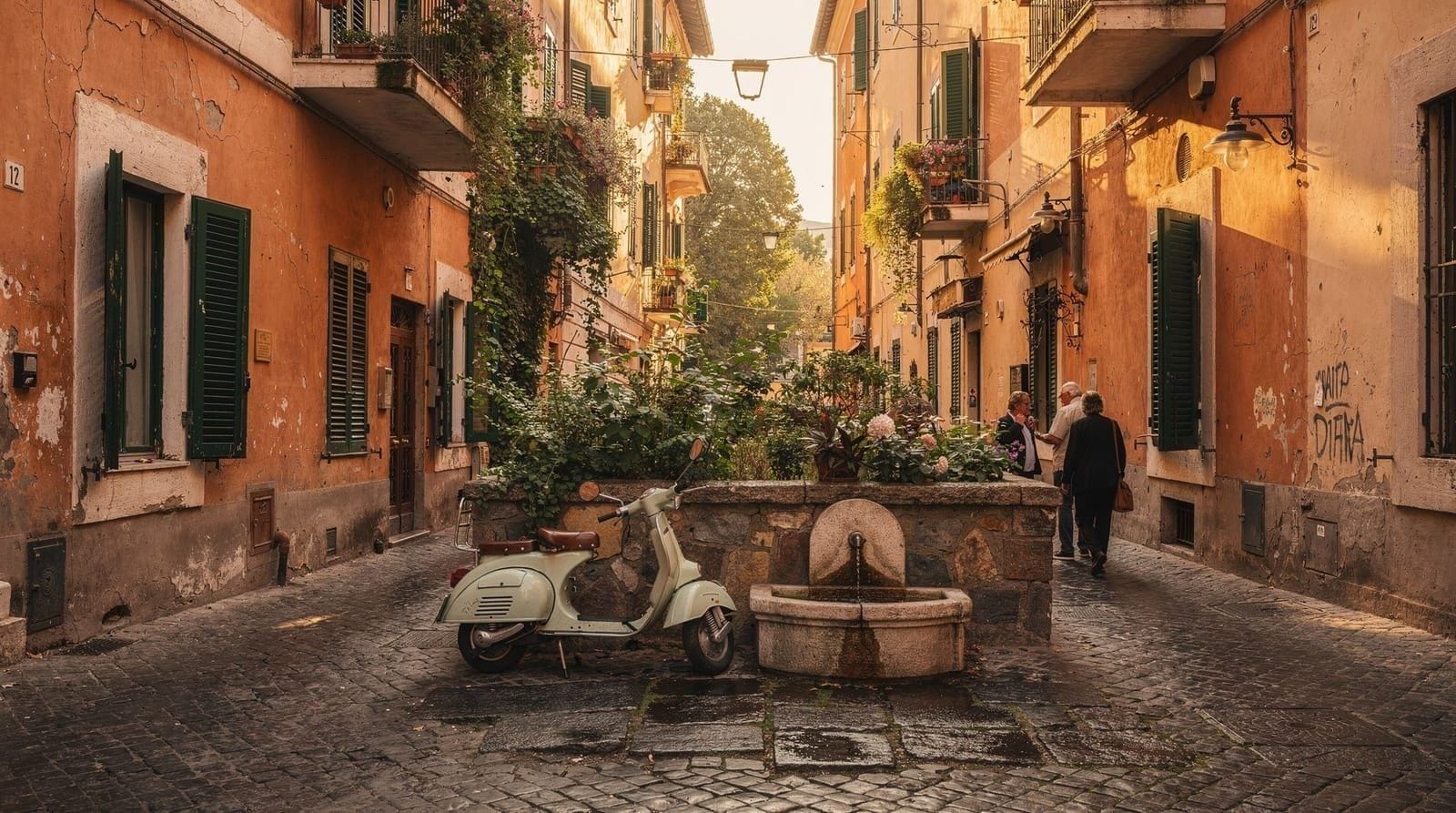
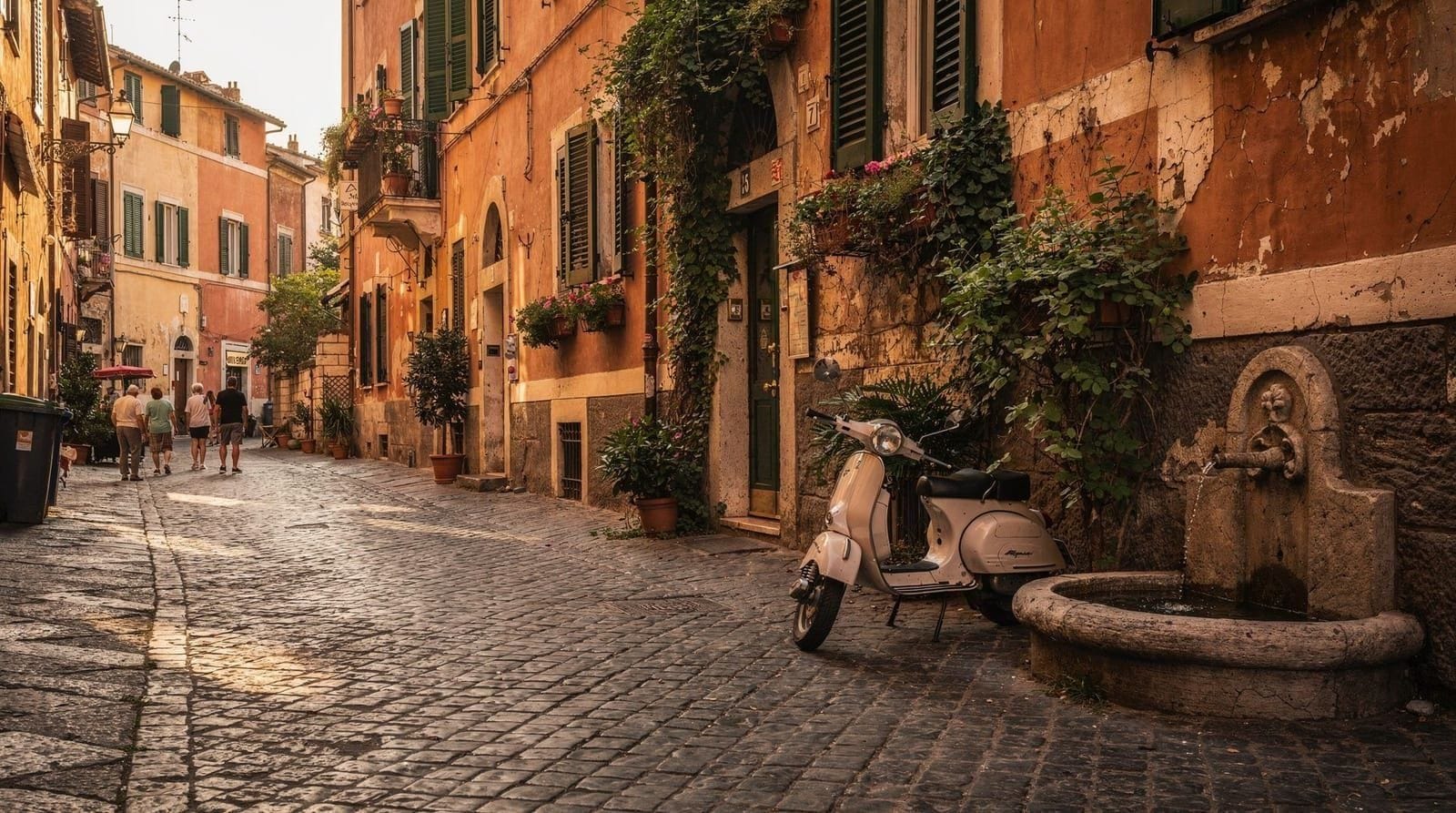
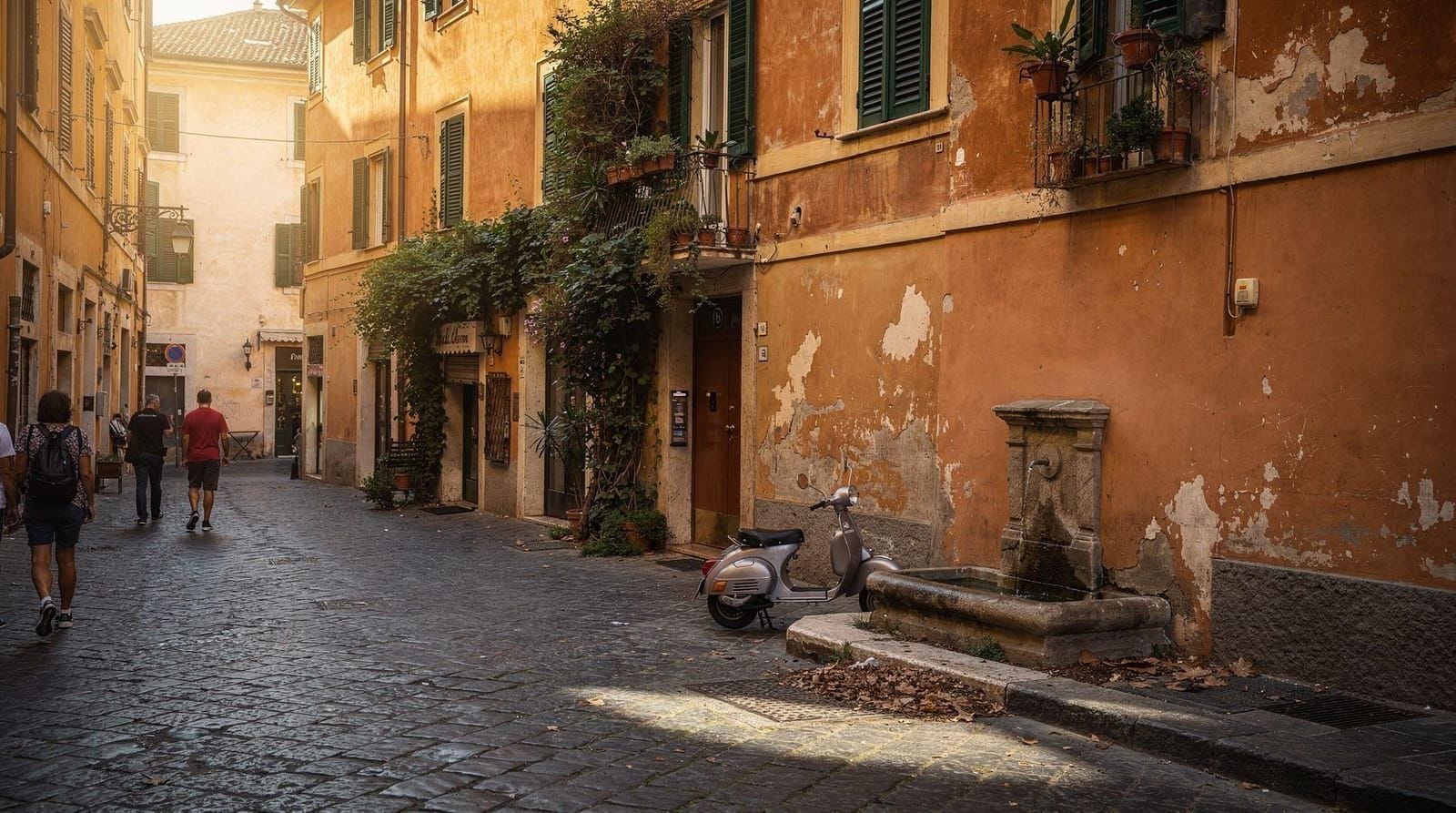
Trastevere’s reputation as a tourist restaurant district obscures its working artisan economy, which still functions in the quieter streets away from Via della Lungaretta.
Handmade leather: Several workshops in the streets around Piazza di Piscinula produce custom leather bags, belts and wallets. Expect to pay €80–200 for a well-made leather bag from a genuine workshop — significantly less than the equivalent from a brand shop, and with the specific quality of Italian hand-stitching. Il Pellettiere di Roma (Via della Luce) is among the longer-established.
Ceramics: A few studios in Trastevere produce original ceramic work — not the tourist-oriented majolica-style plates with generic Roman motifs, but contemporary studio ceramics informed by Italian craft traditions. La Botteghina del Ceramista (Via Goffredo Mameli) has original work.
Bookbinding and paper: The marbled paper and leather bookbinding tradition survives in a handful of Roman workshops. Laboratorio Marmorino near Piazza Farnese does hand-marbled papers and leather-bound notebooks that are genuine artisan objects.
See our Trastevere neighbourhood guide for a full picture of the area.
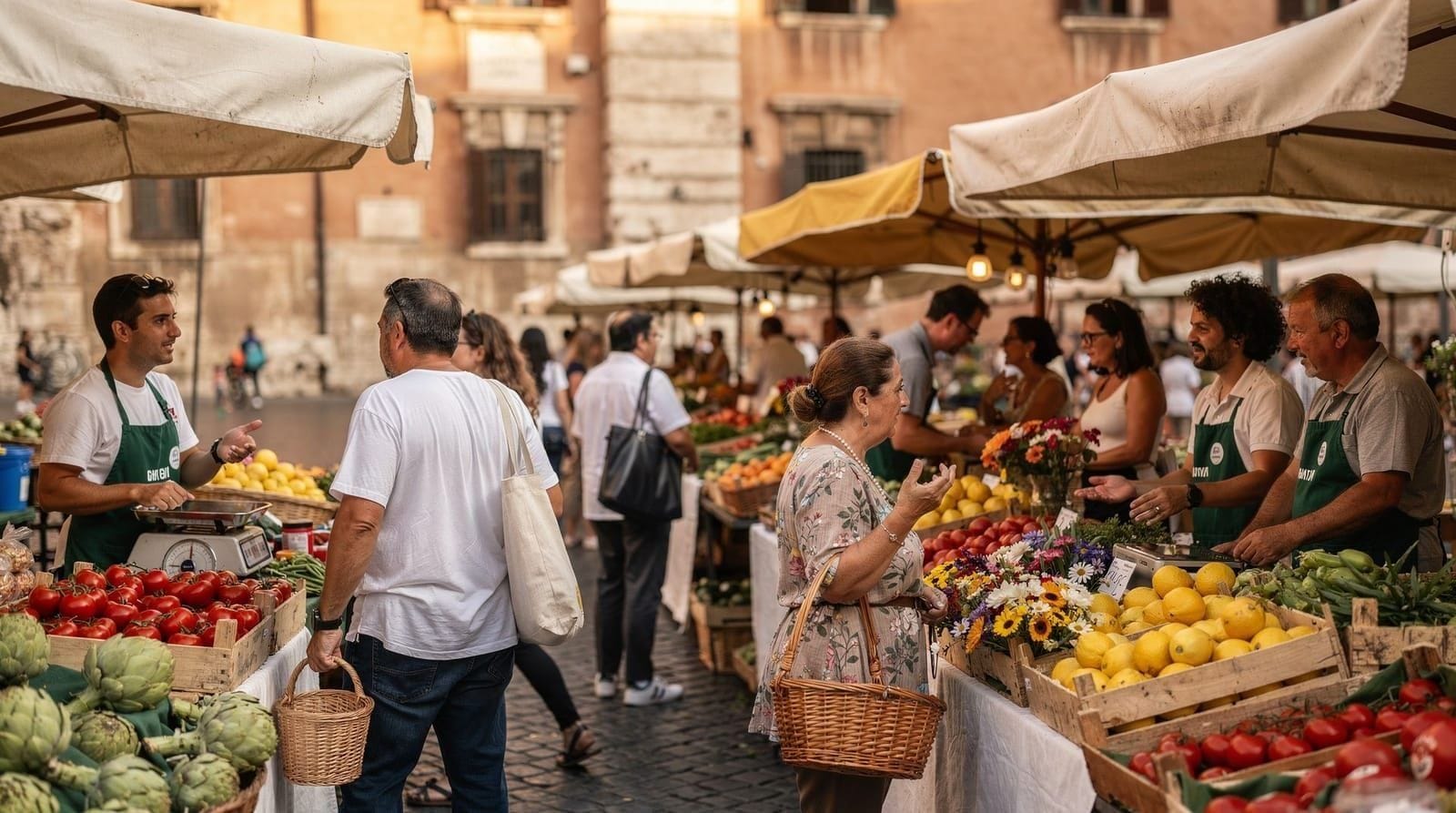
Street food and culture tour of Trastevere and Campo de’ Fiori — a useful introduction to these neighbourhoods before doing your own independent shopping.Food shopping: what to bring home
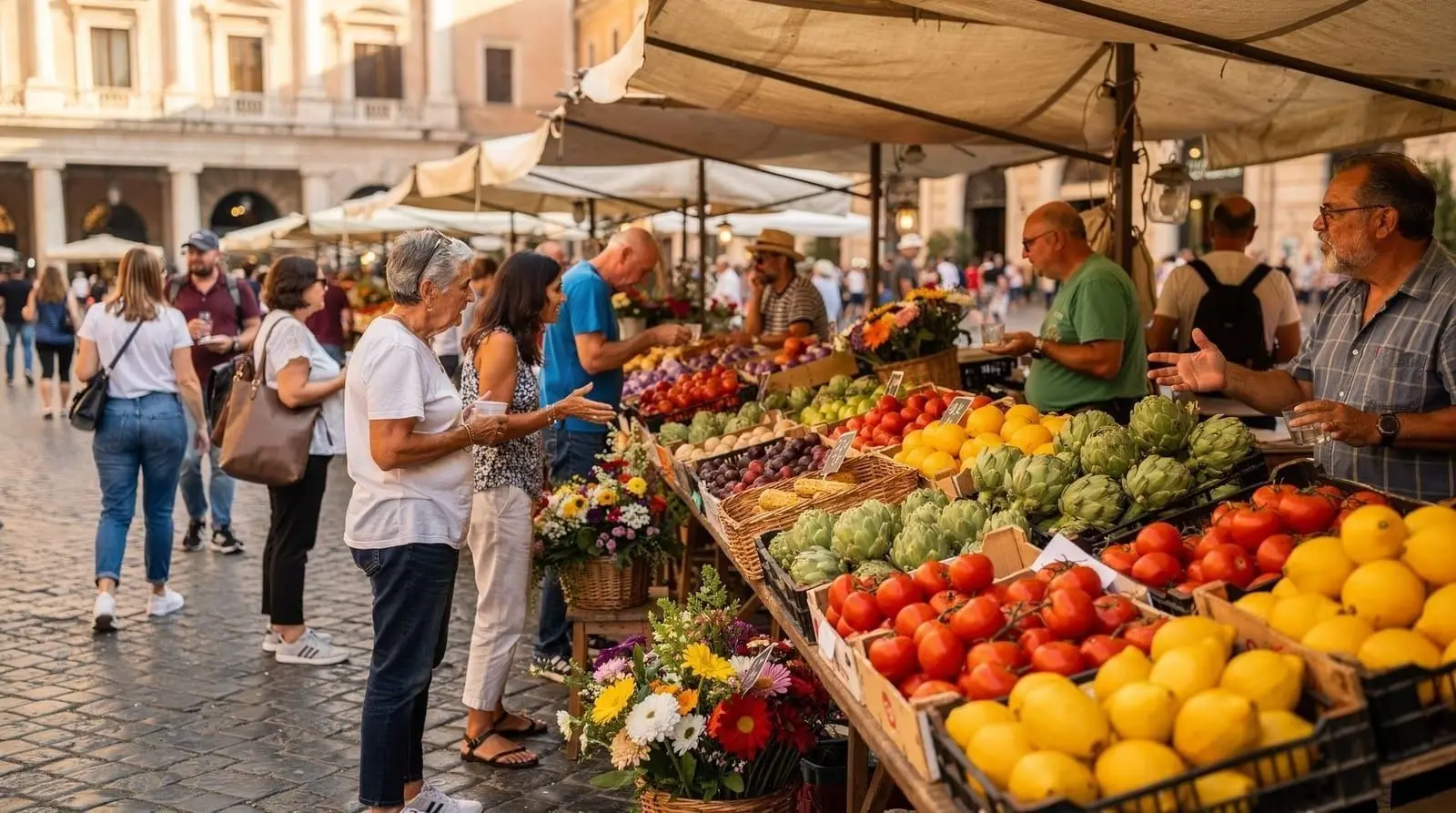
Rome’s food shops are among the best reasons to shop here. The following categories offer genuine value and products difficult or expensive to find elsewhere:
Extra virgin olive oil: Lazio produces excellent DOP olive oils — Sabina DOP from the Sabine hills northeast of Rome is among Italy’s finest; Canino DOP from northern Lazio (near Viterbo) is another. A 500ml bottle of high-quality Sabina DOP costs €12–18 in a good food shop; the same oil in a London or New York shop costs €30+. Food speciality shops in all neighbourhoods stock it; check the harvest date (anno di raccolta) — you want oil from the most recent October harvest.
Guanciale and cured meats: Guanciale (cured pork cheek) is the correct fat for carbonara and amatriciana — not bacon, not pancetta, guanciale. It is genuinely difficult to find outside Italy of the same quality. Vacuum-packed guanciale travels well. Also worth: norcia salumi from Umbria (a speciality of the hill town of Norcia — pork products with DOP status), lardo di Colonnata (cured lard from the Apuan Alps, extraordinary with bread).
Pecorino Romano: Fresh and aged Pecorino Romano PDO is the cheese for Rome’s pasta dishes. The aged hard version travels well. Testaccio Market has the best selection of Lazio cheeses at good prices; specialist shops like Volpetti (Via Marmorata, Testaccio) are the city’s most comprehensive cheese resource.
Bottarga: Dried, cured mullet roe (bottarga di muggine) from Sardinia — one of Italy’s most distinctive umami ingredients, used in pasta and eaten simply with bread. Available in most good food shops; a small vacuum-packed piece costs €8–15 depending on quality.
Dried porcini: Porcini mushrooms dried in Lazio and Umbria are available throughout the year and are excellent for risottos and pasta sauces. Better quality than most exported dried mushrooms. Buy from a shop with high turnover — old dried mushrooms lose flavour.
Volpetti (Via Marmorata, Testaccio): Rome’s most respected delicatessen — comprehensive selection of Italian cheeses, cured meats, olive oils, wines and specialty products. Expensive but genuine. Worth visiting for the experience even if you don’t buy everything. Staff are knowledgeable and helpful in English.
What to avoid: tourist merchandise reality check
The area around the Colosseum, Vatican, Trevi Fountain and Pantheon is densely packed with souvenir shops selling merchandise of consistent and poor quality:
Leather goods: The “hand-made in Italy” leather bags, wallets and belts sold in souvenir shops near tourist sights are typically mass-produced in Chinese factories and assembled in Italy (which allows the Italy label), made with bonded leather (leather dust mixed with glue) that degrades quickly. A good indicator: very low price (€10–30 for a “leather” bag), very high pressure from the vendor, and no workshop visible.
Ceramic “Roman” souvenirs: Generic gladiator and Colosseum imagery on industrially produced ceramics. These are produced primarily in Asian factories. Compare the price and feel to anything from a genuine Italian ceramics studio — the difference is immediately apparent.
Food souvenirs: Pasta shaped like tourist sights, “Italian” condiments in decorative packaging — most are manufactured in bulk and available in any Italian supermarket. Buy from a proper food shop if you want genuine products.
Linen tablecloths “made in Italy”: Similar situation to leather goods — check the label for country of manufacture, not country of origin claim.
This is not to say genuine Italian-made souvenirs don’t exist — they do, in artisan workshops and specialist shops. But they cost more than the tourist shop version, and the price difference reflects the difference in manufacturing.
Shipping and carrying purchases home
For larger or fragile purchases — a ceramics set, a substantial food haul, a leather bag you don’t want to check as luggage — most reputable Monti and Trastevere workshops and the larger food specialists (Volpetti, Eataly) can arrange international shipping, typically at a per-parcel rate rather than per item, which makes it worthwhile once you’ve bought more than one or two things. Ask before paying, since not every small workshop offers it. For carry-on liquids like olive oil or wine, pack in checked luggage with bubble wrap or a dedicated wine/oil protector sleeve (sold in some Testaccio Market stalls) — Rome’s airport duty-free shops are not a substitute for the quality available in the city’s food shops, so it is worth the minor packing effort rather than buying at Fiumicino on the way out.
Practical information
Opening hours: Most Rome shops open 09:30–13:00 and 15:30–19:30, Monday–Saturday. Many close Monday mornings. Sunday opening is inconsistent; tourist-area shops in the historic centre often open Sundays in high season, neighbourhood shops are more likely to be closed.
Payment: Most shops accept cards (Visa, Mastercard, Amex at larger stores). Small workshops and market stalls may be cash-only. Italy is increasingly contactless-friendly.
Language: In tourist-area shops, English is widely spoken. In neighbourhood workshops and artisan studios, Italian is more useful — though most craftspeople are happy to work through a language barrier with gestures and patience.
Bags and packaging: Since 2022, single-use plastic bags are restricted in Italian shops — most charge €0.05–0.20 for a bag. Bring a reusable bag for food shopping; boutique shops typically provide a paper bag with purchases.
For markets specifically — Campo de’ Fiori on weekday mornings, Testaccio Market for food shopping, and Porta Portese on Sundays — see our Rome best markets guide and the individual guides for Campo de’ Fiori and Porta Portese.
Gourmet food and wine tasting in Trastevere — a guided introduction to the neighbourhood’s food culture, a useful complement to independent shopping exploration.Specialist shops worth knowing
Beyond the main shopping areas and markets, Rome has specialist shops serving specific needs that are worth knowing about:
Books in English: Almost Bookshop (Via Governo Vecchio), Anglo American Bookshop (Via della Vite, near the Spanish Steps), and Feltrinelli International (Largo Argentina) all stock English-language titles. For second-hand books, Porta Portese and the weekend markets at Borghetto Flaminio are better value.
Maps and guides: The Roma Club Alpino store (Via del Governo Vecchio area) stocks Italian hiking maps, and several specialist cartography shops near Piazza della Rotonda carry detailed topographical and historical maps.
Wine and speciality food: Beyond Volpetti (Testaccio) and Trimani (Nomentano), notable food specialists include: Roscioli Salumeria (Via dei Giubbonari, near Campo de’ Fiori) for charcuterie and cheese; Mercato di Testaccio for fresh market produce; and Eataly Roma (Ostiense, near the Piramide metro) for a comprehensive one-stop Italian food and wine shop at market-mall scale — useful but expensive.
Ceramics: For authentic Italian studio ceramics (not tourist-shop versions), Laboratorio Mortet in Prati makes original contemporary work. Several Monti boutiques carry ceramics from Deruta (Umbrian majolica tradition) and Positano (Amalfi Coast colour palette) at fair prices.
Stationery and paper: Rome has a surviving artisan bookbinding and paper tradition. Il Papiro (near Piazza di Spagna) stocks Florentine marbled paper products. Campo Marzio Design (Via Campo Marzio) makes high-quality leather-bound notebooks and pens — popular as gifts for a reason.
The honest souvenirs: what actually represents Rome
Souvenirs in the tourist-area shops represent Rome mostly through licensed imagery — Colosseum keychains, Vatican dome snowglobes, gladiator figurines. None of these have meaningful connection to the city’s actual culture or craft tradition.
More honest souvenirs that connect to real Roman culture:
A bottle of Cesanese del Piglio from Coletti Conti — Rome’s greatest red wine, made in the hills east of the city.
A vacuum-packed portion of aged Pecorino Romano from a Testaccio Market vendor — the cheese that has been grated over pasta in Rome for centuries.
A print from one of the map and art print vendors in the historic centre — Rome’s graphic and architectural heritage has produced a remarkable body of visual material, and original prints start at €20–40 for authentic antique examples.
A hand-stitched leather wallet or small bag from a Monti or Trastevere workshop — not a souvenir shop version, but something made in the neighbourhood you visited.
A packet of Sabina DOP olive oil in a labelled bottle from a producer whose name and harvest date are visible — a cooking ingredient you will use for months after returning home.
These cost more than a keychain and require slightly more shopping effort. They also represent what Rome actually is: a city with 2,500 years of continuous culture expressed in food, craft and art, not primarily in miniature plastic monuments.
Rome’s shopping areas compared
| Area | Best for | Price level | Crowd level |
|---|---|---|---|
| Via Condotti / Spanish Steps | International luxury brands | High | Very high, especially afternoons |
| Monti | Independent fashion, artisan leather, vintage | Mid | Moderate |
| Trastevere backstreets | Handmade leather, ceramics, bookbinding | Mid | Low away from main tourist streets |
| Testaccio Market | Food shopping, cheese, cured meats | Good value | Low, mostly locals |
| Via del Corso | High street chains | Low-mid | High |
| Near major monuments | Souvenirs (mostly mass-produced) | Low but poor value | Very high |
If you are combining shopping with a broader neighbourhood visit, the Testaccio neighbourhood guide, Prati neighbourhood guide and Centro Storico guide each cover the shopping streets in their area alongside the rest of what the neighbourhood offers. For visitors pacing spending across a trip, the Rome on a budget guide and the Rome tourist traps guide both cross-reference the same souvenir-shop pricing issues raised here.
Frequently asked questions about Rome shopping guide: from artisan workshops to designer streets
Is shopping in Rome expensive?
What Italian fashion brands are worth buying in Rome?
Where do I find handmade leather goods in Rome?
What food products are worth buying to take home?
Can I get a VAT refund on purchases in Rome?
When are the sales in Rome?
Top experiences
Bookable activities with verified prices and instant confirmation on GetYourGuide.