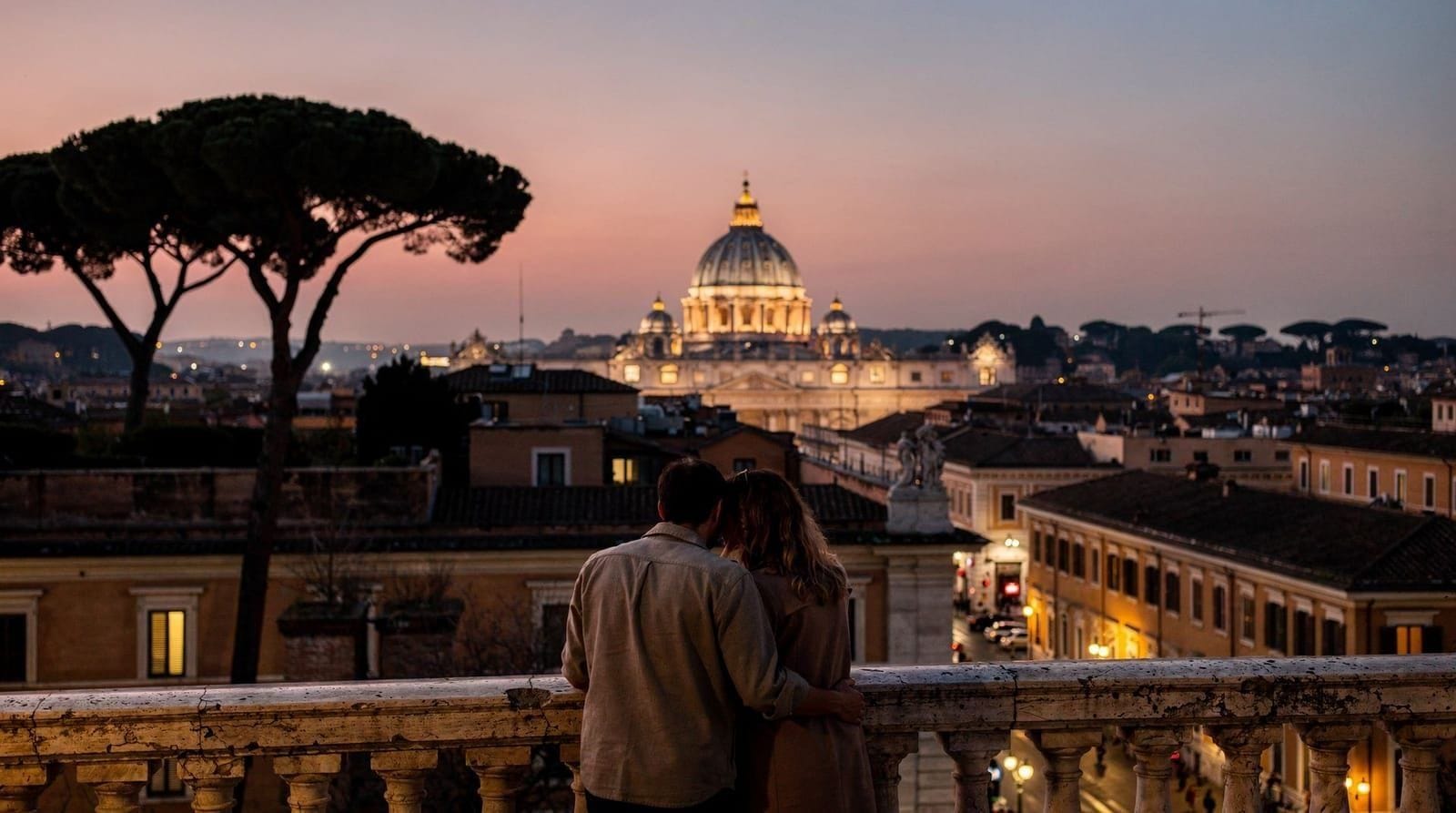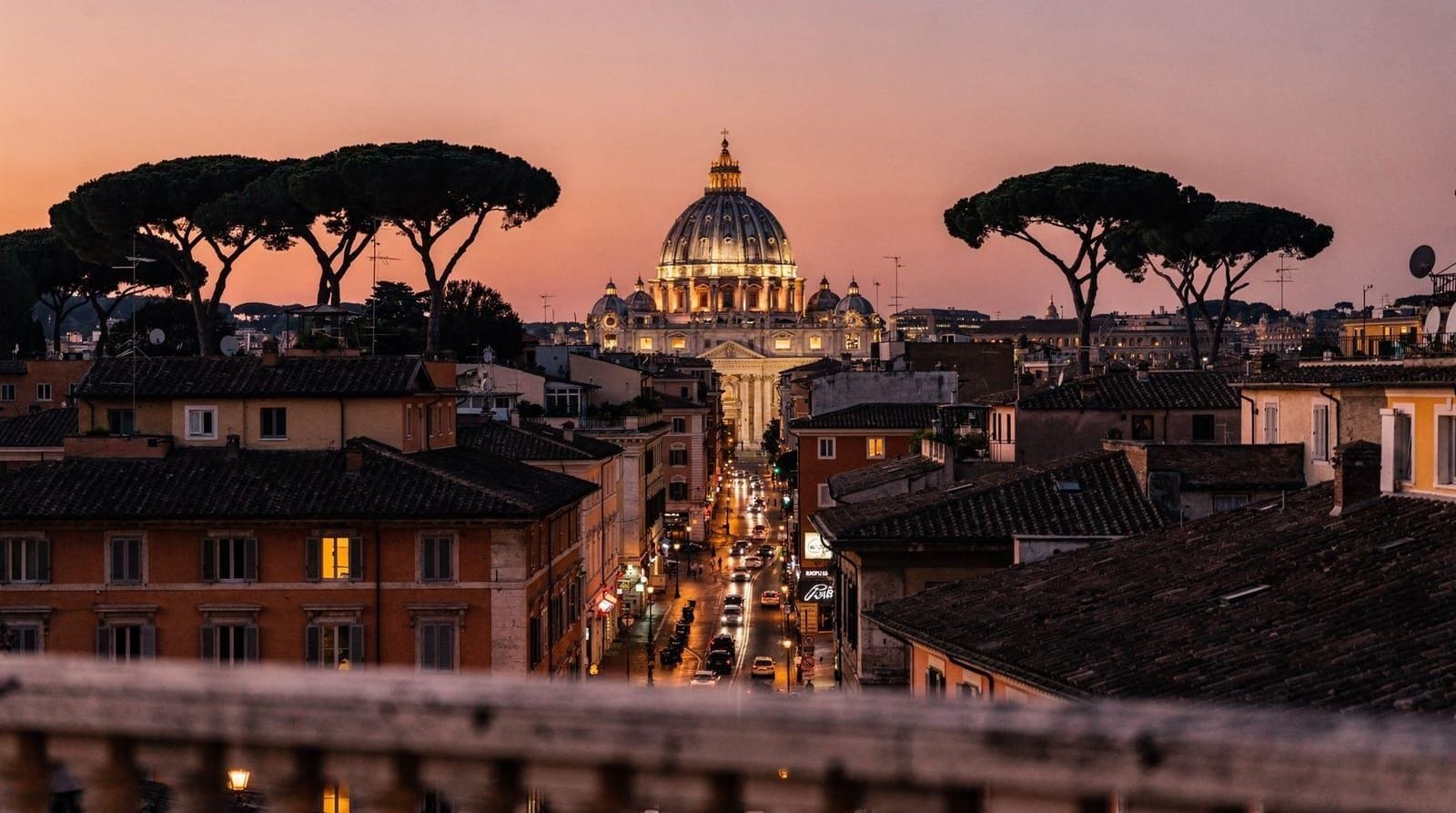
Rome honeymoon guide: where to stay, dine and splurge
Rome: Private Tiber River Cruise on a Luxury Boat
Is Rome good for a honeymoon?
Yes — Rome has the density of beauty, food and culture for a full honeymoon week without repetition, and the city scales well across budgets. The ideal honeymoon stay is 5–7 nights, mixing the major sights with slower days in quieter neighborhoods. The best months are April–May and September–October: warm, beautiful light, fewer crowds than midsummer.
Planning a Rome honeymoon: the fundamentals
Rome is one of the most tested honeymoon destinations in the world, which means the city has absorbed generations of couples and developed infrastructure for it: boutique hotels with romance packages, restaurants experienced at handling special occasions, guides who know how to give a private tour of the Colosseum without it feeling like a lecture.
It also means the risk of an expensive version of a standard tourist experience. This guide is specific: which hotels, which neighborhoods, which experiences, what to spend, and what to skip.
| Ideal length | 5-7 nights |
| Budget (comfortable, for two) | around €300-500/day |
| Best months | April-May or September-October |
| Where to stay | Trastevere, Spagna/Popolo, Centro Storico or Prati |
| Book ahead | Borghese Gallery, Vatican early access, Michelin dinners |
Where to stay: neighborhoods and hotel tiers
Trastevere: for atmosphere
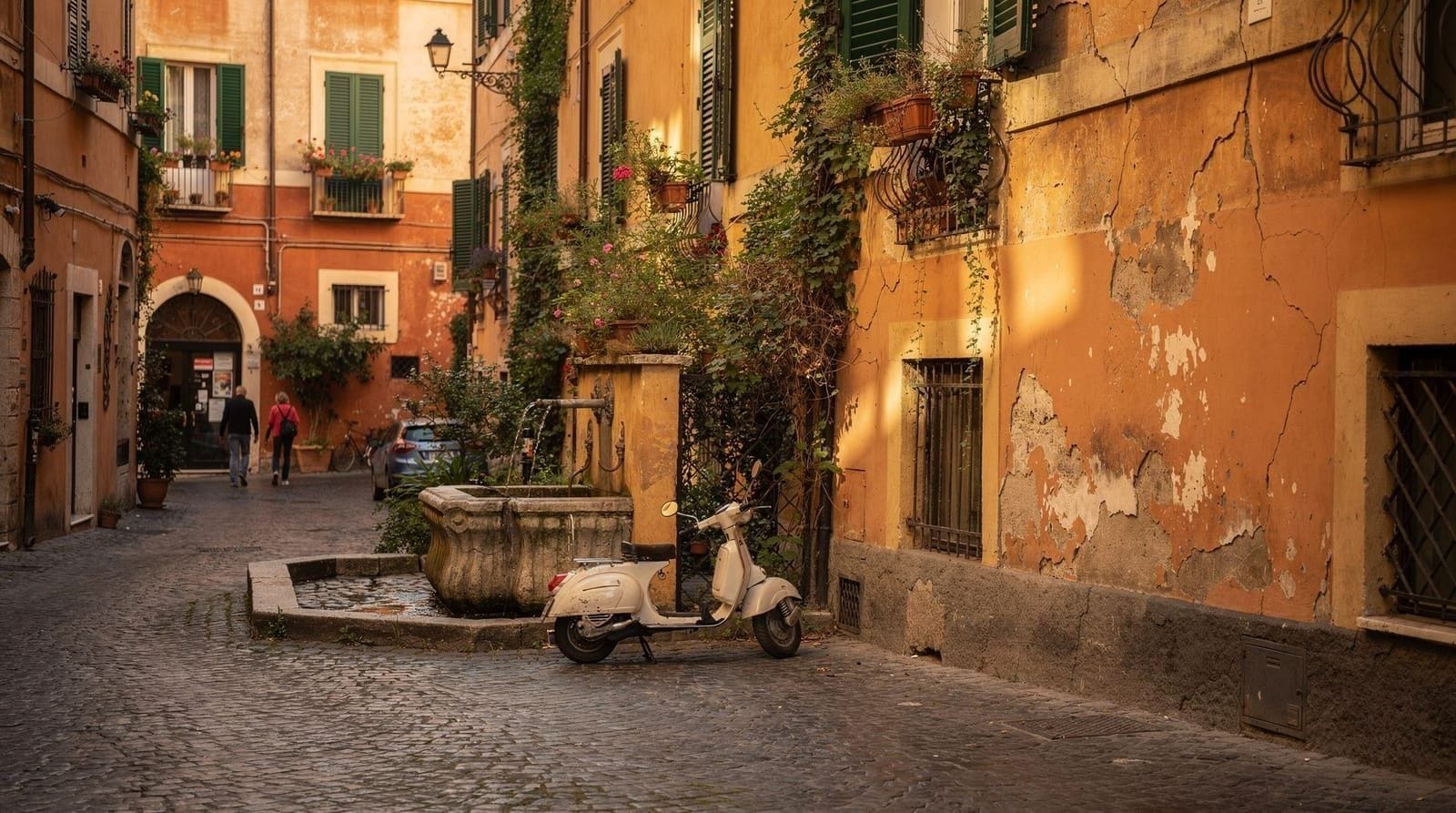
Trastevere offers the most atmospheric accommodation: smaller boutique hotels and apartments in converted medieval buildings, cobbled streets outside, the neighborhood bar scene accessible on foot. The Hotel Santa Maria (a four-star in a converted cloister) and the Arco del Lauro (boutique B&B with a Trastevere feel) are consistently well-reviewed.
Trade-off: Trastevere is busy at night (lively is the polite word; noisy is the honest one on Friday–Saturday). Request an interior-facing room if noise is a concern. The neighborhood is further from most of the main sights than Centro Storico hotels.
Price range: €120–280/night for good hotels; boutique options at €180–320 for the best.
Spagna–Piazza del Popolo: for luxury and convenience
The axis from the Spanish Steps to Piazza del Popolo is Rome’s most concentrated luxury hotel zone. The Hotel de Russie (Rocco Forte), Hassler Roma (above the Spanish Steps), and Eden Rome are the landmark names. These are genuinely world-class hotels with the service levels that a honeymoon justifies.
The area is also well-positioned for sightseeing: Villa Borghese (Borghese Gallery) 10 minutes on foot, the Centro Storico 15–20 minutes’ walk. Prati is 10 minutes across the Tiber.
Price range: €400–900+/night for the flagship hotels; more approachable boutique options at €200–350 for genuine quality.
Centro Storico: maximum immersion
Staying between the Pantheon and Campo de’ Fiori means waking up in the historic center, walking to Navona before breakfast, and being five minutes from most of the major streets. Several boutique hotels in converted palazzos are available at mid-range prices; the Grand Hotel de la Minerve has the Pantheon rooftop view advantage.
Trade-off: heavily visited streets, noise in peak season, less neighborhood feel than Trastevere or Prati.
Prati: for the balanced option
Prati is the neighborhood across the Tiber from Castel Sant’Angelo, wide tree-lined boulevards with good independent restaurants, less tourist-dense than the Centro Storico, and an easy 20-minute walk to both the Vatican and Piazza Navona. Several four-star hotels offer good value (€150–250/night) with the quality level that a honeymoon requires without the Centro Storico premium.
See the where to stay in Rome guide for the full neighborhood breakdown with specific hotel recommendations across all budgets.
| Neighborhood | Best for | Price range/night | Trade-off |
|---|---|---|---|
| Trastevere | Atmosphere, nightlife | €120-320 | Noisy Fri-Sat, further from sights |
| Spagna/Popolo | Luxury, convenience | €200-900+ | Highest prices in the city |
| Centro Storico | Maximum immersion | €150-350 | Heavily visited streets |
| Prati | Balanced value | €150-250 | Less “atmosphere” than Trastevere |
How to structure the days
A 5-night Rome honeymoon structure that works:
Day 1: Arrive, check in, afternoon walk in the neighborhood. Dinner in a restaurant near the hotel (no monuments on day one — settle in). Early bed for jet lag management.
Day 2: Colosseum–Forum–Palatine (morning, with a private or small-group guided tour booked in advance). Lunch near the Circus Maximus area. Afternoon: the Aventino Keyhole and Orange Garden at golden hour. Dinner in Testaccio.
Day 3: Vatican Museums and Sistine Chapel (early entry booked in advance — arrive by 08:00 for best experience). St. Peter’s Basilica and dome climb. Lunch in Prati. Afternoon: rest. Evening: aperitivo at Hotel Locarno bar rooftop or Salotto 42. Dinner in the Centro Storico.
Day 4: Day trip — Tivoli (Villa d’Este gardens, Hadrian’s Villa) for a change of setting. Return by evening. Dinner at a quality restaurant in Rome.
Day 5: Borghese Gallery (book 2–3 weeks ahead). Pincio terrace walk and Villa Borghese gardens. Free afternoon. Evening: Tiber river dinner cruise or Terrazza Borromini opera evening.
Day 6 (if staying 6 nights): Slower day — Trastevere food market, a morning cooking class, aperitivo and long dinner with wine.
The Rome romantic weekend itinerary provides day-by-day timing detail for a 3-night version.
The splurge experiences: what is worth it
Private Tiber river dinner cruise
The gold standard for a Rome honeymoon evening: a private boat, the Tiber at dusk, Castel Sant’Angelo and the bridges lit from below. Operators offering this provide dinner on board — quality ranges from good to excellent depending on the operator. Book 1–2 weeks ahead and check reviews specifically for food quality.
Private Tiber river cruise on a luxury boat — the most intimate Rome evening experience, ideal for a honeymoon dinner.Vespa sidecar by night
Two passengers, an antique Vespa sidecar, the illuminated Colosseum and Spanish Steps. This is the Rome honeymoon photograph that frames the whole trip in retrospect — cinematic, inherently couple-specific, and genuinely atmospheric.
Vespa sidecar tour of Rome by night — covering the illuminated monuments in vintage style. The most memorable photo-worthy couple’s experience in the city.Opera and dinner
An evening combining Italian opera performance and dinner in a historic Rome setting. The candlelit concert format (smaller venues, professional singers, arias and duets rather than a full production) works better in Rome than attempting to fit a full opera production into a tourist evening.
An Italian opera concert with traditional dinner — a complete Rome evening combining live music and food in a historic setting.Private Colosseum and underground tour
The Colosseum’s underground — the gladiator tunnels and mechanical systems beneath the arena floor — is only accessible with specific ticket types or guided tours. A private guided tour covers the full complex (underground, arena floor, upper levels) in about two hours with a guide who tailors the commentary. This makes the Colosseum visit substantially richer than a standard skip-the-line ticket.
Book 1–2 weeks ahead; private tours sell out quickly in peak season.
Budget allocation: where to spend and where to save
Spend on: Hotels (quality of sleep and service genuinely matters over a week), one or two exceptional dinners (one Michelin or equivalent, one atmospheric trattoria), private experiences (Tiber cruise, Colosseum private tour, sidecar). These are the things that distinguish a honeymoon visit from a standard one.
Save on: Breakfasts (eat at the bar counter rather than the hotel breakfast, €3–4 vs €18–25), lunches (pizza al taglio, a slice at Bonci Pizzarium in Prati, is excellent and costs €6–8), transport (walking is almost always better than taxis in the Centro Storico, Metro A for the Vatican, otherwise you rarely need it).
The biggest trap: Restaurants on major tourist piazzas (Navona, Campo de’ Fiori, near Trevi). These charge double for food that is half as good as the streets two minutes away. A restaurant two streets off the main piazza in Trastevere, Monti or Testaccio will consistently be better and cheaper.
Seasonal planning
April–May: The most photogenic. Flowers in the Orange Garden, mild temperatures, the Borghese gardens in bloom. Moderate crowds, manageable if you book ahead. Best overall for a first-time honeymoon.
September–October: Arguably the best month to eat and drink in Rome — the harvest is in, restaurants are at their peak, the heat has broken, and the autumn light is extraordinary. Slightly lower prices than high summer.
July–August: Manageable with planning — early morning sightseeing, afternoon hotel rest, evening from 19:00 onward. Many Romans leave Rome in August (some restaurants and shops close), which can mean a quieter city. Humidity and heat are the main challenges.
December–January: Cold (8–12°C) but atmospheric, particularly around Christmas. Smaller crowds, lower hotel prices, Christmas markets in the piazzas. The Vatican and Colosseum are much less crowded. A less obvious honeymoon timing but works well for couples who prefer cool weather and indoor-heavy days.
See the best time to visit Rome guide for the complete month-by-month analysis.
Practical honeymoon notes
Booking ahead: Borghese Gallery (book 2–3 weeks ahead; only 180 people per 2-hour slot), Vatican early access (book 1–2 weeks ahead), Colosseum private tour (1–2 weeks). Michelin restaurants (2–4 weeks for dinner bookings). Tiber cruise and Vespa options (48–72 hours minimum).
Honeymoon disclosure: Tell your hotel when you book — many will arrange complimentary upgrades, fruit and Prosecco in the room, or other touches. Do the same with restaurants for your special dinner night.
ETIAS note: ETIAS (the EU travel authorization system for non-Schengen nationals) is planned for implementation with mandatory enforcement from approximately April 2027. For a 2026 honeymoon, ETIAS is not yet required — existing Schengen entry rules apply. Check current requirements closer to your travel date at the official EU entry/exit system website.
Rome honeymoon extras: the details that matter
Room upgrades and honeymoon perks
Italian hotels, from boutique to five-star, respond positively to honeymoon communication. Send a short email after booking (not at booking, when the system is automated): “We are celebrating our honeymoon — if any room upgrades are possible, we would be grateful.” Many hotels will upgrade room category, arrange a bottle of Prosecco on arrival, or offer a late checkout without charge. The smaller boutique hotels are more likely to act on this than large chain hotels.
For truly special arrangements — in-room rose petals, private dinner setup on the terrace, a welcome amenity basket — contact the hotel’s concierge directly at least a week before arrival. The best hotels in Trastevere and the luxury options near the Spanish Steps have experience with this and treat it as a service opportunity.
Aperitivo as a honeymoon ritual
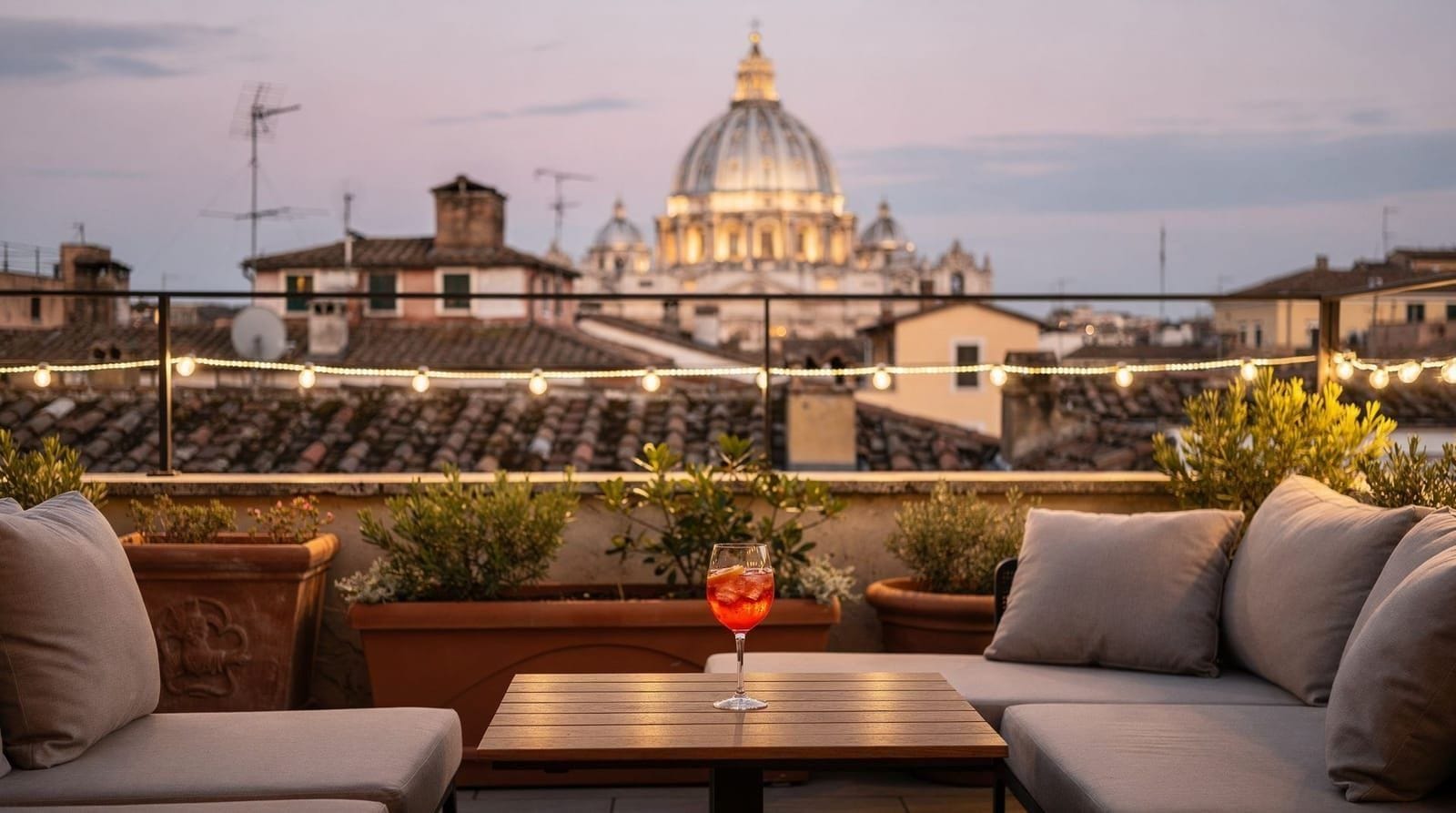
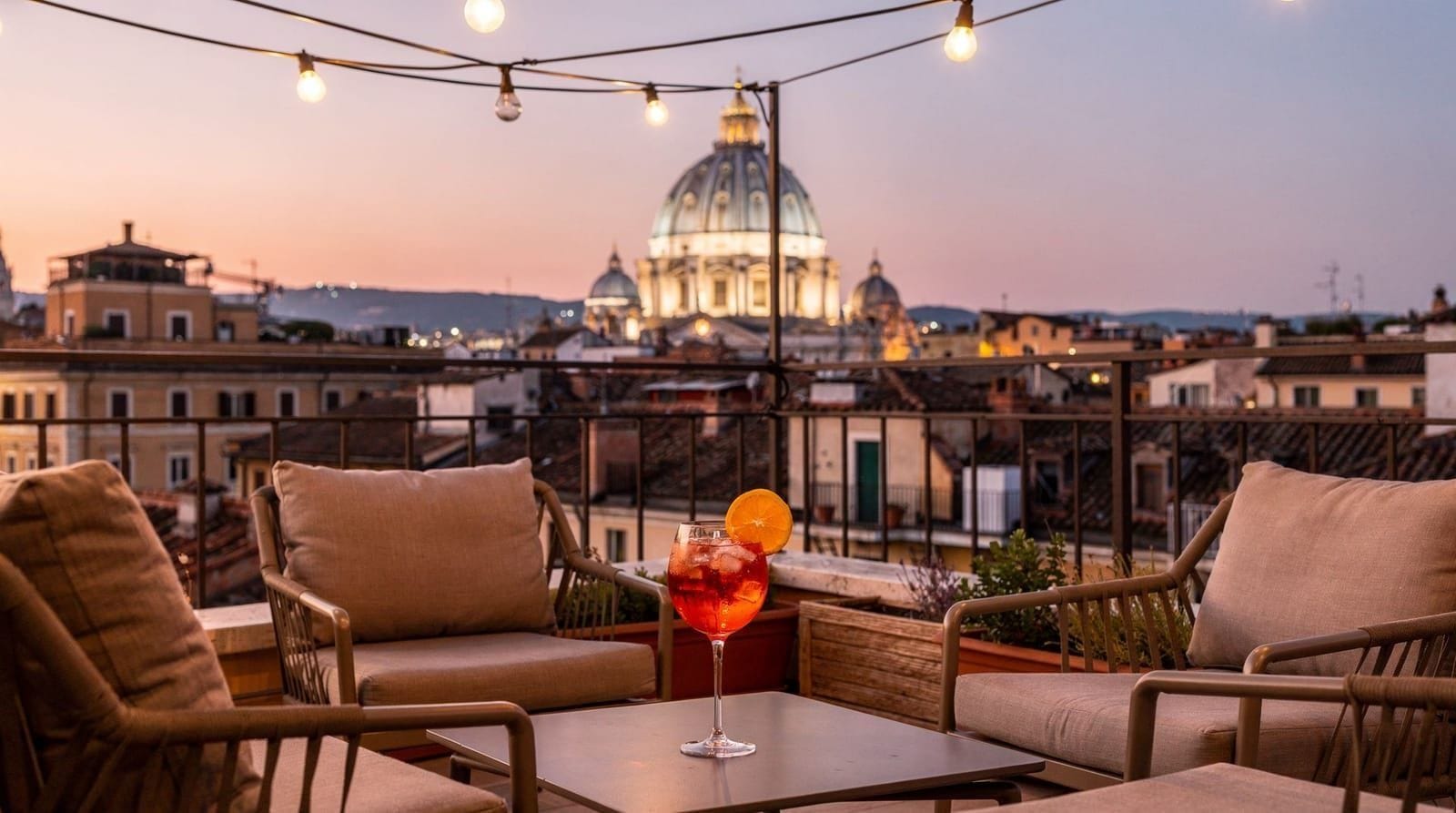
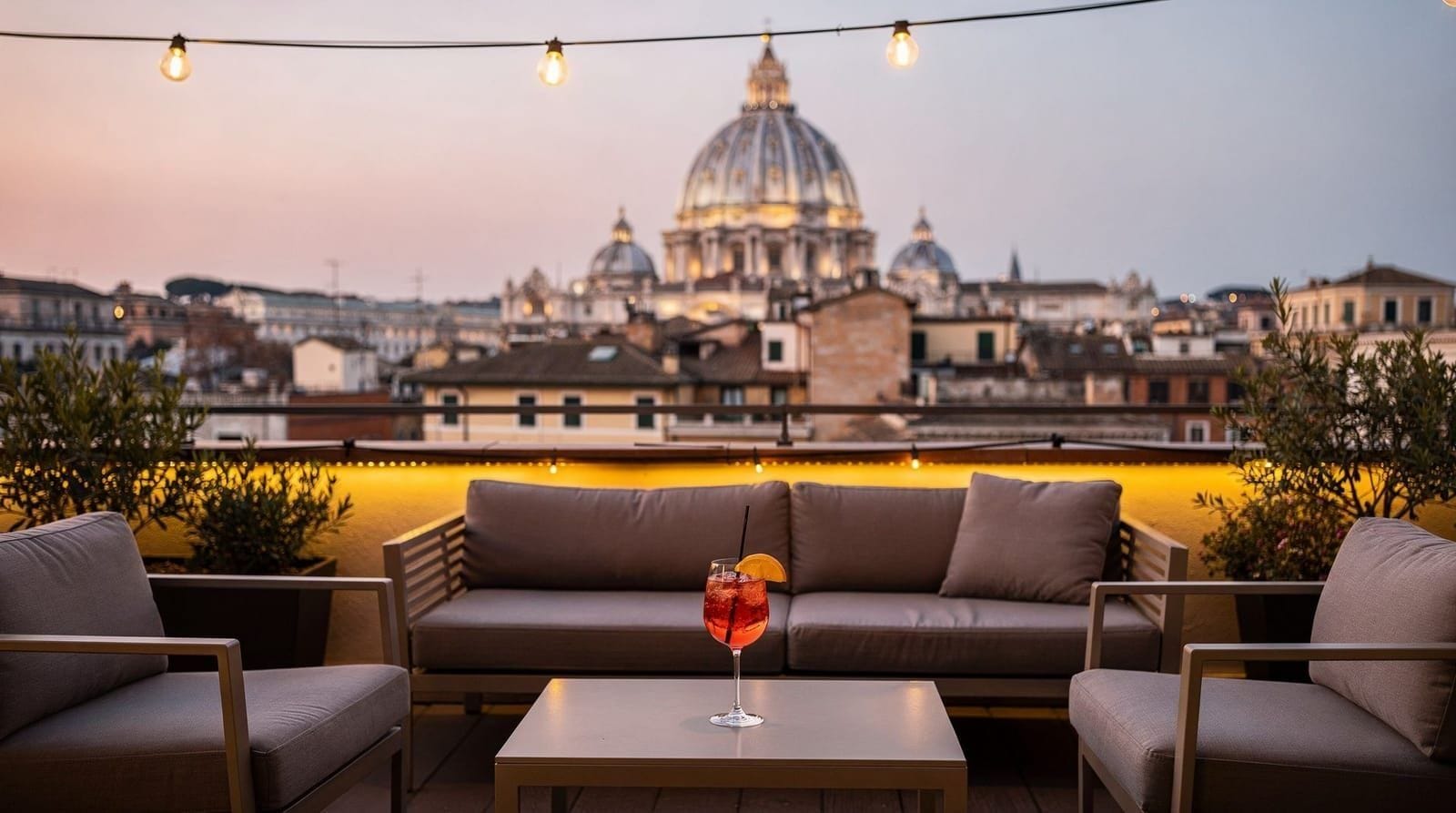
Several couples who have honeymooned in Rome report that the evening aperitivo became their favorite ritual of the trip — not the Colosseum, not the Vatican, but 45 minutes on a piazza at 19:00 with a Negroni and the first view of Rome lit for the evening. The aperitivo hour costs €12–20 for two, requires no booking, and delivers a quality of pleasant unhurried time that the scheduled experiences cannot replicate.
Try to structure at least three or four evenings around an aperitivo before dinner — not as a prelude to a rushed night, but as the anchor of the evening from which everything else is optional. Pick one piazza or bar per evening: Piazza della Madonna dei Monti on day one, Hotel Locarno rooftop bar on day two, Freni e Frizioni in Trastevere on day three. Let the aperitivo become the rhythm.
The aperitivo and nightlife guide has the full breakdown of which neighborhoods offer the best experience at which price points.
Day trips as a change of pace
A week in Rome can be too much of a single thing. The city is extraordinary but also dense and occasionally overwhelming. One or two day trips provide contrast — space, countryside, a change of scale — that makes the return to Rome feel fresh.
Tivoli (45 minutes by train or 1 hour by tour): Villa d’Este gardens with 500 fountains, Hadrian’s Villa spread across a hillside. The gardens in spring (April–May) are the best version. A good lunch in Tivoli town before the return makes a complete day. See the Tivoli day trip guide for the logistics.
Castelli Romani and Frascati (30–60 minutes by train or tour): The volcanic hills south of Rome with wine villages, lake views and Frascati white wine. Less dramatic than Tivoli but more relaxed — better for couples who want countryside and wine over monuments.
Sperlonga (90 minutes by train): A whitewashed coastal village on a promontory above a sandy beach. In summer (June–August), a beach day at Sperlonga is one of the best escapes from Rome’s heat. The town itself is beautiful. See the Sperlonga day trip guide for the approach.
Photography as a honeymoon priority
If documenting the honeymoon is important, consider the logistics of photography in Rome specifically:
The best lighting for couple photography is golden hour (30 minutes either side of sunrise and sunset). Trevi Fountain at 07:00, the Palatine Hill terrace at 19:00, the Gianicolo panorama at 19:30 in May — these windows produce dramatically better photographs than the same locations at 13:00.
For couples who want professional photography, Rome has a market of honeymoon photographers who specialize in the iconic locations and know the timing and positioning for optimal results. A 90-minute session (€300–500) is often worth more as a lasting record of the trip than the equivalent spent on a hotel upgrade.
The best photo spots in Rome guide and Rome sunrise and sunset spots are the reference guides for specific positions and timing.
Managing the Jubilee 2025–2026 context
The Catholic Church’s Jubilee (Holy Year) runs 2025–2026, bringing an estimated 30–35 million pilgrims to Rome. This means: more crowds at the Vatican, Colosseum, Castel Sant’Angelo and the major basilicas; more demand for accommodation in the center; and heavier crowds on the approaches to St. Peter’s Square.
Practical responses for honeymooners: Book accommodation well in advance (already important, even more so in Jubilee year). Book Vatican early-entry tickets 1–2 weeks ahead minimum. Consider visiting the Vatican on a weekday morning rather than weekend. The major secular monuments (Colosseum, Palatine) are less affected by Jubilee pilgrimage patterns.
The Rome Jubilee 2025–2026 guide covers the practical implications for all visitors.
For the specific romantic experiences beyond this overview, see the romantic things to do guide and the couples guide which covers the evening planning in detail.
Restaurants worth booking specifically for the honeymoon
A honeymoon justifies at least one or two meals booked specifically rather than found on the walk. For a special-occasion dinner in a historic setting, ask the hotel concierge for a table with a view — several restaurants near the Pantheon and on Aventino Hill offer rooftop or terrace seating that needs to be requested at booking, not on arrival. For a genuinely quieter, more personal evening, a family-run trattoria in Monti or Testaccio that has been in the same hands for decades often delivers a more memorable meal than a flashier, more photographed restaurant nearer the main sights — ask the hotel for a specific recommendation rather than relying on ratings apps, which skew toward tourist-facing places. Reserve two to three days ahead for anywhere well-reviewed, and a week or more ahead for a genuine Michelin-level dinner in peak season (April-May, September-October).
For the wine side of the meal, Rome’s own hinterland supplies most of what appears on menus — Frascati whites from the Castelli Romani hills are the house pour almost everywhere, and a sommelier at a quality restaurant will often suggest a lesser-known Lazio label worth trying once rather than the familiar Tuscan names. It is a small way to make a dinner feel specific to the region rather than generically “Italian.”
Rings, anniversaries and returning to Rome
Some couples choose Rome for the honeymoon specifically because they intend to return for anniversaries — the city has enough depth that a second or third visit reveals an entirely different Rome. If that is the plan, it is worth deliberately under-scheduling the honeymoon itself: skip a second-tier museum or a far-flung day trip in favour of unstructured time in one neighborhood, and save it for the return trip. Couples who try to see “everything” on the honeymoon often report the trip feeling more like a checklist than a first chapter. The Rome second visit plan is written for exactly this situation and pairs naturally with a honeymoon that deliberately leaves things unseen.
Rome also rewards splitting a longer honeymoon across two bases rather than staying in one hotel the entire time — a few nights in the city followed by two or three nights in the Castelli Romani hills or on the coast at Sperlonga gives the trip a second act, a change of pace, and a genuinely different set of photographs, without adding the complexity of a second country or a long transfer.
A short, low-effort tradition worth considering: photograph the same spot — a table at the same trattoria, the same bench in the Orange Garden, the same bridge at dusk — on the honeymoon and on each return visit. It costs nothing and gives the relationship with the city a throughline that a checklist itinerary does not.
Frequently asked questions about Rome honeymoon guide: where to stay, dine and splurge
What is the best area to stay in Rome for a honeymoon?
How much should we budget for a honeymoon in Rome?
What are the best private experiences for honeymooners in Rome?
When is the best time to honeymoon in Rome?
Do Rome hotels offer honeymoon packages?
What day trips work best for a honeymoon?
Is it safe to walk around Rome at night during a honeymoon?
Top experiences
Bookable activities with verified prices and instant confirmation on GetYourGuide.