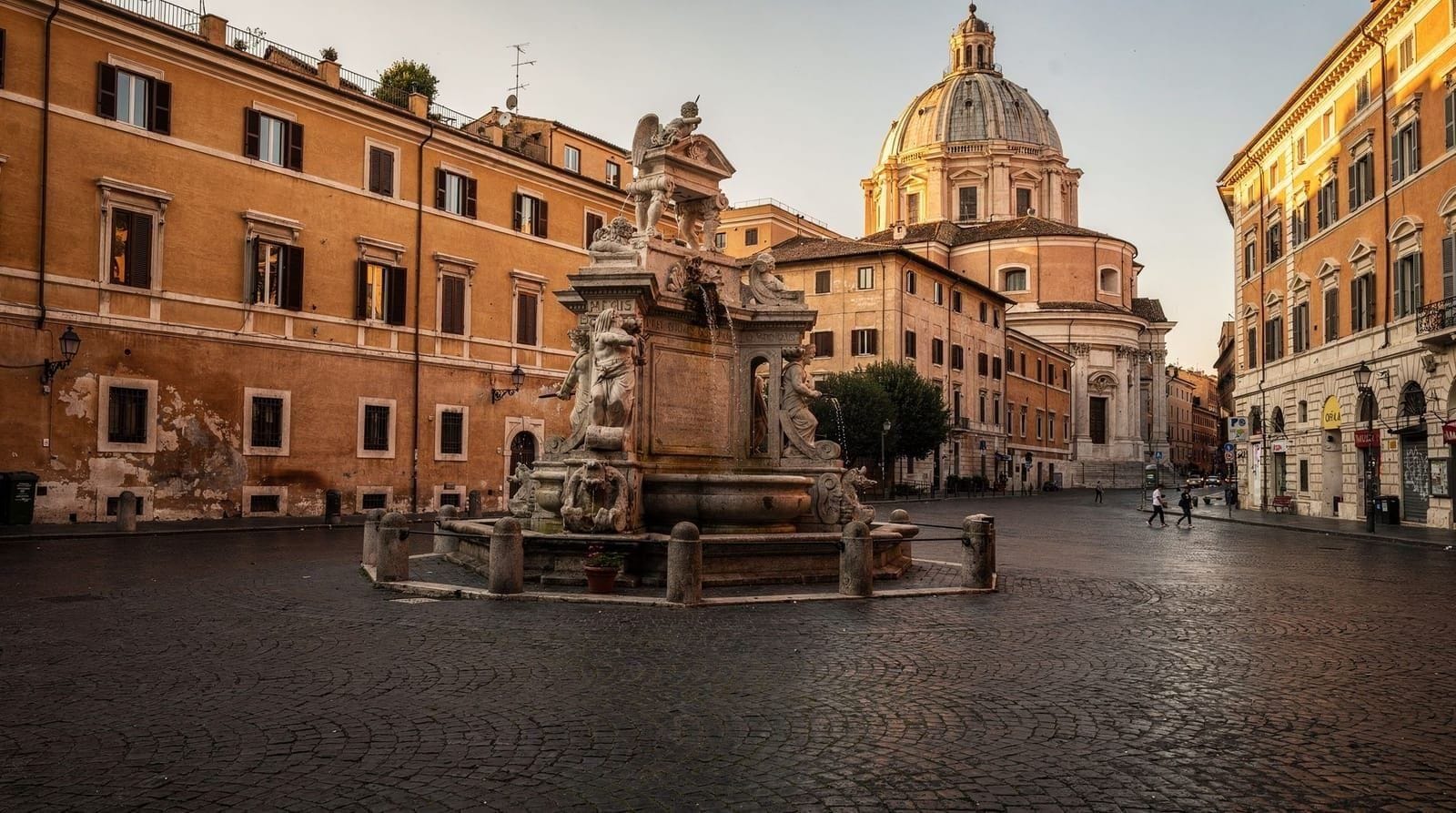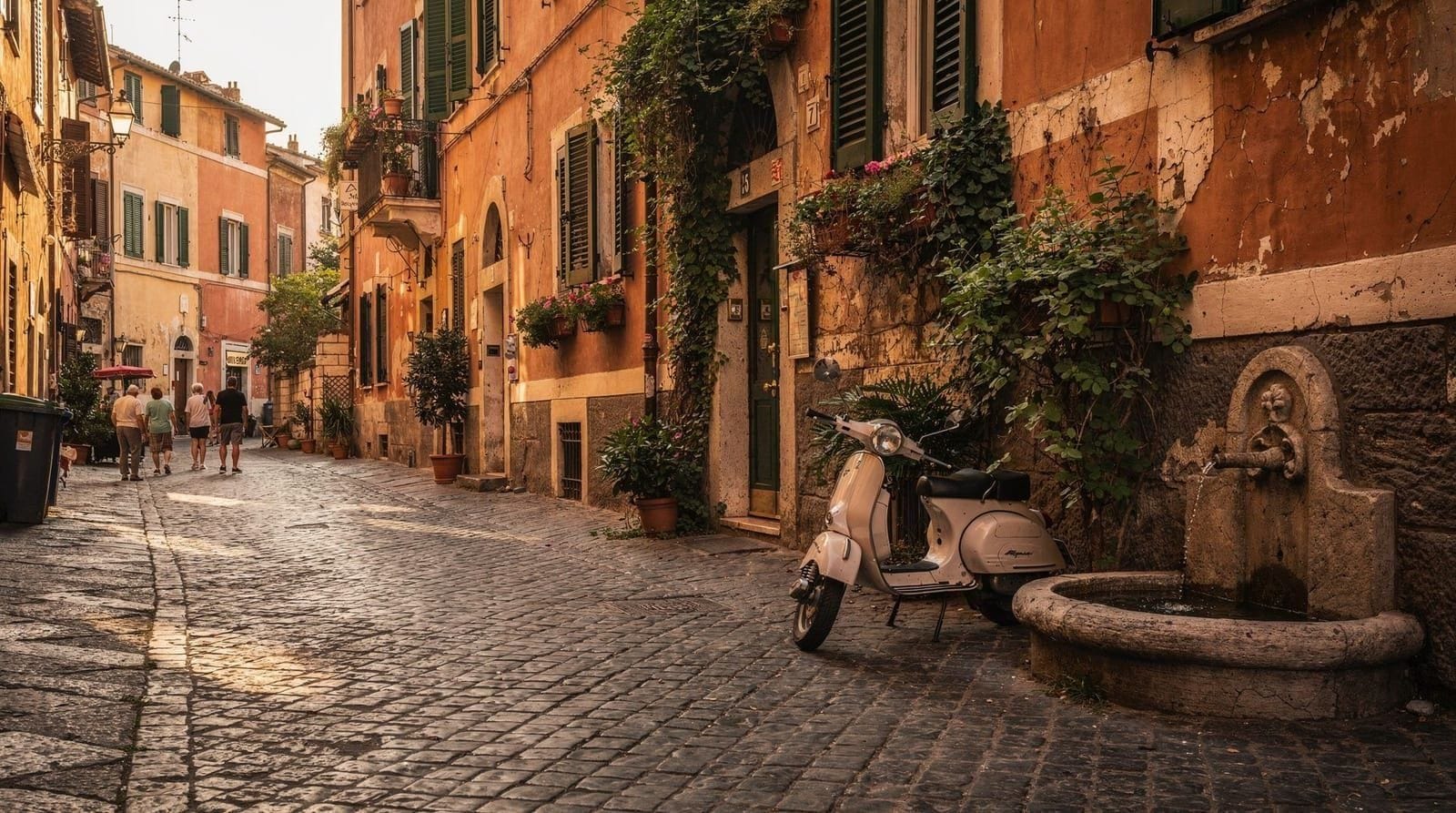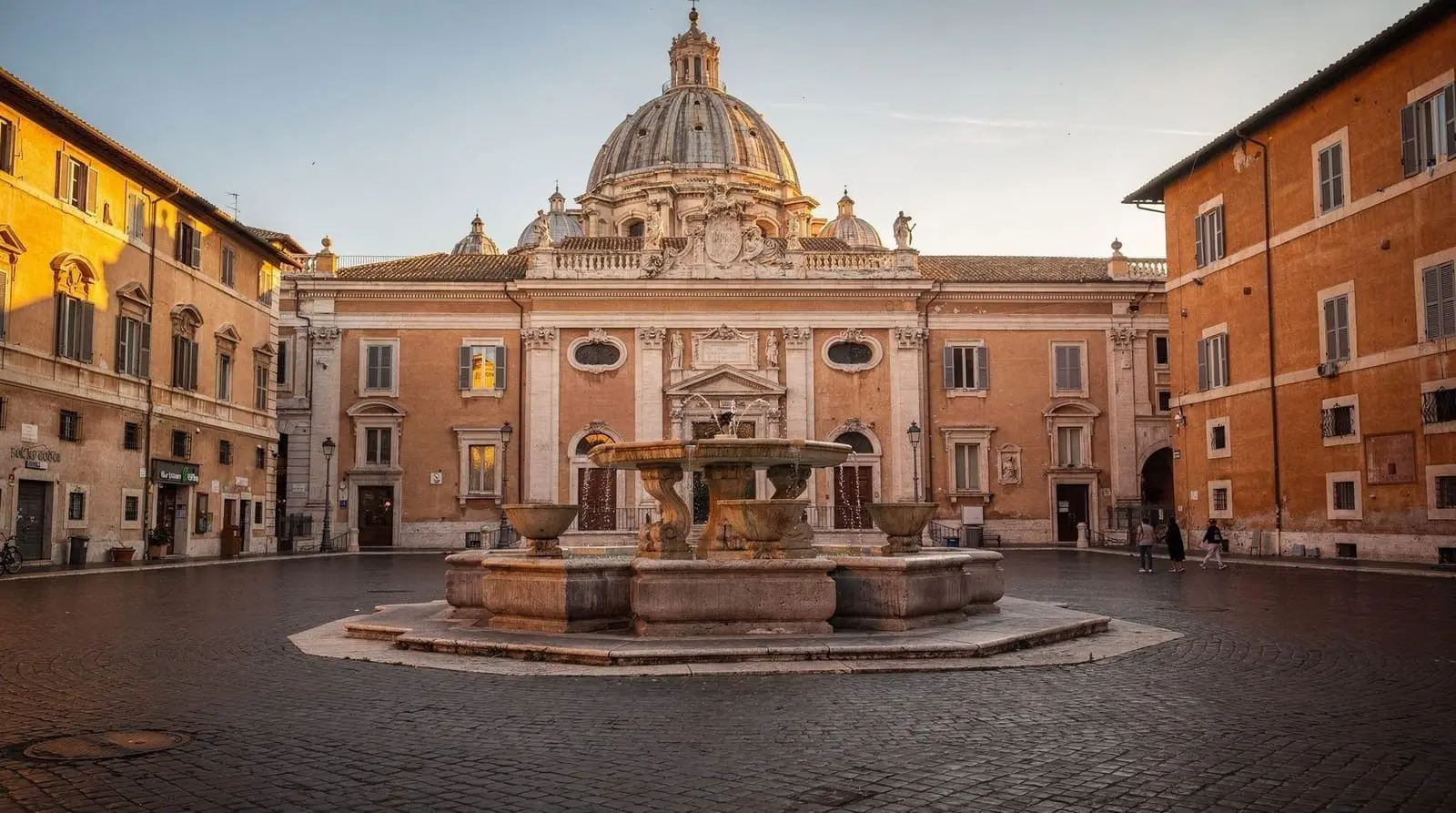
Rome's best piazzas: the honest list beyond the famous three
Vespa Sidecar Tour: Highlights of Rome
What are Rome's best piazzas beyond the famous three?
Piazza del Popolo, Campo de' Fiori (for mornings), Piazza Santa Maria in Trastevere, Piazza Farnese, Piazza della Minerva, Piazza Venezia (for the view), Piazza dei Cavalieri di Malta (keyhole view), and Piazza San Pietro of course. Each has a distinct character and most are less crowded than Navona, Trevi and the Spanish Steps.
The piazza problem (and why it is a good problem to have)
Rome has a problem that other cities would envy: too many extraordinary piazzas. The standard tourist circuit focuses on three — Navona, Trevi, and the Spanish Steps — while overlooking two dozen others that are architecturally significant, historically loaded, and in many cases considerably more pleasant to spend time in precisely because they have not been absorbed into the mass tourist circuit.
This guide is the honest list: the piazzas that deserve more attention, ranked by what they offer rather than by fame.
| Cost | Free — all piazzas in this guide |
| Best time | Early morning or sunset; avoid midday and mid-afternoon |
| Least crowded | Piazza Farnese, Piazza dei Cavalieri di Malta |
| Booking | None needed |
| Combine with | A neighbourhood walk (Trastevere, Aventino, Monti) |
The famous three: a brief reassessment
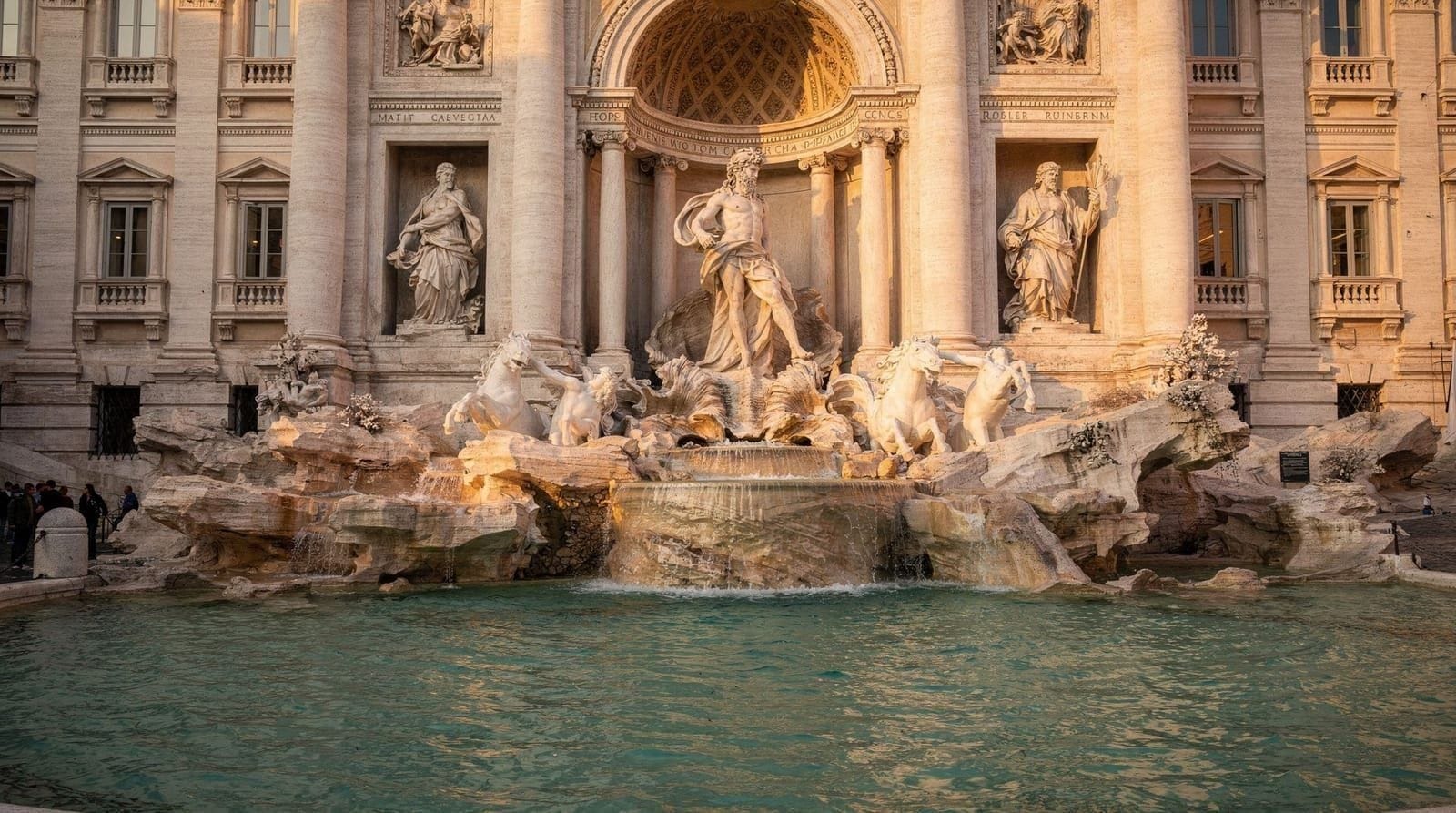
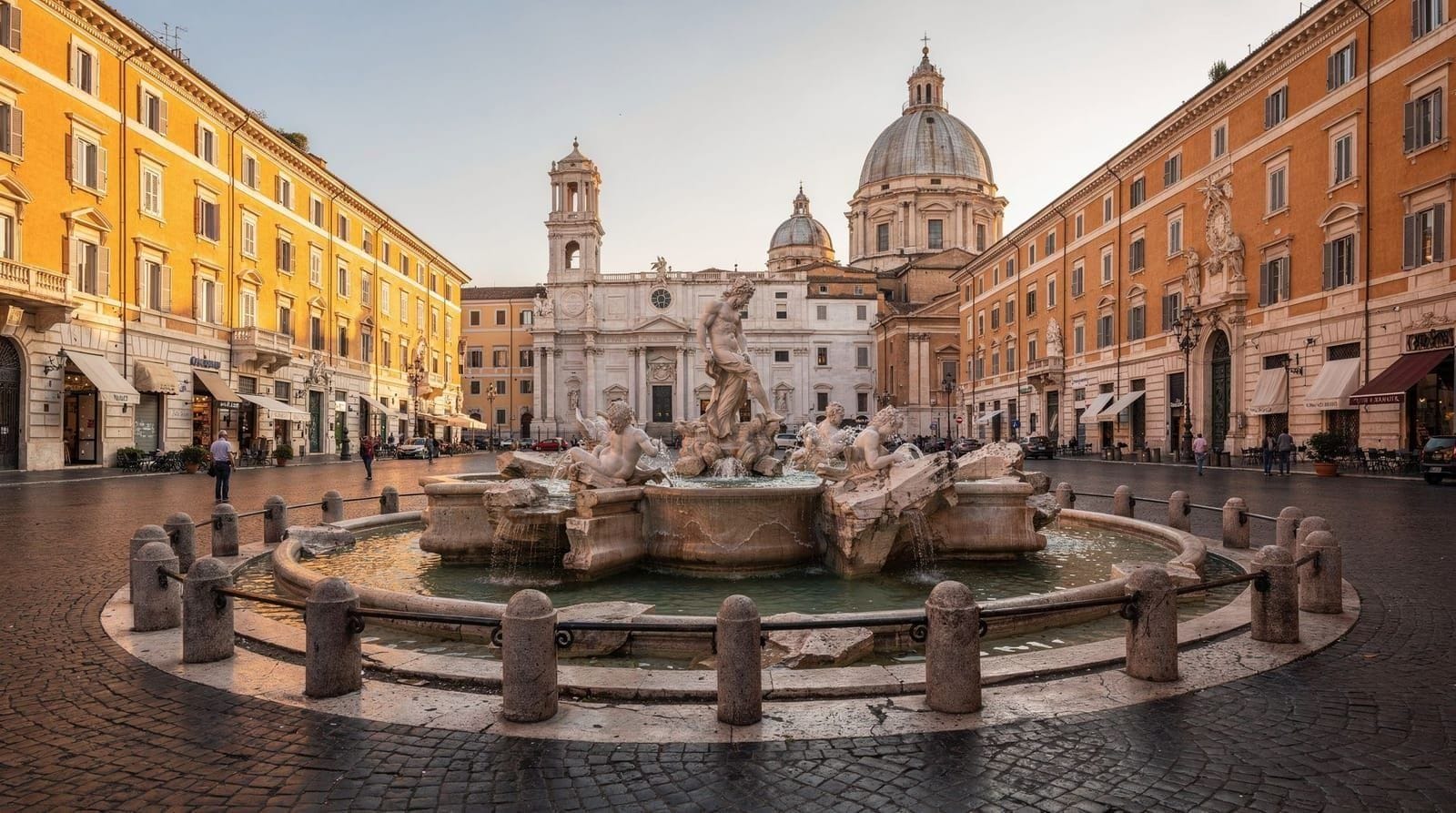
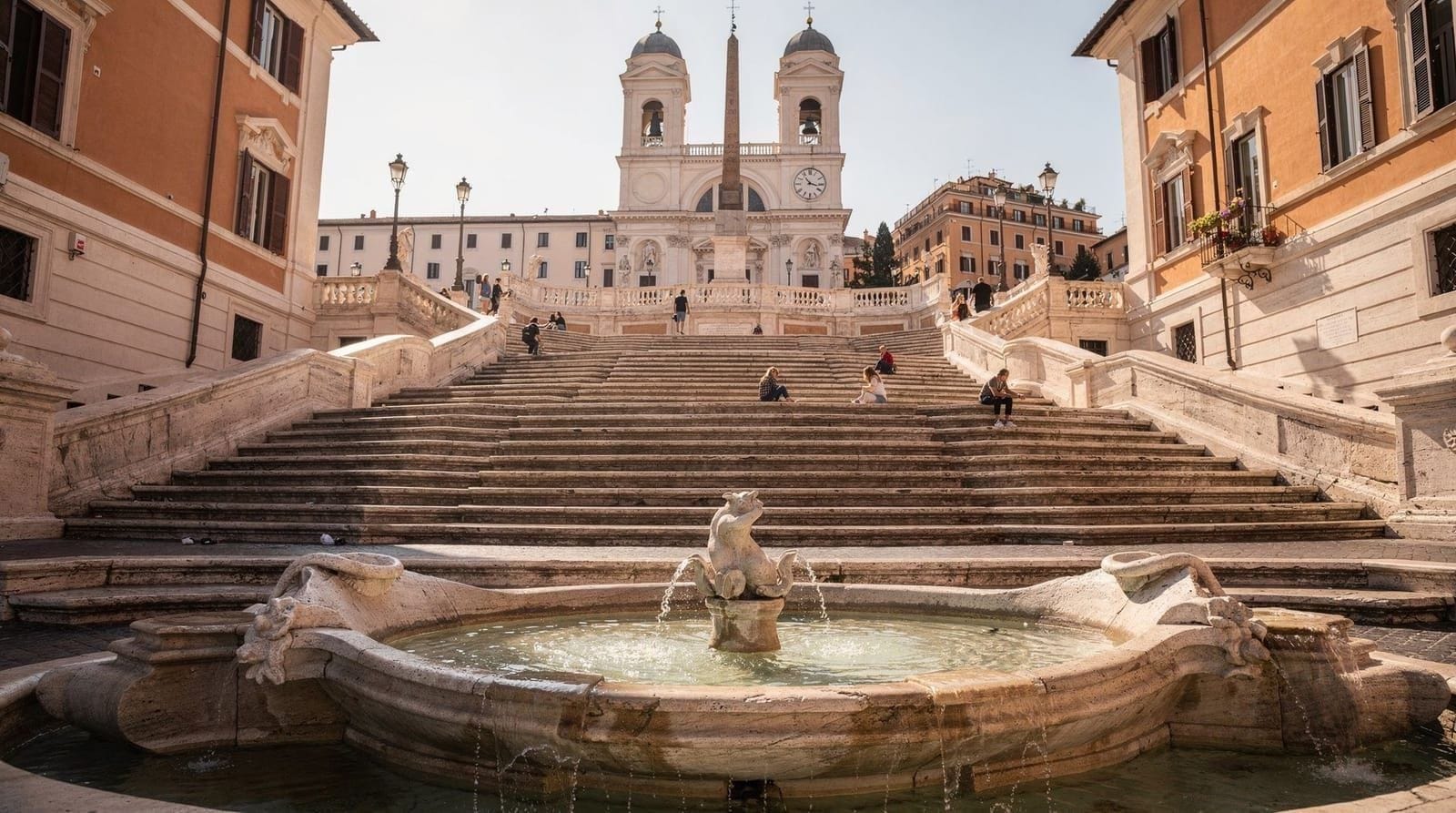
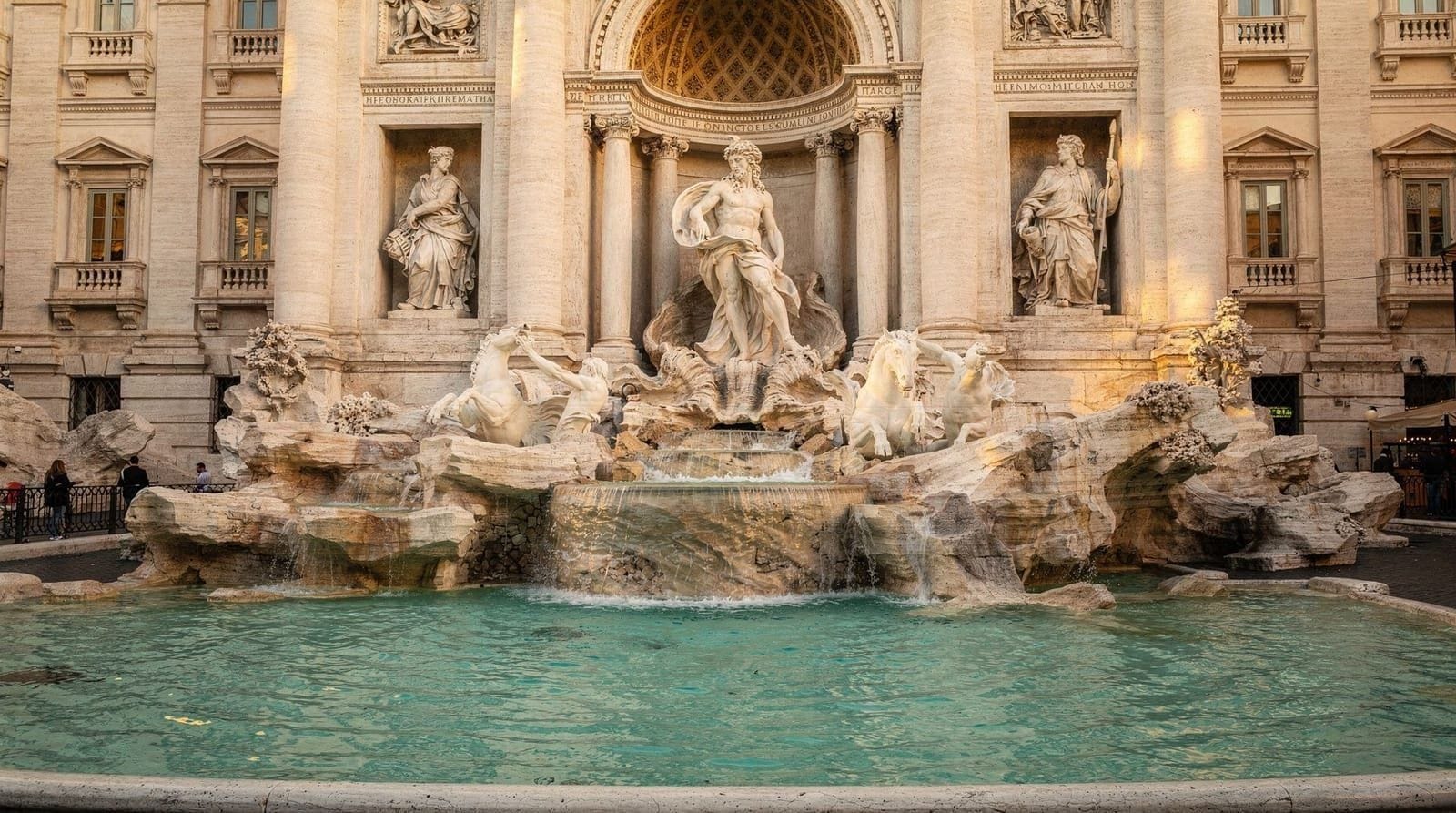
Before moving beyond them, it is worth noting that the famous three are famous for good reasons. Piazza Navona is genuinely the finest baroque piazza in Europe. The Trevi Fountain is, on its merits, extraordinary. The Spanish Steps are a superb piece of urban design. The problem is not that they are overrated — they are accurately rated. The problem is that crowds at peak times make them hard to experience well, and that many visitors leave Rome having seen these three and almost nothing else.
The solution is not to skip them but to time them well (dawn at Trevi, early morning at Navona, evening at the Spanish Steps) and to fill the rest of your day with the lesser-known but equally rewarding piazzas below.
Our full guide to the baroque walking circuit covers the famous three in depth. This guide covers everything else.
Piazza del Campidoglio: Michelangelo’s masterpiece
The Capitoline Hill (Campidoglio) and its piazza are the most architecturally significant civic space in Rome after the Roman Forum below it. Michelangelo was commissioned in 1536 to redesign the hilltop by Pope Paul III, who wanted to impress Holy Roman Emperor Charles V during a state visit. The visit happened before the construction was finished; Michelangelo’s design was completed posthumously from his plans.
The result is a trapezoid-shaped piazza — widening as you ascend the cordonata (the gently graded ramp rather than steps, to allow horses) — with the Palazzo Senatorio (the city hall) at the far end and identical palazzo facades on each side. The oval paving pattern in the center, radiating from the bronze equestrian statue of Marcus Aurelius (actually a high-quality copy; the original is inside the Capitoline Museums), is one of Rome’s most distinctive and photographed floor designs.
Why it matters: The Campidoglio sits above the Roman Forum on one side and looks down at Rome’s modern civic life on the other. The terrace behind the Palazzo Senatorio gives the best elevated view of the Roman Forum available without entering the paid site. It is free.
Combine with the Capitoline Hill and Museums guide for the full context.
Piazza del Popolo: the grand entry to Rome
For centuries, the Via Flaminia entering Rome from the north arrived at Piazza del Popolo — and the piazza was designed accordingly, as a grand theatrical greeting. The twin baroque churches of Santa Maria dei Miracoli and Santa Maria in Montesanto (1680s) frame the entrance to Via del Corso, creating the most explicitly theatrical urban composition in Rome after Navona.
The Egyptian obelisk at the center (originally from Heliopolis, moved to Rome by Augustus, erected in the piazza by Pope Sixtus V in 1589) is one of Rome’s oldest and tallest. The Fontana dei Leoni by Giuseppe Valadier (1822) surrounds it.
What most visitors miss: The Pincian Hill terrace above the piazza (reachable by the ramp on the right) offers one of Rome’s great panoramic views — looking south down the green corridor of Villa Borghese with the city beyond. Best at sunset.
The church: Santa Maria del Popolo, on the northeast corner of the piazza, contains two Caravaggio paintings — the Conversion of St. Paul and the Crucifixion of St. Peter — in the Cerasi Chapel. These are among the most important paintings in Rome and are almost always displayed without crowds. Entry is free.
Campo de’ Fiori: the other piazza
Campo de’ Fiori (“Field of Flowers”) is Rome’s most extroverted public space — and very different in character from the grand baroque designs elsewhere. Medieval in its origins and still functioning as a working market square, it is the piazza where Rome is least likely to feel like a museum.
The morning market (Monday–Saturday, roughly 07:00–13:00) sells produce, flowers, fish and some kitchen goods. The quality is mixed and the tourist-facing stalls around the edges are overpriced relative to the interior, but the activity and noise and smell are genuinely Roman.
The statue of Giordano Bruno at the center is a 19th-century monument to the philosopher burned at the stake on this spot in 1600 for heresy — including his belief in infinite worlds and a non-geocentric universe. He faces toward the Vatican with a famously unforgiving expression. The statue was deeply controversial at the time of its unveiling (1889) and remains a point of tension.
Evenings transform Campo de’ Fiori into a bar district — rowdier and younger than Navona, with lower prices and a less architectural character. Worth experiencing for the difference.
Vespa sidecar tour covering Rome’s highlights — an efficient way to visit multiple piazzas and neighbourhoods in a morning with a local guide.Piazza Farnese: aristocratic Rome, almost tourists-free
Three minutes’ walk south of Campo de’ Fiori and an entirely different atmosphere. Piazza Farnese is the most formally composed residential square in central Rome — grand, quiet, and dominated by the massive Renaissance Palazzo Farnese on the north side.
The palazzo (now the French Embassy) was begun in 1517 for the Farnese family and finished after Antonio da Sangallo the Younger by Michelangelo and Giacomo della Porta. It is considered the finest Renaissance palazzo in Rome. The interior is not generally open to the public (advance booking required for the limited weekly tours), but the exterior and its effect on the piazza are fully visible.
The two fountains in the piazza are large granite basins — originally Roman bathtubs from the Baths of Caracalla, repurposed as fountain bowls in the 16th century with the addition of Farnese lilies. They run quietly and their scale gives you a sense of the Romans’ approach to bathing.
Almost no tourists. Completely worth the short detour.
Piazza Santa Maria in Trastevere: the heart of the neighbourhood
The best piazza in Trastevere — and arguably Rome’s best neighbourhood piazza for an evening visit. The basilica of Santa Maria in Trastevere (3rd century foundations, current form 12th century) forms one entire side of the square; its mosaics of the Virgin and Christ are visible from the piazza through the large windows even at night.
The fountain in the center dates in its current form to 1692 (Carlo Fontana) and is the focal point of an informal social life that runs from morning market vendors through evening aperitivo tables to late-night conversation. The surrounding bars charge Trastevere prices — higher than Roman neighbourhood averages but lower than tourist-center rates.
Visit in the evening in summer: the basilica facade is lit, the mosaic glows, the piazza fills, and the experience is genuinely Roman rather than tourist-managed. See the Trastevere neighbourhood guide for what else to do in the area.
Piazza Venezia: the civic fulcrum
Piazza Venezia is not a beautiful piazza — it is a chaotic traffic roundabout of imperial proportions, dominated on one side by the white marble Vittoriano monument (completed 1925, built over an earlier medieval hill). But it is important and worth a brief stop.
The Vittoriano’s roof terrace (€7 by elevator, or free on foot) gives the single best 360-degree panoramic view in Rome: the Forum and Palatine Hill to the southeast, the Capitoline to the southwest, the whole of the centro storico to the north, and the Tiber bending westward. Fifteen minutes here at the right time of day gives you a spatial map of the city that guides cannot provide.
The Palazzo Venezia (the rust-coloured palazzo on the northwest of the piazza) was Mussolini’s administrative headquarters; he gave speeches from the balcony visible on the facade. It now houses a decorative arts museum (undervisited, worth browsing).
Piazza della Minerva: the elephant obelisk
One of Rome’s smallest and most charming piazzas — the tiny square outside Santa Maria sopra Minerva (Rome’s only Gothic church) anchored by Bernini’s elephant obelisk. The marble elephant, designed by Bernini in 1667 and carved by Ercole Ferrata, carries an Egyptian obelisk on its back.
Bernini’s supposed commentary was that a strong mind is needed to support solid wisdom — the elephant being the strongest of animals, the obelisk being knowledge. Whether or not Bernini said this, the composition is delightful: a small, slightly rotund elephant with a surprisingly benign expression standing in the corner of a quiet piazza, apparently content to carry a 5th-century BCE Egyptian monument for eternity.
The church of Santa Maria sopra Minerva is worth entering for the Filippo Lippi frescoes (Annunciation and the Assumption) in the Carafa Chapel (1489) and for Michelangelo’s marble statue of Christ Bearing the Cross (1521), which stands beside the main altar.
Golf cart tour of Rome’s highlights with a local guide — covers multiple piazzas and monuments that are hard to connect efficiently on foot.Piazza dei Cavalieri di Malta: the famous keyhole
On the Aventine Hill, in a quiet residential area that most tourists never reach, Piranesi designed the entire Piazza dei Cavalieri di Malta in 1765 for the Knights of Malta. The walled square is unusual — not a civic gathering space but a formal architectural composition of obelisks, trophies and fortification imagery.
The reason visitors make the trip: the keyhole in the green entrance gate to the priory at the south end of the piazza. Looking through this keyhole, you see the dome of St. Peter’s framed at the end of a perfectly aligned garden path — a composed view deliberately arranged by Piranesi (or whoever managed the garden alignment). The dome is technically in the Vatican, a separate sovereign state; the garden path is in Italy (Knights of Malta sovereignty); the keyhole viewer stands in Rome. Three territories in a single glance.
The queue for the keyhole at midday in summer can stretch around the piazza. Visit in the morning or late afternoon. Five minutes from the Aventino neighbourhood guide — the orange garden on the hill above the Circus Maximus is also nearby and has views that rival the Capitoline.
Piazza San Pietro: the greatest of all
No list of Rome’s piazzas can omit Piazza San Pietro, though it is so exceptional and so well-documented that it feels almost presumptuous to include it here. Bernini’s colonnade (1656–1667) — two curving arms embracing an elliptical space 340 metres wide — is the most ambitious single piece of urban design in Western history. The colonnade was intended, Bernini said, to embrace Catholics and welcome them, to receive heretics and enlighten them.
The technical achievement: the colonnade consists of 284 columns and 88 pillars arranged in four parallel rows, forming a continuous curved portico. The obelisk at the center is Egyptian (from Heliopolis, moved to Rome by Caligula, re-erected here by Pope Sixtus V in 1586). There are two stone discs embedded in the paving between the obelisk and each fountain arm — standing on either disc, the four rows of columns align perfectly and appear as a single row.
See our St. Peter’s Square guide for the full visit details. For the piazzas circuit, simply note that the square is free to enter and its scale — which is difficult to photograph adequately — is best experienced by walking from the Via della Conciliazione approach early in the morning before the crowds arrive.
A note on timing
The best time for almost any Rome piazza is early morning. The Roman domestic routine (coffee at 07:30, passeggiata from 18:00) means that the city’s public spaces have two natural windows of local life: morning and early evening. Midday, when tour groups are between sites, and mid-afternoon, when the heat has driven everyone inside, are the worst times to visit piazzas.
Three-hour Rome by night walking tour covering the major piazzas in the atmospheric evening light — the best way to experience multiple squares efficiently with commentary.Piazza Mattei and the Jewish Ghetto squares
Away from the grand baroque set-pieces, the small piazzas of the Jewish Ghetto reward a slow, unplanned walk. Piazza Mattei, home to the Fontana delle Tartarughe, is the anchor — genuinely one of Rome’s most intimate squares, framed by 16th-century palazzi and rarely holding more than a handful of visitors at once. A few streets over, Piazza delle Cinque Scole sits at the edge of the old ghetto boundary and has a quieter, more residential feel, with a small daily market presence. Neither piazza has a headline monument to justify a special trip on its own, but together with a lunch stop at one of the neighbourhood’s kosher-Roman restaurants, they make one of the best half-hour detours in central Rome.
Piazza Trilussa: Trastevere’s other square
Piazza Trilussa, at the Trastevere end of the Ponte Sisto pedestrian bridge, is distinct from Piazza Santa Maria in Trastevere a few minutes further in — younger, louder, and the default gathering point for an early-evening drink on the steps beneath the Trilussa statue. It lacks the architectural pedigree of the piazzas above, but it is the piece of Trastevere most visitors actually experience first, arriving on foot from the Centro Storico side of the river. Worth a stop for the people-watching alone, particularly at sunset when the Ponte Sisto silhouette lines up with the light over the Tiber.
The less-famous fountains of note
While the Trevi Fountain and Piazza Navona’s fountains dominate the baroque fountain narrative, several others deserve attention:
Fontana del Tritone, Piazza Barberini: Bernini’s 1643 fountain, a muscular Triton kneeling on four dolphins, blowing a plume of water upward. More joyful and less monumental than the Trevi — visit it separately for a different view of Bernini’s range.
Fontana delle Tartarughe, Piazza Mattei: One of Rome’s most delicate Renaissance fountains (1581, Giacomo della Porta with figures by Taddeo Landini). Four bronze youths push four turtles up to drink from the upper basin. The turtles are 17th-century additions, attributed to Bernini. The piazza itself, in the Jewish Ghetto area, is one of the most intimate in the city.
Fontana di Trevi in miniature: The Acqua Felice terminal fountain on Via Nazionale (1588, designed by Domenico Fontana for Pope Sixtus V) features the largest figure on any Roman fountain — a massive Moses flanked by Aaron and Gideon. The Moses figure was so badly received at its unveiling (compared unfavorably to Michelangelo’s Moses) that the sculptor reportedly died of shame. Probably apocryphal. The fountain is large, somewhat ungainly, and completely ignored by tourists.
For a structured walk through Rome’s water history, see our Rome fountains trail guide.
Frequently asked questions about Rome's best piazzas: the honest list beyond the famous three
How many piazzas does Rome have?
Which piazza is best for people-watching?
What is the most photographed piazza in Rome beyond the famous three?
Which piazza is best in the evening?
Is Piazza Venezia worth visiting?
Are there any truly hidden piazzas in Rome?
Top experiences
Bookable activities with verified prices and instant confirmation on GetYourGuide.