Rome on a rainy day: the honest guide to wet-weather Rome
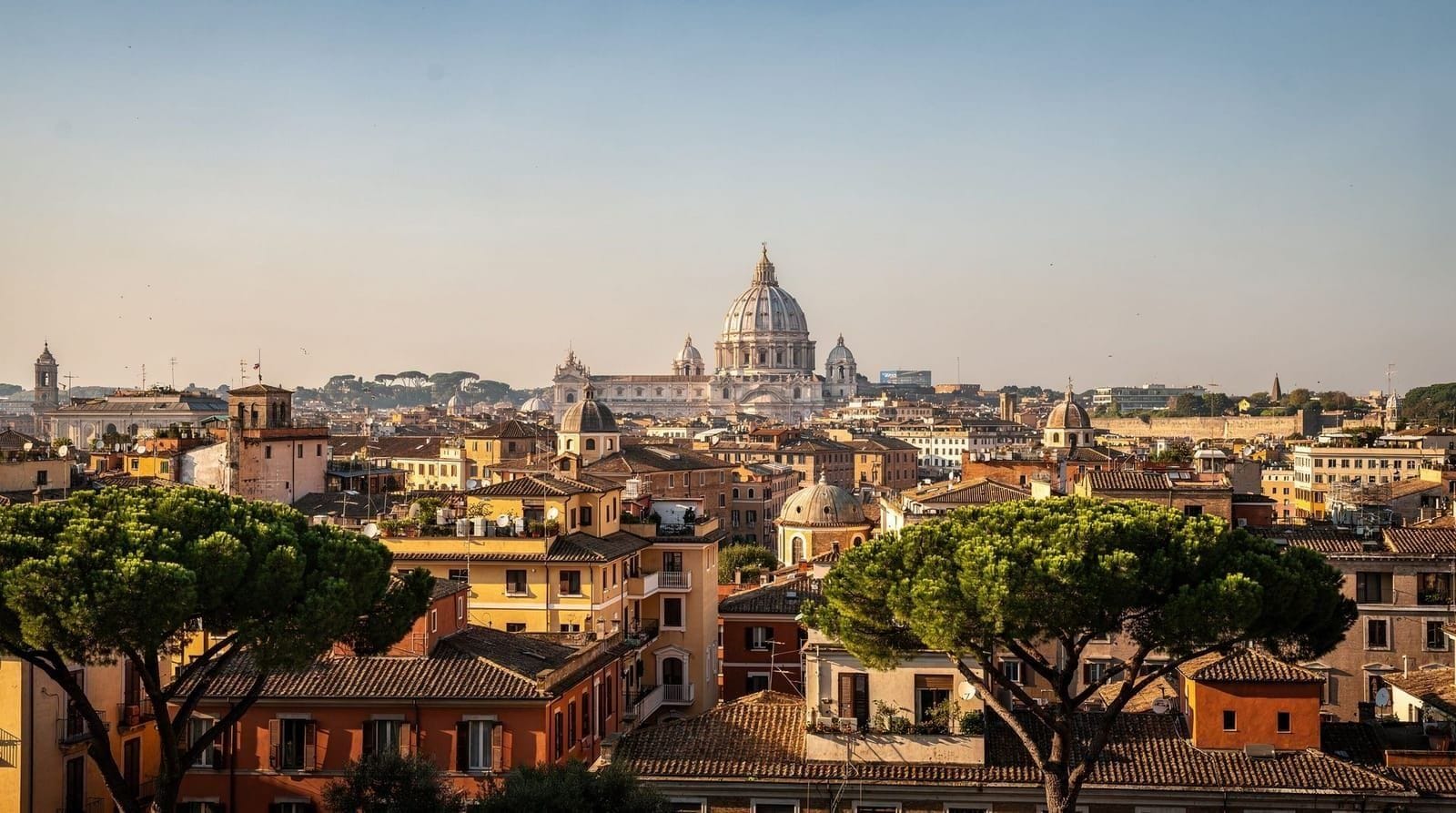
Rome’s outdoor splendours are well documented. The Colosseum looks magnificent in afternoon sun. The piazzas and fountains photograph beautifully in golden-hour light. What nobody tells you is that Rome in the rain has its own specific virtues, and that a grey October morning or a November drizzle can actually improve certain parts of the experience considerably.
Rain in Rome comes in two varieties. The summer version — July and August — is a brief, violent convective event: the sky opens for forty minutes, dumps enormous amounts of water, and then the sun returns. The winter version — November through March in particular — is gentler but can last days, with the kind of persistent grey drizzle that makes northern Europeans feel unexpectedly at home.
In neither case is rain a reason to despair. Here is what to do with it.
| Best bet | underground sites — stable 13–15°C year-round |
| Best museum | Borghese Gallery, small and intimate |
| Best free option | church-hopping the Caravaggio circuit |
| Bring | a packable rain jacket, not an umbrella |
| Silver lining | shorter queues, available restaurant tables |
The underground city
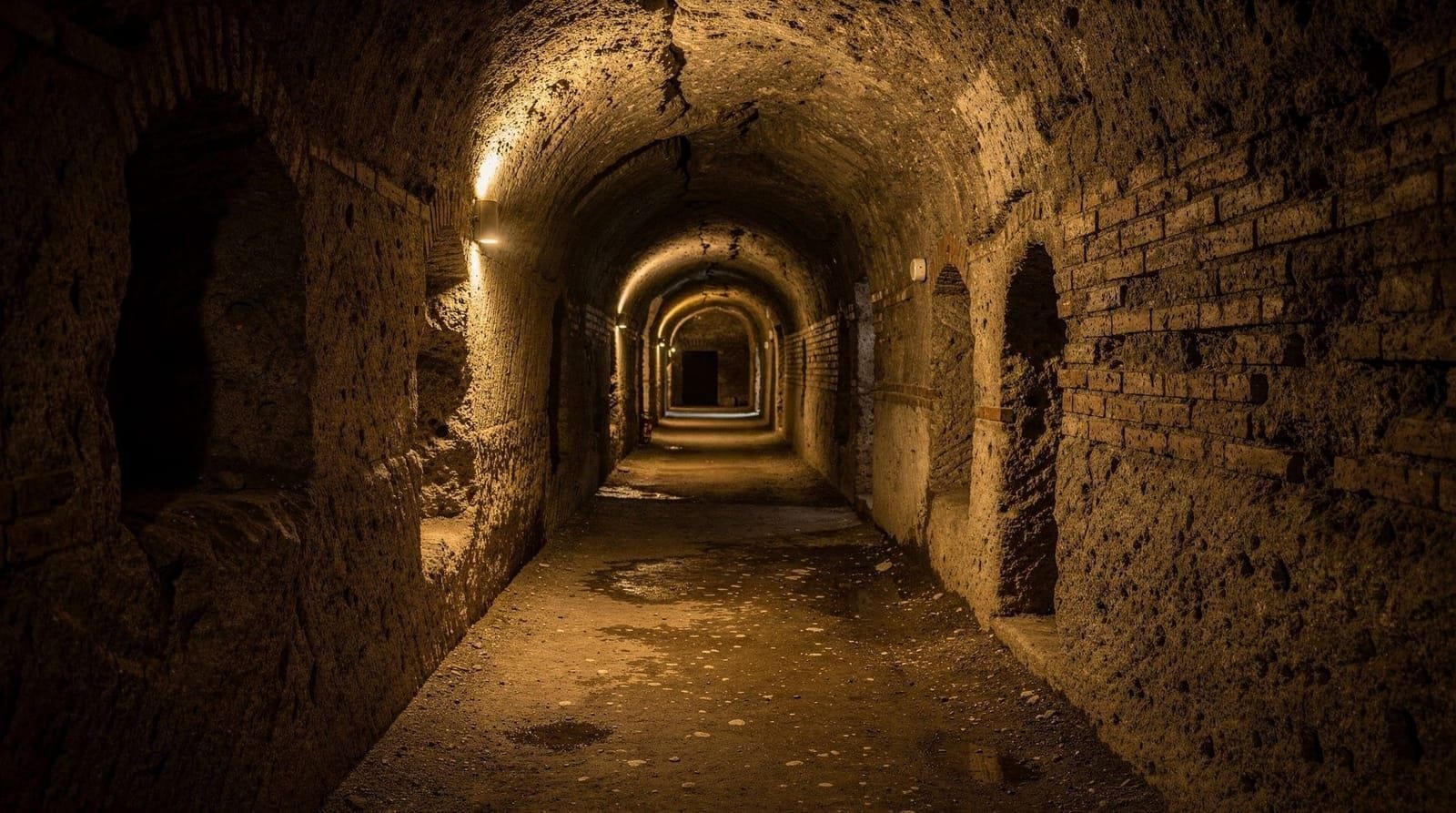
Rain transforms Rome’s underground sites from interesting to genuinely appealing. When you are standing in a first-century Roman apartment beneath the Basilica of San Clemente, listening to an archaeologist explain how each layer of history sits above the one before it, rain on the surface is completely irrelevant. You are dry, you are cool, and you are in one of the most extraordinary spaces in Rome.
The catacombs and underground sites of Rome — the catacombs along the Appia Antica, the Domus Aurea, the Basilica di San Clemente with its three layers of history, the mithraeum beneath Santa Prisca — are all fundamentally indoor experiences. Temperature underground is stable year-round at around 13–15°C, which on a rainy autumn day feels pleasantly warm, and on a rainy summer day feels genuinely refreshing.
The Domus Aurea — Nero’s buried Golden House on the Esquiline hill — is particularly good on wet days. The site is inside a vaulted complex accessed through a hillside entrance; the VR experience gives context to what would otherwise be difficult-to-read ruins, and the whole visit takes about two hours entirely under cover.
The capuchin-crypt-bones on Via Veneto is underground, entirely covered, and takes about thirty minutes. It is strange and specific and not for everyone, but on a rainy afternoon when you’ve exhausted the obvious options, a crypt decorated with the bones of 3,700 friars arranged into chandeliers, rosettes, and architectural decorations is a valid choice.
The right museums for rainy days
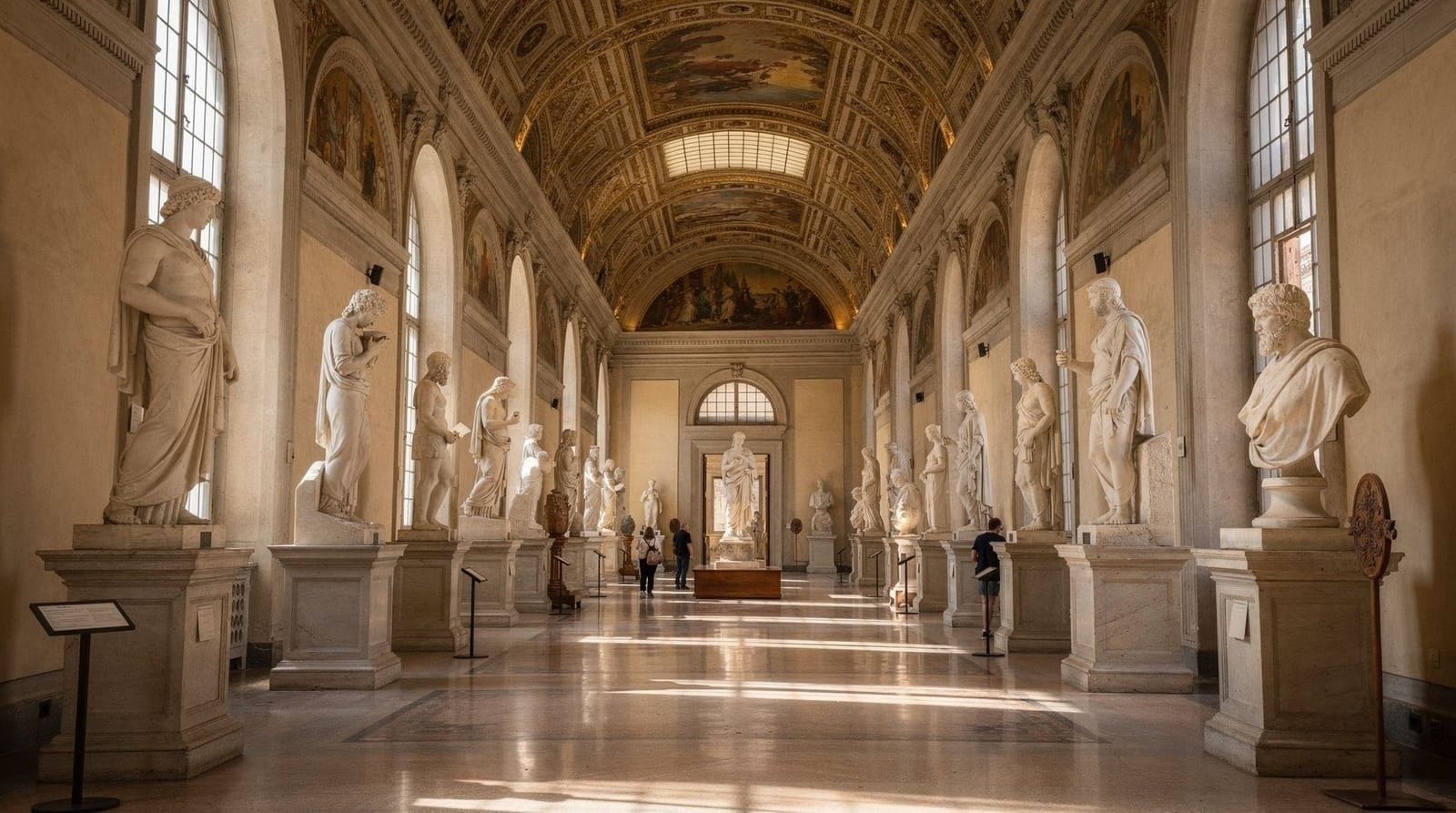
Not all museums are equal as rain-day retreats. The Vatican Museums are vast and covered but so perpetually crowded that shelter from rain is offset by shelter from other people. The Colosseum is mostly open-air; rain there means wet stairs and limited cover.
The museums that genuinely improve on a rainy day:
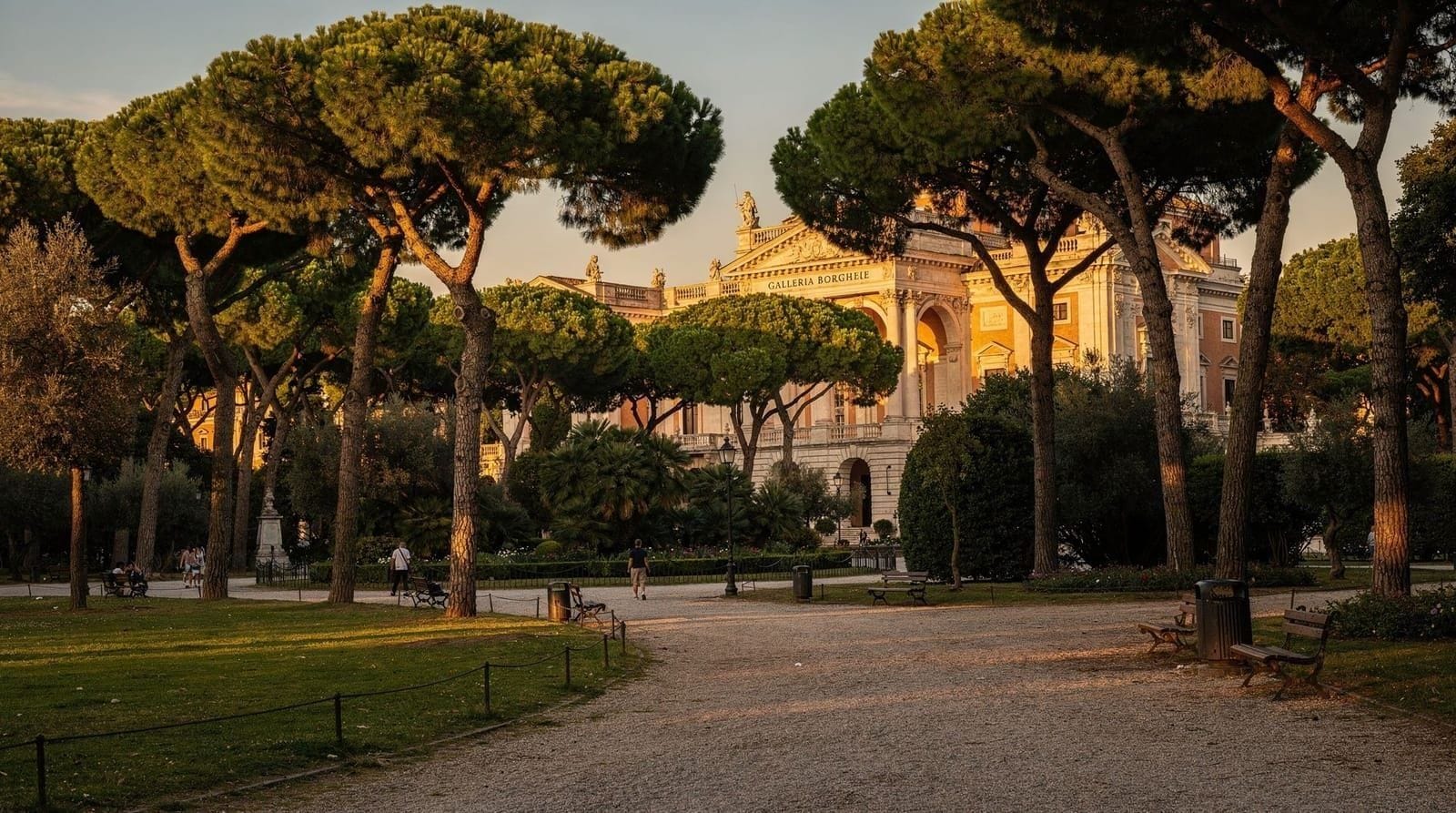
Borghese Gallery: small (only 6 rooms in the main floor), intimate, and containing some of the most beautiful sculpture and painting in Italy. The Bernini sculptures — Apollo and Daphne, David, the Rape of Proserpina — are extraordinary up close in a way that photographs never capture. You need to book in advance (maximum 180 people per two-hour slot, usually 10 days ahead). Rain means fewer no-shows, which occasionally frees up last-minute slots.
Capitoline Museums: the oldest public museums in the world and underrated relative to the Vatican. The Marcus Aurelius equestrian statue, the fragments of the Colossus of Constantine, and the view from the terrace over the Roman Forum (even in rain, the view is remarkable) make this a half-day experience. See the capitoline-museums-guide for what to prioritise.
Palazzo Doria Pamphilj: a private palace that remains in the Pamphilj family, open to the public as a museum. The gallery contains a Velázquez portrait of Pope Innocent X that is one of the greatest paintings of the seventeenth century. The family audio guide (voiced by a family member) is unusual and good. See doria-pamphilj-gallery.
MAXXI: Rome’s contemporary art museum in the Flaminio neighbourhood, designed by Zaha Hadid. The building itself is extraordinary — worth visiting regardless of the exhibition. Good café.
Church-hopping under covered porticos
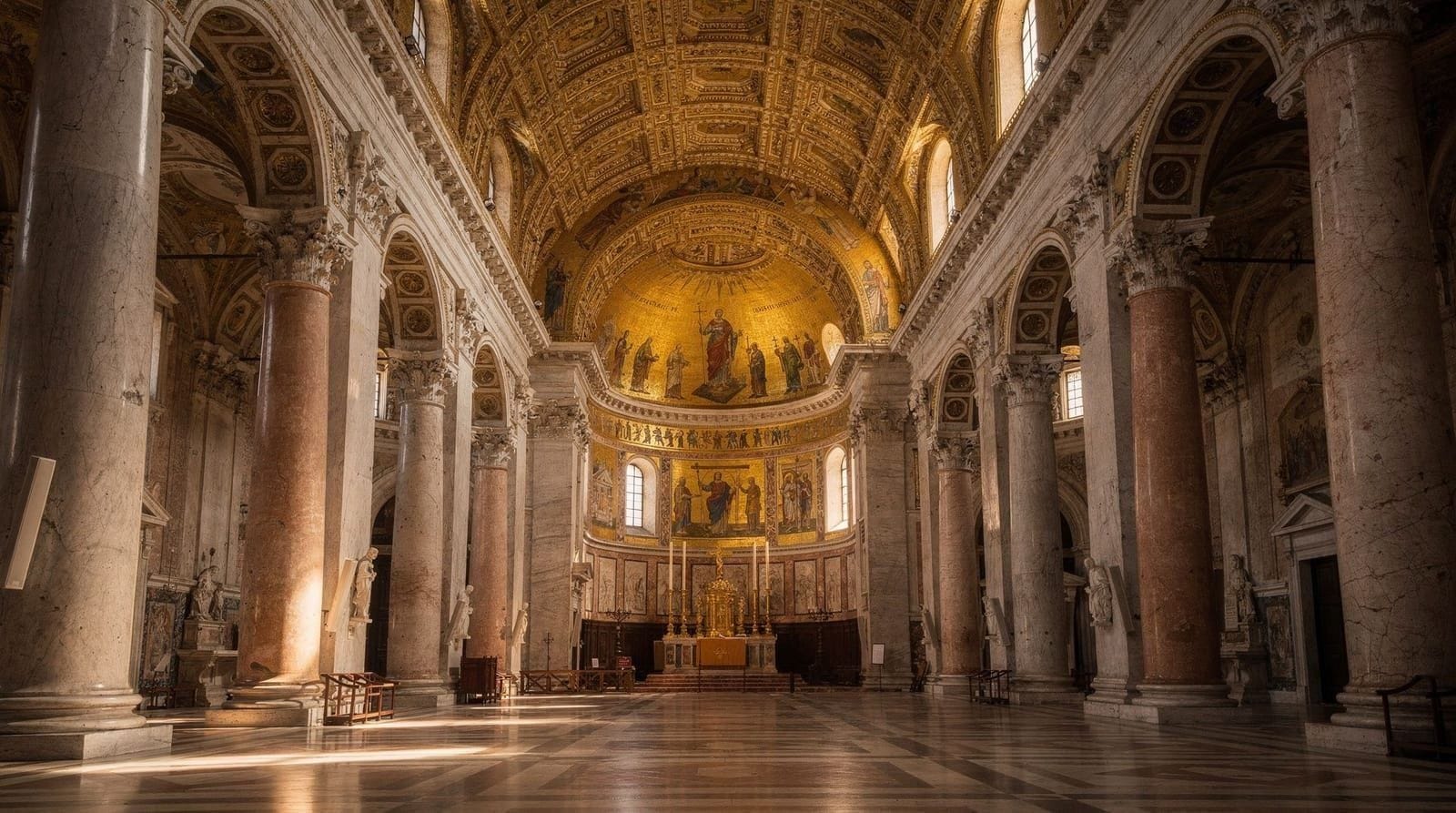
Rome’s churches are underused as rain retreats. They are free (for most of them), they are covered, and a number of them contain paintings that would be the centerpiece exhibit of any major museum in northern Europe but happen to be in a side chapel in a neighbourhood church.
The Caravaggio circuit is particularly rewarding in rain: San Luigi dei Francesi (three Caravaggio paintings of St. Matthew, accessible from the main entrance), Santa Maria del Popolo (the Conversion of Saul and Crucifixion of Peter), and Sant’Agostino (the Madonna di Loreto). Walking between them in rain, ducking under porticos, joining the brief queue under an awning — this feels like the kind of accidental day that becomes the one you talk about. The caravaggio-trail-rome guide has the full circuit.
Santa Maria Sopra Minerva — the only Gothic church in Rome’s centre, behind the Pantheon — houses Fra Angelico’s tomb and a Michelangelo sculpture. The interior is cool and dim and beautiful in a way that bright sunlight can wash out. Rain outside, Gothic vaulting inside, candles lit in the side chapels: this is the version of Rome that most people miss.
The Pantheon in rain: honest advice
The Pantheon has an oculus — a 9-metre hole in the centre of the dome — that is open to the sky. This is by design; the floor has drainage channels from antiquity. When it rains, rain falls into the interior of the Pantheon, creating a column of water that descends theatrically from the opening.
This is remarkable, and worth seeing. It is also worth noting that the Pantheon requires an advance-booked ticket (€5 entry), and the queue in rain is longer than usual because everyone has had the same idea. If you can book a slot before your trip, the Pantheon in rain is one of the more memorable experiences available in the city. If you’re trying to do it spontaneously, expect a thirty-minute wait.
Covered markets and indoor food halls
The Testaccio market is fully covered — a permanent market building with a metal roof and about one hundred stalls selling produce, meat, cheese, street food, and everything else. On a rainy morning, this is an excellent place to spend an hour: buy some cheese, find a supplì stall (fried rice balls, one of Rome’s great street foods), drink a coffee standing at a bar as Romans do.
Eataly Roma on Via Sacchi is the upmarket option: a multi-floor food hall with a bakery, cheese counter, wine bar, and restaurant. It is not cheap, but it is covered, centrally heated, and a reasonable place to wait out a heavy shower with a glass of something.
Rainy-day options at a glance
| Option | Time needed | Best for |
|---|---|---|
| Underground sites (catacombs, Domus Aurea, San Clemente) | 1–2 hrs each | history lovers, all-weather reliability |
| Borghese Gallery or Capitoline Museums | 2–3 hrs | art, but book ahead |
| Caravaggio church circuit | half a day | free, atmospheric, walkable between showers |
| Covered markets (Testaccio, Eataly) | 1 hr+ | food, warmth, no booking needed |
If a heavier downpour is forecast for your whole trip rather than a single afternoon, it’s worth reading the rome-in-winter guide for how to structure several consecutive wet days without feeling like you’re just waiting it out — the argument there, which this piece echoes, is that a slower, museum-and-church-heavy pace in bad weather often produces a more memorable trip than a rushed sunny itinerary.
The practical wet-weather kit
A packable rain jacket is far more useful than an umbrella in Rome. The cobblestones are slippery when wet; having your hands free matters. Umbrellas sold by street vendors (they appear within thirty seconds of any shower) are cheap and break quickly but serve their purpose in an emergency.
The most important thing: don’t change your plans entirely just because of rain. Rome’s outdoor sites — the Forum, the Colosseum, the Appia Antica — are genuinely less good in heavy rain, but light drizzle actually thins the crowds. The Colosseum in rain with far fewer people can be preferable to the Colosseum in August sun with several thousand of them.
Rome: Domus Aurea guided tour with virtual reality experience — Nero’s underground Golden House is exactly the kind of experience that improves in bad weather, combining covered underground ruins with immersive VR reconstruction.
The silver lining argument
There is a case — genuinely — that Rome in November or a rainy week in March is better than Rome in July. The queues are shorter. The museums have breathing room. The restaurant tables are available without a booking. The temperature is comfortable for walking. The light, when it appears, is extraordinary: low and golden and without the haze of August heat. The rome-in-winter guide makes this case at length.
A rainy day is not the day you planned. It might turn out to be the day you remember.
FAQ
Is it worth visiting Rome if it’s forecast to rain the whole trip? Yes. Rome’s underground sites, museums, and covered markets hold up extremely well in rain, and crowds thin out considerably — many visitors find a rainy trip genuinely more comfortable for indoor-heavy days than a hot, crowded summer one.
Do I need an umbrella in Rome? A packable rain jacket is more practical than an umbrella given the cobblestones and narrow, crowded pavements, though cheap umbrellas from street vendors appear within moments of any shower if you’re caught without one.