Ostia Antica vs Pompeii: which Roman city should you visit from Rome?
From Rome: Ostia Antica Guided Half-Day Trip by Train
Duration: 4 hours
Should I visit Ostia Antica or Pompeii from Rome?
Ostia Antica is the easier, cheaper and less crowded option: 45 minutes from central Rome by metro and regional train, €12 entry, half a day. Pompeii is more dramatic and emotionally powerful, but costs 2.5–3 hours each way, more money and a full day. If you have one day: choose based on your priorities. If you have time for both: do Ostia Antica on a shorter day and Pompeii as the main event.
Two Roman cities, two very different trips
Ostia Antica and Pompeii are both preserved Roman cities. Both give you the experience of walking streets that Romans walked 2,000 years ago. Both are extraordinary. And they are radically different experiences in terms of logistics, atmosphere, and what they reveal about Roman urban life.
This guide makes the comparison honest — not to tell you which is “better” in the abstract, but to help you decide which fits your specific trip.
| Ostia Antica | 45 min away, €12 entry, half-day, quiet |
| Pompeii | 2h–2h30 away, €18 entry, full day, crowded |
| Choose Ostia if | Time or budget is limited, you dislike crowds |
| Choose Pompeii if | You have a full day and want the emotional impact |
| Choose both if | You have 5+ days in the Rome area |
The fundamental difference
Pompeii was frozen at a single moment — 79 CE, the eruption of Vesuvius — and preserved under 4–6 metres of volcanic ash. The buildings stand because they were encased. The casts of bodies, the frescoes, the food left in shops, the ruts of cart wheels worn into the paving stones: all of it is a time capsule from one catastrophic afternoon.
Ostia Antica was Rome’s ancient commercial port and was not destroyed — it was gradually abandoned over several centuries (2nd–4th century CE) as the harbour silted up and Rome’s population declined. It has been systematically excavated since the 1920s–1940s. The ruins are less dramatically preserved than Pompeii, but they reveal a broader picture of daily Roman urban life — multi-storey apartment blocks (insulae), commercial bakeries, a synagogue (the oldest surviving in western Europe), a theatre still used for performances, a fire station, public latrines.
Logistics comparison
| Factor | Ostia Antica | Pompeii |
|---|---|---|
| Distance from Rome center | ~25 km | ~240 km |
| Travel time (one way) | 45–50 min | 2h–2h30 |
| Transport | Metro B to Magliana → Roma-Lido train | Frecciarossa to Naples → Circumvesuviana |
| Transport cost (one way) | €1.50 (single ATAC ticket) | €18–25 (high-speed) + €3–4 (Circumvesuviana) |
| Entry fee | €12 adult | €18 adult |
| Time needed on site | 3–4 hours | 4–6 hours minimum |
| Total day duration | 6–7 hours (half-day achievable) | 10–12 hours (full day, tiring) |
What Ostia Antica offers
Ostia is Rome’s own suburb at the mouth of the Tiber, reachable on a standard ATAC transport ticket. The combination of accessibility and quality is remarkable — it is genuinely one of the best ancient Roman sites in the world, and the low visitor numbers compared to Pompeii mean you can wander relatively freely.
Key highlights:
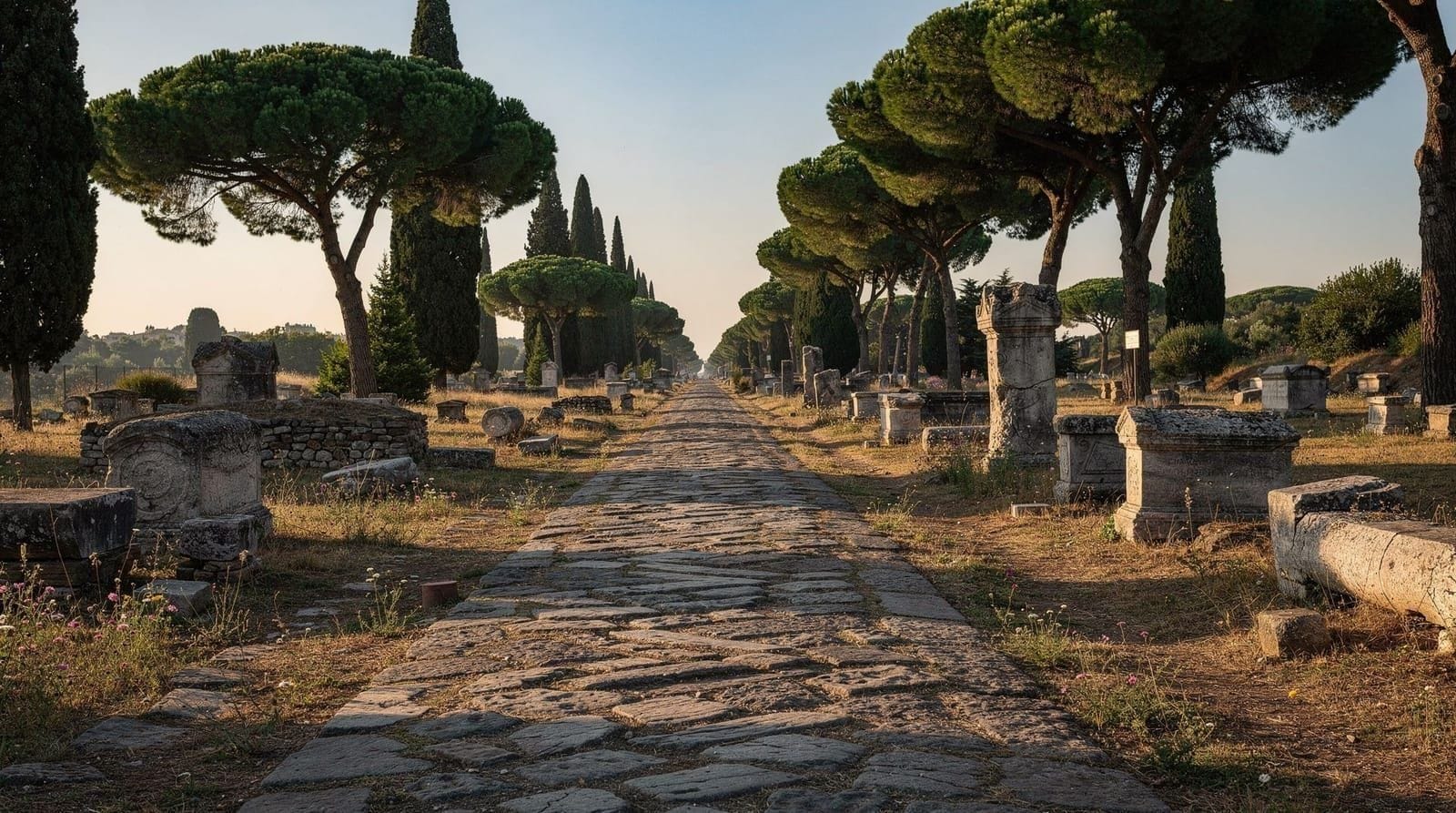
- Decumanus Maximus (main street): 1.5km long, with intact pavement, shops and apartment block façades.
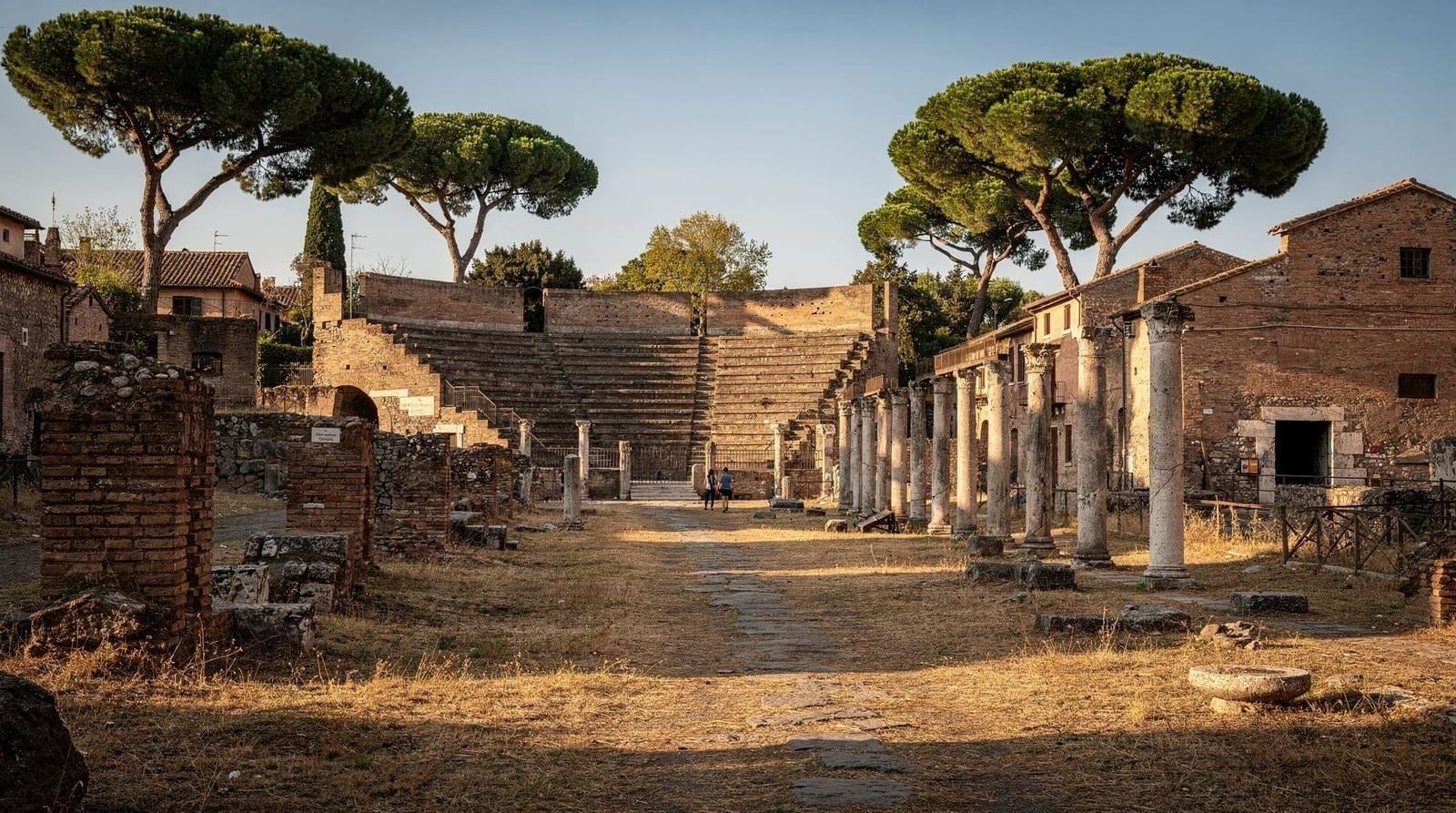
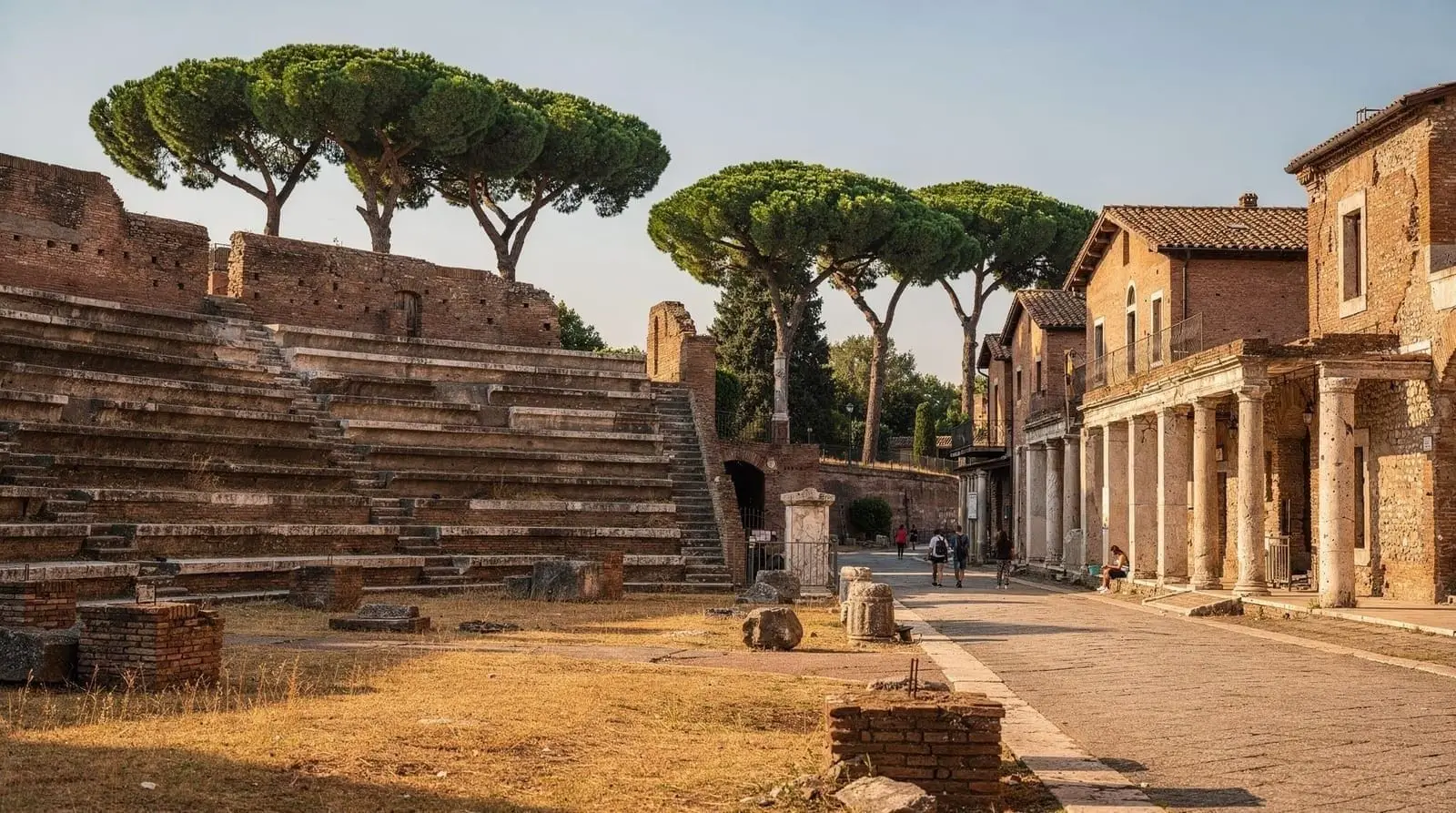
- Theatre of Ostia (2nd century CE): 4,000 seats, still used for outdoor performances in summer.
- Piazzale delle Corporazioni (Guild Square): 61 mosaic floors of commercial guilds from across the Roman world — ships, elephants, dolphins — each representing a trading company. Extraordinary concentration of Roman commercial art in situ.
- Thermopolium (ancient fast-food counter): Several preserved examples with counters and storage jars still in position.
- Synagogue (4th century CE): The oldest synagogue remains in Western Europe, testifying to Ostia’s cosmopolitan merchant population.
- Baths of Neptune: Large bathing complex with well-preserved floor mosaics showing Neptune and sea creatures.
- Insulae (apartment blocks): Multi-storey brick apartment buildings that reveal the ordinary Roman urban living experience — very different from the single-storey Pompeian houses.
What Pompeii offers
Pompeii is the most emotionally powerful ancient site in Italy — and possibly in the world. The time-capsule quality of the preservation, particularly the plaster casts of bodies, makes abstract history viscerally real in a way that no other site achieves.
Key highlights:
- Via dell’Abbondanza (main commercial street): shops, bars, bakeries with millstones still in place.
- Villa of the Mysteries (1st century BCE): Extraordinary fresco cycle depicting Dionysiac initiation rituals — 29 nearly life-size figures in vivid cinnabar red. Outside the main excavation area; requires a 15-minute walk.
- Lupanare (brothel): The most visited single room in Pompeii — tiny but with painted panels above each room indicating services offered.
- Plaster body casts: Several are on permanent display in the Garden of the Fugitives — people who attempted to flee and were caught by the pyroclastic surge. The expressions are preserved. Nothing prepares you for them.
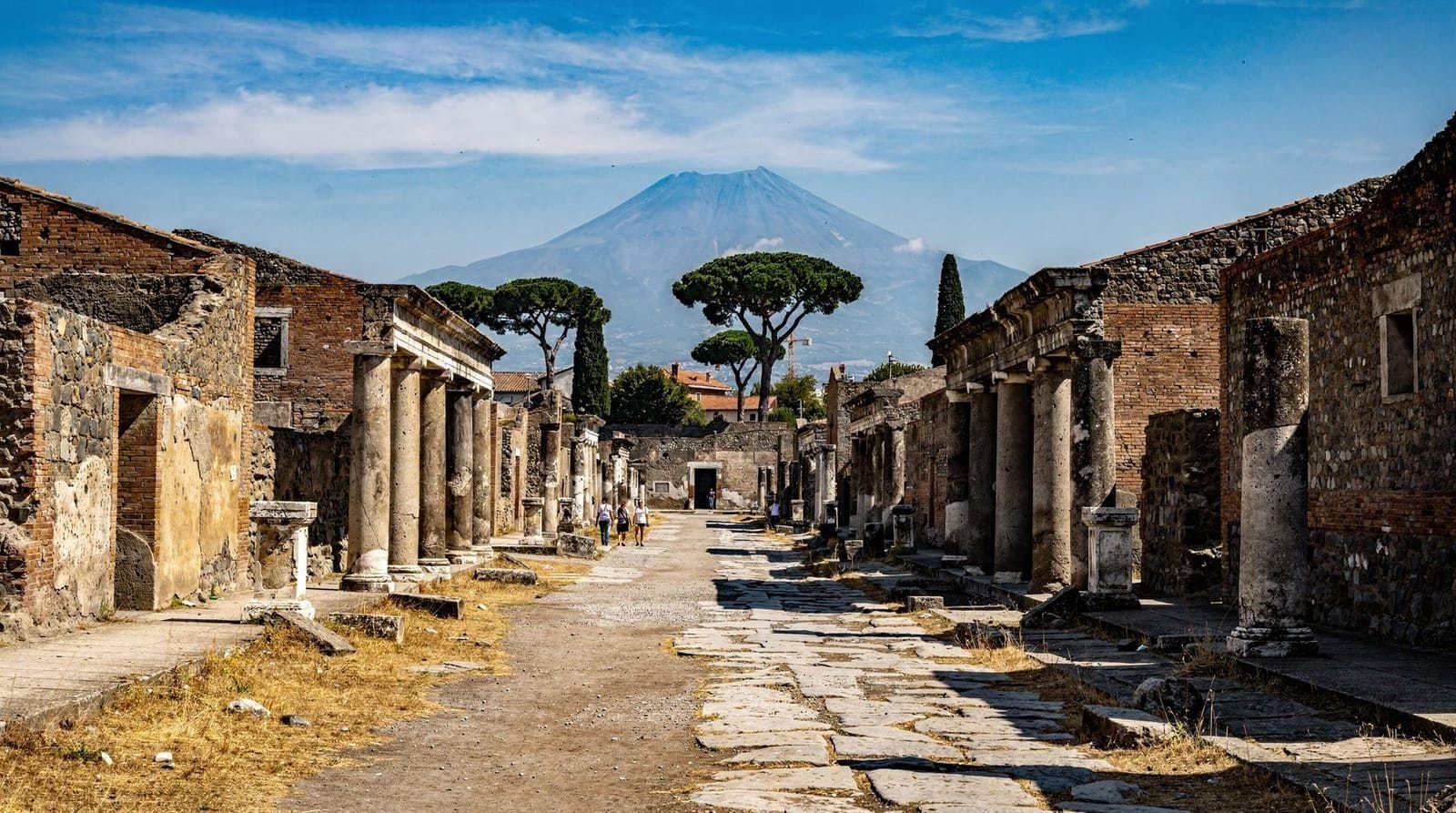
- Forum and Temple of Jupiter: The civic centre of Pompeii with Vesuvius visible in the background — the classic Pompeii photograph.
- House of the Vettii: Recently reopened after restoration; the finest surviving example of a prosperous Roman merchant’s house with complete fresco decoration.
What Pompeii is not: Quick or easy. The site covers 66 hectares; you cannot see it all in one day. The well-preserved frescoes that circulate in travel media are spread across the site and are not all open simultaneously — check the current opening schedule at pompeiiisites.org before arriving.
Full-day Pompeii and Vesuvius trip from Rome — the guided version ensures you see the key sites efficiently including the body casts and fresco highlights that are hardest to find independently.Crowd comparison
Ostia Antica: Genuinely quiet by Italian ancient site standards. Weekdays see very few international tourists; even on summer weekends you rarely feel crowded on the site itself. The size of the excavation — approximately 40 hectares open to visitors — disperses the people effectively.
Pompeii: Very crowded from late morning to mid-afternoon in peak season (April–October). Summer middays are punishing — heat, no shade on the main streets, and 15,000+ visitors daily. Visit on a weekday, arrive at opening (9:00), and plan to leave by 13:00. The western sections (Villa of the Mysteries, House of the Vettii) are significantly less crowded than the central forum area.
Which should you choose?
Choose Ostia Antica if:
- You have 4–5 days in Rome and want to add a half-day ancient site without a full-day commitment.
- Budget is a consideration.
- You want the commercial, everyday-life dimension of Roman urbanism (guilds, apartments, bakeries).
- You prefer fewer tourists and more freedom to wander.
Choose Pompeii if:
- You have or can make a full day for a day trip.
- The emotional impact of a preserved catastrophe site is important to you.
- You can handle 2.5 hours of travel each way.
- This is a once-in-a-lifetime Italy trip and Pompeii is on your essential list.
Choose both if you have time. They complement rather than duplicate each other: Ostia shows you how Romans lived day to day in a port city; Pompeii shows you what that life looked like frozen in a single moment.
See our Ostia Antica day trip guide and Pompeii from Rome guide for full day-trip logistics on each.
What to skip at Pompeii (and what not to miss)
Pompeii’s 66 hectares cannot be seen in a single visit, and not all of it is open simultaneously. The park rotates access to different areas for conservation management. Before visiting, check pompeiiisites.org for the current “open sites” list.
Do not miss:
- Villa of the Mysteries (1st century BCE): 15 minutes’ walk from the main entrance; the fresco cycle depicting Dionysiac initiation is worth the detour and is significantly less crowded than the central forum area.
- House of the Vettii: Recently reopened after long restoration; the best example of a wealthy merchant’s house with complete fresco decoration intact.
- Plaster body casts (Garden of the Fugitives): The most emotionally powerful element of any Pompeii visit. Near the Nocera Gate exit, 10–15 minutes from the main forum.
- Lupanar (brothel): Small, always crowded with a queue, but historical document. Painted panels above each room are primary sources for Roman commercial sexual practices.
- Amphitheatre (eastern section): The oldest surviving Roman amphitheatre in the world, better preserved than most. Less visited than the forum area.
You can skip (if time-pressured): the House of the Tragic Poet (famous for the “Cave Canem” mosaic, but the mosaic is a copy), many of the smaller uninspiring houses with nothing but foundations visible, and the eastern residential grid (largely unexcavated walls without much on-site interpretation).
What to skip at Ostia Antica (and what not to miss)
Ostia is smaller and more navigable than Pompeii, but the same principle applies — a focused visit beats an unfocused one.
Do not miss:
- Piazzale delle Corporazioni (Guild Square): The 61 mosaic shop signs are individually extraordinary — each one a miniature graphic depiction of a merchant’s trade from across the Roman world. This is one of the most concentrated areas of Roman mosaic art outside a museum.
- Theatre (2nd century CE): Regularly used for summer outdoor events; climb to the upper tiers for a view across the site.
- Baths of Neptune mosaic floor: One of the most complete large-scale Roman mosaic floors still in situ anywhere.
- Synagogue (4th century CE, near the Porta Marina exit): Historically extraordinary — the oldest western European synagogue remains. Easy to miss; follow signs from the main Decumanus.
You can skip (if time-pressured): the residential insulae east of the theatre (interesting architecturally but low interpretive value without a guide), the Capitolium area (good foundations but minimal standing structure).
Getting to Ostia Antica: the exact route
The route is simpler than guidebooks often make it sound:
- Take metro Line B to Piramide (or the Roma-Lido train if your accommodation is near a Roma-Lido station).
- From Piramide station, take the Roma-Lido commuter train toward Laurentina/Ostia — direction “Cristoforo Colombo” or “Ostia Lido”.
- Get off at Ostia Antica station (about 30 minutes from Piramide, 4 stops).
- Walk 5 minutes from the station to the site entrance.
The ticket is a standard ATAC ticket (€1.50) or a 100-minute pass. Buy it before you board — the machines at smaller stations can be unreliable.
The train runs every 15–20 minutes; no reservation required.
The honest verdict on guided tours vs self-guided
At Ostia Antica: Self-guided is very feasible. The site provides decent signage, and the layout of the Decumanus makes orientation straightforward. Audio guides (€5 at the entrance) substantially improve comprehension. A guided tour adds expertise but is not essential.
At Pompeii: First-time visitors benefit significantly from a guided tour. The site is large, the contextual signage is inconsistent, and the most emotionally resonant elements (the Villa of the Mysteries fresco interpretation, the plaster cast context, the ergastulum in certain houses) are much more powerful with explanation. If budget is tight, an audio guide (€8) covers the main sites. Plan a guided walk at minimum for the Villa of the Mysteries section.
What the sites reveal about Roman economic life
One of the most valuable comparisons between Ostia and Pompeii concerns what they tell us about Roman economic organisation.
Pompeii shows us a prosperous provincial town of approximately 20,000 people, primarily agricultural in character, with a sophisticated urban economy: specialist shops, taverns, bakeries, a significant commercial district around the forum. The electoral graffiti that cover the walls of Pompeii reveal a politically engaged merchant class — fullers, bakers, and fishermen all endorsed candidates and posted their own commercial announcements.
Ostia Antica shows us something different: an international commercial hub. The Piazzale delle Corporazioni (Guild Square), adjacent to the theatre, contains 61 small offices arranged around three sides of a portico, each belonging to a mercantile corporation from a different port city. The mosaic emblems outside each office — an elephant for dealers from North Africa, dolphins for maritime traders, a lighthouse for the guild that managed lighthouse fees — constitute an extraordinary catalogue of Roman global trade. Ships from Carthage, grain merchants from Alexandria, cork importers from Sardinia: all of them maintained offices in Ostia.
The insulae (apartment blocks) of Ostia are also more informative about ordinary urban life than anything at Pompeii. Pompeii’s housing is primarily single-storey domus (townhouse) format. Ostia has surviving multi-storey apartment buildings with commercial ground floors, residential upper floors, and communal facilities — much closer to modern urban residential architecture than the Pompeian model.
Day-trip logistics: getting to Pompeii step by step
The logistics of Pompeii from Rome are straightforward but need rehearsal:
- From Roma Termini station (or Tiburtina), take a Frecciarossa or Frecciabianca high-speed train to Napoli Centrale (~1h15). Book in advance (from €14.90 on Italo, from €18 on Trenitalia). Avoid regional trains — they take 2.5+ hours.
- From Napoli Centrale, take the Circumvesuviana train (lower floor of the station, separate ticket, ~€3.20) toward Sorrento. Get off at Pompei Scavi – Villa dei Misteri (25–30 minutes).
- The site entrance is 200 metres from the station.
Total travel time from Rome: approximately 2h–2h30 each way. This is why it is a demanding day trip — you lose 4–5 hours to travel for a 5–6 hour site visit.
Entry: €18 adult (EU reduced rates apply; children under 18 free). No timed entry slots required currently for general access, though guided tours have specific times. Book online to avoid queues at the ticket booths.
Depart Pompeii by 15:30 to comfortably catch a high-speed train back to Rome — the last direct Frecciarossa typically departs Naples around 20:00, and the Circumvesuviana back to Naples takes 30 minutes. Missing connections leads to very late returns.
Weather and seasonality comparison
At Ostia Antica: The site is good in almost all seasons. Spring (March–May) is ideal — pleasant temperatures, green vegetation contrasting with the ancient brickwork. Summer mornings (arrive before 10:00) are manageable. Autumn is excellent. Winter is quiet and often atmospheric. The site is open in rain (bring an umbrella — there is limited cover).
At Pompeii: Summer is genuinely unpleasant in the midday heat — the site has very little shade over its 66 hectares, and July–August temperatures in the Campania inland reach 35–38 °C. Visit Pompeii in April, May, September, or October if at all possible. The November–March period offers dramatic atmosphere and almost no crowds, with the cost of occasional rain and cool temperatures.
A note on rain: Ostia Antica’s site is largely open ground with a handful of covered areas near the theatre and entrance; a rainy day is manageable with a poncho and reduces crowds further. Pompeii’s exposed streets make rain considerably more disruptive to a full day’s plan, since there is little shelter across its wider footprint — check the forecast the night before and be ready to shift a Pompeii day to a clearer slot in your itinerary if possible.
Ostia Antica guided tour from Rome — a guided walk through the ancient port city with a licensed archaeologist who contextualises the commercial and social history.Fitting either into a broader Rome itinerary
Neither site needs to be an isolated decision. If your trip already includes a dedicated ancient Rome in one day itinerary covering the Colosseum, Roman Forum and Palatine Hill, Ostia Antica pairs naturally as a lower-intensity half-day addition later in the same trip — it does not compete for the same energy or attention as the big three central sites. Pompeii, by contrast, effectively needs its own full day and works best scheduled with a lighter day either side of it, given the early start and late return.
Travelers building a wider day-trips plan should also weigh both against Rome’s other classic excursions — Appian Way and the aqueducts is a shorter, closer half-day alternative to Ostia Antica if ancient engineering interests you more than urban life, and our best day trips from Rome guide ranks all of these options against each other. For anyone assembling multiple train-based excursions across a longer stay, day trips by train from Rome covers the booking mechanics common to both journeys.
Frequently asked questions
Can I visit both Ostia Antica and Pompeii on the same trip?
Yes, and it is a genuinely good combination if you have 5 or more days in the Rome area. Do Ostia Antica as a half-day early in the trip — it requires little planning and no advance train booking — then reserve a full day later in your stay for Pompeii, ideally with tickets and high-speed train seats booked a couple of weeks ahead. Doing them on consecutive days is possible but tiring; spacing them out gives better energy for both.
Which is better for children — Ostia Antica or Pompeii?
Ostia Antica is generally easier with younger children: shorter travel time, smaller effective walking distance if you focus on the highlights, and less emotionally intense subject matter. Pompeii can be very engaging for children old enough to process the volcanic eruption story and the plaster casts, but the full day of travel and heat (in summer) is demanding for younger kids. For families with children under about 8, Ostia Antica is the lower-stress choice.
Top experiences
Bookable activities with verified prices and instant confirmation on GetYourGuide.