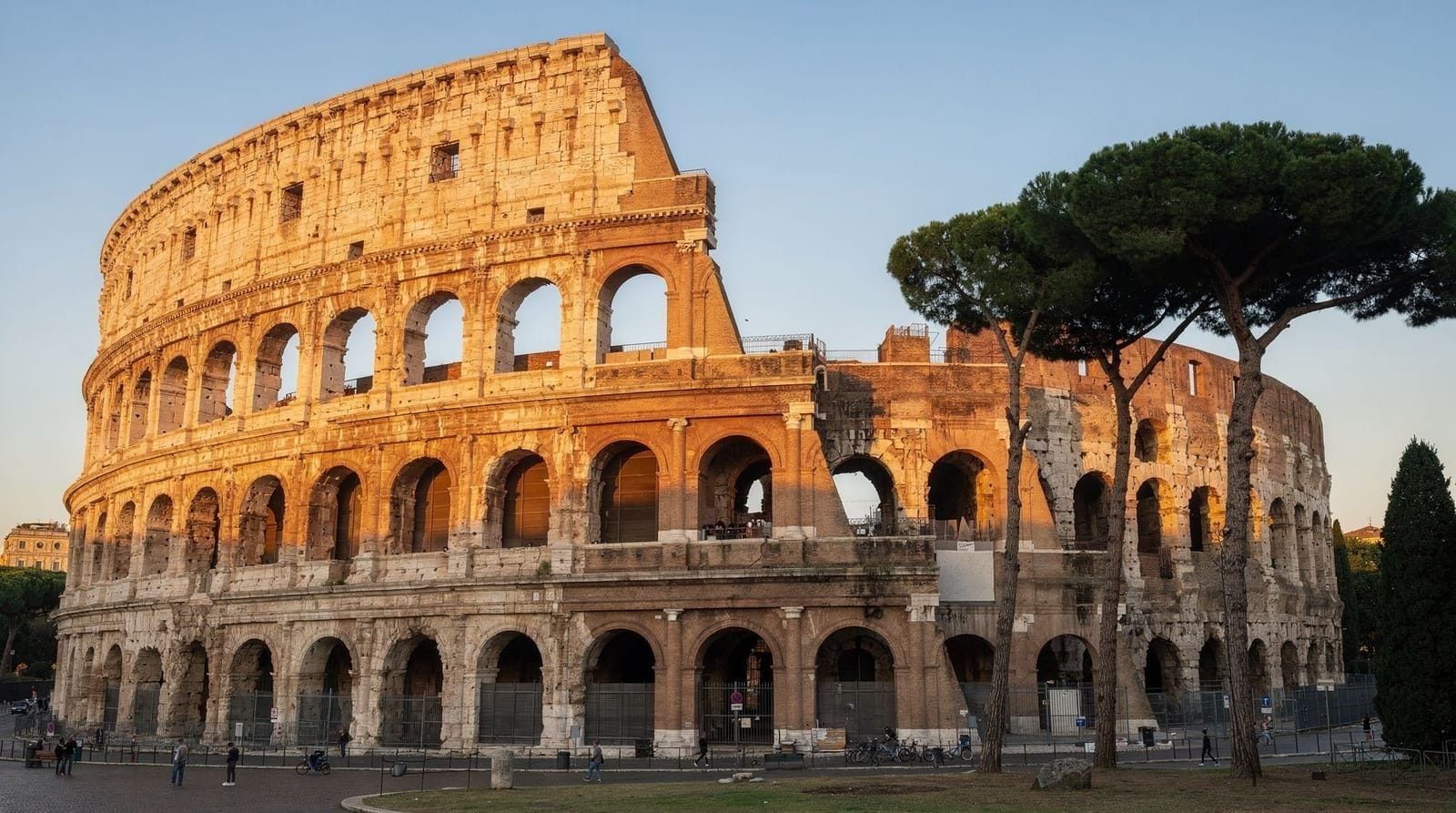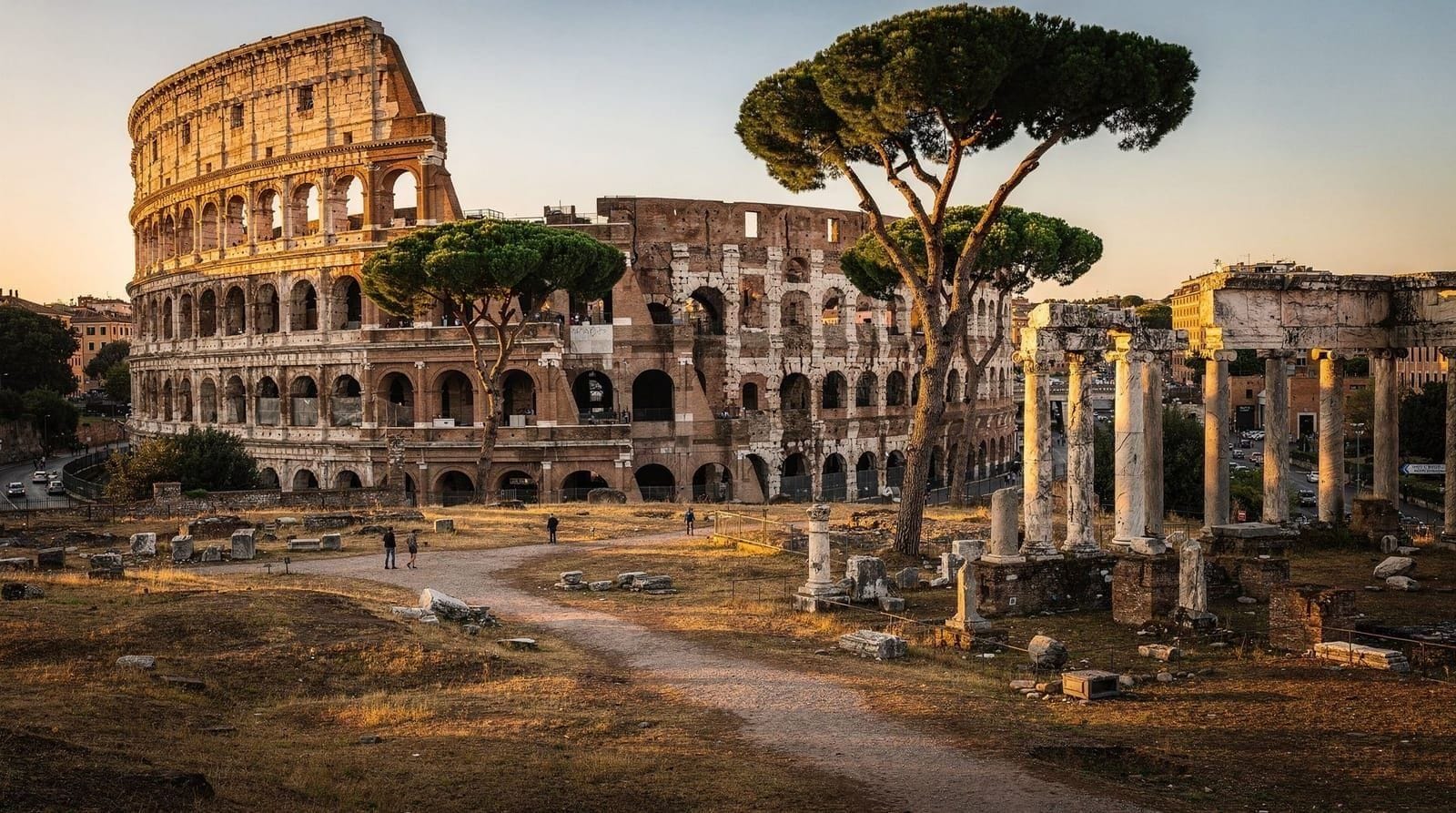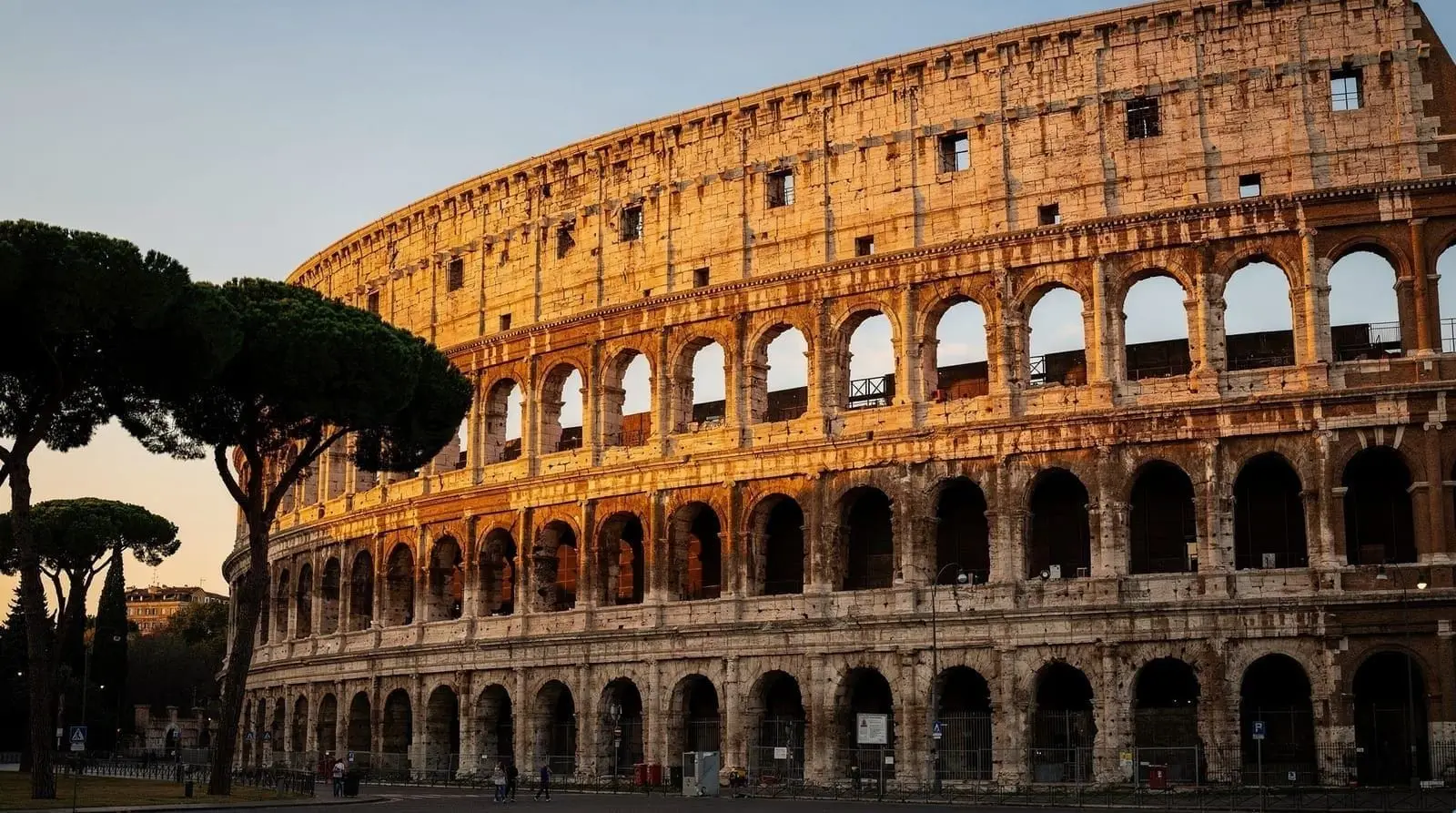
Colosseum arena floor and underground: is the upgrade worth it?
Rome: Skip-the-Line Colosseum and Arena Floor Guided Tour
Duration: 1.5 hours
What does the Colosseum underground and arena floor experience include?
The Full Experience ticket (approximately €22) gives you access to the hypogeum — the subterranean network of corridors, cages and lift mechanisms beneath the arena — and the partial reconstructed arena floor itself. The hypogeum visit is guided in timed groups of roughly 30–40 people. You emerge onto the arena floor at the end. Standard tickets cover only the seating tiers.
What actually lies beneath the Colosseum
Most visitors see only the seating tiers of the Colosseum and leave thinking they have experienced it fully. The underground hypogeum — the labyrinthine service network below the arena floor — is the part that changes perspective most dramatically.
The hypogeum was the operational heart of the spectacles. It housed the lift and pulley systems (Roman engineers used counterweights and capstans) that hoisted animals, scenery and gladiators through trapdoors onto the arena floor. At its peak, the system could operate 28 lifts simultaneously. Exotic animals — lions, bears, ostriches, giraffes brought at enormous expense from across the empire — were held in cages and release chutes here, often for days before their arena debut. The smell and noise must have been extraordinary.
The wooden arena floor was removed in the 19th century by archaeologists who wanted to expose the hypogeum. The partial reconstruction visible today represents a portion of what the original floor covered — perhaps 40% of the full arena.
| Where | Colosseum, central Rome — combined with Forum/Palatine entry |
| Cost | Around €22 adult (Full Experience) vs €18 standard |
| Time needed | 45 min hypogeum tour + 15-20 min on the arena floor |
| Booking | 6-8 weeks ahead in peak season (April-October) |
| Best for | First-timers and return visitors alike — the top Colosseum upgrade |
The Full Experience ticket: what it costs and what you get
As of 2026, the Full Experience ticket costs approximately €22 for adults (vs €18 standard). The addition covers:
- Underground hypogeum tour: A guided 45-minute walk through the service corridors, cage areas and lift zones beneath the arena. Groups are capped (typically 25–40 people), with an English-speaking guide provided by Coopculture.
- Arena floor access: After the underground tour, you emerge via a staircase onto the reconstructed arena floor. Time on the floor is typically 15–20 minutes before the group moves on.
- All standard access: Tiers 1, 2 and the Roman Forum/Palatine Hill combination is included.
The SUPER variant (approximately €24) occasionally adds access to the highest Belvedere terrace — available on specific dates and times; check the official booking site.
There is also a dedicated night version: the Colosseum by night tour with underground and arena floor access runs on selected evenings (typically Thursday–Saturday, April–October). Crowds are minimal and the atmosphere is remarkable; see below.
Is the upgrade worth it?
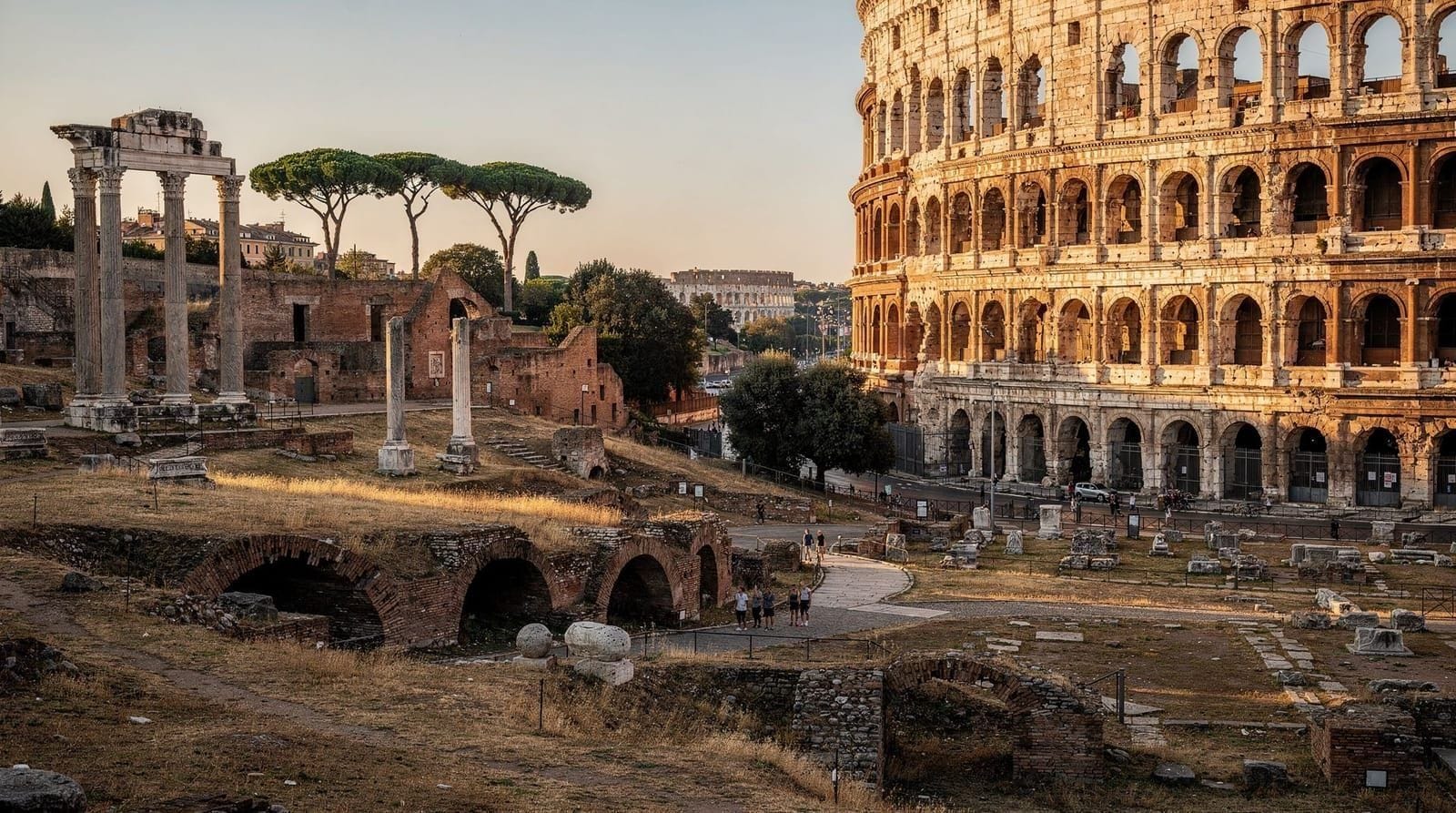
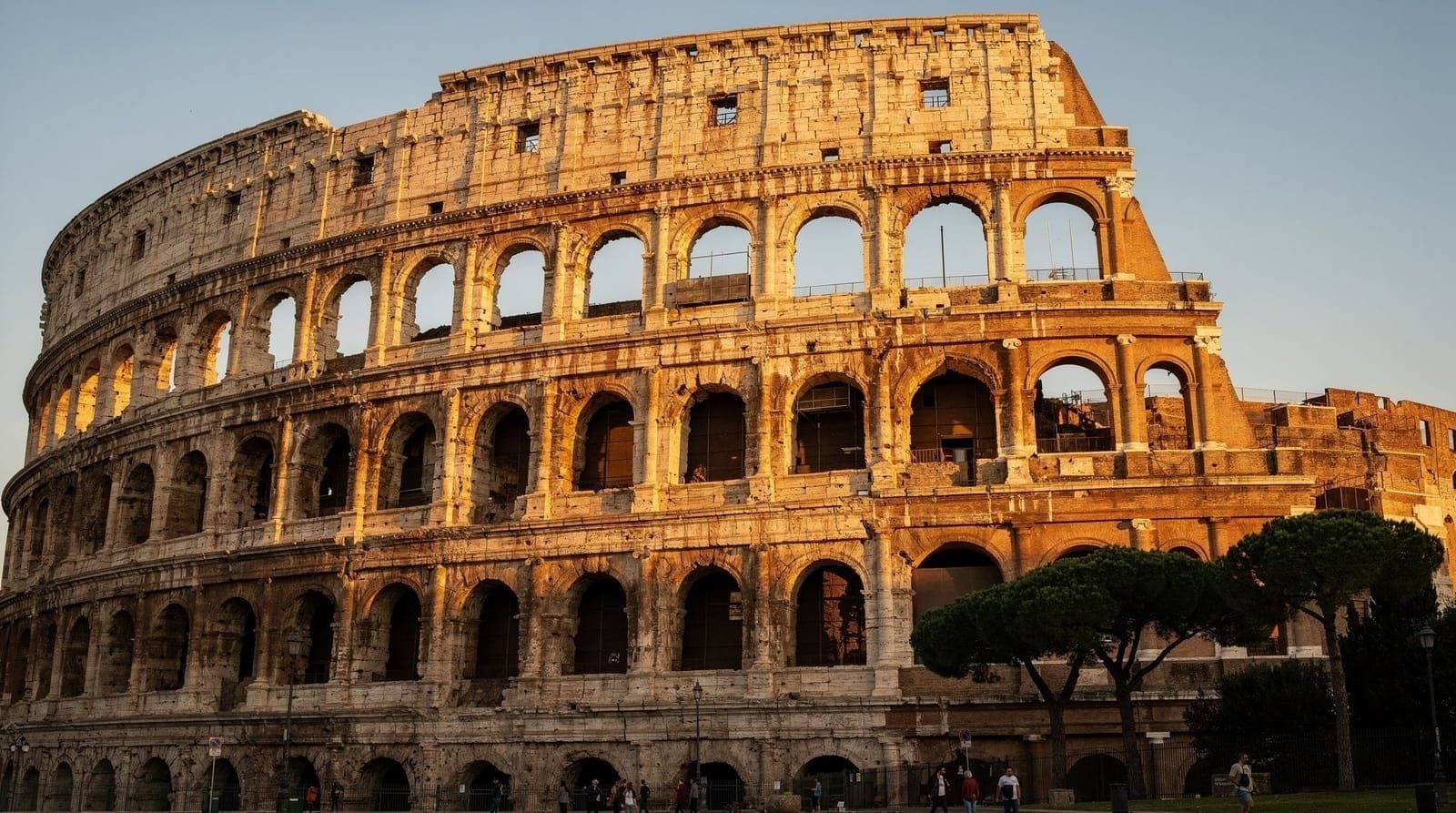
For a first-time visitor: yes, unambiguously, provided you can book a slot (they sell out quickly). The arena floor gives the entire Colosseum a human scale that the seating tiers do not. Standing on the floor, looking up at four storeys of arched galleries, with the Palatine Hill visible over the upper rim, is as close as you can get to experiencing what a gladiator experienced.
For a return visitor or someone who has already seen the standard Colosseum: emphatically yes — the underground is the reason to visit again.
For budget travellers who genuinely cannot absorb the premium: the standard ticket still gives a very good experience. The choice is roughly between €4 extra cost for a substantial upgrade in immersion.
Practical limitations: The hypogeum tour requires walking on uneven surfaces and some narrow passages. It is not accessible for wheelchair users (the arena floor surface itself is accessible, but the underground corridors are not). Guests with severe claustrophobia should be aware that some sections are low-ceilinged and tunnel-like.
This guided tour includes skip-the-line entry plus full arena floor and underground access — the most complete way to experience the Colosseum in a single visit.How to book the arena floor and underground
The Full Experience slots are released in smaller batches than standard tickets and sell out significantly faster — particularly in April–May and September–October. The practical booking window for peak season is 6–8 weeks in advance.
Steps:
- Go to coopculture.it and select Colosseum Full Experience.
- Choose your date and the hypogeum tour time (usually starts 20–30 minutes after your Colosseum entry slot).
- Enter nominative details for every visitor.
- Pay and receive your QR code confirmation.
The underground tour typically runs in fixed starting times (e.g., 9:30, 10:30, etc.) — your Colosseum entry slot needs to be at least 30 minutes before your hypogeum tour start time to allow you to get through the main entrance queues.
If slots are sold out: Check at 8:00 AM on the day — cancellations sometimes free up slots. Alternatively, a licensed guided tour operator (like the ones linked from this page) sometimes has access to allocated slots that individual booking cannot see; this is one genuine advantage of booking through a tour.
The Colosseum by night: underground experience after dark
The night version is a different product entirely: smaller groups (often 15–20), atmospheric lighting in the hypogeum, and the arena floor at night with the Arch of Constantine lit up in the background. Runs approximately 2 hours. Priced at around €25–30 including the guided component.
Booking is equally competitive — Friday and Saturday evening slots go within hours of release. The combination of dramatically reduced crowds, lower temperatures (critical in summer), and the theatrical lighting makes the night tour arguably the best single Colosseum experience available.
The Colosseum by night with underground and arena floor tour — limited groups, powerful atmosphere, and much cooler than the daytime version in summer.What to know before you arrive
Bag size: No bags larger than carry-on (approximately 40×30×15cm) permitted inside. Bag storage at Via Nicola Salvi (€5–7, 5 minutes’ walk from the entrance).
Photography: Full photography permitted in the hypogeum and on the arena floor. No flash, no tripods without permit. The arena floor offers the best interior photograph of the entire Colosseum — shoot from the centre looking up toward the arches.
Shoes: Avoid smooth-soled shoes; the hypogeum floor includes original stone surfaces, some of which are uneven and can be slippery if damp. Trainers or rubber-soled shoes are ideal.
Exit: After the arena floor, you exit back through the main seating tiers. Your combined ticket allows you to continue directly to the Roman Forum (accessed via the connecting path) for the rest of the day.
Combining the underground visit with nearby ancient sites
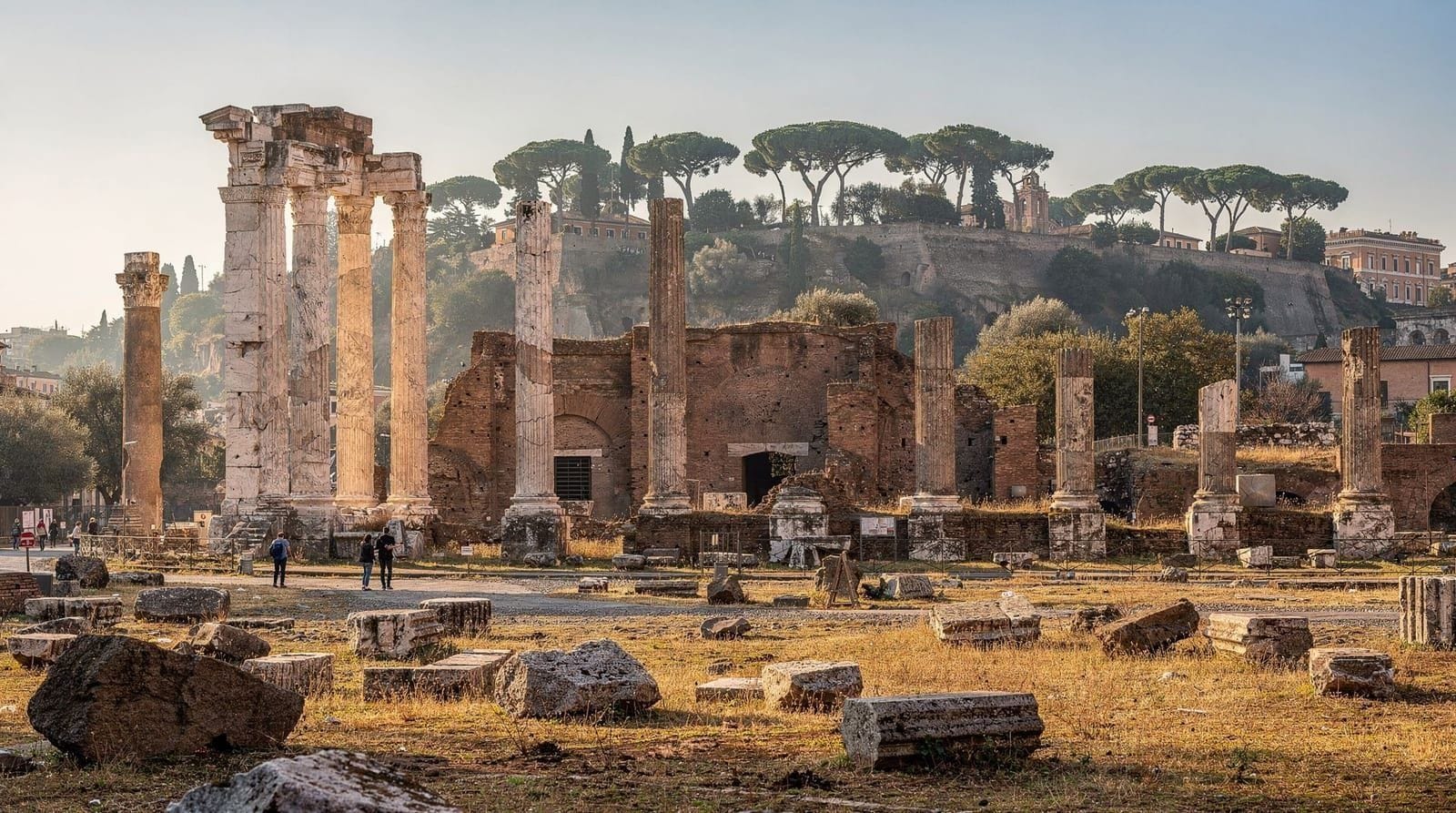
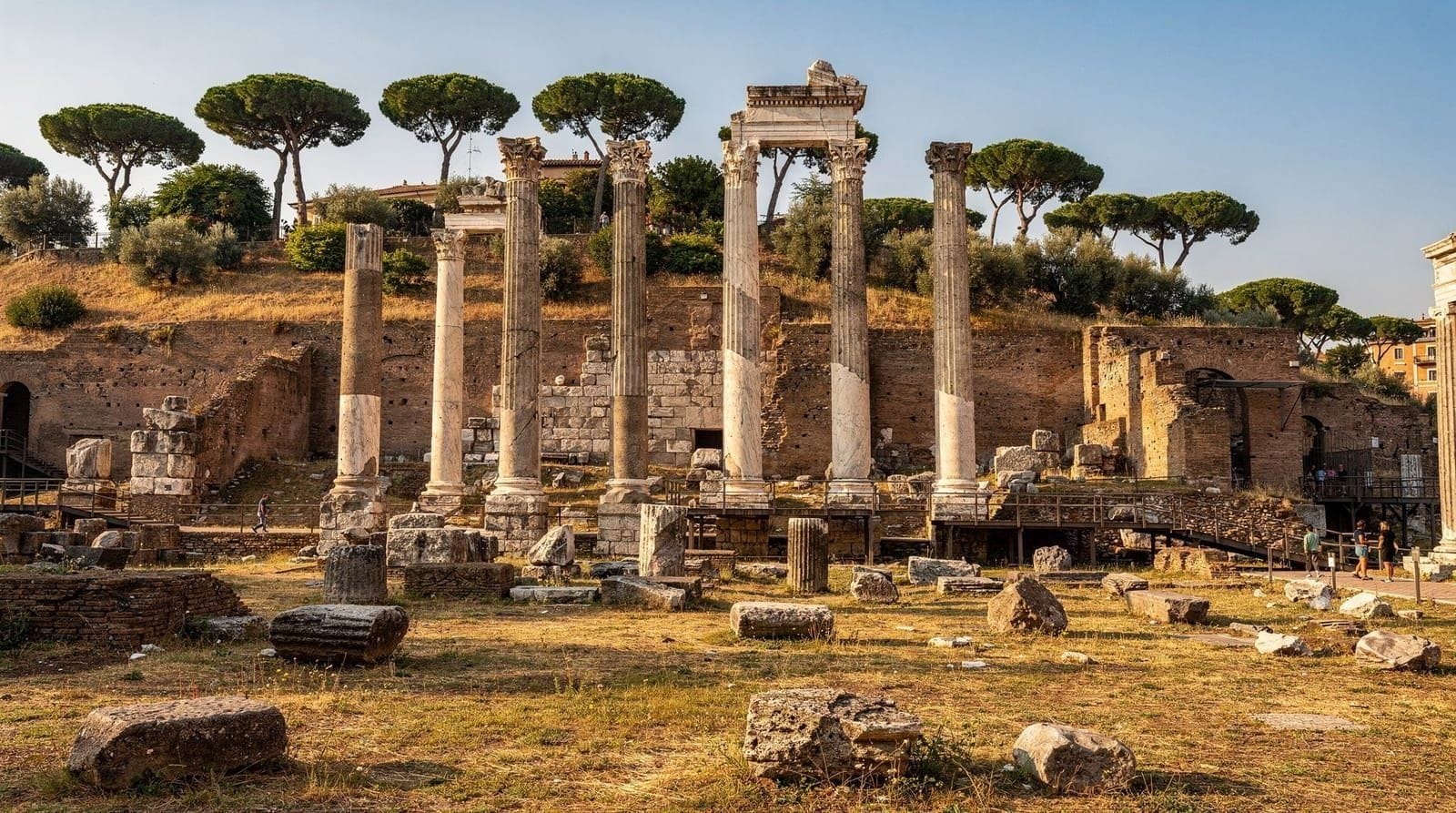
The underground experience pairs naturally with a visit to the Roman Forum immediately afterward (5 minutes’ walk, covered by your combined ticket). See our Roman Forum guide.
For the deeper story of Rome below street level — catacombs, Mithraeum, the Domus Romane under Palazzo Valentini — see our catacombs and underground guide.
The Domus Aurea (Nero’s Golden House), on the Oppian Hill directly above the Colosseum’s northwest side, is another underground experience with a separate ticket. The combination of Domus Aurea in the morning and Colosseum underground in the afternoon makes for a coherent day in Rome’s buried layers. See our Domus Aurea guide.
For the full ancient Rome day plan including all three Colosseum/Forum/Palatine sites plus other nearby ruins, see our ancient Rome in one day guide.
Practical checklist
- Book Full Experience slot 6–8 weeks ahead in peak season (April–October)
- Enter visitor names exactly as they appear on ID
- Arrive 10–15 minutes before Colosseum entry (not hypogeum tour time)
- Bring water — no water inside the Colosseum
- Wear rubber-soled shoes for the underground passages
- Download QR code offline — mobile data is patchy inside
- Check bag size against the 40×30cm limit before leaving your accommodation
The hypogeum in historical context
The word “hypogeum” comes from the Greek for “under the earth.” Roman amphitheatres across the empire had underfloor service systems, but the Colosseum’s was the most elaborate. Documentary sources — including the satirist Martial, who wrote extensively about the Flavian Amphitheatre’s inaugural games in 80 CE — describe astonishing theatrical effects: wild animals appearing as if from nowhere, complex scenery changes that suggested different landscapes, water effects.
The engineering behind these effects was almost entirely hidden from the audience above. A spectator sitting in the upper tiers would have seen the arena floor as a seamless surface, with the trapdoors invisible against the surrounding sand. The emergence of a lion or a bull through a trapdoor was designed to appear supernatural — the creature erupting from the earth without any visible mechanism.
The hypocaust system (underfloor heating) visible in the Baths of Caracalla uses similar principles, but the Colosseum’s underground was purpose-built for spectacle rather than temperature regulation. The corridors are wider, the lift wells are positioned to maximize theatrical impact on the arena floor above, and the service passages are arranged to allow rapid movement of both animals and human combatants without creating dangerous congestion.
What the gladiators actually experienced underground
Gladiators in the hypogeum were waiting, not performing. The cages and holding areas were designed to keep fighters separated until their bout was called. Evidence from bone analysis of gladiatorial remains found at several Roman sites (most famously Ephesus, Turkey) suggests the fighters had deliberately high-calcium, plant-rich diets — the “barleyfed” description from ancient sources supported by physical evidence. These were trained professionals, not random slaves.
The experience of waiting in the hypogeum before entering the arena — listening to the crowd above, the sounds of other bouts transmitted through the floors, the bellowing of animals in adjacent cages — is something the VR overlays at some Colosseum tours attempt to reconstruct. The acoustic reality would have been extraordinary: 50,000+ spectators directly above, separated only by the wooden arena floor and several metres of air.
What the arena floor reconstruction gets right and wrong
The current arena floor is a 21st-century reconstruction — approximately 40% of the original full floor area, covering the central and southern sections of the oval. The reconstructed surface is made from modern materials (weather-resistant composite board rather than original timber) designed to be walked on by visitors and to convey the spatial experience without pretending to be original.
What it gets right: the scale. Standing on the reconstructed floor and looking up at four storeys of arched galleries immediately communicates the overwhelming nature of the performance space. The Colosseum from the inside of the seating tiers is impressive; from the floor level it is viscerally powerful in a different way.
What it cannot convey: the sand (arenas were covered in sand to absorb blood and improve footing — the Latin word for sand is “arena,” which is how amphitheatre performance spaces got their name), the smell, the heat, the noise. Historical accounts suggest arena performances were accompanied by music (organ and horns) and constant crowd noise that would have been deafening in the enclosed space.
Photography on the arena floor
The arena floor provides the single best photographic opportunity inside the Colosseum. From floor level:
- Looking northeast toward the Palatine Hill (visible over the upper rim) — the hill that once contained the emperor’s palace watching the same arena gives spatial context.
- Looking up at the dome of arches from below — the four-storey perspective is only achievable from this angle; the seating tiers recede in concentric ellipses upward.
- The hypogeum opening (if the underground section you visited is still partly open to view) — the contrast between the wooden floor surface and the brick corridors below communicates the layered engineering at a glance.
Time on the arena floor is typically 15–20 minutes; use it deliberately. The guided tour group will move on when the guide signals — there is no option to linger independently once the group starts moving.
Booking the underground as part of a tour vs independently
The official booking through coopculture.it gives you the standard hypogeum guided tour with a Coopculture guide — English, Italian, French and Spanish groups available at different starting times. The quality of individual guides varies; some are archaeologists, some are generalists.
Third-party licensed tour operators sometimes offer the same underground access with their own specialist guides. These can be booked through the tour platforms (same GYG keys linked from this guide). The advantage: you may get a guide with deeper archaeological expertise or a smaller group. The disadvantage: more expensive than the official booking.
For most visitors comparing the two, the deciding factor is how much a smaller group and a specialist guide are worth in euros. A family that wants extra flexibility on timing, or travellers who specifically want an archaeologist rather than a generalist guide, tend to find the third-party premium worthwhile; solo travellers on a tighter budget do just as well with the official Coopculture booking, since the physical space and content are identical either way.
The underground is the same physical space regardless of which booking you use — the difference is entirely in the guide quality and group size.
For the full combined Colosseum, Forum and Palatine day with an expert guide covering all three sites, see our complete Colosseum, Forum and Palatine guide.
The arena floor as theatrical space
Understanding the arena floor requires understanding that the Colosseum was first and foremost a theatre — not for plays but for elaborately staged spectacles. The Romans called it venatio (animal hunts), munera (gladiatorial combat), or naumachiae (mock naval battles, which required flooding the arena — documented only for the earliest period, before the hypogeum was built).
The arena floor staging was sophisticated. Literary sources describe complex scenery transformations: a forest rising from the arena floor between events, landscape elements appearing and disappearing, the illusion of exotic environments created to frame the animals or gladiators performing within them. The trapdoors in the arena floor — some quite large — allowed these elements to be raised and lowered quickly.
Martial’s “Liber Spectaculorum” (written for the inaugural games, 80 CE) includes a poem describing a rhinoceros being used to toss a bear, a crocodile brought from Egypt, and a trained bull — all performing in what he presents as a marvel of nature, but which was clearly carefully stage-managed by handlers in the hypogeum.
Ticket scams for the arena floor add-on
The arena floor and underground add-on is specifically targeted by third-party resellers charging significantly above the official price. Common patterns:
- Websites with official-sounding names (e.g., “rome-colosseum-official.com”, “colosseum-tickets-priority.com”) appear at the top of Google search results with paid advertising
- They sell the same ticket for €35–60 that costs €22–24 on the official site
- Some bundle it with a “certified guide” who turns out to be a volunteer docent or audio-guide handover
How to identify legitimate booking: The official URL for Colosseum tickets is coopculture.it (operated by Coopculture on behalf of the Ministry of Culture). The URL should show .it and reference Coopculture directly. Legitimate third-party tour operators are transparent about the official ticket component and their service fee.
If you have already booked through a third-party site and are unsure whether your booking is valid: your confirmation email should include a QR code barcode linked to the official Colosseum ticketing system. Test it at home (the barcode should be scannable with a standard QR reader) before traveling.
Managing children in the underground
The underground hypogeum is not recommended for very young children (under 5) primarily because of the guided tour format — timed groups moving continuously for 45 minutes with no opportunity to pause or exit. Children who may need bathroom breaks or who have difficulty with confined spaces should consider the standard ticket only.
Older children (6+) typically find the underground compelling rather than frightening. The historical context of gladiators and animals is something children engage with vividly — and the physical reality of walking through the same corridors is something no museum exhibit replicates. Parents should brief children on what they will see before arriving (the corridors, the dark sections, the lift-shaft openings) to manage expectations.
The arena floor itself is fully accessible for children and is, for most, the highlight of the entire Colosseum experience — the scale of the oval seen from the floor is immediately comprehensible to children in a way that the seating tiers are not.
Accessibility and the underground
The underground hypogeum is not currently wheelchair accessible. The corridors involve original Roman stone flooring with uneven surfaces, steps at several points, and some sections of restricted ceiling height. This is unlikely to change without significant structural intervention that the conservation authorities do not currently permit.
The arena floor section itself has improved accessibility — the floor surface is modern composite, level, and accessible via a ramp from the Colosseum’s ground floor. Wheelchair users who cannot access the underground can visit the arena floor independently during standard visiting hours, though not via the underground corridor route.
Contact Coopculture before your visit if accessibility is a specific requirement — there may be specific time slots or assistance available that are not published on the standard booking page.
Frequently asked questions
Is the arena floor add-on worth it if I’ve already booked the standard ticket? You cannot upgrade after booking a standard ticket for the same slot — the Full Experience is a separate ticket type booked from scratch. If your standard ticket is still weeks away, cancel and rebook (subject to the platform’s cancellation policy) rather than trying to add the underground on arrival, which is not possible at the gate.
Should I do the day tour or the night tour if I can only choose one? The night tour is the better experience if your schedule and budget allow it — smaller groups, dramatically reduced crowds, and the arena floor under lighting with the Arch of Constantine illuminated behind it. The day version is more practical logistically since it connects directly into the same-day Forum and Palatine visit; the night version is a standalone evening activity.
For how this fits into the full Colosseum, Forum and Palatine circuit, see our complete guide, and for the practical step-by-step of booking any Colosseum ticket, see Colosseum booking step by step.
Top experiences
Bookable activities with verified prices and instant confirmation on GetYourGuide.