Orvieto
Orvieto: 1h by direct train from Rome, one of Italy's finest Gothic cathedrals, a funicular, and Etruscan tunnels. The most underrated day trip from Rome.
Day Trip from Rome to Orvieto & Civita di Bagnoregio
Quick facts
- Train from Rome
- Direct Regionale / Intercity from Roma Termini — 1h05–1h20
- Train cost
- €9–€19 each way (no high-speed needed)
- Day trip feasibility
- Ideal — one of the easiest day trips from Rome
- Funicular
- €1.30 from the station to the old town (included in combined ticket)
- Best time
- March–June and September–November
- Crowd level
- Much less crowded than Florence or Siena
Why Orvieto is one of Rome’s best day trips — and most overlooked
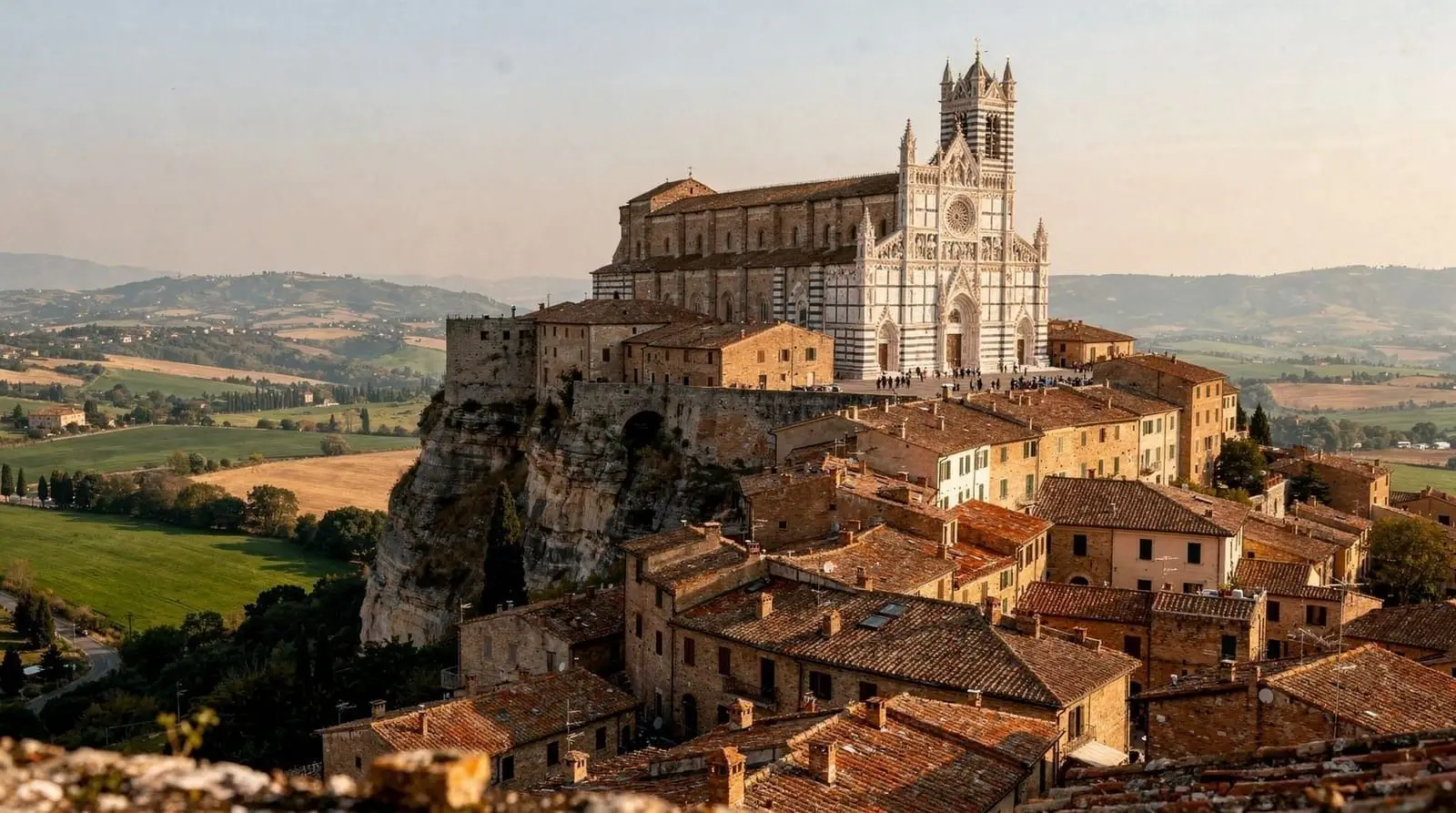
Orvieto solves a problem many Rome visitors have: they want a day trip that doesn’t require a two-hour train, complex connections, or expensive tickets. Orvieto is 1 hour and 5 minutes from Roma Termini by direct regional train. A return ticket costs €9–€19. A funicular (€1.30) carries you from the station up to the old town on its tufa cliff. You step off the funicular and you’re immediately inside a medieval Umbrian city with one of the most decorated Gothic cathedrals in Italy.
Most tourists come here on the way to somewhere else, or skip it entirely. That’s their loss.
This guide covers the full day: the Duomo, the underground city, the wine, and what to do if you want to combine Orvieto with Civita di Bagnoregio for a more ambitious excursion.
Getting there by train
Direct trains from Roma Termini to Orvieto run approximately every 60–90 minutes on the main Roma–Firenze regional line. Journey time: 1h05–1h20.
Operators: Trenitalia Regionale and some Intercity services. Book at trenitalia.com or buy at the station. Ticket: €9–€19 each way depending on service type and how early you book.
The arrival: Orvieto train station (Orvieto Scalo) is at the base of the cliff. The old town (Orvieto Alta) is at the top. Take the funicular from a covered building immediately adjacent to the station — it runs every 10 minutes and costs €1.30. At the top, you can continue by minibus (elettrico) to the Duomo, or walk (15 minutes across the plateau).
Combined tickets: at the station, you can buy a combined Carta Unica Orvieto (€25 approx.) that includes the funicular, bus, and entry to major sites including the Orvieto Underground and the Museo Faina. Worthwhile if you plan to visit multiple attractions.
The Duomo: worth the journey on its own
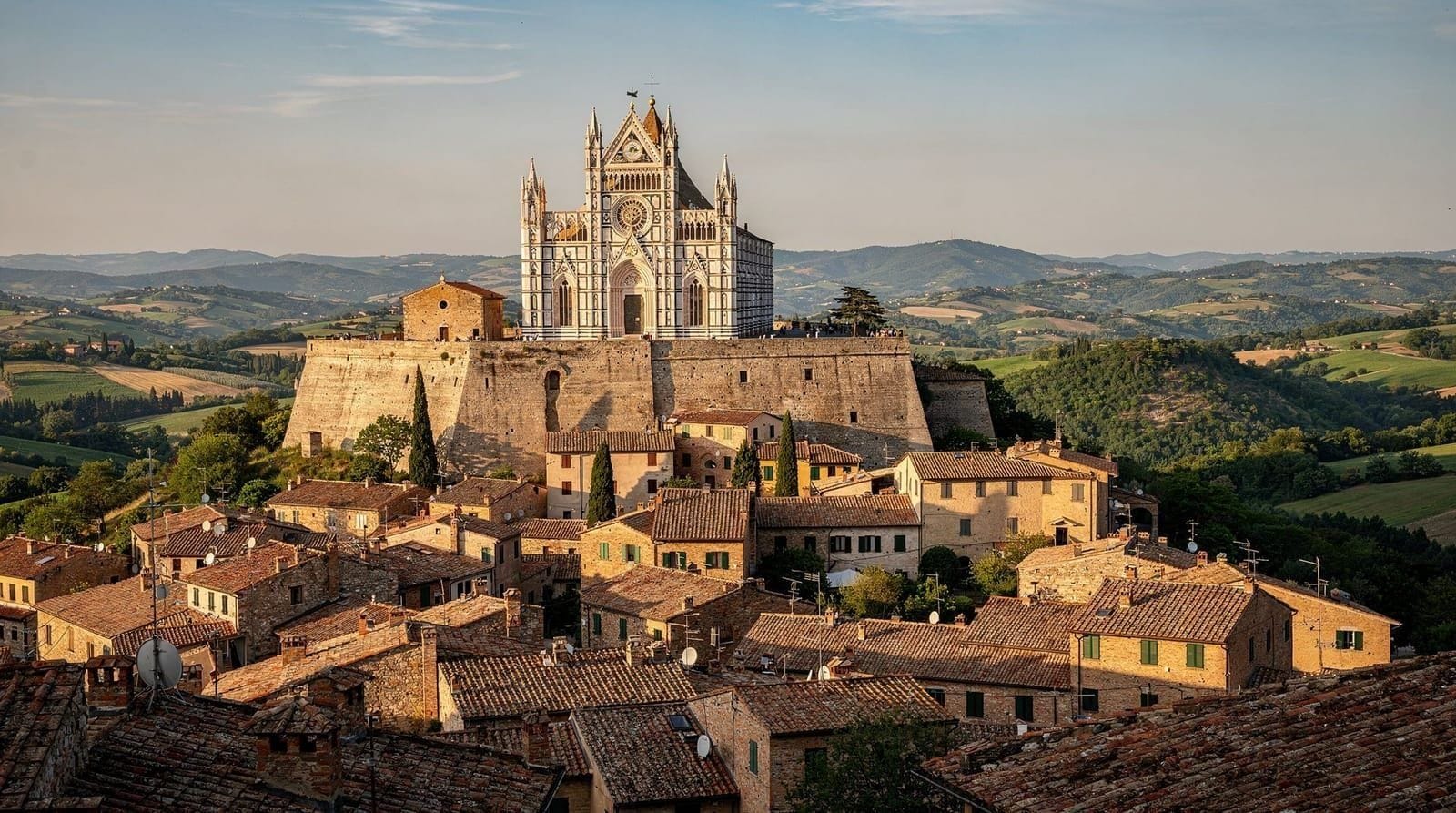
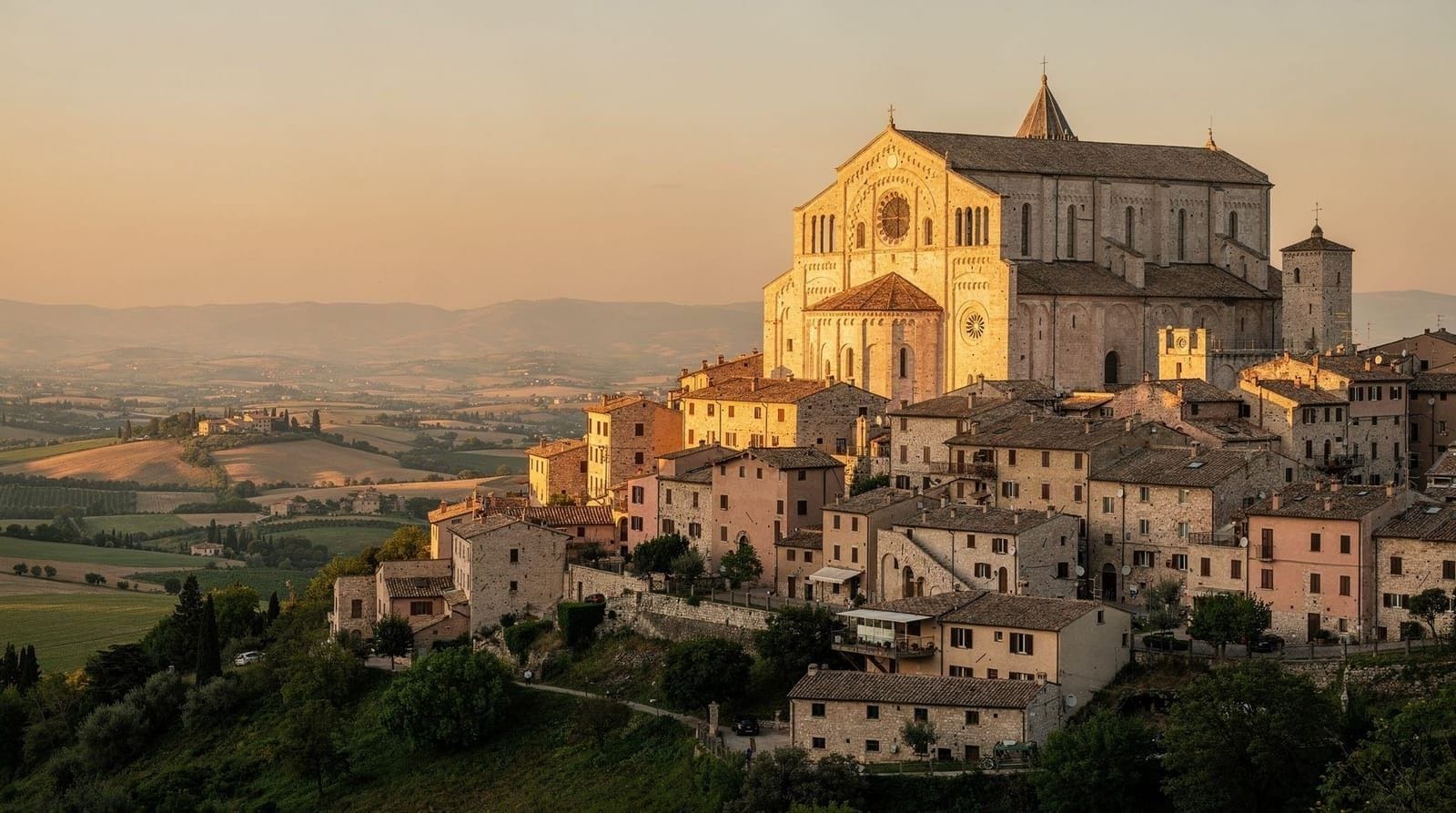
The Orvieto Duomo (Cathedral of Santa Maria Assunta) was begun in 1290 and took three centuries to complete. The facade is one of the most intricate in Italy — a mosaic-covered Gothic triptych that draws architects and art historians who would otherwise have no particular reason to visit Umbria.
What to look for inside:
- Cappella di San Brizio (Chapel of the Magi): frescoes by Luca Signorelli completed 1499–1504. The Last Judgment series — nude bodies rising from the dead, demons, an Antichrist figure — is extraordinarily violent and proto-Baroque in emotion. Michelangelo studied these frescoes before painting the Sistine Chapel. Entry to the chapel requires a separate ticket (included in Carta Unica or €5 at the door).
- The facade mosaics: 14th–19th century, depicting scenes from the Life of the Virgin. The originals were largely replaced but the effect of the gold-ground mosaic in direct afternoon sunlight is remarkable.
- The striped marble: the black-and-white horizontal banding on the exterior and interior walls is characteristic of Umbrian Gothic and uses local basalt and travertine.
Practical: the Duomo is in Piazza del Duomo, the main square. Arrive before 10:00 am to avoid the midday tour buses. Entry to the main church is typically free or a minimal fee (€3–€5); the Cappella di San Brizio costs extra.
Orvieto Underground
Below the city, carved into the tufa cliff over 2,500 years, is a network of tunnels, cisterns, cellars, and Etruscan pigeon houses. The Associazione Orvieto Underground runs guided tours (€7 per person, departures roughly every 45–60 minutes from Piazza del Duomo).
The tour is 45 minutes underground and covers Etruscan wells, medieval cellars used for olive oil pressing, and World War II air raid shelters. The guide explains the geology — the entire city sits on a plug of volcanic tufa — and the successive layers of civilisation that dug into it.
Honest assessment: excellent if you have curiosity about Etruscan archaeology or urban geology. Not spectacular visually in the way a Roman catacomb is, but historically substantial. Worth the €7 and the 45 minutes.
Orvieto Classico wine
Orvieto Classico is a DOC white wine made primarily from Grechetto and Trebbiano grapes grown on the volcanic soils around the town. It’s been produced here since Etruscan times — the caves beneath the city were historically used as wine cellars.
The wine is crisp, mineral, and dry (secco) in its modern form, though sweeter versions (abboccato, amabile) exist. It pairs well with local cuisine — pasta with black truffle (tartufo nero), cinghiale (wild boar) ragù, and the local pecorino cheese.
Where to taste: almost every bar and restaurant in Orvieto serves local Orvieto Classico. A glass typically costs €3–€5. For a structured tasting, Cantina Foresi (Piazza del Duomo 2) is the most central — a wine bar directly facing the Duomo, with a straightforward selection of local and Umbrian bottles at fair prices.
To take home: Bigi, Antinori’s Castello della Sala, and Palazzone are the most widely distributed producers. Palazzone’s Campo del Guardiano (late-harvest version) is considered one of the finest examples of the appellation.
Civita di Bagnoregio: the dying city
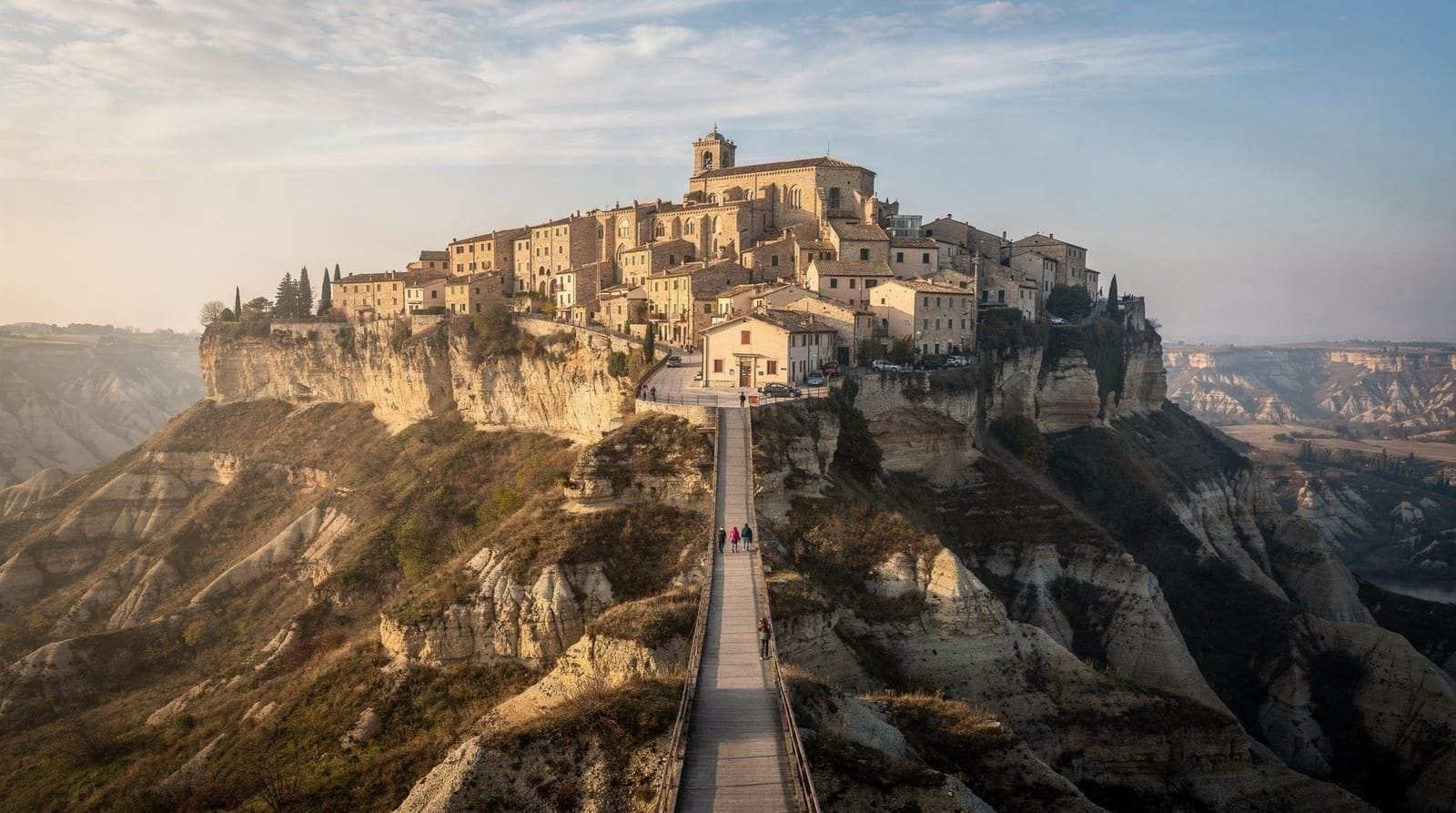
If you want to extend the day, Civita di Bagnoregio is 30 km east of Orvieto — a hilltop village perched on an eroding tufa butte, accessible only by a long pedestrian bridge. Only 10–15 permanent residents remain (the population was 2,500 in the 19th century as the butte crumbles). It’s been called the “dying city.”
Getting there without a car involves a bus from Bagnoregio, itself accessible by regional bus from Orvieto (50 minutes). The logistics are manageable if you’re flexible about timing; they’re tricky if you’re trying to catch a specific return train.
The organised tour option — pairing Orvieto and Civita di Bagnoregio — is the most practical way to do both in a single day. The Orvieto and Civita di Bagnoregio day trip from Rome handles the connections and gives you time at both sites.
For a more comprehensive Umbrian day including a wine-focused lunch, the Orvieto, Civita di Bagnoregio, and wine lunch tour is worth considering. If you prefer to go by train but want a car for the Civita section, the train-based Orvieto and Civita tour is the hybrid option.
Walking Orvieto: the old town
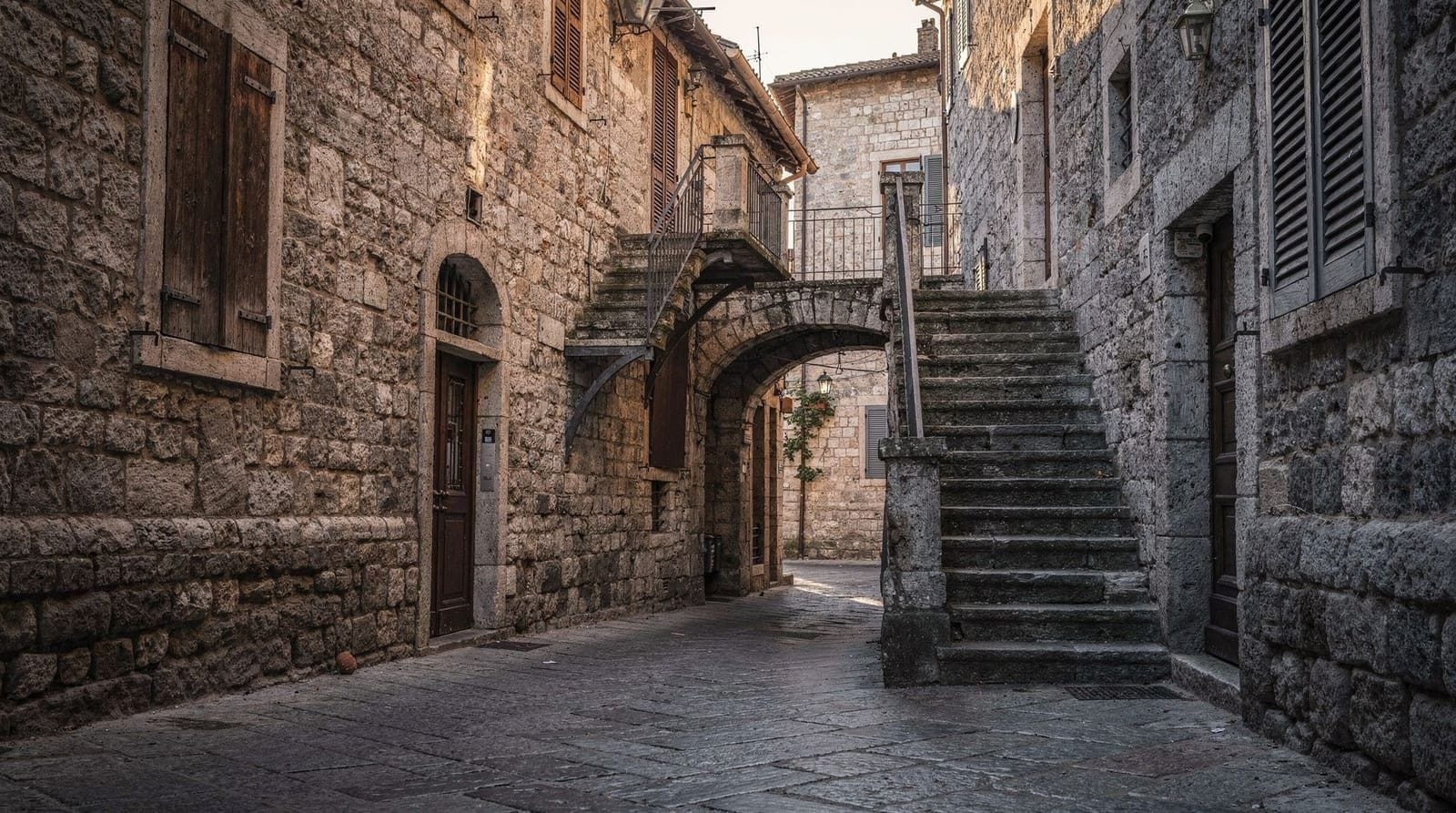
The old town is compact — you can walk from one end to the other in 20 minutes. The main pedestrian street, Corso Cavour, runs the length of the plateau from Piazza della Repubblica toward Piazza del Duomo. It has a good selection of shops selling local ceramics, wine, and truffle products.
Worth a detour:
- Pozzo di San Patrizio (St Patrick’s Well): a 16th-century double-helix spiral well dug on the orders of Pope Clement VII. Two separate staircases (donkeys carrying water barrels used to go down one and up the other without passing each other). Entry around €5. Engineering curiosity, worth 30 minutes.
- Piazza della Repubblica: the medieval central square with the 12th-century church of Sant’Andrea. Much less crowded than Piazza del Duomo and more representative of everyday Orvieto life.
- The cliff walk (Via della Cava or the Belvedere area near Palazzo Soliano): views out over the Paglia valley from the edge of the plateau. The surrounding landscape of green hills and farmland looks like every Umbrian painting you’ve seen.
Where to eat in Orvieto
Orvieto’s restaurant scene is honest and relatively inexpensive by Italian tourist-town standards.
- Trattoria dell’Orso (Via della Misericordia 18–20): small, unpretentious, excellent pici (thick hand-rolled pasta) with cinghiale or black truffle. €15–€25 per person. Cash preferred.
- Ristorante Zippori (Via del Duomo 7, upstairs): terrace with Duomo view, proper Umbrian menu. More expensive (€25–€40) but the setting compensates.
- Gelateria Pasqualetti (Piazza del Duomo 14): the best gelato in Orvieto according to locals. Small, family-run, traditional flavours. €2.50–€3.50.
- Bar Montanucci (Corso Cavour 21): the local bar institution, in business since 1912. Coffee, pastries, light lunch. Excellent chocolate-making tradition — look for the pralines in the glass case.
Orvieto’s Etruscan heritage: before the Romans arrived
Orvieto was called Velzna by the Etruscans, who occupied the plateau from the 9th century BC. It was one of the most important cities of the Etruscan confederation — a federal league of 12 Etruscan city-states that controlled much of central Italy before Roman expansion. The Romans eventually destroyed Velzna in 264 BC and transferred its population to Bolsena.
The Etruscan layers are still visible throughout the city:
- The tufa plateau itself was quarried and tunnelled by Etruscan settlers; the underground network includes Etruscan cisterns, storage rooms, and dove-cotes.
- The Museo Etrusco Claudio Faina (Piazza del Duomo 29) houses one of the best collections of Etruscan pottery, bronzes, and sculpture outside Rome. Entry €6. The Corinthian-style pottery collected here shows the extent of Etruscan trade networks with Greece.
- The Necropolis del Crocifisso del Tufo (500 m from the town, accessible on foot or by car): a 6th–4th century BC Etruscan burial site with rectangular tombs arranged in streets. Names of the deceased are carved above the doorways — an unusual practice. Open daily, entry €3.
The Etruscan heritage gives Orvieto a historical depth that distinguishes it from purely medieval Tuscan/Umbrian towns. The city’s story spans 2,700 years, not just the 14th century.
Orvieto and the papacy: a surprisingly important history
Orvieto was a papal refuge on at least six separate occasions during the medieval and Renaissance periods. The strategic value was obvious: a nearly unassailable cliff-top position, 90 km from Rome, with its own water supply carved into the tufa.
Pope Urban IV fled here in 1261–1264, during which time he commissioned Thomas Aquinas to write the Corpus Christi office texts — hymns still used today — partly inspired by the Miracle of Bolsena (1263), which occurred nearby. The Duomo was begun in 1290 specifically to house the Corporal (linen cloth) from the miracle.
Pope Clement VII took refuge here in 1527 during the Sack of Rome — he had the famous double-spiral Pozzo di San Patrizio dug specifically so the city could maintain its water supply if besieged again.
This context matters for understanding why Orvieto has a cathedral of that scale and decoration — it was built to impress, to celebrate, and to serve as a sign of papal prestige in a strategically important city.
The black truffle: Orvieto’s most valuable local product
The hills and forests around Orvieto produce tartufo nero di Norcia (Tuber melanosporum), the Umbrian black truffle. It’s harvested from November to March and appears in menus throughout the autumn and winter season — shaved over pasta, stirred into sauces, on bruschetta, with eggs.
The Orvieto food economy is closely linked to the truffle season. A fresh truffle sold locally costs €3–€5 per gram (compared to €10–€20/gram for white truffle). Restaurant dishes with truffle shavings are not cheap but are often worth what they charge in season.
Truffle hunting: some agriturismo farms in the Orvieto area offer truffle-hunting experiences with dogs (November–March). It involves walking through oak and holm-oak woods with a trained dog and handler. Approximately €50–€80/person for 2 hours including a tasting. Book directly through local agriturismo listings.
Combining Orvieto with other destinations
Orvieto + Civita di Bagnoregio: the most popular extension (see above). Add 3–4 hours to your day.
Orvieto + Viterbo: both are accessible from Rome on the same general northern corridor. Viterbo is 45 km east of Orvieto (by car) and worth visiting for its own medieval quarter (the Quartiere San Pellegrino). However, combining both in a single day from Rome requires a car and good timing.
Orvieto + Assisi: on the same Umbrian day-trip if you start very early and take a tour. By independent transport, the Orvieto–Assisi connection requires going back through Rome or Perugia — not practical as a single day trip.
Orvieto as an overnight base: one night in Orvieto — staying at one of the converted medieval townhouses in the old town — allows you to see the Duomo in the late-afternoon light and have dinner in the quiet city after the day-trippers leave. The evening quality in Orvieto is significantly different from the midday tourist experience. Hotels range from €60–€120 for a simple double room.
Practical guide to a full day in Orvieto
Here is how a well-planned Orvieto day actually looks from Rome:
6:50 am: depart Roma Termini on the first available regional train toward Orvieto.
8:10 am: arrive Orvieto Scalo (station at the base of the cliff). Buy funicular ticket at the machines outside (€1.30 single, €2.60 return, or part of Carta Unica).
8:15 am: funicular to the old town (Orvieto Alta). Connection time: 5 minutes.
8:30–10:30 am: Piazza del Duomo before the coach tours arrive. The cathedral opens at 9:00 am on most days. Cappella di San Brizio requires a separate ticket. Two hours here with the Signorelli frescoes is not too long.
10:30–11:15 am: Pozzo di San Patrizio (the double-spiral well). Queues are short before 11:00 am; entrance on Viale Sangallo near the funicular station.
11:15 am–12:30 pm: walk Corso Cavour, buy truffle products or Orvieto Classico to take home, browse ceramic workshops.
12:30–2:00 pm: lunch. Trattoria dell’Orso, or a lighter lunch at one of the alimentari with a glass of Orvieto Classico.
2:00–3:00 pm: Orvieto Underground tour (departs every ~60 minutes from Piazza del Duomo). Book at the office on the piazza.
3:00–4:30 pm: explore the western end of the town (Piazza della Repubblica, Via della Cava, views from the cliff edge). The Belvedere terrace near the cathedral has the best panorama of the valley.
4:30 pm: begin walking to the funicular.
5:00 pm: funicular down to the station.
5:15 pm: check timetable for next Rome train (approximately hourly, journey 1h05–1h20).
6:45–7:00 pm: arrive Roma Termini.
This is a comfortable 10-hour day with no rushing. You can extend by an hour if you want to add the Museo Etrusco Faina.
Orvieto vs Siena and Florence: the honest comparison
Orvieto often gets mentally filed alongside Tuscany’s famous hill towns, but the day-trip logistics and crowd levels are quite different:
| Orvieto | Siena | Florence | |
|---|---|---|---|
| Train from Rome | Direct, 1h05–1h20 | No direct train — bus or train+bus, 2–3h | Direct high-speed, 1h30 |
| Crowd level | Low, even in peak season | Moderate–high | High |
| Main draw | Gothic Duomo, Etruscan tunnels | Piazza del Campo, Palio history | Renaissance art (Uffizi, Accademia) |
| Cost | Low (€9–€19 return train) | Moderate | Higher (train + museum tickets) |
| Best for | Easy, low-stress first day trip | Medieval history and hill-town atmosphere | Art and architecture depth |
If this is your first Rome day trip and you want something low-effort and rewarding, Orvieto is the easiest win of the three — there’s no advance museum booking to manage, no complicated connections, and the direct train means a missed connection isn’t a disaster the way it can be on multi-leg routes to Siena. For a fuller regional comparison, see Siena and Chianti, Florence, and the best day trips from Rome guide; the train versus guided tour comparison is also worth reading before booking either route.
Orvieto’s ceramic tradition and where to buy it properly
Orvieto has a centuries-old ceramics tradition, distinct from the more famous Deruta and Faenza schools but locally rooted in the same Umbrian clay and mineral-rich glazes. Workshops along Corso Cavour and the side streets near Piazza del Duomo sell hand-painted plates, jugs, and tiles, often in the characteristic green-and-gold Orvieto palette derived from the cathedral’s own decorative scheme. Prices for genuinely hand-painted pieces start around €25–€40 for a small plate and rise quickly for larger platters or full dinner sets.
A word of caution: as in most Italian craft towns, some shops sell imported, machine-stamped “ceramica” at a fraction of the price of the real thing. Look for a workshop with a visible kiln or painting studio attached — the genuine hand-painted pieces have small variations and brushstroke texture that mass-produced versions lack. If ceramics interest you more broadly, Umbria’s wider tradition is best explored with more time than a single Orvieto day trip allows — Deruta, an hour further into Umbria, is effectively a ceramics-only detour better suited to travellers with a car and a second day in the region.
A shorter half-day version, if you’re pressed for time
Not everyone has 10 hours to spare. If you can only give Orvieto a half day — say, a late-morning arrival and an early-afternoon train back — prioritise ruthlessly rather than trying to compress the full itinerary above.
The essential half-day, in order: funicular up to the old town, the Duomo exterior and the Cappella di San Brizio (60–75 minutes total), a coffee or light lunch on Corso Cavour, then the Pozzo di San Patrizio on your way back to the funicular. That’s a genuinely satisfying 3–3.5 hours that covers Orvieto’s two unmissable sights without rushing either one. Skip the Underground tour and the Etruscan museum on a half-day visit — both are worthwhile but not essential, and trying to fit everything in is how a relaxed half day becomes a stressful one.
If arriving by late-morning train: aim to be in Piazza del Duomo by 11:00 am, order lunch by 1:00 pm at one of the alimentari or Trattoria dell’Orso, and target a train back to Rome around 2:30–3:00 pm. This leaves Orvieto’s afternoon crowds (mostly coach-tour day-trippers) for someone else and still delivers the cathedral, the well, and a proper Umbrian meal. Check the return timetable as soon as you arrive, not on your way back to the station — regional trains toward Rome run roughly hourly rather than every few minutes, so knowing your slot in advance keeps the whole afternoon relaxed instead of rushed.
What a half day sacrifices: the Orvieto Underground tour, the Etruscan necropolis, a truffle-hunting excursion, and any serious wine tasting beyond a glass with lunch. If any of those genuinely interest you, the full-day plan above — or an overnight stay — is worth the extra time. A half day still beats skipping Orvieto entirely; even the essential 3-hour version delivers one of Italy’s great Gothic facades and a genuinely memorable piece of engineering history in the well, for less time and money than most Rome museum mornings cost.
Frequently asked questions about Orvieto
Is Orvieto worth visiting as a day trip from Rome?
Absolutely, and it’s one of the most underrated day trips from Rome. The direct train takes just over an hour, costs under €20 return, and the city delivers genuine medieval Umbria at a fraction of the tourist pressure you’d face in Siena or Florence. The Duomo alone — specifically Signorelli’s frescoes in the Cappella di San Brizio — is worth the journey.
How far is Orvieto from Rome?
Approximately 120 km north of Rome, on the main train line toward Florence. By direct regional train from Roma Termini: 1h05–1h20. It’s in Umbria, just west of the Tiber valley.
Do I need to book Orvieto train tickets in advance?
For regional trains, advance booking is helpful but not essential — you can often buy on the day at the station. That said, booking at least a few days ahead via trenitalia.com ensures you get the cheaper fare. The train is comfortable and less crowded than the Florence routes.
What is the Orvieto Underground?
A network of Etruscan and medieval tunnels carved into the tufa rock beneath the city. Guided tours depart roughly every hour from Piazza del Duomo (€7, about 45 minutes). The tour covers wells, olive oil presses, and wartime shelters dug across multiple historical periods. It’s a good complement to the Duomo if you have 3+ hours in Orvieto.
Can I combine Orvieto with Civita di Bagnoregio?
Yes, on an organised day tour. Going independently is possible but requires bus connections from Orvieto to Bagnoregio, then walking to Civita — manageable if you’re comfortable with timetables, but complicated if you’re trying to catch a specific evening train back to Rome. Most people who want to do both take an organised tour.
What wine is Orvieto known for?
Orvieto Classico — a crisp, dry white wine made from Grechetto and Trebbiano grapes on volcanic soils. Produced here for over 2,500 years. Look for the DOC label. The secco (dry) version is the standard; Palazzone’s Campo del Guardiano is one of the finest late-harvest examples if you want to bring something back.
Is Orvieto better than Siena for a day trip from Rome?
For ease and cost, yes — Orvieto has a direct train under 1h30 and far lower crowds. For medieval hill-town atmosphere and the Palio history, Siena has more to offer but needs a longer, more complex journey. See the comparison table above for the full picture.
Can I visit Orvieto and Assisi on the same trip from Rome?
Not easily as two independent day trips on the same day, since public transport between them routes back through Rome or Perugia. An organised tour can combine elements of both in a single long day; otherwise, treat Assisi and Orvieto as separate excursions, ideally with an overnight in Umbria if you want to see both properly.
Top experiences
Bookable activities with verified prices and instant confirmation on GetYourGuide.