Train vs guided tour for Rome day trips: an honest comparison
Pompeii Day Trip from Rome by High-Speed Train & Guided Tour
Is it better to take the train or a guided tour for Rome day trips?
Train for nearby destinations like Tivoli and Ostia Antica — they are direct, cheap, and easy to navigate independently. Guided tour for distant destinations like the Amalfi Coast, Pompeii, or Florence where the logistics are complex and expert guiding at the site adds genuine value. For Pompeii specifically, a guided tour with a licensed archaeologist is worth the premium over independent travel.
The real trade-off: flexibility vs logistics
Rome is one of the best-positioned cities in Europe for day trips. Within 3 hours by high-speed train, you can reach Florence, Naples, and the Amalfi Coast. Within 1 hour by regional train or local line, Tivoli, Ostia Antica, and Orvieto are accessible. The question is not whether to do day trips — it is whether each specific journey is better done independently by train or through an organised guided tour.
Neither option is automatically better. The right choice depends on the destination, the complexity of local navigation at the site, the size of your group, your comfort with Italian train systems, and whether expert guiding at the site would materially improve your understanding of what you are seeing.
| Go by train | Book a guided tour | |
|---|---|---|
| Best for | Ostia Antica, Florence, Orvieto | Pompeii, Amalfi Coast, both Tivoli villas together |
| Typical saving | 40–60% cheaper | pay for convenience + expert guiding |
| Flexibility | full control of timing | fixed departure/return times |
| Effort required | ticket machines, connections | none — pickup handled |
| Best with kids | Ostia Antica, Florence | Pompeii, Amalfi Coast |
This guide works through the main Rome day-trip destinations in honest detail, with a clear recommendation for each.
The case for going by train independently
Cost is the primary argument. Independent rail travel is substantially cheaper than organised guided tours, and the gap widens for closer, more straightforward destinations. Rome to Ostia Antica costs €1.50 each way on the Roma–Lido line — total transport for the day is under €5. Rome to Florence costs €19–35 each way on the Frecciarossa with advance booking. A guided group tour to Florence covering the same transport costs €80–120 per person. You are paying €40–80 extra for the convenience of having transport organised and a guide included.
Flexibility is the second argument. Italian regional trains run every 15–60 minutes on most routes. If you want to spend an extra hour in Florence’s Oltrarno neighbourhood because the light is extraordinary at that moment, you take the next train. If you are done with Tivoli’s Villa d’Este by noon and want to linger over lunch in the town centre, you stay. Guided tours have a fixed departure time from the destination, and missing the coach means an expensive independent return or an awkward conversation.
Pace is the third argument. Guided tours move at the speed of the slowest person in the group and follow a preset programme. Solo travel or couple travel by train lets you spend 45 minutes at the Temple of Vesta if it holds you, or move through the Roman Forum quickly if you have seen it before.
The straightforward independent routes
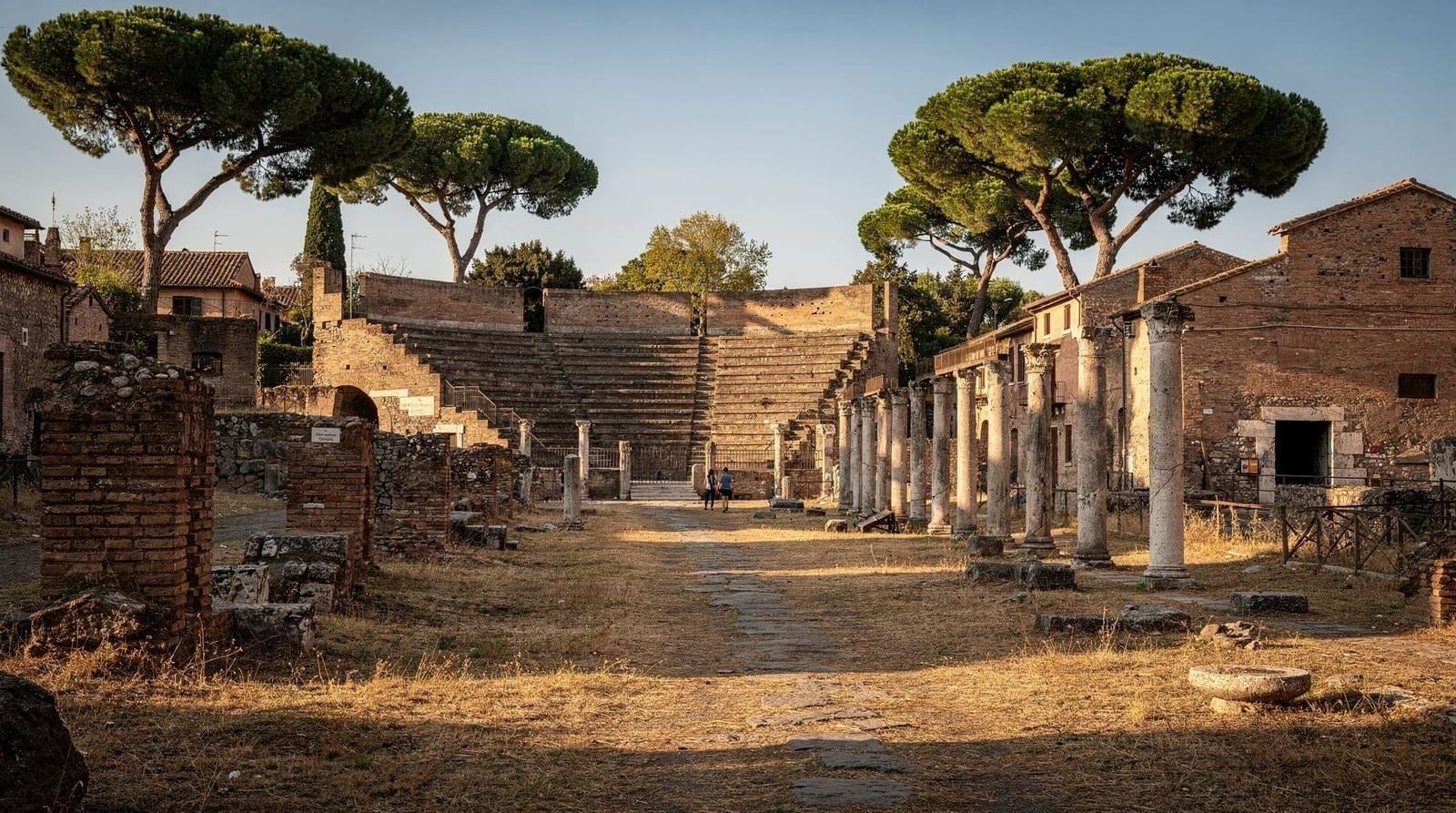
Ostia Antica: The Roma–Lido railway from Roma Ostiense station (or Porta San Paolo, both accessible on Metro B) drops you at Ostia Antica station in 30 minutes. Cost: €1.50 one way (or included in an ATAC day pass). Trains run every 15 minutes during the day. The site entrance is a 100-metre walk from the station platform. This is the easiest independent day trip from Rome: no navigation, no connections, no decisions. An audio guide at the site entrance (€4) or a guidebook suffices.
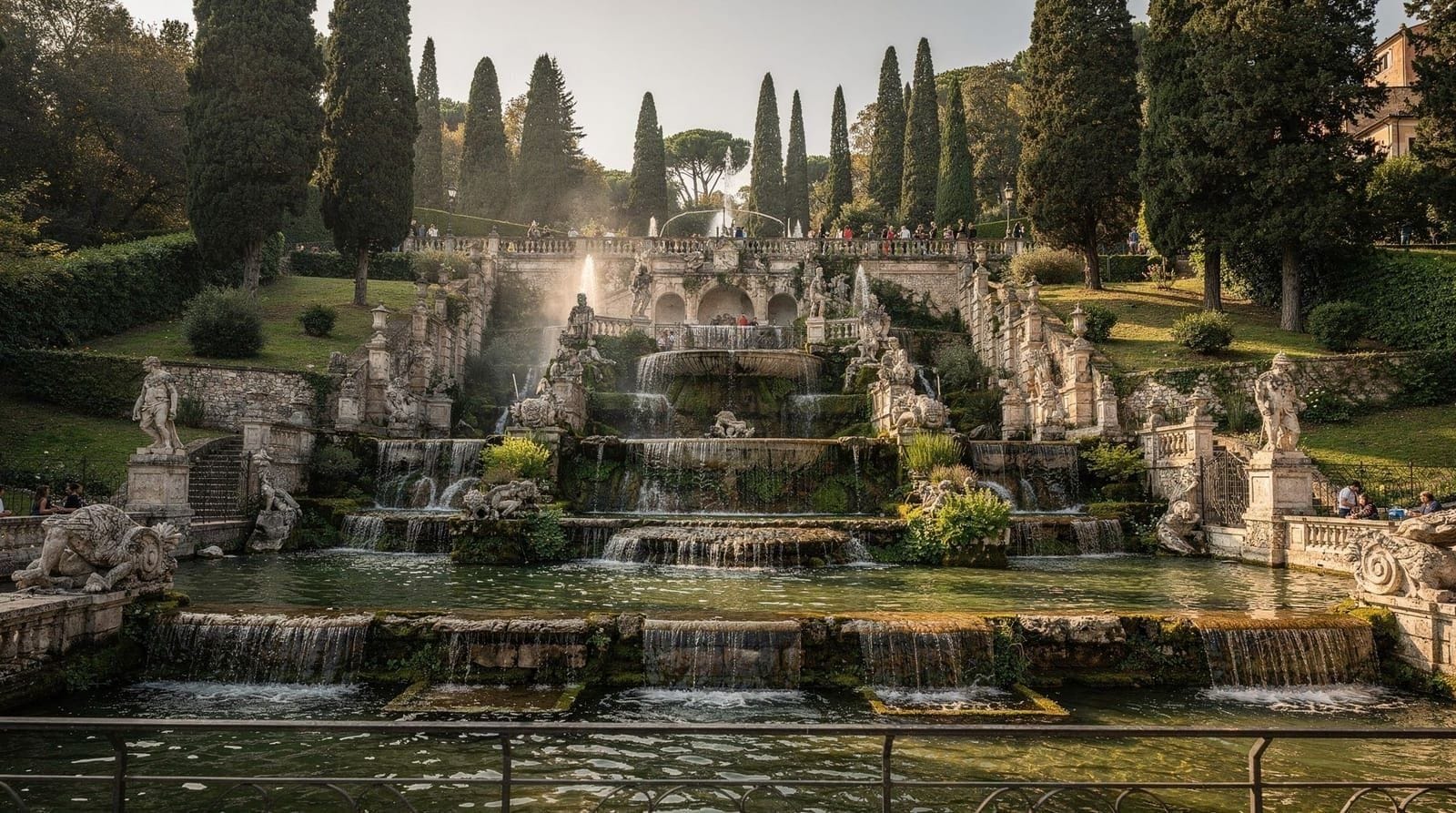
Tivoli: Regional train from Roma Tiburtina (Metro B, Tiburtina stop) to Tivoli station in 55 minutes, cost €2.60–2.90. From Tivoli station, CAT bus lines 4 and 6 to Villa d’Este (15 minutes, included in ATAC day pass or €1.50 separate). The complication: Villa d’Este and Hadrian’s Villa are 6 km apart, requiring a bus or taxi between them. CAT bus no. 4 makes the connection in 20 minutes. Manageable independently, but the multi-leg nature is more complex than Ostia Antica.
Florence: Frecciarossa (Trenitalia) or Italo from Rome Termini to Florence Santa Maria Novella in 1 hour 25–35 minutes. With advance booking (4–6 weeks ahead), fares start at €19 per person each way on Italo. Standard fares are €40–60. Florence’s main sites — Uffizi, Accademia, Duomo, Ponte Vecchio — are all within a 20-minute walk of the station. Book Uffizi (uffizi.it) and Accademia (accademia.org) separately before your trip. Straightforward independently.
Orvieto: Trenitalia regional train from Roma Termini to Orvieto in 1 hour 15 minutes, cost approximately €10 each way. Funicular from the station to the old town (€1.30 each way). Orvieto is a small medieval Umbrian city with one outstanding monument — the Duomo, whose striped black-and-white marble facade and Lorenzo Maitani reliefs justify the entire journey. Entry €5. The town is easily navigable on foot in 3–4 hours.
The case for guided tours
Complex logistics: Some destinations require multiple transport changes, local knowledge, or routing decisions that add friction and uncertainty to an independent visit. The Amalfi Coast is the clearest example: high-speed train to Naples, circumvesuviana to Sorrento, ferry to Positano, then navigating the congested coastal road between towns. A coach tour from Rome handles all of this without requiring any local knowledge from the visitor. The trade-off is a fixed itinerary and a group pace, but on a single complex day trip, that trade-off is often worth it.
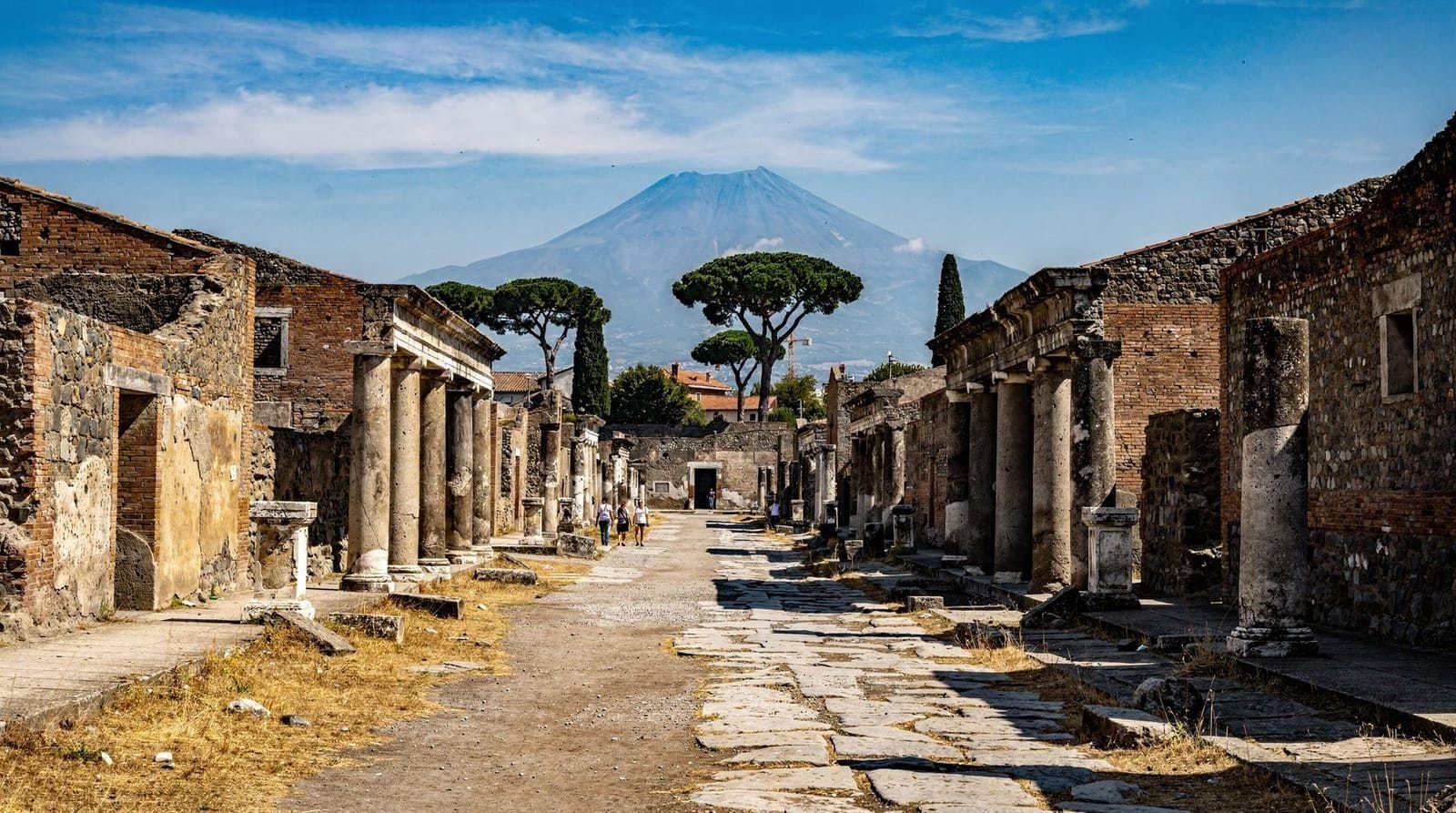
Licensed guides at the site: For archaeologically or artistically complex destinations, a licensed local guide at the site materially improves the experience. Pompeii is the clearest example: the ruins cover 66 hectares, the interpretation panels are adequate but limited in depth, and a licensed archaeologist guide (who can access areas like the House of the Tragic Poet’s famous cave canem mosaic, explain the social organisation of the baths, and interpret the fresco cycles in context) adds content that an audio guide cannot replicate. For a single visit that may be your only time in Pompeii, the premium for expert guiding is worth paying.
Group pricing on transport: Guided tours negotiate transport at group rates. For a Pompeii tour from Rome (€65–90 all in), the components are: return Frecciarossa Rome–Naples (€25–40 at retail), circumvesuviana Rome–Pompeii return (€6), site entry (€16), guide (€15–20 retail). The all-in tour price is comparable to or slightly higher than buying these components separately, but the logistical value is real.
Family travel: Navigating Italian regional trains, ticket machines, and regional bus connections with children under 10 is manageable but stressful. Organised tours handle the transitions, keep children in sight during transfers, and remove the parental cognitive load of navigation. This has real value even at a premium price.
Pompeii day trip from Rome by high-speed train — handles the Naples and circumvesuviana connections and includes an archaeologist guide at the ruinsDestination-by-destination recommendations
Ostia Antica: train independently. 30 minutes, €1.50, direct. An audio guide at the entrance adds value for €4. A guided tour adds cost with minimal navigational or interpretive benefit for most visitors.
Tivoli (both villas): organised tour recommended, or hybrid. The connection between Villa d’Este and Hadrian’s Villa — 6 km apart with a 20-minute bus — is the friction point. A guided tour covering both with transport between them (€55–75) removes this complication and typically includes a licensed guide at both sites. If you are comfortable with Italian bus systems and have already read about both villas, independent is viable and cheaper.
Pompeii: guided tour strongly recommended. The site is enormous (66 hectares), the interpretation without a guide is limited for casual visitors, and the Naples–circumvesuviana logistics require more navigation than other routes. A guided tour from Rome including transport + licensed archaeologist guide + site entry is genuinely worth the premium for most visitors on a first visit.
Amalfi Coast: organised tour for a day trip. The coastal road logistics — SITA bus schedules, ferry timings, traffic variables — are hard to manage reliably as an independent day trip without prior knowledge. For an overnight stay, independent is preferable.
Florence: train independently. The Frecciarossa is comfortable, reliable, and cheap with advance booking. Florence’s sites are walkable from Santa Maria Novella station. Book the Uffizi and Accademia ahead. No tour necessary for the basic visit.
Orvieto: train independently. 1 hour 15 minutes, approximately €10 each way, then funicular. Small enough to navigate without a guide.
Tivoli day trip from Rome covering both Villa d’Este and Hadrian’s Villa — handles transport between the two sites, which is the main logistical challengeCost comparison table
| Destination | Train independently (transport + entry) | Organised tour |
|---|---|---|
| Ostia Antica | €15–18 | €35–55 |
| Tivoli (both villas) | €30–40 | €55–80 |
| Pompeii | €40–58 | €65–95 |
| Florence (sightseeing only) | €45–65 | €85–130 |
| Amalfi Coast day trip | €55–85 | €75–110 |
All figures are per person, adult, in 2026. Children under 4 are free on Italian trains; ages 4–11 approximately 50% fare.
The hybrid option: train there, guided tour on site
The best-value approach for several destinations combines independent transport with a local guided tour at the site:
Pompeii hybrid: Take the Frecciarossa to Naples (€9.90–25) and circumvesuviana to Pompeii Scavi (€2.80). Book a licensed archaeologist guide through a Pompeii-based operator in advance (€20–25 per person in small groups). Total cost: €35–55, versus €65–95 for an all-in Rome tour. You save on the transport markup embedded in the Rome tour price while still getting expert guiding where it matters.
Florence hybrid: Take the Frecciarossa independently (from €19). Book the Uffizi plus a local Florence walking guide through GetYourGuide’s Florence listings (approximately €25–35 for a guided Uffizi tour). Total cost: €65–90, versus €90–130 for an all-in Rome tour. You gain the flexibility of your own travel schedule while still getting interpretive help at Florence’s most complex museum.
Tivoli hybrid: Take the regional train and bus to Villa d’Este independently (€3.50 transport). Join the free guided tour of the villa’s hydraulic system that the site offers (check current schedule at villadestetivoli.info) or book a private guide through a Tivoli-based operator. Travel independently to Villa Adriana by bus and join the site’s self-guided walk with audio guide (€5 available at entrance).
The hybrid approach works best when you have done some background research on the destination and are comfortable with the transport. It is the approach Rome’s most experienced visitors tend to use.
For detailed transport information including train schedules, booking platforms, and first-class vs second-class advice, see our day trips by train from Rome guide and trains from Rome day trips guide.
Florence day trip from Rome by high-speed train — a well-organised option for visitors who want guided coverage of Florence’s highlights in a single day without managing the logistics independentlyBooking trains from Rome: practical guide
Trenitalia vs Italo: Both operators run high-speed services on the Rome–Naples and Rome–Florence routes. Trenitalia’s Frecciarossa is slightly faster and more reliable; Italo is often cheaper with early booking and runs competitive promotional fares. For best prices, compare both at trenitalia.com and italotreno.it. There is no significant quality difference in second-class comfort.
When to book: Prices for the Frecciarossa and Italo follow airline-style dynamic pricing. The cheapest promotional fares (€9.90–19 for Rome–Naples) sell out first, typically 4–8 weeks before departure. Standard fares rise as the travel date approaches. Book as early as possible if dates are fixed; stay flexible on timing if you want the lowest prices.
First class vs second class: For day trips, second class (called “Standard” on Italo, “Economy” or “Base” on Trenitalia) is entirely comfortable — good seats with headrests, power outlets, and free Wi-Fi. First class (“Prima” or “Club Executive”) costs 30–60% more and adds a wider seat and sometimes a complimentary drink. Not necessary for 1–2 hour journeys.
Regional trains: The circumvesuviana (Naples–Sorrento–Pompeii) and Roma–Lido railway (Rome–Ostia Antica) are slower regional services. The circumvesuviana is crowded and has a documented pickpocket problem — keep bags in front of you and avoid waving phones in the aisles. The Roma–Lido is quieter and more pleasant. Both are entirely safe for alert travellers.
Timetables: trenitalia.com and rome2rio.com both show regional train connections in addition to high-speed services. Google Maps works well for Italian regional transport routing.
What changes if you have a Roma Pass or rail pass
If you already hold an Italian rail pass or a multi-day regional transport pass, the maths shifts further toward independent travel — the marginal cost of an extra Ostia Antica or Tivoli trip drops close to zero, since the ticket is already sunk. A Roma Pass covers Rome’s own public transport but not regional lines to Tivoli, Ostia Antica, or Orvieto, so it does not change the day-trip calculation directly, though it is worth having for the days you spend in the city itself. If you are already committed to a multi-city Eurail-style pass covering the Rome–Florence or Rome–Naples legs, book the seat reservation early regardless — high-speed trains in Italy require a paid reservation even when the base travel is covered by a pass, and reservations for popular departure times sell out at the same rate as standard tickets.
A note on guided tours: what good and bad ones look like
Not all guided day trips from Rome are equal. Signs of a well-organised tour:
- Licensed guide (look for “licensed official guide” in the description — in Italy, official guides are certified by regional authorities and have studied the specific site)
- Maximum group size stated (under 15 is ideal; over 25 is a herd)
- Transport included clearly specified (train type or coach)
- Entry tickets included in the price
Signs of a poorly organised tour:
- Very low price (€20–30 all in to Pompeii from Rome is not possible without serious quality compromises)
- “Guide” described as a “coordinator” or “escort” rather than a licensed guide
- No site entry included in the price (you pay separately at the gate)
- Enormous group size (50+ is not a guided tour, it is a crowd)
For day trips including licensed guides at specific sites, the per-person cost should typically be €65–110 for routes like Pompeii or Florence with expert commentary. Budget tours below €40 all-in involve compromises — usually in guide quality, group size, or both.
Reading recent reviews on booking platforms (especially filtering for English-language reviews from independent travellers rather than group tour operators) is the most reliable way to assess quality before booking.
Day trip itinerary templates for both approaches
Independent Florence day trip (train)
- 07:00: Depart Rome Termini (Frecciarossa, pre-booked)
- 08:25: Arrive Florence Santa Maria Novella
- 08:45: Walk to Piazza del Duomo (15 minutes on foot)
- 09:00: Uffizi Gallery (pre-booked, 2.5–3 hours)
- 12:00: Lunch in Oltrarno (cross Ponte Vecchio, Via dei Serragli has good local tratttorie)
- 13:30: Accademia Gallery / Michelangelo’s David (pre-booked, 1.5–2 hours)
- 15:30: Walk to Piazzale Michelangelo for the panoramic view (30-minute walk or taxi)
- 16:30: Return walk via San Miniato al Monte church
- 17:30: Train back to Rome (arrive 19:00 or later depending on service)
Total transport cost: €38–70 return. Site entries: €36–45 (Uffizi + Accademia). Total: €74–115 per person.
Organised Pompeii day trip with guide
- 07:00: Pickup from Rome hotel
- 10:00: Arrive Pompeii ruins
- 10:00–13:00: Guided tour with licensed archaeologist (3 hours, 20 key sites including House of the Faun, the Forum, the baths, the brothel)
- 13:30: Lunch in Pompeii town
- 15:00: Optional Vesuvius crater walk or transfer to Sorrento
- 19:00: Departure from Naples/Sorrento area
- 22:00: Arrive back in Rome
Total inclusive cost: €65–90 per person (transport + guide + entry). Much of this cost compared to independent travel (€40–58 independently) covers the guide’s expertise and the group transport convenience.
The guides make the most difference at Pompeii specifically because the 66-hectare site overwhelms visitors who arrive without context. The gladiatorial barracks, the election notices painted on walls, the lead water pipes that supplied running water to the largest houses, the thermal frescoes in the Suburban Baths — these require a guide to interpret properly from partial physical evidence. An audio guide covers the main sites but cannot answer questions or adapt to your specific interests.
See our Pompeii from Rome guide and Florence day trip guide for destination-specific logistics and recommendations.
Group size and travel style: a quick self-check
Your answer often depends less on the destination and more on who you are travelling with. Solo travellers and couples comfortable navigating unfamiliar transit systems tend to prefer trains for the flexibility, even to more complex destinations like Pompeii, provided they book a local guide separately. Families with young children, first-time visitors to Italy uneasy with a foreign transit system, and larger groups of 4+ people tend to get more value from organised tours, since the per-person transport saving of going independently shrinks once you are already paying for multiple train tickets, and the convenience of a single pickup point matters more with children in tow. If you are combining a day trip with jet lag in your first 48 hours in Rome, lean toward a guided tour regardless of destination — an organised pickup removes one layer of decision-making when you are least equipped to make it. For a broader look at which destinations suit which trip length, see our best day trips from Rome overview.
Frequently asked questions about Train vs guided tour for Rome day trips: an honest comparison
How much does it cost to get to Pompeii from Rome by train?
Is the circumvesuviana train safe?
Which day trips are easiest by train independently?
What is typically included in a guided day trip from Rome?
Can I take the train and join a guided tour at the destination?
Is it worth paying more for a small-group guided tour instead of a large coach tour?
Top experiences
Bookable activities with verified prices and instant confirmation on GetYourGuide.