Civita di Bagnoregio day trip: the dying town on a cliff
Day Trip from Rome to Orvieto & Civita di Bagnoregio
How do you get to Civita di Bagnoregio from Rome?
Civita di Bagnoregio is not reachable by train. The nearest town, Bagnoregio, is served by infrequent buses from Orvieto or Viterbo; from Bagnoregio a 15-minute walk leads to the pedestrian bridge. The most practical options are renting a car (about 1h40 from Rome via the A1 motorway) or joining a guided tour from Rome.
La città che muore — the dying town
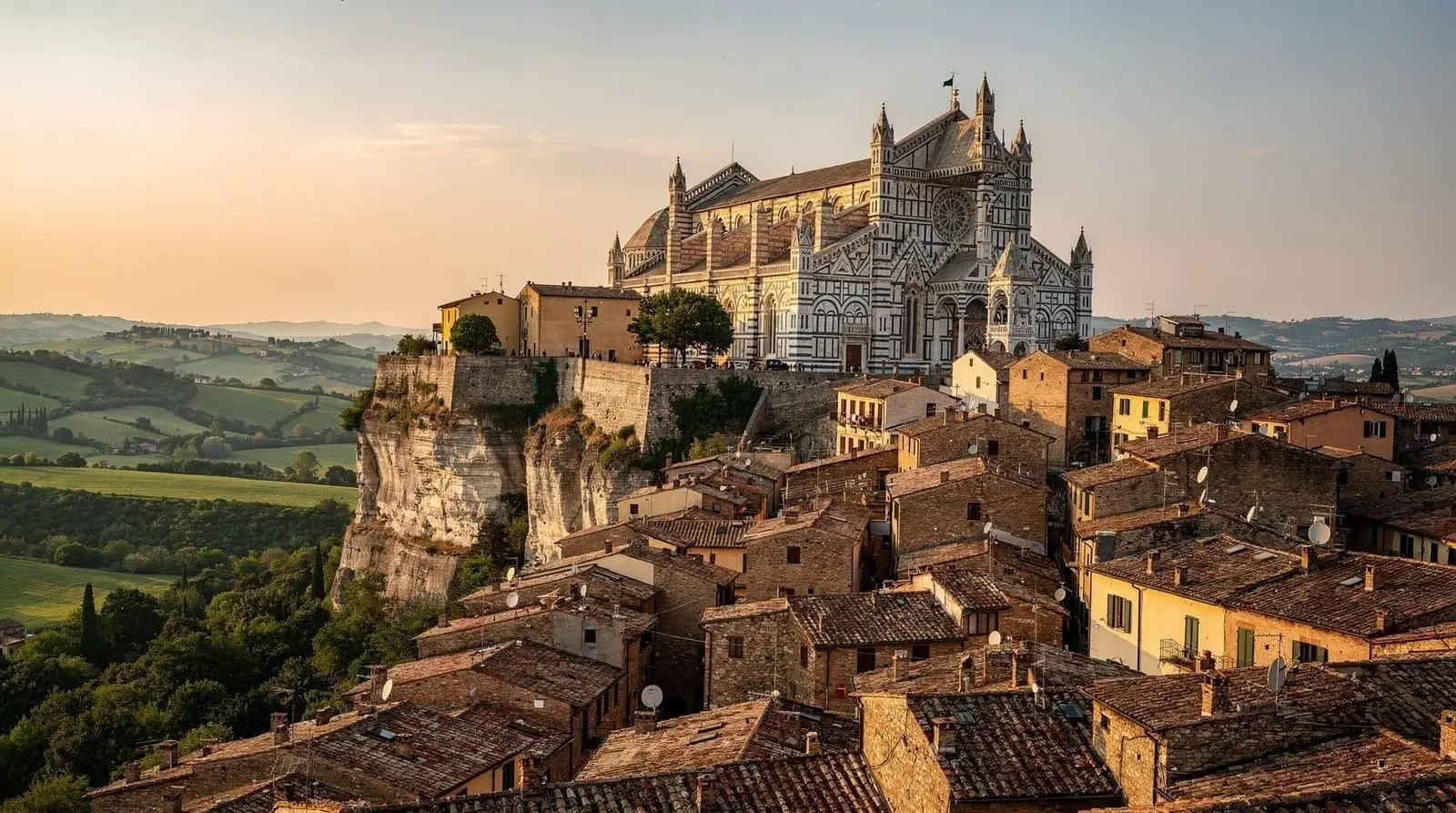
The Italian writer Bonaventura Tecchi, born in Bagnoregio, called Civita “la città che muore” — the dying town. It was a poetic phrase, but it is also a literal description. The medieval village stands on a pinnacle of volcanic tufa that is being steadily eroded from below by the clay of the Calanchi valley — a stark landscape of gullied hills that looks lunar and strange on clear days, golden and melancholy in autumn.
The erosion is measurable. In living memory, the bridge connecting Civita to the road has been rebuilt multiple times as the edge of the pinnacle retreats. Buildings have fallen. The permanent population, which numbered several hundred in the last century, is now estimated at fewer than 15. In summer, Civita hosts several thousand tourists a day.
This is the paradox at its centre: you go to see a place that is dying, and your presence is one of the things accelerating the process.
Go anyway. The view of the pinnacle from across the valley is one of the most striking in central Italy. The village itself — a single piazza, a handful of lanes, a Norman cathedral, and extraordinary light over the Calanchi — is genuinely beautiful. Just go early and go prepared for the logistics.
| Where | Northern Lazio, near Bagnoregio, ~1h40 from Rome by car |
| Cost | Bridge entry ~€5; guided day tour with Orvieto ~€70-100 |
| Time needed | 2-3 hours in the village; full day combined with Orvieto |
| Getting there | Car via A1 to Orte, or guided tour — no practical train option |
| Best time | Before 10:00, and April-June or September-October |
The honest logistics
Civita di Bagnoregio is the only major day-trip destination from Rome where the transport situation is genuinely difficult without a car. There is no train station. The nearest settlement, Bagnoregio (2km away), is served by infrequent buses from Viterbo (COTRAL buses) or from Orvieto — but the connection to Rome requires 2–3 bus changes or a combination of train and bus that takes 2.5–3 hours each way.
The practical options are:
Option 1 — Rent a car. Drive from Rome on the A1 (Autostrada del Sole) north to the Orte exit, then via Viterbo direction to Bagnoregio. Journey time: approximately 1h40–2h00. Parking is available in Bagnoregio at the main municipal car park near the bridge approach.
Important on cars and Rome: Do not collect a rental car from inside the ZTL (limited traffic zone) that covers the historic centre and much of central Rome. Use a rental agency at Fiumicino airport or at Roma Termini (external pickup zone). The ZTL cameras issue automatic fines of €84–335, charged to your rental card by the agency. See the Rome driving and ZTL guide for details.
Option 2 — Join a guided tour. Guided tours from Rome to Civita and Orvieto are the most popular solution for non-drivers. The tour handles all transport, ensures timing to avoid the worst crowds, and includes a guide who provides context for both sites. Cost: approximately €70–100 per person for the full day.
Option 3 — Bus (for confident independent travellers). COTRAL bus from Roma Saxa Rubra (end of Roma Nord light rail) to Viterbo, then COTRAL bus from Viterbo to Bagnoregio. Journey time 2.5–3 hours each way; buses run a few times per day and the schedule requires careful checking. Not recommended unless you are specifically comfortable with Italian regional bus travel.
Getting from Bagnoregio to Civita
From the Bagnoregio car park or bus stop, walk downhill to the visitor centre and ticket booth at the bridge approach. The ticket costs approximately €5 per adult.
The pedestrian bridge is 300 metres long, rising gently across the valley to the village entrance. The walk takes about 10 minutes at an easy pace. The bridge is narrow; in peak season it can feel crowded with two-way traffic. Early morning gives you space.
From the village entrance gate, the main piazza (Piazza del Comune, with San Donato church) is a 3-minute walk.
What to see
The view before you cross
The best single view of Civita di Bagnoregio is from the road at Bagnoregio itself — specifically from the belvedere near the car park, before you descend to the bridge. This is the photograph you have probably seen: the village on its isolated pinnacle, surrounded by the eroded Calanchi landscape, under a sky that seems too large.
An even better viewpoint is available from the village of Lubriano, 3km north (accessible only by car), which looks across at Civita from a higher elevation and gives a more dramatic cross-section of the pinnacle. Worth a 15-minute detour.
The village
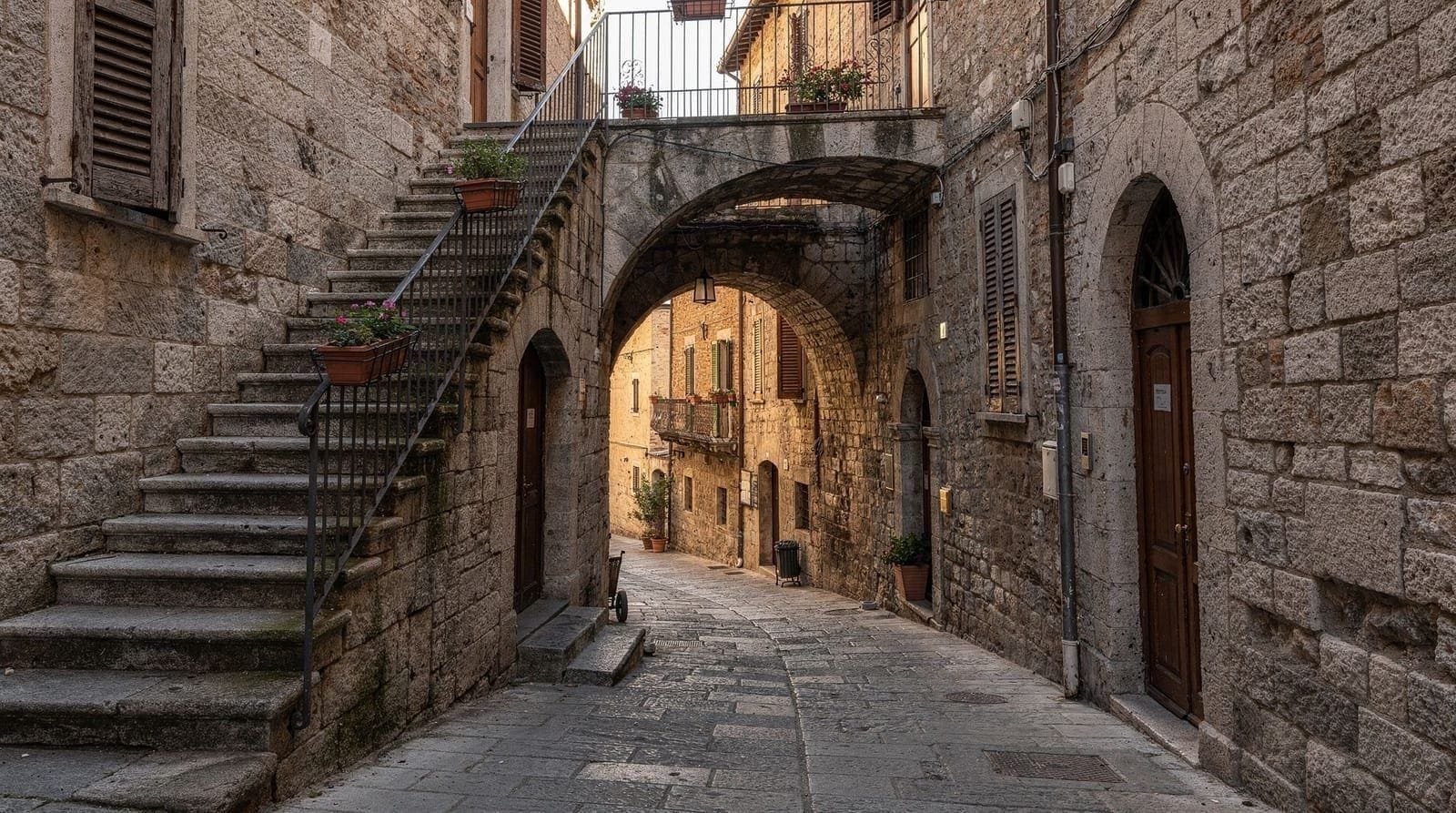
Once you cross the bridge and pass through the 12th-century gateway, the village is compact and immediately affecting. The narrow lanes and the total absence of vehicles (no cars have crossed the bridge since it was built as a pedestrian-only structure) give Civita a stillness unusual in Italy.
Piazza del Comune and San Donato church: The main square has a Romanesque church (San Donato) with a plain 12th-century facade. Inside, a polyptych attributed to the school of Giotto, and in the apse, a 6th-century Byzantine crucifix — the surviving evidence of a much longer history than the current village suggests. The square has two or three cafes; the terrace of the cafe on the south side has the best view across the Calanchi.
The lanes: Walk through the lanes on the southern side of the piazza for the most intact medieval atmosphere. Most of the buildings date from the 16th–17th centuries, built after earlier structures collapsed with their sections of the cliff. The tufa stone is soft enough that many doorways have decorative carvings — animals, faces, emblems — done casually by residents over the centuries.
The Etruscan cave cellars (Grotte Etrusche): Under and around the village, chambers cut into the tufa by the Etruscans are still used as cantinas and storage. Several are accessible through doorways in the lanes; some offer local wine tastings in summer.
The cliff edge viewpoints: Walk to the southern and eastern edges of the village for the best views across the Calanchi. The landscape of the valley — eroded ridges of grey clay alternating with the occasional orange of iron-rich soil — is strange and beautiful. In spring, wildflowers appear in the fissures; in autumn, the clay takes on rust and ochre tones.
The Calanchi landscape
The Calanchi are the eroded clay badlands characteristic of this part of northern Lazio and southern Tuscany. The word comes from the Latin for “calcareous” — the clay was formed from ancient marine sediments, exposed as the volcanic tufa (harder) was deposited on top and the landscape uplifted and then eroded.
The erosion rate is not uniform: in wet winters, gullies can advance by 30–50cm in a single season. In dry summers, the clay bakes and cracks. The landscape is perpetually changing. Roads and paths across the Calanchi are rerouted regularly as sections collapse.
The village of Civita itself has lost perhaps a third of its original extent to erosion since the medieval period. Documents from the 16th century describe buildings and piazzas that no longer exist — swallowed by the retreating edge.
Combining Civita di Bagnoregio with Orvieto
The most practical combination for a day trip from Rome covers both Civita and Orvieto. They are 25km apart by road; in a full day with an early departure, both are comfortable.
Recommended sequence: Civita in the morning (arrive by 09:00 to have 1.5–2 hours before the main tourist wave), then drive or be driven to Orvieto for lunch and the Cathedral afternoon.
For full details on Orvieto, see the Orvieto from Rome guide.
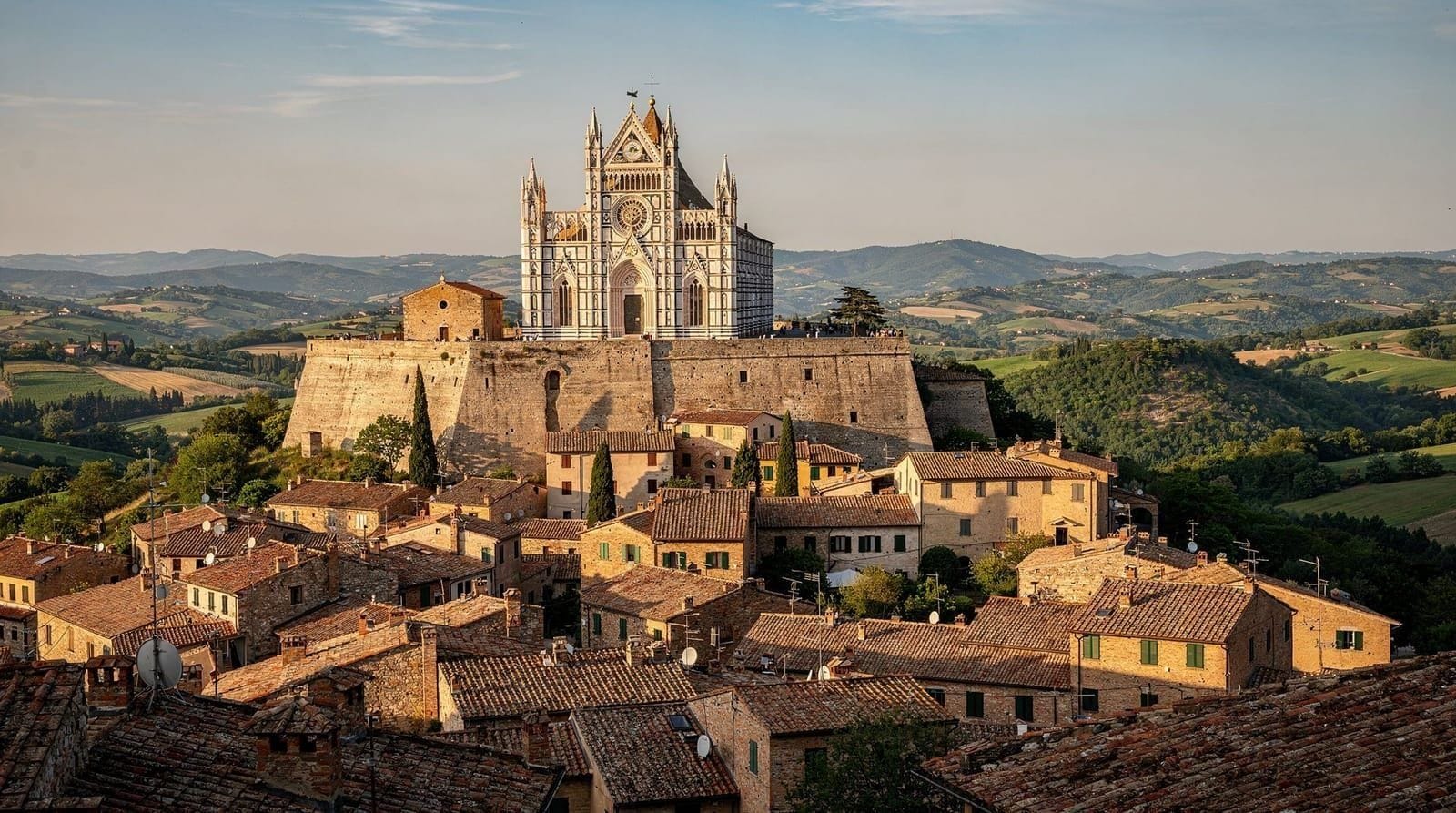
Day trip from Rome to Orvieto and Civita di Bagnoregio — guided tour with coach transportTour vs independent: the clear recommendation
For most visitors, a guided tour with transport is the right choice for Civita di Bagnoregio. The logistics of reaching it independently are genuinely difficult without a car, and the combination with Orvieto is most efficiently done with a tour that handles the 25km road transfer between the two.
If you are renting a car anyway for other day trips in the region (Viterbo, Civita, lake districts of northern Lazio), adding Civita to a self-driven itinerary is perfectly practical.
Guided tour cost: €70–100 per person for the combined Orvieto and Civita day, including transport, guide, and entry. Some tours depart from Termini; others require meeting at a designated point.
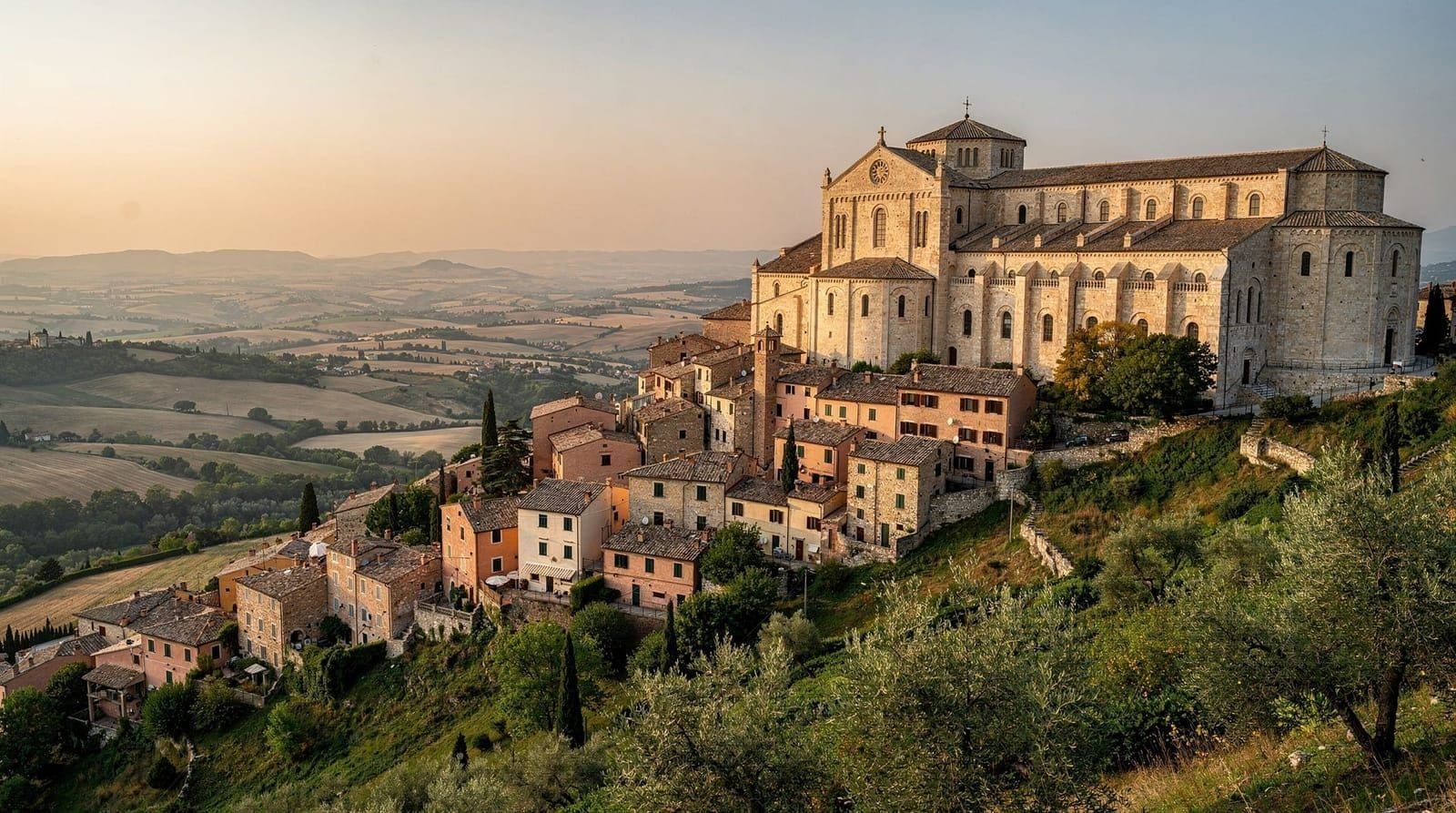
Rome: Assisi, Civita di Bagnoregio and Orvieto day tour — full-day guided trip covering three Umbrian highlightsTrain vs tour vs car: a genuinely honest comparison
Unlike most day trips near Rome, Civita has no reasonable train option — this is the single day trip in this guide series where the standard train-versus-tour framing doesn’t apply. Our broader train vs tour day trips guide covers destinations where both are realistic; for Civita, the choice is really car vs guided tour vs a long, multi-change bus journey best avoided by all but confident independent travellers. If you’re weighing Civita against other northern Lazio and Umbria options that do have train access — Orvieto alone, or Assisi — those are considerably simpler logistically on their own.
Practical information
- Entry fee (bridge): Approximately €5 adults, €3 children under 12. Collected at the ticket booth near the bridge.
- Best arrival time: Before 10:00 to avoid crowds. The village is very busy from 11:00–15:00 in summer.
- Parking (Bagnoregio): Municipal car park near the bridge approach, approximately €2–3 per hour.
- Cafe on the piazza: Light lunch (panini, bruschetta, local wine) available. Budget €10–20. Bring water; the limited facilities can be overwhelmed in peak season.
- Photography: The view of the pinnacle from the road at Bagnoregio is the classic shot. Afternoon light from the west is ideal for photographing the village from across the valley; morning light is better from within the village looking out. See best photo spots in Rome for wider regional photography context.
- Best months: April–June and September–October. July–August is hot and very crowded. See best time to visit Rome for seasonal planning.
- Combine with: Orvieto from Rome on the same day by car or guided tour.
- Destination page: Civita di Bagnoregio destination for the broader northern Lazio context.
- Northern Lazio alternatives: Viterbo and Tuscia day trip is another car-based northern Lazio day option.
- All day trips: Best day trips from Rome for the full ranked guide.
- 10-day itinerary: Central Italy 10 days for combining Civita with Umbria and Tuscany.
Frequently asked questions
Is Civita di Bagnoregio really dying?
Yes, in the literal sense that the tufa pinnacle continues to erode. The rate of erosion has been somewhat reduced by conservation interventions (concrete reinforcement of the base in some sections, drainage management). But the process is irreversible over geological time. The more immediate concern is the tension between conservation and the summer tourist volume, which imposes significant physical stress on the soft-stone buildings.
How busy is Civita in summer?
Very busy in July and August, particularly on weekends and on Italian public holidays. The bridge creates a natural bottleneck; visitor numbers can reach 2,000–3,000 per day in peak season. The village itself (population around 12) is overwhelmed by this volume. An early morning visit (08:00–09:30) is dramatically better than a midday arrival.
Can I stay overnight in Civita di Bagnoregio?
Yes — there are a small number of B&Bs and agriturismo properties in and around the village. Staying overnight transforms the experience; the village after the day-trip crowds leave in the afternoon regains its extraordinary stillness. However, accommodation options are limited and book up early for summer weekends.
Is the drive from Rome straightforward?
Yes. The A1 north to Orte exit, then SS204 and SS71 toward Viterbo and Bagnoregio is well-signposted and the roads are clear. Allow 1h45 from Rome to Bagnoregio. You will pass through the northern Lazio tufa country — ravines, cliff towns, and chestnut forests — making the drive itself scenically interesting.
Is Civita worth it compared to Orvieto alone?
Yes, if the visual drama of the pinnacle and the Calanchi landscape appeals to you — nothing near Rome looks quite like it. Orvieto alone has a greater cathedral and a livelier town for a full afternoon, but Civita’s 1.5-2 hours delivers a uniquely photogenic, almost surreal landscape you won’t see elsewhere in central Italy. Most visitors who make the long trip do both in one day rather than choosing between them.
Does the guided tour route through Assisi make sense as well?
Only if you have a genuinely long day and specific interest in St. Francis’s basilica — Assisi adds a further hour of driving each way beyond the Civita-Orvieto loop. For most first-time visitors, the two-site Orvieto and Civita combination is the better-paced day; save Assisi from Rome for a separate trip if it’s a priority in its own right.
Top experiences
Bookable activities with verified prices and instant confirmation on GetYourGuide.