Vatican Gardens tour — what to know before you book
Rome: Vatican Gardens Bus Tour and Vatican Museums Visit
Can you visit the Vatican Gardens independently?
No — the Vatican Gardens are only accessible via official guided tour or bus tour, priced at €33–€45 per person on top of the standard Vatican Museums ticket. The gardens cover 23 hectares and are genuinely beautiful, but the tour format and additional cost mean they are best suited to repeat Vatican visitors or keen garden enthusiasts.
The Vatican Gardens: an honest overview
The Vatican Gardens cover roughly 23 hectares — about half of Vatican City’s total area — and have been cultivated since the 13th century. They include formal Italian gardens with geometrically trimmed hedges and fountains, a less formal English garden in the northern section, kitchen gardens, an olive grove, and a reproduction of the Lourdes grotto.
They are genuinely beautiful, particularly in spring (April–May) when flowering trees are in bloom and in autumn when the light is soft. They are also one of the least visited areas of Vatican City — because access is tightly restricted to organised tours.
This is the central honest question any visitor should ask: is a Vatican Gardens tour the best use of 2–3 additional hours and €33–€45 on a Rome trip?
For most first-time visitors: probably not. The Museums and Sistine Chapel are more historically and artistically significant — read our Vatican Museums and Sistine Chapel guide and Sistine Chapel guide first if you have to choose. For people who have already seen the Museums, want tranquillity, or are visiting in spring when the gardens are at their finest: yes, it is a worthwhile addition.
| Access | Guided tour only — no independent walking |
| Cost | around €33–65/person, on top of Museums entry |
| Time needed | 2 hours (bus) to 3 hours (walking) |
| Best season | Spring (April–May) for peak bloom |
| Best for | Repeat visitors, garden enthusiasts, spring trips |
How the tours work
The Vatican offers two main tour formats:
Bus tour (most common, ~2 hours)
An open-top minibus travels the main garden routes with a commentary track. The bus makes limited stops. This format covers the most ground but is passive — you do not walk independently through the gardens.
Price: Approximately €33 per person, on top of the standard Vatican Museums ticket (€18). Many operators offer combined packages.
Vatican Gardens bus tour + Vatican Museums visitWalking tour with guide
A smaller-group walking tour of the gardens with a live guide. More immersive, covers less distance but in more depth. Typically sold as part of a combined Vatican day package.
Price: Approximately €45–€65 per person including Museums entry.
Papal Audience + Gardens combination
On Wednesday mornings when the Pope is in Rome, some operators combine the Papal Audience in St. Peter’s Square with a Vatican Gardens bus tour.
Vatican Papal Audience and Gardens bus tourWhat you see in the Vatican Gardens
Formal Italian garden (center and south)
The central section of the gardens, closest to the Apostolic Palace, is formal: geometrically clipped boxwood hedges, stone paths, and Renaissance-era fountains. The Fontana dell’Aquilone (Eagle Fountain, 1612) is the most photographed. Peacocks wander freely in this section.
English garden (north section)
The northern area, added in the 19th century at the request of Pope Gregory XVI, is more naturalistic — less manicured, with trees and informal plantings. Quieter and less visited even on tours.
Reproduction of the Lourdes Grotto
Pope Leo XIII had a reproduction of the Massabielle Grotto at Lourdes built in 1902. It is a place of Marian pilgrimage within the Vatican. Architecturally minor but emotionally significant for Catholic visitors.
The Vatican radio tower (Marconi Tower)
Guglielmo Marconi designed the radio tower in the gardens for Pope Pius XI in 1931. Vatican Radio, one of the world’s oldest international broadcasters, operated from here. The tower is visible from much of the gardens.
Views of the dome
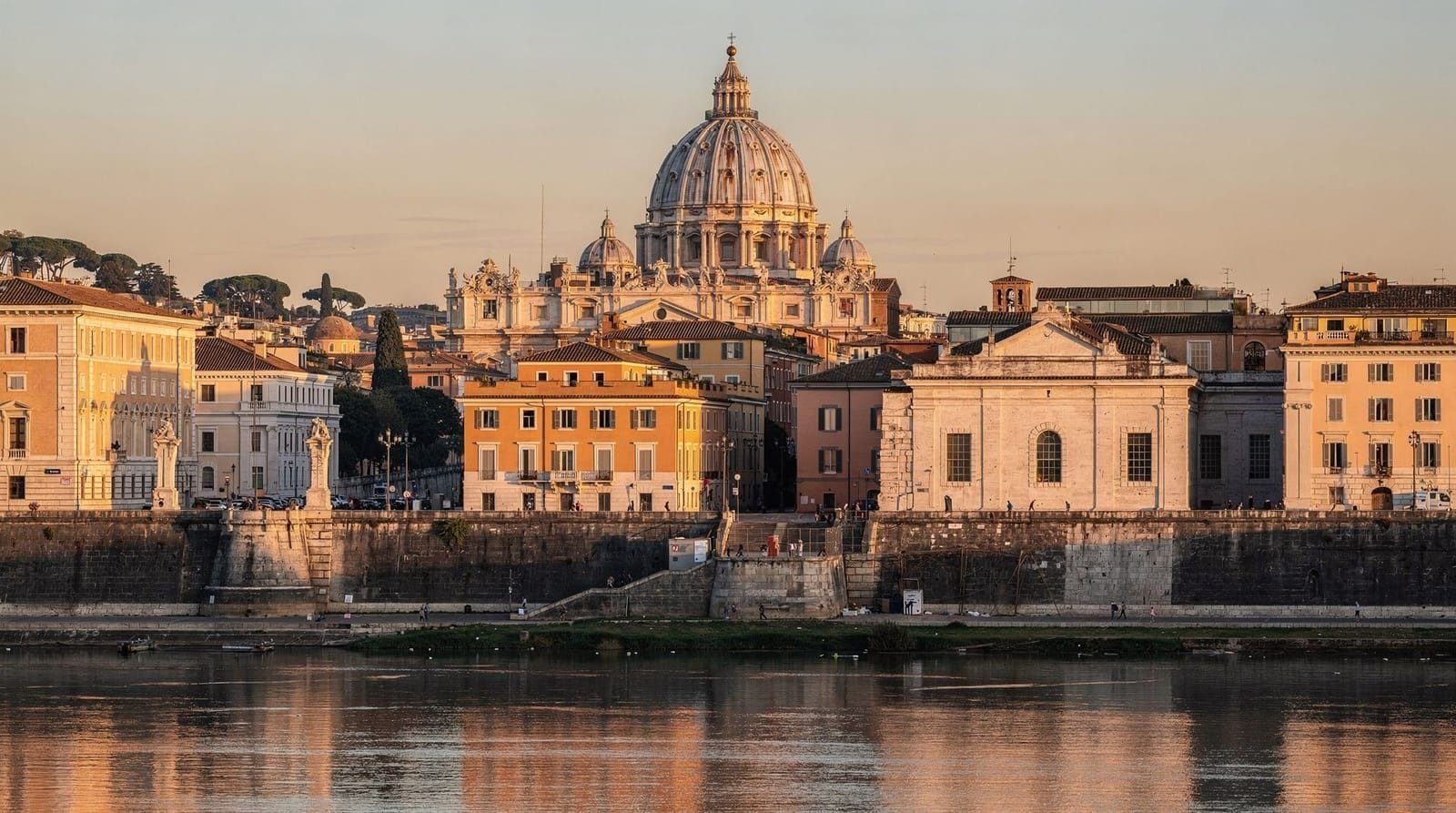
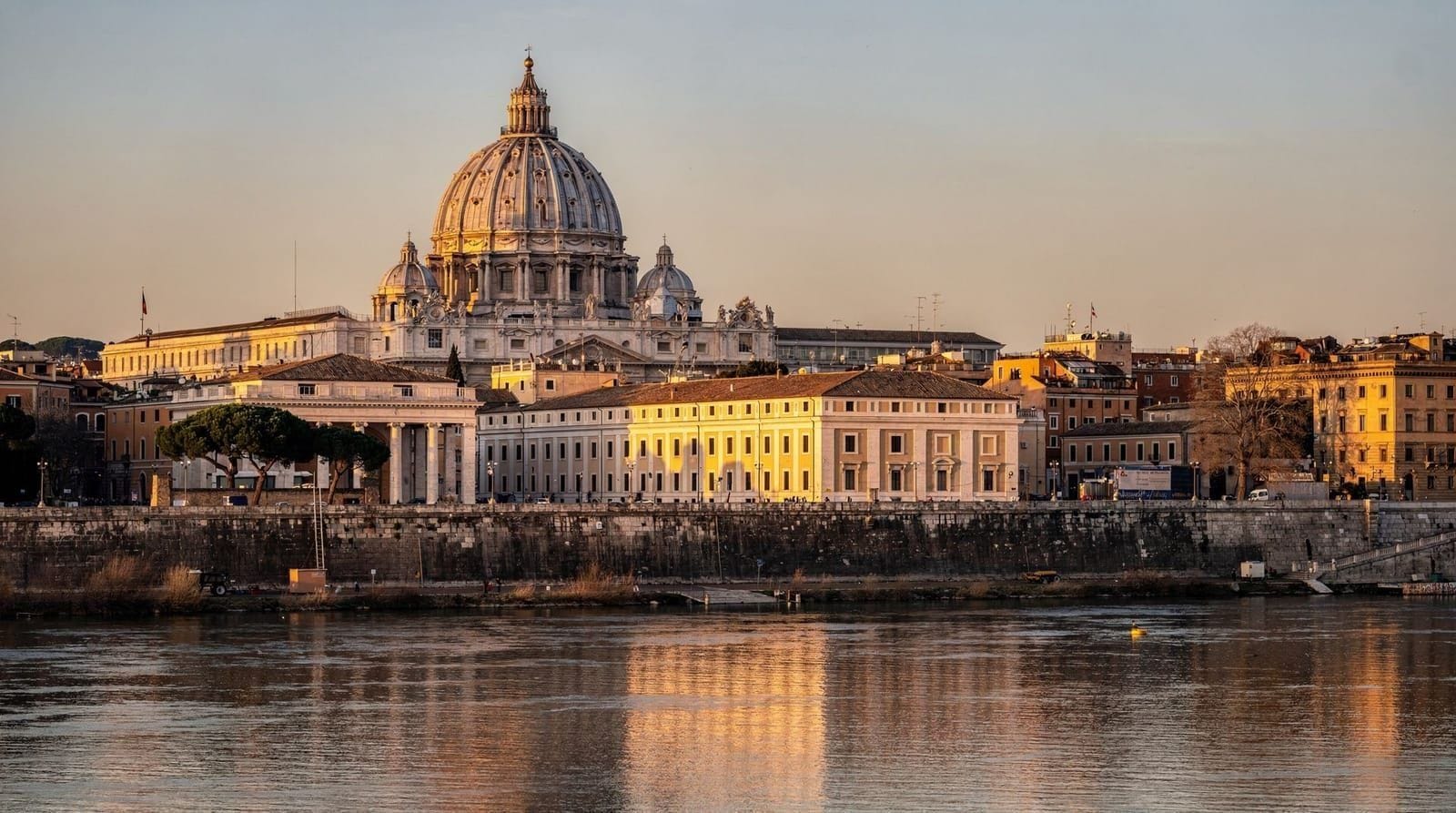
The garden route provides some of the best ground-level views of Michelangelo’s dome — particularly from the eastern areas looking back toward the Basilica. These are better photographic angles than you get from most publicly accessible viewpoints in Rome.
Best season to visit the Vatican Gardens
Spring (April–May): Peak bloom. Roses, wisteria, and fruit trees are flowering. The light is soft. This is the clear best time — worth specifically scheduling a Vatican trip around if gardens matter to you.
Autumn (September–October): Good colour and pleasant temperatures. Less crowded than spring but still attractive.
Summer (June–August): Gardens are green and maintained but less dramatically beautiful than spring. Heat makes the bus tour more comfortable than the walking tour; the covered minibus provides shade.
Winter (November–March): Gardens are less colourful but quieter. Some visitors prefer this for the calm. The Lourdes Grotto area is atmospheric in winter light.
For the full Vatican timing analysis, see our Vatican best time to visit guide.
Is a Vatican Gardens tour worth it?
Worth it if:
- You are a repeat Vatican visitor who has already seen the Museums and Sistine Chapel
- You are visiting in spring (April–May) when the gardens are at their most beautiful
- You want a slower, more contemplative Vatican experience away from the Museums crowds
- You are specifically interested in garden history, papal history, or church architecture from an outdoor perspective
- You have booked an early-morning Vatican Museums tour and have a free afternoon on the same day
Not worth it if:
- This is your first Vatican visit and time is limited — the Museums and Sistine Chapel should take priority
- You are visiting in the height of summer (July–August) and mainly want to avoid heat, not seek it
- You are travelling with children who will struggle with a 2-hour structured bus tour format — see our Vatican with kids guide for age-appropriate alternatives
| Option | Access | Cost | Best for |
|---|---|---|---|
| Bus tour | guided, seated, ~2 hrs | ~€33/person + Museums | first-time Gardens visitors, families |
| Walking tour | guided, on foot, ~2–3 hrs | ~€45–65/person + Museums | garden enthusiasts, photographers |
| Dome climb view | independent, from above | included in dome ticket | budget-conscious, time-pressed visitors |
| Villa Borghese instead | fully independent, free | free | anyone wanting green space without a tour |
Combining the Gardens with the Vatican Museums
The most efficient combination is to book a Vatican day package that includes Museums, Sistine Chapel, and Gardens in a single booking. The typical format:
09:00 — Vatican Museums early entry (3 hours) 12:00 — Brief break in Prati for lunch 14:00 — Vatican Gardens tour (2 hours) 16:00 — Return to St. Peter’s Basilica for dome climb (optional)
This uses a full day and covers the Vatican comprehensively. It is a long day — 8 hours of structured sightseeing — and requires stamina. Families with young children should plan a shorter alternative.
Practical notes for the Vatican Gardens tour
Dress code applies. Shoulders and knees must be covered throughout the Gardens as well as the Museums and Basilica. The dress code guide has the details: Vatican dress code rules.
Footwear. The walking tour involves cobblestone paths and gravel. Comfortable walking shoes are essential; no heels.
Photography. Photography is permitted in the Gardens (unlike the Sistine Chapel). The dome views from the gardens are among the most distinctive in Rome for photography — see best photo spots in Rome.
Booking. Gardens tours must be booked in advance — they are not available on a walk-up basis. Book through the official Vatican website (museivaticani.va) or through tour operators. Availability is limited and typically sells out 1–2 weeks ahead in peak season.
Frequently asked questions about the Vatican Gardens
Can I walk through the Vatican Gardens without a tour?
No — the Gardens are not open for independent access. All visits require a pre-booked guided tour or bus tour.
How long does the Vatican Gardens tour take?
Bus tours typically run 2 hours. Walking tours run 2–3 hours. Combined Museums + Gardens packages take a full day (6–7 hours).
Are children allowed on the Vatican Gardens tour?
Yes, but the bus tour format is more child-friendly than the walking tour. Children under 6 are free. The 2-hour tour requires sustained attention; for young children, factor in whether they will manage structured touring after an already long Museum visit.
Can I see the Vatican Gardens from the dome of St. Peter’s?
Yes — the gardens are fully visible from the dome terrace at 136 metres. This is a practical alternative if you want to see the gardens without booking a separate tour. The view from the dome covers the whole garden layout and provides excellent context.
Is the Vatican Gardens tour accessible for wheelchair users?
The bus tour is more accessible than the walking tour, but terrain varies. Contact the Vatican in advance to confirm accessibility for your specific needs.
Does a Vatican Gardens tour combine well with St. Peter’s Basilica or the dome climb?
Yes — most day packages route naturally from the Museums and Gardens toward St. Peter’s Basilica, and some visitors add the dome climb afterward for a different vantage point over the same gardens they just walked through at ground level. See our St. Peter’s Basilica guide for how to sequence a full Vatican day.
Is the Vatican Gardens tour a good romantic add-on?
For couples who have already done the standard Museums circuit, yes — the relative quiet and the dome views make it one of the more atmospheric Vatican add-ons. See our romantic Rome guide for how it fits alongside other quieter, less crowded experiences in the city.
The history of the Vatican Gardens: four centuries of papal landscape
The gardens have been shaped by successive popes over more than 400 years. Understanding this history makes the visit more interesting than it would otherwise be.
Medieval origins (13th–15th century): The first enclosed gardens were established by Nicholas III around 1279, primarily as kitchen gardens and orchid/fruit cultivation for the papal court. The area between the Apostolic Palace and the city walls was systematically planted during this period.
Renaissance formalization (15th–16th century): Pope Nicholas V and Innocent VIII began converting the working gardens into pleasure grounds more typical of Renaissance villa culture. The addition of loggias, fountains, and geometric plant arrangements reflects the same aesthetic that was reshaping Rome’s private villa gardens (Villa Borghese, Villa d’Este at Tivoli) during this era.
The Belvedere Courtyard: Bramante designed the Cortile del Belvedere (1505–1506) for Pope Julius II as a formal extension of the gardens connecting the Apostolic Palace to the Belvedere Villa. This colossal terraced space, later partially subdivided to house library collections, was one of the most ambitious landscape projects of the Renaissance.
Baroque and later additions (17th–19th century): Pope Paul V added the Fontana dell’Aquilone (Eagle Fountain, 1612) and further elaborated the formal Italian sections. Pope Gregory XVI (1831–1846) introduced the naturalistic English garden section in the northern areas — a Victorian-era fashion that Pope Leo XIII later expanded further.
The Lourdes Grotto (1902): Built at the request of Pope Leo XIII and modelled precisely on the Massabielle Grotto in Lourdes where the Marian apparitions of 1858 occurred. It became and remains a site of personal Marian pilgrimage for Vatican staff and visiting dignitaries.
Guglielmo Marconi and Vatican Radio (1931): The radio tower in the gardens was a direct personal project of Marconi, who spent the last years of his life in close relationship with the Vatican. The first Vatican Radio broadcast on 12 February 1931 was addressed by Pope Pius XI. The Jesuit-run station broadcast in over 40 languages throughout the Cold War period as one of the few international radio services with genuine independence.
What makes the Vatican Gardens unusual in the context of Rome
Rome has many villa gardens — Villa Borghese, Villa Pamphilj, the Orto Botanico at Trastevere — but the Vatican Gardens are unique in several ways.
They are alive with wildlife. Without cars and with 23 hectares of vegetation isolated from the urban grid, the gardens host a significant bird population. Peacocks roam freely in the formal sections. In spring, the rose and wisteria bloom coincides with intense birdsong — an auditory contrast to the rest of Rome.
The topography is varied. The gardens are not flat. The northern section rises toward the Vatican walls and includes the highest point in Vatican City. From this elevation, views over the domes of Rome extend to the east and south. The topographic variety means the bus tour takes you through meaningfully different environments in a short distance.
Agriculture continues. Productive kitchen gardens still operate within the Vatican Gardens, supplying vegetables to the papal residence. This direct connection between a medieval tradition and the contemporary Vatican is genuinely unusual — most comparable European palaces long since converted productive gardens to purely ornamental use.
Silence. Perhaps the most surprising element for visitors arriving from the Vatican Museums: the gardens are quiet. The sound of fountains, birds, and wind replaces the constant background murmur of a major tourist site. For visitors who find the Museums sensory overload, an hour in the gardens is a genuine counterbalance.
Alternatives to the Vatican Gardens if you want green space near the Vatican
If the Vatican Gardens tour pricing or format does not fit your plans, several alternatives near the Vatican provide comparable green-space respite from the tourist circuit.
Villa Borghese (2.5 km, free public park)
Rome’s largest central park covers 80 hectares and is entirely free. It includes formal avenues of umbrella pines, a lake for rowing boats, several museum buildings (Borghese Gallery, Galleria Nazionale d’Arte Moderna), and consistent quiet on weekday mornings. The northern sections are genuinely park-like — grass, trees, birdsong. A metro to Flaminio and a 10-minute walk provides access.
Pincian Hill (Terrazza del Pincio, free)
The hilltop terrace above Piazza del Popolo, 2 km from the Vatican, has formal gardens and one of Rome’s best panoramic views. The Villa Medici gardens adjacent to the French Academy are occasionally open for tours (separate booking). Free to walk through; the terrace itself is one of the better outdoor viewpoints in Rome.
Orto Botanico (Trastevere, €8 admission)
Rome’s botanical garden in Trastevere is 12 hectares of varied plantings including a Japanese garden, historic rose collection, and a remarkable greenhouse section. Less well known than the Vatican Gardens, smaller in scale, but directly accessible without a guided tour. Wednesday–Saturday mornings are quietest.
Castel Sant’Angelo ramparts and gardens
The gardens on the Castel Sant’Angelo terrace are free with the entry ticket (€15). The rampart walkways and upper terrace have views over the Tiber toward the Vatican dome. The formal garden sections — small but well-maintained — provide 30 minutes of quiet walking after the main castle visit.
What Vatican Gardens visitors most commonly say they did not expect
“It felt like being inside a village.” Vatican City has a population of approximately 800 residents: clergy, Swiss Guards, curial staff, and their families. The gardens are part of a functioning community’s daily environment. The gardeners you see are Vatican employees; the buildings adjacent to the path include real offices and residences. This community dimension distinguishes the Vatican Gardens from any public park or museum garden in Rome.
“The dome views were worth it alone.” Photography of St. Peter’s dome from ground level within Vatican City is not possible from public areas — the dome is visible from St. Peter’s Square but at a distance, and from Via della Conciliazione but on axis. The Gardens provide oblique close-range views of the drum and lower dome sections that are simply not available from any publicly accessible location outside Vatican City. For architectural photographers, this alone can justify the tour cost.
“I noticed things I would never have seen from the Museums.” The external architecture of the Vatican Museums complex — the medieval towers, the Sistine Chapel’s exterior facade (plain brick, completely different from the ornate interior), the Vatican Observatory dome (now relocated to Castel Gandolfo but the historic building remains), and the sheer physical scale of the Apostolic Palace — are visible from the gardens as working architectural objects rather than stage sets. Visitors who have been inside the Museums often report the external view clarifies the spatial relationships they could not understand from inside.
“I needed it after the Museums.” This is perhaps the most consistent reaction: after 3 hours of crowded gallery navigation, the gardens provide quiet and natural scale. This is not a small thing. Rome’s major tourist sites are genuinely tiring; an hour of gardens before the inevitable afternoon at a café is a practical recovery strategy.
Staying nearby: making the most of a Gardens day
If you’ve built a full Vatican day around the Museums and Gardens, staying in Prati rather than commuting across the city removes the need to rush at the end of a long day. Prati is a five-to-ten-minute walk from the Vatican Museums entrance, has a genuine residential feel away from the immediate tourist strip, and puts you close enough to return to your hotel for a break between the morning Museums session and an afternoon Gardens tour if your itinerary allows it. For visitors looking for other under-the-radar Rome experiences in the same spirit as the Gardens — quieter, less crowded, rewarding patience over speed — our Rome hidden gems guide covers a similar category of sights across the rest of the city.
Top experiences
Bookable activities with verified prices and instant confirmation on GetYourGuide.