Rome in spring — April, May and early June guide
Rome: Borghese Gallery Skip-the-Line Entry Ticket
Is spring the best time to visit Rome?
May and mid-to-late April (avoiding Easter) are widely considered Rome's best months — 18–23°C, manageable crowds compared to summer, long days, and spring flowers in Villa Borghese and along the Appian Way. Easter week is the major exception — it brings peak prices and extreme crowds. Book everything 2–3 months ahead for any spring visit.
Spring in Rome: the sweet spot with one major caveat
Rome’s spring — April through early June — offers the best combination of the year: warm but not hot temperatures, long daylight hours, spring flowers in the parks and along the Appian Way, and the city at its most photogenic. For most visitors without fixed holiday dates, some point in this window is the optimal choice.
The caveat is Easter. In 2026, Easter falls on 5 April, which means Holy Week runs from 29 March to 5 April. During this period, Rome transforms: pilgrimage crowds of 500,000+ descend on the Vatican, hotel prices spike to August-level or higher near the historic centre, and every major sight requires advance booking weeks ahead. The experience of Rome in the final days of March / first week of April 2026 is categorically different from the experience in late April.
| Temperature | 15-22°C April, 23-27°C May, 28-30°C by mid-June |
| Best window | Mid-to-late April, or May |
| Avoid if possible | Easter week (29 March-5 April 2026) |
| Booking lead time | 3-4 weeks for May, 4-8 weeks for Easter |
| Pack | Light layers, light waterproof, sun protection from May |
| Month | Crowds | Highlight | Watch out for |
|---|---|---|---|
| Early April | Very high (Easter) | Papal Holy Week events | Peak prices, sold-out slots |
| Late April | Moderate | Villa Borghese blooming, artichokes | 25 April holiday bridge |
| May | High but manageable | Roses, best light, outdoor dining | Book 3-4 weeks ahead |
| Early June | Building toward summer | Still pleasant first 10 days | Heat and humidity rising fast |
April: Rome’s most variable month
Weather: 15–22°C average high, dropping to 9–12°C in the evenings. Variable — rain is possible, but sunny periods predominate.
Easter week (29 March – 5 April 2026)
Easter is Rome’s largest single annual crowd event. The data from recent years: on Easter Sunday 2024, approximately 80,000 people gathered in St Peter’s Square alone for the papal blessing.
Practical implications:
- Vatican Museums, Colosseum and Borghese Gallery: book 4–8 weeks ahead — all peak demand
- Hotels near the Vatican and Centro Storico: often fully booked by January for Easter week
- Street pressure around St Peter’s: expect large crowds on Good Friday (Stations of the Cross at the Colosseum, night event), Holy Saturday, and Easter Sunday
- Public transport: additional services, but also additional crowd
If you have flexibility, shift your trip to the week after Easter. The pilgrims leave quickly, and mid-April Rome is wonderful.
Mid-to-late April
Post-Easter April is, for many experienced Rome visitors, the ideal window. Temperatures are in the high teens, days are long (sunset around 20:00), and the city returns to a manageable level of tourism.
Ponte del 25 Aprile: Italy’s Liberation Day (25 April) is a national holiday. Some businesses close; Romans often travel. A long weekend centred on 25 April brings modest domestic crowd increase — nothing compared to Easter.
What’s good in April:
- Villa Borghese in bloom (wisteria, roses beginning)
- The Appian Way lined with wildflowers in the verges
- Artichoke season peaks: carciofi alla romana (braised with herbs) and carciofi alla giudia (fried, Jewish Ghetto style) are at their best in April
May: arguably Rome’s best month
Weather: 23–27°C, mostly stable, excellent for outdoor sightseeing. Rain is possible but uncommon. Sunset around 20:30.
May hits the golden balance between pleasant temperature, reasonable crowds (high but not maximum) and full operation of everything the city offers.
What makes May exceptional:
- The light quality in May is outstanding — long golden hours morning and evening, soft shadows on the Forum columns
- All attractions operate at full capacity and hours
- Villa Borghese’s roses are in peak bloom (the rose garden opens in May)
- Outdoor dining is at its best — restaurant terraces fill naturally with both tourists and locals
- The city’s pace is energetic without the exhausting intensity of summer
Booking in May: Borghese Gallery, Colosseum, and Vatican should be booked 3–4 weeks ahead for popular time slots. Availability is tighter than April but not as scarce as August.
Borghese Gallery entry ticketPonte del 1 Maggio: International Labour Day (1 May) is a major Italian bank holiday. The day itself sees some closures; the surrounding long weekend brings some domestic traveller increase.
Early June: heat arriving
Weather: 28–30°C by mid-June, with humidity building. Still manageable for most visitors but noticeably warmer than May.
June is transitional. The first two weeks share May’s pleasant character; from around 10–15 June, temperatures climb towards the summer range. Crowds build steadily towards their July/August peak.
If June is your window, aim for the first 10 days and plan with the same awareness of heat management that summer requires — early morning and late afternoon as prime sightseeing windows, midday breaks.
Festa della Repubblica (2 June): Italy’s national holiday, with a large military parade along Via dei Fori Imperiali (between the Colosseum and Piazza Venezia). The parade itself is worth seeing if you happen to be in Rome — it closes Via dei Fori Imperiali to traffic and draws large domestic crowds, so plan around the road closure for morning transport.
Spring flowers and gardens
One of spring’s genuine pleasures is Rome’s gardens and outdoor spaces:
Villa Borghese: The park surrounding the Borghese Gallery covers 80 hectares of lawns, umbrella pines, fountains and gardens. The formal rose garden (Roseto Comunale, technically on the Aventino nearby) opens in late April–May for the rose season.
Appian Way (Via Appia Antica): In April and May, the verges of the ancient road are lined with poppies, fennel flowers, and wild herbs — particularly beautiful on Sunday when sections are car-free.
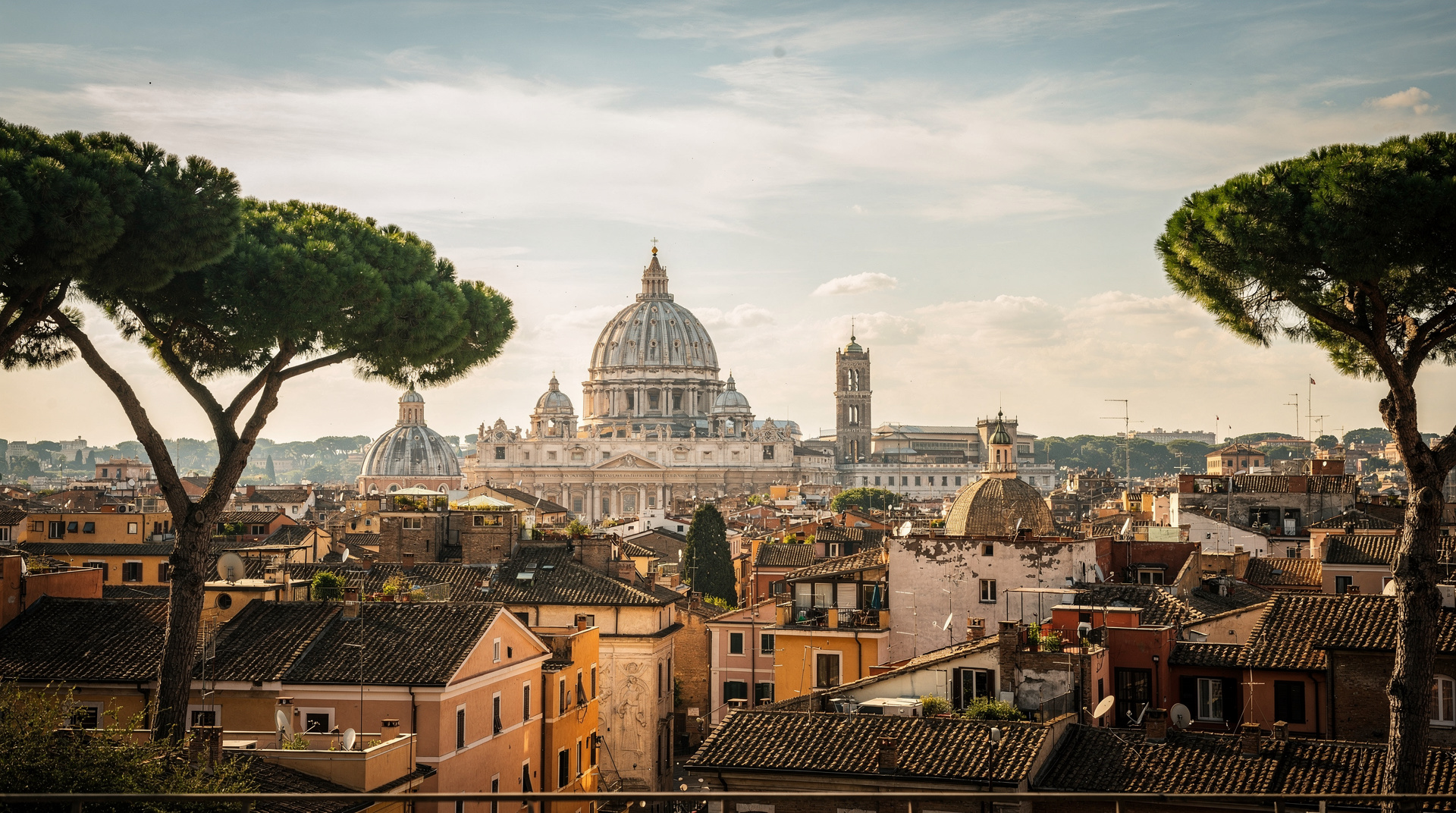
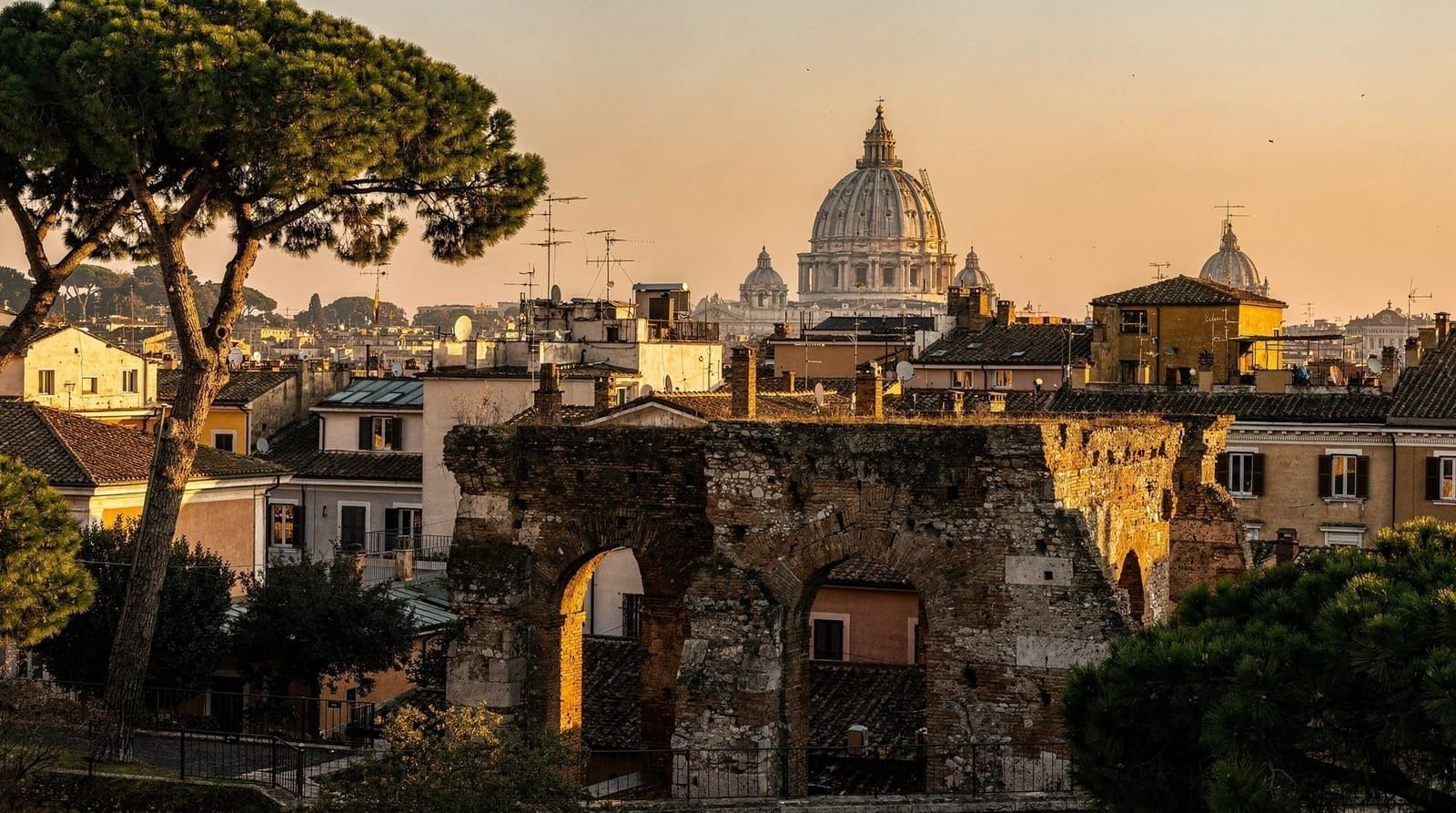
Orange Garden (Giardino degli Aranci) on the Aventino: Open year-round, but spring blooms (orange blossom scent is strongest April–May) make this terraced garden above the Tiber particularly pleasant. The keyhole view of St Peter’s dome at Piazza dei Cavalieri di Malta is a short walk away.
Villa Doria Pamphilj: The largest park within Rome’s walls — 184 hectares. Less visited than Villa Borghese, but excellent for a morning walk in spring.
Artichoke season
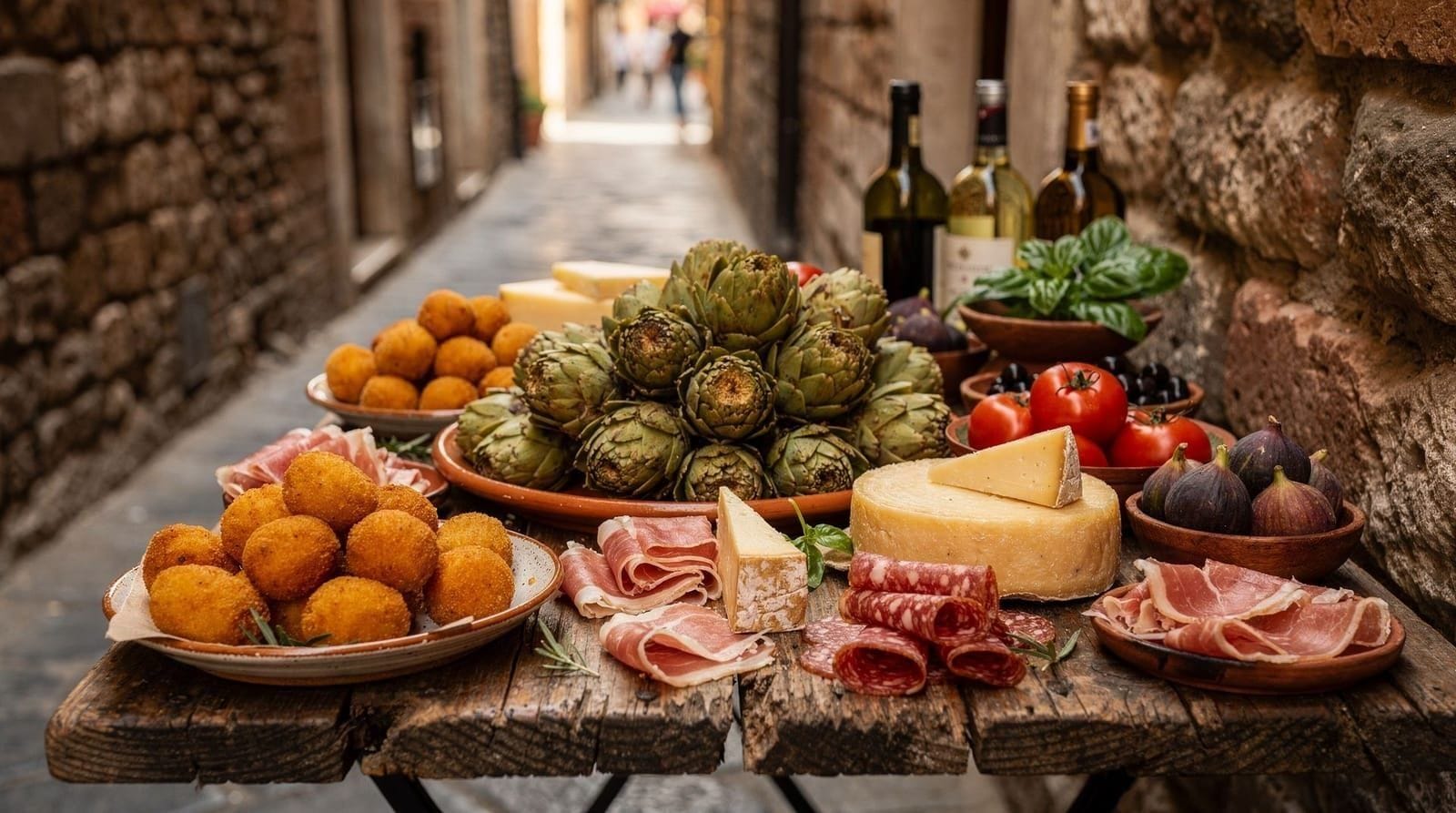
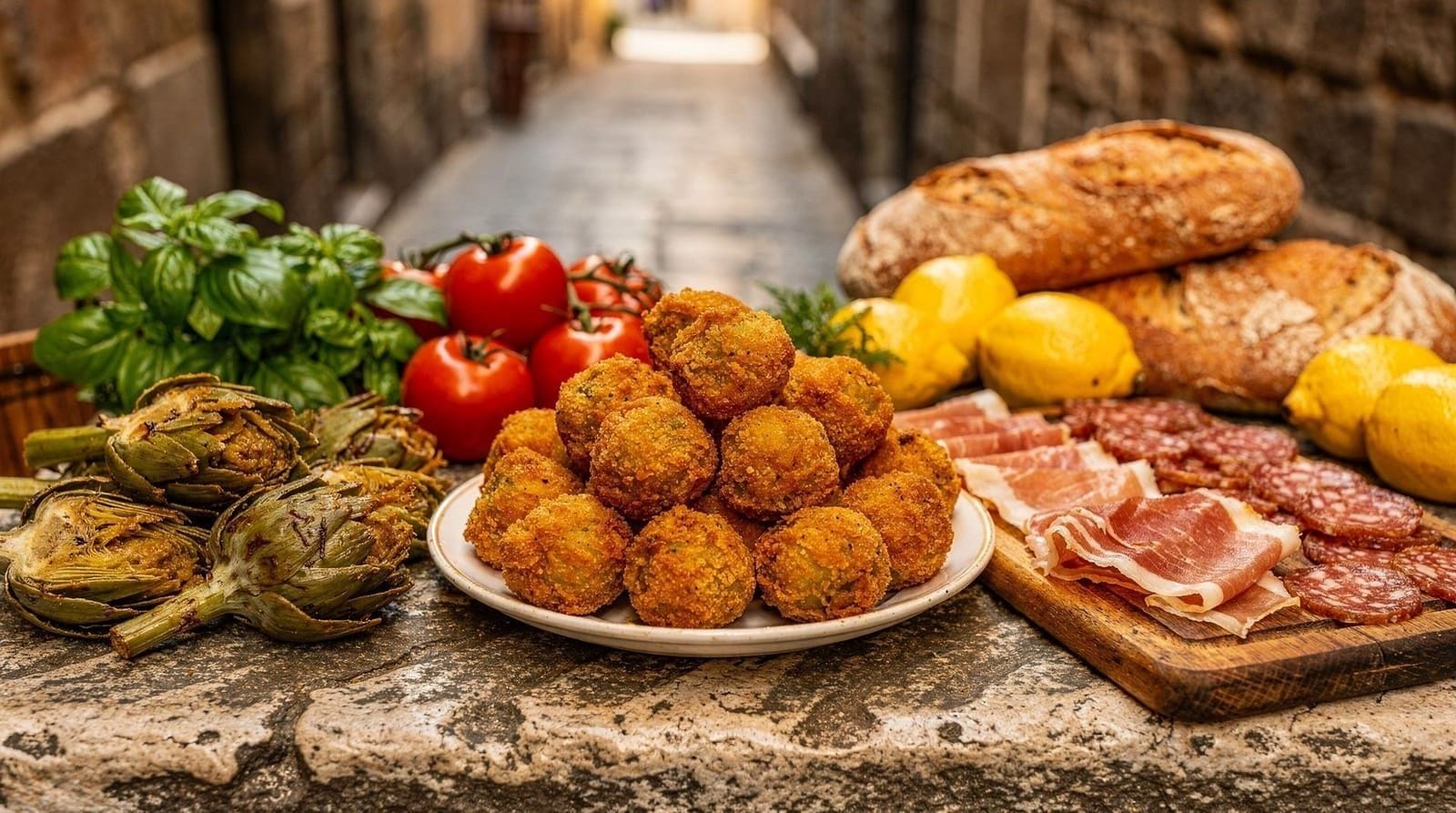
Rome’s signature spring vegetable is the Roman artichoke — and spring is when it dominates local menus:
- Carciofi alla romana: Braised whole artichoke stuffed with mint and garlic. Season runs February–April, peaking in March–April.
- Carciofi alla giudia: Deep-fried whole artichoke until crispy (a Jewish Ghetto speciality). Available at restaurants in the Ghetto and beyond. Seek it at Nonna Betta (Via del Portico d’Ottavia) or Sora Margherita (Piazza delle Cinque Scole).
What to pack for spring Rome
- Light layers — warm in the day, cool in the evenings. A light down or wool layer for evenings in April.
- Light waterproof — brief spring rain showers are possible in April and May
- Sun protection from May — factor 30+ sunscreen and a hat
- Comfortable walking shoes — cobblestones are the dominant surface
Spring booking strategy: what to book and when
Spring is competitive for booking, particularly around Easter. Here is a practical booking timeline:
4–6 months before travel (for Easter week 2026):
- Hotels in Vatican area, Centro Storico, Monti: essential to book this far ahead
- Vatican Museums early access tours: official Vatican site opens these gradually
- Borghese Gallery: check if 2026 spring dates are yet available; book when opened
6–8 weeks before travel (for May or mid-April):
- Colosseum timed entry: official Colosseo site; book 3–4 weeks minimum, 6 weeks for Saturday morning slots
- Borghese Gallery: aim for when your target date opens (typically 10–14 days before)
- Vatican Museums: official skip-the-line or guided tour through reputable operator
- Popular restaurants (if you have specific targets): OpenTable or direct reservation
On arrival:
- Borghese Gallery cancellation slots: the official site occasionally releases cancelled slots same-day. Worth checking the app version for last-minute availability.
- Colosseum: if pre-booked slots are showing as full, check again every day starting 30 days before your visit — cancellations release unpredictably.
Spring day-trip considerations
Spring is the ideal season for Rome’s day-trip options:
Tivoli: Villa d’Este’s gardens are at their best in April–May, with the fountains running in full operation and the surrounding grounds in spring flower. The train from Roma Tiburtina takes 40–60 minutes; trains run regularly.
Ostia Antica: The archaeological site is extraordinary in spring light. Go on a weekday morning in May when tour groups are still light. Take the Metro B to Piramide then the Roma-Lido regional train.
Castelli Romani: The hillside towns of Frascati, Castel Gandolfo and Marino are surrounded by blossoming orchards and vineyards in April. Frascati is accessible directly by regional train from Termini.
Orvieto: The direct regional train from Termini (under 90 min) and Orvieto’s extraordinary cathedral facade are at their most photogenic in spring clarity.
The Easter experience: a practical guide for attendees
If attending Easter events at the Vatican is your specific purpose, here is what to know:
Palm Sunday (29 March 2026): Mass in St Peter’s Square. Free, no tickets required, but arrive by 09:30 for a good position for the 10:30 Mass. Crowds are large.
Holy Thursday (2 April): Mass of the Chrism at St Peter’s Basilica; Washing of the Feet ceremony (Mandatum) elsewhere.
Good Friday (3 April): Stations of the Cross at the Colosseum (Via Crucis), presided over by the Pope, at 21:15. This is outdoors and free — arrive by 19:30 to secure a viewpoint.
Easter Sunday (5 April): Papal Mass at 10:00 in St Peter’s Square, followed by the Urbi et Orbi blessing. Free but requires tickets for the Mass itself (obtain from the Papal Prefecture). Hundreds of thousands attend. Crowd density in the Borgo/Vatican area begins building Friday–Saturday; plan your accommodation checkout on Monday if possible.
For the Jubilee context affecting Easter 2026 specifically, see the Rome Jubilee 2025–2026 guide.
Spring food: what to eat
Artichokes: Season peaks March–April. Order:
- Carciofi alla giudia at Nonna Betta (Via del Portico d’Ottavia 16) in the Jewish Ghetto — the canonical address
- Carciofi alla romana at Checchino dal 1887 (Via di Monte Testaccio 30) in Testaccio
Fava beans (fave): Fresh fave appear in spring markets and are traditionally eaten raw with pecorino romano on 1 May (the Roman “Fave e Pecorino” tradition). Mercato di Testaccio and Campo de’ Fiori are the best markets for fresh spring produce.
Peas and spring lamb: Late April through May, Roman menus feature abbacchio (Roman spring lamb), often braised or roasted with rosemary. Restaurants in Testaccio — Felice a Testaccio (Via Mastro Giorgio 29), Da Remo (Piazza di Santa Maria Liberatrice 44) — do this properly.
For booking strategy around Easter 2026, see the Rome jubilee and major events guide. For an overall seasonal view, see the best time to visit Rome guide.
What spring looks like neighbourhood by neighbourhood
Monti: Rome’s best all-around neighbourhood is at its peak in spring. The independent boutiques open their doors onto the street, outdoor café seating fills from mid-morning, and the Via Baccina and Via del Boschetto back streets provide the most pleasant aimless walking in central Rome. Proximity to the Colosseum makes morning visits efficient.
Trastevere: Spring evenings in Trastevere — with restaurants spilling onto cobblestone lanes, jasmine beginning to scent the air, and the Santa Maria in Trastevere basilica lit against the darkening sky — are among Rome’s most memorable experiences. Come in the evening rather than the daytime, when tourist density in the main piazzas is lower.
Testaccio: The covered Mercato di Testaccio is busy year-round but spring produce transforms the food stalls — artichokes, fava beans, peas, and the season’s first asparagus. The neighbourhood’s trattorias run at local capacity in spring evenings before summer changes the demographic.
Vatican/Prati: The Jubilee carryover makes Vatican-area streets busier in spring 2026 than in pre-Jubilee springs, particularly around Easter. The residential Prati neighbourhood to the north, however, is a calm and useful base — well-served restaurants, close to the Vatican without being in the tourist crush.
Photography in spring
Spring light is extraordinary in Rome. The combination of lengthening days, clear air without summer haze, and the visual contrast of ancient stone against spring green is unique to the April–May window.
Best spring photography spots:
- The Roman Forum from above (Campidoglio viewpoint or Via Sacra upper section) with wildflowers along the lower ruins
- The Aventino Hill rose garden in May (Roseto Comunale, Via di Valle Murcia) — free entry, stunning
- The Appian Way with spring flowers along the verges, particularly on Sunday when it is car-free
- Piazza della Rotonda (the Pantheon square) at 06:30–07:00 before the day crowds arrive, spring morning light hitting the columns
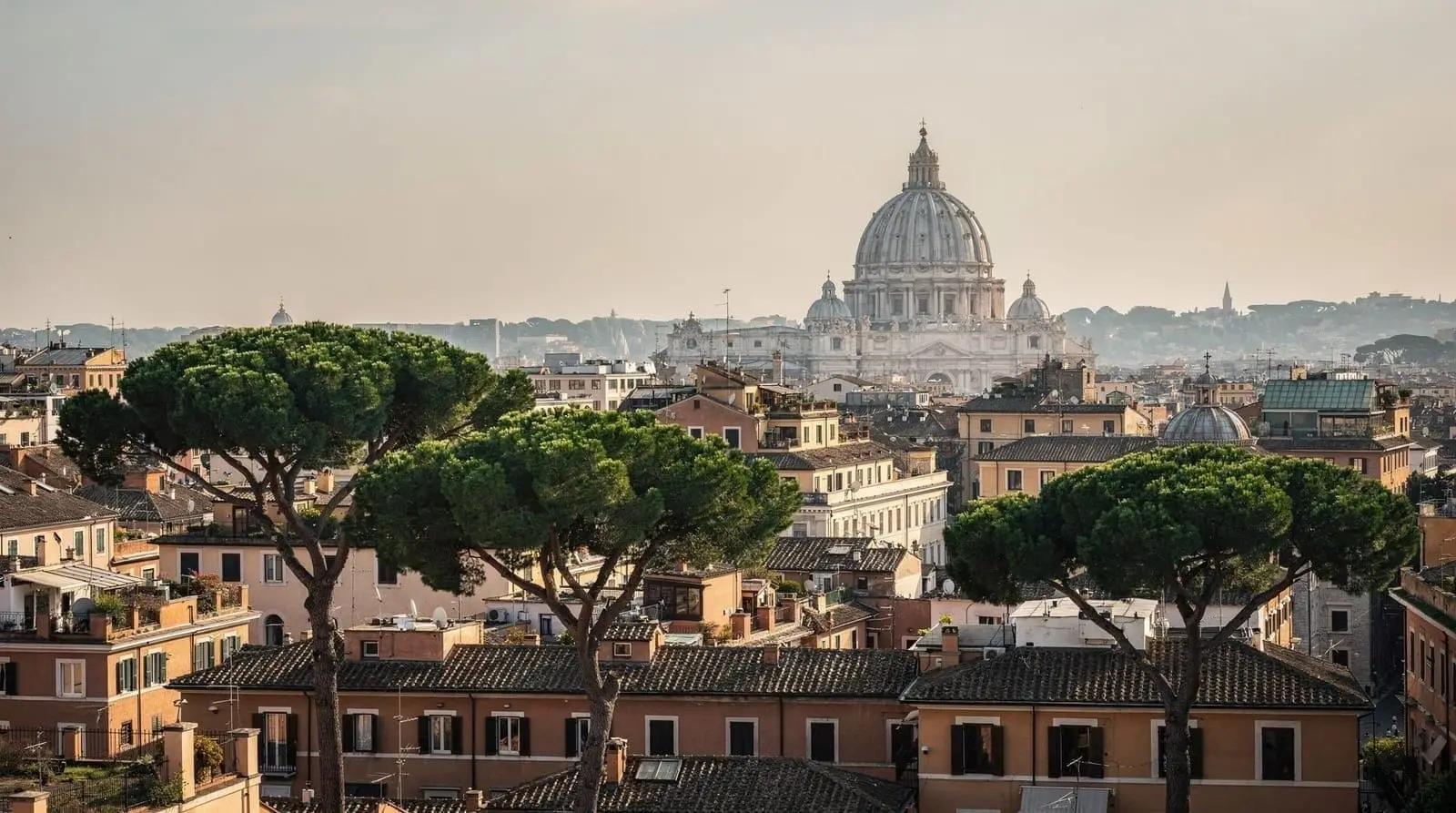
- Villa Borghese from the Pincio terrace: spring green trees, domes in the distance, soft light
For recommended viewpoints and timing, see the best photo spots in Rome guide.
Spring on a budget
Spring is Rome’s highest-demand season for prices (particularly Easter and May), but some strategies apply:
- Book accommodation 6+ weeks ahead and use price alerts on Booking.com or Hotels.com — rates spike as Easter approaches, then sometimes partially fall in the 2–3 weeks before travel as unsold rooms enter promotional pricing
- April mid-week vs weekend: Friday–Sunday hotel rates in April are typically 20–40% higher than Monday–Thursday rates as European short-break visitors occupy weekends
- Ticket strategy: The Colosseum is non-negotiable for booking ahead. The Capitoline Museums and Castel Sant’Angelo have no advance booking requirement and minimal queues even in May — worth including on your list
- Free Sundays: The first Sunday of each month, all Italian state museums offer free entry. In May, this can coincide with the Colosseum and Roman Forum — but it also means those sites are at maximum crowding. A practical trade-off decision: free entry vs crowd management.
For the full budget guide, see Rome on a budget.
Transport in spring: anything to know?
Spring doesn’t change Rome’s fundamental transport options, but a few seasonal notes:
Easter week traffic: The week around Easter brings additional coach tours, pilgrimage buses, and taxi demand near the Vatican and Centro Storico. Allow extra journey time for Vatican-area trips, especially Good Friday and Easter Sunday. Metro Line A (Ottaviano) sees its highest single-day usage of the year on Easter Sunday.
April/May holiday bridges (ponti): The sequence of bank holidays in late April and early May — Liberation Day (25 April) and Labour Day (1 May) — often creates long weekend “bridges” (ponti) when Romans travel domestically and visitor numbers in the city adjust. Transport is busier around these dates; book train day-trips in advance.
Cycling in spring: Spring is the best season for cycling in Rome. The Appian Way is partially car-free on Sundays; e-bike and standard bike tours offer an excellent way to cover ground with wildflowers visible along the verges. For Appian Way e-bike experiences, guided tours handle logistics:
Appian Way, catacombs and aqueducts e-bike tourSpring evenings in Rome
Spring evenings are among the city’s best. Temperatures from about 15°C in April to 18–22°C by May make outdoor dining genuinely pleasant without summer’s oppressive heat.
Evening walks: The classic Trastevere evening — narrow cobbled streets, trattorias with outdoor tables, the basilica of Santa Maria in Trastevere lit up at 21:00 — is at its best in May evenings before the summer tourist rush peaks.
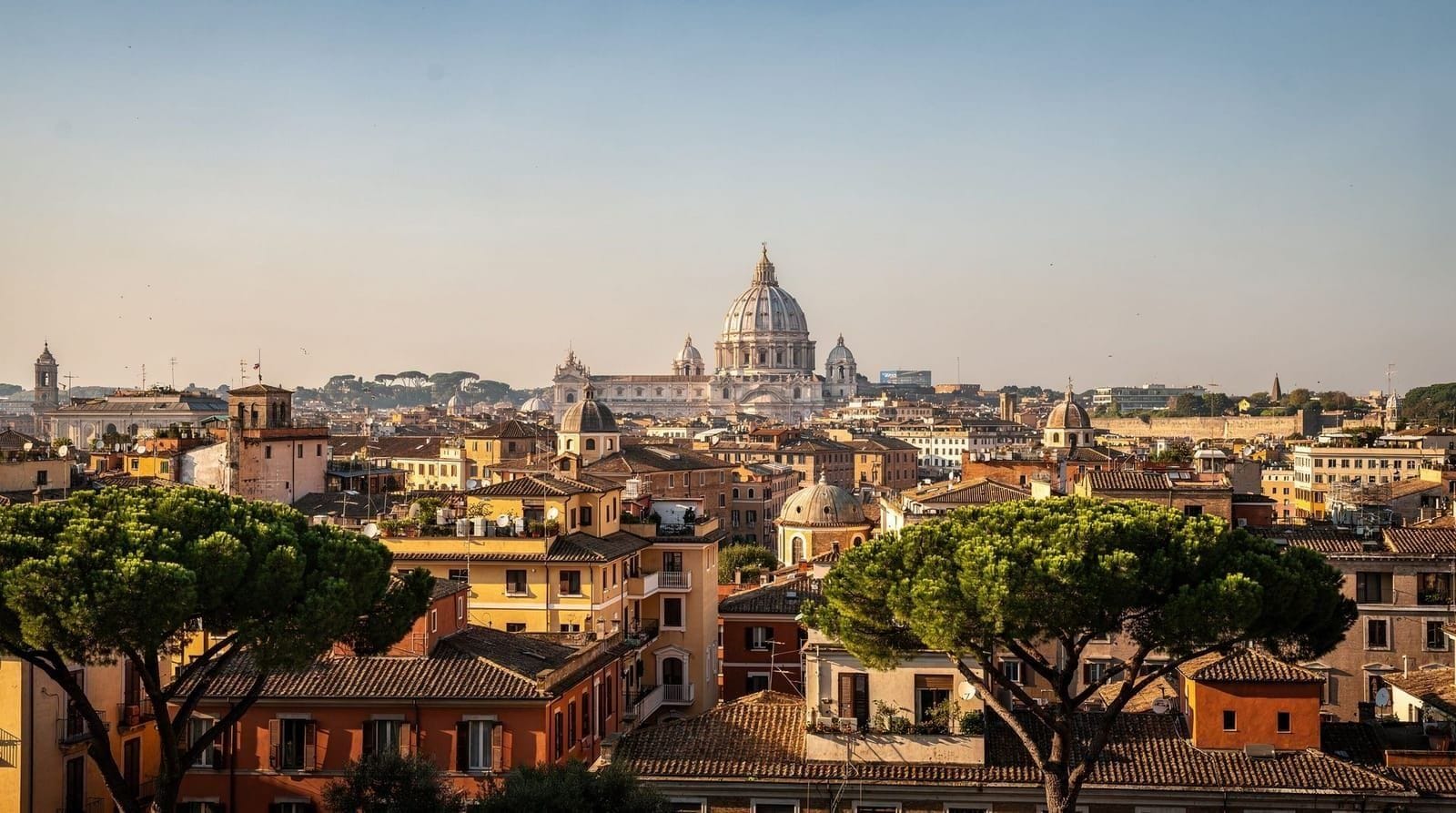
Sunset at the Giardino degli Aranci: The Orange Garden on the Aventino faces west over the Tiber towards St Peter’s. In late April and May, sunset at this vantage point (around 20:00–20:30) creates views across Rome that rival more famous panoramas.
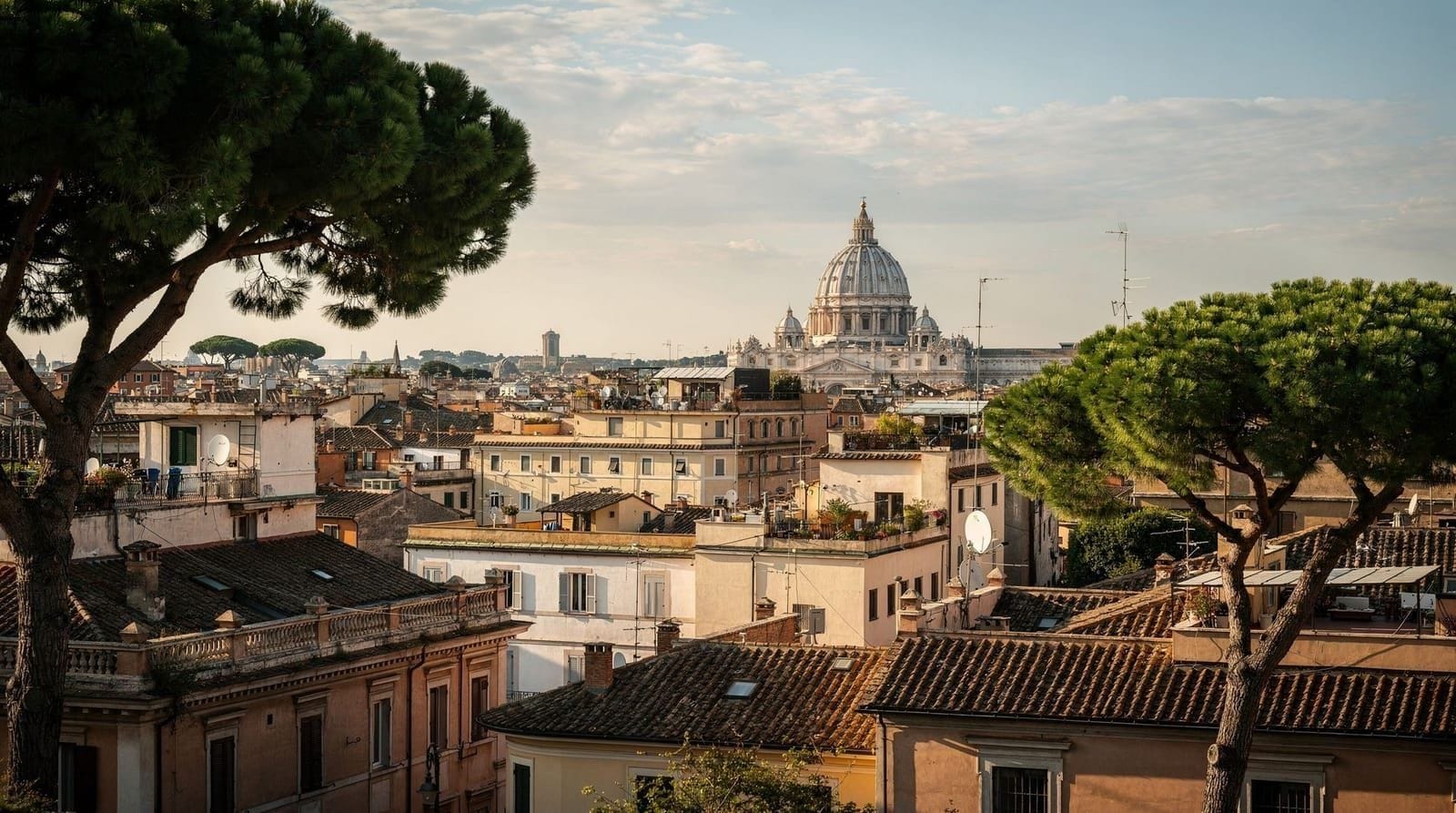
Rooftop bars in spring: Rome’s rooftop terraces (on hotels and some restaurants in Prati, Monti and near the Colosseum) are at their most pleasant from late April. The city skyline in spring evening light with the distant dome of St Peter’s is a recurring visual reward. See the Rome rooftop bars guide for specific recommendations.
Late spring markets: The antique market at Porta Portese runs every Sunday morning year-round, but spring mornings are the best time to browse — cool weather, pleasant strolling, and the market at full operational capacity before summer’s heat. Over 4,000 stalls spread through the Trastevere/Testaccio junction area from 06:00 to 14:00.
Choosing between April and May if you can pick either
If your dates genuinely float within the spring window, the choice between April and May comes down to a few concrete trade-offs rather than a simple “May is better” answer. May wins on weather reliability and light quality — it is the more consistently pleasant month with less rain risk. April wins on price and crowd levels outside the Easter fortnight — post-Easter April, roughly 10-25 April, is noticeably quieter and cheaper than May at the Colosseum, Vatican and Borghese Gallery, while still delivering good weather most days. April also has the artichoke season at its peak and the Appian Way wildflowers at their best, both of which fade by late May. Families with school-age children are often locked into specific weeks regardless, but for anyone with flexibility, the last ten days of April is arguably the single best-value window in the entire Roman calendar — May’s weather without May’s prices or crowd levels.
Weekday-versus-weekend timing compounds this further: a Monday-to-Thursday trip in late April can come in noticeably cheaper on hotels than the exact same nights shifted to a Friday-Sunday window, since European short-break visitors concentrate on weekends throughout spring. Combining a weekday-heavy late-April trip with the artichoke season and pre-crowd Appian Way flowers is, for a value-conscious traveller with flexible dates, close to the optimal spring configuration available.
Spring versus the other seasons, in short
Spring is not the only good time to visit, and it is worth being honest about the trade-offs. Compared to autumn, spring has the edge on flowers and light but a harder-to-avoid crowd spike around Easter that autumn simply does not have — October has no equivalent single-week crowd event. Compared to summer, spring wins decisively on comfort; nobody chooses July over May for the weather alone. Compared to winter, spring costs more and is busier, but rewards that cost with usable outdoor evenings and blooming gardens that winter cannot offer at any price. If your dates are flexible and Easter can be avoided, late April or May is the strongest all-round choice of the year; if Easter week is unavoidable for personal reasons, treat it as its own distinct trip with its own booking timeline rather than a normal spring visit.