Capri
Capri from Rome takes 3+ hours each way. Here's what the trip actually involves, what the island delivers, and how to avoid the worst tourist traps.
From Rome: High Speed Train Transfer and Boat Tour of Capri
Duration: 13 hours
Quick facts
- Travel time from Rome
- ~3h each way (train to Naples + ferry to Capri)
- Frecciarossa Rome–Naples
- ~1h10 (Roma Termini → Napoli Centrale)
- Naples ferry to Capri
- Hydrofoil 40–50 min (€25–€28 each way); slower ferry 80 min (€15)
- Day trip feasibility
- Possible but very long; overnight on island is expensive
- Best time
- May, June, September — avoid July/August
- Budget on island
- High — budget €20+ for a sun lounger, €15 for a restaurant first course
Capri from Rome: the distance problem
Capri is one of the most famous islands in the Mediterranean. It’s also the furthest major day-trip destination from Rome on this list, and the one where logistics most often derail the trip.
The math: Frecciarossa Rome–Naples is 1h10. From Naples, the fastest option is a hydrofoil (aliscafo) from Molo Beverello or Mergellina — 40–50 minutes to Marina Grande on Capri, costing €25–€28 each way. Total transit time, door to door from a central Rome hotel: 2h45–3h15 minimum. That means leaving Rome at 7:00 am to be on Capri by 10:00 am.
You’ll get 5–6 hours on the island before needing to leave to catch the last hydrofoil (typically 6:30–7:00 pm in summer) and still be back in Rome by 10:30–11:00 pm.
This is not impossible. It’s a full-day commitment. And it assumes no delays, no missed connections, and no hydrofoil suspensions due to weather (which happens several times a month in June–September).
This guide is honest about what you get for that investment — and what you won’t.
Capri’s geography: the island in 15 minutes
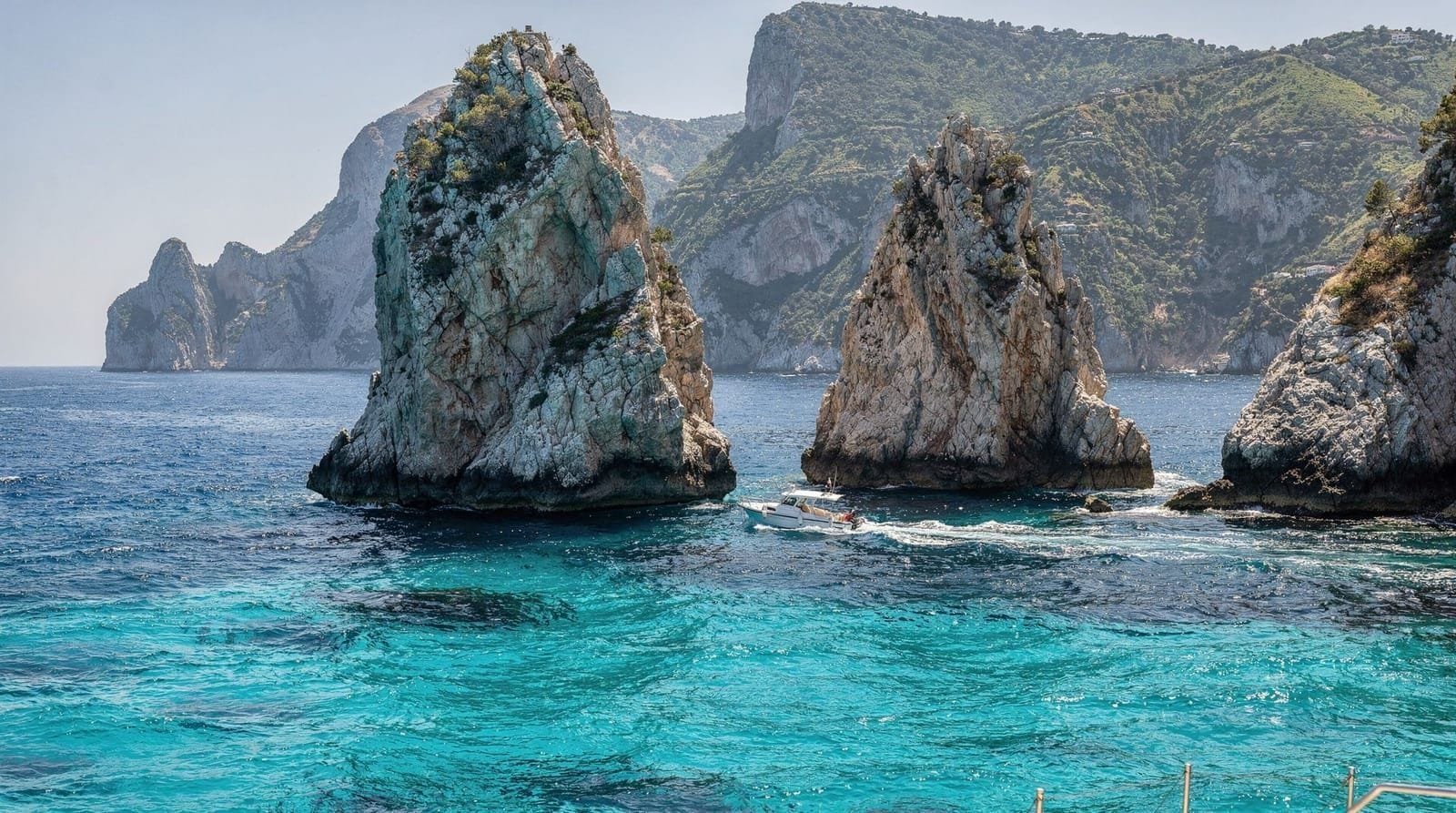
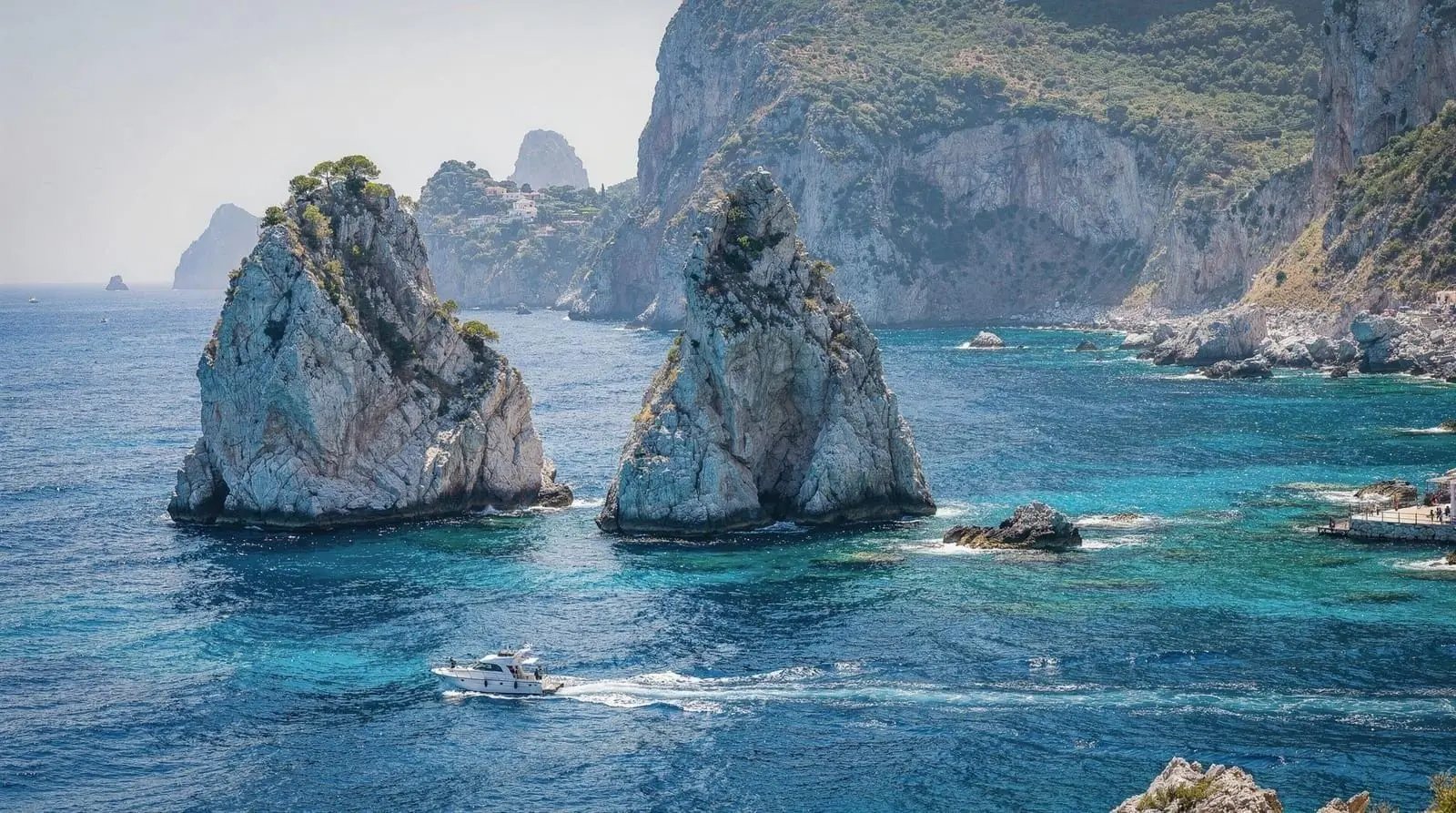
Capri is 10.4 km² — a rocky limestone island rising steeply out of the Bay of Naples. Two towns: Capri town (the tourist hub, lower on the island) and Anacapri (higher up, quieter, accessible by bus or taxi from Marina Grande). The famous rocks offshore — the Faraglioni — are visible from several points around the island.
The ferry port, Marina Grande, is the only practical arrival point. From there, funicular to Capri town (€2.40, 5 minutes), or bus/taxi to Anacapri.
Key sites:
- Blue Grotto (Grotta Azzurra): the iconic sea cave where sunlight enters underwater and illuminates the water electric blue. Accessible by small rowboat from the entrance (April–October). Not accessible in rough weather.
- Gardens of Augustus (Giardini di Augusto): free or very cheap (€1), dramatic views of the Faraglioni. Underrated.
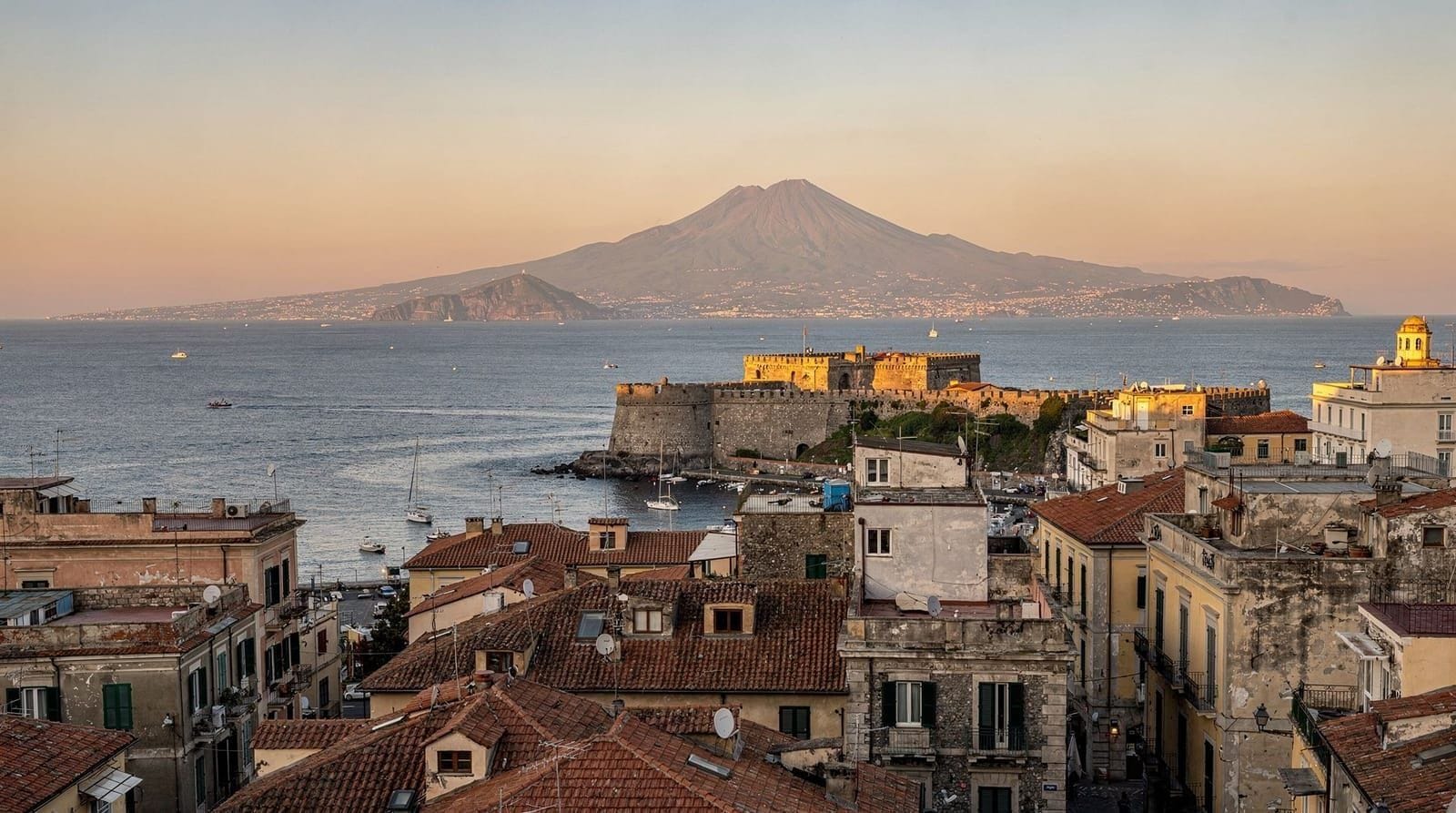
- Monte Solaro: cable-chair from Anacapri to the island’s highest point (589 m). Views of the Gulf of Naples, Vesuvius, and the Bay of Salerno. Return ticket €14. Well worth it.
- Villa San Michele (Anacapri): early 20th-century villa built by Swedish doctor Axel Munthe, set in gardens with views. Well-maintained and genuinely interesting (€10).
- Via Camerelle (Capri town): the main luxury shopping street. Hermès, Prada, Dolce & Gabbana. Beautiful facades; prices are what you’d expect.
The Blue Grotto: managing expectations honestly
The Blue Grotto is the thing most visitors come specifically to see. Here is what the experience actually involves:
- You take a boat from Marina Grande or from the dedicated Blue Grotto dock (€14–€16 by small motorboat from the dock itself). The motorboat fare is separate from the entry fee.
- You transfer to a rowboat operated by a local rower (entry fee: €14). You lie flat in the rowboat as it passes through the entrance — the opening is 1.3 m high.
- Inside, the grotto is spectacular for about 4–6 minutes. The bioluminescent blue light is real and extraordinary.
- You’re back outside in under 10 minutes total.
The line for rowboats in July–August can be 1.5–2 hours. The entrance is closed in rough weather (waves exceeding ~0.5 m). Weather cancellations happen on an estimated 25–30% of summer days. There’s no advance booking — you turn up and wait.
Verdict: genuinely worth seeing if the conditions are right and the queue is under 45 minutes. Not worth basing your entire Capri itinerary around, because it may simply be closed.
Alternative: the boat tour around the island passes the Blue Grotto exterior and stops at the Faraglioni and other sea caves. If the Blue Grotto is closed for entry, the island circumnavigation is a reasonable substitute.
Organised day tours: when they work
The high-speed train + boat tour combination is the most popular format for visiting Capri from Rome. A good tour handles the Frecciarossa booking, the Naples transfer to the hydrofoil terminal, and the Capri boat tour — leaving you to explore the island.
The high-speed train and Capri boat tour combination is the flagship option: train from Rome, boat tour around the island, free time in Capri town or Anacapri.
For visitors who want to see more of the Campania region, the 2-day Naples, Pompeii, Sorrento, and Capri itinerary spreads the region over two days, which is much more sensible.
The Capri island day trip at leisure is for travellers who want to handle their own exploration on the island but prefer a guided transfer from Rome.
What to eat on Capri without paying more than you have to
Capri is one of the most expensive tourist destinations in Italy. Restaurant prices are noticeably higher than the mainland.
Benchmark prices (2025–2026):
- Insalata Caprese at a restaurant in Capri town: €16–€22
- Pizza: €14–€18
- Limoncello shot: €5–€8
- Coffee (espresso): €2–€3.50 (normal Italian price only in local bars, not tourist terraces)
Reliable options:
- La Buca di Bacco (Via Longano 35, Capri town): solid local trattoria, pasta dishes €14–€18. Not cheap by mainland Italian standards but reasonable for Capri.
- Bar Gatto Bianco (Via Vittorio Emanuele, Capri): good coffee, simple sandwiches, €3–€5.
- Anacapri bars: consistently cheaper than Capri town for the same coffee and snacks. If you’re going up to Monte Solaro anyway, have your lunch in Anacapri.
Avoid: the restaurants facing Piazza Umberto I (La Piazzetta) in Capri town. They charge a substantial premium for the square view.
The Caprese: insalata Caprese (tomato, mozzarella, basil) is genuinely from Capri. The version made with local fior di latte di Agerola — rather than standard buffalo mozzarella — is exceptional when done well. Ask specifically.
Getting around the island
From Marina Grande to Capri town: funicular (€2.40, 5 min) or taxi (€15–€20).
Capri town to Anacapri: blue bus (€1.80, 20 min) or taxi (€18–€22). The bus runs frequently but fills up fast in summer. On-foot path (the Scala Fenicia, 921 steps) connects the two — take it down, not up.
Monte Solaro: cable-chair from Anacapri (Piazza Vittoria). Return €14. 12 minutes each way. The views are worth the price.
Boat tour: various operators at Marina Grande offer 1.5–2 hour circumnavigation tours with stops near the Blue Grotto exterior, the Faraglioni, and the Green and White Grottos. Prices €18–€25 per person. Book at the quayside in the morning.
Honest assessment: is Capri right for you?
Capri is the right choice if:
- You have more than one day in the Naples/Campania area
- You specifically want the island experience (boats, grottos, sea views, glamour)
- You’re travelling in May, June, or September and can take an early train
Capri might not be the best choice if:
- You have only one day available from Rome and also want to see Pompeii or Sorrento
- You’re travelling in July–August on a budget (the island is very expensive and very crowded)
- You’re prone to seasickness — the hydrofoil crossing can be rough in choppier weather
For a single Rome-based day trip covering the Campania coast, Pompeii + Sorrento or Amalfi Coast gives you more variety for similar transit effort. Capri rewards a dedicated visit more than a rushed detour.
Hiking the island: the path most tourists miss
The majority of Capri visitors spend their time in Capri town or on the beach. A minority discover the network of walking paths that cross the island’s interior and clifftops.
Path 1 — Capri town to Arco Naturale: 30–45 minutes each way from Capri centre. The Arco Naturale is a rock arch on the eastern cliff face, reachable via a path that passes through lemon and olive groves. The viewpoint back toward the Faraglioni from this path is better than any photo point in the town. No admission charge. Low signage — download a map or use komoot.
Path 2 — Monte Solaro north ridge walk: from the cable-chair summit station at Monte Solaro, a 40-minute path descends north through the scrubland toward Cetrella, a small hermitage and chapel. Continue toward Anacapri by foot (total 90 minutes) or retrace. The views west toward Ischia and Procida are outstanding in clear weather.
Path 3 — Punta Carena lighthouse: at the southwest tip of the island, a 45-minute bus ride from Anacapri to the terminus, then a short walk to the lighthouse. The clearest swimming water on the island, with a small rocks-and-platform lido and a café. Much less crowded than Marina Grande area beaches. Bus from Anacapri costs €2.
The walking paths are best in spring (April–May) and autumn (September–October) when the temperatures are moderate. In July–August, hiking exposed clifftops in full sun is not comfortable.
Capri and sustainability: the visitor pressure problem
Capri receives approximately 2.4 million visitors per year on an island 10 km². In peak summer, the queues at the funicular, the lines for the Blue Grotto rowboats, and the ferry queues create a visitor density that makes parts of the experience actively unpleasant.
Some practical consequences:
- The municipality introduced a temporary ban on large rolling suitcases in Capri town in some peak summer periods.
- The island’s fresh water supply is almost entirely desalinated or ferried in.
- The Blue Grotto entrance boat queue is often suspended when wave height exceeds threshold — unpredictably.
- Marina Grande gets extremely crowded between 10:00 am and 3:00 pm.
The strategies that genuinely help: arrive on the first hydrofoil (before 9:30 am), book your return hydrofoil the moment you land, and plan to leave before 5:00 pm rather than at the last possible moment. The island is a different experience at 8:30 am with the mist still on the bay than at noon with five ferry-loads of visitors on the funicular.
What makes Capri worth the journey despite everything
The Blue Grotto, the Faraglioni, the view from Monte Solaro, swimming in clear 22 °C water in a limestone cove — these are things that genuinely justify the journey. Capri is not overhyped in its physical beauty. The sea around the island is among the clearest in Italy. The rock formations are extraordinary. The terraces with views of Vesuvius across the bay, with a glass of cold Greco di Tufo, are memorable in the specific way that Italian travel is supposed to be.
The island is crowded and expensive. It is also genuinely beautiful. Both things are true simultaneously. The decision is whether you’re going to manage the logistics in a way that lets you experience the second more than the first.
The ferry from Naples: which terminal and which operator
Getting from Naples to Capri involves navigating two different ferry terminals and multiple competing operators — something that confuses first-time visitors.
Molo Beverello (the main terminal, near Piazza del Municipio): the closest to Naples Centrale (15-minute walk or 5-minute taxi). All hydrofoil (aliscafo) and car ferry services for Capri depart from here. Operators: SNAV, Caremar, NLG. The SNAV and NLG hydrofoils are the fastest option (40–50 minutes).
Mergellina (about 3 km west along the waterfront): additional hydrofoil services from here to Capri and other islands. Less central — only worth using if you’re already in the Mergellina/Posillipo area.
Car ferries vs. hydrofoils: car ferries are slower (80–90 minutes) and cheaper (€15–€17 each way), run by Caremar. Hydrofoils (€25–€28) are much faster and run more frequently. For a day trip, the hydrofoil is almost always the correct choice — you save 40–60 minutes each way.
Advance booking: in July–August, book return hydrofoils the moment you step off the ferry at Marina Grande. SNAV’s website (snav.it) allows advance booking with a print-at-home ticket — doing this before departure from Rome removes uncertainty.
Seasickness note: the hydrofoil crossing can be rough if there’s a swell (Beaufort 3+). The boats are enclosed and move quickly — most people are fine, but if you’re prone to motion sickness, take precautions before boarding.
Practical notes
Hydrofoil booking: SNAV, Caremar, and NLG operate services from Naples. In peak season, book the return hydrofoil as soon as you arrive on the island (or in advance online at snav.it or caremar.it). Last hydrofoils from Capri to Naples are typically at 7:00–7:30 pm in summer — missing one means an expensive overnight on the island.
Weather: Capri’s hydrofoil services suspend when seas exceed a certain height. Check the forecast the day before. If conditions look marginal, have a backup plan (Pompeii works well as an alternative from the same Naples connection).
Clothes: Capri town is a place people dress for. Casual beach wear is fine for the beach and the Blue Grotto; for walking Via Camerelle and Piazza Umberto I, locals and tourists alike tend toward smart casual. Not a requirement but you’ll feel more comfortable.
Capri vs. the Amalfi Coast vs. Sorrento: which Campania day trip
Rome-based visitors deciding between Campania’s big three coastal destinations should weigh transit time against what each place actually delivers.
| Capri | Amalfi Coast | Sorrento | |
|---|---|---|---|
| Transit from Rome | ~3h each way (train + hydrofoil) | ~3.5–4h each way (train + bus/ferry) | ~2.5–3h each way (train + local transfer) |
| Character | Island glamour, cliffs, grottos | Dramatic coastal road, Positano/Amalfi towns | Relaxed base town, easier logistics |
| Cost level | Very high | High | Moderate–high |
| Best for | A dedicated single-destination day | Scenic coastal driving/bus views | A calmer, lower-effort day |
| Weather risk | Hydrofoil can be suspended in swell | Coastal road can close/slow in storms | Lower risk, more inland options |
Given the transit cost, Capri rewards travellers who treat it as its own dedicated day rather than trying to combine it with Naples or Pompeii in the same 24 hours — the connections leave too little slack. If your Rome trip allows only one long Campania day, Sorrento is the lower-risk, lower-cost choice; Capri is the one to choose specifically for the island and grotto experience. Travellers with two or more days available should look at the Naples–Pompeii–Sorrento–Capri itineraries or the wider central Italy 10-day itinerary rather than compressing everything into one exhausting day.
Stopping in Naples on the way
Since every Capri trip from Rome passes through Naples Centrale and the Molo Beverello ferry terminal, it’s worth deciding in advance whether you want to build in time there. A tight connection (30–40 minutes between train arrival and hydrofoil departure) leaves no room for anything beyond walking between the station and the port. A looser schedule — arriving on an earlier train — allows a quick espresso and a sfogliatella near the station, or even a short look at Naples itself if you’re prepared to sacrifice time on Capri.
Most first-time visitors are better off treating Naples purely as a transit point on a Capri day and saving a proper Naples visit for a separate trip — see the Naples from Rome guide for what the city offers on its own terms, including the archaeological museum that holds most of Pompeii’s best finds.
One practical detail that trips up first-timers: Napoli Centrale station and the Molo Beverello ferry port are roughly 2 km apart, connected by taxi (10–15 minutes, €12–€15, fares can spike in traffic) or the R2 city bus, which is cheaper but slower and less predictable with luggage. Build at least 30 minutes into your connection for this transfer alone, more if you’re travelling with the whole family or in peak-season traffic around the port.
Frequently asked questions about Capri
Can you do Capri as a day trip from Rome?
Yes, but it’s one of the longer day trips. Total travel time is roughly 3 hours each way, giving you 5–6 hours on the island if you leave Rome at 7:00 am. It works, but it’s a full commitment. Anyone who has 5+ days in Italy and wants to see Capri properly should consider an overnight in Sorrento to reduce the daily transit.
How do you get from Naples to Capri?
The fastest option is the hydrofoil (aliscafo) from Molo Beverello in central Naples (next to Piazza Municipio). Journey time is 40–50 minutes to Marina Grande. Operators include SNAV, Caremar, and NLG. There are also slower car ferries (80 minutes, cheaper). Hydrofoil tickets cost €25–€28 each way.
Is the Blue Grotto worth visiting?
If the weather cooperates and the queue is under 45 minutes, yes — the light effect inside the cave is genuinely spectacular. If there’s rough water or a long queue (common July–August), the boat tour around the island exterior is a good alternative. Don’t count on the Blue Grotto being accessible on any specific day.
How expensive is Capri?
Very expensive by Italian standards. Restaurant main courses start around €18–€25 in most places; a basic lunch for two with a carafe of wine will run €50–€70. Sun loungers on the beach rent at €20–€30 per person. The island has a mid-luxury baseline price across most services.
What’s the difference between Capri town and Anacapri?
Capri town (lower island) is the tourist centre — the famous Piazzetta, Via Camerelle shops, most restaurants. Anacapri (upper island) is quieter, more residential, and cheaper. Monte Solaro and Villa San Michele are in Anacapri. Most visitors spend most of their time in Capri town; if you want a break from the crowds, take the bus up to Anacapri for a couple of hours.
What’s the best month to visit Capri?
May and September are ideal: warm sea (19–23 °C), manageable crowds, full boat services. June is good too. July and August are the most crowded months, with peak prices. The island is also beautiful in late October if boat services are still running, though the sea is cooler.
Should I choose Capri or the Amalfi Coast from Rome?
Choose Capri for island scenery, grottos, and a self-contained day; choose the Amalfi Coast for the dramatic coastal road and towns like Positano. Both take a similar amount of transit time from Rome, so the choice comes down to island versus mainland coastline rather than convenience.
Can I combine Capri with a Naples stop on the same day?
Only marginally — a Capri day trip already runs long, and the train/ferry connections at Naples are usually tight in both directions. If you want a genuine look at Naples itself, plan it as a separate day rather than squeezing it around a Capri crossing.
Top experiences
Bookable activities with verified prices and instant confirmation on GetYourGuide.