What a Sunday in Rome actually looks like
Most travel guides tell you that Sunday in Rome is magical — bells, piazzas, espresso, a city that slows down. That is true. What they sometimes forget to mention is that Sunday in Rome can also be a logistical puzzle if you arrive without a plan: shops shuttered, some restaurants closed, and queues at the Colosseum that make you wonder if you’ve stumbled into a different city entirely.
| Free entry | first Sunday of the month, state museums & Colosseum |
| Best morning activity | Porta Portese flea market, roughly 6am–2pm |
| What’s closed | most independent shops, some pharmacies, some trattorias |
| What stays open | museums, gelaterie, restaurants, bars |
| Best time to arrive | 8:00-8:30am for free-entry sites, to beat the queue |
Sunday here has its own rhythm. Learn it and you’ll have one of the best days of your trip. Ignore it and you’ll spend two hours looking for an open pharmacy.
What shuts down and what doesn’t
Romans take Sunday seriously. Most independent shops — clothing stores, small food shops, hardware stores, the pharmacies that aren’t marked as “di turno” (on rotation) — will be closed. Supermarkets in the centre are often open in the morning but close by early afternoon. The big chains near Termini station tend to stay open longer.
Restaurants, bars, and cafés mostly operate normally, though some trattorias in residential neighbourhoods close for their weekly rest. If you’re planning lunch somewhere specific, a quick call the day before is worth it.
What does stay open: museums (generally), tourist sites, gelaterie, and the whole chaotic apparatus of the centro storico that runs on tourist euros regardless of the day.
The first Sunday: free entry at state museums
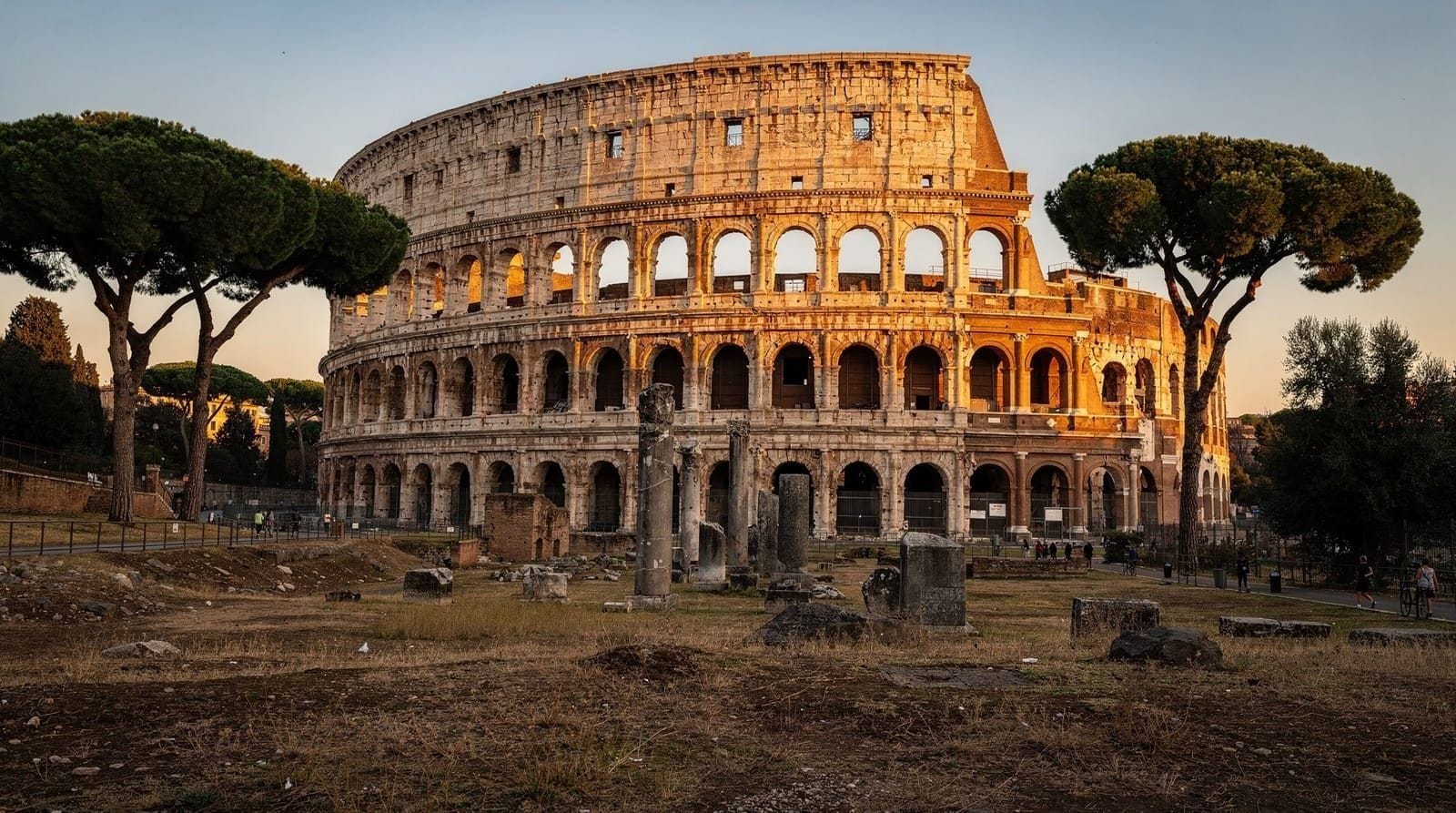
On the first Sunday of every month, state-run museums across Italy offer free admission. In Rome, this means the Colosseum, Roman Forum and Palatine Hill, the Baths of Caracalla, the National Roman Museum, Palazzo Barberini, and a long list of other sites. The full list changes occasionally, so it’s worth checking the official MIC (Ministero della Cultura) website before you go.
The catch — and it is a significant catch — is that every visitor in Rome with the same idea turns up at the same time. The queue at the Colosseum on free Sundays starts forming before 8am and by 10am it is genuinely alarming. If you want to use the first Sunday effectively, arrive at 8:30am for the Colosseum or Roman Forum, or choose a site that attracts fewer visitors. The Baths of Caracalla, the Palatine Hill entrance (separate from the main Forum queue), or the Palazzo Altemps branch of the National Roman Museum are all excellent and far less crowded on these days.
If the first Sunday falls during your trip, use it for the site you were planning to pay for anyway — and get there early. If crowds genuinely bother you, you might actually prefer a paid weekday visit with a skip-the-line option and the ability to stroll rather than shuffle.
For context on how to book and what to expect, the first Sunday does not require advance booking at most sites — but it also removes all crowd control.
Porta Portese: the best Sunday morning in Rome
Every Sunday morning, rain or shine, Porta Portese transforms the southern end of Trastevere into Rome’s largest and most chaotic flea market. It runs from roughly 6am until about 2pm, though the best stuff is gone well before noon.
This market is not the curated artisan market of your imagination. It is enormous, sprawling, occasionally baffling, and genuinely great. You’ll find vintage clothing piled on tables, old books and maps, vinyl records, mismatched ceramics, furniture that would require a van to transport, and stalls selling new but very cheap goods that have no obvious provenance. There are also excellent food stalls if you arrive hungry.
Come with cash, come with time, and come with no fixed expectations. The market runs along Via Portuense and several side streets — allow at least two hours to walk it properly. Pickpockets operate here; keep your bag in front of you.
Getting there: walk from Trastevere station (5 minutes), or take tram 8 to Largo di Torre Argentina and walk down to the river.
The market wraps up by 2pm, which leaves your afternoon free for lunch in Trastevere — one of the most satisfying ways to structure a Sunday.
Church life and the morning bells
Sunday morning in Rome means Mass. Most of the major basilicas hold multiple services, and the city’s sonic landscape on a clear Sunday morning — the bells of Sant’Andrea della Valle, the Gesù, Santa Maria Maggiore — is something you only get on this day. If you want to experience the liturgical Rome rather than just the tourist Rome, attending Mass at one of the smaller neighbourhood churches is worth it. The dress code applies everywhere: shoulders and knees covered.
St. Peter’s Square on Sunday mornings is often packed for the Papal Angelus at noon, when the Pope (or a representative) appears at the window above the piazza to address the crowd. It’s a remarkable piece of living ritual if you happen to be there. It’s also very crowded. Plan accordingly.
The Vatican museums are, somewhat counterintuitively, closed on Sundays — except for the last Sunday of the month, when they offer free entry in a mirror of the state museum scheme. The same chaos applies.
First Sunday vs. a regular Sunday
| First Sunday of the month | Any other Sunday | |
|---|---|---|
| Museum entry | free at state sites | normal ticket price |
| Crowds at major sites | very high, arrive by 8:30am | normal weekend levels |
| Booking needed | not required, but no crowd control | recommended for Colosseum/Vatican |
| Best strategy | early arrival or a less-visited site | pre-booked skip-the-line ticket |
If your trip happens to land on a first Sunday, decide in advance whether the free entry is worth the queue for the specific site you want, or whether a paid weekday visit with a skip-the-line ticket suits you better. There’s no wrong answer — it depends entirely on how much a couple of hours in a queue bothers you.
Getting a proper Sunday lunch
Sunday lunch is a genuine Roman institution, and it runs long — families take multi-course meals that stretch from 1pm into the mid-afternoon, particularly in neighbourhood trattorias away from the tourist centre. This means two practical things: restaurants that don’t take reservations can have real waits around 1:30–2pm, and kitchens in more traditional spots sometimes stop taking orders earlier than on weekdays because the pace is slower. If you have a specific restaurant in mind for Sunday lunch, book it, or arrive right at opening. The where to eat in Rome guide has neighbourhood-specific recommendations that hold up well on a Sunday.
The afternoon pace
By 2pm on a Sunday, Rome enters a different mode. The flea market is over, Mass is done, lunch is being eaten at length and without apology. The city feels genuinely slower than any other day of the week. This is the afternoon to walk somewhere without a specific destination: along the Appia Antica if the weather is good, through the orange garden on the Aventine, or up onto the Gianicolo hill for the view.
The aventino-circo-massimo neighbourhood is particularly good on a Sunday afternoon — quiet, residential, with the orange garden at the top of the Aventine and Circus Maximus below. There are almost no tourist-facing businesses here, which means it’s essentially just you and Romans taking their Sunday walk.
What to actually do if everything is shut
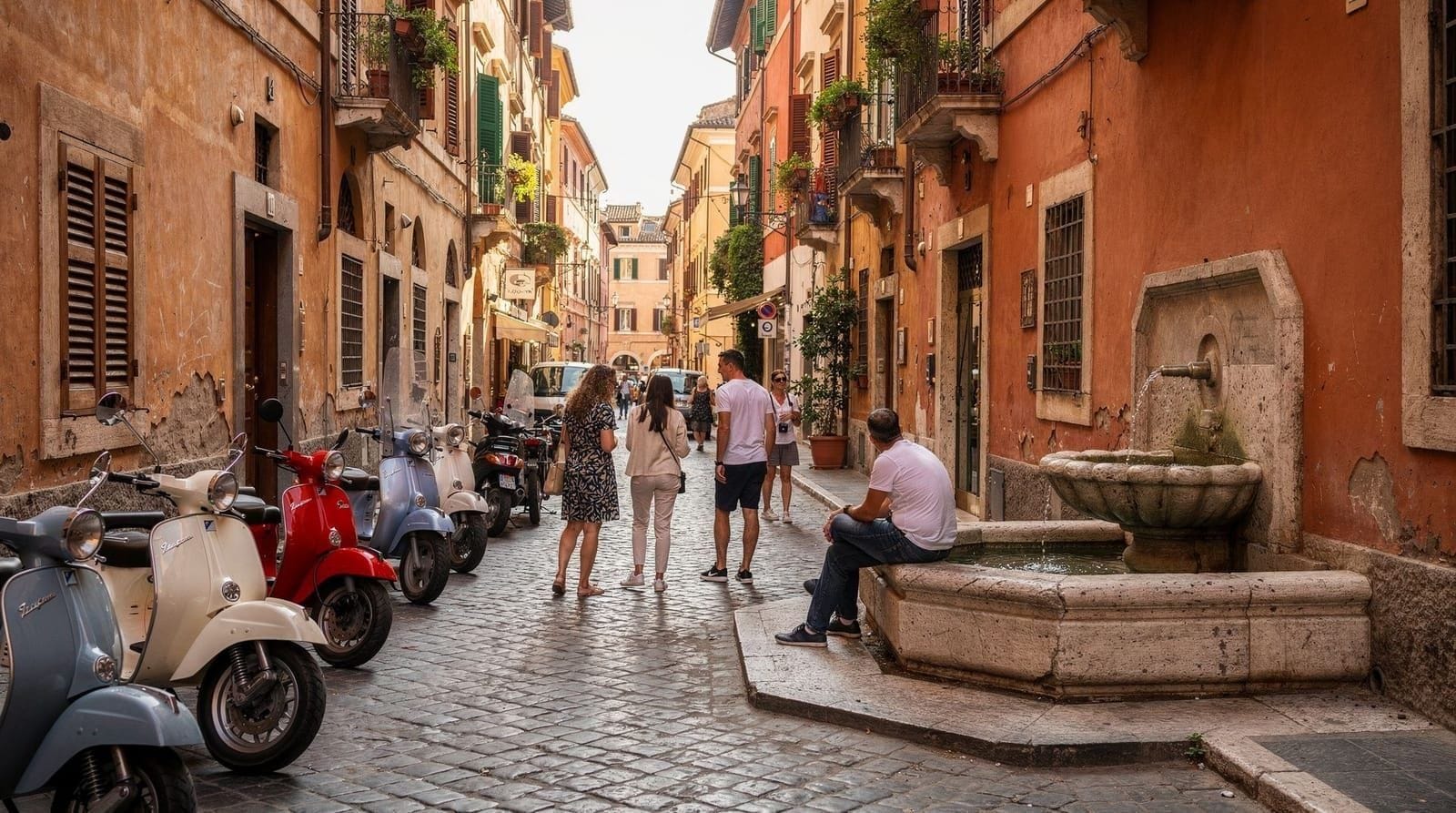
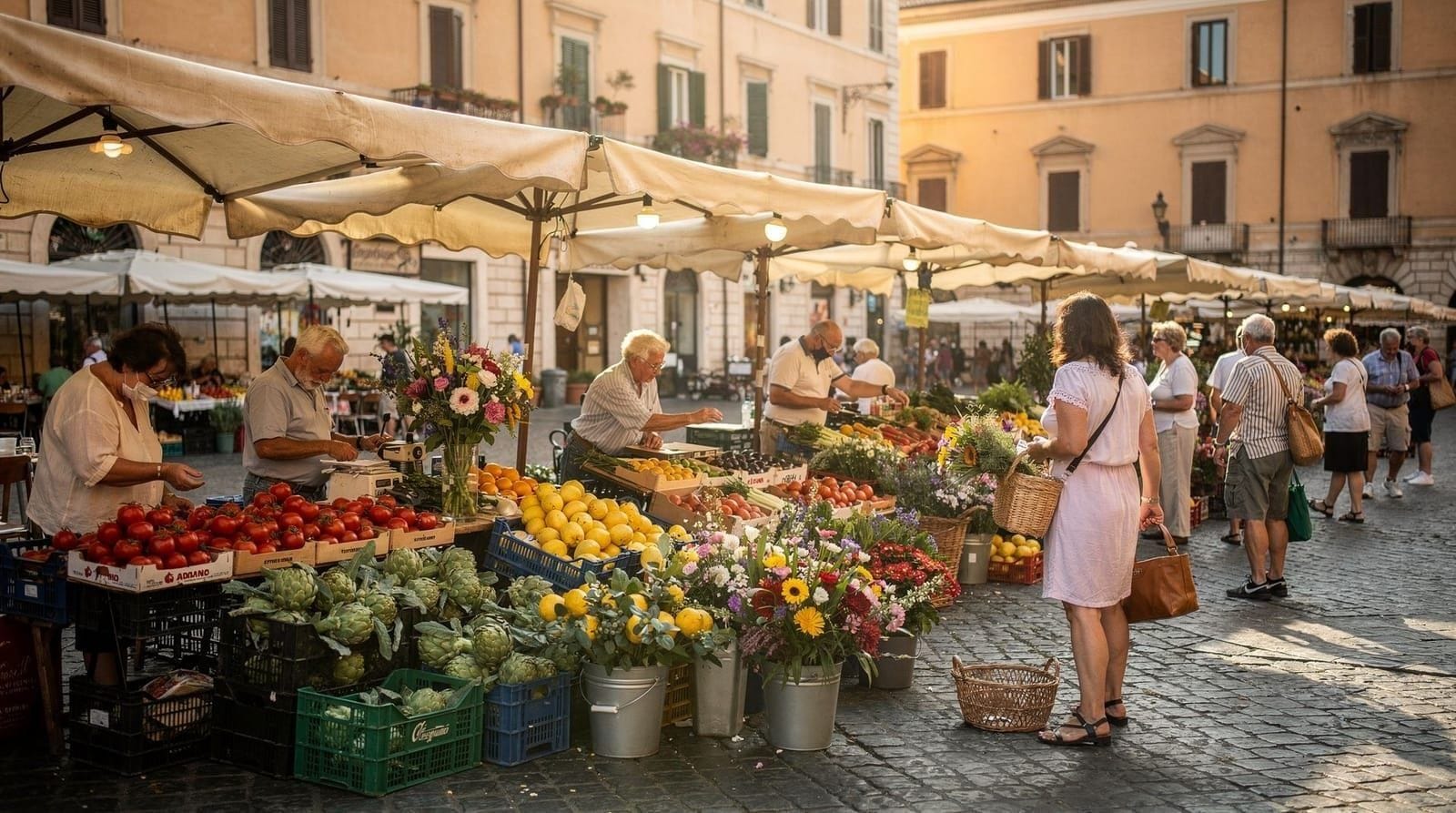
If you arrive on a Sunday without a plan and find yourself staring at closed shops, here is the reliable backup: walk. Rome’s entire historic centre is extraordinarily walkable and requires no admission fee. The Pantheon district, the area around Campo de’ Fiori (the market itself only runs on weekday mornings, but the square is always open), the streets behind Piazza Navona — all of this is there regardless of the day.
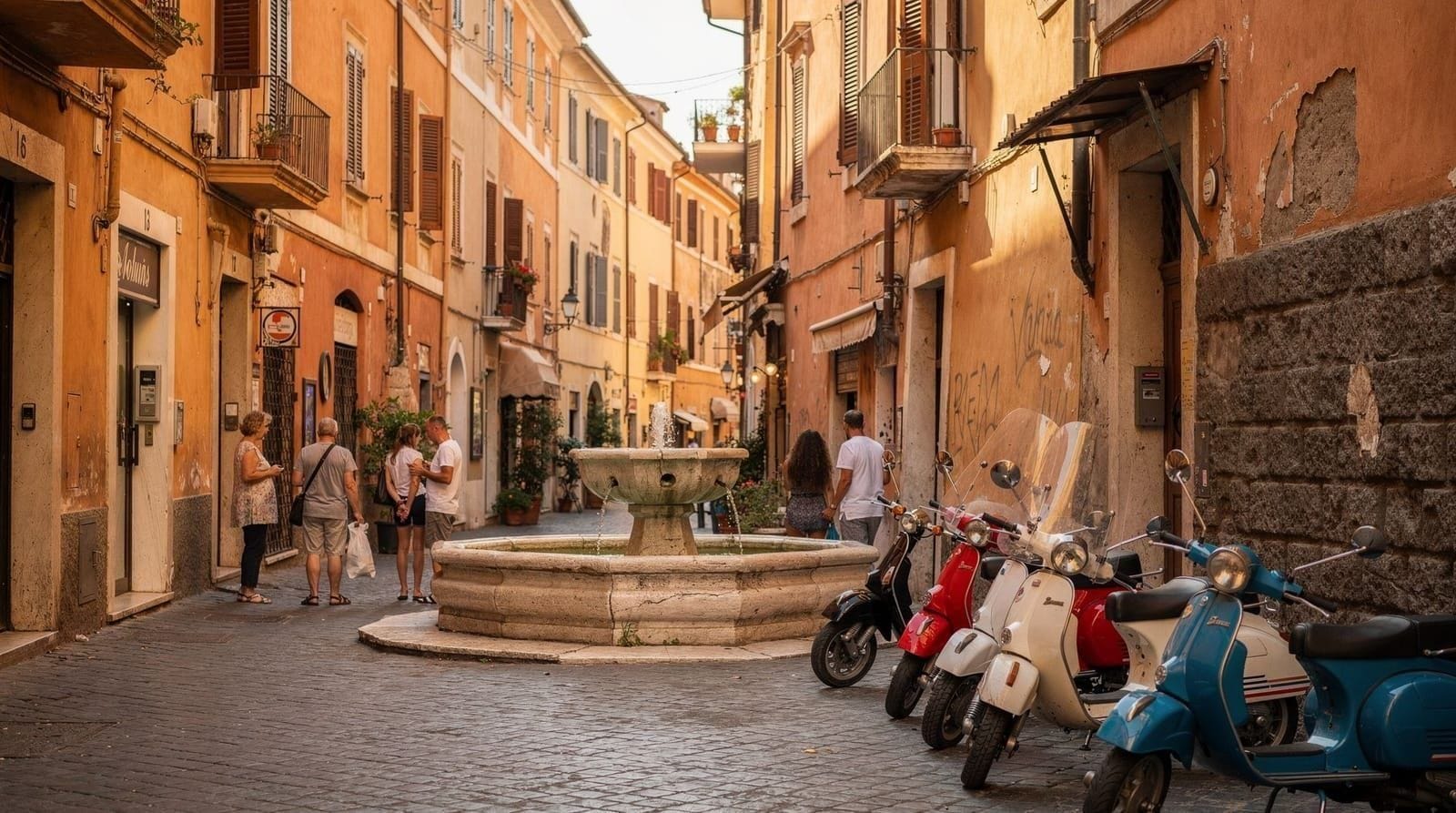
The nasoni — Rome’s 2,500 public drinking fountains — run all day, all week. Water is free and cold. The street food circuit (supplì at Supplì Roma in Trastevere, pizza al taglio at various spots in the centre) operates on Sundays and requires only cash.
Rome evening guided walking tour through the historic centre — if you want a structured end to your Sunday, an evening walking tour that takes in the lit-up piazzas and fountains is genuinely beautiful and a good way to see the city at its most atmospheric.
The honest version
Sunday in Rome is wonderful and slightly inconvenient in equal measure. The free museum days are real but require early arrival to be worth it. Porta Portese is genuinely excellent. The shops being closed is mildly annoying if you need anything specific. The slower pace of the afternoon is, if you let it be, one of the best things about being in Rome.
Plan for the free-entry sites or the market, leave the afternoon loose, and eat lunch somewhere that doesn’t rush you out the door. That’s a Sunday in Rome done right.
Frequently asked questions
Is everything really closed in Rome on Sunday? No — that’s a common misconception. Museums, tourist sites, restaurants, bars, and gelaterie mostly operate as normal. It’s independent shops, some pharmacies, and a few neighbourhood trattorias that close for the day.
Do I need to book ahead for the free first-Sunday museum entry? No booking is required at most sites, but that also means no crowd control — arriving by 8:00-8:30am at the Colosseum or Roman Forum is the only reliable way to avoid a long wait.