Rome's hidden churches and their forgotten masterpieces
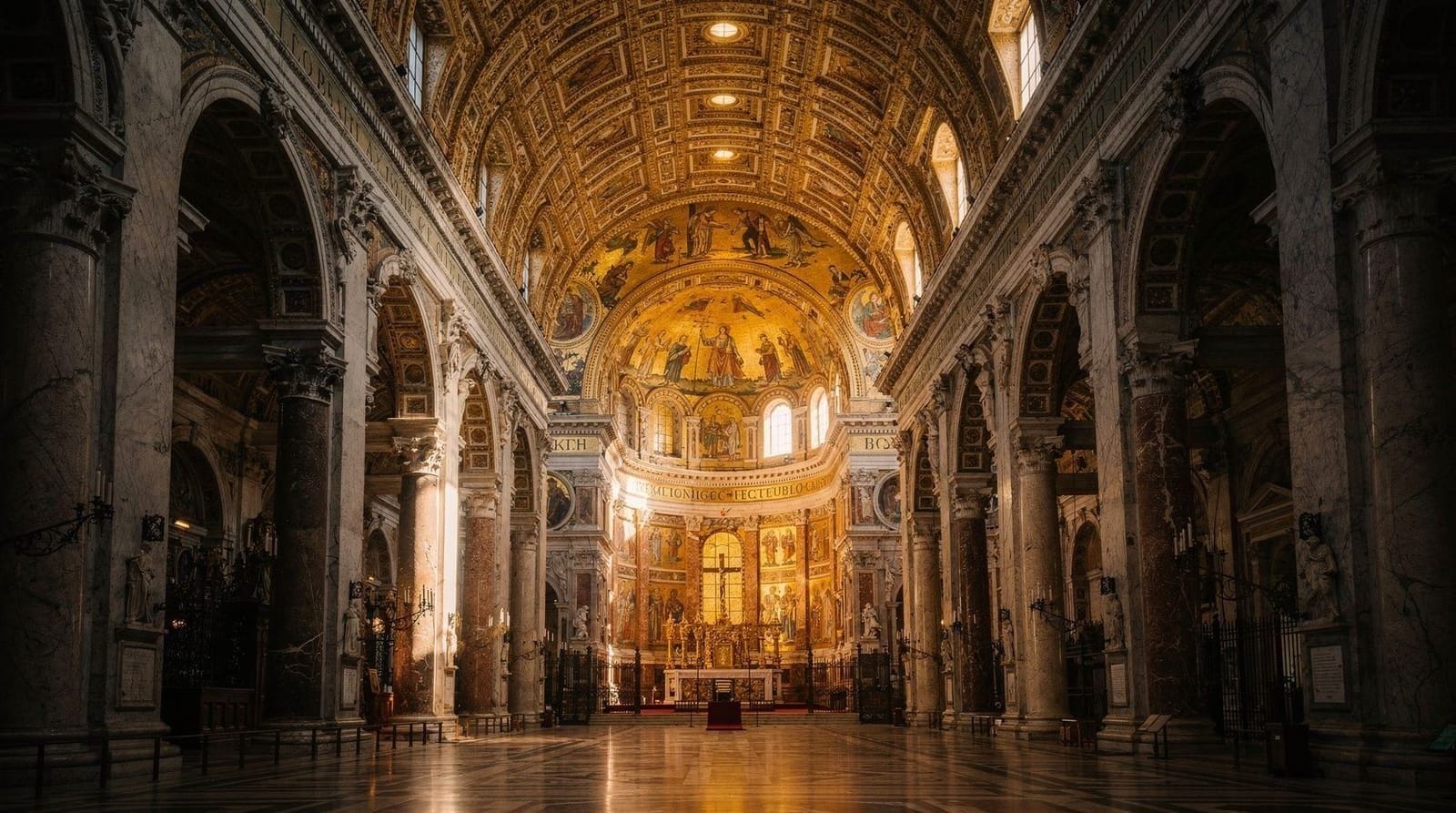
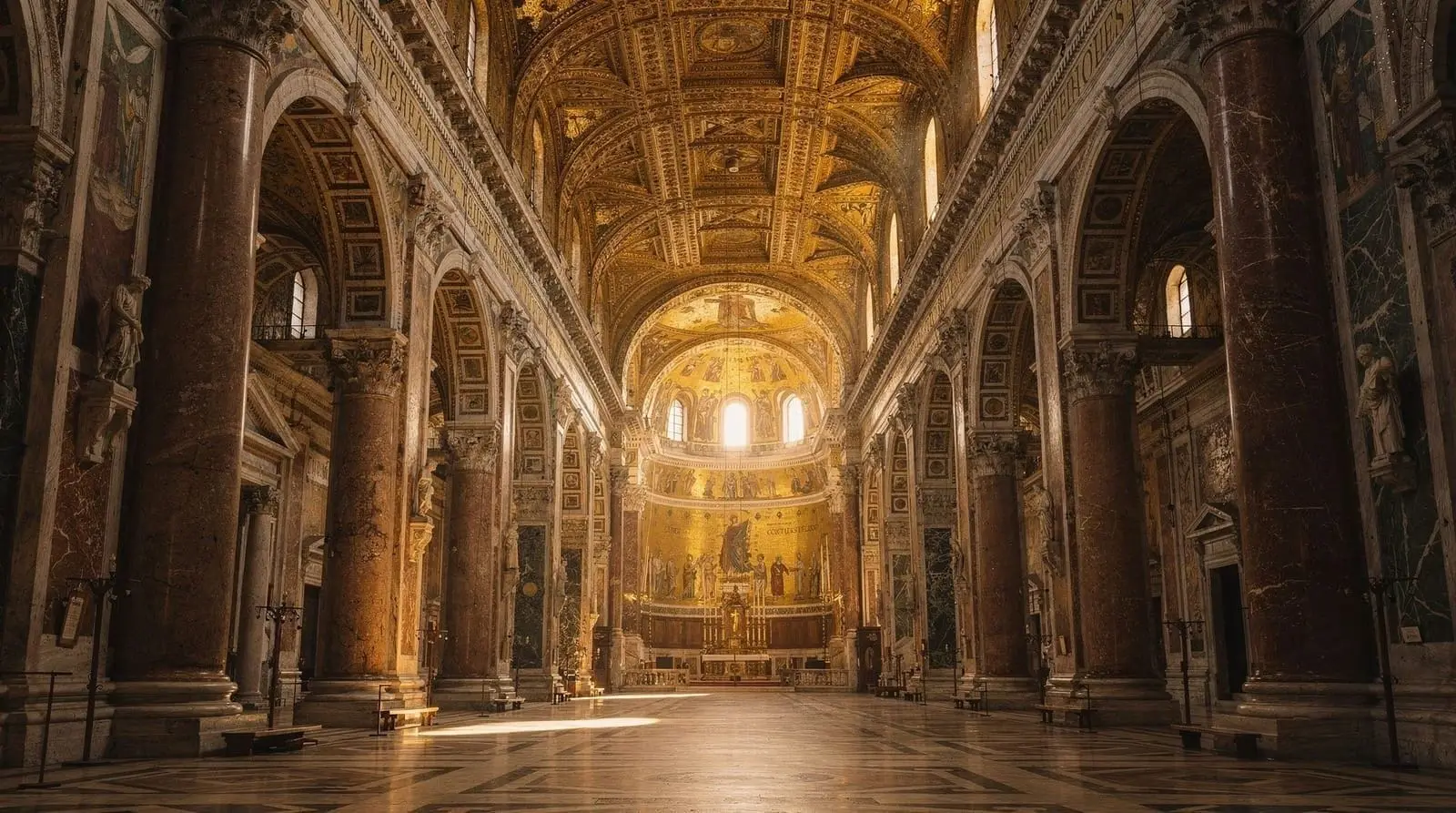
Here is something that took me a while to internalise about Rome: the most extraordinary art in the city is frequently not behind a ticket desk. It’s in churches that don’t have queues, don’t have official hours printed on the major tourist maps, and don’t appear on most itineraries. The paintings and mosaics in these churches are routinely better — more surprising, more moving, more technically astonishing — than what’s in some of the paid museums.
This is a guide to seven of them. They are all free to enter. None of them require booking.
| Cost | free entry to all seven (San Clemente’s underground is ~€10 extra) |
| Opening pattern | roughly 7:30am–noon and 4pm–7pm, midday closure |
| Coins to bring | €1 coins for chapel light machines (San Luigi, Santa Prassede) |
| Booking | none required, ever |
| Best pace | 2–3 churches per outing, grouped by neighbourhood |
The seven, at a glance
| Church | Standout work | Neighbourhood |
|---|---|---|
| Santa Maria del Popolo | Two Caravaggios, a Raphael chapel | Piazza del Popolo |
| San Luigi dei Francesi | Caravaggio’s Matthew cycle | Near Piazza Navona |
| Santa Maria in Trastevere | 12th-century apse mosaic | Trastevere |
| Sant’Ignazio di Loyola | Trompe-l’oeil ceiling | Near the Pantheon |
| San Clemente | Three layers, 3,000 years | Near the Colosseum |
| Santa Prassede | Byzantine mosaics | Near Santa Maria Maggiore |
| San Pietro in Vincoli | Michelangelo’s Moses | Near the Colosseum |
Santa Maria del Popolo — Caravaggio’s twin masterpieces
Start here. The Cerasi Chapel, on the left side of the nave as you enter from the piazza, contains two Caravaggio paintings hanging opposite each other: the Conversion of Saint Paul (1601) on the right wall and the Crucifixion of Saint Peter on the left. Both are oil on canvas, both are life-size, and both show the artist at the very moment he was transforming what it meant to paint a religious narrative.
The Conversion of Saint Paul is the more startling of the two: a horse occupies most of the composition, Paul lies on his back in the foreground with his arms outstretched, and the divine light source creates an extreme chiaroscuro that feels almost cinematic. There is no angel, no crowd, no theatrical apparatus — just a man thrown from his horse in a stable, and light, and the moment of total surrender.
The church also contains a Raphael altarpiece (the Chigi Chapel, designed by Raphael, executed partly by Bernini and Sebastiano del Piombo) and choir stalls from the late 15th century. The whole building is an extraordinary condensation of Renaissance and Baroque art in a building that sees a fraction of the visitors that the Vatican museums attract. The centro storico destination guide covers the neighbourhood around Piazza del Popolo in more detail.
Opening hours: generally 7:30am–noon and 4pm–7pm daily. The midday closure catches out many visitors — plan for morning or late afternoon.
San Luigi dei Francesi — Caravaggio’s Matthew cycle
Three Caravaggio paintings in a single chapel in the French national church of Rome, located two minutes’ walk from Piazza Navona. The Contarelli Chapel (fourth on the left) contains the Calling of Saint Matthew, the Martyrdom of Saint Matthew, and Saint Matthew and the Angel. The first is one of the most reproduced Caravaggio paintings in the world; in person it is significantly more powerful than photographs suggest — the darkness in the image is actual darkness, and the light that falls on Matthew’s face is startlingly localised.
A coin machine (€1) operates the light in the chapel. This is slightly annoying but unavoidable. Bring coins.
Santa Maria in Trastevere — the oldest Madonna in Rome
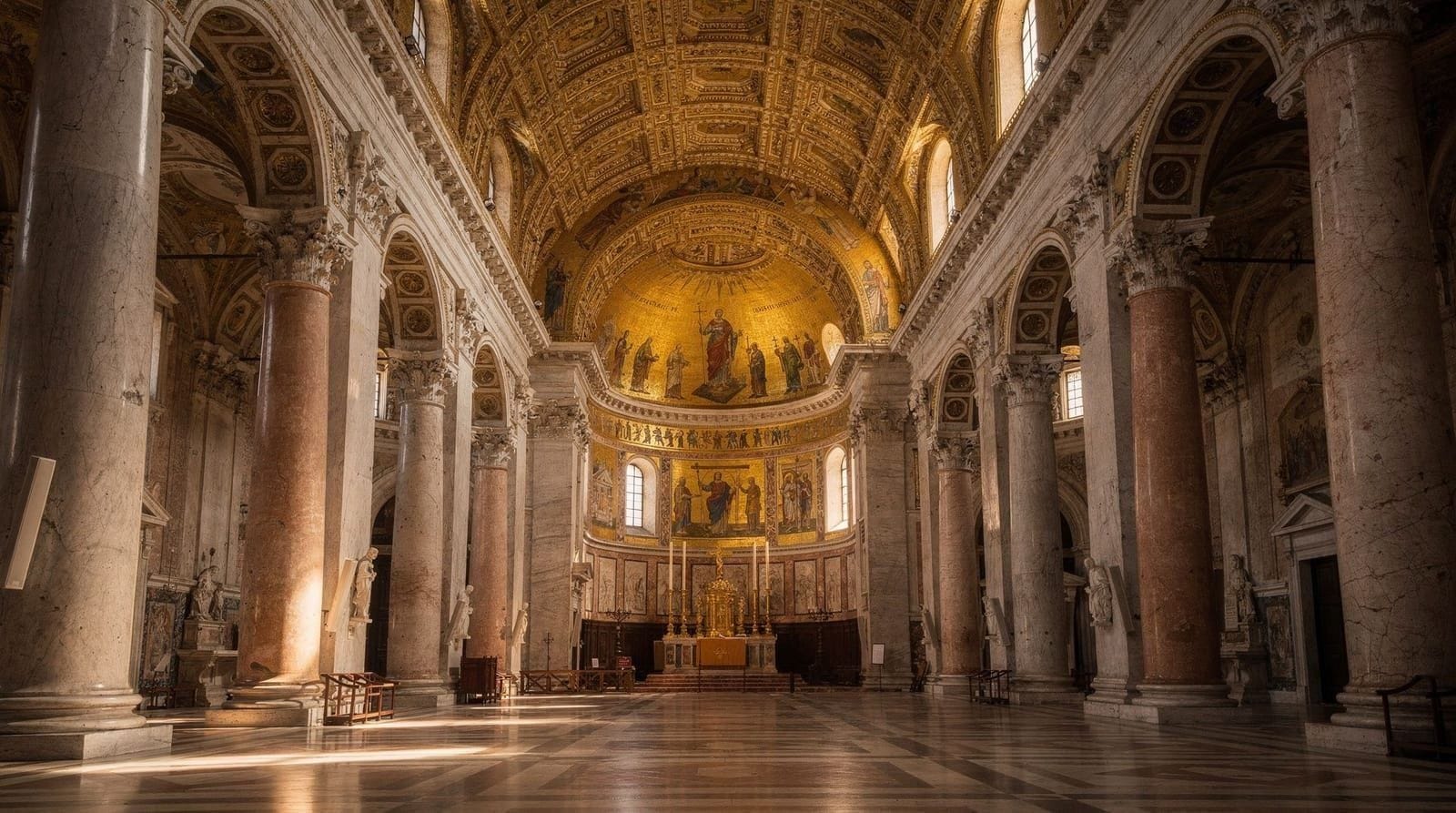
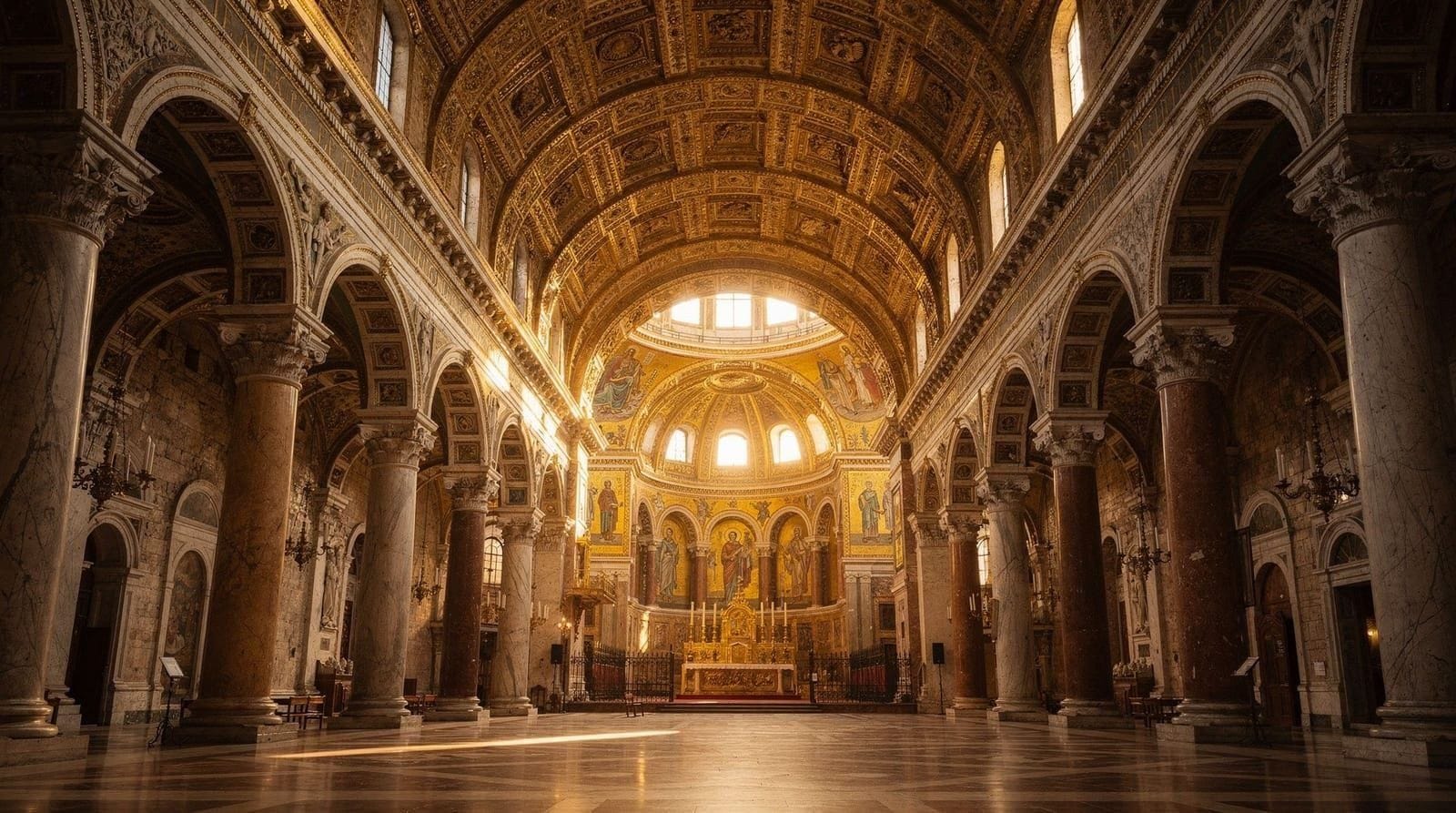
This is Trastevere’s main church and the oldest church dedicated to the Virgin Mary in Rome — the original structure dates to the 4th century, though what you see is mostly 12th century. The apse mosaic is extraordinary: a 12th-century Christ and Mary enthroned, flanked by saints, with a gold background that changes quality as the light shifts through the day. Below it, a series of mosaic panels by Pietro Cavallini (c. 1291) showing scenes from the life of the Virgin — these predate Giotto and represent some of the earliest Italian painting that shows interest in expressing human emotion and spatial depth.
Free, always open. One of the most beautiful interiors in Rome and rarely busy.
Sant’Ignazio di Loyola — the greatest ceiling trick in Rome
The nave ceiling of Sant’Ignazio is painted in trompe-l’oeil by Andrea Pozzo (1688–1694) to simulate a continuation of the building’s architecture — columns, arches, balconies, a sky — that in reality is entirely flat. The effect is convincing enough to be disorienting: standing in the centre of the nave and looking up, it is genuinely difficult to determine where the walls end and the painting begins.
Pozzo also painted a false dome — there are two spots marked on the floor, one showing the ceiling as it “should” look and one showing it as it collapses into a completely different perspective when you move a few metres. The church is also notable for its beautiful Baroque interior and the tomb of St. Robert Bellarmine.
The catch: like most Roman churches, Sant’Ignazio closes at midday. The 11am–1pm window is too short for many visitors to catch it.
San Clemente — three thousand years underground
San Clemente at street level is a fine 12th-century Basilica with excellent Cosmatesque floor mosaics and a beautiful apse mosaic showing the Tree of Life growing from the Cross. The entry fee for the underground layers — a 4th-century basilica below, and a 1st-century Roman building containing a Mithraeum below that — is around €10. But the street-level church is free.
The street-level church alone is worth a significant chunk of your afternoon. The mosaics in the apse rival Santa Maria in Trastevere and are less crowded. The fresco cycle in the lower church (accessible via the underground ticket) contains some of the earliest vernacular Italian text in existence.
Located five minutes’ walk from the Colosseum.
Santa Prassede — the most important Byzantine mosaics in Rome
Santa Prassede is one of Rome’s most significant churches for art history and one of its least visited. The Chapel of San Zeno, inside the church, is decorated floor-to-ceiling with 9th-century Byzantine mosaics commissioned by Pope Paschal I. The gold ground, the rigid frontality of the figures, and the overall effect of golden light in a small vaulted space are unlike anything else in Rome outside of Ravenna. Paschal also collected mosaics from around the decaying early Christian churches of Rome and relocated them here, which makes the space a kind of mosaic anthology.
The main apse mosaic is also excellent — Paschal I with a square halo (indicating he was alive when the mosaic was made) standing next to Christ. The square halo as a convention for the living is itself a fascinating detail.
Located a short walk from Santa Maria Maggiore. Small coin contribution requested for the chapel light.
San Pietro in Vincoli — Michelangelo’s Moses
San Pietro in Vincoli houses two things: the chains of St. Peter (the vincoli, or chains, locked in a reliquary under the high altar) and Michelangelo’s Moses, originally commissioned for Pope Julius II’s tomb. The tomb was never completed at the intended scale, and Moses ended up in this church as the central figure of a reduced monument flanking two comparatively uninspiring figures representing Leah and Rachel.
Moses is a genuinely remarkable sculpture. The figure is seated but conveys enormous energy — the muscles of the arms and neck, the expression of restrained fury, the extraordinary treatment of the beard and drapery. The famous “horns” (actually rays of light, misinterpreted from the Hebrew in a translation error) are part of the iconography that Michelangelo accepted from tradition.
The church is free to enter. Moses is visible directly when you enter. The church is close to the Colosseum and easily combined with a visit to the ancient Rome district.
Guided food walking tour with wine in TrastevereSeveral of these churches cluster in the centro storico and Trastevere. A guided walking tour of the area in the evening — stopping for food and wine — is a good way to frame the afternoon if you’ve spent the morning with Caravaggio and mosaics and want to end with something more relaxed.
Going deeper on any one thread
If Caravaggio is the draw, the Caravaggio trail guide and the Rome basilicas and Caravaggio guide map out the fullest sequence across the city, including a couple of churches not covered here. If mosaics are what caught your interest — Santa Maria in Trastevere and Santa Prassede both qualify — the Rome mosaics guide surveys the wider set, including Santa Maria Maggiore and the mosaics inside St Peter’s. And if you’d rather build a day around Rome’s grandest religious architecture instead of hidden gems, the four papal basilicas guide covers St Peter’s, St John Lateran, Santa Maria Maggiore, and St Paul Outside the Walls as a contrasting, larger-scale counterpart to this list. The broader Rome hidden churches guide has additional lesser-known stops if seven isn’t enough.
If San Clemente’s layered history interests you specifically, the dedicated San Clemente basilica guide and the basilica-san-clemente-underground guide go into the underground levels — the 4th-century basilica and the Mithraeum below it — in far more depth than is possible here.
A note on opening hours
Roman church opening hours are not uniform, frequently change, and are not always updated online. The general pattern is 7:30am–noon and 4pm–7pm (or 3:30pm–6:30pm in winter). The midday closure is real and enforced. Plan church visits for morning or late afternoon and treat any specific times as approximate. The Caravaggio trail guide covers the four main Caravaggio churches in Rome with updated opening times and the best visiting sequence.
FAQ
Do any of these seven churches require booking? No. All seven are walk-in, free churches with no reservation system; only San Clemente’s optional underground excavation has a paid ticket, bought on-site.
What should I bring to see everything properly? Bring a few €1 coins for the chapel light machines at San Luigi dei Francesi and Santa Prassede, and check opening times before you go, since most of these churches close for a few hours around midday.