Free things to do in Rome — the honest list for 2026
Let’s get the misleading part out of the way first. Most articles about “free Rome” include the Trevi Fountain, the Spanish Steps, and the Colosseum area as free attractions. The first two are free to stand near, which is true but odd to celebrate. The Colosseum area is a public street that happens to be next to a paid monument. None of these are particularly useful entries on a free-things list.
The genuinely interesting free things in Rome — the ones worth planning around — are different. This is an attempt at an honest version of that list.
| Best free art | Caravaggios at Santa Maria del Popolo, San Luigi dei Francesi |
| Best free view | Gianicolo Hill terrace |
| Best free water | Nasoni public fountains, roughly 2,500 across the city |
| Genuinely free days | First Sunday of the month (state museums) |
| Pretending to be free | ”Free” walking tours (tip-based), Colosseum photo props |
The churches, which are an absurd bargain
Rome has something like 900 Catholic churches. Most of them charge nothing to enter, most of them contain artworks that in any other context would require a museum ticket, and most of them are visited by nobody except a handful of tourists who wandered off the main circuit.
The free churches that punch hardest:
Santa Maria del Popolo (near Piazza del Popolo, free entry): Contains two Caravaggio paintings — the Conversion of Saint Paul and the Crucifixion of Saint Peter — hanging in the Cerasi Chapel on the left side of the nave. These are major works by a major artist, and you can walk up to within arm’s length of them. Free. In a Baroque church with other significant art by Raphael, Bramante, and Chigi. The only catch is that the church closes midday.
San Luigi dei Francesi (near Piazza Navona, free entry): Three Caravaggio paintings in the Contarelli Chapel, including the famous Calling of Saint Matthew. Put a coin in the light machine to see them properly (it’s €1, which I’m counting as basically free given what you’re looking at).
Sant’Ignazio di Loyola (Campo Marzio): The trompe-l’oeil ceiling fresco by Andrea Pozzo is a technically extraordinary piece of illusionistic painting that pretends to be a dome when viewed from a specific spot marked on the floor. It’s one of Rome’s visual tricks and well worth the five-minute detour.
San Clemente (near the Colosseum): The 12th-century basilica at ground level is free. The underground layers — Roman insula, earlier basilica, Mithraeum — cost around €10 and are worth it. The free part alone is impressive.
The Rome hidden churches guide covers more of these in detail.
Piazzas, which are also free
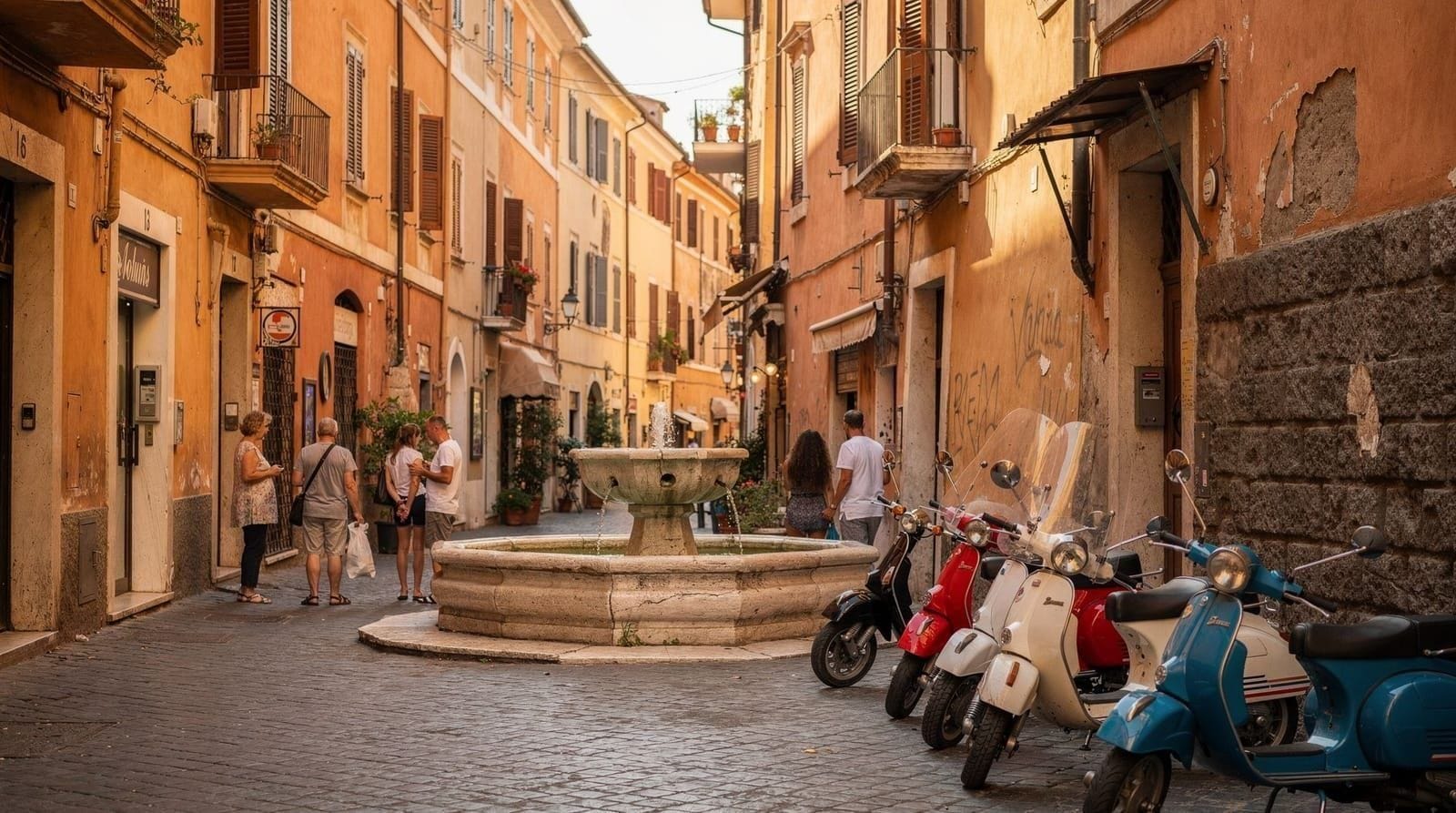
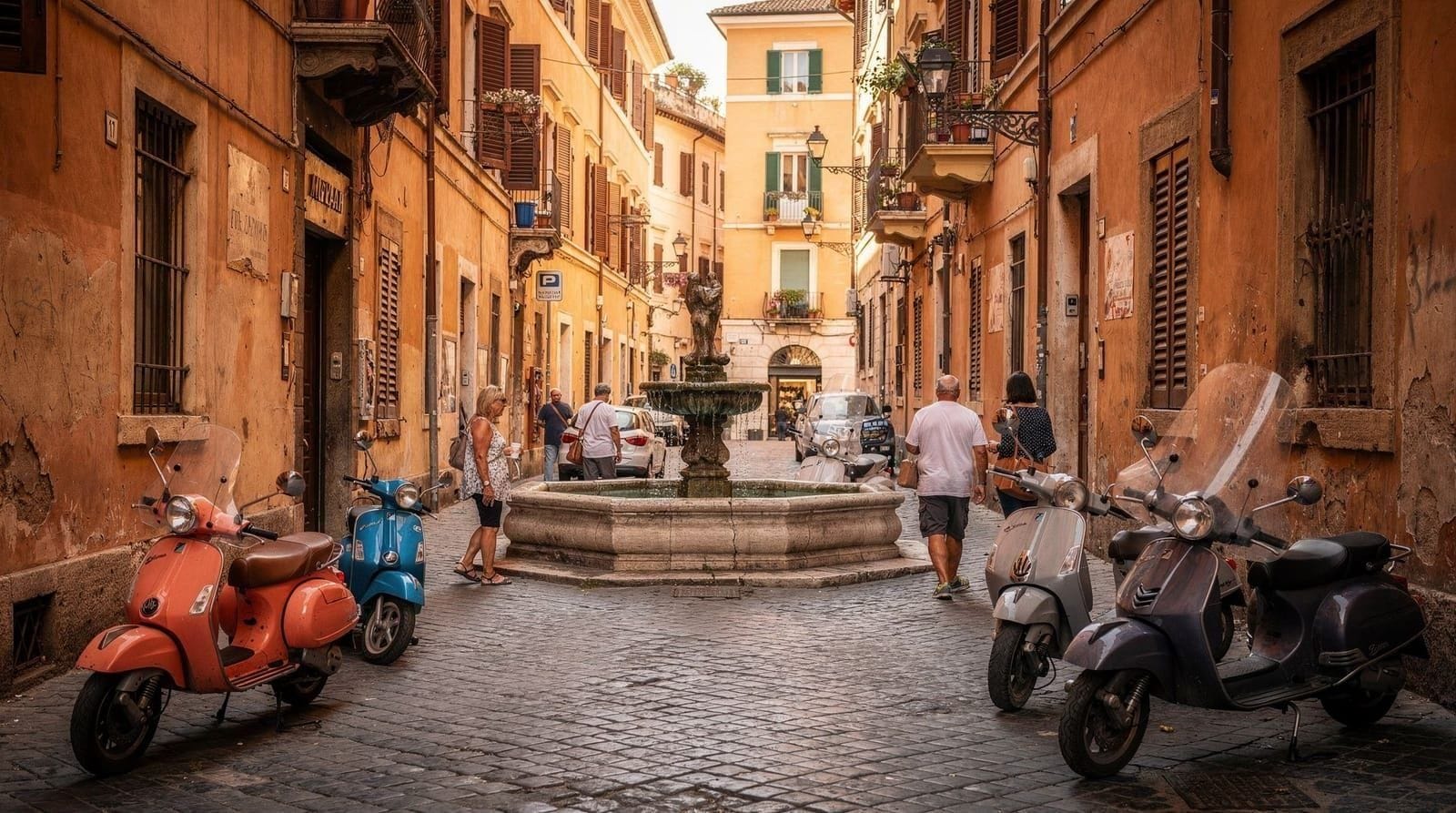
The major Roman piazzas — Piazza Navona, Campo de’ Fiori, Piazza del Popolo, Piazza Farnese, Piazza della Minerva — are all public spaces with no entry charge. Sitting on the edge of a fountain in Piazza Navona and watching the circus of street artists, vendors, and tourists costs nothing. The coffee or gelato you’ll probably want once you’re there costs something, but the space itself is free.
Campo de’ Fiori has a morning market (roughly 7am–2pm daily) that costs nothing to walk through, has good seasonal produce, and is a genuine neighbourhood market rather than a tourist attraction, though the tourists have found it.
Piazza della Minerva has the Bernini elephant obelisk, which is one of Rome’s charming smaller monuments and essentially never crowded.
Water, which is completely free
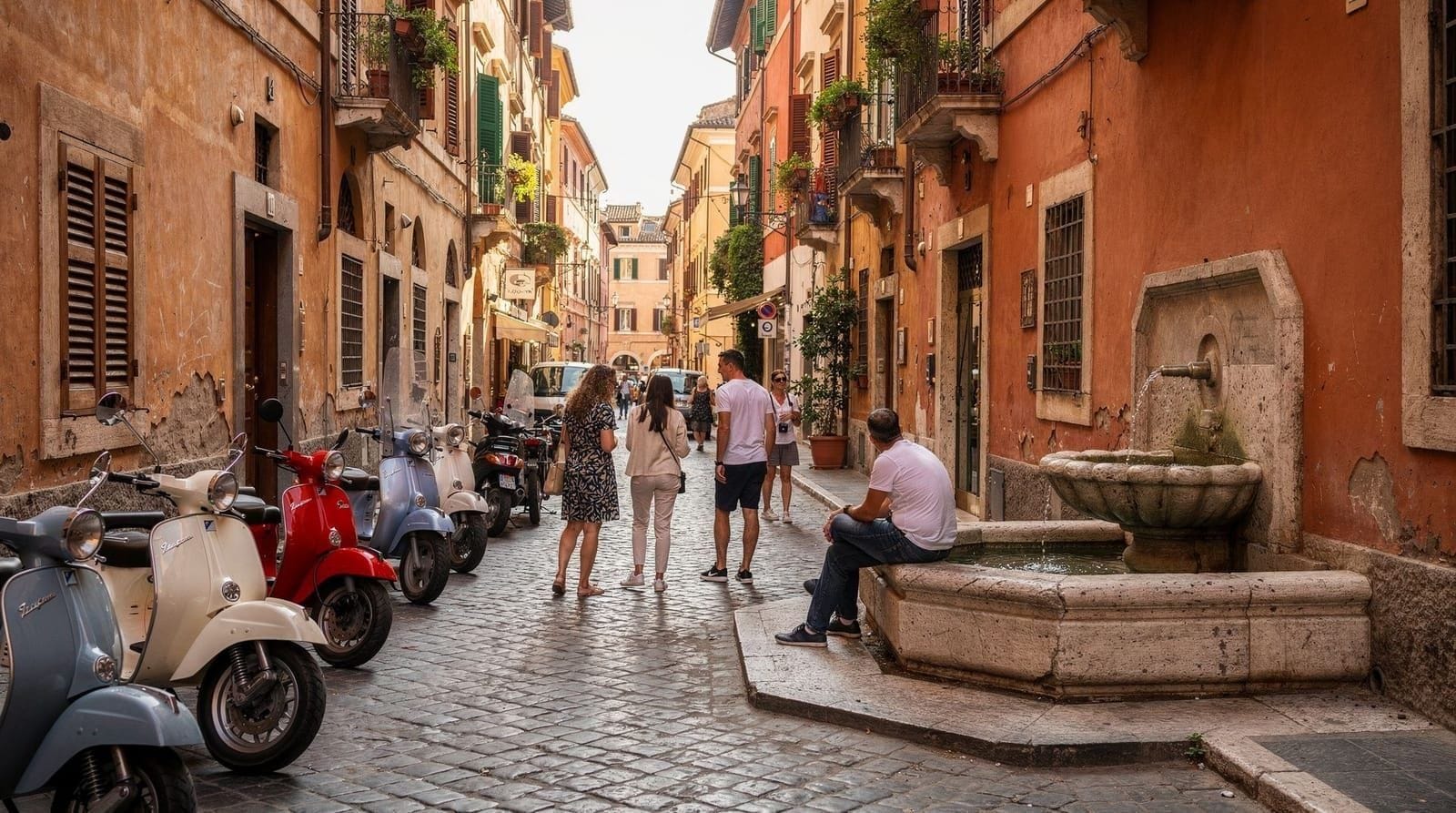
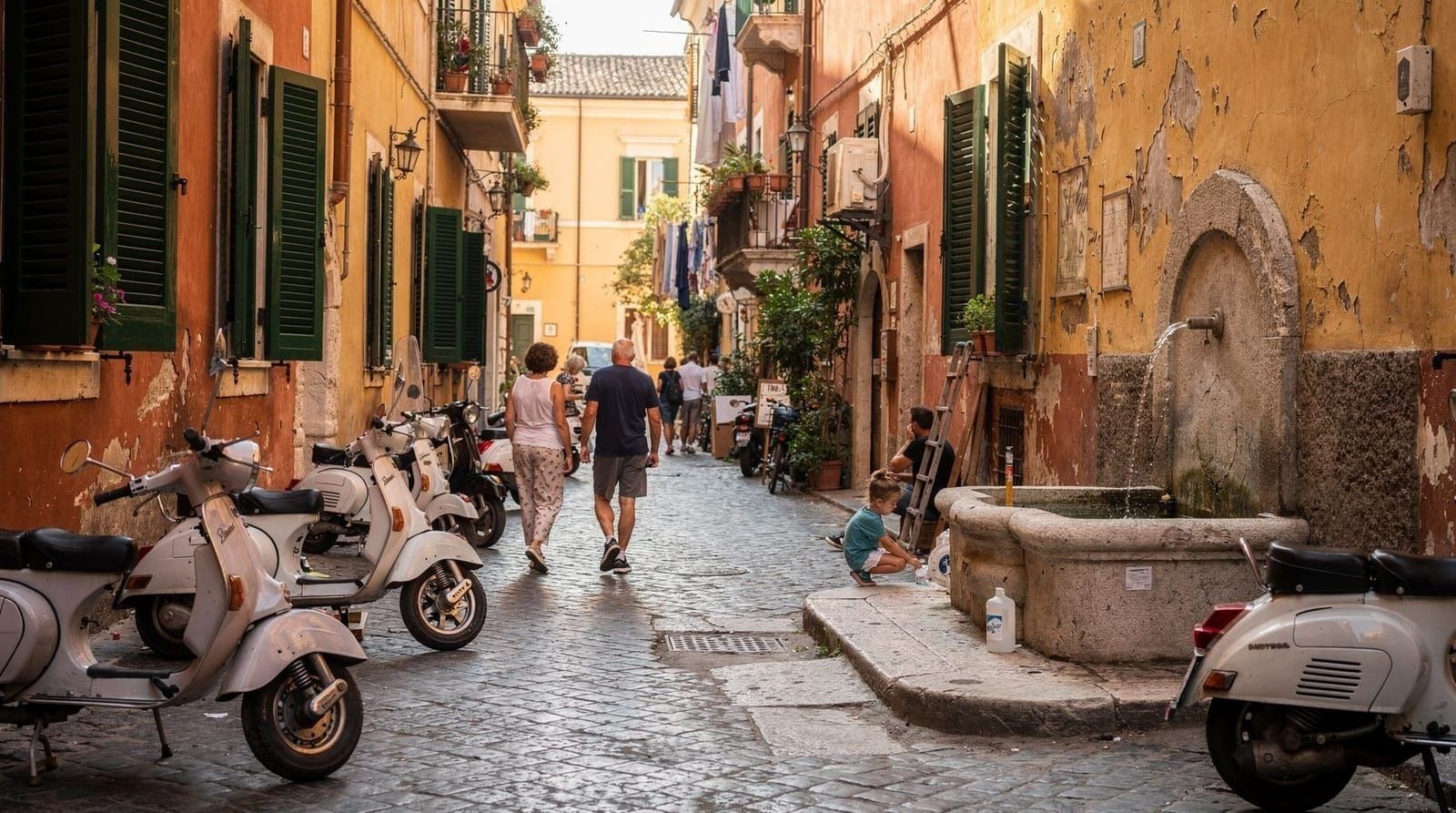
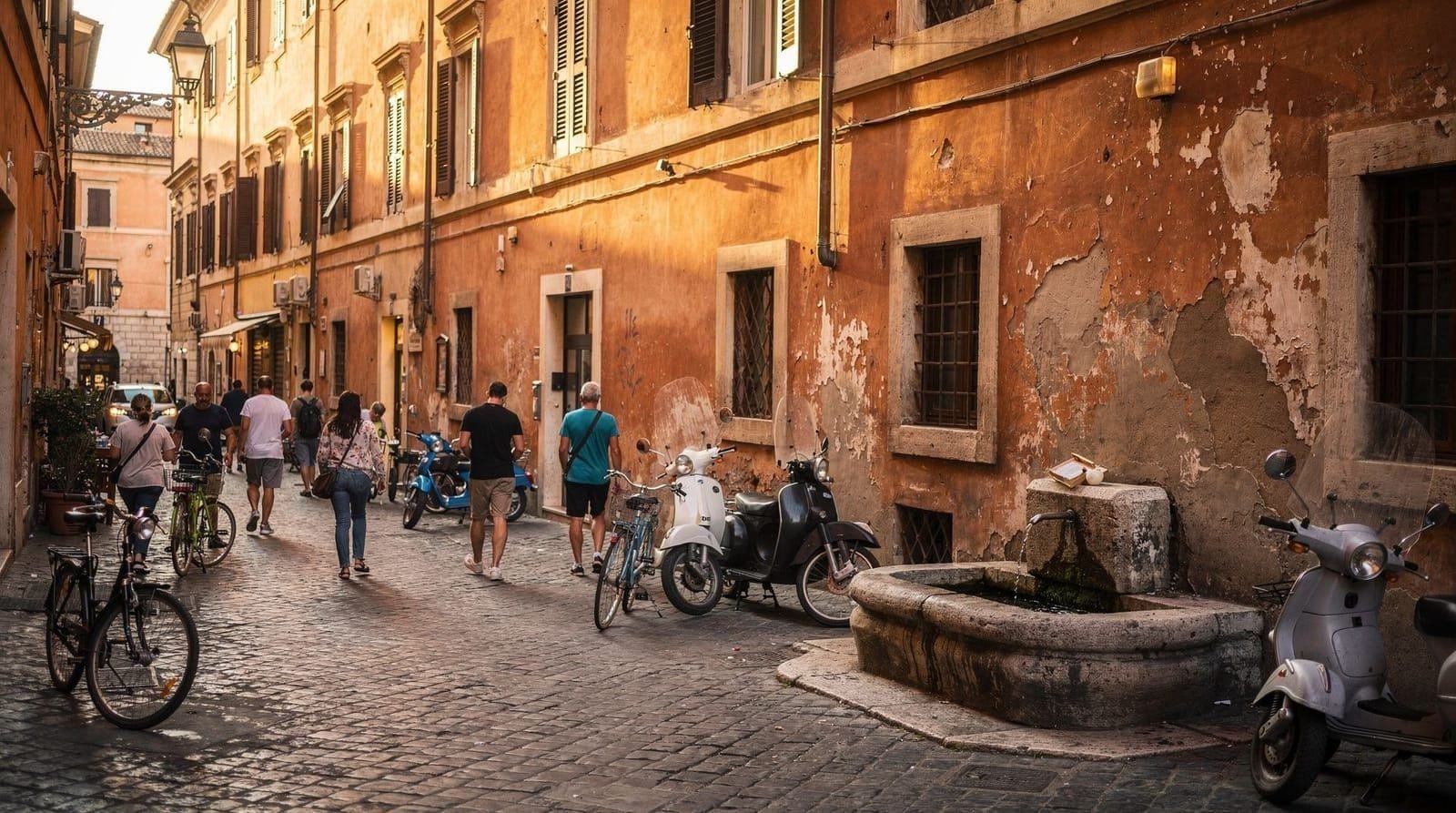
This is worth knowing: Rome’s public drinking fountains, the nasoni (named for their downward-curving spout), dispense continuous cold water from the Roman aqueduct system. There are roughly 2,500 of them across the city. The water is cold, clean, and good. Blocking the spout hole with your finger and drinking from the resulting jet is the technique.
On a hot summer day, this is genuinely useful — you can refill a water bottle every few minutes across the entire city centre, which makes the €1–2 tourist shop water bottle essentially unnecessary. The nasoni are one of Rome’s better civic features.
The view from the Gianicolo, which is the best free view
The Gianicolo (Janiculum Hill) gives the highest and widest unobstructed view of Rome’s centro storico and is almost entirely ignored by the tour bus circuit. From the terrace near the Garibaldi monument, you see the domes — St. Peter’s in the background, Sant’Andrea della Valle, Sant’Ivo, the Pantheon, the entire skyline — across a foreground of terracotta rooftops.
Get there either by walking up from Trastevere (20–25 minutes uphill, rewarding) or by bus. The view is best in the morning when the light hits the facades from the east. Midday it’s fine but slightly flat. Sunset draws more people but is beautiful.
Other free viewpoints: the terraces of the Pincian Hill above the Borghese Gardens (accessible from Piazza del Popolo via the ramp or from Villa Borghese), and the Aventine Hill’s Orange Garden (Parco Savello), which is quieter than the Gianicolo and has Rome’s most Instagram-photographed viewpoint — for those who want the keyhole view of St. Peter’s Dome at the Knights of Malta priory gate on Via Magistrale. All of these are covered together in the best photo spots guide, which cross-references timing and light for each one.
The Borghese Gardens, not the Gallery
Villa Borghese — the park, not the gallery — is free to enter and is a civilised afternoon in Rome. The Galleria Borghese inside requires a booking and ticket (worth it, one of Rome’s best museums). But the park itself is 80 hectares of gardens, paths, a small lake, open-air theatrical spaces, and occasional pop-up exhibitions that are free to walk through. Romans use it as a genuine park.
What’s pretending to be free
The Vatican Museums and Sistine Chapel: Not free. The only free entry is on the last Sunday of the month, when entry is genuinely free but the queues start before 7am and the experience is overwhelming — 20,000+ people in a single morning. Not recommended unless you’re happy with very crowded conditions.
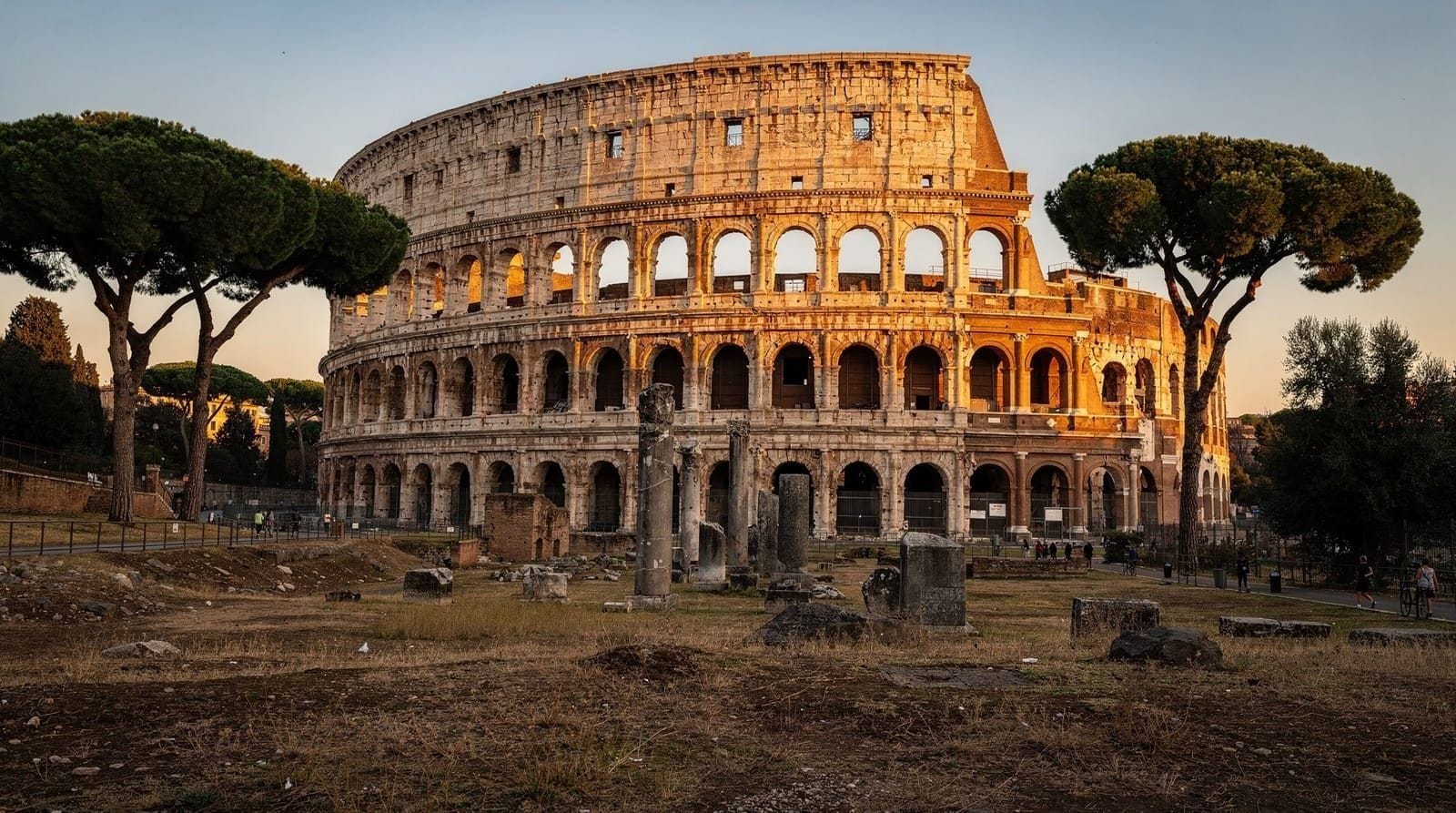
The Colosseum: Not free. You need a ticket.
The Pantheon: Now requires a ticket (€5 for standard entry, €3 for EU citizens between 18–25, free for under-18s). This changed in 2023 and the free era is over.
“Free” walking tours: These operate on a tip model, which is fine and usually around €15–20 per person expected. Not dishonest, just not actually free.
Gladiators outside the Colosseum: The photos are free if you decline firmly. They are not free if you don’t — if you let them drape a plastic sword on you, you will be charged €10–20.
The first Sunday of the month
Italian state museums offer free entry on the first Sunday of the month. This includes the Colosseum (and Roman Forum and Palatine Hill), the Borghese Gallery, and the national museums. The queues on these Sundays are significant — show up at opening time (9am) and accept that the free entry comes with a crowd. Still worth knowing about, particularly for the Colosseum.
Guided city centre evening walking tourAn evening walking tour is a reasonable way to see the free piazzas and church exteriors with someone who can put them in context — the free attractions are most rewarding when you understand what you’re looking at. Evening is also when the light makes the palazzos and fountains look their best.
The practical budget picture
Rome on a serious budget — two paid attractions per day, coffee at the bar rather than seated, lunch at a market or forno, aperitivo over dinner — runs around €50–70 per person per day excluding accommodation. This is manageable and you don’t feel like you’re missing the city. The Rome on a budget guide has a more detailed breakdown.
The genuinely free things are valuable not because they replace the paid attractions but because Rome’s outdoor life — its streets, its piazzas, its churches — is often as interesting as what’s behind a ticket desk.
Neighbourhoods that reward free wandering
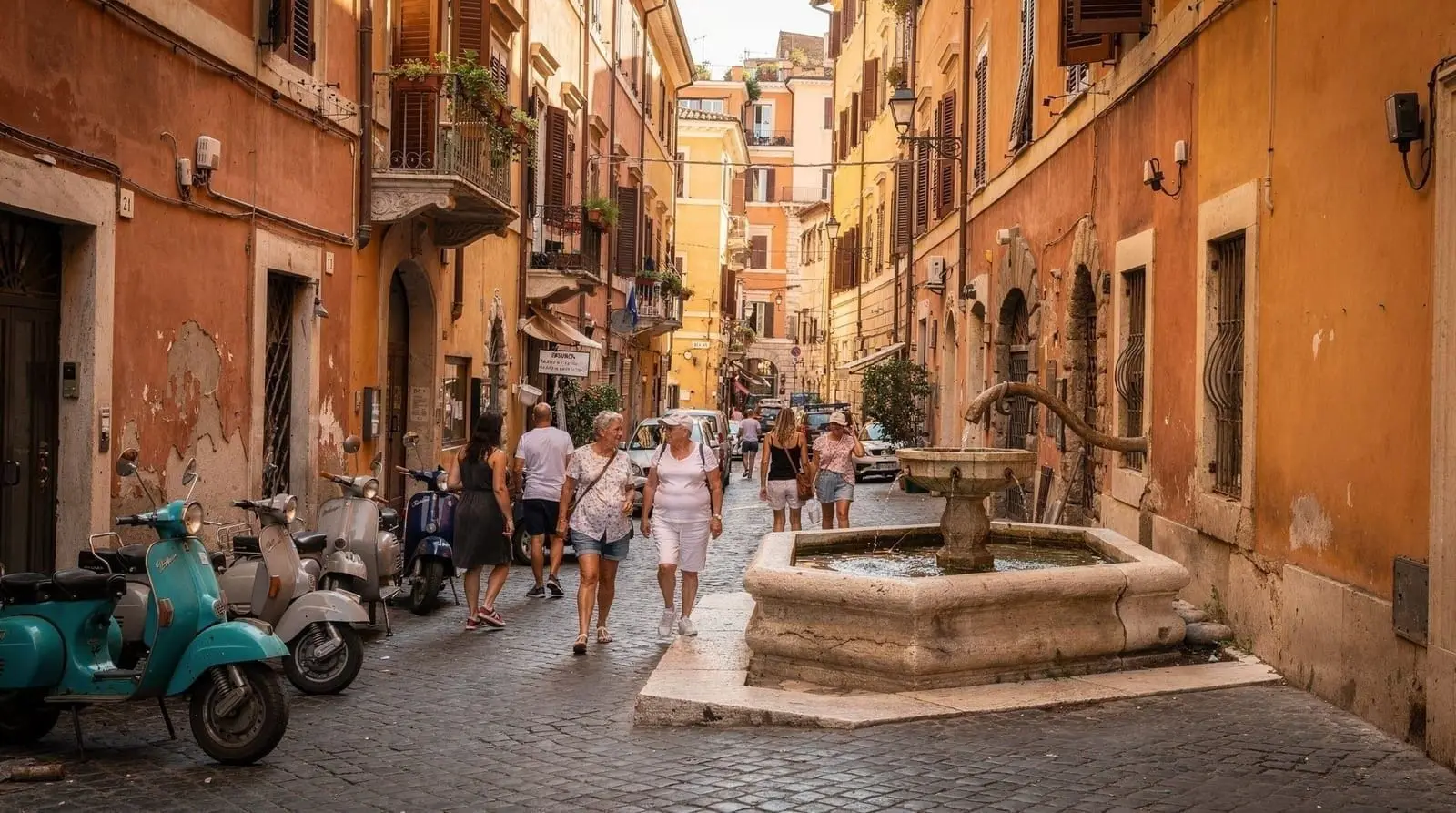
Beyond the specific sights above, some neighbourhoods are worth entering with no plan at all. Trastevere’s tangle of medieval lanes costs nothing to walk and rewards getting lost in the late afternoon; Monti has a similarly dense, low-key charm without Trastevere’s crowds. The Rome hidden gems guide collects smaller, less-obvious spots across several neighbourhoods for exactly this kind of aimless, free afternoon.
Free entry days beyond the first Sunday
The first Sunday of the month isn’t the only recurring free-entry window — some sites also waive entry on specific cultural heritage days through the year, and the details change annually. The Rome free entry days guide tracks the current calendar in more depth than is worth repeating here, since dates shift from year to year.
Frequently asked questions
Is it true the Trevi Fountain and Spanish Steps count as “free things to do”? Technically yes — there’s no ticket to stand near either — but that’s a low bar. The genuinely valuable free experiences in Rome are the churches with major artworks, the free viewpoints, and the piazzas, which reward more time than a two-minute photo stop.
Are the state museum free Sundays worth planning a visit around? Only if you don’t mind crowds. The first Sunday of the month brings free entry to the Colosseum, Roman Forum, Palatine Hill, and Borghese Gallery, but queues build fast and the experience is significantly more crowded than a normal paid day. Worth it for the Colosseum specifically if budget is tight; less worth it for the Borghese, where the timed-entry system normally keeps crowds low.