Five Roman pastas explained — what they are, where to eat them, and what to avoid
Rome has roughly four thousand years of history and approximately five pasta dishes that matter. This is not an exaggeration. Roman cuisine is built on a tight canon — the same ingredients, the same techniques, the same arguments about whose grandmother made it better. Understanding those five dishes before you arrive will save you from ordering the wrong thing, help you identify the tourist-trap versions, and make you significantly more annoying to Italians in the best possible way.
| Where | Any real Roman trattoria, best in Testaccio/Trastevere |
| Cost | Around €12–22 per portion (primo) |
| Key ingredient | Guanciale, not pancetta — non-negotiable |
| Format matters | Tonnarelli, rigatoni, bucatini per dish |
| Booking | Advance for well-known spots (Roscioli) |
Comparing the four core dishes
| Dish | Ingredients | Format | Tell of a bad version |
|---|---|---|---|
| Cacio e pepe | Pecorino, pepper, pasta water | Tonnarelli | Clumped, rubbery cheese |
| Gricia | Guanciale, Pecorino, pepper | Mezze maniche/rigatoni | Pancetta instead of guanciale |
| Carbonara | Gricia + egg yolks | Rigatoni | Cream added, too pale |
| Amatriciana | Gricia + tomato + white wine | Bucatini | Parmigiano instead of Pecorino |
The big four (plus one)
The core Roman pasta universe runs as follows: cacio e pepe, carbonara, amatriciana, and gricia. These four are so closely related that understanding one clarifies all the others. The fifth, tonnarelli cacio e pepe versus rigatoni carbonara, is less a different dish than a different argument. But there is a fifth entry worth knowing: pasta alla genovese, which despite its name is a Neapolitan dish so embedded in Rome’s Jewish-adjacent cooking tradition that you’ll encounter it everywhere in the Jewish Ghetto food scene.
Let’s do them properly.
Cacio e pepe — the baseline
Cacio e pepe means “cheese and pepper.” That’s it. Pecorino Romano, black pepper, and the pasta’s own starchy cooking water. Nothing else. No cream, no butter, no garlic, no olive oil (though some add a touch). The technique is everything: you toast the pepper in a dry pan, dissolve the Pecorino into a paste with hot water, and bring them together with the pasta while moving constantly so the cheese forms a sauce rather than clumping.
This is one of the most technically demanding dishes in Roman cooking. It looks simple. It is not. A properly made cacio e pepe has a glossy, creamy coating that coats every strand of tonnarelli or rigatoni without a single visible clump. A badly made one has rubberized cheese stuck to the pasta in chunks. About 60% of restaurants in Rome serve the bad version.
The best version in the city is a matter of genuine dispute. Da Enzo al 29 in Trastevere is widely cited. Felice a Testaccio in Testaccio does a version tableside that is theatrical and excellent. Roscioli near Campo de’ Fiori has a version that splits opinion — some find it too rich, others consider it definitive.
Price check: a main-course portion of cacio e pepe runs €14–22 depending on location. If you’re paying €9, you’re probably in a tourist-area trap.
Gricia — the ancestor
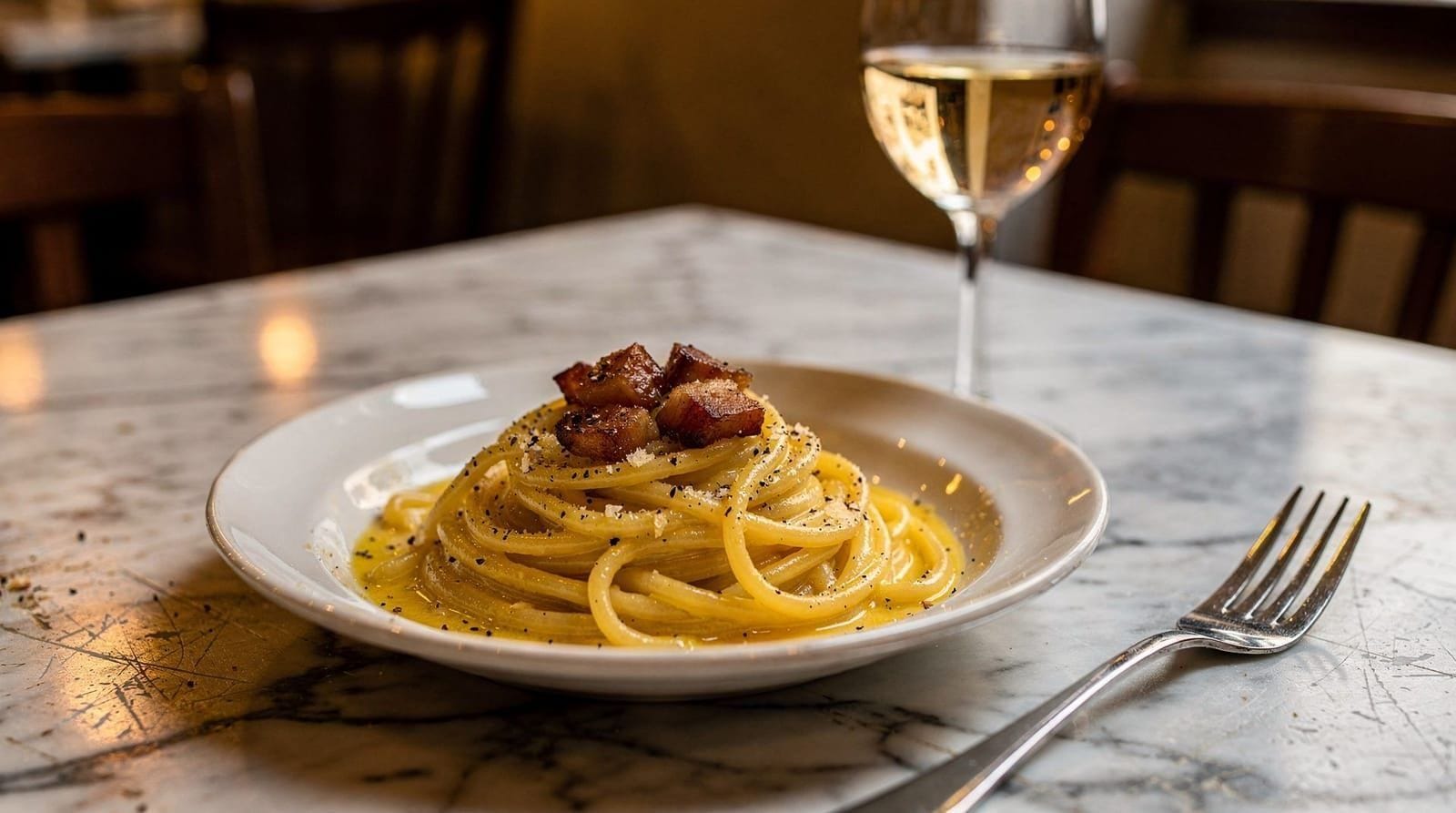
Gricia is carbonara without the egg. It’s amatriciana without the tomato. It predates both, which makes it the oldest entry in this list and, for a certain type of food obsessive, the most interesting. The ingredients are guanciale (cured pork cheek, not pancetta — this is important), Pecorino Romano, black pepper, and pasta water. That’s the whole list.
The flavour is deeply porky and savoury in a way that carbonara’s richness and amatriciana’s acidity slightly obscure. It’s cleaner than both and arguably more demanding of good ingredients, because there’s nothing to hide behind. If your guanciale is good, gricia is extraordinary. If it’s not, you’ll know.
Gricia is also the Roman pasta least likely to appear on a tourist-targeted menu and most likely to be done properly on a local one. If you see it offered as a special or handwritten on a chalkboard, order it.
Carbonara — the famous one
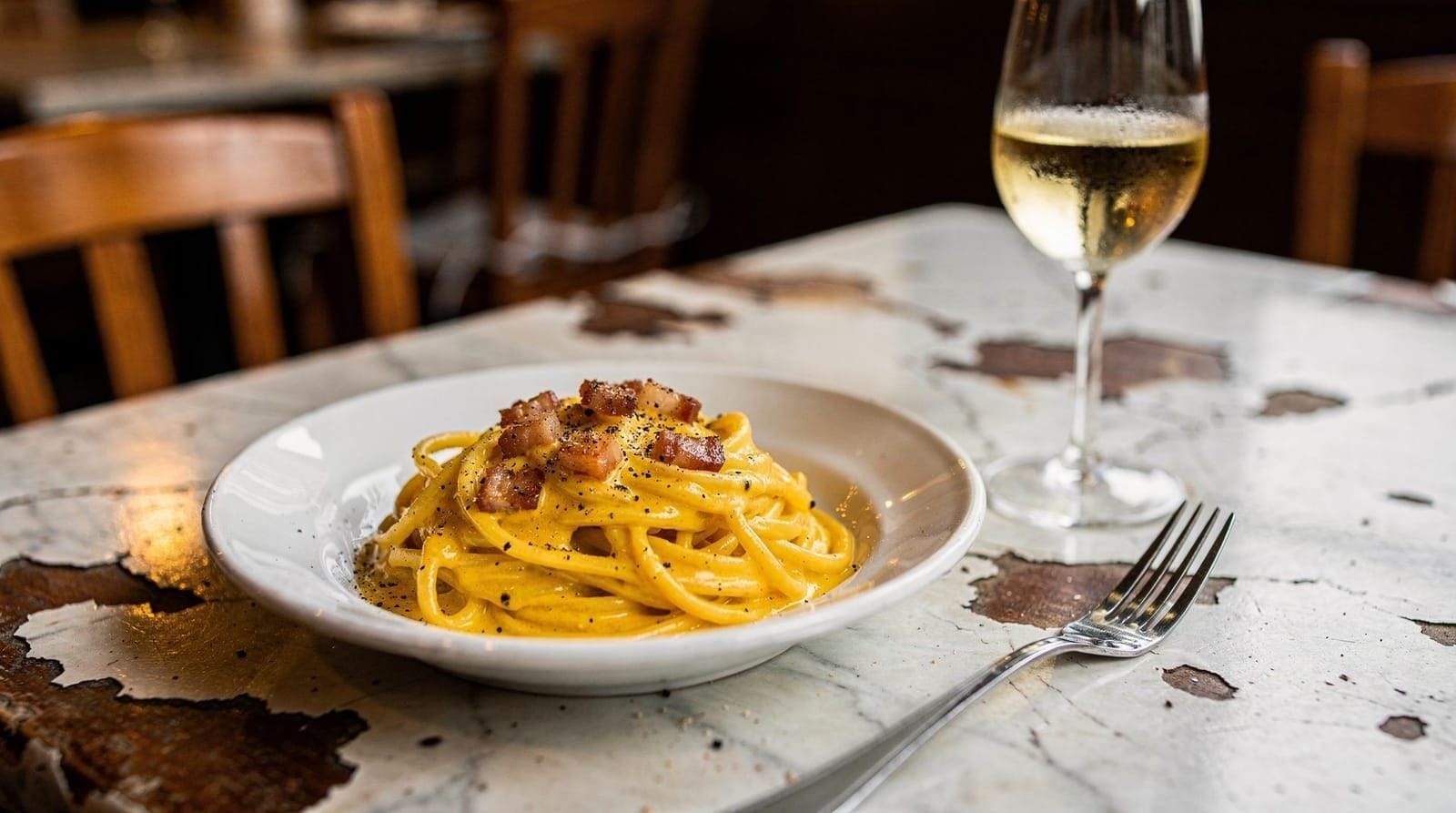
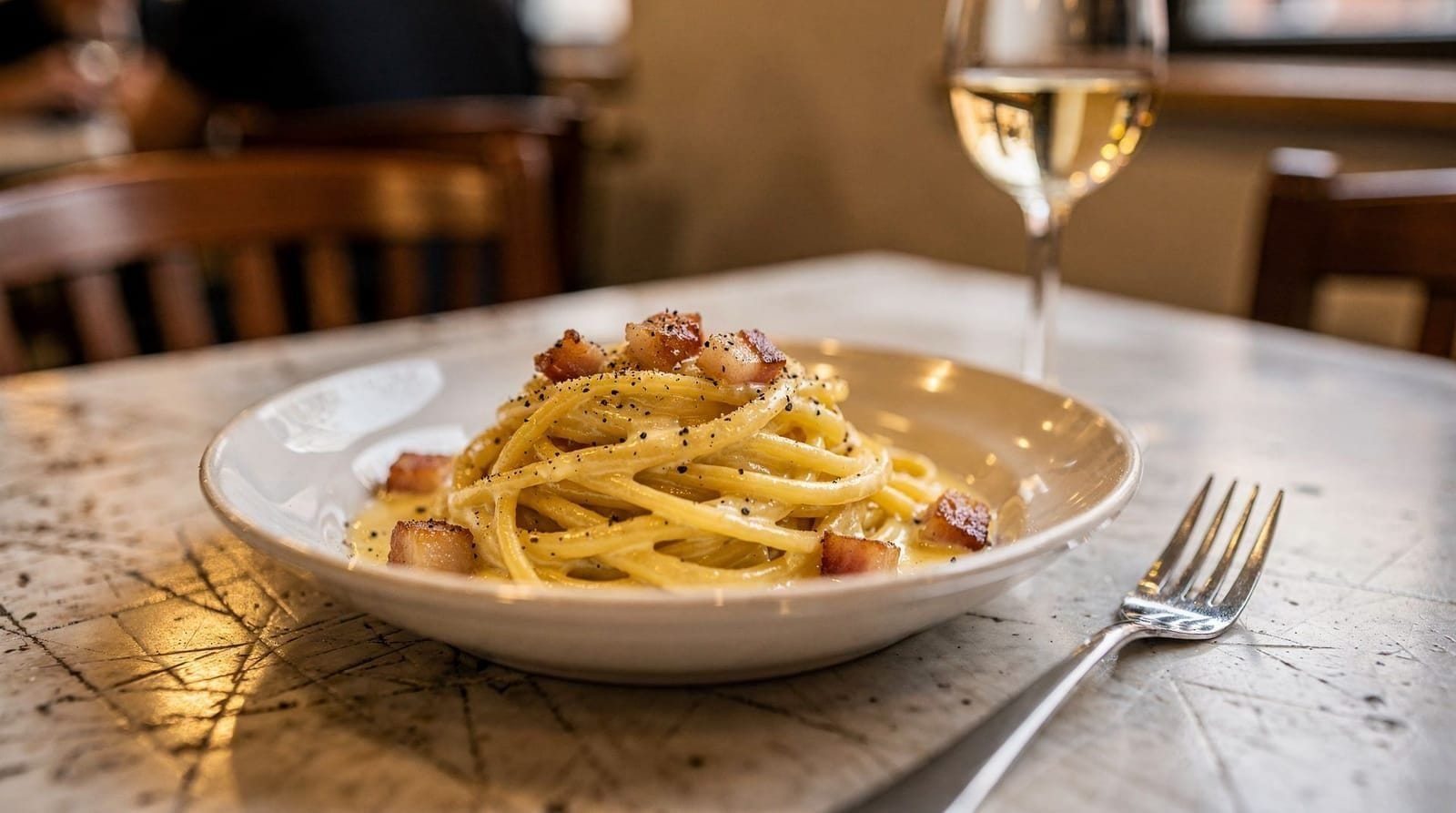
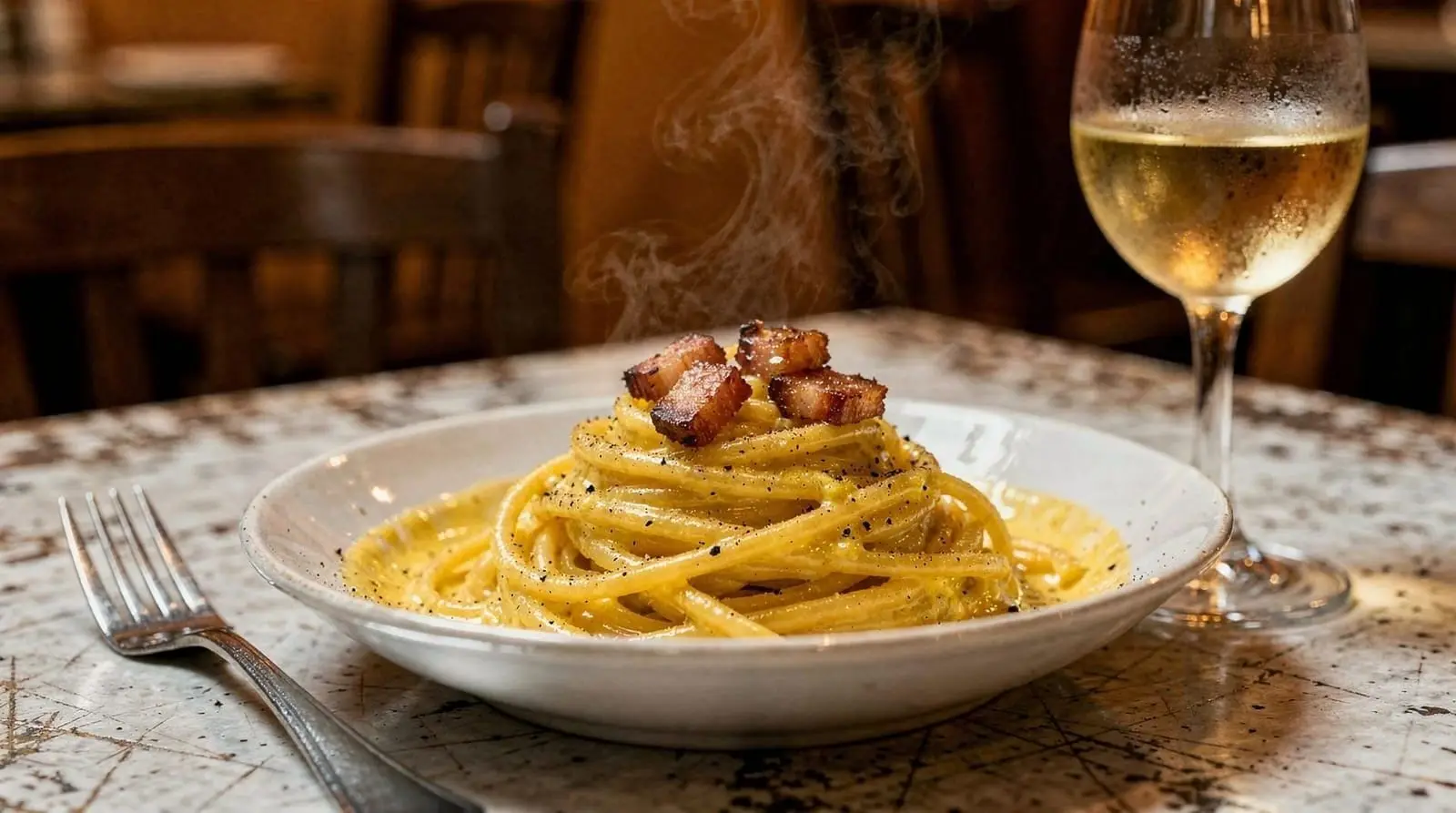
Carbonara is gricia with egg yolks added, and the result is one of the richest pasta preparations in the Italian canon. Done correctly, the sauce is a glossy, voluptuous coating of Pecorino and egg that transforms the pasta into something that sits somewhere between a main course and a decadent indulgence. The guanciale should be rendered until the fat is translucent but the exterior is golden and slightly crisp. The pepper should be abundant.
What it does not contain is cream. No cream. The creaminess comes from the emulsification of fat, egg yolk, cheese, and starchy pasta water. If a restaurant adds cream, that’s an adjustment for tourists who found the authentic version unnerving and doesn’t reflect traditional technique.
The egg situation confuses people: carbonara traditionally uses only egg yolks, not whole eggs. This is what gives it the deep yellow colour and the richness. Some recipes use one whole egg plus additional yolks. Nobody uses just whites.
Where to eat it: Roscioli is frequently cited as the city’s reference point, and it has the waiting list to prove it — book days ahead. For something lower-key and equally good, Trattoria Da Danilo near Termini is underrated and charges fair prices.
Amatriciana — the tomato arrives
Amatriciana (technically all’amatriciana, or alla matriciana in Roman dialect) is gricia with tomato added. The guanciale is rendered first, then crushed San Marzano tomatoes go in and reduce with white wine until the sauce is glossy and slightly sweet. Pecorino goes in at the end. Bucatini is the classic format — those thick, hollow spaghetti tubes that are simultaneously satisfying and extremely difficult to eat without splashing yourself.
The dish comes from Amatrice, a town in the mountains northeast of Rome in the Lazio region, which was largely destroyed in the 2016 earthquake. Eating it is, among other things, a small act of cultural remembrance.
Arguments among Romans about amatriciana centre on two main points: onion (some add half an onion to the guanciale rendering — heresy to purists, perfectly fine to everyone else) and the wine (white versus none). The chilli flake question — some add peperoncino, some don’t — generates less heat.
Where carbonara and amatriciana go wrong on tourist menus
The tourist-trap versions of both dishes have specific tells. In carbonara: too pale (not enough egg yolk), watery (cream or water added to thin it), or a sticky mass of cheese (overheated). In amatriciana: pancetta instead of guanciale (milder, less interesting), canned plum tomatoes that haven’t reduced enough, Parmigiano instead of Pecorino (sweeter, less sharp).
In Testaccio, which is Rome’s food neighbourhood and where the slaughterhouse workers who invented much of this cuisine actually lived, the standards are consistently higher. The Testaccio market stalls are a reliable cheap option. In Trastevere, quality varies enormously by restaurant — the ones with laminated menus and a person outside flagging tourists down are consistently the worst.
The fifth dish: tonnarelli cacio e pepe vs everything else
A brief word on pasta formats, because Romans are serious about this. Tonnarelli (a square-cut, thick spaghetti) is the canonical format for cacio e pepe. Rigatoni is preferred for carbonara by many cooks because the ridges and tube hold the sauce. Bucatini for amatriciana. Mezze maniche or rigatoni for gricia. Getting these right is not mandatory but it signals that the kitchen is paying attention.
If a restaurant offers all four dishes in rigatoni only, they’ve simplified for operational convenience. This isn’t the end of the world, but it’s a tell.
Food and wine tour in Trastevere with 20-plus tastings and free-flowing wineA food tour in Trastevere is a good way to try several of these dishes in proper versions in one evening, alongside enough other Roman food to give you context. The better tours include all four pasta families in their tasting sequence, paired with local wines.
Prices, coperto, and other practical notes
Coperto (cover charge) is standard in Roman sit-down restaurants — typically €1.50–3 per person — and not a scam, just a Roman thing. It will appear on your bill automatically. Tipping is discretionary and 5–10% of the bill is fine; nobody expects 20% American-style.
For the pastas themselves: a proper portion as a first course (primo) runs €12–18 at a mid-range trattoria. As a main course (if eating pasta only), you’d typically order the same portion but it’s fine to do so. Don’t order pasta and a main course both — unless you’re genuinely hungry, the portions are generous and you’ll struggle.
The Roman pasta food tour guide goes deeper into neighbourhood-by-neighbourhood recommendations and where to find each dish in its best version. The carbonara and cacio e pepe deep-dive covers the technical side in more detail if you want to understand the cooking.
One final note: the correct response when a Roman restaurant’s cacio e pepe arrives is to eat it immediately. It gets worse as it sits. This is not a dish for taking photos first.
Ordering strategy if you want to try all four
Roman portions are generous, so trying all four dishes across a single meal isn’t realistic. The honest approach is one dish per meal across a few days, or splitting portions with a companion at a restaurant that allows it — ask, most will. If you’re short on time, the Testaccio market stalls covered in the Testaccio food guide let you try smaller portions of two or three dishes for a fraction of the cost of a sit-down restaurant meal, which is the closest thing Rome has to a pasta tasting menu.
Which neighbourhood to eat in matters more than which restaurant
Beyond specific restaurant names, the Rome street food guide and general neighbourhood quality matter as much as any single recommendation. Testaccio, historically the neighbourhood of the slaughterhouse workers who created much of this cuisine, still has the highest baseline quality. Trastevere is more variable — genuinely excellent kitchens sit blocks from tourist traps with laminated menus, so use the ingredient tells above rather than trusting the address alone.
Frequently asked questions
What’s the actual difference between carbonara and gricia? Carbonara is gricia with egg yolks added. Both use guanciale, Pecorino, and pepper as the base; carbonara adds the egg to create its signature rich, glossy sauce, while gricia stays cleaner and more directly porky.
Why does guanciale matter so much compared to pancetta? Guanciale is cured pork cheek with a higher fat content and a more intense, slightly sweet flavour than pancetta (cured pork belly). When rendered, guanciale’s fat carries the sauce in all four dishes; pancetta produces a milder, less distinctive result that purists consider a compromise rather than the real thing.