The best rooftop bars in Rome — and the ones to skip
Rome is not naturally a rooftop-bar city. The buildings in the centro storico are mostly 4–6 floors, the skyline is dominated by church domes rather than glass towers, and Italians traditionally drink at street level — at the bar, standing, in ten minutes, then back to whatever they were doing. The rooftop bar as a format is, to some extent, an import for tourists.
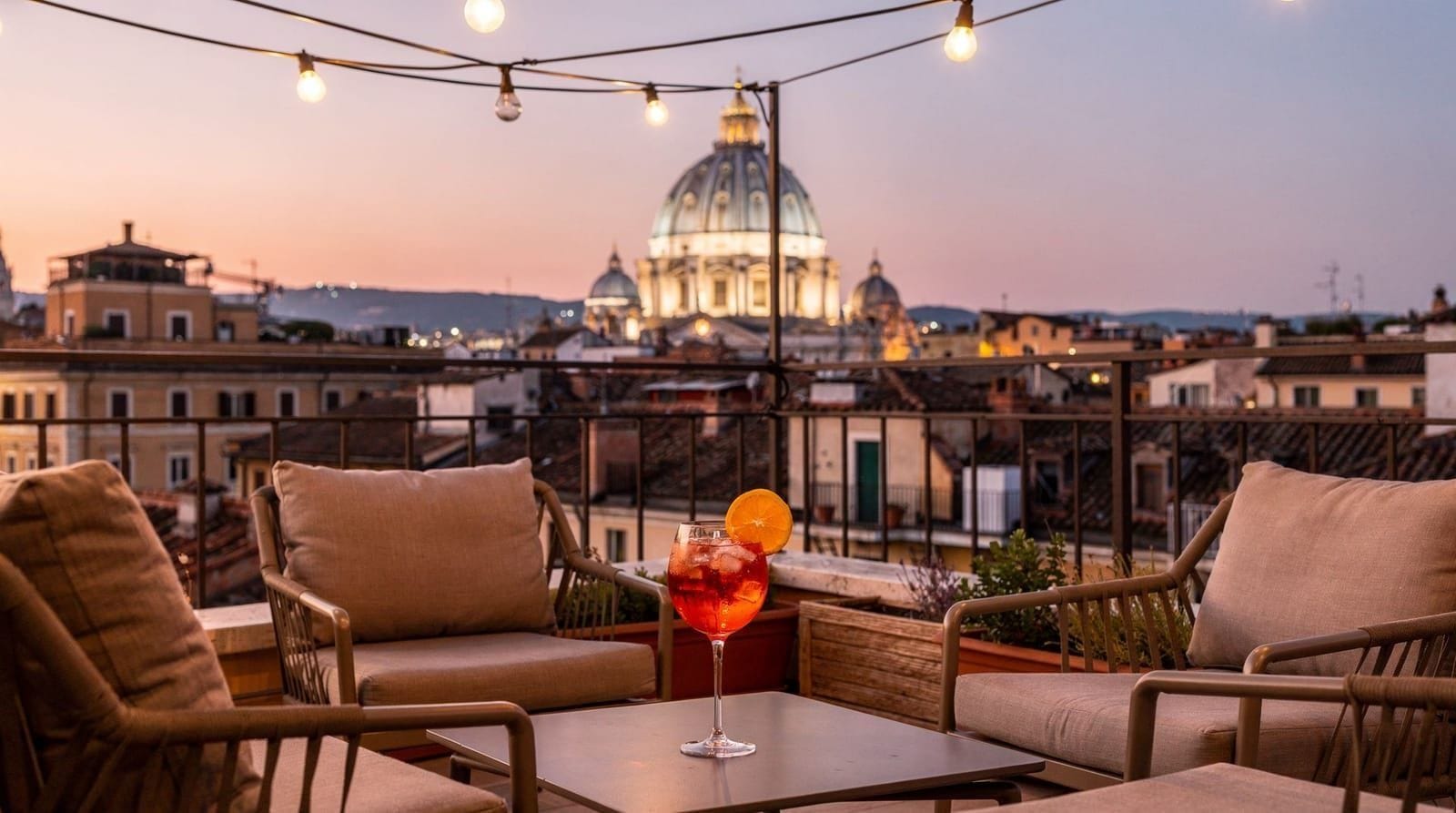
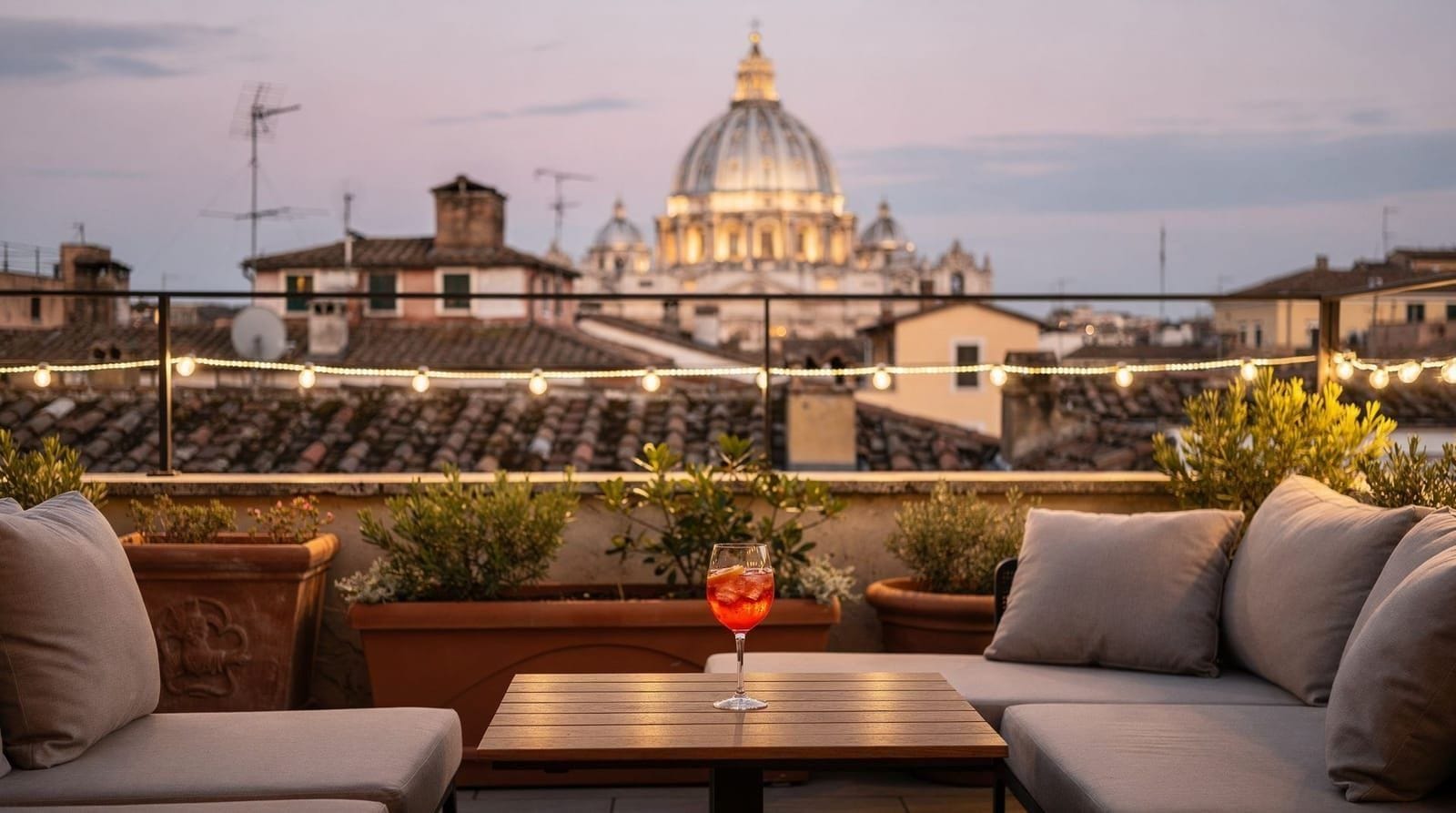
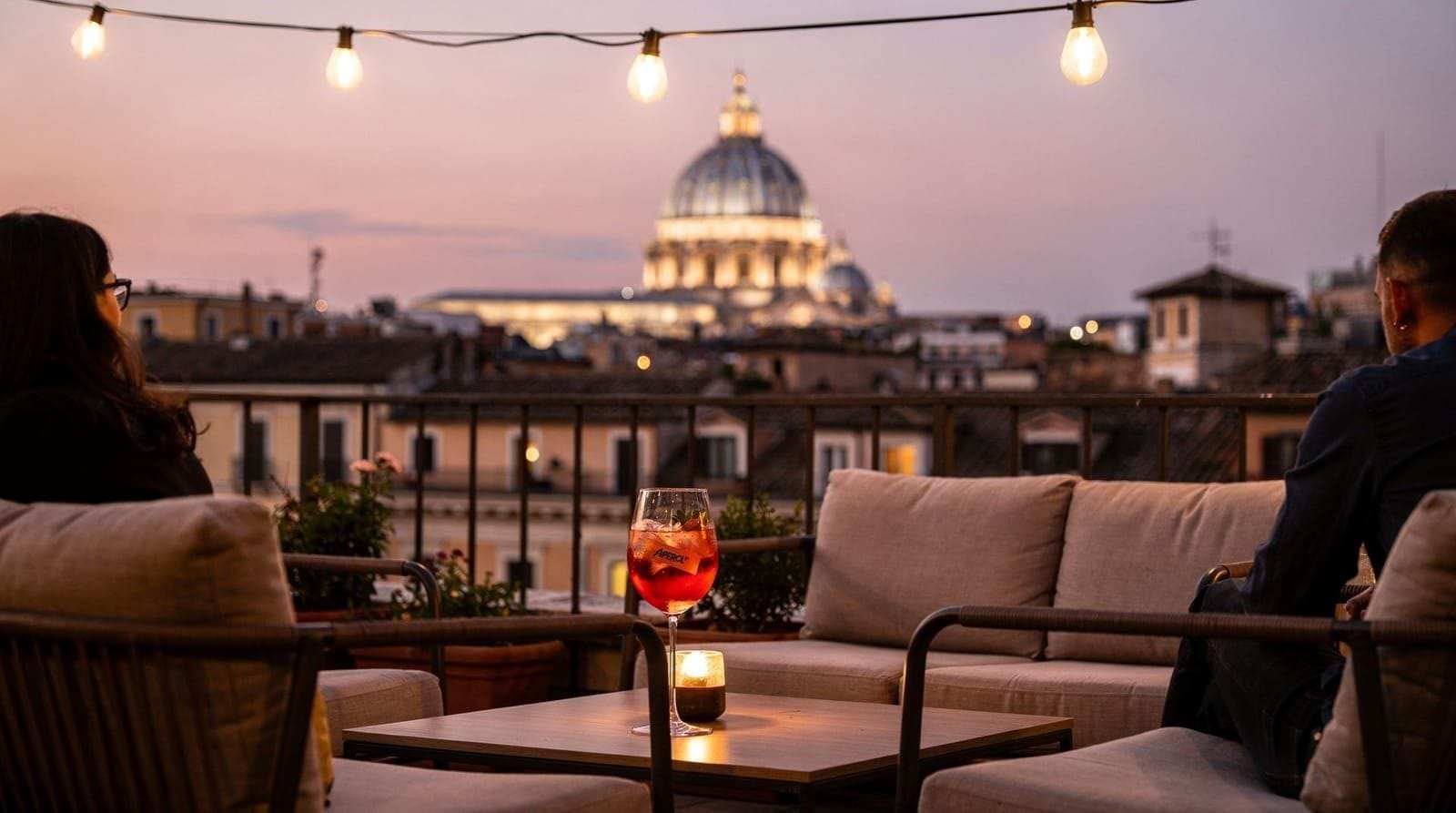
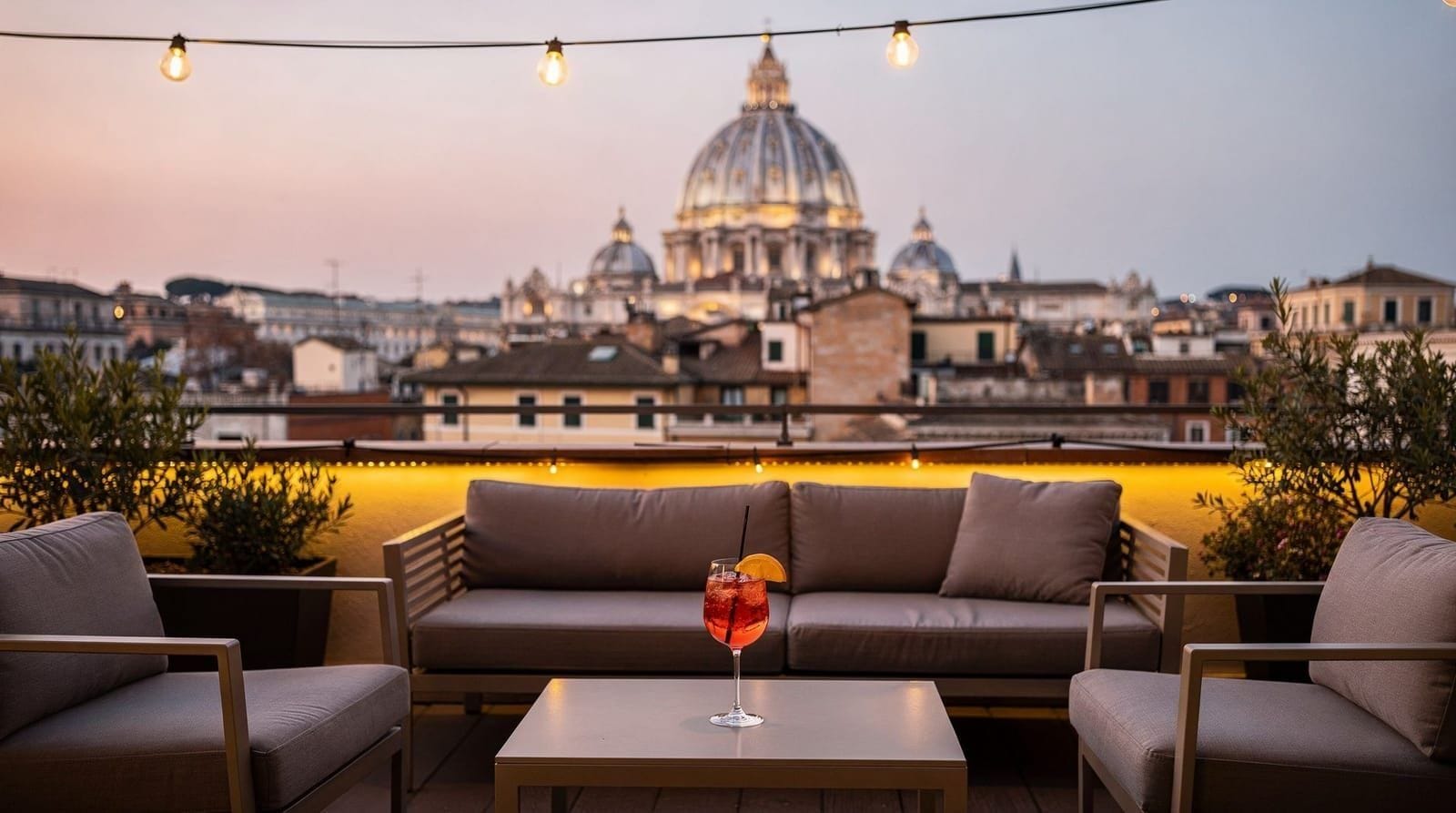
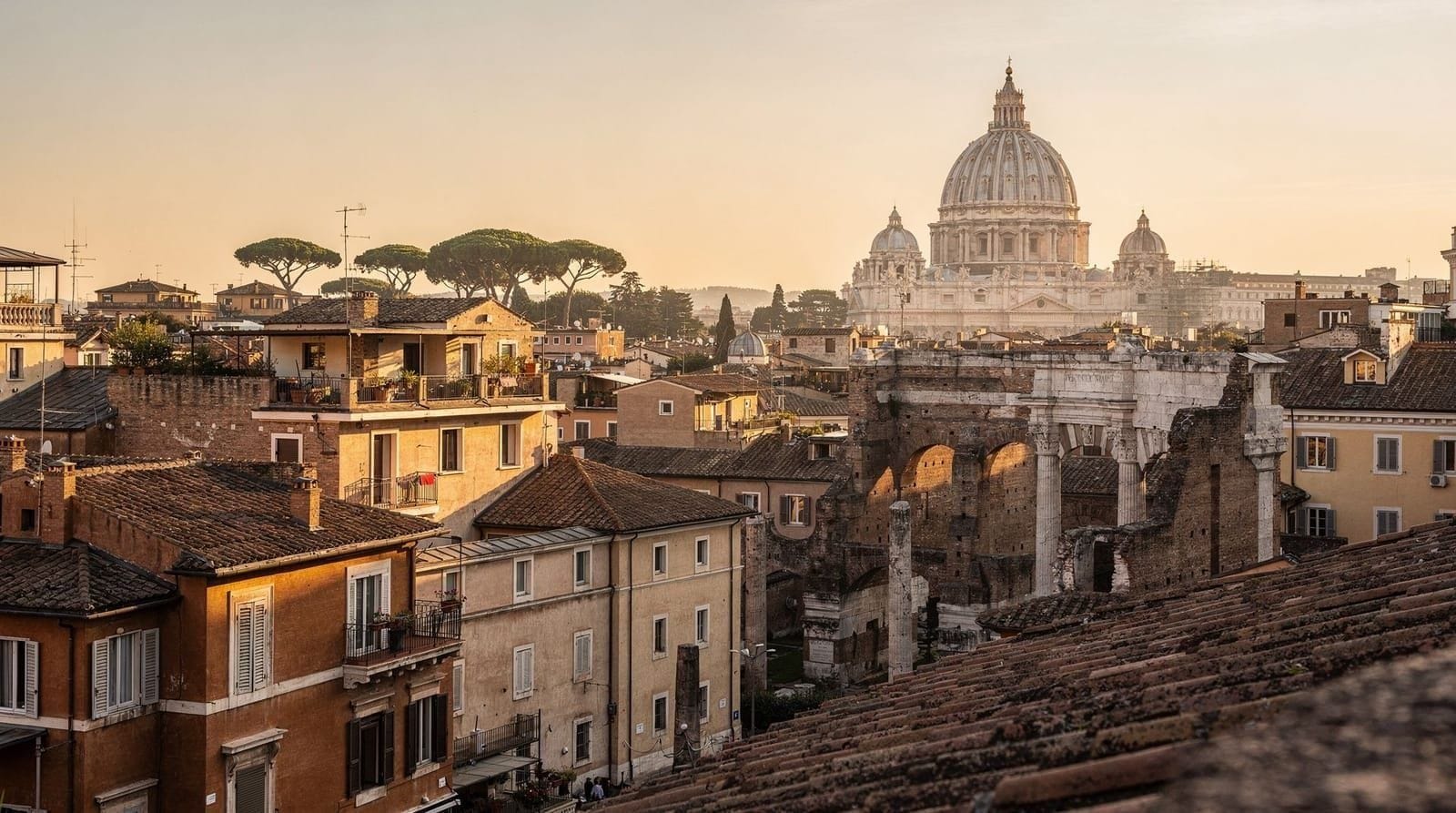
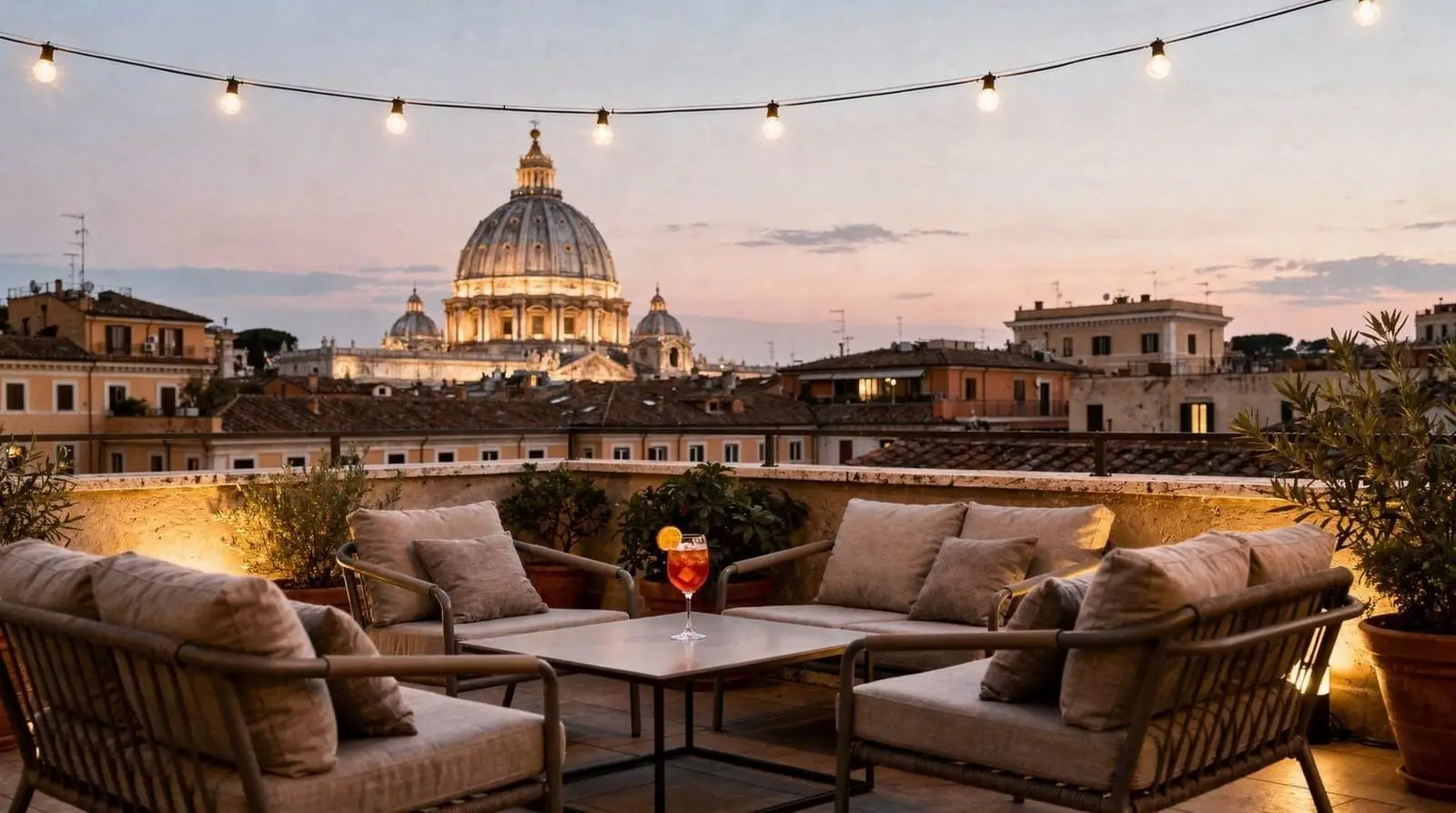
That said, there are a handful of elevated drinking spots in Rome that are genuinely worthwhile, and the view across the terracotta rooftops to St. Peter’s Dome or the Pantheon is something that rewards the €18 cocktail, at least once. Here is an honest assessment.
| Best view | Terrazza Borromini, Piazza Navona |
| Cocktail price | Around €16–24 |
| Best time | Aperitivo window, 6pm–9pm |
| Book ahead | Essential in summer, especially weekends |
| Dress code | Smart casual, no shorts/flip-flops at top spots |
Comparing Rome’s rooftop options
| Venue | View | Vibe | Price level |
|---|---|---|---|
| Terrazza Borromini | Piazza Navona, Baroque rooftops | Formal, romantic | Highest |
| G-Rough rooftop | Piazza Navona (smaller) | Intimate, design-led | High |
| Salotto Ciampini | Tiber & Monte Mario from Pincio | Genteel, older crowd | Moderate |
| Radisson Blu | 360° panoramic, Termini area | Functional, not romantic | Moderate |
The best: Il Sorpasso and the Prati neighbourhood
Before we get to actual rooftops, a side note: some of Rome’s best aperitivo is at street level in Prati — the neighbourhood immediately north of the Vatican. Prati has a concentration of wine bars and aperitivo spots that serve free food with drinks in the 6pm–9pm window, in the Roman tradition, and they’re used by actual Romans rather than operating as tourist spectacles. Il Sorpasso on Via Properzio is the reference point: outstanding natural wine list, excellent free cicchetti, neighbourhood crowd. Worth knowing about as an alternative to paying €20 for a cocktail somewhere scenic.
Terrazza Borromini — the view to beat
The rooftop bar at Palazzo Pamphilj, overlooking Piazza Navona, is the benchmark for Roman rooftop experiences. The terrace faces west across the piazza’s curve, and on a clear evening the light on the Baroque facades turns gold in a way that justifies everything. The drinks are expensive (€18–22 for a cocktail), the service is hotel-professional, and the view is legitimate.
The format includes aperitivo food — small portions, well done — and on certain evenings there’s live music or opera performances. These evenings cost more but are one of Rome’s better experiences if you like operatic music and good views together.
Book: essential, especially on weekends. Walk-up availability is rare.
Terrazza Borromini open-air opera with aperitifThe G-Rough rooftop (Piazza Navona)
Another Piazza Navona view, from the rooftop bar of the G-Rough boutique hotel. Smaller terrace, better cocktails than many competitors, and a design aesthetic that’s more Wallpaper magazine than tourist-trap. The cocktail list has some creative entries and the bartenders know what they’re doing.
Quieter than Terrazza Borromini — which is either a feature or a bug depending on what you want. Best for an intimate drink rather than a big-group aperitivo.
Salotto Ciampini (Pincian Hill)
This isn’t technically a rooftop bar — it’s a terrace bar at the top of the Pincian Hill staircase, above the Spanish Steps, with a view west across the Tiber towards Monte Mario. The setting is garden terrace rather than high-rise, and it feels more like Rome’s genteel older café culture than the Instagram-optimised rooftop circuit.
The coffee is excellent (it functions as a café during the day), the aperitivo is traditional, and the prices are marginally more reasonable than the Navona spots. The crowd tends older and more local. Recommended for those who find Terrazza Borromini too theatrical.
The Radisson Blu — for the Termini-area view
Not usually on the recommended list, but worth knowing about: the rooftop bar at the Radisson Blu hotel near Termini station has a 360-degree view of Rome that is genuinely panoramic and shows the city in a way that the piazza-facing terraces don’t — you see the suburbs, the hills, the aqueducts in the distance, the full geography. Drinks are hotel-bar quality (fine, nothing special) and prices are lower than the Navona spots.
This is the recommendation for those who want to understand Rome’s spatial layout from above. Not romantic, but useful.
What to skip
The rooftop of the Mercato Centrale (Termini): The view is mediocre and the drinks are ordinary. The concept is fine; the execution lacks ambition.
Most hotel rooftop bars on Via Veneto: This street was glamorous in the 1960s. In 2026 it’s a long-declined boulevard of overpriced hotel bars and restaurants serving mediocre food to expense-account tourists. The views are not good enough to justify the premium.
The Altare della Patria rooftop: This is technically a viewpoint accessed by an elevator inside the monument, not a bar — worth doing for the view (€7–10 depending on whether you go to the mid-level or top), but there’s nothing to drink. Don’t confuse it with a rooftop bar. The view from the top of the Vittoriano is, however, Rome’s best legitimately public elevated view.
The timing question
Rome’s aperitivo window is 6pm–9pm. This is when the rooftop bars are busiest and when the light is most photogenic (especially in summer, when sunset is around 8:30pm and the golden hour stretches for over an hour). For the best experience: arrive at the start of the aperitivo hour, order a Negroni or a Spritz, and watch the light change across the rooftops.
In summer (June–August), book the major rooftop spots two to three days ahead. Spring and autumn, same-day booking is usually possible. Winter the terraces are often closed or partially enclosed and heated — the views are still good but the atmosphere is different.
Drinks prices and what’s reasonable
Cocktails at Rome’s rooftop bars run €16–24. Wines by the glass: €10–16. Beer: €8–12. Non-alcoholic options are typically half the cocktail price. Most of these bars also charge a “consumazione minima” (minimum spend) that’s usually equivalent to one drink.
This is expensive by Roman standards — a Negroni at a neighbourhood bar in Testaccio or Trastevere runs €8–11 — but the view is the product and the price is the price.
An evening rooftop paired with a walking tour
One format that works well: start the evening with a guided walking tour of the centro storico, covering Piazza Navona, the Pantheon, and the Trevi area in the late afternoon light, then finish with an aperitivo at a rooftop bar as the sun goes down. This sequences the city logically — you see the monuments first, then see the same skyline from above over a drink. The contrast is worthwhile and it stops the rooftop experience from feeling like an isolated tourist activity disconnected from the city below.
Rome evening tour: Spanish Steps, Trevi, Navona and Pantheon at sunsetDress code
Roman rooftop bars are smart casual in practice. No shorts, no flip flops, no sports trainers at the top-end spots (Terrazza Borromini in particular). The dress code is not strictly enforced but people who look like they’re on their way from the beach may receive service at a lower level of enthusiasm than those who dressed for an evening out. This is Rome; aesthetics matter.
The Rome aperitivo and nightlife guide covers the full spectrum from rooftop to neighbourhood wine bar to the late-night bars around Piazza della Repubblica and San Lorenzo. The best areas guide maps out where to drink by neighbourhood.
If you’d rather skip rooftops entirely
Rooftop prices are a real barrier for some travellers, and it’s worth saying plainly: you are not missing the “real” Rome by skipping them. A Negroni at street level in Monti or Trastevere at a third of the price, with better people-watching and a more genuinely local crowd, is a legitimate alternative rather than a consolation prize. The Rome wine bars and enoteche guide is the resource for that street-level version of the same evening.
Combining a rooftop with dinner
Few rooftop bars do a full dinner well — the format is built around aperitivo and cocktails, not a sit-down meal. The better sequence is aperitivo on the roof around 7pm, then dinner afterward at street level in Trastevere or the centro storico, where the kitchens are stronger and the prices are saner. Trying to eat a full dinner at a rooftop venue usually means paying a premium for food that is secondary to the view.
Frequently asked questions
Do I need to book rooftop bars in advance in Rome? For the well-known ones — Terrazza Borromini especially — yes, particularly in summer and on weekends. Walk-up availability exists but is unreliable at peak times; book a table or at least call ahead.
Are rooftop bars in Rome worth the price compared to a neighbourhood bar? Once, for the view — yes. As a nightly habit, no. A Negroni that costs €20 on a Piazza Navona rooftop costs €8–10 at street level in Trastevere or Testaccio with a similar quality drink; you’re paying specifically for the elevation and the skyline, not for better ingredients.